Fiji · Country guide
Fiji's open door is for over-45s. Everyone else needs a sponsor.
The residence permit for people with outside income starts at age 45 and wants about US$45,000 sitting in a Fijian bank. Everything else runs through an employer or a university.
More than 300 islands, about 936,000 people, and roughly 5,500 miles of open Pacific between you and California. Fiji sells itself as effortless, and the arrival is. The rest takes planning. What follows is the month's math once shipping is priced in, the three permits Fiji will let you file, why you probably can't buy the ground you are standing on, and what happens the day you need a hospital.

Reviewed and updated September 19, 2026 · 13 min read
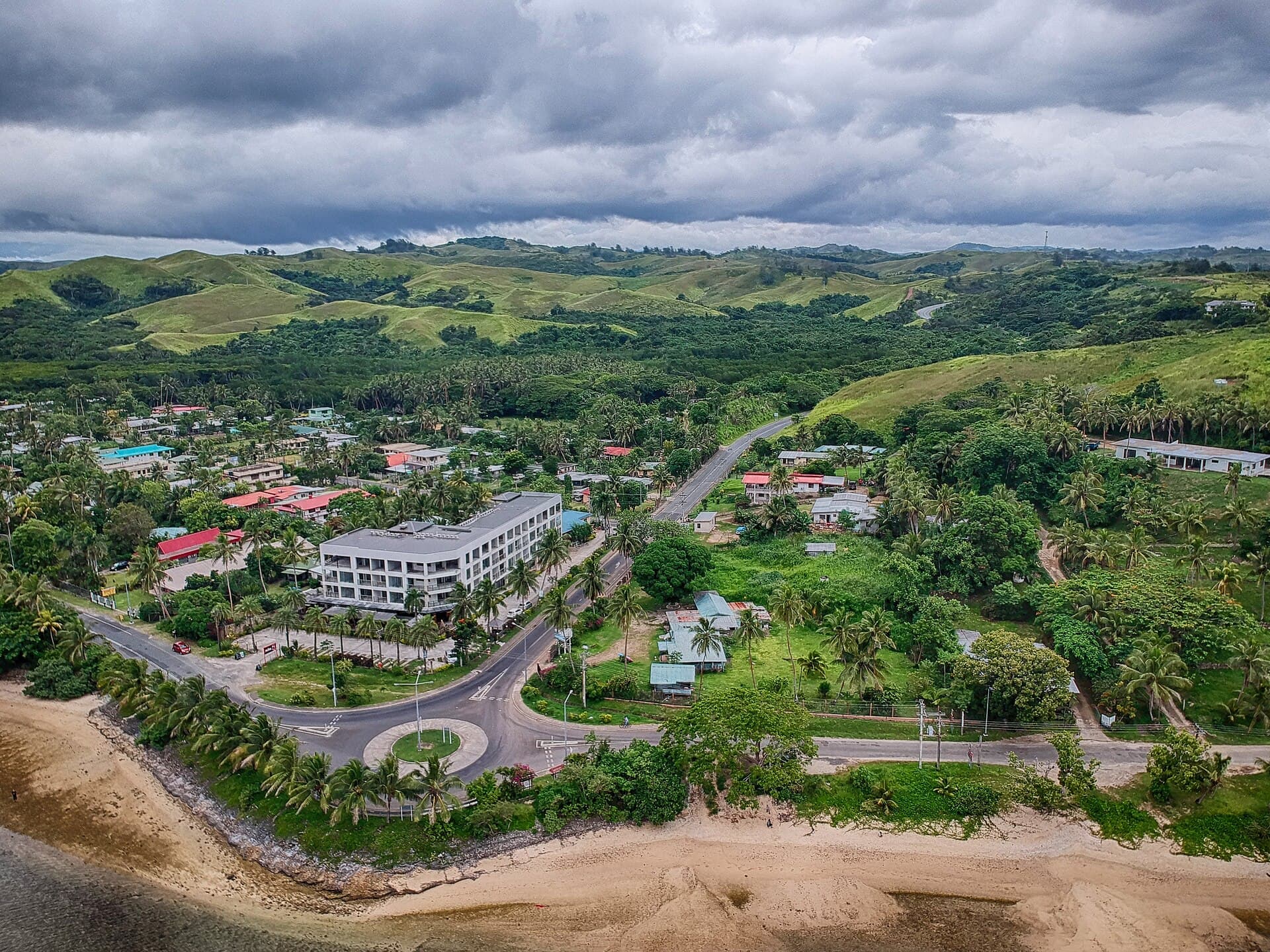
01 · The case for Fiji
The part Fiji makes easy
Fiji front-loads the easy parts. A U.S. passport is visa exempt, so you land at Nadi and immigration gives you a visitor permit on the spot, good for up to four months and usually extendable by two more. Nobody asks for a bank statement. Nobody asks for a plan.
Then the everyday friction isn't there. English is an official language and the working language of government, business and school, so you fill in your own forms and argue your own power bill. Washington's travel advisory gives Fiji its Level 1 rating and singles out exactly one spot to avoid, which this page comes back to. And the climate does one thing all year. August is the coolest month and still averages around 78 degrees.
The people who do well here are retirees with a pension that lands wherever they are, remote workers on a U.S. paycheck, and the occasional person married into an island already. What they share is income that does not depend on Fiji, because Fiji's own job market is small and mostly closed to you. The bandwidth holds up for the remote half of that group: Fiji sits on the Southern Cross cables and landed Google's Tabua cable in January 2025, with a second cable landing station behind it.
Here's the catch
You're a long way out, and it costs money every month. Anything not grown in Fiji arrives by ship, so a fridge, a car and a jar of peanut butter all carry the ocean in their price. Serious medicine leaves the country entirely: complex surgery means an air ambulance to Australia or New Zealand. Cyclone season runs November through April and it isn't exactlly decorative. Flights thin out, too: Fiji Airways dropped its Dallas nonstop on September 7, 2026, leaving four North American gateways. Fiji has also had four coups since 1987, the 2013 constitution still writes the military in as a guardian of the nation, and the next general election has to happen by February 6, 2027. None of that stops a move. All of it belongs in the decision.
- Safety index
- 70/100
- English proficiency
- 90/100
- Internet speed
- 35 Mbps
- Capital
- Suva
- Currency
- Fijian Dollar (FJD)
02 · The money
The month, priced out
$1,150
One person, a month
Housing, groceries, transport and bills, living the local way
$1,900
A couple, a month
Two people under one roof, sharing one car
$550
A one-bedroom in town
Nearer $350 once you leave the center
$4
A meal at a cheap restaurant
Fiji's bargain eating is Indo-Fijian
$23
The home internet bill
Before you add a phone plan on top
$22
Monthly transport spend
Per person, on buses, before anyone buys a car
The cheap half, and the imported half
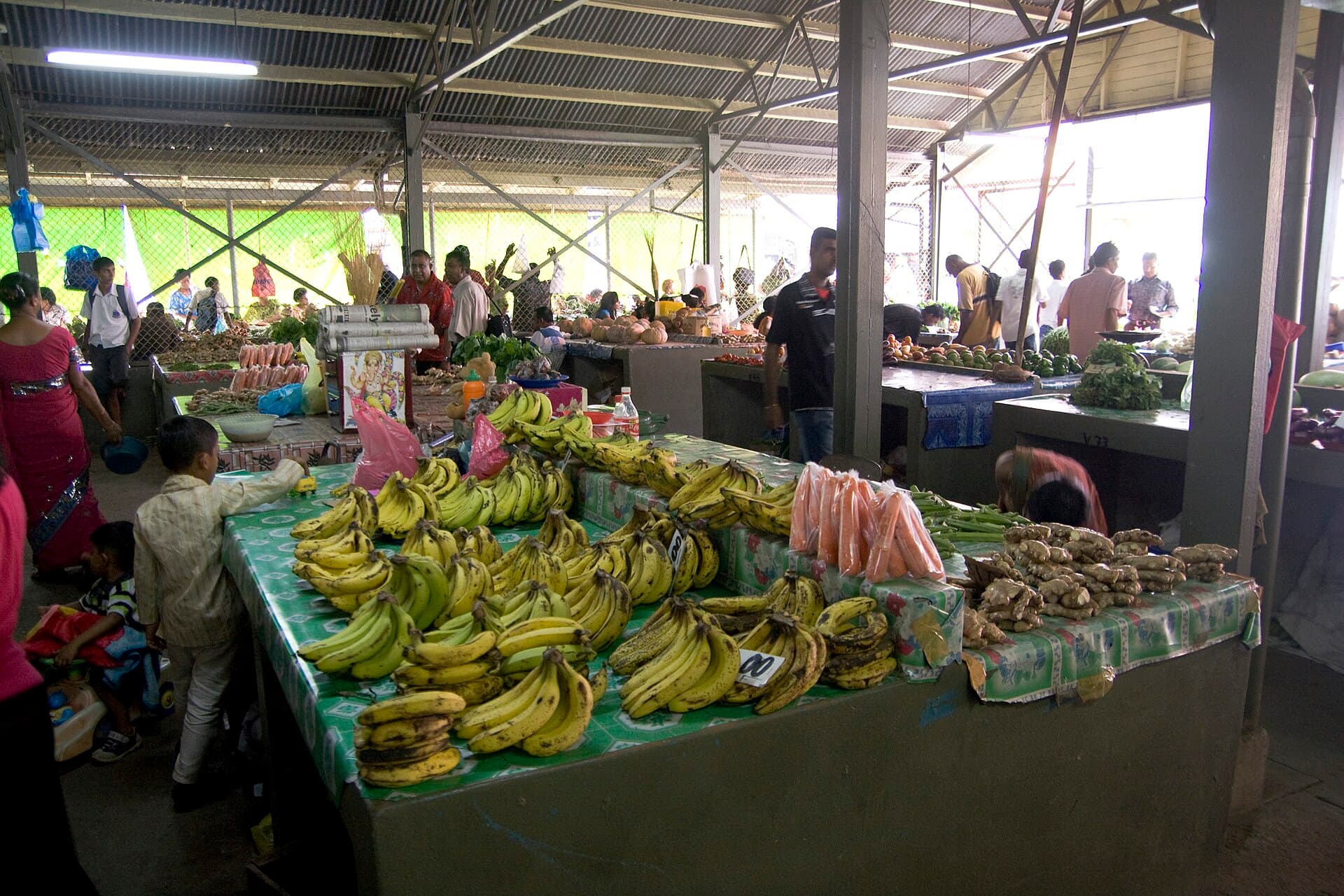
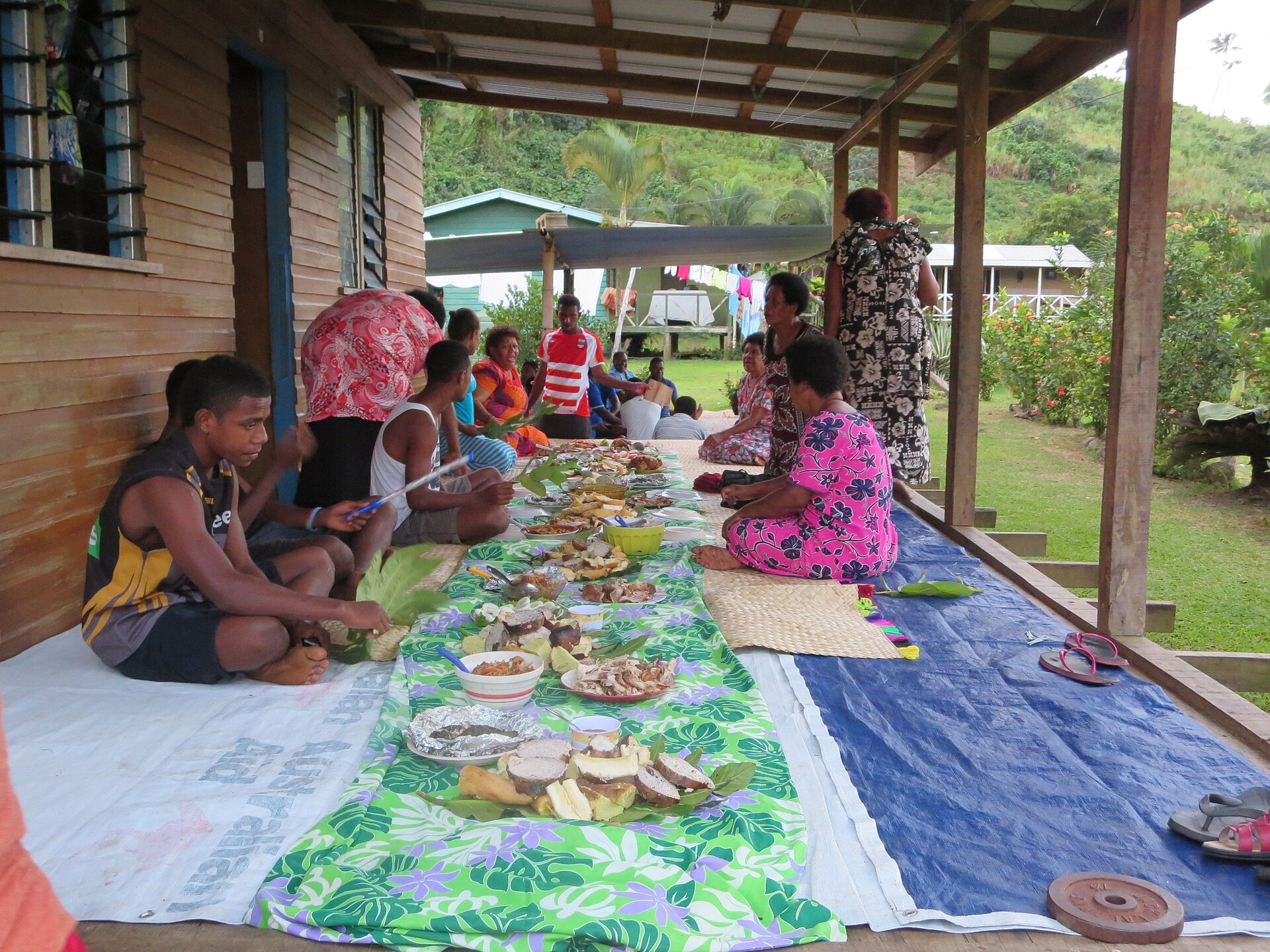
Fiji splits neatly into two price lists. The first one, the one grown or caught here, is cheap and very good: dalo and cassava, rourou, a bag of ginger, reef fish, market tomatoes, a roti parcel for lunch. Shop the municipal markets in Suva, Nadi, Lautoka or Sigatoka and a week of food for two lands under what one supermarket run costs at home.
The second list is everything that arrived on a ship. Imported groceries, appliances, building materials, a car, anything with a cord on it. Value added tax lands on top at 12.5 percent, cut from 15 percent on August 1, 2025, and freight and duty have already done their work before VAT gets there. New arrivals usually overshoot their first month's budget on exactly this stuff.
Rent is the swing factor; it moves with how foreign you want your house to feel. A plain local one-bedroom is not expensive. A furnished place in Suva's Domain or on Denarau with a generator, a gate and a landlord who quotes in U.S. dollars is a different market and a different number. Outside Suva you should also budget a car; the bus network is cheap but slow, and coverage drops off past the Queens Road.
About the dollars above. The Fiji dollar bought roughly 45 U.S. cents through September 2026, and that is the rate behind every conversion here. The Reserve Bank of Fiji posts a fresh one each morning, so pull the numbers again before you sign.
Why the budget is the easy part
The month is the affordable part. What Fiji asks for instead is commitment: an age, an employer, a school, or a pile of money that sits in a Fijian bank and then needs permission to come home again. Work out which of those you can live with while the weather is still an abstraction.
03 · The permits
What Fiji will actually let you file
Fiji's Ministry of Immigration lists seventeen permit categories. Strip out the ones for yachts, medical treatment, family reunion and research. Three are left that a working-age or retired American might realistically file:
Assured income: The closest thing to a retirement visa
Officially it's the Residence Permit on Assured Income. The principal applicant has to be 45 or older, carry health insurance, show income that arrives from outside Fiji, and agree not to take a job here. On approval you deposit about US$45,000, which the policy writes as FJ$100,000, into a resident account at a Fijian bank. Buy property in Fiji and the ministry could waive that deposit. Bring a family and you top the account up every year, roughly US$13,500 for two people or US$18,000 for a household of up to five, set in the policy at FJ$30,000 and FJ$40,000, respectively. The application fee is about US$290, billed as FJ$650.05. The ministry quotes 21 working days to decide.
A work permit belongs to your employer
There is no route where you find work after you arrive. A Fijian employer sponsors you, the file goes in under the category the ministry calls a work permit for non-citizen skilled contracted workers, and the permit is tied to that job. Same fee, plus a security bond payable once the permit is approved. The realistic openings are tourism and hospitality management, the regional agencies and NGOs clustered in Suva, diving, education and medicine.
If you're coming to study
The student permit needs a place at a recognized Fijian institution and proof you can pay for yourself. The University of the South Pacific has its main campus in Suva and it is the regional university for twelve Pacific countries, which makes it a more serious option than the size of Fiji suggests.
No nomad visa, and no plans for one
Several relocation sites describe a Fiji digital nomad visa with a savings test. It does not exist, and the ministry's own list of permit categories has no remote-work entry on it. That description belongs to Antigua and Barbuda's nomad residence and has been copied onto Fiji pages for years. Remote workers fall back on the visitor permit: land, work for clients abroad, leave before six months is up. That is a legal gray area rather than a permission, and it won't get you a bank loan, a lease a landlord takes seriously, or residency.
The three permits, as the ministry files them
| Visa | Category | Application cost | Processing | Difficulty | Guide |
|---|---|---|---|---|---|
| Residence Permit on Assured Income | retirement | — | ~60 days | 5/5 | Guide |
| Student Visa | student | — | ~30 days | 3/5 | Guide |
| Work Visa | skilled work | — | ~30 days | 4/5 | Guide |
About that data card
Four things about the table above. The Guide column is empty because Fiji has no published visa pages yet, so there is nothing to link. The application cost column is empty too, though Immigration bills the same fee on all three. The difficulty score prints out of ten and is stored out of five, so read 4/10 as four out of five. And the 60 days on the assured income row is our number, not Fiji's: the ministry publishes a standard of 21 working days, and files still slip past both.
04 · Land
You can buy less of Fiji than you think
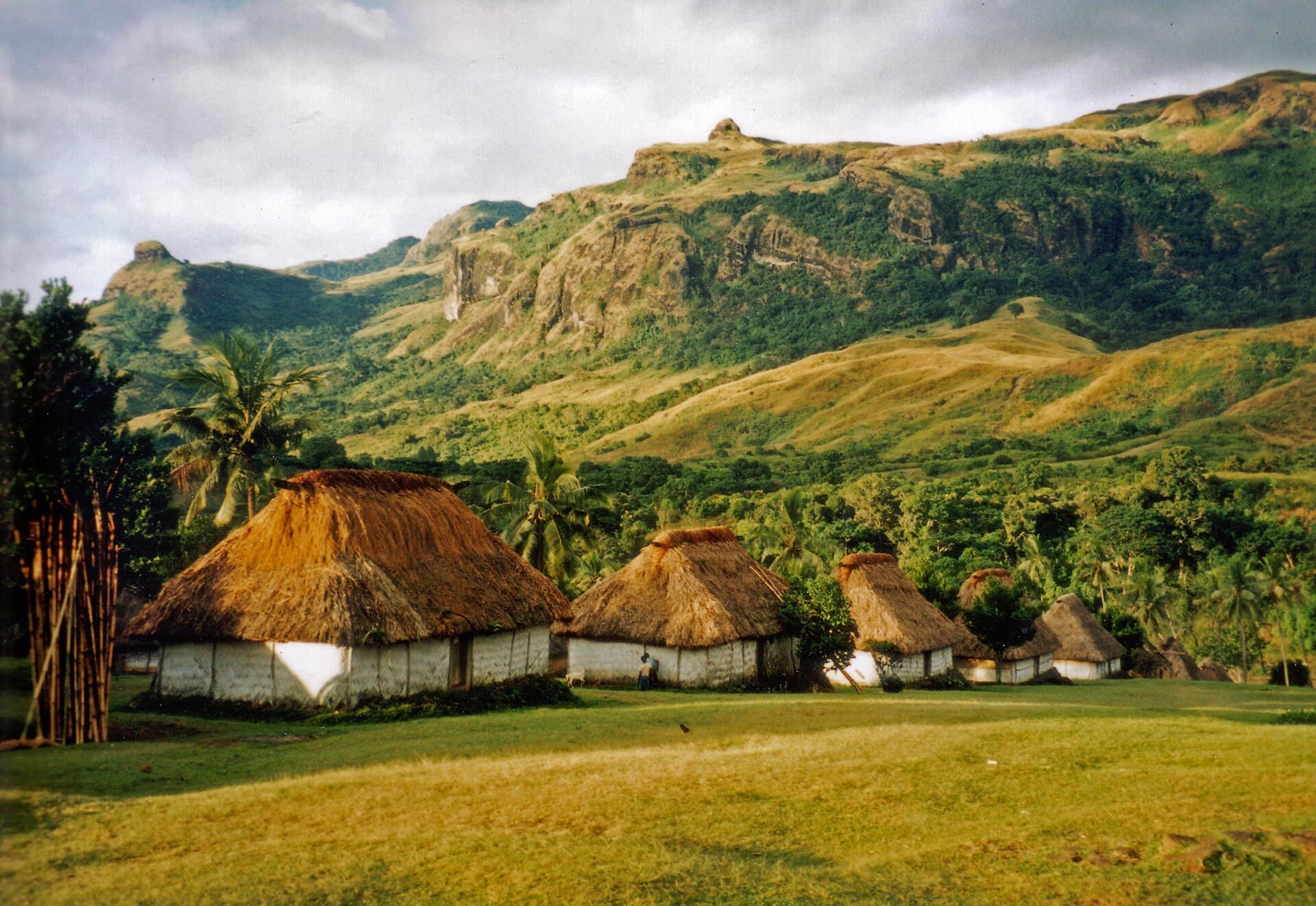
This is the chapter that surprises people, and the one to read twice before a listing gets its hooks in you.
Who owns the ground
About 87 percent of Fiji is iTaukei land, held communally by indigenous landowning units and administered in trust by the iTaukei Land Trust Board. It cannot be sold to anyone, Fijian or foreign. It can be leased, commonly for up to 99 years. Another 4 to 5 percent is State land, also lease-only. That leaves freehold at roughly a tenth of the country. It is the part of Fiji that changes hands outright.
What a foreigner can buy
The Land Sales Amendment Act of 2014 closed the obvious option. A non-resident cannot buy freehold or State land for residential use inside any town or city boundary. Four carve-outs survive: strata or unit title, which is how apartments and resort villas are sold; industrial or commercial property; a home inside an integrated tourism development such as Denarau or Naisoso; and running a licensed hotel. Outside the town boundaries you can still buy residential freehold, and anything over an acre needs the Minister of Lands to sign off.
Build within two years or pay
If you do buy freehold, the same act gives you 24 months to finish a new dwelling on it, and the build has to cost at least US$112,500, a floor the act sets at FJ$250,000. Miss the deadline and the penalty is 10 percent of the land's value every six months. Between the town-boundary ban, the build clock and the price of building materials this far out, the workable options for most Americans end up being a lease or a strata title. Go in expecting a lease and Fiji works fine. Go in expecting a deed and it does not.
05 · Distance
What being this far out costs you
Four North American nonstops
Fiji Airways flies straight to Nadi from Los Angeles, San Francisco, Honolulu and Vancouver.
Everything else arrives by sea
Furniture, a car, your tools. Freight and duty land on the price before VAT does.
Cyclone season, November to April
Fiji also sits on the Ring of Fire, so earthquake and tsunami planning is part of living here.
Serious care leaves the country
An air ambulance to Australia or New Zealand is three to three and a half hours, and it costs tens of thousands.
You'll be working at night
Fiji runs at UTC+12, which puts you most of a day ahead of every U.S. time zone.
The American community is small
Our own country notes rate it small, and it sits in pockets rather than in one place you can join.
06 · Health, tax and money
Health insurance, tax returns, and a bank that answers to Suva
The public system isn't yours
Fiji's public hospitals are free to citizens and permanent residents. Everybody else gets a bill. There are three divisional hospitals, in Suva, Lautoka and Labasa, with Colonial War Memorial in Suva acting as the national referral center. Expats mostly use the private side: Oceania Hospital and Pacific Specialist Healthcare, both in Suva. A private GP visit runs about US$22 to US$36, billed as FJ$50 to FJ$80; a specialist costs roughly twice that. For anything past that, the plan is a flight out. U.S. government guidance is blunt about the condition attached to it: an evacuation gets arranged once somebody can show insurance or pay up front. Colonial War Memorial does keep a recompression chamber, which matters in a country whose main draw is under water. Everything else serious goes on a plane.
Fiji taxes what you earn anywhere
Become a Fijian tax resident and Fiji taxes your worldwide income. You get there by living in Fiji for more than half the income year, or by making your home here. The first US$13,500 or so of chargeable income is untaxed, a threshold Fiji sets at FJ$30,000. Above it, the rates are 18 and 20 percent. Non-resident employees pay 20 percent from the first dollar. There's no wealth tax, capital gains sits at 10 percent, and stamp duty on a conveyance is 3 percent.
Fiji and the IRS have no deal
The Fiji Revenue and Customs Service lists eleven double-tax agreements. Australia, New Zealand, the United Kingdom, Japan, Korea, India, Singapore, Malaysia, Papua New Guinea, Qatar and the United Arab Emirates are on it. The United States isn't. The 1040 doesn't stop when you leave, and an FBAR joins it once your overseas accounts pass the reporting line. Fiji does grant unilateral relief for tax you paid elsewhere, so the outcome is usually survivable. However, it's worked out case by case instead of written into a treaty. Get both returns priced together before you commit to a tax year here.
The Reserve Bank has to approve the exit
Fiji runs exchange controls. Sending money out of the country, including repatriating capital, generally needs Reserve Bank approval. On the assured income permit, that's explicit: the ministry says a permit holder needs Immigration clearance before the Reserve Bank even considers a repatriation. Money goes in easily. Money comes out on somebody else's timetable.
07 · Where to live
Fiji town guides, when we have them
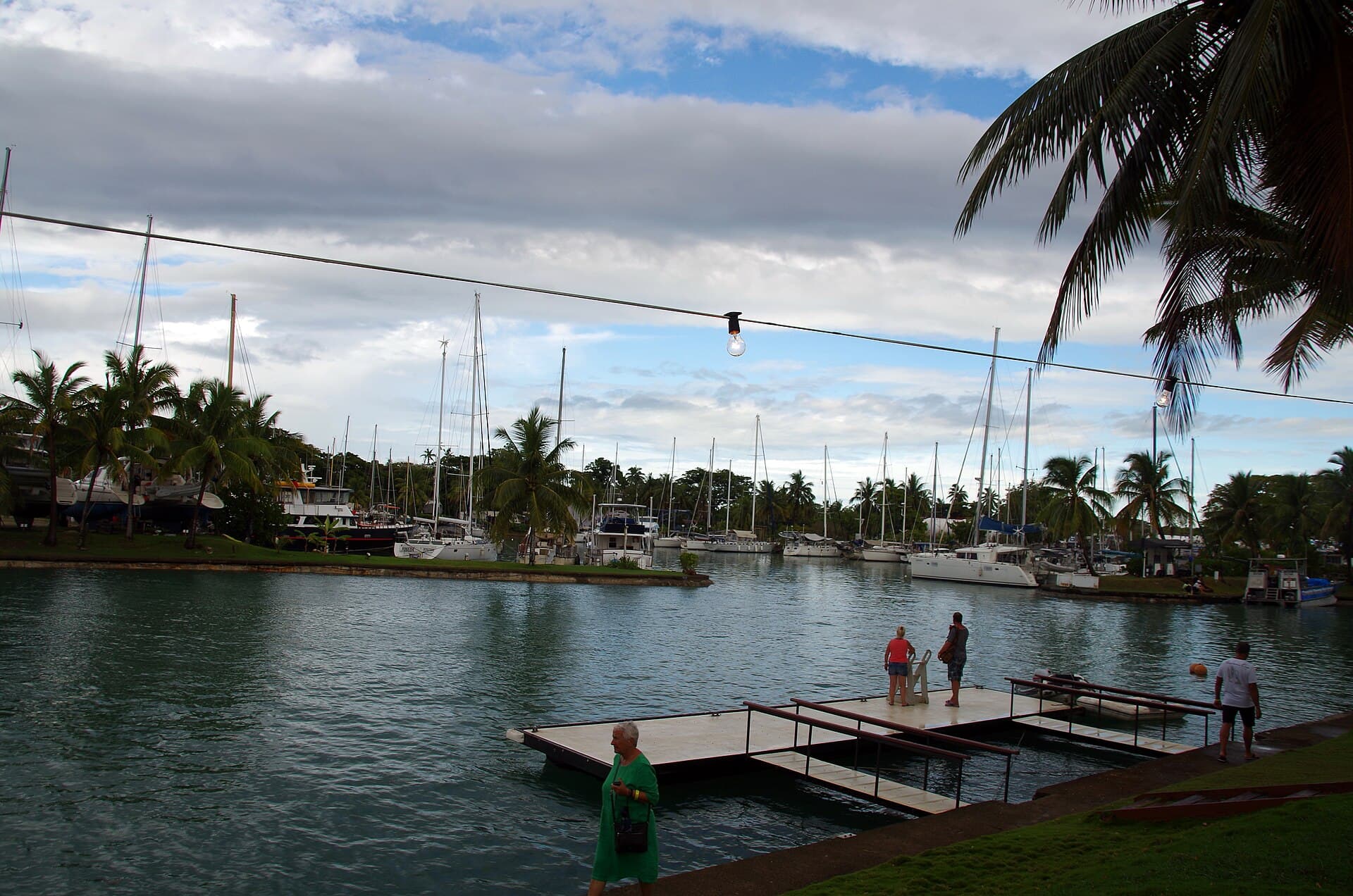
Suva
Capital with city life
Fiji's capital and biggest city, with the best hospitals, the main campus of the University of the South Pacific, the embassies and a big municipal market. It sits on the wet side of Viti Levu, so expect rain. The beaches are elsewhere, so this is city life, not resort life.
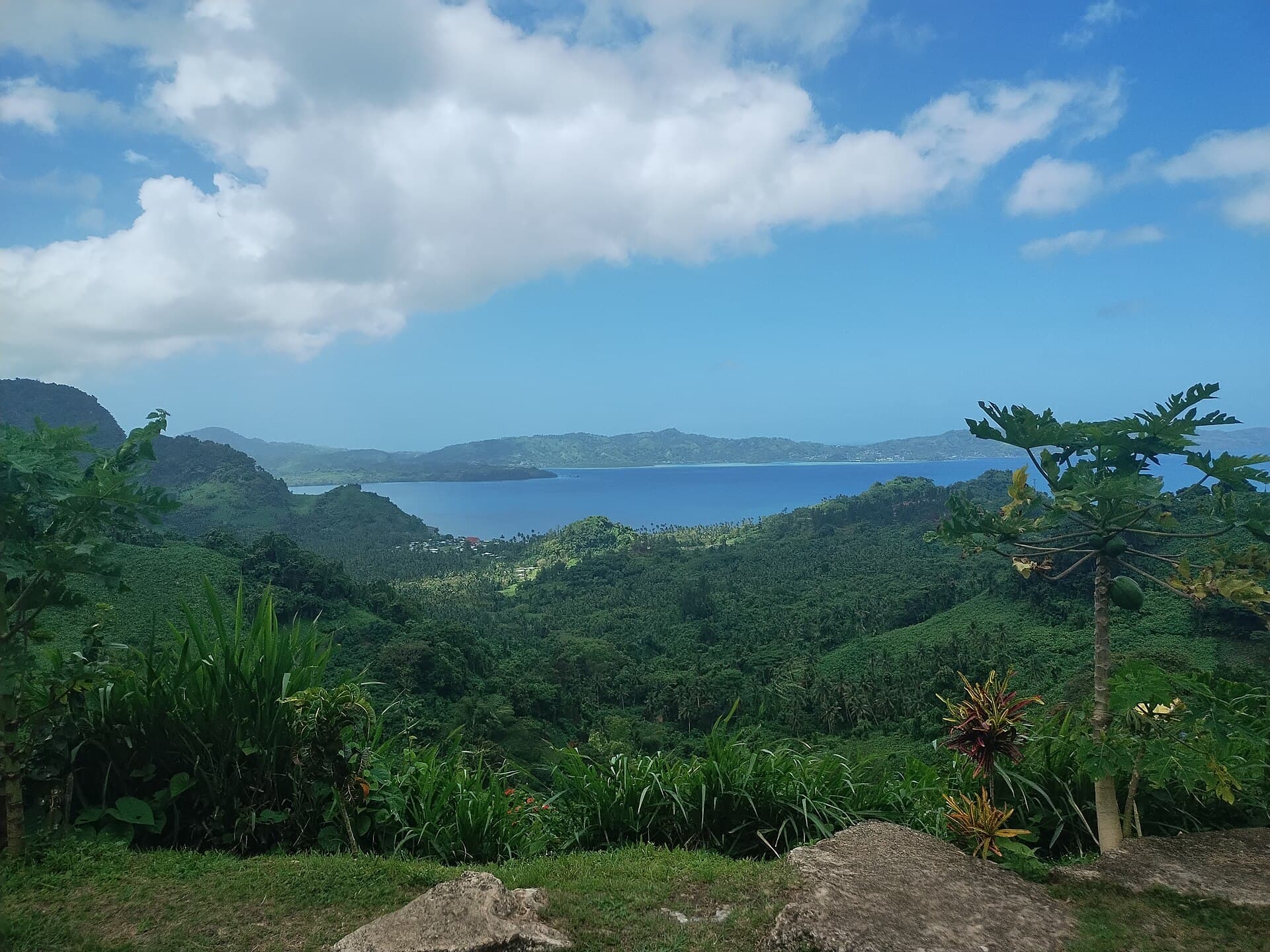
Nadi
Airport town
The gateway town beside Fiji's international airport, with a big Hindu temple, a busy Main Street and boats out to the Mamanuca islands. Drier and sunnier than Suva. It's more service town than pretty town, and the best beaches are a drive or a boat ride away.
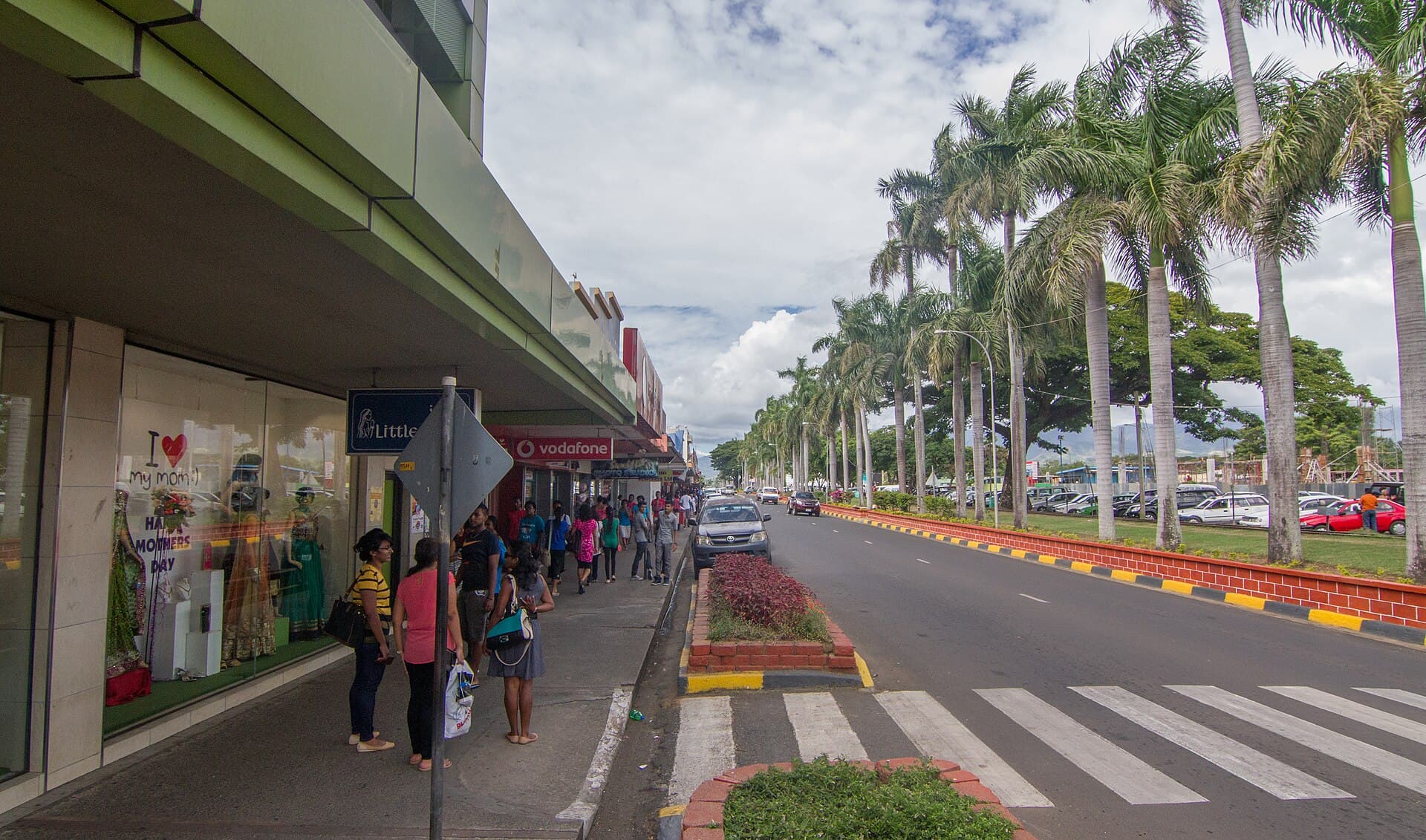
Savusavu
Hot springs harbor town
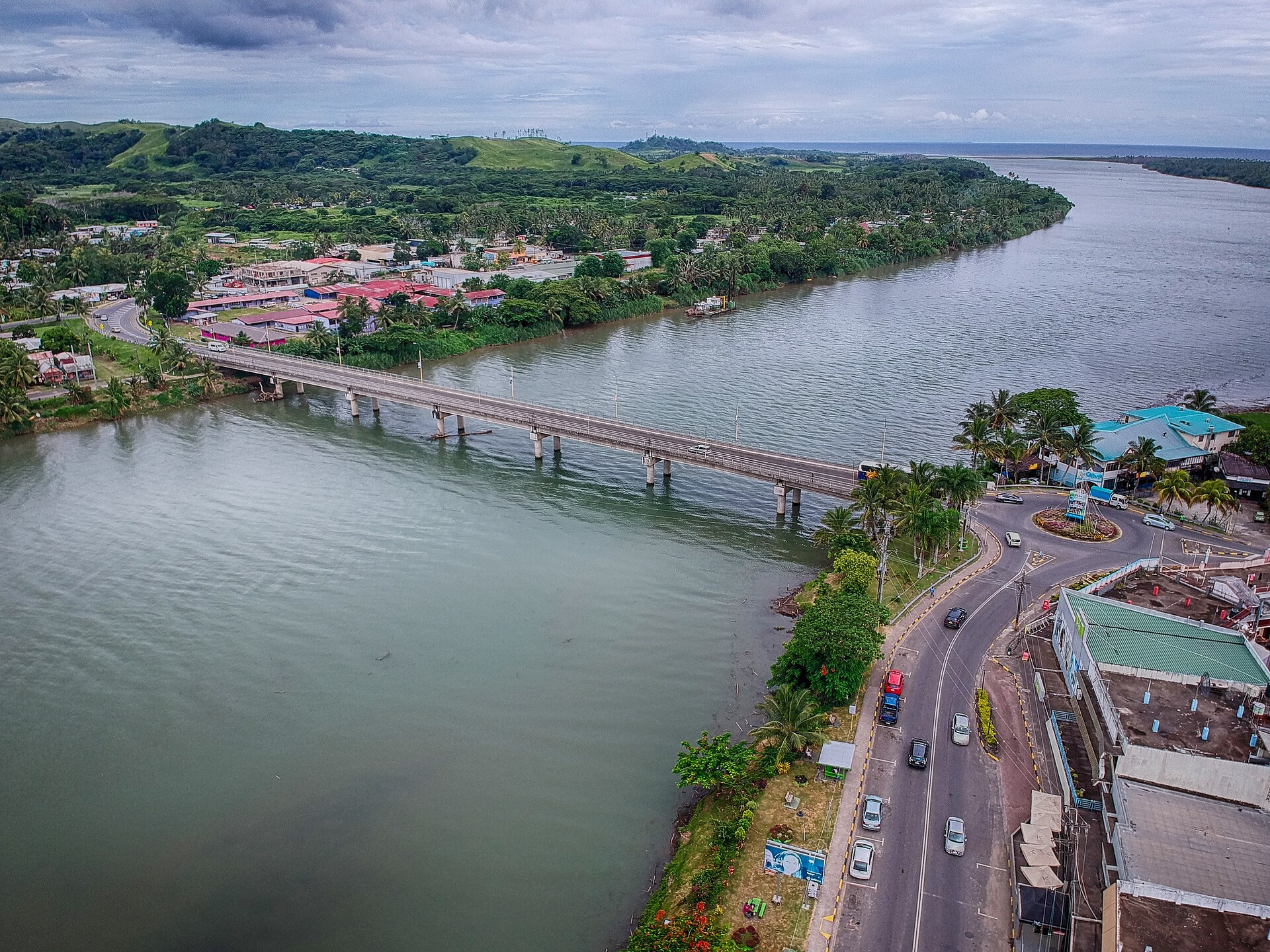
A sleepy harbor town on Vanua Levu known for dive sites, hot springs and a yacht-friendly bay with a small expat community. Quiet and green. You're on a smaller island with limited shopping and healthcare, and a flight or ferry from the main island.
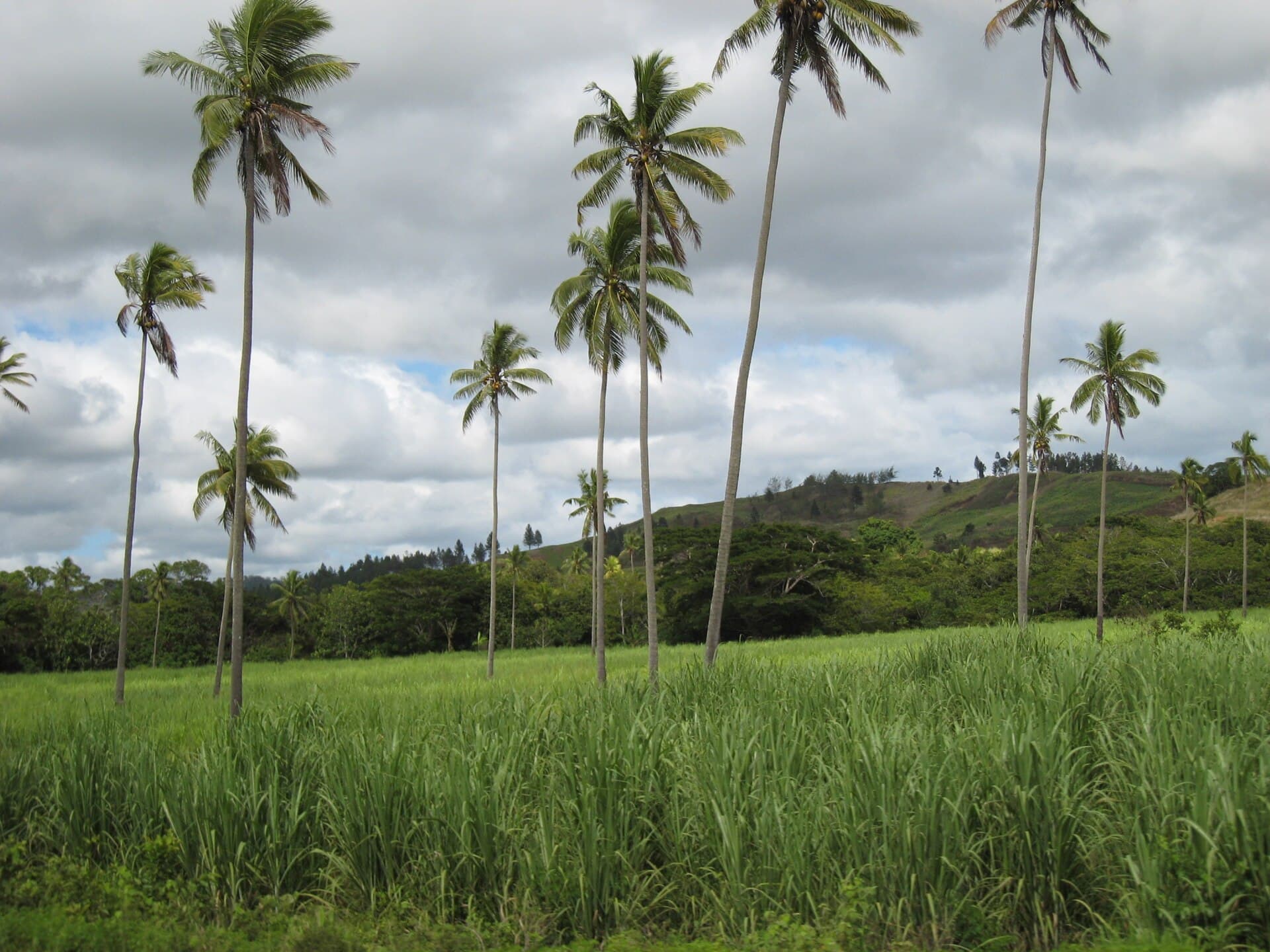
Lautoka
Sugar city
Fiji's second city and sugar port on the west coast, a short drive from Nadi and the airport. It has a big market, a long waterfront and lower prices than the resort belt. It's a working port with few expats and few frills.
Labasa
Sugar belt town
The main town of northern Vanua Levu, with a large Indo-Fijian community and a busy market, set in sugar country. Very few foreigners and prices are low. Expect limited dining and nightlife, and a flight or ferry to reach Suva.
Five places people pick, and who picks them
Suva
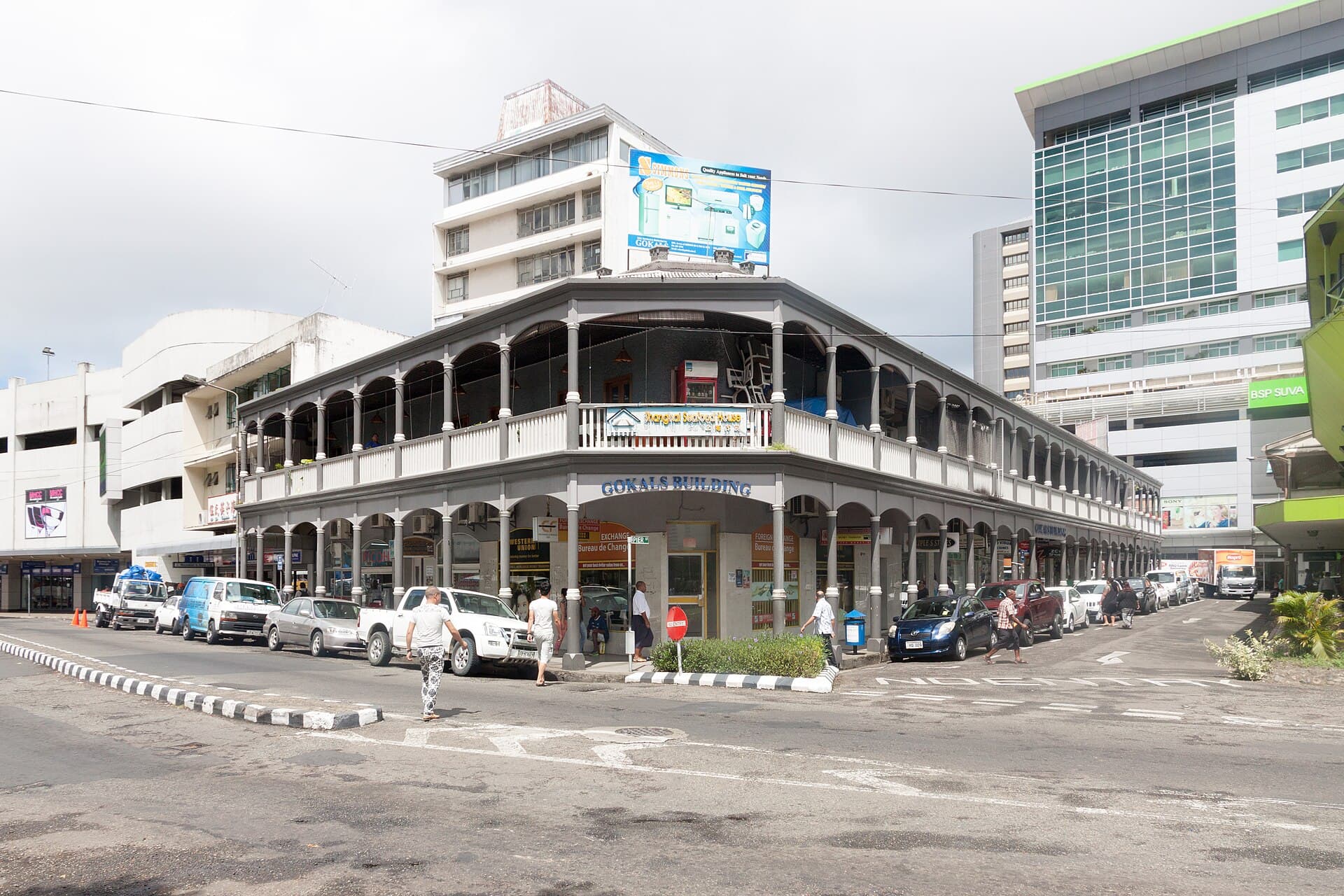
The capital sits on the wet southeast corner of Viti Levu; it's the closest thing Fiji has to a city. The national referral hospital is here, along with the embassies, regional agencies, university and a restaurant scene. It rains far more than the dry western side, and the traffic gets worse than the population suggests. Work that hires foreigners clusters around all of it.
Nadi and Denarau
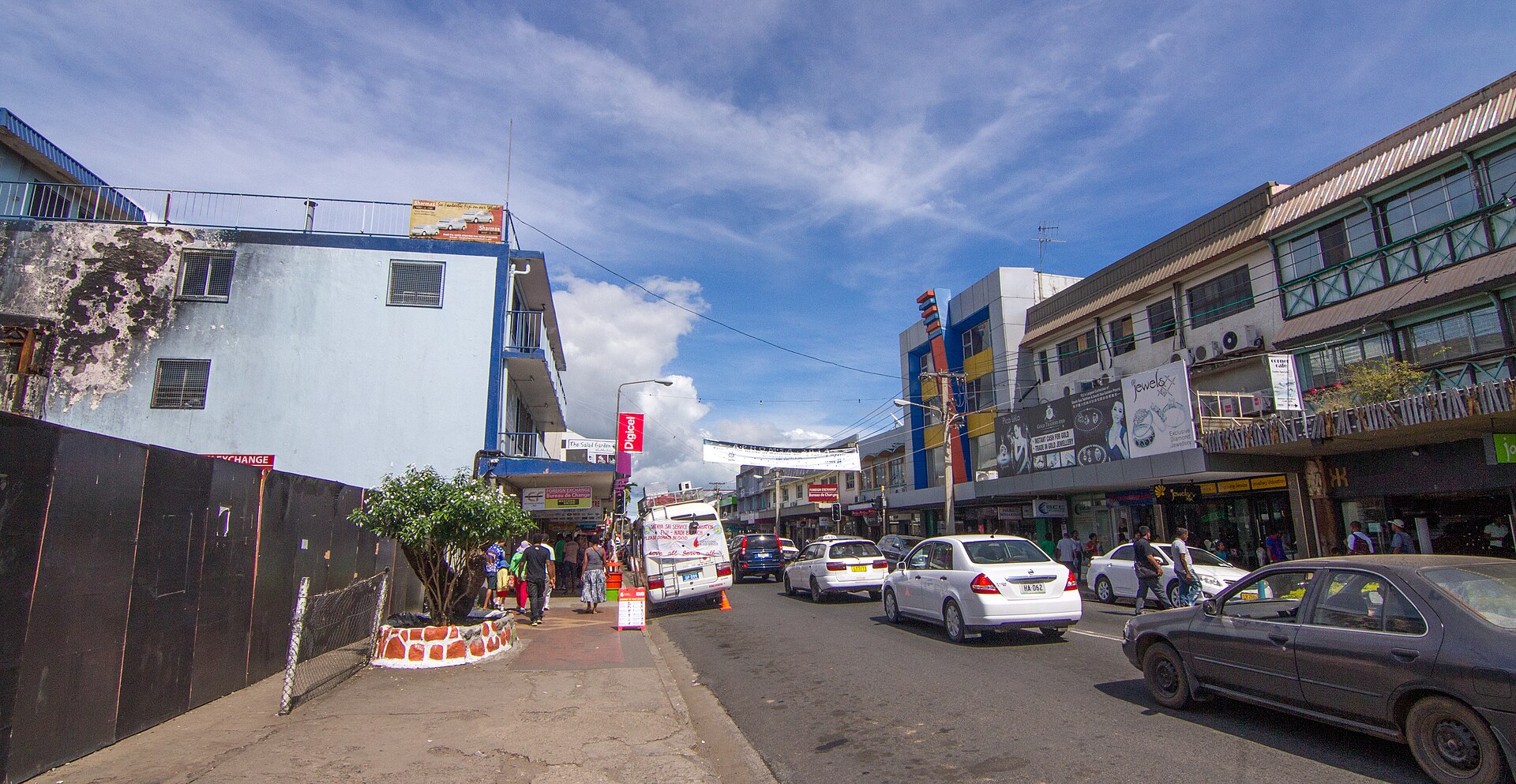
Nadi is the airport town: dry, hot, practical, and the one place with a flight home. Denarau, ten minutes away, is the gated marina-and-golf island where a lot of foreign money sits, and one of the places a non-resident can legally own a home, because it counts as an integrated tourism development. It's comfortable but not really Fiji.
Savusavu
On Vanua Levu, Fiji's other large island, wrapped around a sheltered bay with hot springs in the middle of town. It's drawn a small foreign community for decades, plus a yacht crowd, and a health center you wouldn't want to lean on. Of the five places here, it's the farthest from a divisional hospital.
Pacific Harbour
An hour and a half west of Suva on the Coral Coast, built as a resort development in the 1970s and now a strip of expat houses, diving operators and the jumping-off point for rafting the Navua river. Close enough to Suva for a specialist appointment, far enough for peace and quiet.
Lautoka
A working sugar port in the northwest, on the dry side of Viti Levu. Prices here aren't set by foreign demand, there's no expat scene to speak of, and the divisional hospital serves the whole western half of Viti Levu. Worth a look if you want ordinary Fiji at ordinary prices.
A very short list of specialists

Lynette Wilson
Fiji Local Guide
Lynette Wilson ran a South Pacific tour company out of the United States before moving to Fiji, where she has now lived for 15 years. Book her when the question is which town, not which permit.
Learn more
Find Your Feet Fiji
Fiji Relocation Plans
Find Your Feet Fiji does corporate relocations, which means schools, clinics, clubs and landlords are a checklist to them rather than a research project. Useful if an employer is moving you on a deadline.
Learn more

Questions Americans ask before they book the flight
Can foreigners buy property in Fiji?
Only a narrow slice of it. Roughly 87 percent of Fiji is iTaukei land that cannot be sold to anyone and is leased instead. Since 2014 a non-resident cannot buy freehold residential land inside a town or city boundary. You can still buy an apartment on strata title, a home inside a resort development such as Denarau, commercial property, or freehold outside the town boundaries.
Do you pay tax in Fiji on U.S. income?
If you become a Fijian tax resident, yes. Fiji taxes a resident on income from everywhere, not just on money earned in Fiji, and you get there by spending more than half the income year in the country or making your home there. The first US$13,500 or so is untaxed, a line Fiji draws at FJ$30,000, then rates are 18 and 20 percent. Fiji has no tax treaty with the United States, though it grants unilateral relief for foreign tax paid.
What is healthcare like in Fiji?
Adequate for routine care in the towns, thin for anything complicated. Public hospitals are free to citizens and permanent residents only, so foreigners use private clinics such as Oceania Hospital in Suva. Expect about US$22 to US$36 for a private GP visit. Complex surgery and cancer care mean an air ambulance to Australia or New Zealand, which is why evacuation coverage is not optional.
Is Fiji safe for Americans?
The State Department puts Fiji in Level 1 and then flags one specific place inside it: Colo-i-Suva Forest Park near Suva, where it warns of violent robbery and assault. The everyday risk is opportunistic theft in Nadi and Suva. OSAC notes Fiji's police are professional but under-resourced and often lack vehicles to respond, so prevention matters more than reporting.
Does Fiji have a retirement visa?
Not by that name. The Residence Permit on Assured Income does the job. You must be 45 or older, hold health insurance, show income arriving from outside Fiji, and agree not to work there. On approval you deposit about US$45,000, which Fiji sets at FJ$100,000, in a local bank account. That deposit can be waived if you have bought property in Fiji instead.
How much money do you need to live in Fiji?
Plan on about $1,150 a month on your own and $1,900 for two, which buys a roof, food, getting around and the utility bills at local prices. Town-center one-bedrooms sit near $550 and fall toward $350 further out. The column that wrecks budgets is imports: overseas groceries, a vehicle, anything with a plug. Budget above these numbers for year one, not on them.
Does Fiji have a digital nomad visa?
No. Fiji has never launched one, and the ministry's own list of permit categories has no remote-work entry. Sites describing a Fiji nomad visa with a savings requirement are repeating Antigua and Barbuda's program under the wrong flag. Remote workers use the visitor permit instead and leave within six months, which is tolerated rather than authorized.
Can Americans move to Fiji?
Yes, but not casually. A U.S. passport gets you a visitor permit on arrival for up to four months, usually extendable by two more, and that permit does not let you work in Fiji or settle. To stay you need one of three permits: assured income if you are 45 or older, an employer-sponsored work permit, or a student permit. There is no self-sponsored route for a working-age person.
Sources
- Residence Permit on Assured Income · Fiji Ministry of Immigration (checked 2026-09-19)
- Policy on Residence Permit on Assured Income · Fiji Ministry of Foreign Affairs (checked 2026-09-19)
- Fiji Permits, all categories · Fiji Ministry of Immigration (checked 2026-09-19)
- Visa exempted countries · Fiji Ministry of Immigration (checked 2026-09-19)
- Personal income tax, salary and wage earners · Fiji Revenue and Customs Service (checked 2026-09-19)
- VAT calculation notice, rate cut to 12.5 percent · Fiji Revenue and Customs Service (checked 2026-09-19)
- Land Sales (Amendment) Act 2014 · Parliament of Fiji (checked 2026-09-19)
- Fiji Investment Climate Statement · U.S. Department of State (checked 2026-09-19)
- Fiji Travel Advisory · U.S. Department of State (checked 2026-09-19)
- Fiji Country Security Report · OSAC (checked 2026-09-19)
- Fiji election timelines for 2026 and 2027 · Pacific Islands News Association (checked 2026-09-19)
- Fiji Airways drops Nadi to Dallas · One Mile at a Time (checked 2026-09-19)
- Fiji's strengthening internet infrastructure · APNIC (checked 2026-09-19)
- FJD to USD mid-market rate · Xe (checked 2026-09-19)
Fiji is one answer. Is it yours?
Talk to an Expatsi advisor about putting together your personal roadmap to a new life abroad.
Why not you?