Moving to Uruguay
Moving to Uruguay: the calm, welcoming corner of South America
Marriage equality since 2013, the continent's steadiest democracy, universal healthcare, and a Sunday asado with your name on it. Here is the honest, up-to-date guide.
A small, calm country with marriage equality since 2013, the steadiest democracy in South America, and a Sunday asado that turns strangers into neighbors. Here is the honest guide.

By Jen Barnett, Co-founder, Expatsi
Reviewed and updated August 19, 2026 · 11 min read
01 - The case for Uruguay
Why Americans are looking at Uruguay

Uruguay is the quiet one. It sits between Argentina and Brazil, it is about the size of Washington state, and it doesn't spend much energy telling the world how good it has it. That is exactly why people miss it.
Here is what wins Americans over. Same-sex marriage has been legal since 2013, two years before it was in the United States. Uruguay is the only country in South America that the Economist rates a full democracy. It is the most peaceful country on the continent, with universal healthcare, legal cannabis, and a long habit of minding its own business about how you live and who you love. People call it the "Switzerland of South America", and for once the nickname fits.
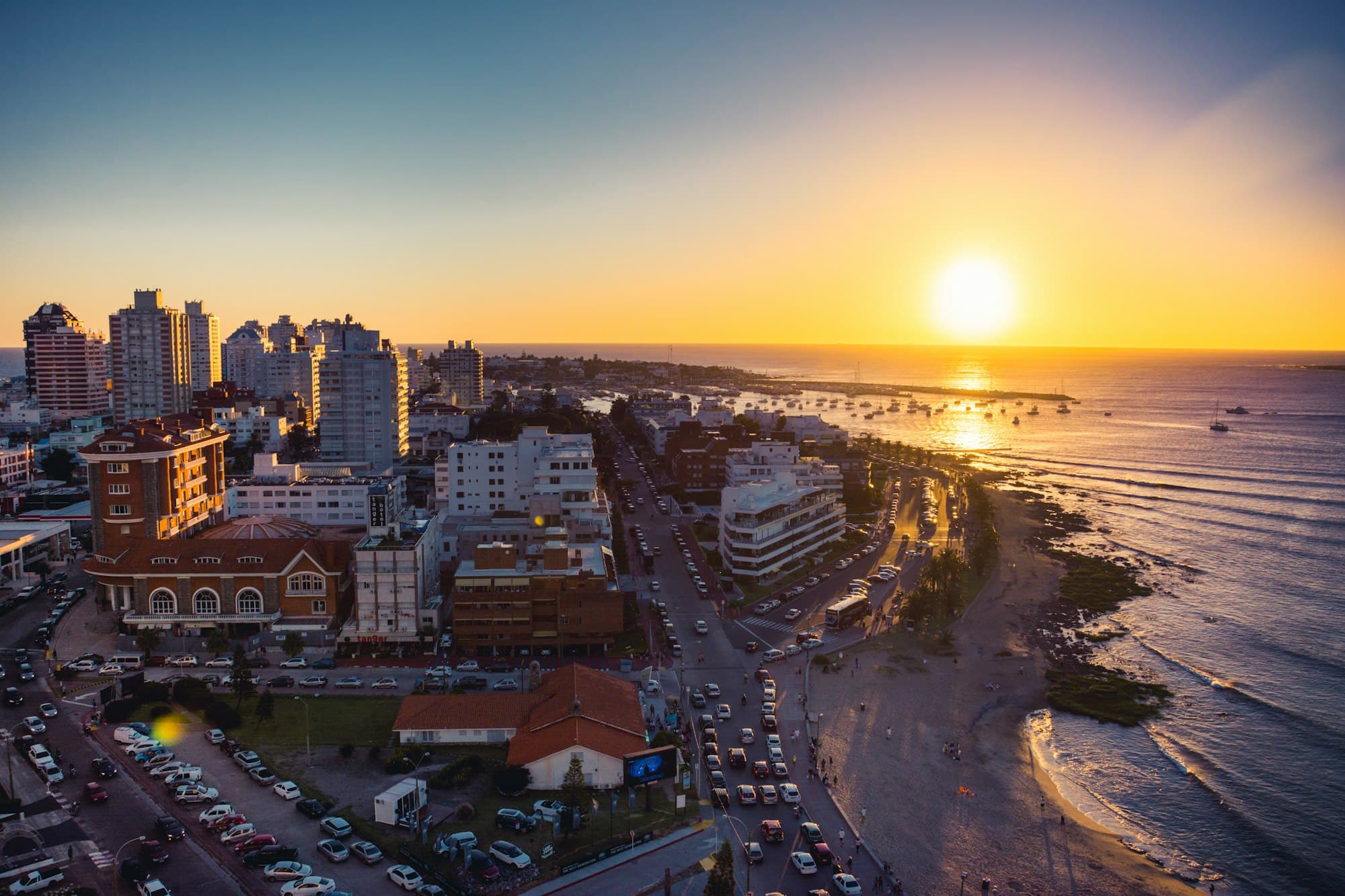
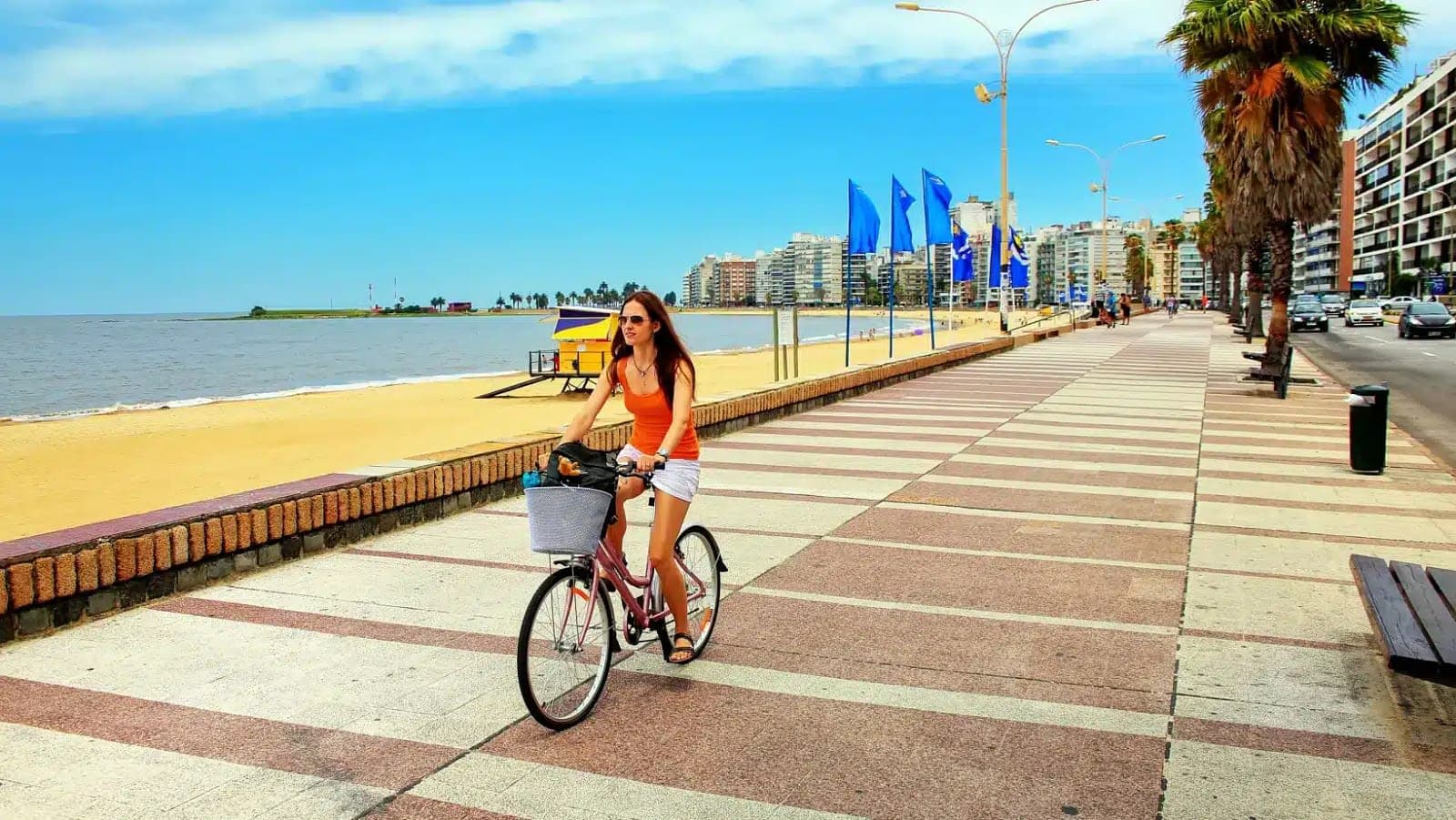
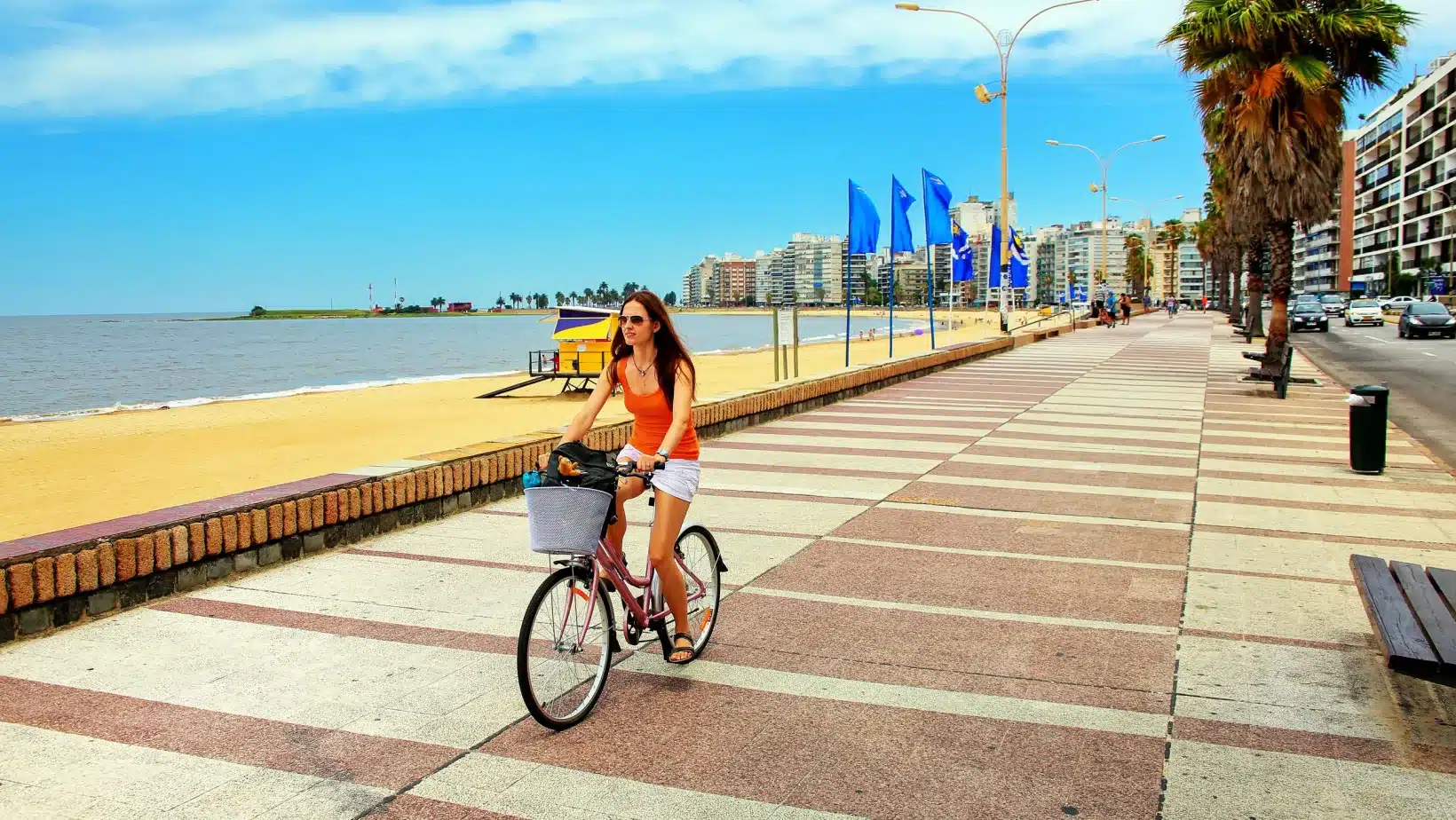
It's also a real place with weather and seasons. The Atlantic beaches fill up in January and empty out in July. Montevideo has a 14-mile waterfront promenade, the rambla, where the whole city walks, runs, and drinks mate at sunset. The interior is rolling green cattle country. And every weekend, somewhere close by, someone is lighting a wood fire for asado (a barbecue social).
Who does well here? Retirees who want good healthcare and calm over cheap and chaotic. Remote workers who like being just two hours ahead of New York. Families drawn to safe streets and a strong public system. And plenty of LGBTQ Americans who are done wondering whether their rights are up for debate. About 3.4 million people live in the whole country, so it feels small and knowable in the best way.
Here is the catch
Uruguay isn't cheap by Latin American standards. Groceries and dining out cost real money, closer to a mid-size U.S. city than to Mexico or Ecuador. You'll want to learn Spanish, because English is not widely spoken outside tourist spots and a few offices. Winters are gray, damp, and colder than the beach photos suggest. It's also far: about 10 hours in the air from the East Coast, with no quick weekend trips home. If you want cheap and tropical, keep looking. If you want stable, safe, and genuinely welcoming, read on.
- Cost of living (single)
- $1,500/mo
- Safety index
- 65/100
- Internet speed
- 70 Mbps
- Language
- Spanish
- Capital
- Montevideo
- Population
- 3.4M
02 - The numbers
What it costs to live here
$1,500
Monthly budget, one person
all-in, comfortable
$2,650
Monthly budget, a couple
rent included
$4,250
Monthly budget, a family
two kids, mid-range
$600
One-bedroom in Montevideo
less outside the capital
$17
Dinner out for one
the pricey part of life here
$43
Fast home internet, monthly
about 70 Mbps, reliable
What your money actually buys
Let's be straight about the money, because Uruguay surprises people. Rent is the affordable part. A nice one-bedroom on the Montevideo rambla runs around $600 a month, and you can pay less a few blocks inland or in a smaller city. A couple lives comfortably on about $2,650 a month with rent included, and a single person on roughly $1,500 per month.
The good news is what that buys: clean cities, real public services, tap water you can drink, and a health system that actually works. Rent varies by where you plant yourself. Expect to pay $800 to $2,000 for a place in Punta del Este in season, $600 to $1,200 across Montevideo's neighborhoods, and $400 to $900 in a smaller city like Colonia or Salto. Utilities and a good internet plan add up to something modest on top.
The catch is the grocery bill. Imported goods, electronics, and cars are taxed heavily, and even local staples cost more than you would guess. Beef and wine are the happy exceptions, both excellent and cheap. Dinner out is a treat, not a default, at around $17 per person. People who move here from a big U.S. city usually find their rent drops har, while their supermarket run stays about the same.
None of these are official figures. They are Expatsi's cost-of-living estimates as of 2026, meant to get you in the right ballpark before you build a real budget for your own life.
Why the budget and the visa line up
Uruguay doesn't set a legal minimum income for residency. In practice, officials want to see you can support yourself, and the amounts people are approved with (roughly $1,500 a month for one person, more for a couple) land right around what it actually costs to live here. Prove you can cover your own life, and you're most of the way to completing the paperwork.
03 - A country that has your back
Rights that are already settled

If you are moving partly to feel safe being yourself, this is Uruguay's strongest card.
The most LGBTQ-friendly country in Latin America
Uruguay decriminalized homosexuality in 1934, decades ahead of most of the world. It banned discrimination based on sexual orientation in 2004, recognized civil unions in 2008 and same-sex adoption in 2009 (both firsts in Latin America), and legalized same-sex marriage in 2013. In 2018, it passed one of the world's most far-reaching trans rights laws, letting people change their legal gender without surgery or court battle. Americas Quarterly named it the most LGBTQ-friendly country in Latin America, calling it a model for social inclusion. And none of it came with a bitter culture war; polls showed most Uruguayans already agreed. Every September, Montevideo holds the Marcha de la Diversidad, a march more than a party, and Punta del Este runs its own Pride every summer. Beyond the laws, the everyday feeling is what people remember: Montevideo has been ranked the most gay-friendly city in Latin America. Same-sex couples tend to describe a country that simply does not make a thing of it.
The steadiest democracy on the continent
Uruguay is the only South American country the Economist Democracy Index rates a full democracy, 15th in the world in its 2024 ranking, ahead of the United States. It has the longest democratic tradition in the region, power changes hands calmly (the 2024 election was praised worldwide for how smoothly it ran), corruption is among the lowest in the Americas, and the press is free. This is the country that gave the world Pepe Mujica, the president who lived on a farm and gave away most of his salary. After the noise of recent U.S. politics, a lot of people find all of that genuinely restful.
Safe, with one honest asterisk
Uruguay is the most peaceful country in South America on the Global Peace Index. Violent crime is low. Here is the catch: petty theft and the occasional street robbery do happen in Montevideo, and the US State Department keeps Uruguay at a Level 2 "exercise increased caution" advisory, the same level as France or the UK. You watch your phone and your bag the way you would in any city, and you get on with your life. Uruguay also sits near the top of the region for press freedom and quality of life, and it runs almost entirely on renewable electricity, which tells you something about how the place is managed. Attitudes are most relaxed in Montevideo and along the coast; small interior towns are more conservative, and trans Uruguayans still face real discrimination in daily life despite the strong laws.
What comes standard
Marriage equality
Legal since 2013, with joint adoption and IVF access for same-sex couples.
A full democracy
The only one in South America, with peaceful transfers of power and low corruption.
The region's safest
Number one in South America on the Global Peace Index, with low violent crime.
Universal healthcare
A public system plus affordable private mutualista plans that expats can join.
Personal freedom
Legal cannabis, legal abortion, and a strong separation of church and state.
US-friendly hours
Just two hours ahead of New York, so remote work and family calls stay easy.
04 - Getting residency
Your visa options, in plain English
Uruguay keeps immigration refreshingly simple. There is no points test and no golden-visa price tag. You mostly need to show you can support yourself and that you have a clean record. Here are the doors.
Test the water: the digital nomad permit
If you work remotely for clients outside Uruguay, the digital nomad permit lets you stay 180 days, renewable once for a full year. The fee is tiny, and you apply online after you arrive. It is the low-commitment way to try the country on. See the Uruguay residency route for remote workers.
The real move: temporary or permanent residency
For an actual move, Uruguay does something rare. You can apply straight for permanent residency instead of grinding through years of temporary status first. You prove stable income from any source (a pension, Social Security, investments, remote work, or a business), hand over an FBI background check and local health certificate, and you're in. One application can cover your spouse and kids, and you can file from inside the country after entering as a tourist. Plan on roughly a year for the full process, during which you hold a provisional ID and can already live here. Details on the permanent residency and retirement route.
Then, if you want it, citizenship
After five years of legal residency (three if you are married to a Uruguayan), you can apply for citizenship, as long as you have spent real time in the country and can hold a conversation in Spanish. Uruguay allows dual nationality, so you keep your U.S. passport. A Uruguayan passport gets you visa-free travel to around 150 countries, Europe's Schengen zone included.
Compare Uruguay's residency routes
| Visa | Category | Application cost | Processing | Difficulty | Guide |
|---|---|---|---|---|---|
| Permanent Residency | retirement | — | ~60 days | 3/5 | Guide |
| Temporary or Permanent Residency | self employment | — | ~30 days | 2/5 | Guide |
05 - The practical stuff
Healthcare, taxes, and everyday life
Healthcare that people actually praise
Uruguay runs a two-track system. There is free public care through ASSE, and there are private nonprofit cooperatives called mutualistas that most residents and expats join for something like $50 to $250 a month depending on age. You get a doctor, hospitals, and prescriptions without the US-sized bill. It's one of the reasons that retirees rank Uruguay so highly.
Taxes are gentler than you fear
Uruguay taxes on a territorial basis, which means it generally does not touch your foreign pension or foreign income. New residents also get a tax holiday on foreign investment income: either a full exemption for ten years or a flat 7% rate, your choice. There is no inheritance tax, and no wealth tax on assets you hold outside Uruguay. The one thing that does not change is Uncle Sam; as a US citizen you still file a US return every year, though foreign tax credits and the usual exclusions keep most people from being taxed twice. Tax rules shift and the details get technical, so run your own situation past a cross-border accountant before you commit.
Getting around and settling in
You do not need a car in Montevideo; the city is walkable and buses go everywhere, though a car helps if you settle on the coast or in the countryside. Your US license works while you get residency sorted, and there are international and bilingual schools in Montevideo and around Punta del Este for families. Opening a local bank account is doable once your residency is in motion, though it takes patience and paperwork, so keep a U.S. account and a good currency service for the first stretch.
Pets, mate, and the little things
Uruguay is genuinely pet-friendly, so the dog can come. The whole country runs on mate, the bitter green tea everyone carries in a thermos with a metal straw. You'll see it on the rambla, at work, and at every asado. Learn to accept a gourd when it is offered, don't stir it with the straw, and you have made a friend.
This guide is dated on purpose
Income expectations, the 2026 tax holiday, and residency timelines all move over time; the figures here are current as of 2026. Treat them as a starting map, not legal advice, and confirm the specifics with an immigration lawyer or accountant before you file anything.
06 - Where to live
Three places to plant yourself
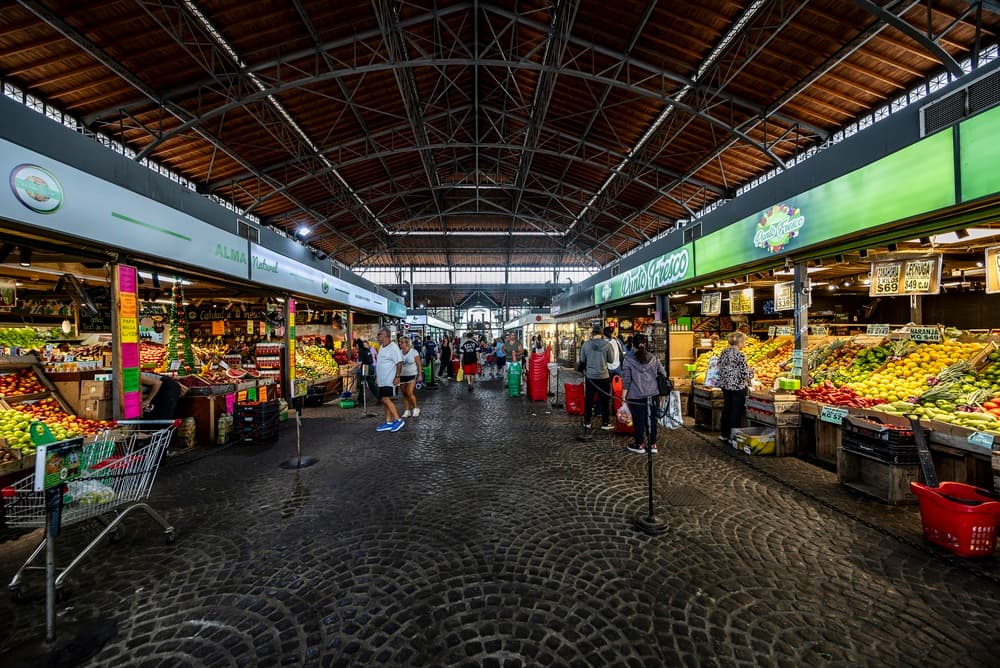
Montevideo
City life on the water
Half the country lives in the capital, and it is where most expats start. Walkable neighborhoods like Pocitos and Ciudad Vieja, the endless rambla, theaters, and the best healthcare in the country.

Punta del Este
Beaches and glamour
South America's flashiest beach resort in summer and a calm seaside town the rest of the year. Higher prices, big-sky sunsets, and Casapueblo down the coast.

Colonia del Sacramento
Colonial calm
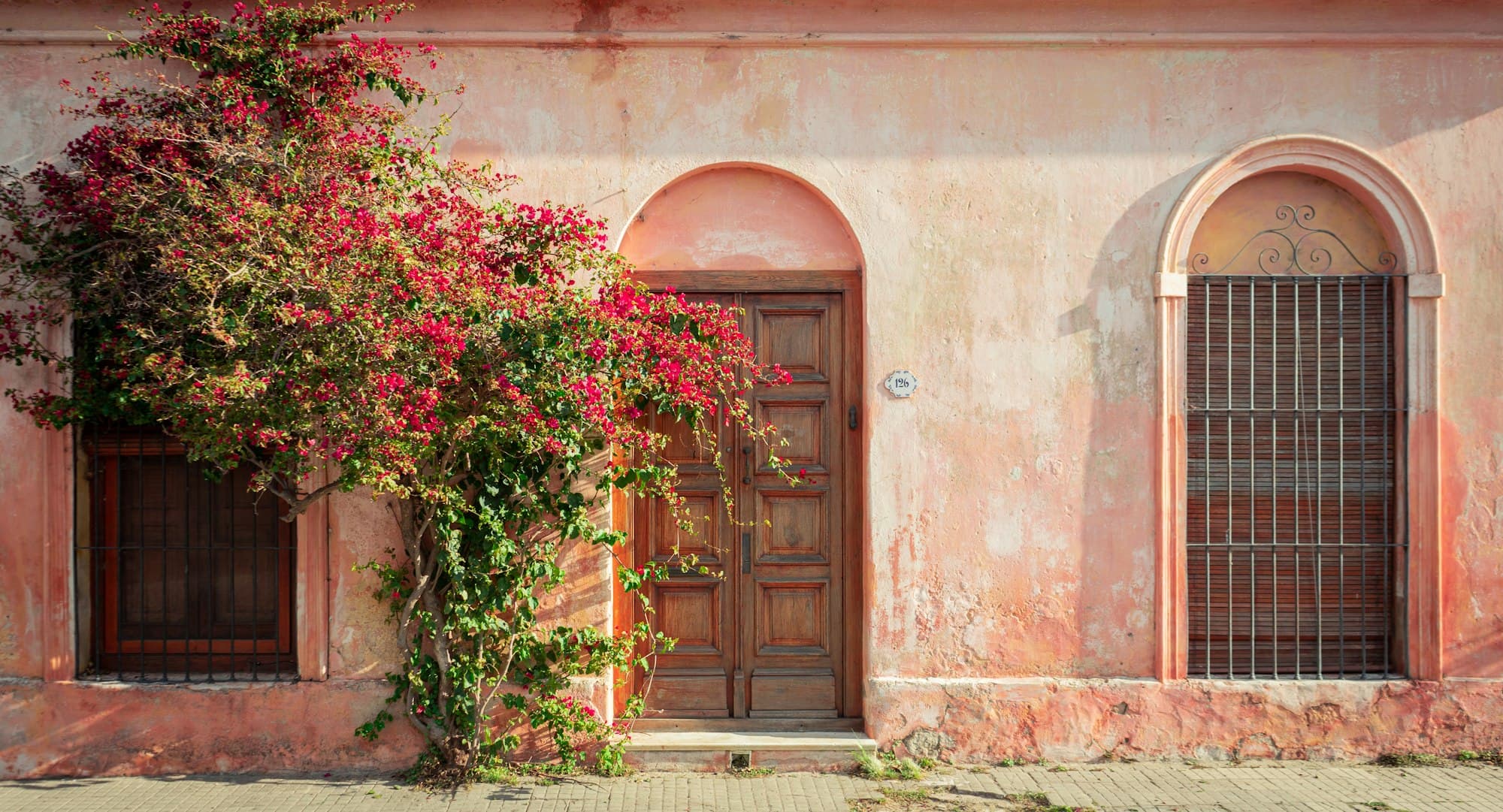
A UNESCO-listed colonial town of cobblestone streets and bougainvillea, an hour by ferry from Buenos Aires. Small, pretty, and popular with people who want quiet.

Interior
Hot springs and ranchland
Uruguay away from the coast: Salto and the river towns, hot-spring resorts, cattle country, and Argentina a bridge away across the river. Almost nobody speaks English here, services are basic, and Montevideo is a long drive south. For people who want the quiet itself, not the idea of it.
07 - Finding your people
Pull up a chair: asado is how you meet Uruguay
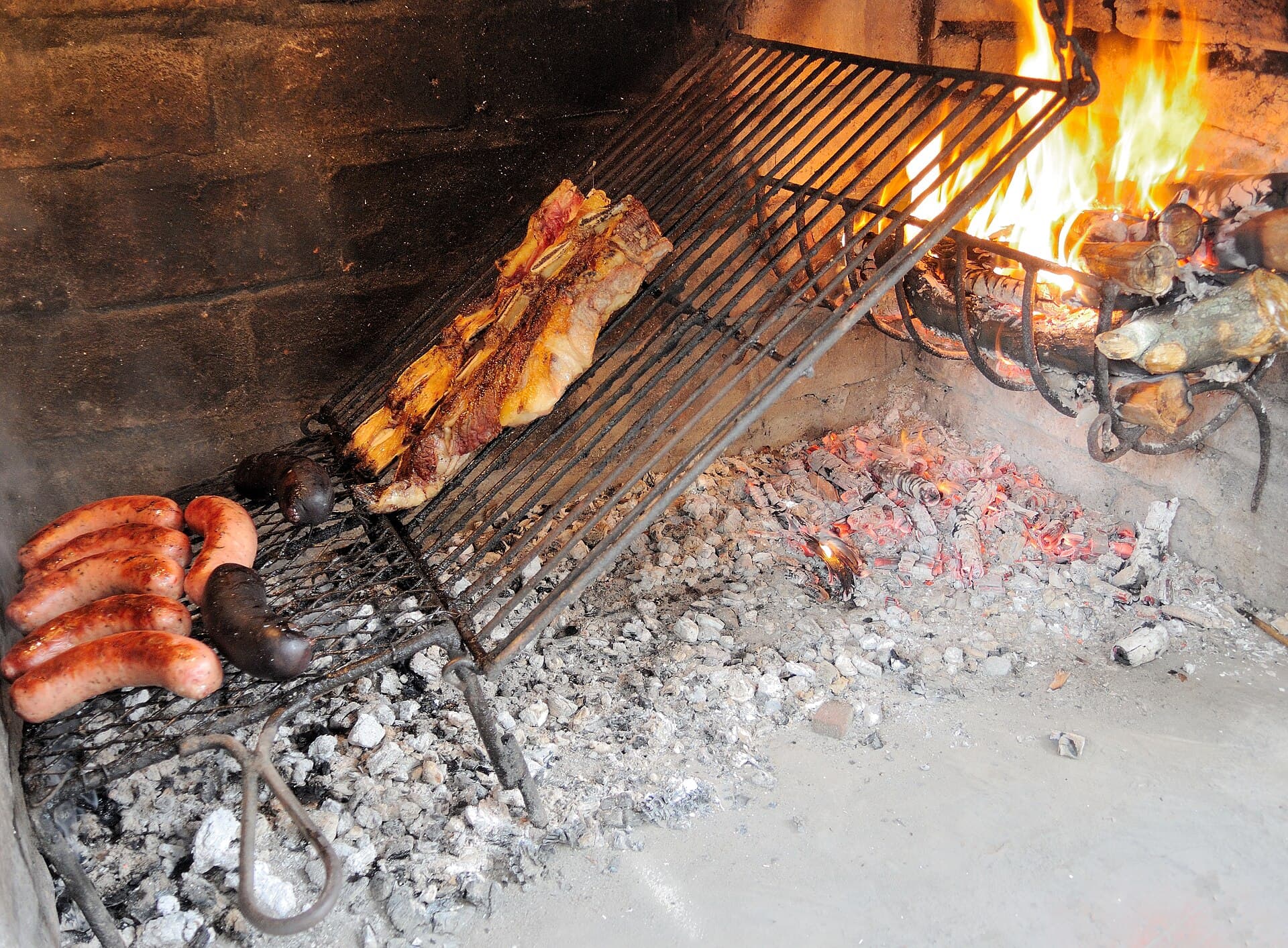
Every culture has a thing that lets an outsider in. In Uruguay, it's the asado, and it might be the easiest one on earth to join.
Asado is the national dish and national ritual at once. It's not a quick cookout. Someone lights a wood fire (Uruguayans use firewood, not charcoal), lets it burn down to embers, and cooks beef, ribs, chorizo, and sweetbreads low and slow over three or four hours. The point was never really the meat. The point is the afternoon: people standing around the grill, talking nonsense, passing wine, waiting. When the food finally lands, someone shouts "un aplauso para el asador," a round of applause for the grill master.
For a newcomer, that rhythm is a gift. You don't need fluent Spanish to stand by a fire and be handed a plate. The Sunday asado is a standing invitation in most Uruguayan lives, and neighbors, coworkers, and your kids' friends' parents will fold you into theirs faster than you expect. Get invited to one, bring a decent bottle of Tannat (the local red), offer to help, and you have a foothold in a real community. Below are the people who help Americans handle the less delicious parts, the visas and paperwork, so you can get to the fire faster.


See it before you commit
Reading about Uruguay only gets you so far. Expatsi runs small-group scouting trips that put you in Montevideo and Punta del Este for a week, touring real neighborhoods, meeting local experts on visas, healthcare, and taxes, and finding out whether the place feels like home before you ship a single box. It is the fastest way to turn a maybe into a decision.
Uruguay
7 nights · Feb 21-28 or Jul 18-25, 2027 · hosted by Diego Lacurcia, Karen Higgs, Claire Ward
- Seminar with experts in visas, healthcare, & taxes
- 7 nights
- Lodging included: Four-star accommodations, breakfast, and group transportation
From $4,299 per person
See this tripGo deeper
Free and members-only resources to take the next step.
Uruguay Healthcare Report
Healthcare guide for Uruguay
A free, plain-English report on how Uruguay's public and private healthcare actually works.
How To Move To Uruguay
Thinking about making Uruguay your new home? In this webinar, we’ll cover the main ways to move to Uruguay, including residency options, timelines, costs, and what to expect once you arrive. You’ll also learn about housing, healthcare, and key planning steps so you can decide if Uruguay is the right fit and map out a confident path forward.
Our full webinar walking through the steps, costs, and timeline of moving to Uruguay.
Real Life in Uruguay: What It’s Actually Like After the Move
What is life in Uruguay really like once you’ve made the move? In this webinar, you’ll hear what day-to-day life looks like after relocating, from housing and healthcare to social life, culture, and common surprises new expats face. Get an honest, on-the-ground perspective to help you decide if Uruguay truly fits your expectations and lifestyle.
Real expats on what daily life is actually like once the move is done.
Talk to people already there
Uruguay
Expatsi Community
Our Uruguay community is full of Americans at every stage, from just curious to fully moved. Ask the awkward questions and get honest answers.
Join the communityUruguay questions, answered
Is Uruguay really that LGBTQ-friendly?
Yes, and it is not just marketing. Same-sex marriage has been legal since 2013, adoption since 2009, and a landmark trans rights law passed in 2018. Americas Quarterly has called Uruguay the most LGBTQ-friendly country in Latin America. Montevideo and the coast are the most relaxed; small interior towns lean more conservative, and trans residents still face discrimination in daily life despite strong laws.
How long until I can get permanent residency or citizenship?
Uruguay lets you apply directly for permanent residency, rather than years of temporary status first, and the full process takes about a year, during which you can already live here. Citizenship comes after five years of legal residency, or three if you are married to a Uruguayan, plus conversational Spanish.
Is Uruguay safe?
It is the safest country in South America on the Global Peace Index, with low violent crime. The honest catch is petty theft and occasional street robbery in Montevideo, which is why the US State Department keeps it at a Level 2 advisory, the same as France or the UK. Normal city awareness goes a long way.
Will Uruguay tax my US retirement income or savings?
Generally no. Uruguay taxes on a territorial basis, so foreign pensions and most foreign income are not taxed. New residents also get a tax holiday on foreign investment income, either a full ten-year exemption or a flat 7% rate. Tax rules are technical and change, so confirm your own case with a cross-border accountant.
What is the healthcare like?
Good, and a big reason people move here. There is free public care through ASSE, plus private nonprofit mutualista plans that most expats join for around $50 to $250 a month depending on age. You get doctors, hospitals, and prescriptions without US-sized bills.
Do I have to speak Spanish?
You will want to. English is not widely spoken outside tourist areas and some offices, and English proficiency here is low. You can get started with English and good translation help, but real daily life, banking, and healthcare go much smoother in Spanish, and citizenship later requires you to hold a conversation.
How much money do I need to move to Uruguay?
Budget roughly $1,500 a month for one person or $2,650 for a couple, rent included. Uruguay does not set a legal minimum income for residency, but officials want to see you can support yourself, which usually lands right around those numbers. Rent is affordable; groceries and dining out are the pricey part.
Can I keep my US citizenship?
Yes. Uruguay allows dual nationality, so you keep your US passport if you later naturalize. As a US citizen you also keep filing a US tax return every year, no matter where you live.
Sources
- The Economist classed Uruguay as the only full democracy in South America · Uruguay XXI (checked 2026-07-27)
- LGBTQ rights in Uruguay · Wikipedia (checked 2026-07-27)
- Uruguay: A Global Leader for LGBTI Rights · World Bank (checked 2026-07-27)
- Uruguay, the low-profile trailblazer for LGBTQ+ rights · Guru'Guay (checked 2026-07-27)
- Global Peace Index · Institute for Economics and Peace (checked 2026-07-27)
- Asado, Uruguay's national dish · Wikipedia (checked 2026-07-27)
- Retire in Uruguay: taxes and residency · Taxes for Expats (checked 2026-07-27)

Is Uruguay your kind of place?
Take the free Expatsi Test and see how Uruguay stacks up against everywhere else you could go.
navy