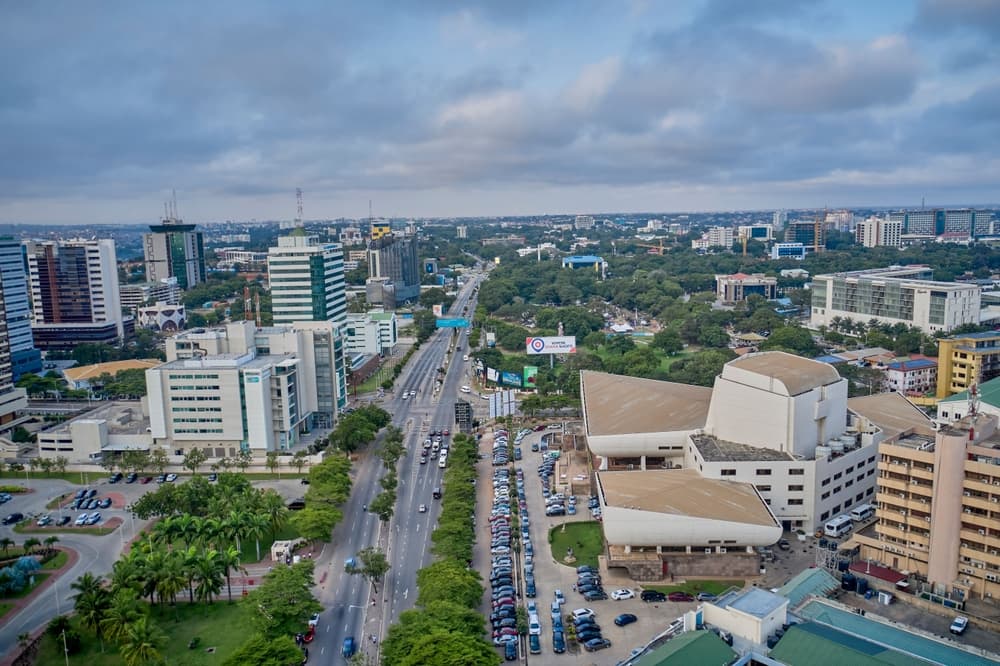
Accra: West Africa's English-speaking cultural capital
Ghana's coastal capital pairs a warm, welcoming culture with a growing Black American expat community and everyday life conducted in English.
- 1,782,150
- Population (2021)
- $1,800/mo
- Monthly budget · single
- 82°F / 28°C
- Avg temperature
Plan on about $1,800 a month in U.S. dollars to live in Accra as a single person, around $2,500 for a couple, and roughly $3,800 for a family of four. Rent is the variable that swings hardest: a one-bedroom averages about $900 in central neighborhoods like Osu, Cantonments, or Airport Residential, and closer to $500 farther out in areas like Tema or Spintex. Many landlords still ask for one or two years of rent up front, so budget for a large initial outlay, even when the monthly number looks manageable.
Accra suits people who want an English-speaking base in Africa with real cultural depth. Since Ghana's 2019 Year of Return campaign, the city's drawn a steady stream of African Americans relocating for heritage, business, or simply a different pace of life, and neighborhoods like Osu and East Legon have restaurants, galleries, and coworking spaces that cater to an international crowd. The city sits on the Atlantic, stays warm all year at an average of about 82 F (27.9 C), and gets a comparatively modest 769 mm of rain annually for a tropical capital.
The honest drawback is infrastructure. Power outages (locals call the phenomenon dumsor) still happen, traffic is heavy, and imported goods carry a premium, so a Western-style grocery run costs more than the overall budget figures might suggest.
At a glance
$1,800
Monthly budget · single person
$900/mo 1-bed rent, center
55/100
Safety index
$45
Internet / month
82°Fannual average
Aug 78° · Mar 85°
Climate
1,782,150
Population (2021)
Expatsi estimates, updated Aug 2026, based on rental listings, government statistics, and local reporting.
Cost of living
What it costs to live in Accra
Single person
$1,500–$2,100/mo
about 40% below Austin, TX
Couple
$2,100–$3,000/mo
about 45% below Austin, TX
Family of four
$3,100–$4,500/mo
about 50% below Austin, TX
Compared with Austin, TX (Expatsi estimate, 2026).
- $7 −65%
- Inexpensive meal
- $750–$1,050/mo −54%
- 1-bed rent, center
- $400–$600/mo −63%
- 1-bed rent, outside
- $45/mo −31%
- Internet
- $204/sq ft −69%
- Buy price, center
Expatsi estimates, updated Aug 2026, based on rental listings, government statistics, and local reporting.
Daily life
How Accra lives
- B- grade, 28th percentile among the cities we track
- Dining & caféstypical
- B- grade, 25th percentile among the cities we track
- Arts & culturetypical
- B- grade, 26th percentile among the cities we track
- Parks & outdoorstypical
- B+ grade, 61st percentile among the cities we track
- Schools & educationstrong
- B+ grade, 61st percentile among the cities we track
- Healthcare accessstrong
- C- grade, 0th percentile among the cities we track
- Bike infrastructuremodest
- B grade, 54th percentile among the cities we track
- Public transittypical
- A- grade, good physical accessibility
- Accessibilitygood
Graded on OpenStreetMap amenity density relative to the 298 cities we track. Accessibility is the exception: it's graded against a fixed standard (terrain steepness and sidewalk surfaces), not a curve.
Climate
Weather through the year
Annual average 82°F (28°C) · 30 in of rain a year · Source: Meteostat station normals (65472, 1991-2020)
On the ground
Scenes from Accra
Getting around
Transport in Accra
Most of Accra moves by tro-tro, the privately run minibuses that cover nearly every corridor in the city for small change. They're the backbone of daily transport, but there are no printed schedules or maps. You learn routes by asking, and comfort is minimal. For newcomers, ride-hailing is the practical default. Uber, Bolt, and the local app Yango all operate in Accra; rides across town are inexpensive by U.S. standards.
There's no metro or commuter rail worth planning around. A bus rapid transit effort called Aayalolo launched on a limited corridor but never scaled into a citywide system, so buses remain a patchwork rather than a network. Shared taxis running fixed routes fill some of the gaps.
Walkability varies sharply by neighborhood. Osu's Oxford Street and parts of Cantonments are pleasant enough on foot, but sidewalks disappear without warning elsewhere, open drainage gutters line many roads, and the midday heat discourages long walks. Treat walking as something you do within a neighborhood, not between them.
A car makes sense if you settle in for the long haul, especially with kids or a commute to Tema or East Legon. Be ready for serious congestion at peak hours and assertive driving norms. Plenty of expats skip ownership entirely, combining ride-hailing with a trusted hired driver for longer trips.
- 30/sq mi
- Transit stops
- 0.0/sq mi
- Bike infrastructure
- 2.2/sq mi
- Wheelchair-accessible places
Mapped features per square mile from OpenStreetMap.
Keep exploring
Places like Accra
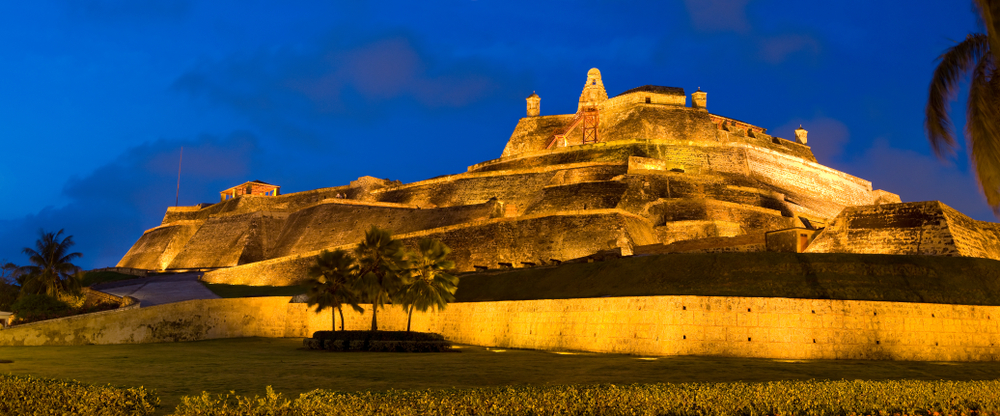
Cartagena
Colombia
914.6K people · $1,700/mo
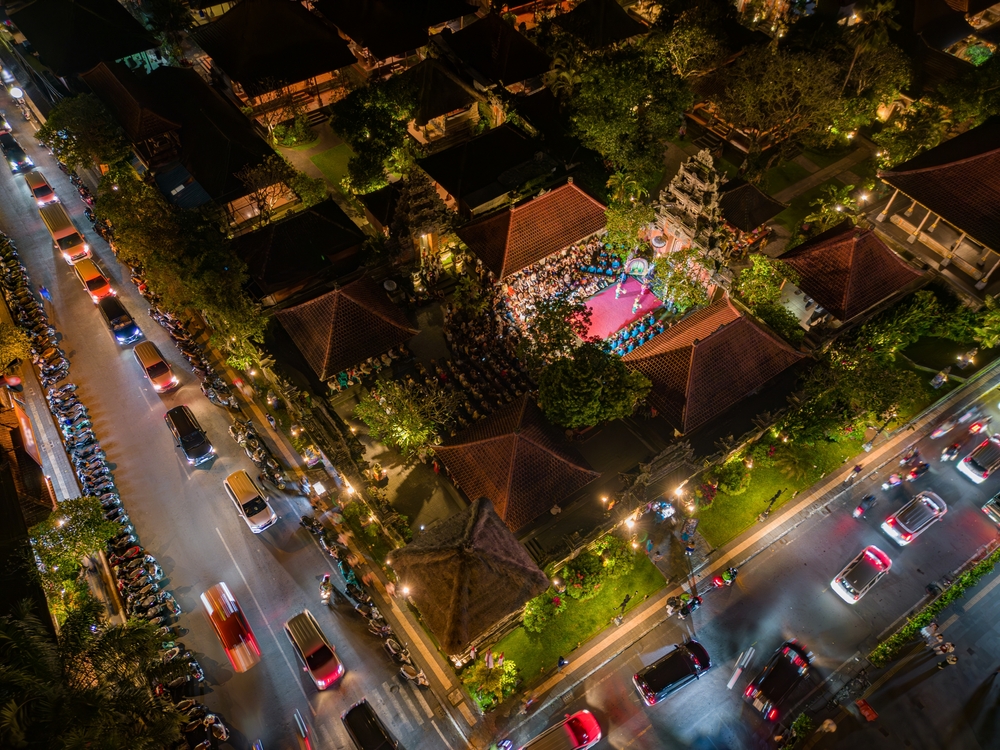 Coming soon
Ubud
Indonesia
$1,700/mo
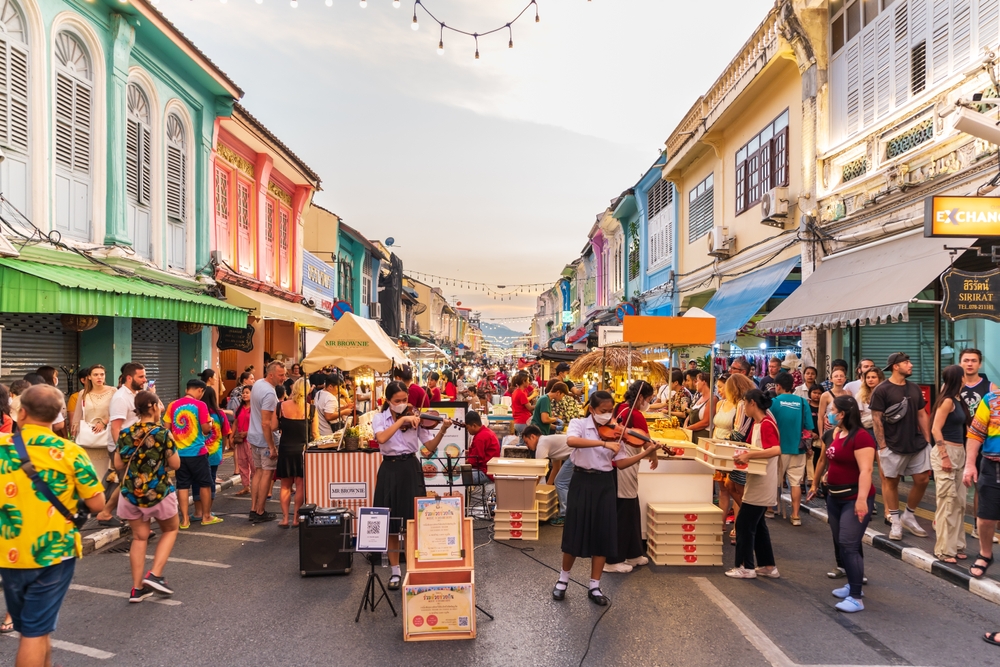 Coming soon
Phuket City
Thailand
77.6K people · $1,600/mo

Mérida
Mexico
892.4K people · $1,500/mo
Canggu
Indonesia
7.1K people · $2,100/mo
Riviera Maya
Mexico
$2,100/mo
Community
Community & practical notes
Community: Accra has one of the most visible African American expat communities on the continent, energized by the Year of Return and the annual December festival season locals call Detty December. Beyond that, there are long-established Lebanese, Indian, and European business communities, plus a rotating cast of NGO and diplomatic staff. English is Ghana's official language, so integration is more about learning local rhythms (and a few Twi greetings) than overcoming a language wall.
Healthcare: Ghana runs a National Health Insurance Scheme, but most expats rely on private care and international insurance instead. Private facilities in Accra handle routine and moderate needs, and quality at the top clinics is reasonable, but serious or complex cases often mean evacuation coverage to Europe or South Africa, so build that into your policy. Expect to pay cash or card upfront at many facilities, then file for reimbursement afterward.
Limited mobility: Accra is a hard city for wheelchair users. The problem isn't terrain, which is almost entirely flat, but the pedestrian environment. Paving starts and stops without warning, deep open storm gutters run beside many roads, and curb cuts are rare, pushing wheelchair users into traffic. Ghana's Persons with Disability Act gave public buildings until 2016 to become accessible, and that deadline passed largely unmet. Newer construction is the exception, and international hotels and venues like the Accra International Conference Centre generally have ramps and lifts. Tro-tros aren't accessible, so budget for door-to-door car travel and check entrances before you sign a lease.
Remote work: Fixed internet runs about $45 a month. Mobile data from MTN or Telecel is widely used as a backup during outages, which you should plan for with a charged power bank or generator-backed workspace. Coworking spaces like Impact Hub Accra and Workshed serve the remote crowd, concentrated around Osu and East Legon. Local hiring skews toward fintech, telecom, NGOs, and Ghana's growing startup scene.
Retirement: Ghana has no dedicated retirement visa. Most Americans start on a visitor visa, then move to a residence permit through work, business ownership, or an indefinite residence route after establishing ties. People of African descent can also pursue the right of abode, a permanent status Ghana created specifically for the diaspora. It's paperwork-heavy and with unpredictable timelines, so many retirees work with a local agent. Compare retirement visa options or read the full Ghana guide.
Housing
Renting and buying
- 1-bed rent (center)
- $750–$1,050/mo
- 1-bed rent (outside center)
- $400–$600/mo
- Buy price (center)
- $204/sq ft
- Buy price (outside center)
- $107/sq ft
Expatsi estimates, based on rental listings, government statistics, and local reporting.
Good to know
Frequently asked questions
How is healthcare in Accra for expats?
Private clinics and hospitals in Accra handle routine care at reasonable quality, and most expats carry international insurance rather than relying on Ghana's national scheme. The key gap is complex or emergency care, where serious cases are often evacuated abroad, so evacuation coverage matters. Expect to pay up front at many facilities and file for reimbursement.
Is the internet in Accra good enough for remote work?
Generally yes, with planning. Fixed internet costs about $45 a month, and most remote workers keep mobile data from a second provider as a backup because power outages still occur. Coworking spaces in Osu and East Legon offer generator-backed workspaces if your home setup goes down.
Can I retire in Accra?
Yes, but Ghana has no formal retirement visa, so retirees typically use a standard residence permit or, for people of African descent, the right of abode, a permanent status created for the diaspora. At about $1,800 a month for a single person, a U.S. retirement income stretches comfortably. Factor in private health insurance with evacuation coverage, since complex medical care often means treatment abroad.
Is Accra safe for Americans?
Accra scores 55 on the safety index with a crime index of 45, middle-of-the-road numbers that match the lived reality: violent crime against foreigners is uncommon, but petty theft, pickpocketing, and scams happen. Standard big-city habits apply, like avoiding flashy valuables and using ride-hailing at night. Ghana is broadly considered one of the more stable, welcoming countries in the region.
How much does it cost to live in Accra?
Budget about $1,800 a month in U.S. dollars for one person, around $2,500 for a couple, and roughly $3,800 for a family of four. A one-bedroom apartment averages about $900 in the city center and about $500 outside it. A meal at an inexpensive restaurant runs about $7, though imported groceries cost noticeably more than local food.
How do I move to Accra from the US?
Americans need a visa to enter Ghana, usually a visitor visa obtained before travel. To stay long term you'll apply for a residence permit through the Ghana Immigration Service, typically tied to employment, business ownership, or family ties. Many newcomers make a scouting trip first, since renting usually requires one to two years of rent paid up front.
Do I need a car in Accra?
Not at first. Ride-hailing apps like Uber, Bolt, and Yango are inexpensive and cover the city well, and tro-tro minibuses handle most routes for very little. There's no metro, so long-term residents with families or cross-town commutes often buy a car or hire a driver, accepting the heavy traffic that comes with it.
What is the weather like in Accra?
Warm and steady. Accra averages about 82 F (27.9 C) year round with roughly 769 mm of annual rainfall, which is modest for a tropical coastal city. There's no winter; the main seasonal variation is a rainy period centered on May and June and the dry, dusty harmattan winds around December to February.
See how Accra fits your life
Take the free Expatsi Test and compare Ghana to nearly 200 countries on what actually matters: cost, healthcare, climate, and safety. About five minutes.
Why not you?