The country, not the state
Moving to Georgia: the 2026 guide for Americans
One person lives here on about $1,150 a month and a couple on about $1,850. Entry insurance, a higher property bar and a new work permit all arrived this year. Here's how they change the move.
This is the guide to Georgia in the Caucasus, the one with Tbilisi, the Black Sea coast and a clay-jar winemaking tradition on UNESCO's heritage list. It covers what a month costs, the permits that still work for Americans after this year's changes, and the parts of life there that don't show up in the travel photos.

Reviewed and updated October 22, 2026 · 12 min read

01 · The case for Georgia
A year on your passport, and plenty to weigh after it

Georgia sits between the Black Sea and the Caucasus Mountains, a country of about 3.7 million people with one rule that makes it unusually easy to try: a U.S. passport gets you up to 365 days on arrival. No application, no fee, no consulate appointment.
That year works as a trial run. A retiree can live through a Tbilisi winter before buying anything, and a remote worker paid from abroad can set up a base without filing a thing. If the place sticks, the next step is buying property, investing, or taking a job that comes with a residence permit.
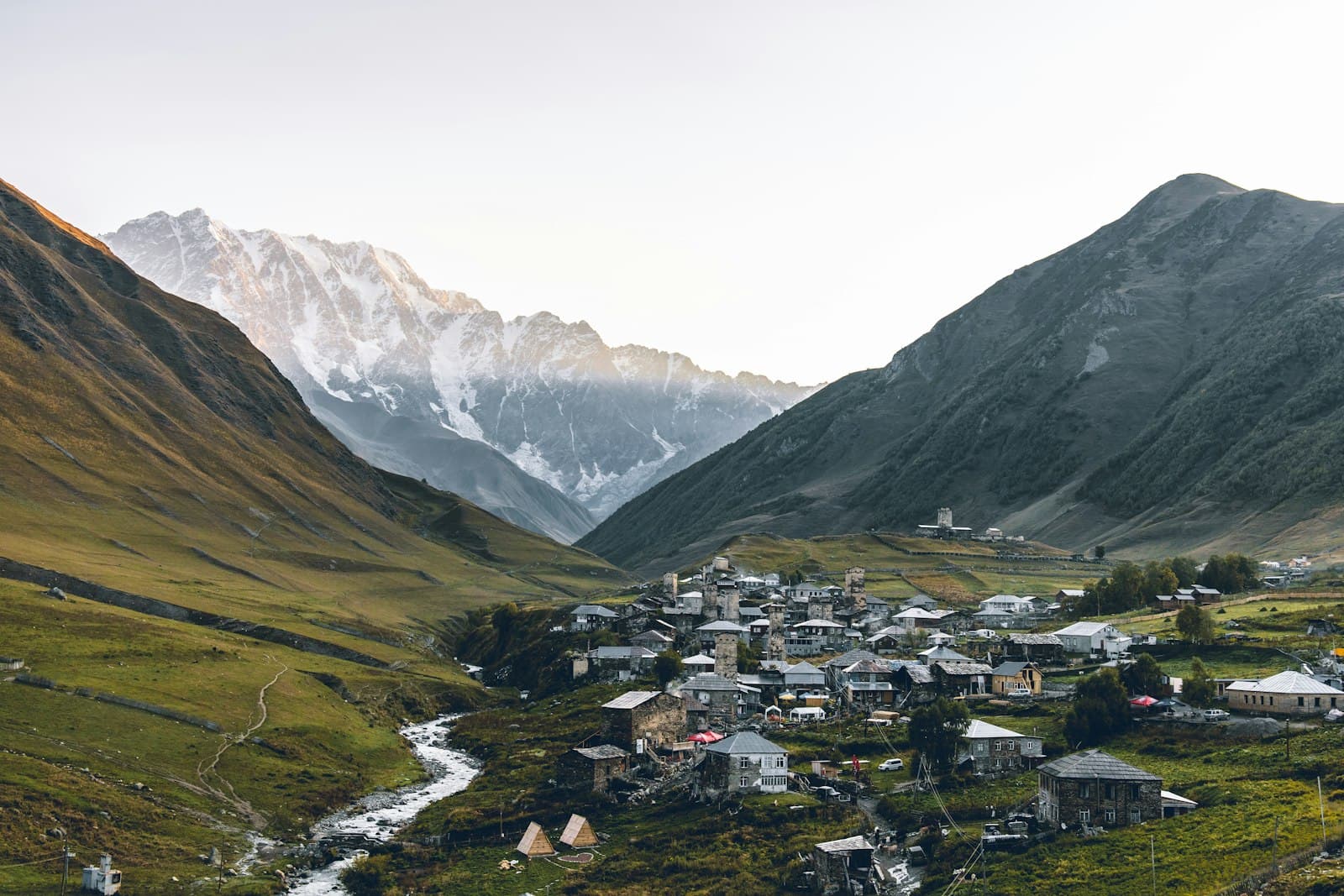
The price isn't the only draw. Tbilisi's old town stacks up the hills above the river, all wooden balconies and church domes, with a cable car overhead. Wine runs deep: the Georgian way of fermenting it in egg-shaped clay jars called qvevri, buried in the ground for months, went onto UNESCO's intangible heritage list in 2013, and families still make it at harvest. To the north the Greater Caucasus holds villages like Ushguli in Svaneti and the hilltop church at Gergeti. By our data the country gets about 220 sunny days a year, with an average temperature near 55°F and four real seasons.
A few practical basics. Georgia runs on the lari. It's eight to nine hours ahead of Eastern, by season, because the country dropped daylight saving time in 2005. There are no nonstop flights to the U.S., so you'll connect through a hub such as Istanbul, Dubai, Doha, Frankfurt, Munich, Warsaw or Amsterdam.
Here's the catch
Georgia has changed fast, and some of it will rule the country out for some readers. Better to hear it now.
The politics come first. In November 2024, the ruling party dropped the country's push to join the EU, inciting mass protests. Human Rights Watch reports a foreign agents law with prison terms of up to five years for groups that fail to register, and a ban on foreign funding for broadcast media. Smaller protests have continued in the evenings near parliament on Rustaveli Avenue. The U.S. government still rates Georgia at Level 1, its lowest travel advisory, as of its last reissue in March 2025. It also tells Americans to stay away from demonstrations, and its security office notes that official talk about foreign meddling has stirred some anti-U.S. feeling. The Russian-occupied regions of Abkhazia and South Ossetia are Do Not Travel.
Second, it's a hard fit for LGBTQ+ movers. A December 2024 law restricts discussion of transgender rights and same-sex relationships in schools and public settings, and the State Department warns that traditional attitudes can mean discrimination and harassment.
Third, healthcare and language take work. The system is mostly private; the public program generally doesn't cover foreigners, and quality drops outside the big cities. English thins out beyond the expat parts of Tbilisi and Batumi; we score it 35 out of 100.
Fourth, 2026 tightened the rules. Entry now requires health insurance, the property bar for residency rose to $150,000, and foreigners who work for Georgian employers or run a business here need a separate right-to-work permit. The old path of registering as a freelancer online and paying 1 percent tax with little else to do has narrowed.
If you want a second passport, look elsewhere. Naturalization takes 10 years of residence, and Georgia generally makes new citizens give up their other nationality unless citizenship is granted by exception.
If none of that stopped you, the rest of this guide covers the money, the permits, the practical setup and who can help.
- Cost of living (single)
- $1,150/mo
- Safety index
- 70/100
- English proficiency
- 35/100
- Internet speed
- 40 Mbps
- Capital
- Tbilisi
- Currency
- Georgian Lari (GEL)
02 · The numbers
What a month in Georgia costs in 2026
$1,150
Monthly budget, single
all in, comfortable
$1,850
Monthly budget, couple
all in, comfortable
$3,200
Monthly budget, family
housing included
$550
Rent, 1-bed city center
$350 outside center
$11
Inexpensive meal out
per person
$15
Monthly transit
buses and metro
$17
Home internet, monthly
about 40 Mbps
70/100
Safety index
low crime level
The costs our averages don't show

The cards above are our 2026 averages in U.S. dollars. Rent is the biggest line for most people, dropping off noticeably once you leave the center. What the averages leave out are the costs that come with being a foreigner here.
Health coverage is the big one. Georgia's public program generally doesn't cover foreign residents, and most hospitals and doctors won't take U.S. insurance, so private coverage is a real monthly bill. A comprehensive plan for a healthy adult rarely tops $40 to $60 a month in 2026, and some form of insurance is now required just to cross the border.
Imported goods and electronics are relatively expensive, so bring the laptop and phone you want to keep. The internet is fine for video calls, but at around 40 Mbps it's slower than a lot of U.S. fiber plans, which matters if you upload large files for work.
Then there's paperwork. A residence permit decision costs about 300 lari (about $110) on the standard 30-day track and up to 600 lari (about $220) for a 10-day decision, before any lawyer or translation fees. A property permit starts with a $150,000 purchase. And if you carry cash in, anything over 30,000 lari (about $11,100) has to be declared at the border.
Why the free year changes the math
Georgia doesn't ask you to prove income or file anything for stays of up to 365 days, so your first year costs about what your rent and insurance cost. That makes a sensible first move: come on your passport, live through a Tbilisi winter, and only then decide whether $150,000 of property or a $300,000 investment is worth it. The next chapter takes each route in turn.
03 · Permits and visas
Four ways to stay, and the rules that changed in 2026

Three changes this year shape every route: insurance at the border, a higher property threshold, and a new permit for anyone working for a Georgian employer or running a local business. Pick the route that matches where your money comes from.
Staying on your passport: up to 365 days
This is the simplest route. You can stay up to 365 days with no visa. Your passport has to be valid when you enter, with one blank page for the stamp. Since January 1, 2026, every foreign visitor also needs health and accident insurance covering the whole stay, with at least 30,000 lari (about $11,100) of coverage from a Georgian or foreign insurer. Border officers can check it, and they may refuse entry at their discretion.
The year works well for retirees testing the country and for remote workers paid by a U.S. employer or foreign clients. Legal advisers read the 2026 labor rules as exempting people who serve only foreign companies, though one firm notes the line is still being settled in practice. What the year doesn't allow is working for a Georgian employer. Keep in mind that 183 days in any 12-month period makes you a Georgian tax resident, whatever your immigration status.
Buying a home: the property residence permit
Own non-agricultural property worth at least $150,000 and you can get a one-year residence permit, renewable each year while you own it. The threshold rose from $100,000 on March 1, 2026; people who bought before the change can still qualify at the old figure. The value is based on market appraisal, not the price you paid, and several properties can be added together. Your spouse and children can be included. The catch is that this permit doesn't give you the right to work, and foreigners can't buy agricultural land.
Investing $300,000: the investment residence permit
Put $300,000 into Georgian real estate or a Georgian company and you can get a five-year permit. The business version comes with turnover targets, rising from $50,000 in the first year to $120,000 a year by the third, and an audit confirming the investment. Sources that follow the program say it converts to permanent residence after five years if the investment is kept. A useful perk in 2026: investment permit holders are exempt from the new right-to-work permit.
Taking a job: work residence permit plus the right to work
A work residence permit needs income of at least five times Georgia's official subsistence minimum, and the employer needs turnover of 50,000 lari (about $18,500) for each foreign employee, or 35,000 lari in education and healthcare. It can run for up to six years. Since March 1, 2026, foreigners without permanent residence who work for a Georgian employer or are self-employed here also need a right-to-work permit, which takes 30 calendar days on the standard track or 10 working days expedited. Self-employed applicants sit a video interview. Working without it can bring a fine of 2,000 lari (about $740). Individual entrepreneurs who once registered online now go through the same permit system.
What Georgia doesn't offer
There's no separate digital nomad visa; remote workers rely on the 365-day stay. The permit types (work, IT, property, investment, study and family reunification) include nothing built around a pension, so a retiree's route is the free year first, then property if they stay. Permanent residence normally comes after 10 continuous years on qualifying permits.
Visa-Free Entry
Up to 365 days on a U.S. passport
No application or fee. Bring a valid passport and health insurance of at least 30,000 lari for the whole stay. It doesn't cover work for a Georgian employer.
- Passport valid for at least 3 months beyond intended stay
- Proof of onward/return travel
- Proof of sufficient funds for stay
Temporary Residence Permit (Business/Investment)
A five-year permit for a $300,000 investment
Real estate or a Georgian company with $300,000 invested. The business version has yearly turnover targets and an audit, and holders skip the new right-to-work permit.
- Investment of at least $300,000 in non-agricultural real estate or business
- Company formation documents (for business route)
- Proof of identity
04 · Setting up your life
Healthcare, taxes, banking and the rest of the setup
The questions Americans ask once they've picked a route, answered with the 2026 rules.
Healthcare
Georgia's healthcare is mostly private. The state's universal program generally doesn't extend to foreign residents, and most hospitals and doctors won't accept U.S. insurance, so plan on private coverage from day one. The good news is the price: a comprehensive plan for a healthy adult rarely tops $40 to $60 a month in 2026. In Tbilisi, expats tend to use large private groups such as Evex, MediClub Georgia and Aversi Clinic, which keep specialists, diagnostics and pharmacies under one roof. Quality drops outside the major cities, so for anything serious, plan on the capital. Healthcare coach Hunter Schultz can help you plan care before you pick a city, and ExpatInsure can set up the international policy.
Taxes
Georgia charges a flat 20 percent income tax, and residents are exempt on income that doesn't have a Georgian source. You become a tax resident after 183 days in any continuous 12-month period. Individual entrepreneurs with turnover under 500,000 lari (about $185,000) can register for small business status and pay 1 percent on turnover, though under the 2026 rules the work itself now needs a right-to-work permit. Wealthy movers can also look at high net worth individual status, which starts at assets over 3 million lari (about $1.1 million) or income over 200,000 lari for three years, plus other conditions.
None of that removes your U.S. return. The IRS taxes citizens wherever they live, and the Foreign Earned Income Exclusion covers wages and self-employment income only, not pensions or Social Security. MyExpatTaxes handles U.S. filings for Americans abroad, and Flamingo Compliance tracks your days so you know when the 183-day line is coming.
Banking and moving money
Opening an account is quick. TBC Bank opens accounts for foreigners at a branch with a passport and phone number, and physical cards arrive within one business day in Tbilisi. Moneycorp handles currency exchange and recurring international transfers, and remember that cash over 30,000 lari has to be declared at the border.
Driving and pets
A U.S. driver's license is valid for one year from your last entry, and residency doesn't extend it. You can exchange a valid U.S. license for a Georgian one without exams. The State Department advises against driving at night outside cities. For a dog or cat you'll need an ISO microchip, a rabies shot given 21 days to 11 months before arrival, and a vet health certificate issued within 10 days of travel; Georgia doesn't require a titer test. Starwood Pet Travel can handle the flights and forms.
These rules moved this year
Georgia's entry insurance, property threshold and work permit rules all changed between January and March 2026, and parts of the new labor law are still being interpreted. Everything here reflects what we could verify as of September 2026. Before you buy property or sign a job contract, confirm the current rules with a licensed professional.
05 · Where people settle
Tbilisi, Batumi and the quieter places in between
Tbilisi is the default. It's the capital and the center of the country's economic and cultural life, with the biggest expat scene, the major private hospitals and the most English. The trade-offs are traffic congestion and air pollution.
Batumi, on the Black Sea, is the second option people weigh. It has a subtropical climate, beaches and a skyline of modern buildings, and it draws both tourists and remote workers. Kutaisi, one of the oldest cities in the country, is quieter and slower, with historic landmarks and a younger, budget-minded crowd.
Beyond those, life gets more traditional fast. Mountain regions such as Svaneti are beautiful and remote, and specialized care is concentrated in Tbilisi and Batumi, which matters if you're older or managing a condition. Wherever you settle, stay out of Abkhazia and South Ossetia, where the U.S. can't provide emergency help. Our Georgia city guides will appear below as they're published.
Georgia city guides
Where to live in Georgia

Tbilisi
Old town capital
A walkable capital with wooden balconies, sulfur baths, cafes in Vera and Sololaki, and a cable car over the old town. Easy to live in with a 365-day stay on a US passport and Georgian wine all around. The catch is that winter air is smoky in the valley and the 2026 rules narrowed the residency options.

Batumi
Black Sea resort city
A seaside city of glassy towers and a long boulevard, with a cool, green botanical garden on the cliffs at Green Cape just north of town. Warm summers, mild but damp winters, and a smaller expat crowd than Tbilisi. The catch is that it's very wet from autumn through winter and loud and crowded in July and August.

Mtskheta
Ancient capital town
A small old town on the river with a UNESCO-listed cathedral and monastery, about half an hour from Tbilisi by car. Quiet, green and good for people who want village pace with the capital close. The catch is the limited shops and restaurants, and you'll want a car for daily life.
06 · Help on the ground
Your Georgia move team
Georgia is easy to enter and harder to set up well: private health coverage, two tax systems, a property purchase, and a pet on the plane. These are the Expatsi-vetted partners we'd call for each piece, grouped by what they do. None of them is a Georgian immigration firm, so for a residence permit filing you'll still want a licensed local lawyer.

Hunter Schultz
Healthcare Coach
A healthcare coach who helps you work out how you'll get medical care abroad, before you commit to a country or a city.
Learn more
ExpatInsure
Global Health Insurance
Expatsi's global health insurance partner. They arrange the international private coverage that most people living abroad carry.
Learn more
MyExpatTaxes
U.S. Expat Tax Service
A U.S. expat tax service that prepares the federal returns and foreign account filings Americans still owe after they move.
Learn more
Flamingo Compliance | Tax Residency and Visa Tracker Platform
Tax Residency and Visa Tracker Platform
A platform that tracks where you spend your days, so you can see tax residency and visa limits coming before you cross them.
Learn more
Moneycorp
Currency Exchange
A currency exchange and international payments specialist that moves your dollars abroad and sets up recurring transfers for rent and bills.
Learn more
Beacon Global Advisors
Financial Planning
Financial planners for Americans abroad, focused on keeping U.S. retirement accounts and investments working after you leave.
Learn more
Starwood Pet Travel
Pet travel and transport
A pet travel and transport company that plans your animal's flights and paperwork from the U.S. to your new home.
Learn more
Plan-B Outbound Migration
Multi-Country Visa Support
Multi-country visa support for people still comparing destinations, useful if Georgia is one of several places on your list.
Learn more
Culturosity Co.
Cultural Skills Coach
A cultural skills coach who helps you adjust to a new country's customs and communication style, so daily life feels less foreign sooner.
Learn more07 · Common questions
Moving to Georgia: frequently asked questions
Can I become a Georgian citizen and keep my U.S. passport?
Usually not. Naturalization normally requires 10 consecutive years of lawful residence plus knowledge of the Georgian language, history and law, and Georgia generally doesn't allow dual citizenship. The main exception is citizenship granted by exception, which lets the person keep another nationality.
How much property do I need to buy for residency in Georgia?
At least $150,000 of non-agricultural property, measured at market value, since March 1, 2026. It was $100,000 before, and people who bought earlier can still qualify at that level. The permit lasts one year, renews while you own the property, can include your spouse and children, and doesn't give you the right to work.
Can I work remotely for a U.S. company while living in Georgia?
Generally, yes. Legal advisers read Georgia's 2026 labor rules as exempting people who provide services only to foreign companies or clients, though one firm notes the boundary is still being settled in practice. Working for a Georgian employer or running a local business now requires a right-to-work permit, and 183 days in the country makes you a Georgian tax resident.
How much does it cost to live in Georgia?
By Expatsi's 2026 estimates, one person lives comfortably in Georgia on about $1,150 a month, a couple on about $1,850, and a family on about $3,200. A one-bedroom apartment in a city center averages about $550 a month. Budget separately for private health insurance, since Georgia's public program generally doesn't cover foreigners.
Can Americans live in Georgia without a visa?
Yes, for up to 365 days. U.S. citizens can enter Georgia visa-free and stay up to a year with no application or fee. Since January 1, 2026, you also need health and accident insurance covering the whole stay, with at least 30,000 lari (about $11,100) of coverage. The stay doesn't let you work for a Georgian employer.
Is Georgia safe for Americans?
The U.S. State Department rates Georgia at Level 1, Exercise Normal Precautions, as of March 2025, but lists Abkhazia and South Ossetia as Do Not Travel. Political protests have continued in Tbilisi since November 2024. U.S. officials advise avoiding demonstrations entirely and not making a show of your nationality.
Do I need health insurance to enter Georgia in 2026?
Yes. Since January 1, 2026, foreign visitors must hold health and accident insurance that covers their entire stay in Georgia, with coverage of at least 30,000 lari (about $11,100). The policy can come from a Georgian or a foreign insurer, and border officers can ask to see it when you arrive.
Does Georgia tax my Social Security or other U.S. income?
Georgia exempts its tax residents from tax on income that doesn't have a Georgian source, so U.S. pensions, Social Security and investment income generally aren't taxed there. Georgian-source income is taxed at a flat 20 percent. The U.S. still taxes you as a citizen, and the Foreign Earned Income Exclusion doesn't cover pensions or Social Security.
Sources
- Georgia International Travel Information · U.S. Department of State (checked September 2026)
- Georgia Travel Advisory · U.S. Department of State (checked September 2026)
- Georgia To Require Insurance For All Tourists Starting 1/1/2026 · U.S. Embassy in Georgia (checked September 2026)
- New Work Permit Rules for Foreign Nationals in Georgia Starting March 1 · U.S. Embassy in Georgia (checked September 2026)
- Georgia to Increase Real Estate Investment Threshold for Residence Permits · Erickson Immigration Group (checked September 2026)
- Georgia: Taxes on personal income · PwC (checked September 2026)
- Organic Law of Georgia on Georgian Citizenship · Legislative Herald of Georgia (checked September 2026)
- World Report 2026: Georgia · Human Rights Watch (checked September 2026)
- Georgia: One Year of Protests Over EU Accession · OSAC, U.S. Department of State (checked September 2026)
- Georgian Legal Residence Permit, Consolidated Guide · ExpatHub.ge (checked September 2026)
- Healthcare System in Georgia: A Complete Guide for Expats · Veridia (checked September 2026)
- Foreign Earned Income Exclusion · IRS (checked September 2026)
Is Georgia the right first year abroad?
Take the free Expatsi Test and see how Georgia stacks up against other countries on cost, healthcare, climate and safety for your own situation.
Why not you?