Your complete guide to moving to France
Moving to France, the real guide
What it costs, which visa fits, how healthcare works, and where Americans are actually settling. No fluff and no sales pitch, just the numbers and the trade-offs.
An estimated 150,000 Americans already call France home. Here's how to join them, and how to tell if it's the right move for you before you commit.

Reviewed and updated September 28, 2026 · 10 min read

01 · The case for France
Why Americans are moving to France

For a lot of Americans, France stopped being a someday fantasy and became a real plan. The reasons are practical now, not just romantic. Healthcare that won't bankrupt you. Cities you can live in without a car. Five weeks of vacation as a baseline. A slower everyday pace that a lot of people say they didn't know they were missing.
The numbers back it up. France issued around 15,000 first residency permits to US citizens in 2025, up about 14 percent from the year before, and it now holds the largest American community in continental Europe. You would be joining people in Paris, sure, but also in Lyon, Bordeaux, Nice, Montpellier, and the villages of the Dordogne.
France also makes a genuinely soft landing. You can visit for up to 90 days without a visa to scout neighborhoods before you decide anything. The food and wine live up to the reputation, and they cost less than you think. And you're two and a half hours from London by train, six and a half from Barcelona, and under two hours by air from Rome, so the rest of Europe is a weekend away.
For a lot of people the pull is also about what you're leaving behind. Since 2025, Americans have named healthcare costs, gun safety, and a general want for a calmer daily life as the reasons they finally looked abroad. France answers those with a straight face: you can see a doctor without checking your bank balance, walk your kids to a good public school, and take a real vacation without guilt. It's a different set of defaults, and once you live inside it, going back feels strange.
Here's the catch
France is not a place you move to for a quick, cheap, easy life. The paperwork is real and slow, and the French administration rarely explains itself or apologizes for the wait. You will want some French, because English only gets you so far outside the big expat circles. Paris is expensive. Taxes and social charges are high. And winters in the north are grey and long. If you need everything to move fast and work on the first try, France will test your patience. If you can trade some speed for a very high quality of life, it pays you back for decades.
- Cost of living (single)
- $2,000/mo
- Safety index
- 55/100
- Internet speed
- 120 Mbps
- Language
- French
- Capital
- Paris
- Population
- 68.4M
02 · The numbers
€3,350
A couple's monthly budget
all in, comfortable, outside Paris
€2,000
One person, per month
rent included
€900
One-bed in the city center
about €700 just outside
€18
Dinner out, per person
a good neighborhood spot
Your money goes further than you'd guess

Here's the honest version. Paris is one of the most expensive cities in Europe, and if you insist on a big apartment inside the Périphérique, France will feel pricey. Step outside Paris and the math changes fast. A couple can live comfortably in Lyon, Montpellier, or a southern town on around €3,350 a month with rent, and plenty of retirees do it on less.
The day-to-day stuff is where you feel the difference. A doctor's visit runs about €30 before reimbursement. A great bottle of wine is under €10. A neighborhood dinner is around €18. Fast, reliable home internet is roughly €35 a month, and a monthly transit pass is about €70. You trade a big house and two cars for a walkable town, a real train network, and a food budget that stretches.
Buying is realistic too. Property outside the big cities is often cheaper than what Americans expect, and foreign buyers can get a French mortgage, though the paperwork is heavier than at home. Utilities and mobile plans are cheap by US standards, and you can skip the car payment, the second car payment, and most of the insurance that comes with them.
These are Expatsi's cost-of-living estimates as of 2026, meant to get you in the right ballpark. Your real number depends on the city, the neighborhood, and how French you're willing to shop and eat. The closer you live like a local, the cheaper France gets.
Why the budget and the visa line up
Most long-stay routes ask you to show roughly one French minimum wage, about €1,800 a month per person, in steady income. That's close to what it actually costs one person to live well outside Paris. So if you can qualify for the visa on paper, you can usually afford the life it buys. The two numbers were built for each other.
03 · Who France is for
Who actually thrives here

France rewards some people more than others. Before you fall for the pictures, find yourself in this list honestly.
Retirees and the financially independent
This is France's sweet spot. If you live on a pension, Social Security, investments, or savings, the visitor visa is built for you, and the US-France tax treaty treats American retirement income unusually well. Great healthcare, walkable towns, and a gentle pace make it one of the best countries in the world to grow older in.
Remote workers and freelancers
France has no dedicated digital-nomad visa, but the self-employed route (profession libérale) covers freelancers and founders who invoice clients from anywhere. It takes more paperwork than a nomad stamp, and it comes with a real path to long-term residency.
Skilled employees and families
If a French employer hires you, or you land a Talent card, your spouse can usually come and work too, and kids slot into strong, low-cost schools. France is family-friendly in the ways that matter: healthcare, childcare, and safe public space.
The catch: who tends to struggle
Job seekers without an offer have the hardest time, because the work visa needs a French employer first and the labor market protects local candidates. People who refuse to learn any French find daily errands and the administration genuinely frustrating. And anyone who needs cheap, fast, and simple should probably look at another country. France is absolutely worth it, but it asks for real effort and patience up front, and it pays that back slowly over years rather than in the first month.
What comes standard
World-class healthcare
A universal public system that consistently ranks among the best on earth, for a fraction of US costs.
All of Europe next door
Paris to London in 2.5 hours by train, Barcelona in 6.5, and Rome in under 2 by air.
Schools that cost little
Strong public schools and near-free public universities, plus real childcare support.
Time to actually live
Five weeks of paid vacation and a 35-hour week are the baseline, not a fight.
Cities built for people
TGV trains, metros, trams, and walkable centers where you don't need a car.
Culture on tap
Markets, museums, and villages so good that France is the most-visited country on earth.
04 · Your visa options
Which visa actually fits you

There's no single "move to France" visa. You pick the long-stay visa (the VLS-TS) that matches how you'll support yourself, apply online through France-Visas, and finish at a consulate that covers your US state. Here are the routes most Americans use.
The visitor visa, for retirees and the financially independent
This is the most popular route. You show stable income of roughly one French minimum wage, about €1,800 a month per person, plus private health insurance and a place to live. You agree not to work in France. It's valid a year, renewable, and after five years you can apply for a ten-year card. See our full guide to the France retirement visa.
The work visa and Talent card, for employees
A French employer has to hire you and file the work authorization, so this route starts with a job offer. Skilled hires often get the multi-year Talent card, which lets a spouse come and work and skips the labor-market test. Here's how the France work visa works.
The entrepreneur visa, for freelancers and founders
Independent workers use the profession libérale route. Since 2025 you first need a French agency to approve your business plan before you can even apply, so start early. Read the France entrepreneur visa guide.
The student visa
Enrolling in a French program of more than 90 days gets you a student long-stay visa, with the right to work part-time and a smoother path to switch status later. It's a real option for career changers and anyone who wants a foothold while they figure out the longer game.
Income thresholds move with the French minimum wage and consulates apply them differently, so treat the numbers here as a starting point and confirm the current figure before you file.
The France visas side by side
| Visa | Category | Application cost | Processing | Difficulty | Guide |
|---|---|---|---|---|---|
| Long-stay (National) Visa | retirement | $99 | ~15 days | 3/5 | Guide |
| Student Visa | student | $99 | ~15 days | 3/5 | Guide |
| Work Visa | skilled work | $99 | ~60 days | 4/5 | Guide |
05 · The practical stuff
Healthcare, taxes, and daily life
The move is one thing. The systems you plug into afterward are another. Here's what to expect.
Healthcare
After three months of stable residence you register with your local CPAM to join the public system (PUMA), which reimburses about 70 percent of standard care. Almost everyone adds a mutuelle, a private top-up that runs roughly €25 to €100 a month, to cover the rest. Keep private insurance for your first months while your Carte Vitale works its way through the paperwork.
Taxes
As a US citizen you file US taxes forever, no matter where you live, and you'll file a French return too once you're resident. The good news is the US-France tax treaty is one of the friendliest out there, and it generally keeps US Social Security taxed only in the US. French social charges and the details of pensions and investments get complicated fast, so hire a cross-border accountant before you move, not after.
Money and banking
Open a French bank account early, because you'll need it for rent, utilities, and healthcare reimbursements. Keep your US accounts open too. A currency partner like Moneycorp helps you move dollars to euros without getting hammered on exchange rates.
Schools and family
Public school is free and taken seriously, and public universities cost a few hundred euros a year, not tens of thousands. Bilingual and international schools exist in the bigger cities if you want an English-track option while the kids catch up on French. Childcare is subsidized and widely available.
Getting around
You mostly won't need a car. The TGV connects the big cities at high speed, and metros, trams, and buses cover the rest. One tip that saves a lot of grief: French administration rarely confirms it received your file and rarely explains a delay, so keep copies of everything and don't read silence as a no. Days will be safe and calm. Watch your phone in crowded metros, expect the occasional strike, and you'll be fine.
This guide is dated on purpose
France keeps changing the rules. A 2026 law adds a yearly healthcare contribution, likely €300 to €600, for visitor-visa holders, though the exact amount is still pending. Income floors track the minimum wage and rise most years, and a new EU travel form (ETIAS) is due in late 2026. We date our numbers so you can see how fresh they are. Confirm the current figure before you file.
06 · Where to live
Where Americans actually settle

Paris
The big city
The museums, the food, and the whole cultural weight of the country in one place, plus the largest American community in France. You pay for it with the highest rents anywhere in the country. Best for professionals, culture lovers, and anyone who wants the full urban life with English-track schools nearby.
Nice
Sun and the sea
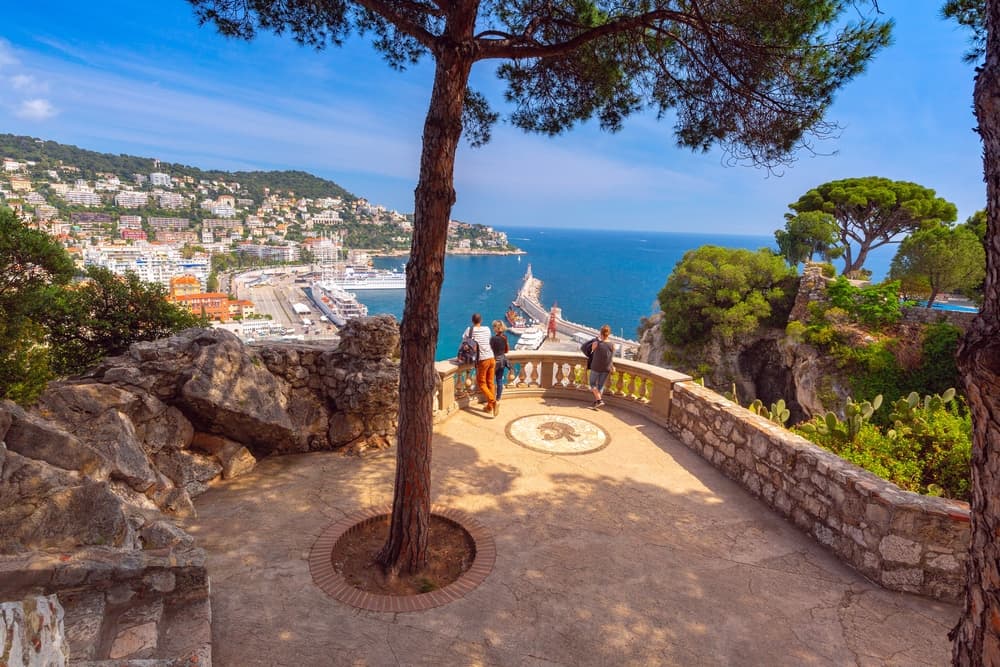
Nice, Toulon, and the Côte d'Azur trade grey northern winters for Mediterranean light and mild years. A longtime favorite with retirees, though prices climb the closer you get to the water.

Bordeaux
Wine and value
Bordeaux's grand elegance plus the Dordogne's affordable villages, a region that's drawn English-speaking expats for decades. You get real value, superb food and wine, and a gentle pace of life.

Montpellier
Young and sunny
A youthful Mediterranean city that's one of the fastest-growing spots for American expats. You get sunshine, lively student energy, the beach nearby, and lower costs than the Riviera up the coast.

Lyon
Second city, first for food
France's food capital and its second city, at the meeting of two rivers, with a Renaissance old town and Paris two hours by train. It feels like a real working city rather than a postcard, with a small but growing American crowd. Winters are gray and summers get hot.
Annecy
Alpine lake town
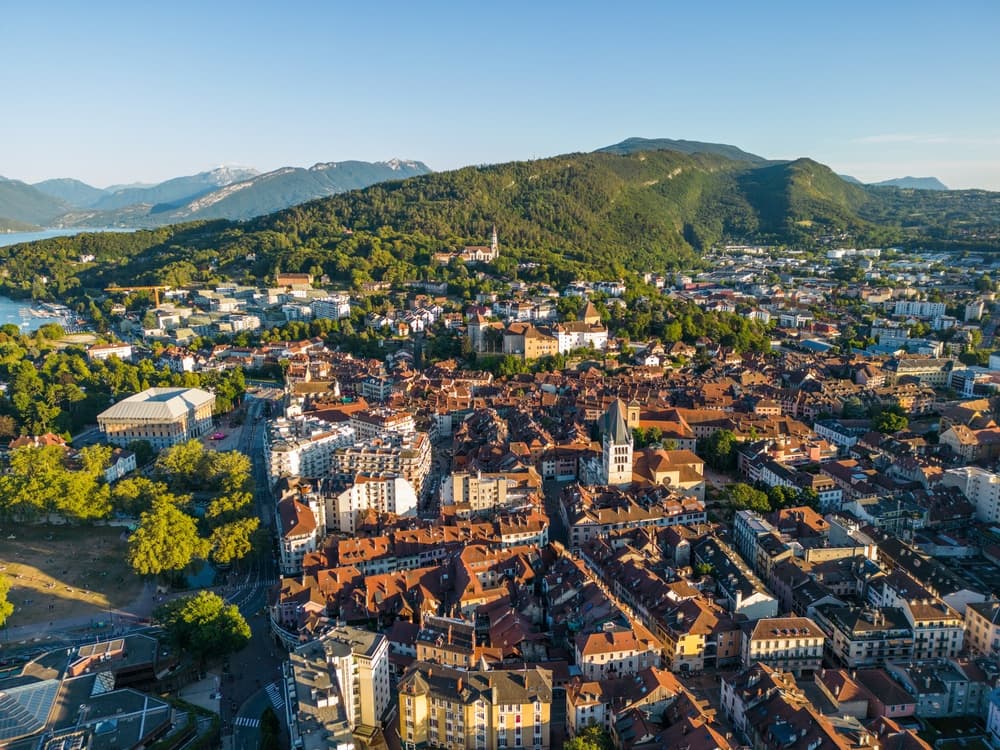
A canal-laced old town on a famously clean alpine lake, with swimming off the beaches in summer, ski lifts within an hour, and Geneva and its airport about 40 minutes north. It is one of the most expensive places to live in France outside Paris and the Riviera, and summer weekends are packed.

Strasbourg
France with German edges
Alsace's capital keeps a foot in both countries: half-timbered houses, winstubs serving choucroute, and Germany one stop away on the tram. The European Parliament sits here, so there's international work and an international school crowd, and the Christmas market has run since 1570. Winters are gray and properly cold.

Toulouse
Pink brick and Airbus
France's aerospace capital, where Airbus employs a small city's worth of people and one of the country's largest student populations fills the pink brick streets at night. The Pyrenees are about ninety minutes south and the Canal du Midi starts in town. Summers run hot, and rugby is close to a religion.

Provence
Markets, lavender, mistral
Inland Provence, anchored on Aix, with plane-shaded market squares, Cezanne's Mont Sainte-Victoire on the skyline, and lavender across the Valensole plateau from late June. The Luberon villages hold a long-settled foreign crowd. The mistral blows for days at a time and summers run dry and hot.
07 · Get help from people who've done this
The people who make it easier
You can absolutely do this yourself, but the people who move without drama almost always have a small bench of help. These are vetted partners who work with Americans moving to France every week. They handle the visa file, the apartment hunt, the mortgage, the school run, and yes, the dog. Start with one conversation and see what you actually need.


Amber Haggerty
France Local Guide
Amber Haggerty is a France local guide based in Paris who helps newcomers settle into daily life, from finding your neighborhood to figuring out how things actually work.
Learn more
Kiki Littlestar
Southern France Local Guide
Kiki Littlestar guides people through life in the South of France, a favorite for retirees and anyone chasing Mediterranean sun and a slower pace.
Learn more
Paris Property Group
French Real Estate
Paris Property Group helps English-speaking buyers and renters find the right place in France and make sense of a very different real estate market.
Learn more
Societe2Courtage
France Mortgage Lending
Societe2Courtage arranges French mortgages for foreign buyers, so a US income doesn't shut you out of owning a place in France.
Learn more
Go deeper
Two Expatsi resources worth your time before you commit.
France Healthcare Report
Healthcare guide for France
A plain-English breakdown of how French healthcare actually works for Americans, from PUMA to the mutuelle.
Moving To France
Learn what it takes to start a new life in France—from visa options and cost of living to culture, lifestyle, and integration into French society.
Our Moving To France webinar walks through visas, costs, and the real steps, start to finish.
You won't be doing this alone
France
Expatsi Community
Trade notes with other Americans at every stage of the move to France, from first questions to keys in hand.
Join the France communityFrance questions, answered
Will I still pay US taxes if I live in France?
Yes. U.S. citizens file a U.S. tax return every year no matter where they live, plus a French return once you're resident. The good news is the US-France tax treaty is unusually friendly and generally prevents double taxation, keeping U.S. Social Security taxed only in the States. The details around pensions, investments, and French social charges get complex, so work with a cross-border accountant.
Can I just move to France for a while to try it out?
Sort of. As an American you can stay up to 90 days in any 180-day period without a visa, which is perfect for scouting cities and neighborhoods. To actually live there beyond 90 days you need a long-stay visa. A late-2026 EU travel form called ETIAS will add a quick online step for short visits, but it's not a visa.
How does French healthcare work for Americans?
After three months of stable residence you register with your local CPAM to join the public system (PUMA), which covers about 70% of standard care, and most people add a mutuelle top-up for roughly €25 to €100 a month. Keep private insurance for your first months while your paperwork processes. Note that a 2026 law adds a yearly contribution for visitor-visa holders, with the amount still to be set.
Do I need to speak French?
You can start with very little, especially in Paris and other expat hubs, but you'll want to learn. English only carries you so far with landlords, doctors, and the administration, and French is required for the language tests tied to long-term residency and citizenship. Start before you move. It changes how the whole experience feels.
Is France safe?
Day to day, yes. The U.S. State Department lists France at Level 2, the same as much of Western Europe, mainly because of terrorism risk and occasional protests. Violent crime against visitors is rare. The realistic risks are pickpocketing in crowded tourist spots and metros, and strikes that disrupt transport. Keep an eye on your phone and you'll be fine.
How much money do I need to move to France?
For a long-stay visa you generally show around one French minimum wage in steady income, roughly €1,800 a month per person, plus private health insurance and proof of a place to live. To actually live comfortably, budget about €2,000 a month for one person or €3,350 for a couple outside Paris. Paris costs more. These are 2026 estimates, so confirm the current visa threshold before you apply.
How long until I can get permanent residency or citizenship?
Most long-stay routes are valid a year and renew into multi-year cards. After five continuous years of legal residence you can apply for a ten-year resident card, and naturalization is possible after five years too, with a higher French language requirement. Plan on the language, and keep clean records of your time in the country from day one.
Which French visa is right for me?
If you live on a pension, savings, or investments and won't work in France, the visitor visa fits. If a French company hires you, you'll get a work visa or a Talent card. If you freelance or run your own business, the entrepreneur (profession libérale) route is yours. Students enroll and get a student visa. There's no separate retirement or digital-nomad visa in France.
Sources
- France Travel Advisory (Level 2) · US Department of State (checked 2026-07-28)
- Healthcare & health insurance in France: 2026 guide · Feather (checked 2026-07-28)
- Guide to health insurance in France in 2026 (2026 visitor-visa contribution) · Expatica (checked 2026-07-28)
- Taxes for American Retirees in France: the US-France treaty · Love France (checked 2026-07-28)
- Expats in France: 2026 statistics (US permits and population) · Selectra (checked 2026-07-28)
- Why more Americans are moving to France in 2026 · EasyStart (checked 2026-07-28)

Is France actually your place?
Take the free Expatsi Test and see how France stacks up against everywhere else you could go, based on your budget, your visa options, and what you want out of life.