Country guide
Moving to Thailand: cheap to live in, complicated to stay in
A couple lives well here on about $1,900 a month. The hard part isn't the money; it's choosing between five unrelated visa routes and understanding what Thailand taxes.
Thailand is the rare country where the money question is easy and the paperwork question is hard. Nobody moves here and finds that the cost of living was the problem. Immigration is what trips people up. There's no single headline residency visa the way other countries have one. Instead, there are five unrelated ones, and picking wrong costs you a year. This guide walks all five, then the three things that catch Americans out: what Thailand taxes when you wire money in; the air in the north from February to April; the fact that you'll never own the land under your house.

By Jen Barnett, Co-founder, Expatsi
Reviewed and updated September 17, 2026 · 15 min read
01 · The case for Thailand
What Thailand is good at

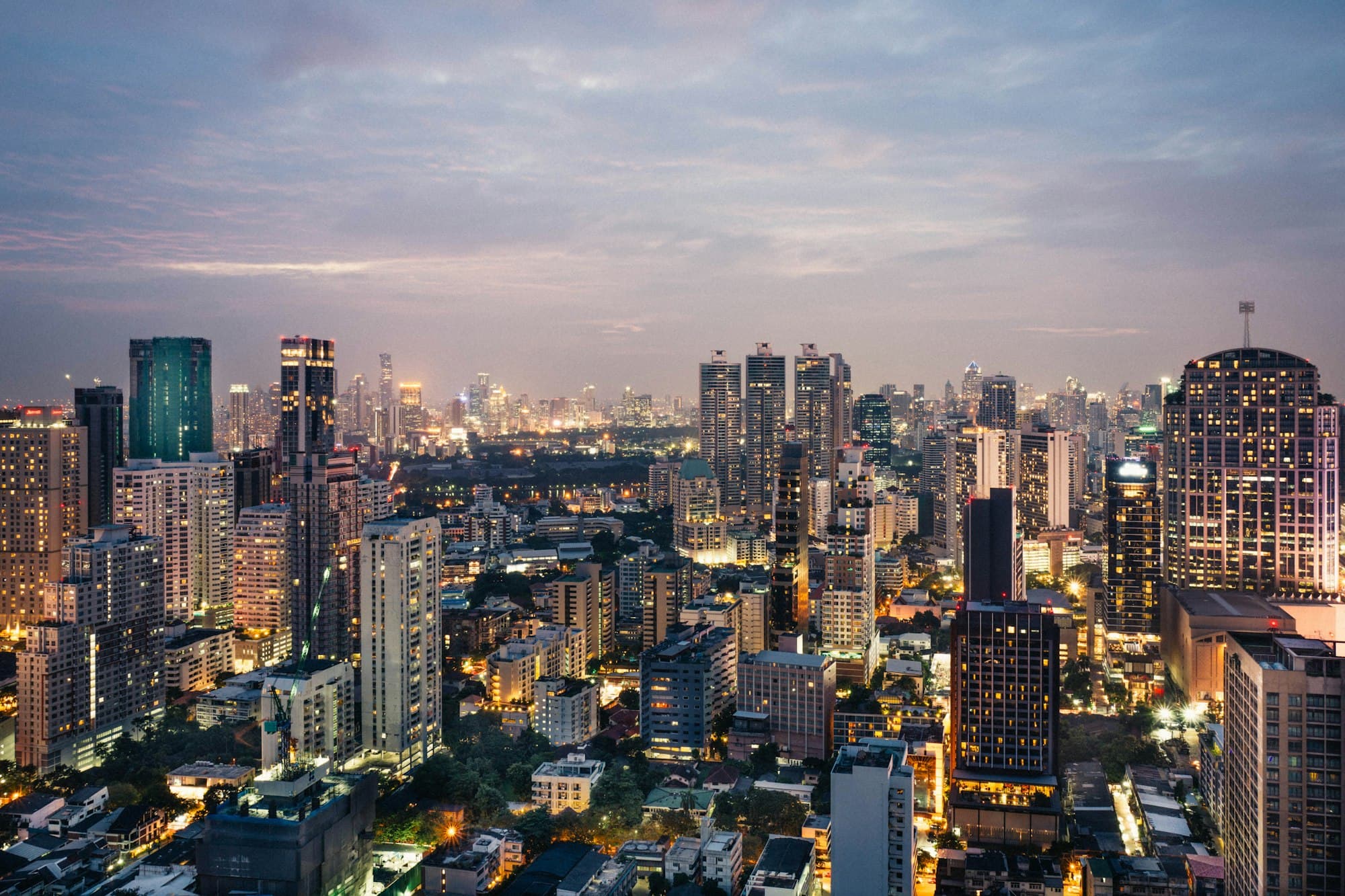
Thailand has been absorbing foreign residents for decades, and it shows in the boring, useful ways. Bangkok has two metro systems, fiber in the buildings that foreigners rent, and hospitals that bill in English. Chiang Mai has a coworking scene that predates the phrase "digital nomad." Phuket and Koh Samui have private hospitals with emergency rooms that take international insurance. None of that is exotic. It's infrastructure, and it's the reason people stay past the first year.
The money is the other half. The useful way to think about it is that Thailand is cheap in the boring categories, not in the fun ones. Rent, food, local transport and medical care all run a fraction of U.S. prices. Imported groceries, alcohol, cars and international school fees don't. Which of those two lists your life leans on decides whether you halve your costs or roughly match them.
The people this works for
Retirees over 50 with a pension and savings they can park. Remote workers paid by a company outside Thailand who'd rather have a five-year visa than an annual renewal. Anyone who wants a real city, real healthcare and low burn rate in one place but doesn't need a path to citizenship at the end of it.
Here's the catch
Thailand doesn't offer permanent residency as a normal outcome. Almost every long-stay foreigner here is renewing something: a one-year extension, a five-year visa, a paid membership. Every year you're re-proving that you still qualify, and you build no standing you can't lose. If your whole reason for moving is a second passport, this isn't the country.
- Cost of living (single)
- $1,100/mo
- Safety index
- 56/100
- Internet speed
- 200 Mbps
- English proficiency
- 55/100
- Capital
- Bangkok
- Population
- 69.8M
The monthly number
$1,900
Monthly budget, couple
all-in, outside prime central Bangkok
$1,100
Monthly budget, one person
Chiang Mai lands under it, Bangkok over it
$500
One-bedroom, city center
roughly half that outside the center
$3
A meal out
street food comes in under it
02 · The money
Where the budget goes

Rent and health insurance are the two lines that decide your number; they pull in opposite directions as you age. A 35-year-old in good health can buy a local Thai policy for well under $100 a month. The same person at 60, with a blood-pressure prescription, is shopping international plans and looking at several hundred. Premiums climb steeply after age 55 and pre-existing conditions get excluded. The expensive mistake is arriving uninsured and shopping for a policy after something shows up.
The rest is cheap in a way that takes a few months to trust. Public transport runs about $31 a month. A private hospital GP visit is roughly $24 to $60. Domestic flights are cheap enough that a weekend on an island stops being a special occasion. What isn't cheap: imported cheese, wine, cars, and air conditioning in April, when a Bangkok electricity bill can double.
One budget line has nothing to do with living costs. If you go the retirement route, you'll park about $24,000 in a Thai bank account and leave it there: money you own but can't spend. Price that separately from your monthly burn or you'll plan the move twice.
A low cost of living is not a low tax bill
Thailand has no wealth tax or inheritance tax, so plenty of people move here assuming that means their pension arrives untouched. It doesn't work that way any more. Since January 2024, if you spend 180 days or more in Thailand in a calendar year, foreign income you wire into the country can be assessable at Thai rates. Money you earned before 2024 is still exempt when you bring it in. That one date does more to shape a Thailand budget than any rent figure on this page.
03 · Everyday life
The parts nobody puts in the brochure
The heat is constant, and the air isn't always fine
It averages 29C, around 84F, and it doesn't let up. The bigger issue is smoke. Every year from roughly February to April, crop burning and forest fires across northern Thailand and Myanmar push Chiang Mai's air into the unhealthy range. In March 2026, the city repeatedly ranked among the most polluted in the world. That same April, the Interior Ministry declared Chiang Mai, Lamphun and Phayao emergency disaster zones over it. Chiang Mai's annual average fine-particle reading in 2024 was still more than five times the World Health Organization guideline. Bangkok and the southern islands don't have this problem at anything like the same scale. Another option: a lot of northern residents just leave for two months a year.
Getting around is easy in two cities and a car everywhere else
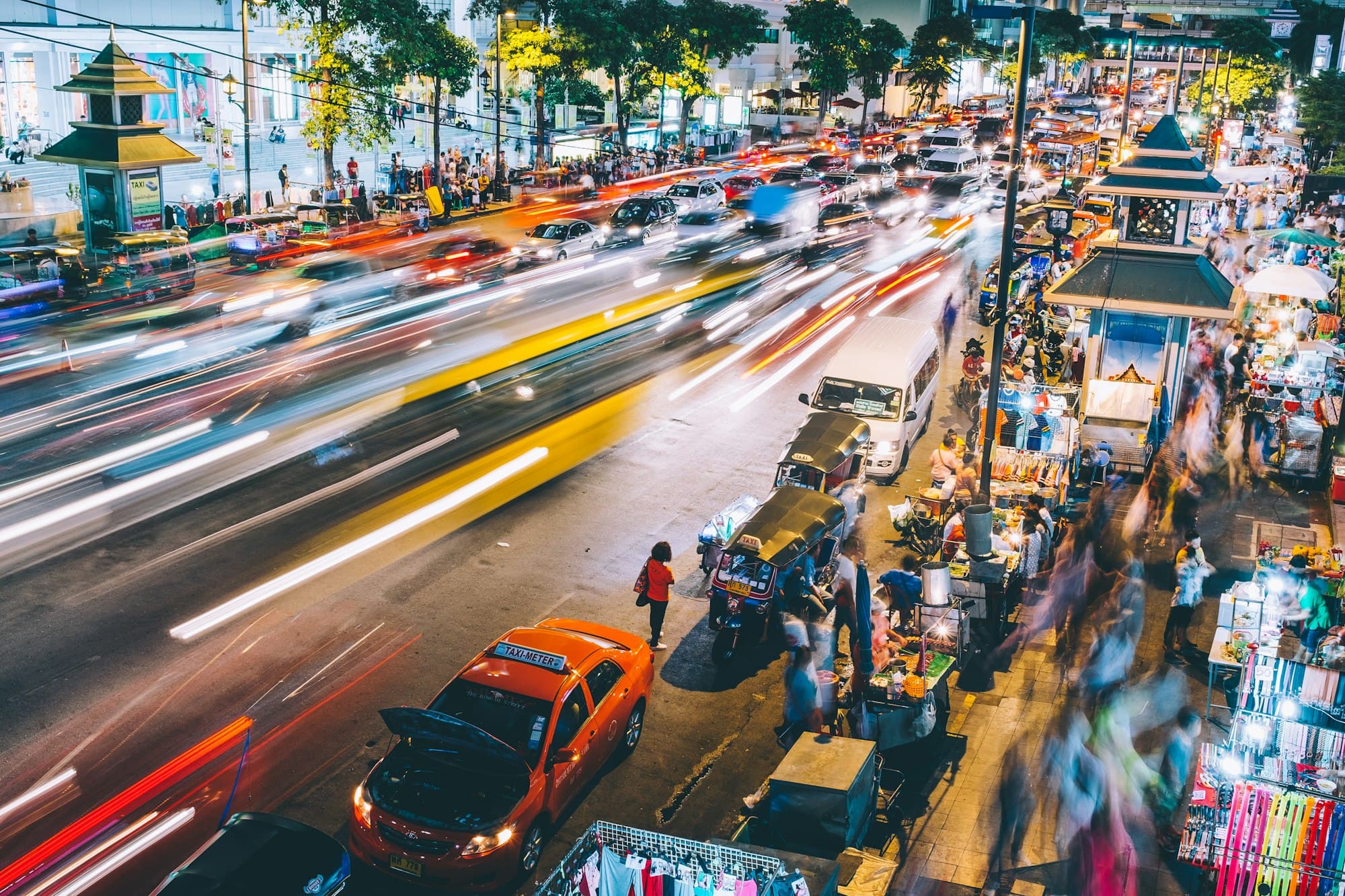
Bangkok's BTS, MRT and airport link cover the parts of the city foreigners live in, and Grab fills the gaps for a couple of dollars. Outside Bangkok you're on a motorbike, in a Grab, or driving. Thailand's road deaths are high and the traffic is chaotic, which is worth a serious think before you buy a scooter because everyone else has one.
You can get by in English, and you'll be a visitor if you do
Hospitals, condo offices, banks and immigration in the big centers all work in English. Thai is the official language and it's tonal, with its own script, so nobody learns it by osmosis. Learning to read a menu and count changes how you're treated in a week.
Where it goes wrong
Families who homeschool, because Thailand doesn't recognize it the way the US does. Parents of children who need specialist autism support, which is thin outside private Bangkok providers. Anyone who needs a settled legal status to feel at home. And people who came for the beaches and then discovered that their island costs more than Bangkok and has one hospital.
What you gain and what you give up
Hospitals people fly to
Bumrungrad in Bangkok was the first hospital in Asia to earn JCI accreditation, back in 2002, and the big private networks run branches in Chiang Mai, Phuket, Pattaya and Hua Hin.
A long way from home
Bangkok is roughly 15 hours' flying from the East Coast with at least one stop, and 12 hours ahead of New York. Christmas at your sister's is a project.
Two seasons, and one is wet
Our data has Thailand at 220 sunny days and 120 rainy ones. The wet season arrives as afternoon downpours rather than grey weeks, but on the islands it also means rougher seas and thinner flight schedules.
Reporting never stops
Every 90 days you tell immigration where you live. Miss it and the fine is about $60 (2,000 baht), more again if they catch it before you report.
Marriage equality is law
The Marriage Equality Act took effect in January 2025, the first in Southeast Asia. A same-sex spouse now has the same visa rights as any other.
Politics you don't get a vote in
Thailand has had repeated coups and a February 2026 general election. Foreigners stay well clear of political activity. Lese-majeste law is enforced.
04 · The visa routes
Five ways to stay, and what each one asks of you
Thailand doesn't have one headline residency visa the way Portugal has the D7. It has a shelf of unrelated products aimed at different wallets, and choosing wrong costs you a year. Here they are in rough order of how hard they are to qualify for. Every figure below is in baht first because that's what the form asks for, with the dollar equivalent at roughly 33 baht to the dollar in September 2026.
DTV, if you work remotely
The Destination Thailand Visa launched in July 2024 and is the closest thing to a nomad visa here. It runs five years, lets you in for 180 days at a time, and extends once inside the country for another 180 days for 1,900 baht, about $58. You need 500,000 baht in savings, about $15,000, sitting in a personal account for at least three months, plus proof you work for clients or an employer outside Thailand. The fee is 10,000 baht, roughly $300, and you apply from outside the country. Two things changed on August 31, 2026: you now need a criminal record check and proof of permanent residence, and you must file at the mission covering your citizenship or legal residence rather than whichever consulate is convenient. Refusals have climbed, and the reason is nearly always money that landed in the account the week before.
Retirement, if you're 50 or over
The Non-O and O-A retirement routes want either 800,000 baht in a Thai bank, about $24,000, or monthly income of 65,000 baht, just under $2,000, or a combination reaching 800,000 baht across the year. Here's the part that only bites Americans: the U.S. Embassy in Bangkok stopped issuing income affidavits in January 2019. Without that letter, the income route is effectively shut for the first one-year extension, so year one means the deposit in practice. From the second year, you can switch to income if you've had 65,000 baht a month landing in a Thai account for 12 straight months. The deposit has to sit for two months before you file and three months after approval, and it can't drop below 400,000 baht, about $12,000, for the rest of the year.
LTR, if the numbers are big
The Long-Term Resident visa is ten years, issued five at a time by the Board of Investment; it's the only route with a real tax break. Wealthy Pensioners need $80,000 a year of passive income, or $40,000 plus a $250,000 Thai investment. Work-from-Thailand Professionals need $80,000 a year and an established overseas employer. It also gets you annual reporting instead of ninety-day, airport fast track, and a digital work permit.
Non-B or SMART, if a company is involved
A Thai employer sponsors the Non-B and you get a work permit on top of it. SMART is the Board of Investment's route for specialists, executives and founders in targeted sectors, and it waives the work permit. Both are hard, and both depend on an organization wanting you specifically.
Thailand Privilege, if you'd rather pay than qualify
The old Elite card, rebranded in 2023. Tiers run from 650,000 baht for five years, around $19,700, up to 5,000,000 baht, about $151,000, for twenty, with no income test, no bank deposit and a concierge to file your paperwork. It's a tourist-class visa though: no work rights, no tax break, and the ninety-day reporting still applies.
The Thailand visas in our database
| Visa | Category | Application cost | Processing | Difficulty | Guide |
|---|---|---|---|---|---|
| Long-Term Resident Visa | skilled work | $50 | ~30 days | 5/5 | Guide |
| Non-Immigrant B Visa (Work/Business) | skilled work | $80 | ~5 days | 4/5 | Guide |
| SMART Visa | self employment | $10 | ~14 days | 5/5 | Guide |
About that data card
Three things on the table above need a footnote. The LTR's cost shows as $50, which is wrong: the government fee is 50,000 baht per person, about $1,500, and the 50 looks like a currency mix-up in our data. The $80 and $10 next to the Non-B and SMART are consular visa fees only, not what the route costs you once a work permit, a sponsor and a lawyer are involved, and neither has anything to do with the LTR's $80,000 income bar above. And the table only holds three Thailand visas, all of them work or investment routes, so the two doors this guide spends the most space on are missing from it entirely: the DTV and the retirement Non-O. We've flagged all of it for the data team.
05 · Money, health and property
The four to get right
Tax, and the rule everyone gets wrong
Cross 180 days in a calendar year and you're a Thai tax resident. Since January 2024, foreign income you remit into Thailand is assessable in the year you bring it in, at progressive rates up to 35 percent. Income earned before 2024 stays exempt, which is why people keep pre-2024 savings in a separate, documented account. You've probably read that Thailand is about to exempt money brought in within a year or two of earning it. That proposal is real. It came from the Revenue Department, but it hadn't been published in the Royal Gazette, so it isn't law. The February 2026 election paused it. Plan against the rule that exists. LTR holders in the Wealthy Global Citizen, Wealthy Pensioner and Work-from-Thailand categories are exempt under Royal Decree 743, which is a large part of why that visa is worth its price. None of this touches your U.S. return: you file a 1040 wherever you live, plus FBAR once your foreign accounts pass $10,000, and an 800,000 baht visa deposit sails past that line on day one. MyExpatTaxes handles this exact mix.
Healthcare is the reason a lot of people stay
The private system is good and it's cheaper, and more than sixty hospitals in Thailand carry JCI accreditation. A GP visit at a private hospital runs about $24 to $60 and a specialist about $45 to $100. The public system is free or near-free for Thai citizens and formal employees, but it's crowded, English isn't guaranteed, and access follows Thai citizenship or formal employment, so private insurance plus self-pay is the normal setup for foreigners. Private hospitals ask for a deposit up front, about $1,500 to $6,000, for a planned procedure, whether or not you're insured. The O-A requires health insurance and the LTR requires $50,000 of it, so this isn't optional anyway.
Property, and the sentence to remember
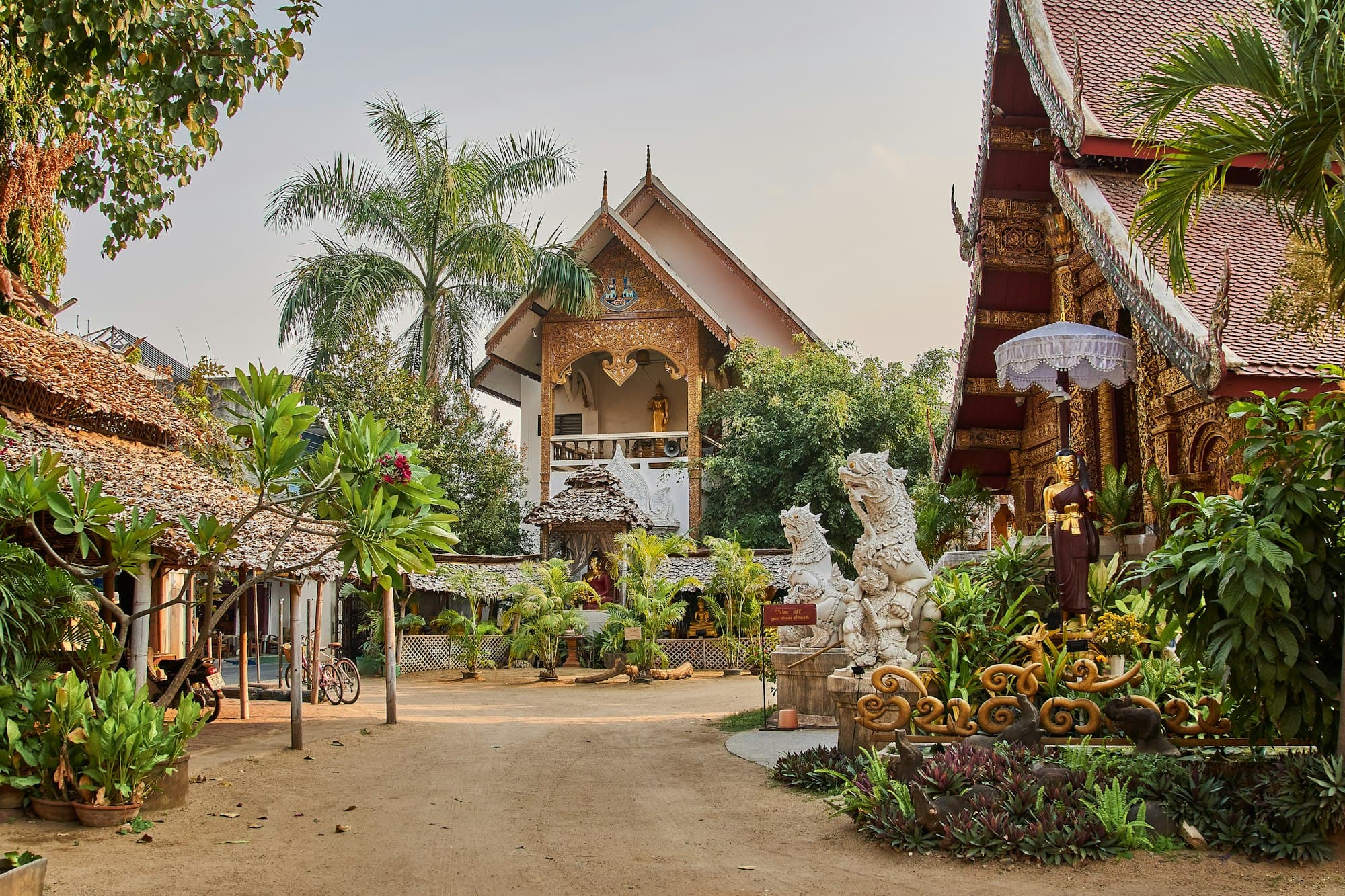
You can own a condo outright, as long as foreign buyers hold no more than 49 percent of the building's floor area, and the purchase money has to arrive from abroad in foreign currency so your bank can issue the transfer form the Land Office wants. You can't own land. A villa means owning the building and leasing the ground, and Thai law caps a registered lease at 30 years. Therefore, anything marketed as 60 or 90 years is a 30-year lease with promises stapled to it. The Thai company workaround is illegal; enforcement stepped up hard through 2025 and 2026 with hundreds of nominee structures prosecuted. Rent first. Everyone says it, and it's the advice people skip.
The bank account problem
This is the errand that surprises people. Banks have tightened up on tourist-class visas, so an account is straightforward on a Non-O, Non-B or LTR and awkward on a DTV. You'll want one either way: the retirement deposit has to sit in a Thai bank, and a condo purchase has to be wired in from overseas and logged.
This guide is dated on purpose
Dollar figures here use roughly 33 baht to the dollar, the rate in mid-September 2026, and the baht has moved more than 5 percent against the dollar in the past twelve months. Thai immigration rules also move in small increments without much warning: the DTV picked up two new document requirements on 31 August 2026 alone. Treat the baht figures as the rule and the dollar figures as a snapshot, and check the current requirement with the embassy or immigration office you'll be filing at before you commit to anything.
06 · Where to live
Thailand city guides
Bangkok
Big, cheap, connected
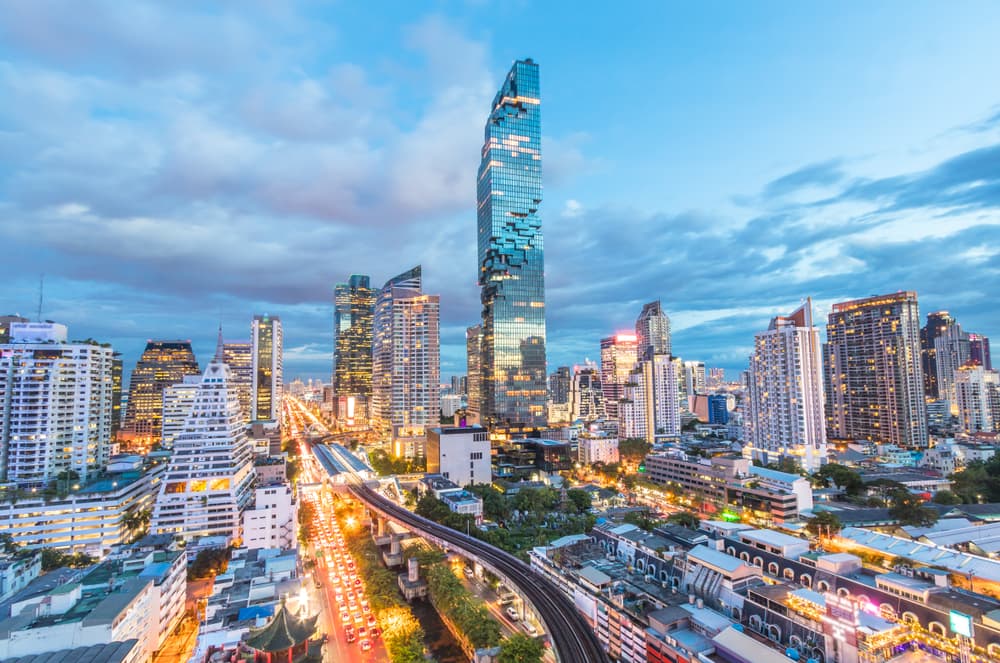
The expat default: BTS and MRT lines reach the neighborhoods foreigners rent in, hospitals bill in English, and Sukhumvit, Ari and Sathorn each have a different rhythm. The catch is heat, traffic that can eat an hour, and hazy air in the dry months.

Chiang Mai
Slow, green, nomad-friendly
A mountain-ringed northern city with a long coworking history, cheap lunches and temples around the old city moat. Nimman is where newcomers land, and the Old City is calmer. The catch is smoke from burning season, roughly February to April, when many residents leave for a few weeks.
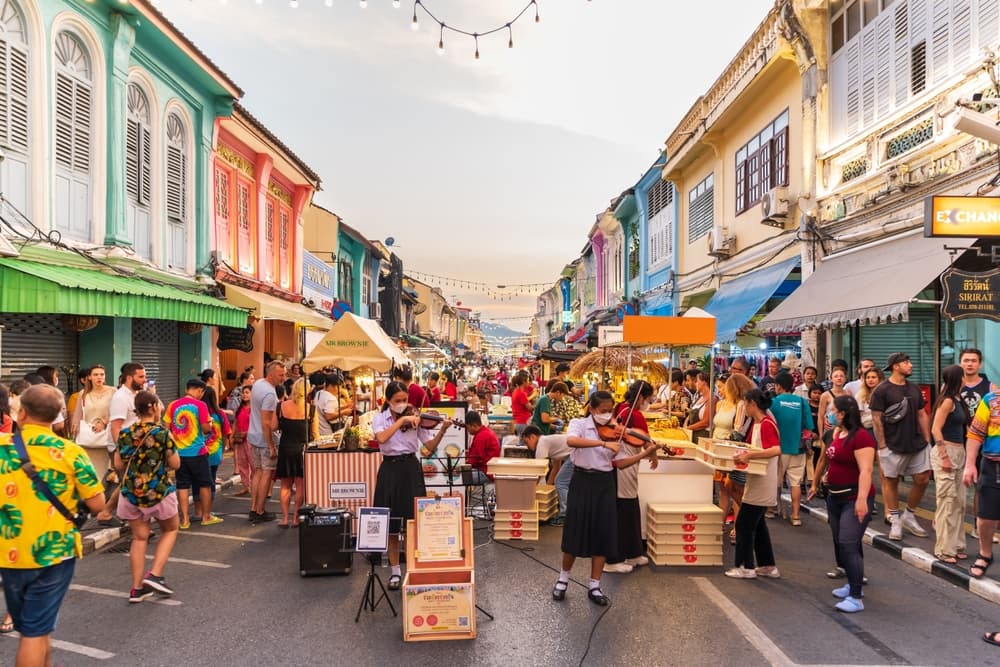
Phuket City
Old Town Phuket
Phuket City is the island's working town, with Sino-Portuguese shophouses, a Sunday walking street and local markets, a drive from the famous beaches. It suits people who want real Thai daily life and hospitals close. The catch is that most expats live in Rawai, Kathu or Chalong, so you'll need a scooter or car.
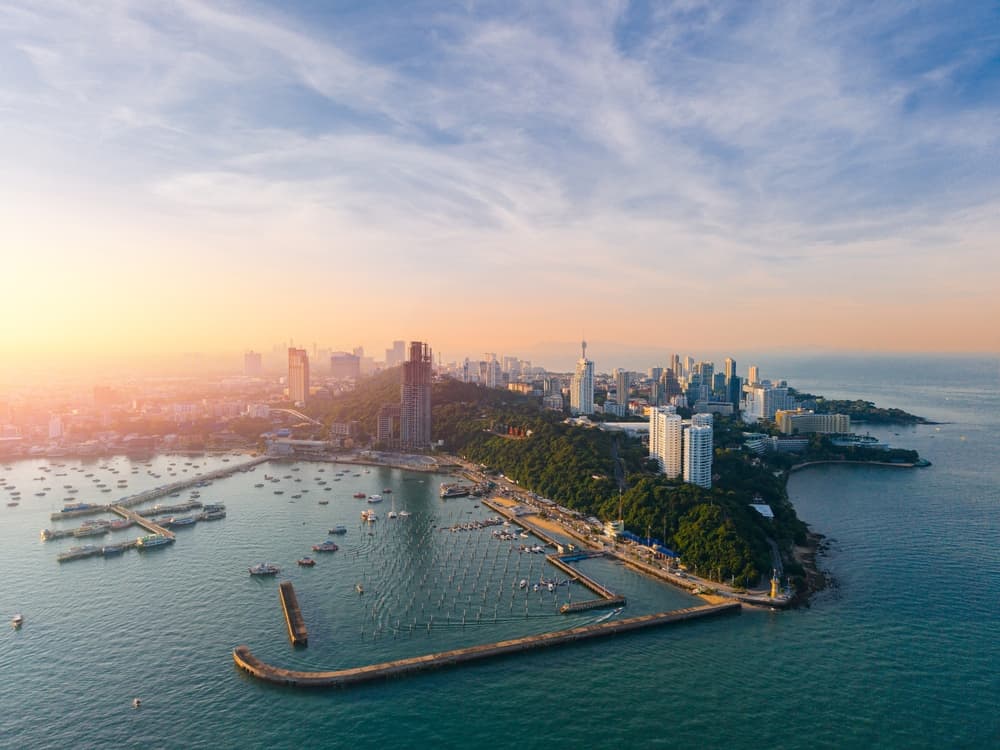
Pattaya
Big beach-city expat base
About two hours by road from Bangkok, Pattaya has a large retiree community, big private hospitals and condos with pools. Jomtien and Naklua are calmer than the nightlife strip. The catch is heavy traffic, a nightlife reputation and a beach that won't match the postcards.
Six bases, and who each one suits
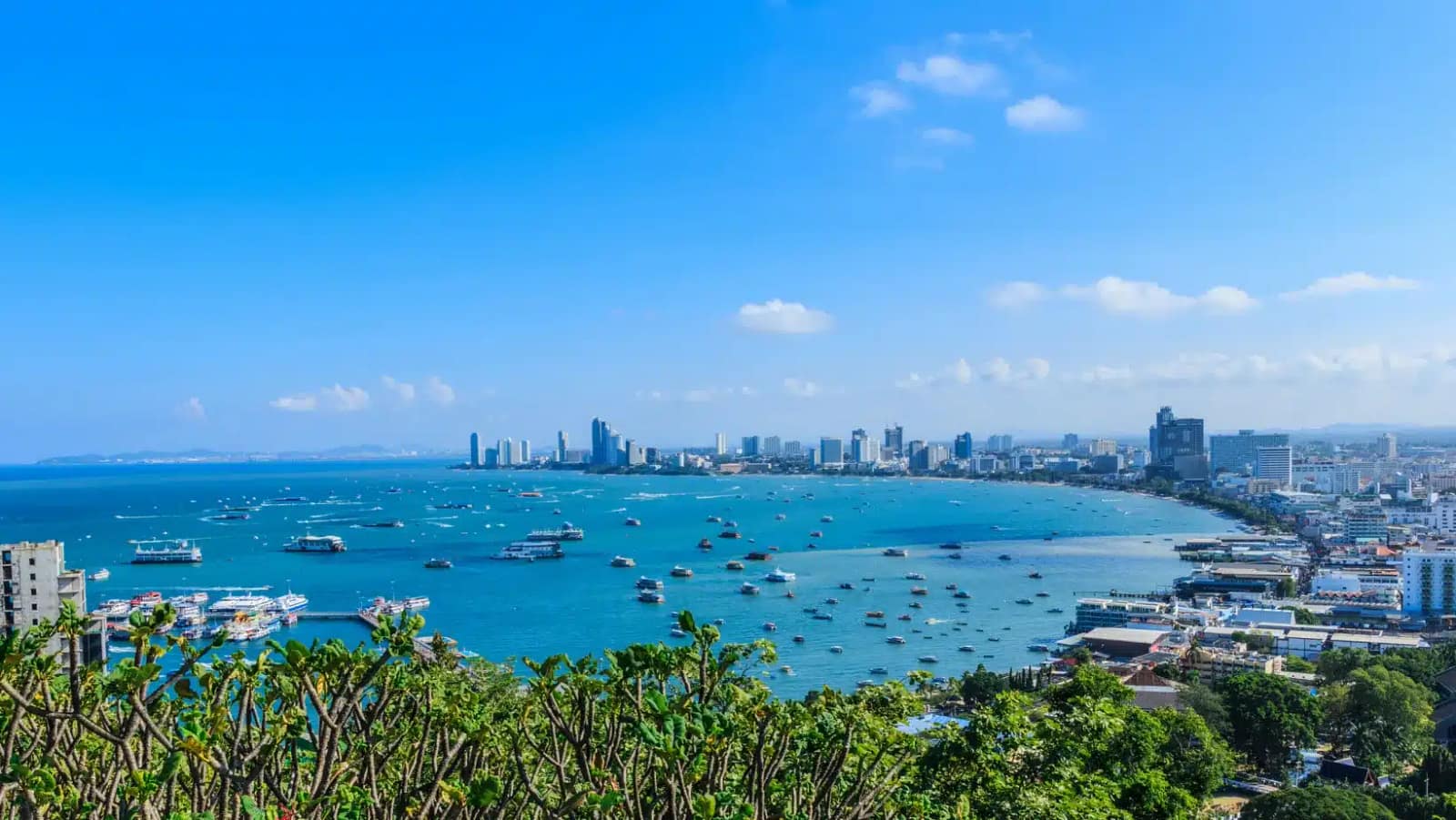
Bangkok
The only one with everything: two metro lines, the flagship hospitals, direct flights across Asia, and a foreign population big enough that you can build a whole social life without leaving your district. Rents run about $400 to $1,200. The trade is traffic, heat that bounces off concrete, and a cost of living that will quietly match a mid-size US city if you live like an American.
Chiang Mai
Where a lot of long-stayers end up. Cheaper than the capital at roughly $250 to $800 in rent, cooler, walkable in the old city, with mountains half an hour away and a long-established foreign community. The burning season is the whole argument against it.
Phuket
An island with real infrastructure: an international airport, a JCI-accredited hospital, international schools. Rents from about $400 to $1,500, and groceries cost more because everything arrives by truck and boat. Suits families who want beach living without giving up hospitals.
Hua Hin
Three hours from Bangkok on the Gulf, quiet, flat, popular with retirees, and about $350 to $900 in rent. Good hospitals for a town its size. Not much nightlife, which is either the point or the problem.
Pattaya
Closest coast to Bangkok, around $300 to $900 in rent, with a big established foreign population and a reputation that precedes it. The residential districts north and east of the center are a different town from that reputation.
Koh Samui
Tropical, slower, $400 to $1,200 in rent, and the hardest of the six to leave in a hurry. One hospital network, pricey flights, and a rainy season that means it.


The people who file this stuff for a living
Thailand is a country where the paperwork rewards a local. Immigration offices interpret the same rule differently in Bangkok and in Chiang Mai, the document list shifts, and an application that fails costs you a flight out and back. These are the partners we send Americans to, grouped by the problem they solve.



MyExpatTaxes
U.S. Expat Tax Service
MyExpatTaxes prepares U.S. returns for citizens living overseas. The piece people underestimate in Thailand is documentation: proving which money was earned before 2024 means keeping a clean paper trail from the year you leave, not assembling one later under pressure.
Learn more
ExpatInsure
Global Health Insurance
ExpatInsure brokers international health policies. Get quotes before you pick a city rather than after: whether a policy direct-bills at the private hospital nearest you matters more day to day than the headline premium does, and that varies by network.
Learn more
Moneycorp
Currency Exchange
Moneycorp moves currency for people relocating. Thailand tends to produce one or two very large transfers rather than a steady trickle, and on a lump sum that size the gap between your retail bank's rate and a broker's is a meaningful number.
Learn moreGo deeper
Worth reading before you start filling in forms.
Thailand Healthcare Report
Healthcare guide for Thailand
Our country report on how Thai healthcare works in practice, including what the public system does and doesn't cover for foreigners.
Do I have enough money?
Our partners at Beacon Financial outline how much money a move abroad could cost you as well as how much you may need to retire.
A session on pressure-testing your number before you move, which matters here because the visa deposit and your living costs are two separate piles.
US Expat Taxes 101
Moving abroad doesn't mean leaving the US tax system behind. In this webinar, we'll cover the basics every American expat should know, including filing requirements, foreign income exclusions, tax treaties, reporting foreign bank accounts, and common mistakes to avoid. Whether you're planning your move or already living overseas, this session will help you better understand your tax obligations and where to turn for professional guidance.
The basics of filing from abroad as a U.S. citizen, which you keep doing no matter how many days you spend in Thailand.
Members who are already there

Thailand
Expatsi Community
Our Thailand group is where members compare immigration offices, insurance quotes and neighborhoods with people who filed the same forms last year.
Join the communityThe questions that come up before the move
What is the retirement visa age and income requirement in Thailand?
You have to be 50 or older. Financially it's about $24,000 (800,000 baht) in a Thai bank, or monthly income of just under $2,000 (65,000 baht), or a combination reaching 800,000 baht over the year. Americans hit a wrinkle: the US Embassy in Bangkok stopped issuing income affidavits in 2019, so the first one-year extension has to run on the deposit in practice.
Can you get permanent residency or citizenship in Thailand?
Rarely, and it isn't the normal outcome. Thailand's permanent residence route is quota-limited and slow, and naturalization after that is harder still. Almost every long-stay foreigner is renewing something instead, whether that's an annual extension, a five- or ten-year visa or a paid membership, and reporting their address to immigration every 90 days.
Is Thailand safe for Americans?
The US State Department put Thailand at Level 1, exercise normal precautions, in its advisory dated 7 July 2026, with Level 2 increased caution for the Thai-Cambodian border region and the southern provinces of Yala, Pattani and Narathiwat. Violent crime against foreigners is rare. The everyday risks are road traffic and scams, particularly rental deposits and bar tabs.
How bad is the air pollution in Chiang Mai?
Bad for roughly two months a year. Crop burning and forest fires push air quality into the unhealthy range from about February to April, and in March 2026 Chiang Mai repeatedly ranked among the world's most polluted cities. Its 2024 annual average was over five times the World Health Organization guideline. Many residents plan to be elsewhere for that stretch.
Can Americans buy property in Thailand?
You can buy a condominium outright, provided foreign owners hold no more than 49 percent of that building's floor area and you wire the purchase money in from abroad in foreign currency. You cannot own land, so a house means owning the building on a registered lease of the ground, capped at 30 years. Company structures that get around this are illegal and are being prosecuted.
Will Thailand tax my US pension or Social Security?
It can. Spend 180 days or more in Thailand in a calendar year and you're a tax resident, and since January 2024 foreign income you bring into the country is assessable in the year you remit it. Money earned before 2024 is exempt. A widely reported exemption for income remitted within a year or two of earning it was still only a draft in mid-2026. You also keep filing a US return regardless.
Does Thailand have a digital nomad visa?
Effectively yes, since July 2024. The Destination Thailand Visa runs five years, lets you stay 180 days per entry with one 180-day extension, and asks for about $15,000 (500,000 baht) held in a personal account for three months plus proof you work for people outside Thailand. It gives you no work permit and no tax break, and you apply from outside the country.
How much money do you need to live in Thailand?
Around $1,100 a month for one person and $1,900 for a couple, all in, based on our country data. Chiang Mai comes in under that and central Bangkok or Phuket goes over it. Budget the visa money separately: the retirement route needs about $24,000 (800,000 baht) parked in a Thai bank account that you can't spend.
Sources
- Thailand Travel Advisory · U.S. Department of State (checked 2026-09-16)
- LTR Visa Thailand: Long Term Resident Program · Thailand Board of Investment (checked 2026-09-16)
- Thailand Long Term Resident (LTR) visa: Key Updates and Requirements for 2026 · HLB Thailand (checked 2026-09-16)
- Thai Revenue Department Drafts Foreign Income Remittance Tax Relief · HLB Thailand (checked 2026-09-16)
- Thailand Remittance Tax Tracker: Is the Exemption Law Yet? · ThaiLawOnline (checked 2026-09-16)
- Destination Thailand Visa (DTV) 2026: Official Guide and Requirements · ThaiEmbassy.com / Siam Legal (checked 2026-09-16)
- Retirement visa Thailand 2026: everything you need to know before applying · The Thaiger (checked 2026-09-16)
- U.S. Mission in Thailand to Cease Providing Income Affidavit · Integrity Legal (reporting U.S. Embassy Bangkok release) (checked 2026-09-16)
- Can Americans Buy Property in Thailand? 2026 Rules and Options · Taxes for Expats (checked 2026-09-16)
- Thailand Condo Foreign Quota 2026: The 49% Rule Explained · Terms.Law (checked 2026-09-16)
- Chiang Mai among the top 10 most polluted cities during Thailand's burning season · IQAir (checked 2026-09-16)
- Thai Marriage Visa Cost and Requirements 2026 (Non-O Guide) · ThaiLawOnline (checked 2026-09-16)
- Thailand Privilege visa 2026: tiers, cost and benefits · The Thaiger (checked 2026-09-16)
- Thai Baht exchange rate · Trading Economics (checked 2026-09-16)

Before you book the scouting flight, run the numbers
Schedule a call with our expat experts to see which path suits you best.
Why not you?