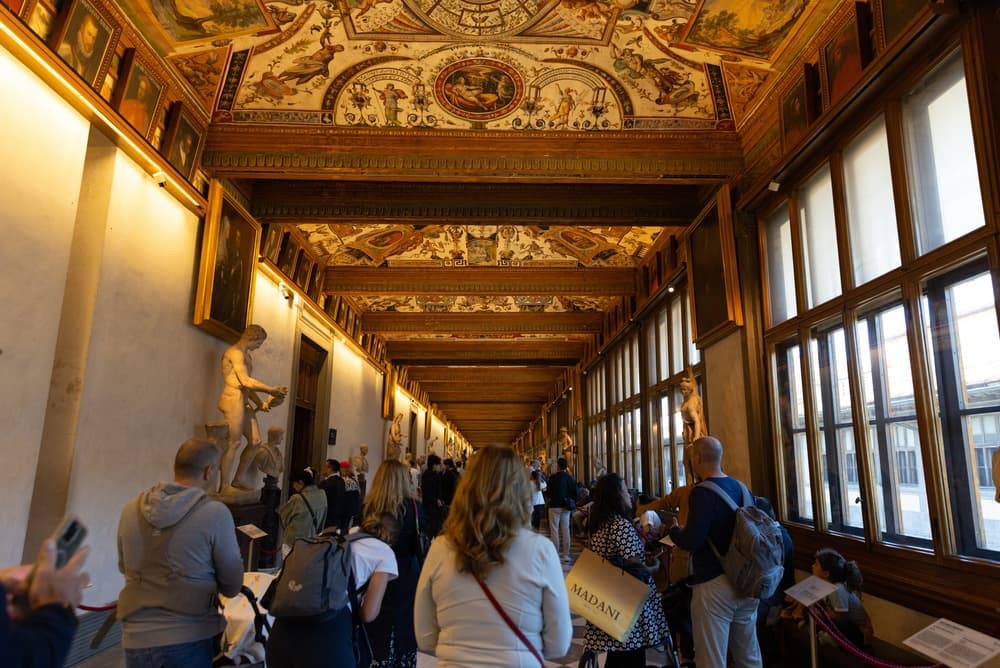
Florence: a Renaissance city you can cross on foot
A human-scaled Renaissance city where daily life happens on foot, with a long American presence and a quieter rhythm across the Arno.
- 360,930
- Population (2023)
- $2,600/mo
- Monthly budget · single
- 58°F / 14°C
- Avg temperature
Budget about $2,600 a month in U.S. dollars for a single person in Florence, roughly $3,700 for a couple, and around $6,100 for a family. A one-bedroom apartment averages about $1,350 in the historic center and about $950 in outlying neighborhoods like Rifredi or Novoli. Rent is the biggest lever in your budget; the gap between the center and the edge is real money over a year.
Florence suits people who want a city that feels human-scaled. The historic core fits inside the old walls, and daily life happens on foot: the market at Sant'Ambrogio, an espresso standing at the bar, a sit-down meal at a modest trattoria for about $22. American students, academics and retirees have come here for generations, so English gets you further than you'd expect. The Oltrarno keeps a quieter, residential rhythm than the blocks around the Duomo.
The honest drawback is the tourism. Roughly 8 million day trippers pass through each year, on top of everyone who stays overnight, in a city of about 361,000 people. From spring through fall, the center can feel like it belongs to them. Housing gets tight for the same reason. Florence froze new short-term rental permits in the UNESCO center in 2025, but long leases downtown stay scarce and landlords can be picky.
At a glance
$2,600
Monthly budget · single person
$1,350/mo 1-bed rent, center
63/100
Safety index
$30
Internet / month
58°Fannual average
Jan 41° · Aug 76°
Climate
360,930
Population (2023)
Expatsi estimates, updated Aug 2026, based on rental listings, government statistics, and local reporting.
Cost of living
What it costs to live in Florence
Single person
$2,300–$2,900/mo
about 15% below Austin, TX
Couple
$3,300–$4,100/mo
about 20% below Austin, TX
Family of four
$5,400–$6,800/mo
about 25% below Austin, TX
Compared with Austin, TX (Expatsi estimate, 2026).
- $22 +10%
- Inexpensive meal
- $1,200–$1,500/mo −31%
- 1-bed rent, center
- $850–$1,050/mo −30%
- 1-bed rent, outside
- $30/mo −54%
- Internet
- $45/mo +9%
- Transit pass
- $534/sq ft −18%
- Buy price, center
Expatsi estimates, updated Aug 2026, based on rental listings, government statistics, and local reporting.
Daily life
How Florence lives
- A grade, 90th percentile among the cities we track
- Dining & cafésstandout
- A grade, 93rd percentile among the cities we track
- Arts & culturestandout
- B+ grade, 67th percentile among the cities we track
- Parks & outdoorsstrong
- A grade, 95th percentile among the cities we track
- Schools & educationstandout
- B+ grade, 66th percentile among the cities we track
- Healthcare accessstrong
- A- grade, 81st percentile among the cities we track
- Bike infrastructurestrong
- A grade, 85th percentile among the cities we track
- Public transitstandout
- A- grade, good physical accessibility
- Accessibilitygood
Graded on OpenStreetMap amenity density relative to the 298 cities we track. Accessibility is the exception: it's graded against a fixed standard (terrain steepness and sidewalk surfaces), not a curve.
Climate
Weather through the year
Annual average 58°F (14°C) · 36 in of rain a year · Source: Open-Meteo Historical Weather API (temps: ERA5-Land 0.1°; precip/sunshine: ERA5 best-match; 1991-2020 normals)
On the ground
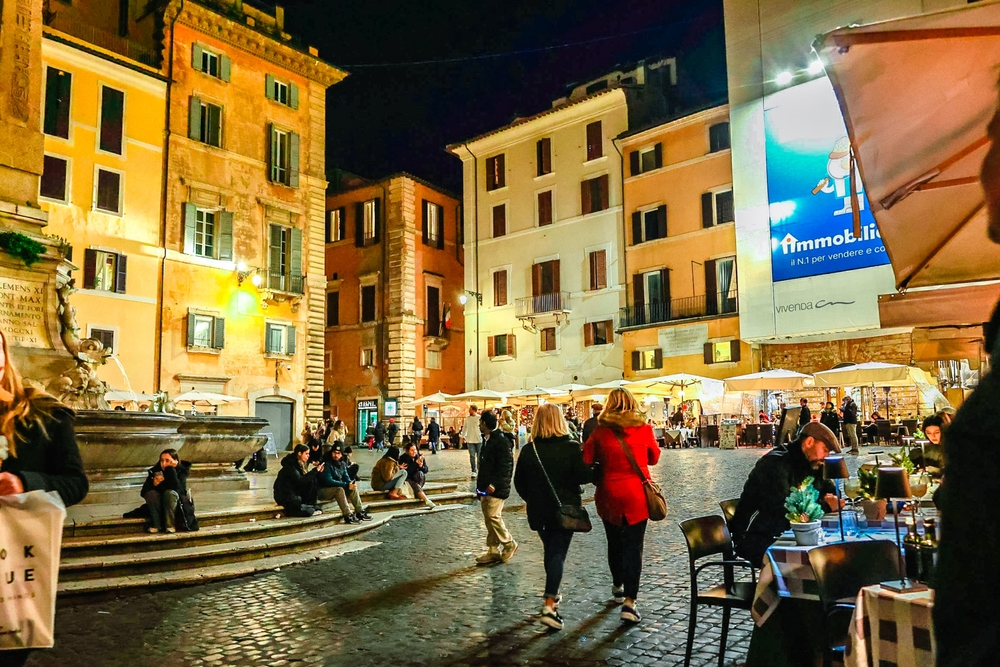
Scenes from Florence
Getting around
Transport in Florence
Florence is a walking city first. The historic center is compact and largely closed to private cars under the ZTL, a camera-enforced restricted traffic zone, so most residents cross it on foot in 20-30 minutes.
Public transit is Autolinee Toscane buses plus a modern tram network reaching Scandicci, the airport and the Careggi hospital district. Since January 2025, it's also serviced Piazza San Marco at the edge of the center. Monthly passes runs about $45 and covers both networks. Trams are frequent and level-boarding; buses fill the gaps, especially on the hillier southern edge.
Cycling works on the flat valley floor, and the city keeps adding lanes along the Arno, though cobblestones and traffic make some stretches less relaxing. Santa Maria Novella station matters more to most residents: the fastest trains reach Rome in about 90 minutes and Milan in under two hours, accessible from a platform you can walk to.
Car ownership becomes a liability inside the city. ZTL cameras issue fines automatically, a separate night zone closes the center from 11pm to 3am Thursday through Sunday, parking is scarce and expensive, and you don't need one for daily life. For weekends in the Tuscan countryside, getting the occasional rental beats owning your own wheels.
- 62/sq mi
- Transit stops
- 51/sq mi
- Bike infrastructure
- 81/sq mi
- Wheelchair-accessible places
Mapped features per square mile from OpenStreetMap.
Keep exploring
Places like Florence


Community
Community & practical notes
Community: Florence has one of the oldest American communities in Italy, built on study-abroad programs, art schools and a steady stream of retirees. The American International League of Florence, a charity founded in 1975, meets monthly at the British Institute, which also runs Italian classes and an English library, and The Florentine covers the city in English. The flip side of the student churn is that some friendships are seasonal. Long-term foreign residents tend to settle in the Oltrarno and the neighborhoods outside the walls.
Healthcare: Tuscany runs one of Italy's stronger regional systems, third nationally behind Veneto and Emilia-Romagna in the Health Ministry's 2024 review of care levels. Legal residents can register with the national health service; for retirees, that means an income-based annual contribution with a floor of 2,000 euros. That gets you a family doctor and public hospitals, including the big Careggi teaching hospital. The friction is bureaucratic: permit and local registration first, and the offices work on their own schedules.
Schools: The International School of Florence has been here since 1952, teaches in English and offers the International Baccalaureate plus an American high school diploma, on two campuses: one in the hills near Piazzale Michelangelo, one out at Bagno a Ripoli. It's accredited by the Council of International Schools and the Middle States Association.
Remote work: Home fiber runs about $30 a month and city coverage is good. Coworking is real but small-scale: Nana Bianca on the Arno, Impact Hub in Rifredi, Multiverso near Sant'Ambrogio. Local hiring skews towards tourism, fashion and leather, and the universities. There's nothing here resembling Milan's tech market, so most Americans bring their income with them as digital nomads.
Limited mobility: Mixed, and worth planning around. The valley floor is genuinely flat, but the city's own accessibility project puts it plainly: wide pedestrian areas in the center, and also narrow streets and stone paving that stop a wheelchair. Trams are step-free; older buses and centuries-old buildings without elevators are the weak points. The climb to Piazzale Michelangelo or Fiesole is steep. Ask about the specific building's accessibility options before you sign any lease.
Retirement: Italy's main route for retirees is the elective residence visa, built for people living on pensions, annuities or investment income rather than a paycheck. It renews each year and opens onto long-term residence after five years. Compare the options in our guide to retirement visa options, and see the full picture in our Italy guide.
Housing
Renting and buying
- 1-bed rent (center)
- $1,200–$1,500/mo
- 1-bed rent (outside center)
- $850–$1,050/mo
- Buy price (center)
- $534/sq ft
- Buy price (outside center)
- $348/sq ft
Expatsi estimates, based on rental listings, government statistics, and local reporting.
Good to know
Frequently asked questions
How does healthcare work for Americans in Florence?
Most Americans arrive on private insurance, because a long-stay visa requires it for the first year. Once your permit comes through you can join the public system and choose a GP. Many people keep the private policy anyway for faster specialist appointments and English-speaking care, since public waits for non-urgent visits run long.
Do I need a car in Florence?
No. The historic center is a restricted traffic zone where cameras fine unauthorized cars automatically, and most daily life happens on foot. A monthly transit pass covering buses and trams costs about $45. Most residents rent a car only for countryside trips.
Is Florence safe for Americans?
Yes, by U.S. standards. Florence scores 63 on the safety index with a crime index of 37, and the State Department's OSAC report calls violent crime in Italy rare while warning that foreigners get targeted for pickpocketing and bag snatching. The crowds around the Duomo, the busy bus lines and Santa Maria Novella station are where that happens.
Is Florence wheelchair accessible?
Partly. The city publishes Passepartour, four wheelchair itineraries plus a map marking which streets in the center you can manage alone and which need a helper, and the Firenze Welcome Center at Piazza Stazione lends wheelchairs free. Those guides also flag which museums and churches you can get into, where the equipped toilets are, and how blue-badge holders handle the restricted traffic zone and parking. The Kimap app rates street surfaces as you go.
Can I retire in Florence?
Yes, and plenty of Americans do. The route is Italy's elective residence visa: you show stable passive income and a place to live, and you can't work, remote jobs included. Consulates read that income test strictly, so build the file before you book anything. The payoff is a walkable city with hospitals a tram ride away and English spoken widely.
How do I move to Florence from the US?
You need a long-stay visa before you fly: the usual routes are the elective residence visa for people with passive income, a student visa, a work visa, or Italy's digital nomad visa. After arrival you apply for a residence permit (permesso di soggiorno) and register with the city. Start with the consulate covering your U.S. state, since requirements vary between them.
What is the weather like in Florence?
The annual average is about 57.5 F (14.2 C), with roughly 36 inches (906 mm) of rain a year. August averages highs near 85 F in the Arno valley, with hotter spells on top of that; January averages highs near 49 F. November is the wettest month, December the darkest, and spring and fall are the comfortable seasons.
How much does it cost to live in Florence, Italy?
Plan on about $2,600 a month for a single person, around $3,700 for a couple and roughly $6,100 for a family, all in U.S. dollars. Rent is the biggest variable: a one-bedroom averages about $1,350 in the historic center versus about $950 outside it. A meal at an inexpensive restaurant runs about $22.
See how Florence fits your life
Take the free Expatsi Test and compare Italy to nearly 200 countries on what actually matters: cost, healthcare, climate, and safety. About five minutes.
Why not you?