Slovakia guide for Americans, September 2026
Moving to Slovakia: the 2026 guide for Americans
Slovakia has no retirement visa and no nomad visa, but it does have mountains, the euro, Vienna next door, and a brand-new citizenship shortcut for Americans with Slovak roots.
A plain-spoken guide to who can live here legally, what a month costs, which rules tightened in 2025 and 2026, and who handles the paperwork.

Reviewed and updated October 22, 2026 · 13 min read
01 · The case for Slovakia
What pulls Americans to Slovakia, and what should give you pause
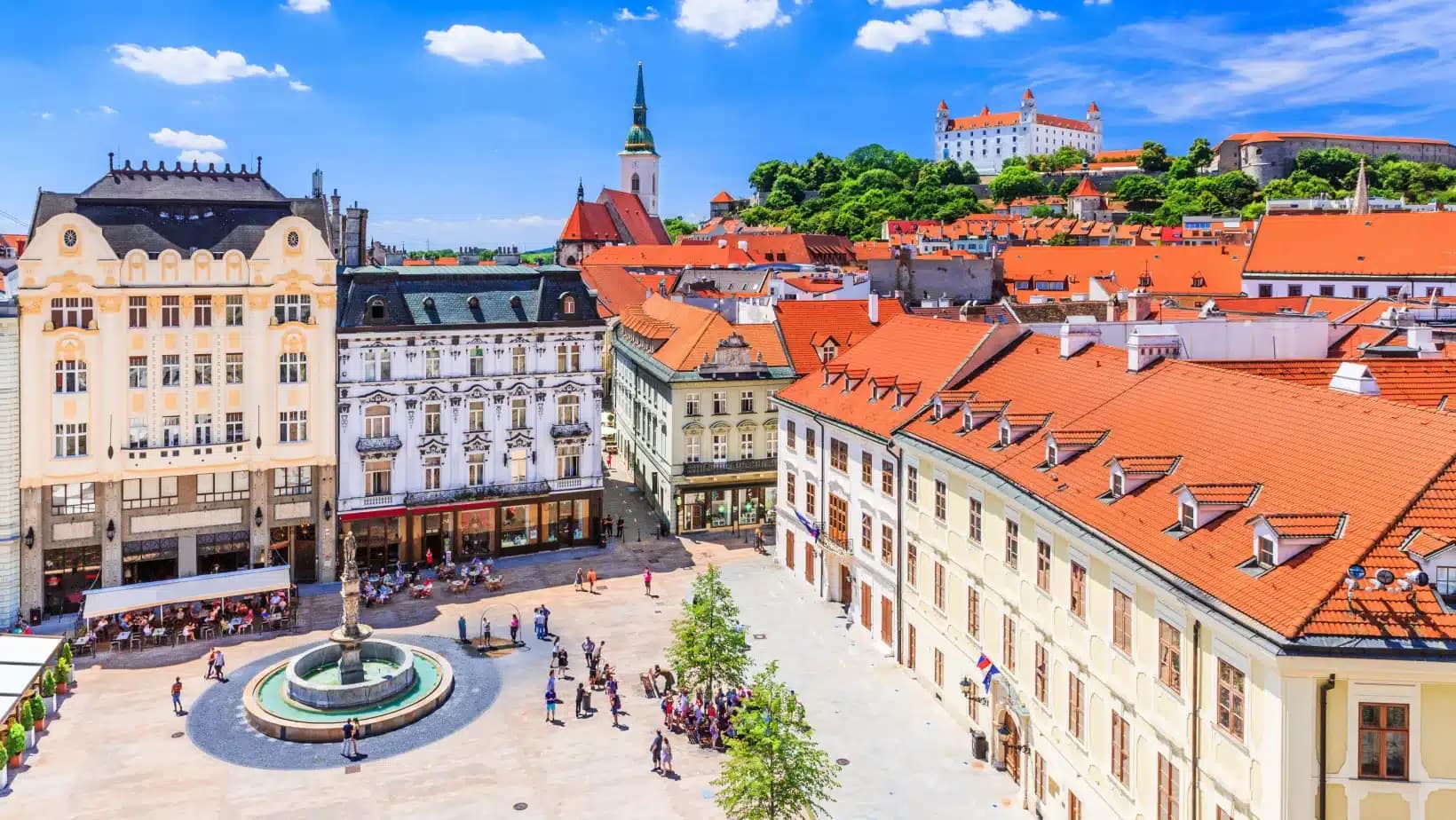
Slovakia is a small country of about 5.4 million people in the middle of Europe, with Austria, Hungary, Czechia, Poland and Ukraine on its borders. It uses the euro, member of both the EU and Schengen area. Its capital, Bratislava, sits about 36 miles from Vienna's airport, roughly 45 minutes by bus. That last detail matters more than it sounds: you can live on Slovak costs and still have a major Central European hub down the road.
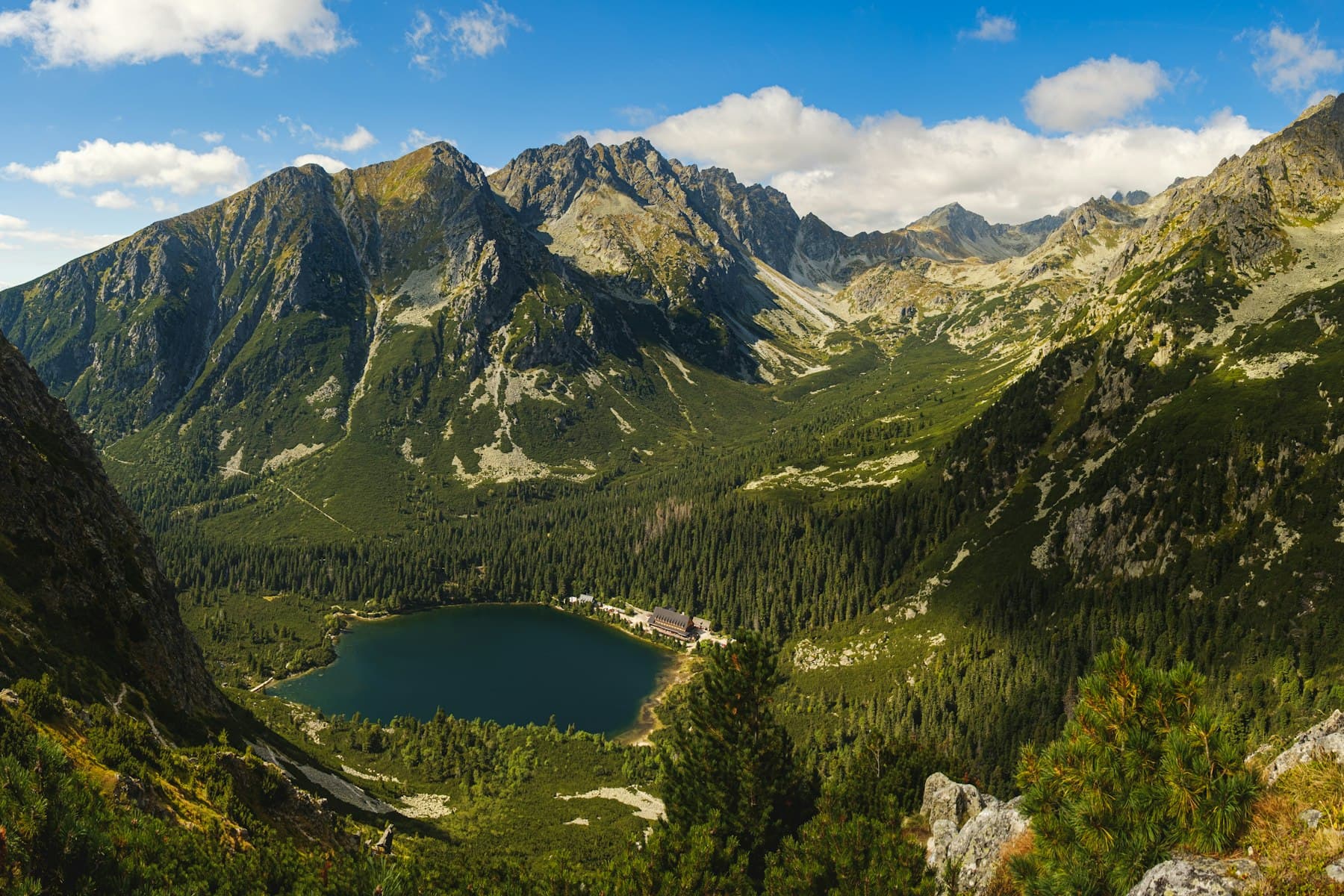
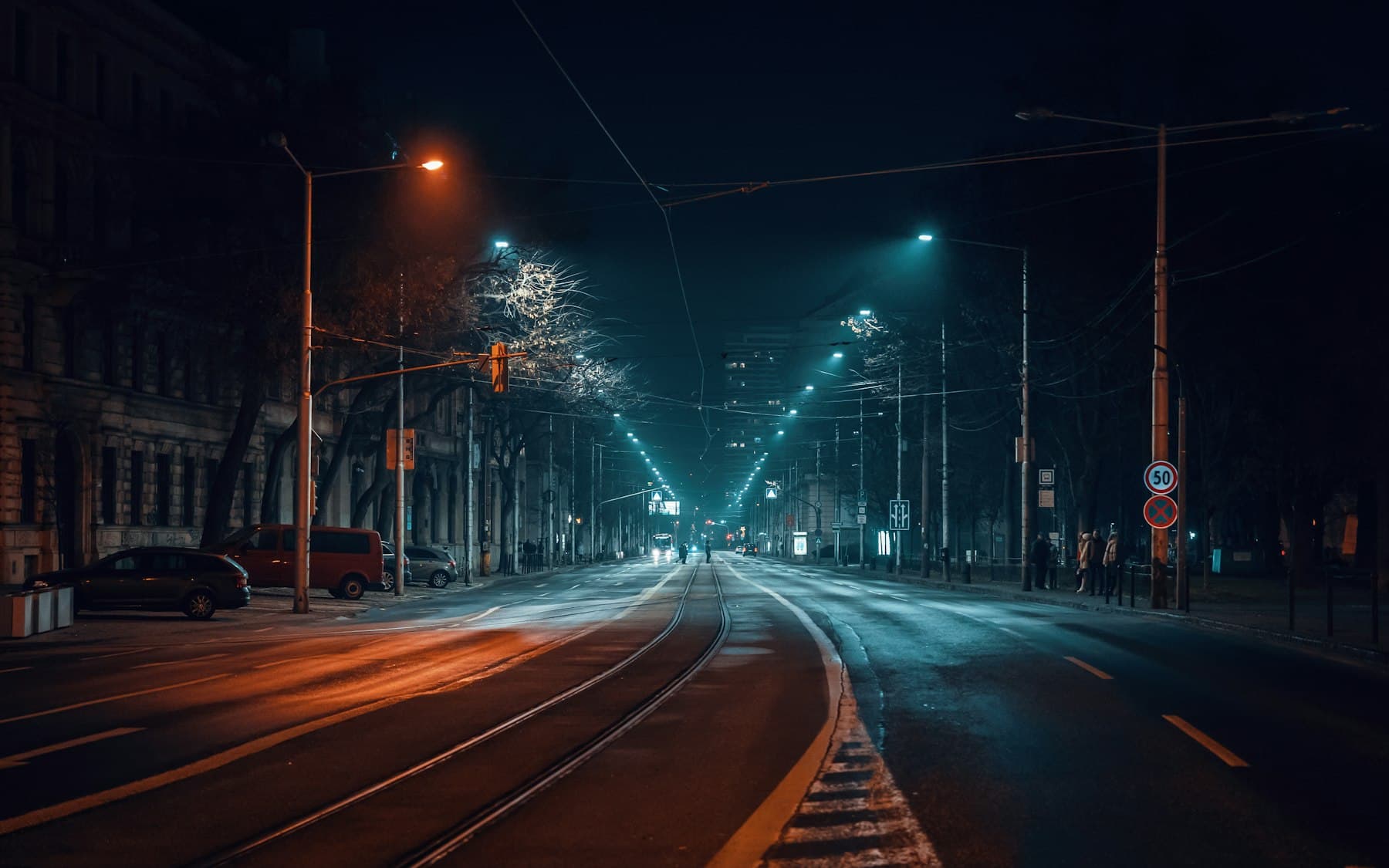
The country's other big draw is the outdoors. The High Tatras rise in the north, with mountain lakes like Popradské pleso, and there are forests, rivers and lakes across the rest of the country. Winters are real here, with the State Department noting heavy snow from November to March. This is a four-season life, not a sunbelt one.
Day to day, Slovakia is calm. The U.S. State Department rates it Level 1, the lowest advisory; the crimes it flags for visitors are the pickpocketing and phone-snatching you'd guard against in any European city center. Our own index puts safety at 70 out of 100. Home internet runs about $20 a month in our 2026 cost data, and the country is six hours ahead of Eastern time for most of the year.
Who does well here? People with a concrete reason to be in Slovakia: a job offer from a Slovak employer, a place at a university, a Slovak spouse, a business they'll really run, or a parent, grandparent or great-grandparent born in what is now Slovakia. That last group just got the best news in this guide; we'll get to it in chapter three.
Here's the catch
Slovakia is a harder country to move to than its prices suggest, and it's better to hear that before you fall for the mountains.
There's no retirement visa or digital nomad visa. Slovak law grants temporary residence only for set purposes, such as business, a job, study, family, research or Slovak heritage. If you plan to live on Social Security or a remote salary with no other tie, there's no route built for you, plus the business route that freelancers use got tighter in July 2025.
Local pay is low by U.S. standards. The minimum wage is about $1,050 a month in 2026 (915 euros), so this works best when your income is portable and your status is solid, not when you're hoping to find a Slovak job after you land.
The language is Slovak, and the system runs in it. Documents need official Slovak translations. English only goes so far (our index scores it 60 out of 100), and permanent residence now requires Slovak at the A2 level.
Finally, there's the politics. In September 2025, parliament amended the constitution to recognize only two sexes and to make adoption largely a right of married couples. LGBTQ Americans and families who care about those protections should weigh that seriously.
If you're still here, Slovakia may well fit. The rest of this guide covers the money, each residence route in plain terms, healthcare and taxes, and who can help.
- Cost of living (single)
- $1,550/mo
- Safety index
- 70/100
- English proficiency
- 60/100
- Internet speed
- 80 Mbps
- Capital
- Bratislava
- Currency
- Euro (EUR)
02 · The numbers
A month in Slovakia, in U.S. dollars
$1,550
Monthly budget, single
2026 estimate, all in
$2,550
Monthly budget, couple
2026 estimate, all in
$4,050
Monthly budget, family
housing included
$700
Rent, 1-bed city center
$550 outside center
$9
Inexpensive meal out
lunch-menu territory
$35
Monthly transit pass
trams and buses
$20
Home internet, monthly
about 80 Mbps
70/100
Safety index
State Dept Level 1
Where the money goes, and why your income source matters
As of 2026, our cost data puts a single person at about $1,550 a month and a couple at about $2,550, all in. A family with kids lands around $4,050 once you add a bigger apartment. Those are national averages, so treat them as a starting point, not a promise.
Housing is the line that moves the most. A one-bedroom in a city center averages about $700 a month, and about $550 further out. Everything else is modest: a simple meal out runs around $9, a monthly transit pass about $35, and home internet about $20 for roughly 80 Mbps.
The number to keep in mind is the other side of the ledger. Slovakia's minimum wage is about $1,050 a month in 2026 (915 euros), and salaries in general are set to local costs, not American ones. If a U.S. salary or a strong freelance business travels with you, the math is comfortable. If you're counting on a Slovak paycheck to cover a Slovak lifestyle, run the numbers for your field before you commit.
One more budget line people forget: the paperwork itself. Residence fees alone run about $230 to $380 per application, before apostilles, certified Slovak translations and the residence card, and more if you hire help.
Why the visa decides the budget, not the other way around
In a lot of countries, the question is whether your income clears a visa's floor. In Slovakia, the question comes first: which legal purpose do you fit? Only business applicants have to prove financial means up front, and there's no passive-income visa at all. Pick your route before you pick your apartment. The next chapter walks through each one.
03 · Your way in
Every realistic residence route for an American, in plain terms
Start with what you already have: as a U.S. citizen, you can spend up to 90 days in any 180 in Slovakia and the rest of Schengen without a visa, as long as your passport is valid for three months past your departure. You'll also register in the EU's Entry/Exit System at the border. For anything longer, you need temporary residence, and Slovakia grants it only for a fixed list of purposes. Find yours below.
A useful detail for Americans: because you don't need a visa to enter, you can usually file your residence application at a Foreign Police office inside Slovakia rather than at a consulate in the U.S. The police must decide within 90 days. The big exception is business residence, which now has to start at a Slovak embassy or consulate abroad.
Freelancers and business owners: temporary residence for business
This is the route freelancers and small-business owners use, typically with a Slovak trade license, and it's the closest thing Slovakia has to a remote-work option. It's granted for up to three years; the fee is about $380 (330 euros).
The rules changed on July 1, 2025, and most of the changes make it harder. Applications are capped at 700 a year, allocated by embassy. First-time applications must be filed at a Slovak consulate abroad, not in Slovakia. You can't switch into business residence from another status until you've held it for 24 months. You'll need a business plan, proof the business brings economic benefit, and certified Slovak translations of the attachments. According to immigration firm Fragomen, the government prefers employment permits and suspects some business permits are used to dodge tax.
Renewals got stricter again on July 15, 2026. A sole trader now has to show taxable business income above a legal minimum, roughly $3,300 (about 2,877 euros) for the previous year, and any unpaid tax or insurance on the filing day means rejection. If you're a salaried employee of a U.S. company rather than a freelancer, this route doesn't fit neatly, so get legal advice before you build a plan around it.
A Slovak job offer: employment residence
If a Slovak employer hires you, you'll apply for a single permit that covers both residence and work. The employer usually has to report the vacancy to the labor office at least 20 working days before, and the office can check whether a local candidate could fill it. The permit runs up to two years at a time, the fee is about $285 (250 euros), and the police decide within 60 days.
Students: free in Slovak, paid in English
Full-time degrees taught in Slovak at public universities are tuition-free within the standard length of study. English-taught programs charge about $570 to $14,000 a year (500 to 12,200 euros), set by each school. Student residence lasts up to six years, and students may also run a business on the side. The catch for long-term planners: study years count only half toward permanent residence.
Married to a Slovak, or joining family
Family reunion residence lasts up to five years and costs about $230 (200 euros). If your spouse is a Slovak citizen with permanent residence in Slovakia, you can go straight to five-year permanent residence, skipping the temporary stage entirely.
Slovak roots: the new shortcut
This is the route that changed most. Since July 15, 2026, Americans with at least one parent, grandparent or great-grandparent who was a Czechoslovak citizen born in what's now Slovakia can apply for Slovak citizenship without living in Slovakia first. You can file at a Slovak embassy or consulate in person, online or by mail. Slovak law doesn't make foreigners give up their original citizenship to become Slovak, so you keep your U.S. passport. Separately, a Slovak Living Abroad certificate gives temporary residence for up to five years with the right to work.
The long game: permanent residence and a passport
After five years of continuous residence you can apply for long-term residence, if you haven't been away more than six months in a row or ten months in total. You'll need Slovak at the A2 level, funds of 12 times the subsistence minimum (about $4,050, or 3,542.64 euros, as of July 2026), and a fee of about $285 (250 euros), or about $230 (200 euros) if you file online. Naturalization takes at least eight years of continuous permanent residence, plus spoken and written Slovak and general knowledge of the country; spouses of Slovak citizens can apply after five years living together in Slovakia.
Business Residence Permit
The only route for the self-employed
Temporary residence for business, usually on a trade license. Capped at 700 applications a year and filed at a Slovak consulate abroad.
- Valid passport
- Application submitted at Slovak diplomatic mission abroad (not at foreign police)
- Business plan
National Visa (Type D)
For stays past 90 days with a Slovak anchor
Long stays tied to an employer, a university place or family. Americans can often file the residence application itself at a Foreign Police office after a visa-free entry.
- Valid passport
- Purpose-specific documentation (e.g., work contract, university acceptance, family reunification proof)
- Proof of accommodation in Slovakia
04 · Life admin
Healthcare, taxes and the paperwork that trips people up
These are the parts of the move that decide whether your first year feels smooth or frantic.
Healthcare
Slovakia runs a public health insurance system through three insurers: Všeobecná zdravotná poisťovňa (VšZP), Union and Dôvera. Whether you're in it depends on your status, not your preference. Permanent residents are covered by the public system, and so are temporary residents who are employed or self-employed. Temporary residents who don't work, such as a non-working spouse, and many foreign students have to buy individual commercial insurance instead.
The deadline is tight: you must sign up for health insurance within three working days of collecting your residence card. Line it up before your appointment, not after. Our healthcare index scores Slovakia 70 out of 100. If you're managing a chronic condition or moving in your 60s, it's worth a session with Hunter Schultz, our healthcare coach, and a quote from ExpatInsure for any commercial coverage you'll need while your status settles.
Taxes
Once you're a Slovak tax resident, Slovakia taxes your worldwide income, and the U.S. still expects a return from you every year as a citizen. From January 2026, Slovak income tax runs at 19%, 25%, 30% and 35% as income rises, and the point where the 25% rate kicks in dropped this year. Capital gains are taxed separately at 19%. The U.S. and Slovakia have had an income tax treaty since 1993, which helps keep the same dollar from being taxed twice, but only if you file correctly in both places. MyExpatTaxes handles the U.S. side for Americans abroad, and Beacon Global Advisors can look at how your 401(k), IRA and brokerage accounts should be set up before you go.
Documents
This is where applications stall. Supporting documents, including your FBI background check, generally need an apostille and an official Slovak translation, and they can't be older than 90 days when you file. You'll also need a confirmation of accommodation covering at least six months. The residence card itself costs about $11 (10 euros) for delivery within 30 days, or about $45 (39 euros) within two business days. Legalize That Doc orders and apostilles U.S. records like FBI checks and vital records, which takes much of the timing risk out of that 90-day window.
A few rules that surprise Americans
The legal blood alcohol limit for drivers is zero, not 0.08. Bringing cannabis or CBD products into the country is illegal. If you'll drive in winter, plan on snow from November through March.
This guide is dated on purpose
Slovakia changed its business residence rules in July 2025, then amended both its residence and citizenship laws again in July 2026. Everything here reflects the rules as of September 2026, and euro amounts are converted at about $1.14 per euro. Confirm the current version with a licensed professional before you file.
05 · Picking a base
Choosing where to live in Slovakia
In Slovakia, your route usually picks the city before you do. An employer, a university or a spouse's family puts you in a specific place. If you have a free choice, weigh three things: how close you want to be to Vienna's airport, whether you'd rather have the Tatras on your doorstep, and how much English you'll need day-to-day, since it's more common in the capital than in smaller towns. Our Slovakia city guides appear below as each one is published.
06 · Your move team
People who make a Slovak move easier
Slovakia is a paperwork-heavy move in a language most Americans don't speak, which is exactly when a good specialist earns their fee. These are Expatsi-vetted partners, grouped by the part of the move they handle: health coverage, taxes and money, documents and ancestry, your pets, and settling into the language and culture.

Hunter Schultz
Healthcare Coach
A healthcare coach with more than 20 years of expat living and a background in air medical transport. In a one-hour consultation he maps your health needs to the care available where you're moving.
Learn more
ExpatInsure
Global Health Insurance
Expatsi's international health-insurance partner, led by Andy Seale and Stephanie Edwards. The team to call for commercial coverage while you're waiting on a residence card or not yet eligible for the public system.
Learn more
MyExpatTaxes
U.S. Expat Tax Service
Tax software and support built for Americans filing U.S. returns from abroad, running since 2018. Useful the first year you're juggling a Slovak tax residence and a U.S. filing.
Learn more
Beacon Global Advisors
Financial Planning
Financial planners who keep American 401(k)s, IRAs and investment accounts working after you leave, and help you stay square with both tax systems.
Learn more

Legalize That Doc
Document Preparation
Founder Melissa Di Nardo's document concierge orders, apostilles and legalizes U.S. records such as FBI checks, birth and marriage certificates, and pension letters for use abroad.
Learn more
Sovereign Roots
Citizenship by Ancestry
Citizenship-by-descent consultants for Canada and Europe who help families research roots and secure second passports.
Learn more

Lingoda
Language Learning
An online language school with small live classes on your schedule, for building the everyday language skills that make paperwork and daily life easier.
Learn more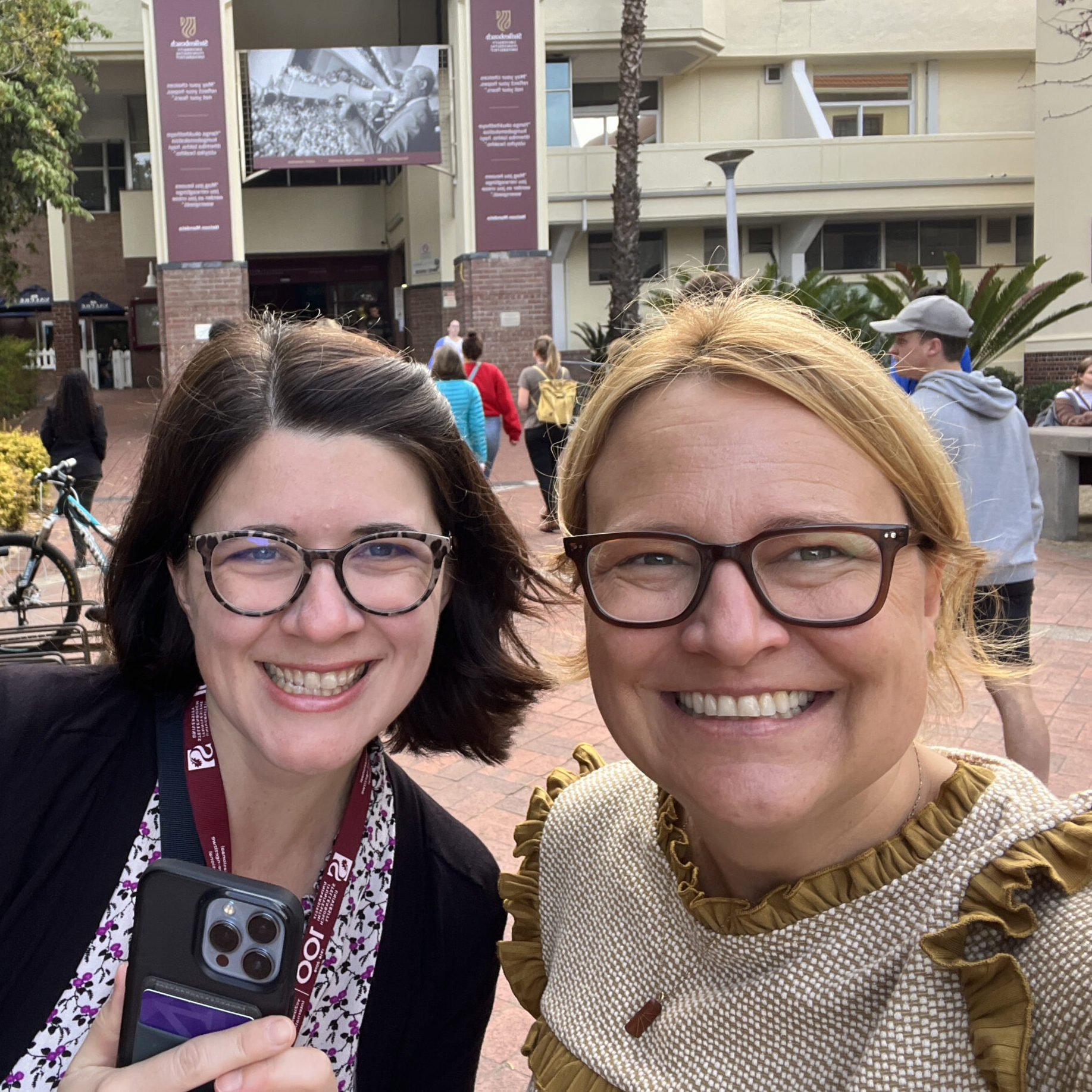
Culturosity Co.
Cultural Skills Coach
Co-founders Jennifer and Janka coach individuals and families on intercultural skills through one-on-one sessions and group workshops, so the culture shock is shorter.
Learn more07 · Quick answers
Moving to Slovakia: common questions
How much does it cost to live in Slovakia?
Expatsi's 2026 cost data puts a monthly budget at about $1,550 for a single person, $2,550 for a couple and $4,050 for a family, all in. Rent is the biggest variable, with a one-bedroom apartment in a city center averaging about $700 a month.
How long can a U.S. citizen stay in Slovakia without a visa?
Up to 90 days in any 180-day period across the Schengen area, which includes Slovakia. Your passport must be valid for at least three months past your departure date. Staying longer requires temporary residence for a recognized purpose, such as a job, study, family or business.
Can I get Slovak citizenship through my grandparents?
Possibly. Since July 15, 2026, people with at least one parent, grandparent or great-grandparent who was a Czechoslovak citizen born in what's now Slovakia can apply for Slovak citizenship without first living in Slovakia. Applications go through Slovak embassies and consulates, in person, online or by mail. You'll need documents proving the family line.
Is Slovakia safe for Americans?
Yes, by the State Department's measure. Slovakia carries a Level 1 advisory, the lowest, meaning exercise normal precautions. The most common crimes against visitors are pickpocketing and phone, backpack and purse theft in tourist areas. Two rules that catch Americans off guard: the legal blood alcohol limit for drivers is zero, and bringing cannabis or CBD products into the country is illegal.
Does Slovakia have a digital nomad visa?
No. As of 2026 Slovakia has no dedicated digital nomad or remote-work visa. Freelancers generally use temporary residence for business on a Slovak trade license, which has been capped at 700 applications a year since July 2025 and must be filed at a Slovak consulate abroad. It fits self-employed people better than salaried employees of U.S. companies.
Do I have to give up U.S. citizenship to become Slovak?
No. Slovakia's citizenship law doesn't require foreigners who acquire Slovak citizenship to renounce their original nationality, so Americans who naturalize or claim citizenship by descent keep their U.S. passport.
Can I apply for Slovak residence after arriving as a tourist?
For most purposes, yes. Because Americans don't need a visa to enter Slovakia, they can file a temporary residence application at a Foreign Police office inside the country, and the police must decide within 90 days. The exception is residence for business: since July 2025, first-time business applications must be filed at a Slovak embassy or consulate abroad.
Can Americans retire in Slovakia?
Not on a retirement visa, because Slovakia doesn't have one. Temporary residence is granted only for set purposes such as business, employment, study, family reunion, research or Slovak heritage, and none is built for pension income. Retirees can still qualify another way: a Slovak spouse, family already living in Slovakia, or Slovak ancestry, which since July 15, 2026 can lead to citizenship without living in the country first.
Sources
- Application for temporary residence · IOM Migration Information Center, Slovakia (checked September 2026)
- What is temporary residence? · IOM Migration Information Center, Slovakia (checked September 2026)
- Changes in the Act on Residence of Foreigners from July 1, 2025 · IOM Migration Information Center, Slovakia (checked September 2026)
- Legislative changes effective from 15 July 2026 · IOM Migration Information Center, Slovakia (checked September 2026)
- Long-term residence · IOM Migration Information Center, Slovakia (checked September 2026)
- Single permit · IOM Migration Information Center, Slovakia (checked September 2026)
- Slovak citizenship for foreigners · U.S. Embassy in Slovakia (checked September 2026)
- Slovakia travel advisory · U.S. Department of State (checked September 2026)
- Admission and tuition fees · Study in Slovakia (SAIA) (checked September 2026)
- Slovak Republic: taxes on personal income · PwC Worldwide Tax Summaries (checked September 2026)
- Slovak Republic tax treaty documents · IRS (checked September 2026)
- Slovak citizenship by descent simplified from 15 July 2026 · ZIP Citizenship (checked September 2026)
- EUR to USD exchange rate history, 2026 · Exchange-Rates.org (checked September 2026)
Find out if Slovakia belongs on your shortlist
Take the free Expatsi Test to compare Slovakia with other countries on cost, healthcare, climate and safety, and see where you fit best.
Why not you?