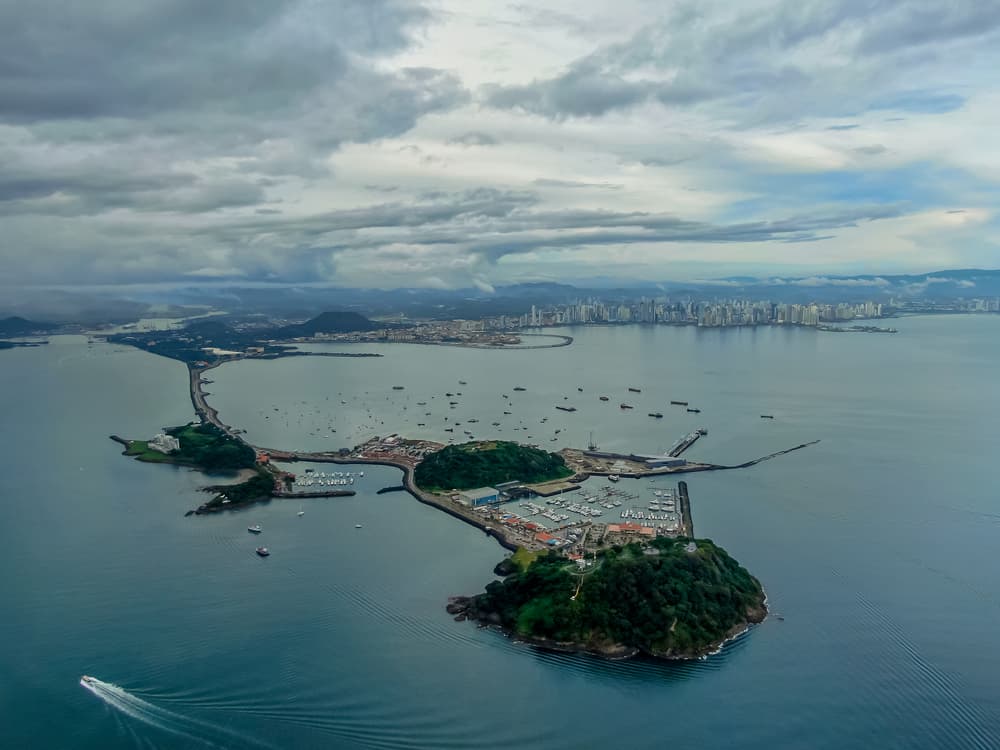
Panama's Pacific Coast: beach towns from Gorgona to Río Hato
A string of beach, golf, and gated-community towns along the Pan-American Highway, one to two hours west of Panama City, where nearly everyone drives.
- $1,800/mo
- Monthly budget · single
- 79°F / 26°C
- Avg temperature
Plan on about $1,800 a month for one person on Panama's Pacific beach corridor, about $2,500 for a couple, and about $3,600 for a family of four (U.S. dollars, 2026). A one-bedroom near a town center rents for about $800, or about $600 further from the main strip, and an inexpensive meal out is about $9. That's $100 a month under our single-person budget for Coronado, the corridor's best-known town.
The corridor is the run of beach towns along the Pan-American Highway west of the capital: Gorgona, Coronado, San Carlos, and on to Río Hato, about an hour from Panama City at the near end and up to two at the far end. Life here is built around the beach, golf, and gated developments, and the crowd is heavy on North American retirees. It suits couples who want warm water and a quiet routine and don't mind driving to get anything done.
It's a poor fit if you want to live without a car, go out at night, or find a big remote-work scene. Our cost estimate for this stretch is wide, from $1,400 to $2,300 a month for one person, because a condo tower in Gorgona and a house in a golf community near Río Hato are very different budgets.

Reviewed and updated October 1, 2026 · 4 min read
At a glance
$1,800
Monthly budget · single person
$800/mo 1-bed rent, center
60/100
Safety index
$40
Internet / month
79°Fannual average
Nov 78° · Apr 81°
Climate
Expatsi estimates, updated Aug 2026, based on rental listings, government statistics, and local reporting. Coverage here is thin, so treat these as a rough guide.
Cost of living
What it costs to live in Pacific Coast
Single person
$1,400–$2,300/mo
about 40% below Austin, TX
Couple
$1,900–$3,100/mo
about 45% below Austin, TX
Family of four
$2,800–$4,400/mo
about 55% below Austin, TX
Compared with Austin, TX (Expatsi estimate, 2026).
- $9 −55%
- Inexpensive meal
- $600–$1,000/mo −59%
- 1-bed rent, center
- $450–$750/mo −56%
- 1-bed rent, outside
- $40/mo −38%
- Internet
Expatsi estimates, updated Aug 2026, based on rental listings, government statistics, and local reporting. Coverage here is thin, so treat these as a rough guide.
Daily life
How Pacific Coast lives
- C- grade, 0th percentile among the cities we track
- Dining & cafésmodest
- C- grade, 0th percentile among the cities we track
- Arts & culturemodest
- C- grade, 0th percentile among the cities we track
- Parks & outdoorsmodest
- C- grade, 0th percentile among the cities we track
- Schools & educationmodest
- C- grade, 1st percentile among the cities we track
- Healthcare accessmodest
- C- grade, 0th percentile among the cities we track
- Bike infrastructuremodest
- C grade, 6th percentile among the cities we track
- Public transitmodest
Graded on OpenStreetMap amenity density relative to the 369 cities we track. Accessibility is the exception: it's graded against a fixed standard (terrain steepness and sidewalk surfaces), not a curve.
Climate
Weather through the year
Annual average 79°F (26°C) · 83 in of rain a year · Source: Open-Meteo Historical Weather API (temps: ERA5-Land 0.1°; precip/sunshine: ERA5 best-match; 1991-2020 normals)
On the ground
Scenes from Pacific Coast
Getting around
Transport in Pacific Coast
Budget for a car. The towns string out for miles along the Pan-American Highway, and each one splits into developments, beach roads, and shopping plazas spread well apart. Short hops by local taxi cost about $3 to $7, which works for a dinner out but adds up fast as a way of life.
The bus is the backup. Small buses marked Antón or San Carlos leave Panama City's Albrook terminal for the beach towns, charging $2.50 to $3.00 to Coronado and taking about an hour and a half. They leave when they fill, usually within 30 minutes. You'll ride along the highway and then need a taxi to reach a home off it.
Weekends change the rhythm, since city families drive out to their beach places and the highway gets busier in both directions. For flights, you'll use Tocumen in Panama City. The airport at Río Hato lists only seasonal flights to Canada, with no U.S. routes.
- 0.2/sq mi
- Transit stops
- 0.0/sq mi
- Bike infrastructure
- 0.0/sq mi
- Wheelchair-accessible places
Mapped features per square mile from OpenStreetMap.
Keep exploring
Places like Pacific Coast
Community
Community & practical notes
Which town, and who lives there
Gorgona is the closest true beachfront community to the capital, mostly condo towers with ocean views, a few stores, and a basic clinic. A relocation tour operator puts its rents and sale prices about 20% under Coronado's, with fewer restaurants and less nightlife. Coronado, next door, is the most built-up town and gets its own guide. San Carlos is quieter, with oceanfront condos, golf, and marina access, and Río Hato further west is less developed again. Seasonal flights from Montreal and Toronto land at Río Hato, a good hint at how many Canadians winter along this coast.
Healthcare
Clínica Hospital San Fernando in Coronado is the main private option on this stretch, with lab work, radiology, an ICU, and maternity care. San Carlos has its own urgent and emergency care, and Gorgona has a small clinic for routine visits. Pharmacy chains like Arrocha and Metro are in the plazas. Specialists and complex surgery generally mean the drive into Panama City, so check how far your development is from the highway before you sign a lease.
Internet and remote work
Fiber reaches Coronado and most of the communities around it, with plans running from about 50 to 200 Mbps. Heavy storms in the wet season can knock out power, so if your income depends on staying online, keep a battery backup and a phone hotspot. The remote-work crowd here is small; the coast skews older and settled.
Limited mobility
The coast is mostly flat, but almost nothing here is set up for getting around without a car. Plazas, beaches, and homes sit far apart along a busy highway with patchy sidewalks, and the beaches themselves mean crossing sand. If you use a wheelchair or walk with difficulty, plan on a car and a regular driver, and look at newer condo buildings with elevators over older houses.
Retiring here
This corridor is one of Panama's classic retirement spots, and the Pensionado visa is why. Show $1,000 a month in lifetime pension income (U.S. Social Security counts) and you get permanent residency from the start, with no minimum age, plus legally required discounts on things like restaurants, utilities, flights, and medical visits. Read the details in our Pensionado guide, compare countries in our retirement visa guide, or start with the full Panama guide.
Housing
Renting and buying
- 1-bed rent (center)
- $600–$1,000/mo
- 1-bed rent (outside center)
- $450–$750/mo
Expatsi estimates, based on rental listings, government statistics, and local reporting. Coverage here is thin, so treat these as a rough guide.
Good to know
Frequently asked questions
When is the rainy season on Panama's Pacific Coast?
The dry season runs from about December through April, with almost no rain from January to March. Rain picks up in May and is heaviest from September through November. The coast gets about 83 inches of rain a year, and average highs sit in the mid to upper 80s Fahrenheit all year.
Is Gorgona cheaper than Coronado?
Generally, yes. A Panama relocation tour operator puts Gorgona's rents and home prices about 20% below Coronado's. The trade-off is fewer restaurants, less nightlife, and only basic shops and a small clinic, so Gorgona residents drive to Coronado for most errands and healthcare.
Can I work remotely from Panama's Pacific beach towns?
Yes, if you plan for the weather. Fiber reaches Coronado and most of the surrounding communities, with speeds of about 50 to 200 Mbps, but wet-season storms can cut power. Remote workers here keep a battery backup and a phone hotspot, and there's little in the way of a coworking scene.
How much does it cost to live on Panama's Pacific Coast?
Expatsi estimates about $1,800 a month for one person living in the beach towns between Gorgona and Río Hato, and about $2,500 for a couple (U.S. dollars, 2026). The real range is wide, roughly $1,400 to $2,300 for one person, depending on the town and whether you rent a condo or a house in a golf community.
Do you need a car to live on Panama's Pacific beaches?
For most people, yes. The towns and developments are spread for miles along the Pan-American Highway. Buses to Panama City run along the highway for a few dollars, and local taxis cost about $3 to $7 a trip, but daily errands without a car are hard work.
Is Panama's Pacific Coast safe for Americans?
The corridor scores 60 out of 100 on the safety index Expatsi tracks, with a crime index of 40. Many foreign residents live in gated developments, and the usual precautions apply: don't leave valuables in a parked car at the beach, and lock up a house you leave empty for long stretches.
How far are Panama's Pacific beach towns from Panama City?
Gorgona and Coronado, at the near end, are about an hour to an hour and a half from Panama City by road, and the towns toward San Carlos and Río Hato are up to about two hours away. Weekend traffic from the city can slow the drive.
Can I retire on Panama's Pacific Coast?
Yes, and many Americans and Canadians do. Panama's Pensionado visa gives permanent residency to anyone with at least $1,000 a month in lifetime pension income, and U.S. Social Security counts. There's no minimum age, and holders get legally required discounts on things like restaurants, utilities, and medical visits.
See how Pacific Coast fits your life
Take the free Expatsi Test and compare Panama to over 100 countries on what actually matters: cost, healthcare, climate, and safety. About five minutes.
Why not you?