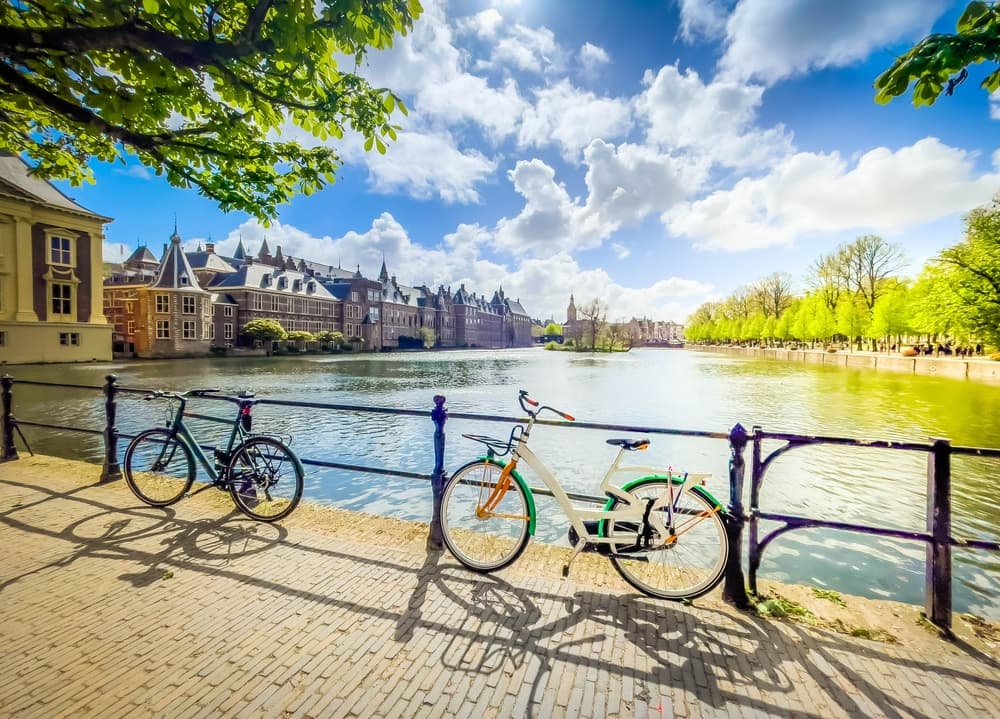
The Hague: an international city on the North Sea
The Netherlands' seat of government puts international courts, a real beach, and tram-everywhere convenience in one mid-sized city of about 548,000 people.
- 548,320
- Population (2021)
- $3,000/mo
- Monthly budget · single
- 51°F / 11°C
- Avg temperature
Living in The Hague costs one person about $3,000 a month in U.S. dollars, a couple about $4,300, and a family about $6,200. Center one-bedrooms sit around $1,550, and outer districts like Loosduinen or Leidschenveen closer to $1,300. Those numbers cover rent, groceries, insurance and getting around, not travel.
That makes it the most affordable of the four biggest Dutch cities. A one-bedroom in the center costs less here than in Rotterdam, Utrecht or Amsterdam, and a single person lives on roughly $1,100 a month less than in Amsterdam.
The Hague is the Dutch seat of government, home to the International Court of Justice, the International Criminal Court and a long list of embassies and NGOs, so English works as a daily language for a large share of the city. It also sits on the North Sea, with Scheveningen and Kijkduin as beach districts, which Amsterdam cannot offer. It suits diplomats and NGO staff, remote workers, and families who want international schools.
The trade-off is housing supply. The rental shortage is real, landlords commonly want income at three to four times the rent, and good apartments go in days. Start looking before you land.
At a glance
$3,000
Monthly budget · single person
$1,550/mo 1-bed rent, center
75/100
Safety index
$50
Internet / month
51°Fannual average
Jan 40° · Aug 64°
Climate
548,320
Population (2021)
Expatsi estimates, updated Aug 2026, based on rental listings, government statistics, and local reporting.
Cost of living
What it costs to live in The Hague
Single person
$2,600–$3,400/mo
about the same as Austin, TX
Couple
$3,800–$4,800/mo
about 5% below Austin, TX
Family of four
$5,500–$6,900/mo
about 20% below Austin, TX
Compared with Austin, TX (Expatsi estimate, 2026).
- $18 −10%
- Inexpensive meal
- $1,350–$1,750/mo −21%
- 1-bed rent, center
- $1,150–$1,450/mo −4%
- 1-bed rent, outside
- $50/mo −23%
- Internet
- $85/mo +106%
- Transit pass
- $557/sq ft −14%
- Buy price, center
Expatsi estimates, updated Aug 2026, based on rental listings, government statistics, and local reporting.
Daily life
How The Hague lives
- A- grade, 81st percentile among the cities we track
- Dining & cafésstrong
- A grade, 92nd percentile among the cities we track
- Arts & culturestandout
- B+ grade, 63rd percentile among the cities we track
- Parks & outdoorsstrong
- A- grade, 82nd percentile among the cities we track
- Schools & educationstrong
- A- grade, 72nd percentile among the cities we track
- Healthcare accessstrong
- A+ grade, 96th percentile among the cities we track
- Bike infrastructurestandout
- B+ grade, 68th percentile among the cities we track
- Public transitstrong
- A+ grade, good physical accessibility
- Accessibilitygood
Graded on OpenStreetMap amenity density relative to the 298 cities we track. Accessibility is the exception: it's graded against a fixed standard (terrain steepness and sidewalk surfaces), not a curve.
Climate
Weather through the year
Annual average 51°F (11°C) · 31 in of rain a year · Source: Open-Meteo Historical Weather API (temps: ERA5-Land 0.1°; precip/sunshine: ERA5 best-match; 1991-2020 normals)
On the ground
Scenes from The Hague
Getting around
Transport in The Hague
Day to day, most people here get around by bike or tram. HTM runs the trams and buses, including the lines out to the beach at Scheveningen, and RandstadRail light rail links the city with Zoetermeer and, on the RET line, with Rotterdam. Everything runs on OVpay, so you tap in and out with a contactless bank card or phone. About $85 a month covers daily riding.
Expect disruption as a normal condition. The city and HTM are partway through a long tram renewal program, and track work reroutes lines for months at a time. Check the HTM app before you count on a route.
Cycling is the default for short trips. The city is flat and sits barely above sea level, and separated bike lanes cover most routes. Many newcomers buy a used bike in the first month and use transit less than they expected.
Two intercity stations, Den Haag Centraal and Hollands Spoor, put Amsterdam, Rotterdam, Utrecht and Schiphol within easy commute or day-trip distance on frequent NS trains.
A car is unnecessary for most residents and actively inconvenient downtown where parking is scarce and permits are waitlisted in some neighborhoods. Families who drive outside the Randstad regularly keep one, but plenty manage with trains and car-share.
- 44/sq mi
- Transit stops
- 197/sq mi
- Bike infrastructure
- 52/sq mi
- Wheelchair-accessible places
Mapped features per square mile from OpenStreetMap.
Keep exploring
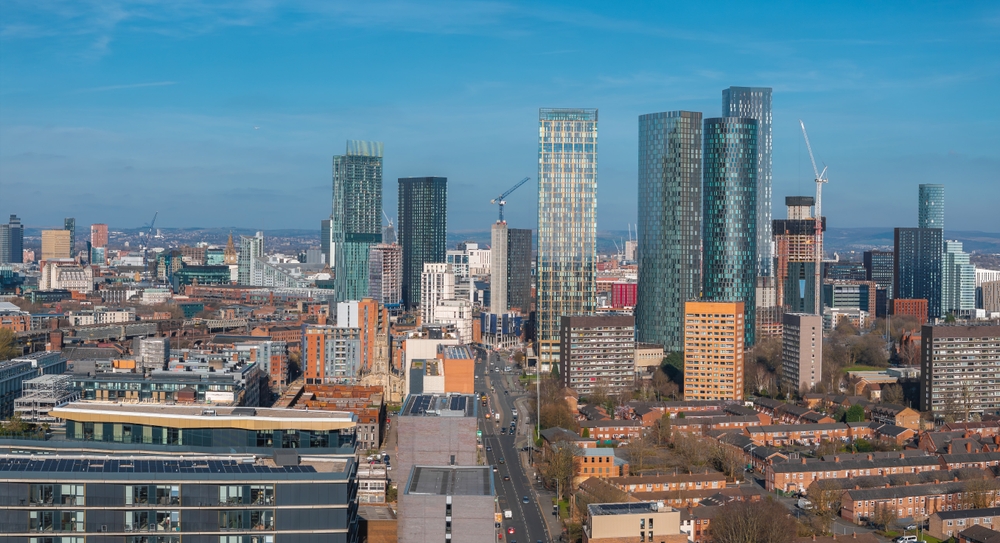
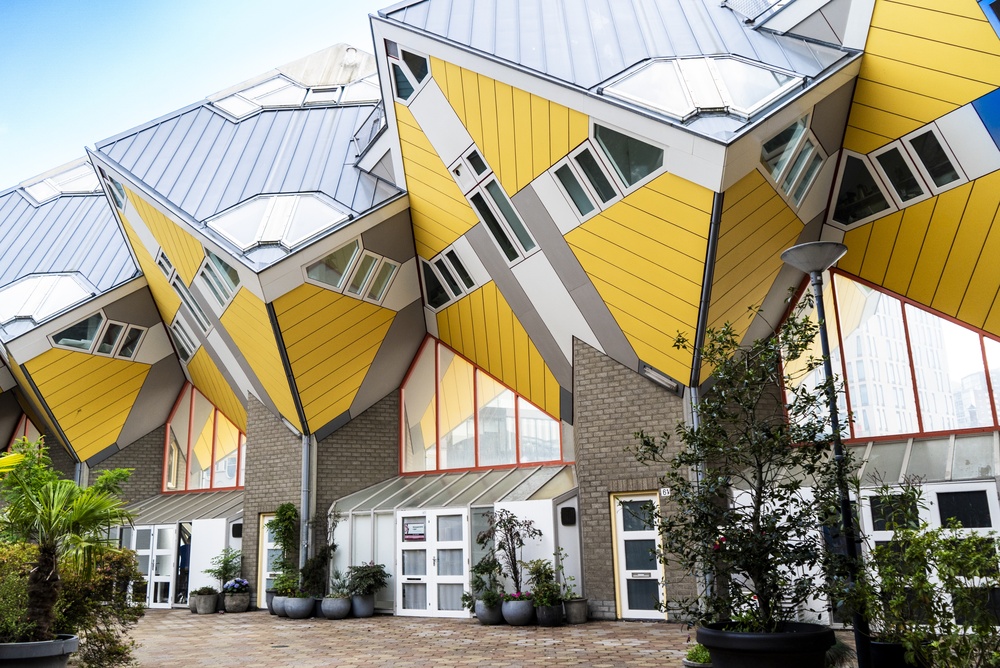
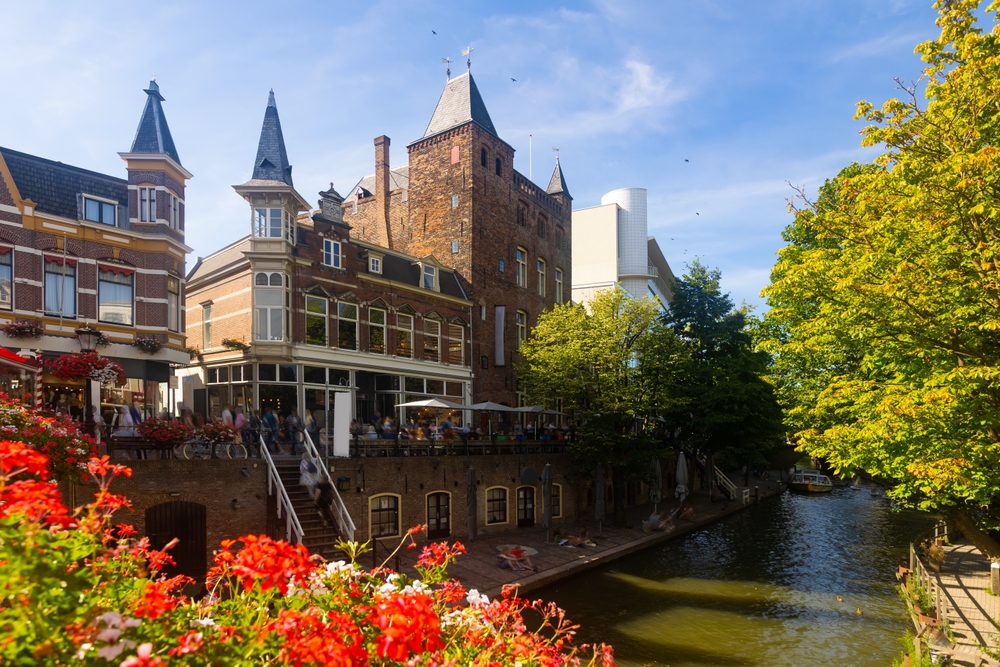
Places like The Hague

Community
Community & practical notes
Community: The Hague might be the easiest soft landing in the Netherlands. The courts, embassies, NGOs, energy firms and tech companies employ a large international workforce. The city runs The Hague International Centre, a free municipal office in City Hall that handles registration, your BSN and residence permit collection in one appointment. Expat groups and English-language services are well-established.
Healthcare: Quality is high once you're inside the system. The friction is the front door, since GP practices across the Randstad routinely close their patient lists. Plus, a practice may turn you down if you live more than 15 minutes away, so your search is bounded by postcode. If nobody will take you, your insurer's zorgbemiddeling desk is legally obliged to arrange a GP; most newcomers never learn to ask.
Schools: The International School of The Hague teaches ages 4-18 and is subsidised by the Dutch education ministry, so its fees sit well below the private options. The American School of The Hague, in nearby Wassenaar, is the country's only American school and offers both Advanced Placement and the IB diploma. British, European and German schools are here too, and waiting lists are real.
Limited mobility: The ground is about as good as it gets, since the city is genuinely flat and distance, not hills, sets your limit. RandstadRail and the newer trams are low-floor with step-free boarding. Buses carry ramps, but the older red and beige trams still have steps and are only now being replaced, so which vehicle arrives shapes the trip. The harder obstacles are indoors and underfoot: older canal-side and pre-war buildings have steep Dutch staircases and no elevator. Brick sidewalks in the historic center are uneven and often blocked by parked bikes. View any apartment in person before committing to a lease.
Remote work: Fixed internet runs about $50 a month; Dutch fiber is fast and reliable. For a desk outside the house, The Hague Tech sits beside Hollands Spoor, the Humanity Hub draws the peace and justice crowd, and Spaces has locations around Beatrixkwartier. Hiring leans toward international law, government, NGOs, energy and IT.
Retirement: There's no Dutch retirement visa, which is the whole story for most retirees. Americans can stay 90 days visa-free, but longer needs a permit tied to work, family, study or self-employment. The Dutch American Friendship Treaty (DAFT) is a comparatively accessible self-employment route, though it means actually running a business. Compare retirement visa options elsewhere, and read our full Netherlands guide for the routes that do work.
Housing
Renting and buying
- 1-bed rent (center)
- $1,350–$1,750/mo
- 1-bed rent (outside center)
- $1,150–$1,450/mo
- Buy price (center)
- $557/sq ft
- Buy price (outside center)
- $446/sq ft
Expatsi estimates, based on rental listings, government statistics, and local reporting.
Good to know
Frequently asked questions
How can an American move to The Hague?
You need a residence permit to stay past 90 days. The common routes are a job with a Dutch employer, often through the highly skilled migrant scheme, the Dutch American Friendship Treaty for Americans who start a business, study, or joining a Dutch or EU partner. The Hague International Centre handles your registration once you arrive.
What is the weather like in The Hague?
Mild, damp and windy. The annual average temperature is about 51F (10.75C), with roughly 31 inches (795 mm) of rain spread across the year. Winter days average about 43F and nights about 37F, so snow is rare, and summer average highs sit near 69F. The wettest months are late summer rather than winter, and the North Sea wind is a constant. Bring a rain jacket, not a parka.
How does healthcare work for expats in The Hague?
Residents must buy Dutch basic health insurance from a private insurer, generally within four months of registering. The basic premium averages about 157 euros a month per adult in 2026, on top of a 385 euro yearly deductible that is set by law and the same at every insurer. GP visits are exempt from that deductible. Your GP is the gateway to specialists, and some practices have full patient lists.
Is The Hague safe?
Yes. The Hague scores 75 out of 100 on the safety index, with a crime index of 25. Every Dutch city we track scores between 69 and 80, and The Hague sits in the middle of that band. Ordinary precautions cover daily life, and bike theft is the crime you are most likely to meet, so buy two good locks.
How much does it cost to live in The Hague?
Plan on about $3,000 a month for a single person, around $4,300 for a couple, and roughly $6,200 for a family, all in U.S. dollars. A one-bedroom rents for about $1,550 in the center and about $1,300 outside it. A casual restaurant meal runs about $18.
Do I need a car in The Hague?
No. HTM trams and buses, RandstadRail and two intercity train stations cover the city and the region, and about $85 a month handles daily transit. The city is flat and most residents cycle for short trips. Central parking is scarce, and the permit waitlist is real, so a car is more burden than convenience.
Can I retire in The Hague?
The Netherlands has no retirement visa, so retiring here is genuinely hard for Americans without an EU passport or a Dutch partner. Some retirees use the self-employment treaty route, but it requires running a real business. If retirement is the goal, compare countries that offer a dedicated retirement visa.
Do people speak English in The Hague?
Widely. Between the international courts, the embassies and the NGOs, English is a daily working language, and most Dutch people speak it well. You can handle nearly all of daily life in English, though learning Dutch helps with bureaucracy, neighbors and feeling at home long term.
See how The Hague fits your life
Take the free Expatsi Test and compare Netherlands to nearly 200 countries on what actually matters: cost, healthcare, climate, and safety. About five minutes.
Why not you?