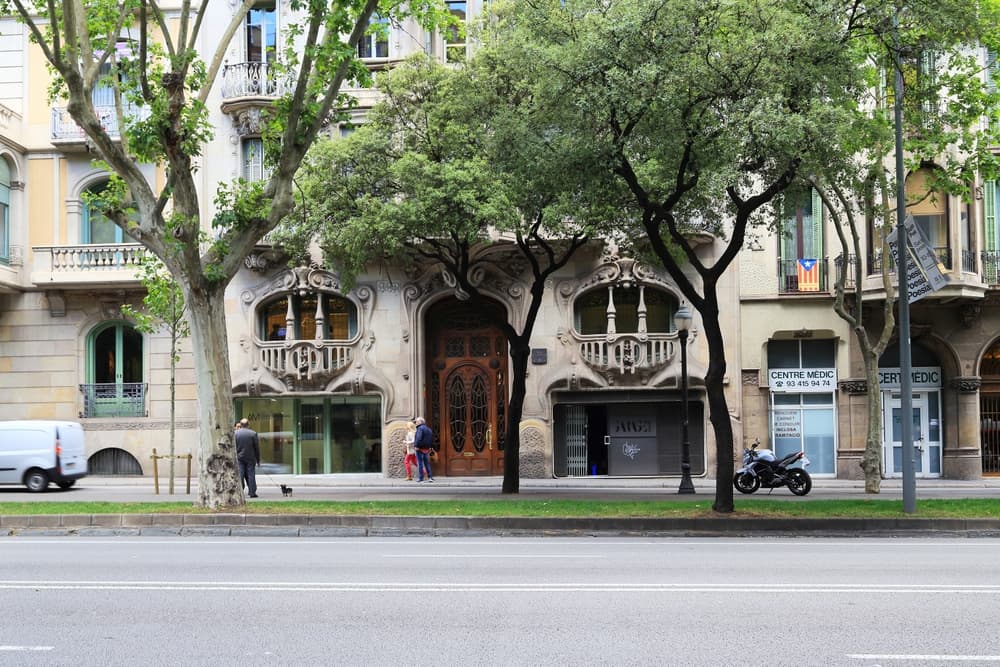
Barcelona: a Mediterranean metropolis, not a resort town
Beach, metro and world-class food in Spain's second city, and the highest rents of any Spanish city we track.
- 1,731,649
- Population (2025)
- $2,900/mo
- Monthly budget · single
- 62°F / 17°C
- Avg temperature
Budget about $2,900 a month in U.S. dollars to live in Barcelona as one person, around $4,100 as a couple, and roughly $5,900 for a family. Rent decides everything: a one-bedroom runs about $1,550 in central neighborhoods like the Eixample or Gràcia, and about $1,150 in the outer districts. Lunch at a neighborhood spot is about $17.
Barcelona earns that premium by being a real metropolis rather than a resort town. It has a deep international population, year-round nonstops to the U.S., serious food and arts scenes, and the Mediterranean a metro ride away. Remote workers, couples in their thirties and forties, and retirees who want walkable city life all land here.
The honest limit is housing. The whole city is a legally designated stressed rental market, which caps rents but has thinned supply: vacancy sits between 1 and 2 percent, a well-priced flat is gone within a couple of weeks, and more than four times as many house hunters chase each listing as in Madrid. Expect a competitive search, and expect to document your income before signing.
If the city itself is the problem, Sitges is the usual alternative: a beach town of about 33,000 people 40 minutes down the coast by train, where a one-bedroom runs about $1,300 and one person's budget is closer to $2,600.
At a glance
$2,900
Monthly budget · single person
$1,550/mo 1-bed rent, center
56/100
Safety index
$35
Internet / month
62°Fannual average
Jan 49° · Aug 77°
Climate
1,731,649
Population (2025)
Expatsi estimates, updated Aug 2026, based on rental listings, government statistics, and local reporting.
Cost of living
What it costs to live in Barcelona
Single person
$2,600–$3,200/mo
about 5% below Austin, TX
Couple
$3,600–$4,600/mo
about 10% below Austin, TX
Family of four
$5,200–$6,600/mo
about 25% below Austin, TX
Compared with Austin, TX (Expatsi estimate, 2026).
- $17 −15%
- Inexpensive meal
- $1,350–$1,750/mo −21%
- 1-bed rent, center
- $1,000–$1,300/mo −15%
- 1-bed rent, outside
- $35/mo −46%
- Internet
- $40/mo −3%
- Transit pass
- $613/sq ft −6%
- Buy price, center
Expatsi estimates, updated Aug 2026, based on rental listings, government statistics, and local reporting.
Daily life
How Barcelona lives
- A+ grade, 99th percentile among the cities we track
- Dining & cafésstandout
- A+ grade, 96th percentile among the cities we track
- Arts & culturestandout
- A grade, 86th percentile among the cities we track
- Parks & outdoorsstandout
- A grade, 94th percentile among the cities we track
- Schools & educationstandout
- A+ grade, 99th percentile among the cities we track
- Healthcare accessstandout
- A+ grade, 100th percentile among the cities we track
- Bike infrastructurestandout
- A+ grade, 98th percentile among the cities we track
- Public transitstandout
- A- grade, good physical accessibility
- Accessibilitygood
Graded on OpenStreetMap amenity density relative to the 298 cities we track. Accessibility is the exception: it's graded against a fixed standard (terrain steepness and sidewalk surfaces), not a curve.
Climate
Weather through the year
Annual average 62°F (17°C) · 22 in of rain a year · Source: Meteostat station normals (08181, 1991-2020)
On the ground
Scenes from Barcelona
Getting around
Transport in Barcelona
Barcelona is one of the easiest cities in Europe to live in without a car. The TMB metro is the spine, alongside an extensive bus network, FGC trains up into the hills, Rodalies commuter lines along the coast, and trams at either end of Diagonal. It all runs on the integrated ATM fare system, so one pass covers metro, bus, tram and commuter rail within your zone, and transit budgets around $40 a month.
Day to day, plenty of residents barely touch any of it. The central districts are dense and flat, and the Eixample grid was drawn for walking, so most errands happen on foot. Bicing, the city bike-share, plus a growing network of protected lanes make cycling a practical commute.
A car is mostly a liability. Street parking is scarce and expensive, and the ZBE low-emission zone bars older unlabelled vehicles from inside the ring roads on weekdays, 7am to 8pm, though nights, weekends and holidays are unrestricted. Foreign plates must register first. The case for owning one is weekend trips to the Pyrenees or the Costa Brava, and even then many people rent for the day.
Sitges runs on the same network. The R2 Sud Rodalies line links it to Barcelona Sants in about 40 minutes, every 20 to 30 minutes for most of the day. Commuting is the one line item that costs more: about $55 a month against $40, since you cross fare zones.
For longer hops, Sants puts Madrid about two and a half hours away by AVE, and El Prat flies nonstop to the U.S.
- 104/sq mi
- Transit stops
- 287/sq mi
- Bike infrastructure
- 312/sq mi
- Wheelchair-accessible places
Mapped features per square mile from OpenStreetMap.
Keep exploring
Places like Barcelona


Community
Community & practical notes
The expat scene: Barcelona holds one of the largest international populations in Spain, with established American, British, Latin American and Pakistani communities, plus a big rotating cast of remote workers. English will get you started, but the city runs in two languages, Spanish and Catalan, and picking up Spanish is what moves you from visitor to neighbor. Meetups, language exchanges (intercambios) and neighborhood associations are the usual ways in.
Sitges: The beach-town alternative down the coast. It has a long-established international and LGBTQ+ community, a year-round events calendar anchored by Carnival and the October film festival, and a safety index of 76 against Barcelona's 56. The limit is summer, when the population roughly quadruples and the town belongs to day-trippers.
Healthcare: Catalonia runs its own public system, CatSalut, and getting into it is a sequence rather than a single step. You register your address at the town hall (the padrón), then request a Targeta Sanitària Individual at your local CAP, the neighborhood primary care center that assigns your family doctor. People not working or paying into social security need a separate recognition step. Most visas require private insurance anyway, and many residents keep one on top for faster specialists and English-speaking doctors.
Getting online: Fiber runs about $35 a month and is standard across the city. The coworking scene concentrates in Poblenou, the old industrial quarter rebuilt as the 22@ innovation district. Local hiring clusters in tech, tourism, design and logistics, and Spain's digital nomad visa has made the city a base for Americans keeping U.S. jobs on Spanish hours.
Limited mobility: Barcelona is two different cities in a wheelchair. The Eixample grid is flat, wide and generously kerbed, footpaths are in good repair, every bus has had a ramp since 2007, and the trams board level at every stop. Most metro stations have lifts and a handful do not, with interchanges the awkward case: at Clot one line's platforms are lift-reachable and the other's are not, so a transfer that looks trivial on the map can be impossible. Outages are common and posted the same day, so check your station first. The Gothic Quarter's stone lanes and the slopes at Montjuïc and Park Güell undo much of what the flat districts get right.
Retiring here: Spain's non-lucrative visa is the standard route. It asks for documented passive income (the floor is tied to Spain's IPREM index and rises with each dependent), full private health cover and no work in Spain, and it renews toward permanent residency at five years. Spanish tax residency starts once you spend most of the year there, and U.S. retirement income is generally taxable in Spain. Compare routes at retirement visa options and our Spain guide.
Housing
Renting and buying
- 1-bed rent (center)
- $1,350–$1,750/mo
- 1-bed rent (outside center)
- $1,000–$1,300/mo
- Buy price (center)
- $613/sq ft
- Buy price (outside center)
- $423/sq ft
Expatsi estimates, based on rental listings, government statistics, and local reporting.
Good to know
Frequently asked questions
How does healthcare work for expats in Barcelona?
Most visas require private health insurance. Catalonia's public system is CatSalut: once you are registered on the local padrón and your right to care is recognized, you get a health card and a family doctor at a neighborhood clinic. Many residents keep private cover as well to skip specialist waits.
Can I retire in Barcelona?
Yes, and most American retirees use Spain's non-lucrative visa, which requires documented passive income, private health insurance and no work in Spain. It leads to permanent residency after five years. Plan for tax: once you are resident, Spain taxes your worldwide income, including most U.S. retirement income.
How do I move to Barcelona as an American?
Americans need a visa before arriving for any stay past 90 days. The usual routes are the digital nomad visa, the non-lucrative visa for passive income, work visas through a Spanish employer, and student visas. All require private health insurance and a background check, and applications run through Spanish consulates in the U.S.
Do people speak English in Barcelona?
Widely, in tourist areas and international workplaces. Daily life is another matter: the city operates in Spanish and Catalan, and paperwork, landlords and clinics expect Spanish. You can arrive with English, but Spanish makes everything easier, and locals appreciate even basic Catalan.
How much does it cost to live in Barcelona?
One person needs roughly $2,900 a month here, a couple around $4,100, and a family about $5,900, all in U.S. dollars. A one-bedroom averages $1,550 in the center and $1,150 further out. For one person the range runs about $2,600 to $3,200.
What is the weather like in Barcelona?
Mediterranean and mild, averaging about 62F (16.6C) across the year with roughly 22 inches of rain. August is the hottest month, averaging highs near 84F; January averages highs near 57F. Autumn is the wet season rather than winter, with September the rainiest.
Do I need a car in Barcelona?
No. Metro, buses, trams and commuter trains share one integrated pass at about $40 a month, and the central districts are flat and very walkable. Parking is scarce, and the low-emission zone keeps older unlabelled cars out on weekday daytimes. Most car owners use theirs for trips out of town.
Is Barcelona safe?
Barcelona scores 56 on the safety index, the lowest of the 19 Spanish cities we hold data for, though the low score reflects theft rather than violence. OSAC's Spain report calls violent crime not prevalent while noting street crime has risen here. Pickpocketing is the daily issue, concentrated on La Rambla, in the Gothic Quarter, around Barceloneta and on the metro.
See how Barcelona fits your life
Take the free Expatsi Test and compare Spain to nearly 200 countries on what actually matters: cost, healthcare, climate, and safety. About five minutes.
Why not you?