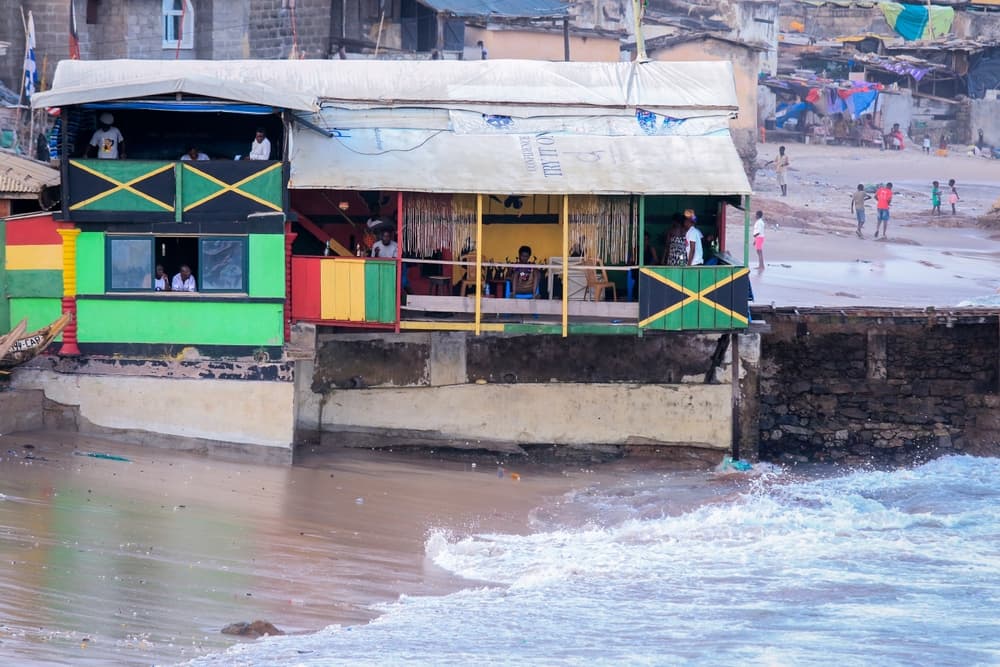
Cape Coast: castles, beaches, and Ghana's slower coast at a fraction of Accra's cost
A seaside city of about 190,000 where castles, beaches, and student life share the same few miles of shoreline.
- 189,925
- Population (2021)
- $900/mo
- Monthly budget · single
- 79°F / 26°C
- Avg temperature
A single person in Cape Coast can live on about $900 a month in U.S. dollars, a couple on around $1,300, and a family of four on roughly $1,900. Rent is a small slice of that: a one-bedroom averages about $300 in the center and around $200 outside it, and a sit-down meal at a local spot costs about $3. Keep in mind these figures are low-confidence estimates, since fewer expats report prices here than in Accra.
Cape Coast is Ghana's old colonial capital and its most historically loaded city. Cape Coast Castle, a UNESCO site and major stop for African American heritage travelers, anchors the waterfront, and the University of Cape Coast gives the town a steady student population and an academic calendar's worth of energy. It suits people drawn to that history, teachers and researchers, volunteers with NGOs, and anyone who wants beach-town Ghana at a fraction of Accra's cost and chaos. English is the official language, which removes the biggest barrier Americans face elsewhere.
The honest drawback is infrastructure. Power cuts, patchy water supply, and limited shopping options mean daily life takes more planning than in Accra, which is about three hours away when you need an airport, embassy, or specialist doctor.
At a glance
$900
Monthly budget · single person
$300/mo 1-bed rent, center
58/100
Safety index
$40
Internet / month
79°Fannual average
Aug 76° · Mar 81°
Climate
189,925
Population (2021)
Expatsi estimates, updated Aug 2026, based on rental listings, government statistics, and local reporting. Coverage here is thin, so treat these as a rough guide.
Cost of living
What it costs to live in Cape Coast
Single person
$700–$1,100/mo
about 70% below Austin, TX
Couple
$1,000–$1,600/mo
about 70% below Austin, TX
Family of four
$1,500–$2,300/mo
about 75% below Austin, TX
Compared with Austin, TX (Expatsi estimate, 2026).
- $3 −85%
- Inexpensive meal
- $250–$400/mo −85%
- 1-bed rent, center
- $150–$250/mo −85%
- 1-bed rent, outside
- $40/mo −38%
- Internet
Expatsi estimates, updated Aug 2026, based on rental listings, government statistics, and local reporting. Coverage here is thin, so treat these as a rough guide.
Daily life
How Cape Coast lives
- C grade, 6th percentile among the cities we track
- Dining & cafésmodest
- C grade, 6th percentile among the cities we track
- Arts & culturemodest
- C- grade, 4th percentile among the cities we track
- Parks & outdoorsmodest
- B- grade, 26th percentile among the cities we track
- Schools & educationtypical
- B- grade, 27th percentile among the cities we track
- Healthcare accesstypical
- C- grade, 0th percentile among the cities we track
- Bike infrastructuremodest
- C- grade, 4th percentile among the cities we track
- Public transitmodest
Graded on OpenStreetMap amenity density relative to the 298 cities we track. Accessibility is the exception: it's graded against a fixed standard (terrain steepness and sidewalk surfaces), not a curve.
Climate
Weather through the year
Annual average 79°F (26°C) · 48 in of rain a year · Source: Open-Meteo Historical Weather API (temps: ERA5-Land 0.1°; precip/sunshine: ERA5 best-match; 1991-2020 normals)
On the ground
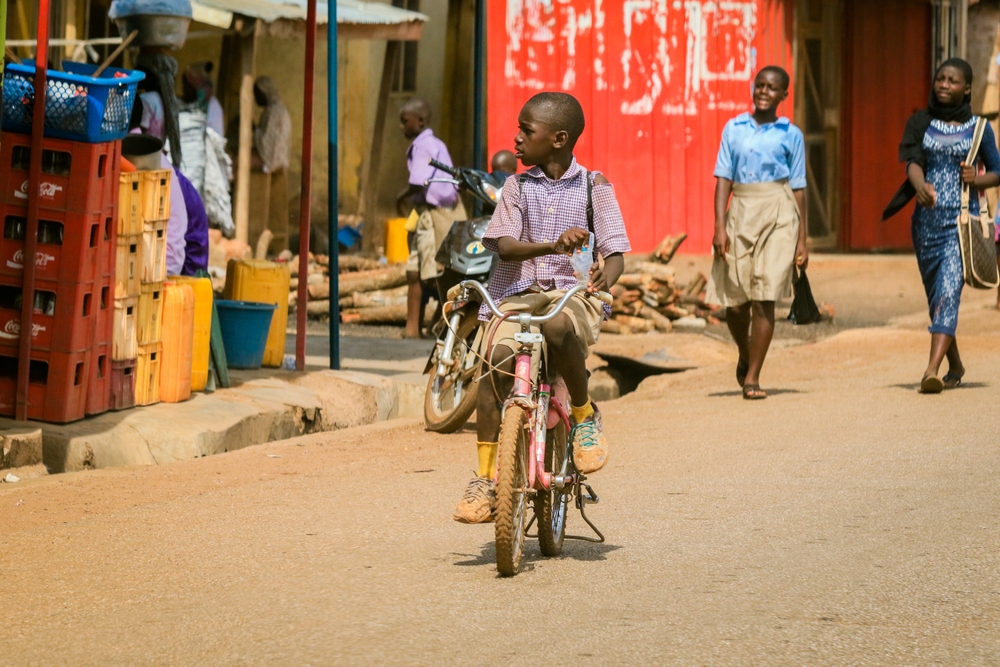
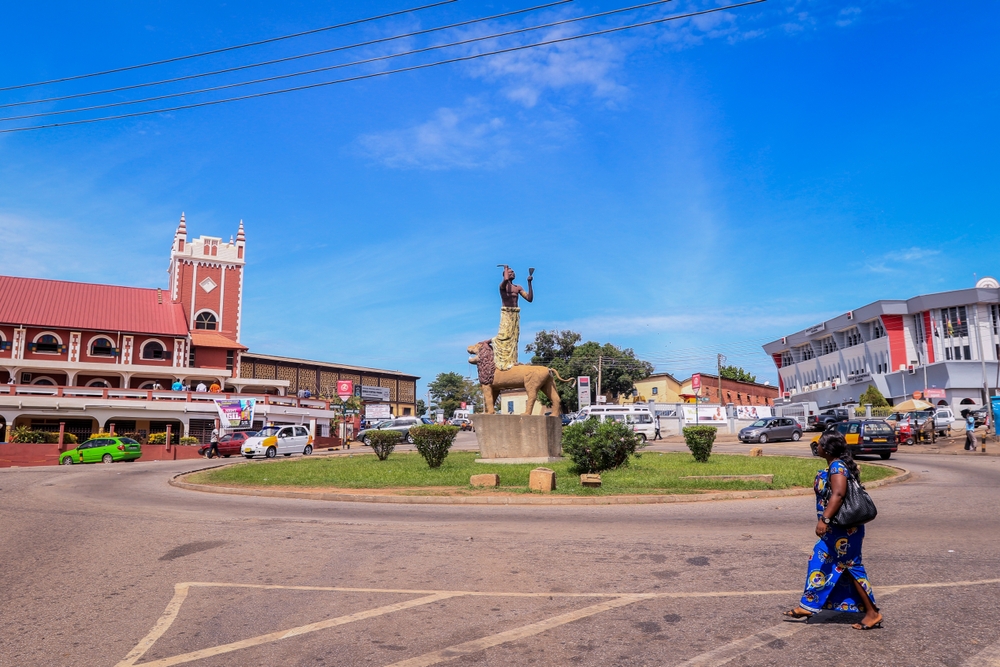
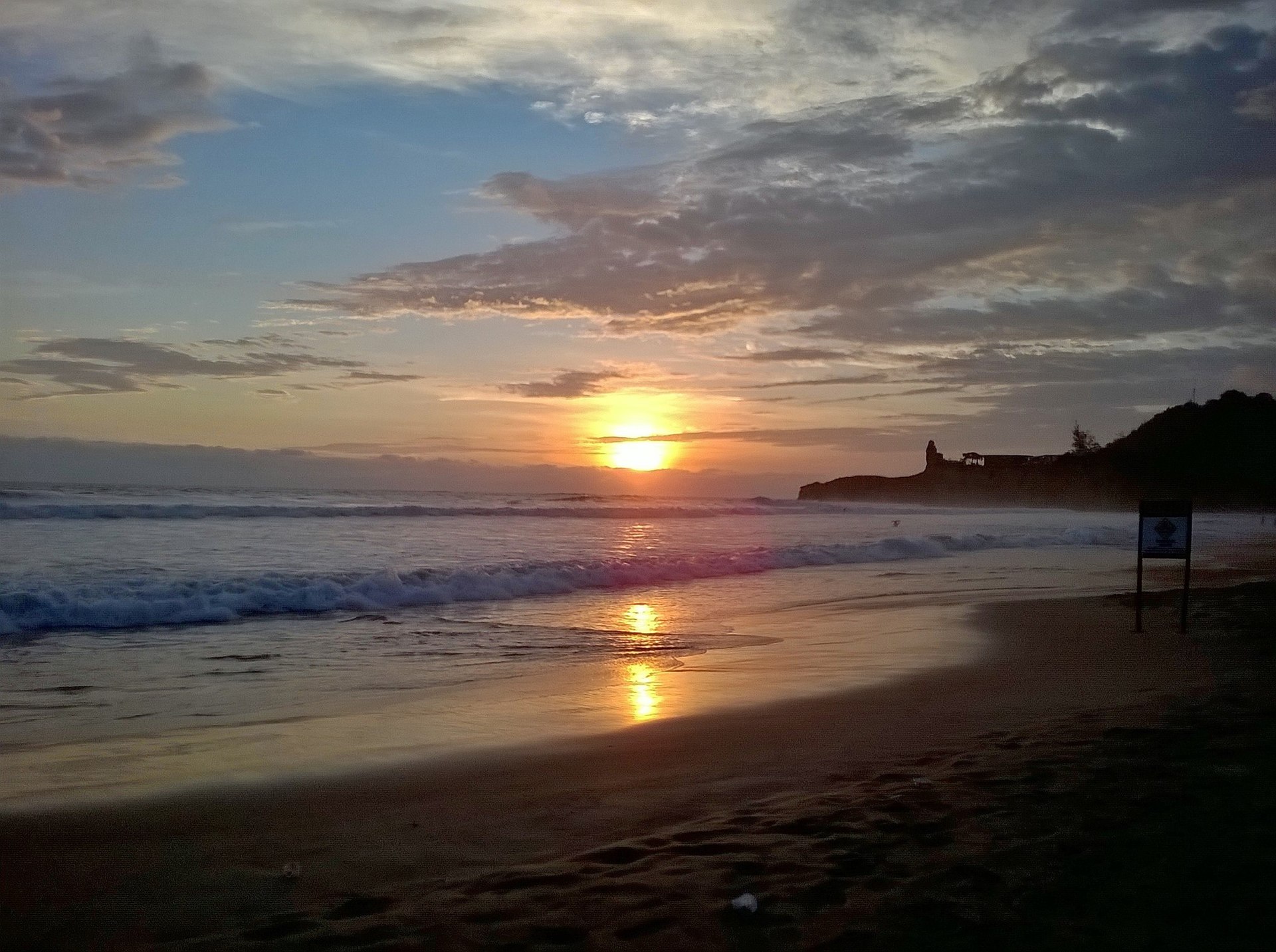
Scenes from Cape Coast
Getting around
Transport in Cape Coast
Cape Coast has no formal transit system. Like the rest of Ghana, it runs on tro-tros, the shared minibuses that follow set routes for fares of a few cedis, and on shared and charter taxis that cover everything the tro-tros don't. Kabu Kabu ride-hailing style motorbike taxis (locally called okada) fill the gaps, though they carry real accident risk; many expats avoid them.
The city itself is compact. The castle, Kotokuraba Market, and the central neighborhoods sit within walking distance of each other, and plenty of residents get through a normal day on foot plus the occasional taxi. Sidewalks are inconsistent and drainage ditches line many roads, so walking takes attention, especially after dark where street lighting is thin.
A car is genuinely useful here, moreso than in a bigger city. Trips to Elmina, Kakum National Park, or Accra are far easier when self-driven, and the Accra to Takoradi coastal highway passes right through town. Many long-term expats either buy a used car or build a relationship with one or two trusted taxi drivers for regular runs.
For intercity travel, VIP and STC buses and shared vans connect Cape Coast to Accra and Takoradi from stops near Pedu Junction, and the nearest commercial airport is in Accra, about 90 miles east.
- 0.1/sq mi
- Transit stops
- 0.0/sq mi
- Bike infrastructure
- 0.5/sq mi
- Wheelchair-accessible places
Mapped features per square mile from OpenStreetMap.
Keep exploring
Places like Cape Coast
Community
Community & practical notes
Community: The expat scene is small and purpose-driven rather than social-club shaped. It skews toward university lecturers and exchange students at UCC, NGO and Peace Corps volunteers, and a growing number of African Americans exploring roots or relocating under Ghana's diaspora-friendly policies, momentum that started with the 2019 Year of Return. Newcomers tend to plug in through the university, churches, or volunteer organizations rather than through expat meetups, and Accra's larger foreign community is close enough for a weekend.
Healthcare: Cape Coast Teaching Hospital is the regional referral hospital and handles most routine and emergency care, backed by smaller clinics and pharmacies around town. Foreign residents with a residence permit can register for Ghana's National Health Insurance Scheme, but most expats carry international health insurance and pay cash locally, since care is inexpensive out of pocket. The real friction is capacity: serious cardiac, cancer, or trauma cases usually mean transfer to Accra, so insurance with evacuation coverage is the standard advice.
Limited mobility: Cape Coast is a hard city for wheelchair users. The ground is close to flat, so hills are not the problem; broken or missing sidewalks, open storm gutters, and stepped entrances are. Ghana's Persons with Disability Act gave public buildings until August 2016 to become accessible; that deadline passed largely unmet, and an amendment with real enforcement is still before Parliament. The Daily Graphic's national survey named the University of Cape Coast among campuses that remain largely inaccessible, and research on UCC's own shuttles found no disability-friendly fittings. No transit here is accessible, so residents who need it should arrange a regular private driver and a ground-floor place to live. Anyone with significant mobility needs should visit before committing.
Remote work: Fixed internet runs about $40 a month. Most remote workers layer in MTN or Telecel mobile data as backup, because outages happen. There's no established coworking scene in the way Accra has; people usually work from home, hotel lobbies, or cafes near the university. Local hiring is thin outside the university, teaching, tourism, and NGO sectors, so nearly every American here earns their income from abroad.
Retirement: Ghana has no dedicated retirement visa. Most retirees enter on a visitor visa and then apply for a residence permit through the Ghana Immigration Service, typically by showing means of support, and renew it annually; an indefinite residence status exists for long-term stayers, and people of African descent have additional right-of-abode pathways. It's paperwork-heavy but well-trodden. Compare retirement visa options and see our full Ghana guide for the country-level picture.
Housing
Renting and buying
- 1-bed rent (center)
- $250–$400/mo
- 1-bed rent (outside center)
- $150–$250/mo
Expatsi estimates, based on rental listings, government statistics, and local reporting. Coverage here is thin, so treat these as a rough guide.
Good to know
Frequently asked questions
Can I retire in Cape Coast?
Yes, though Ghana has no formal retirement visa. Retirees generally enter on a visitor visa, then apply for a renewable residence permit by showing they can support themselves. With budgets around $1,300 a month for a couple, Social Security alone can fund a comfortable life here. See our [retirement visa options](/visas/retire) page for how Ghana compares.
Is the internet good enough for remote work in Cape Coast?
Fixed internet costs about $40 a month and is workable for video calls, but outages and power cuts are a fact of life. Remote workers here keep mobile data from MTN or another carrier as a backup connection, and many add a battery backup or small generator. It's viable, just not effortless.
How much does it cost to live in Cape Coast, Ghana?
Plan on about $900 a month in U.S. dollars for one person, around $1,300 for a couple, and roughly $1,900 for a family of four. A one-bedroom apartment averages about $300 in the center and around $200 outside it, and an inexpensive restaurant meal costs about $3. These are low-confidence estimates given limited price data for the city.
How do I move to Cape Coast from the United States?
Americans need a visa to enter Ghana, usually a visitor visa obtained from a Ghanaian embassy before travel. To stay long term, you apply for a residence permit through the Ghana Immigration Service, typically tied to work, study, family, or proof of independent means, and renew it annually. Ghana also offers right-of-abode pathways for people of African descent.
What is the weather like in Cape Coast?
Warm and humid all year, averaging about 79°F (26.1°C), with roughly 48 inches (1,214 mm) of rain annually, most of it in the May to June wet season. There is no winter. Ocean breezes take the edge off the heat compared with inland Ghana, but you'll want fans or air conditioning year-round.
Is Cape Coast safe for Americans?
Cape Coast scores 58 on the safety index with a crime index of 42, which puts it in moderate territory. Violent crime against foreigners is uncommon; petty theft and occasional scams targeting tourists near the castle are the more realistic concerns. Standard precautions, like not walking alone on unlit roads at night, cover most of the risk.
How is healthcare in Cape Coast?
Cape Coast Teaching Hospital is the Central Region's main referral hospital and handles routine and emergency care, supported by clinics and pharmacies around town. Out-of-pocket costs are low, and residence-permit holders can join Ghana's national insurance scheme. For serious specialist care, most expats carry international insurance with evacuation coverage, since complex cases get referred to Accra.
Do I need a car in Cape Coast?
Not strictly, but it helps more than in Accra. The center is compact and walkable, and tro-tros and shared taxis cover daily routes inexpensively. A car earns its keep for trips to Kakum National Park, Elmina, and the roughly three-hour run to Accra for the airport, embassies, and specialist medical care.
See how Cape Coast fits your life
Take the free Expatsi Test and compare Ghana to nearly 200 countries on what actually matters: cost, healthcare, climate, and safety. About five minutes.
Why not you?