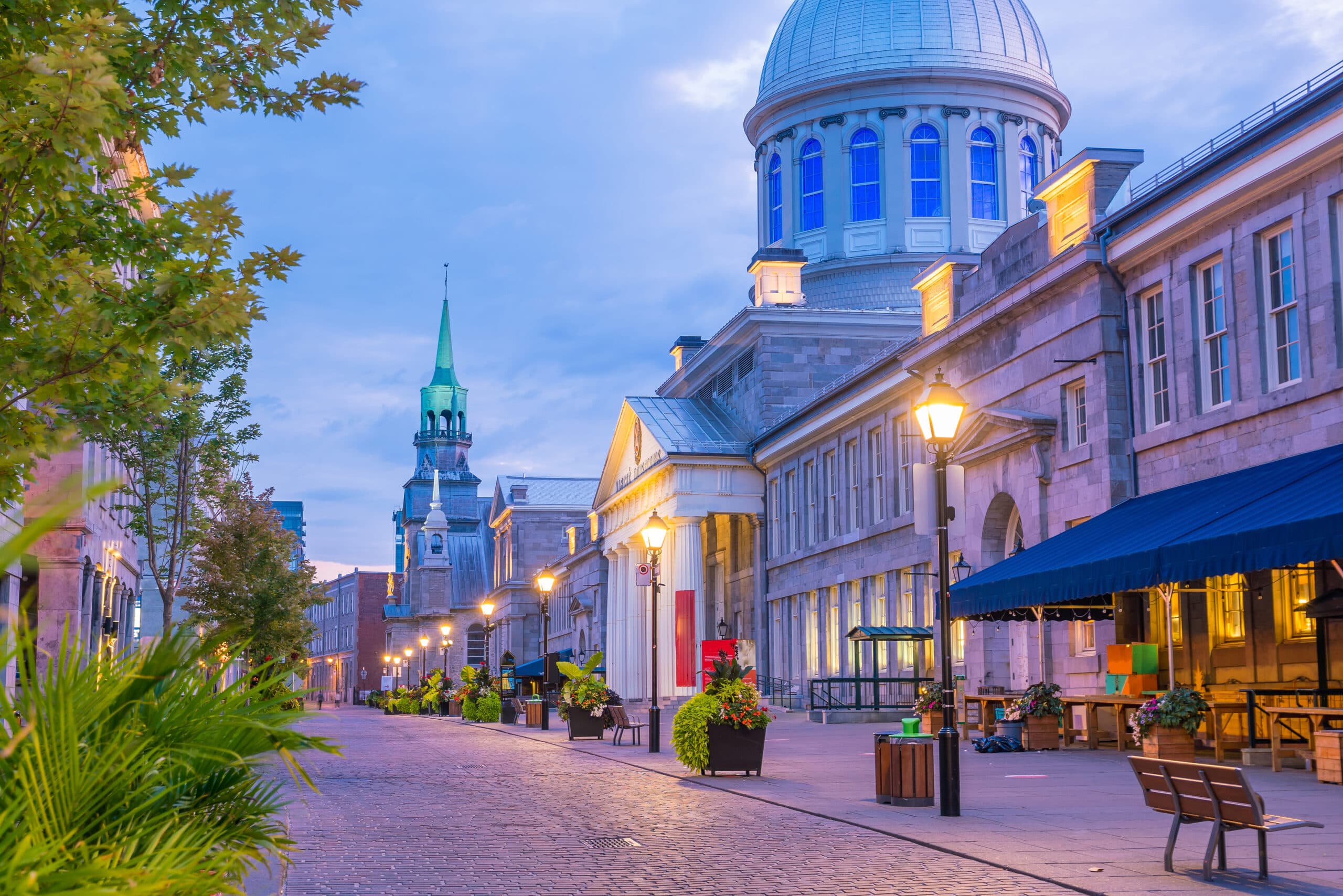
Montreal: a big, walkable city with a French heart
A French-speaking metropolis with plowed bike lanes, four metro lines, and a restaurant and music scene out of proportion to its size.
- 1,895,211
- Population (2024)
- $2,300/mo
- Monthly budget · single
- 46°F / 8°C
- Avg temperature
Montreal runs about $2,300 a month for one person and $3,500 for a couple, all in. A family of four is closer to $5,400. A one bedroom in the center averages $1,250, or about $1,000 if you live outside the core. Those are U.S. dollars, not Canadian.
That budget buys a genuinely big city: 1.9 million people, four metro lines, bike paths that get plowed in January, and a restaurant and music scene out of proportion to its cost. Montreal suits remote workers, students, artists, and anyone who wants big city texture without New York or Toronto rents.
The trade-off is language. Montreal is a French city with rules to match: newcomers can get Quebec government services in English for only the first six months after they arrive, and French is the default after that. Plan on learning it rather than working around it.
At a glance
$2,300
Monthly budget · single person
$1,250/mo 1-bed rent, center
71/100
Safety index
$50
Internet / month
46°Fannual average
Jan 19° · Jul 72°
Climate
1,895,211
Population (2024)
Expatsi estimates, updated Aug 2026, based on rental listings, government statistics, and local reporting.
Cost of living
What it costs to live in Montreal
Single person
$2,000–$2,500/mo
about 25% below Austin, TX
Couple
$3,000–$3,900/mo
about 25% below Austin, TX
Family of four
$4,800–$6,000/mo
about 30% below Austin, TX
Compared with Austin, TX (Expatsi estimate, 2026).
- $18 −10%
- Inexpensive meal
- $1,100–$1,450/mo −36%
- 1-bed rent, center
- $900–$1,100/mo −26%
- 1-bed rent, outside
- $50/mo −23%
- Internet
- $75/mo +82%
- Transit pass
- $469/sq ft −28%
- Buy price, center
Expatsi estimates, updated Aug 2026, based on rental listings, government statistics, and local reporting.
Daily life
How Montreal lives
- A grade, 88th percentile among the cities we track
- Dining & cafésstandout
- A grade, 87th percentile among the cities we track
- Arts & culturestandout
- B+ grade, 67th percentile among the cities we track
- Parks & outdoorsstrong
- B+ grade, 67th percentile among the cities we track
- Schools & educationstrong
- B+ grade, 60th percentile among the cities we track
- Healthcare accessstrong
- A grade, 89th percentile among the cities we track
- Bike infrastructurestandout
- A+ grade, 96th percentile among the cities we track
- Public transitstandout
- A- grade, good physical accessibility
- Accessibilitygood
Graded on OpenStreetMap amenity density relative to the 298 cities we track. Accessibility is the exception: it's graded against a fixed standard (terrain steepness and sidewalk surfaces), not a curve.
Climate
Weather through the year
Annual average 46°F (8°C) · 45 in of rain a year · Source: Meteostat station normals (71612, 1991-2020; no sunshine data)
On the ground
Scenes from Montreal
Getting around
Transport in Montreal
Most people here don't own a car, and the city is built for that. The metro runs four lines and 68 stations, buses fill the gaps, and a monthly transit pass costs about $75. If you're 65 or over and live in the Montreal agglomeration, public transit is free.
The REM, an automated light rail line, is the newer piece. It reaches the South Shore, Deux-Montagnes, and, as of May 2026, the West Island. It doesn't reach the airport yet; that branch is scheduled for 2027, so for now the 747 bus runs around the clock between Trudeau and downtown.
Biking is everyday transportation here for a lot of people: the island has more than 1,000 km of bike paths, the REV lanes are protected and cleared of snow, and BIXI keeps 234 stations open all winter on studded tires. Downtown is also connected by an underground pedestrian network that many people use in February.
A car earns its keep if you commute off the island. On it, parking is tight and the snow removal rules are a chore.
- 85/sq mi
- Transit stops
- 97/sq mi
- Bike infrastructure
- 300/sq mi
- Wheelchair-accessible places
Mapped features per square mile from OpenStreetMap.
Keep exploring
Places like Montreal
Living here
Community and practical notes
Language: Montreal is a French city with a deep anglophone layer. Mile End, Notre-Dame-de-Grace, Westmount, Verdun, and the West Island are where most American transplants land, and you can get through a day downtown in English without trying, though the official rules are stricter than daily life suggests. Under Law 14, the bill most people still call Bill 96, newcomers can get Quebec government services in English for only the first six months after they arrive, and French is the default after that. Emergency care is exempt, so 911 and the ER will treat you in any language.
Schools: Under the Charter of the French Language, children of most immigrant families attend French public school. English public school needs a certificate of eligibility with narrow criteria, usually a parent who did most of their own schooling in English in Canada, while families on work or study permits can get a temporary authorization instead. It's worth sorting that out before you sign a lease.
Healthcare: New permanent residents and people on work permits of six months or more wait up to three months for RAMQ, the provincial health plan; register within 15 days of landing so the clock starts early, and buy private insurance for the gap. The harder problem is the family doctor shortage, since more than a million Quebecers don't have one and Montreal waits often run one to three years. In the meantime most people rely on 811 option 3, a CLSC or a walk-in clinic, and on Quebec pharmacists, who can assess and prescribe for a long list of minor ailments.
Limited mobility: Easier here than in most cities this old. Montreal is flat, the sidewalks are paved rather than cobbled, and wheelchair-accessible places are unusually dense. The metro is the weak spot: it opened in 1966, fewer than half of the 68 stations have elevators, and the STM has paused new elevator projects over funding. Buses are all accessible. Winter is the real variable, since snowbanks bury curb cuts for weeks at a time.
Remote work: Home internet runs about $50 a month. Mile End is the center of gravity for coworking and the startup scene, with Spaces on De Gaspe and a dense cluster of studios around it. Notman House downtown is the long-running tech community hub, and ECTO in the Plateau is a coworking cooperative. Aerospace, AI, gaming, and film are the industries that hire here.
Retirement: Canada has no retirement visa, no passive income route, and no golden visa. If your child or grandchild is a Canadian citizen or permanent resident, the Super Visa lets you stay up to five years per entry on a visa that's good for up to ten years, but your host has to meet an income floor and you need CAD $100,000 in private medical coverage. Parent and grandparent sponsorship has been closed to new applications since January 2026. Otherwise you're here as a visitor, six months at a time, and staying 183 days in a year can make you a tax resident. Neither visitors nor Super Visa holders get provincial health coverage. The retirement visa options and our guide to moving to Canada are the place to start.
Housing
Renting and buying
- 1-bed rent (center)
- $1,100–$1,450/mo
- 1-bed rent (outside center)
- $900–$1,100/mo
- Buy price (center)
- $469/sq ft
- Buy price (outside center)
- $339/sq ft
Expatsi estimates, based on rental listings, government statistics, and local reporting.
Good to know
Frequently asked questions
Do you need a car in Montreal?
You don't need a car on the island. Four metro lines, 68 stations, buses, the REM light rail, and a monthly pass around $75 cover most lives, and transit is free for residents 65 and over. More than 1,000 km of bike paths and year-round BIXI bikes handle the rest. A car mostly makes sense for commuting off the island.
How do I get health insurance in Montreal as a newcomer?
Register for RAMQ within 15 days of arriving, then expect to wait up to three months before coverage starts, and buy private insurance to bridge that gap. Once you're covered, finding a family doctor is the harder part, and most people use 811 option 3, CLSCs, and walk-in clinics while they wait.
Can Americans retire in Montreal?
Retiring in Montreal is possible but not straightforward, because Canada has no retirement visa. The realistic routes are the Super Visa if you have a Canadian child or grandchild, which allows up to five years per entry, family sponsorship, or plain visitor status at six months per entry. Parent and grandparent sponsorship has been paused to new applications since January 2026, and visitors get no provincial health coverage.
Do I need to speak French to live in Montreal?
You can get through a day in Mile End, NDG, or downtown without French, but you'll need it to build a life here. Under Law 14, newcomers get Quebec government services in English for only the first six months after arrival. Most workplaces outside tech and gaming run in French, and children of immigrant families generally attend French public school.
How much does it cost to live in Montreal?
A single person needs about $2,300 a month and a couple about $3,500, all in and in US dollars. A family of four runs about $5,400. A one bedroom in the center averages $1,250, or about $1,000 outside the core. A meal at an inexpensive restaurant is around $18 and home internet is about $50.
Is Montreal safe?
Montreal scores 71 on the safety index and 29 on the crime index, which puts it among the safer big cities in North America. Walking alone at night in central neighborhoods is normal and unremarkable. The everyday risks are bike theft and things taken from parked cars, not violence.
How cold do Montreal winters actually get?
January is the coldest month, averaging 18.6F (-7.45C), with typical highs near 26F and lows near 11F. July is the warmest month, with highs around 80F (26.5C). Across the year Montreal averages 46F (7.9C) and roughly 45 inches of precipitation, much of it snow. Winter is long rather than brutal, and the city keeps running through it.
How do Americans move to Montreal?
Quebec picks its own economic immigrants. You apply through the Arrima portal for a Quebec selection certificate first, then to the federal government for permanent residence. Federal Express Entry does not select people for Quebec. Work permits, study permits, and family sponsorship are the other common ways in.
See how Montreal fits your life
Take the free Expatsi Test and compare Canada to nearly 200 countries on what actually matters: cost, healthcare, climate, and safety. About five minutes.
Why not you?