Complete guide to moving to Saint Lucia
Moving to Saint Lucia: what Americans need to know in 2026
Volcanic peaks, English as the everyday language, and a comfortable life for about $2,600 a month for a couple. The hard part is staying legally past six weeks, and this guide shows how people do it.
No retirement visa, no nomad visa beyond a one-year extended stay, and a citizenship program that starts at $240,000. Here's how the island's rules fit together for someone holding a U.S. passport.

Reviewed and updated September 28, 2026 · 13 min read

01 · The case for Saint Lucia
An English-speaking island a nonstop flight from home
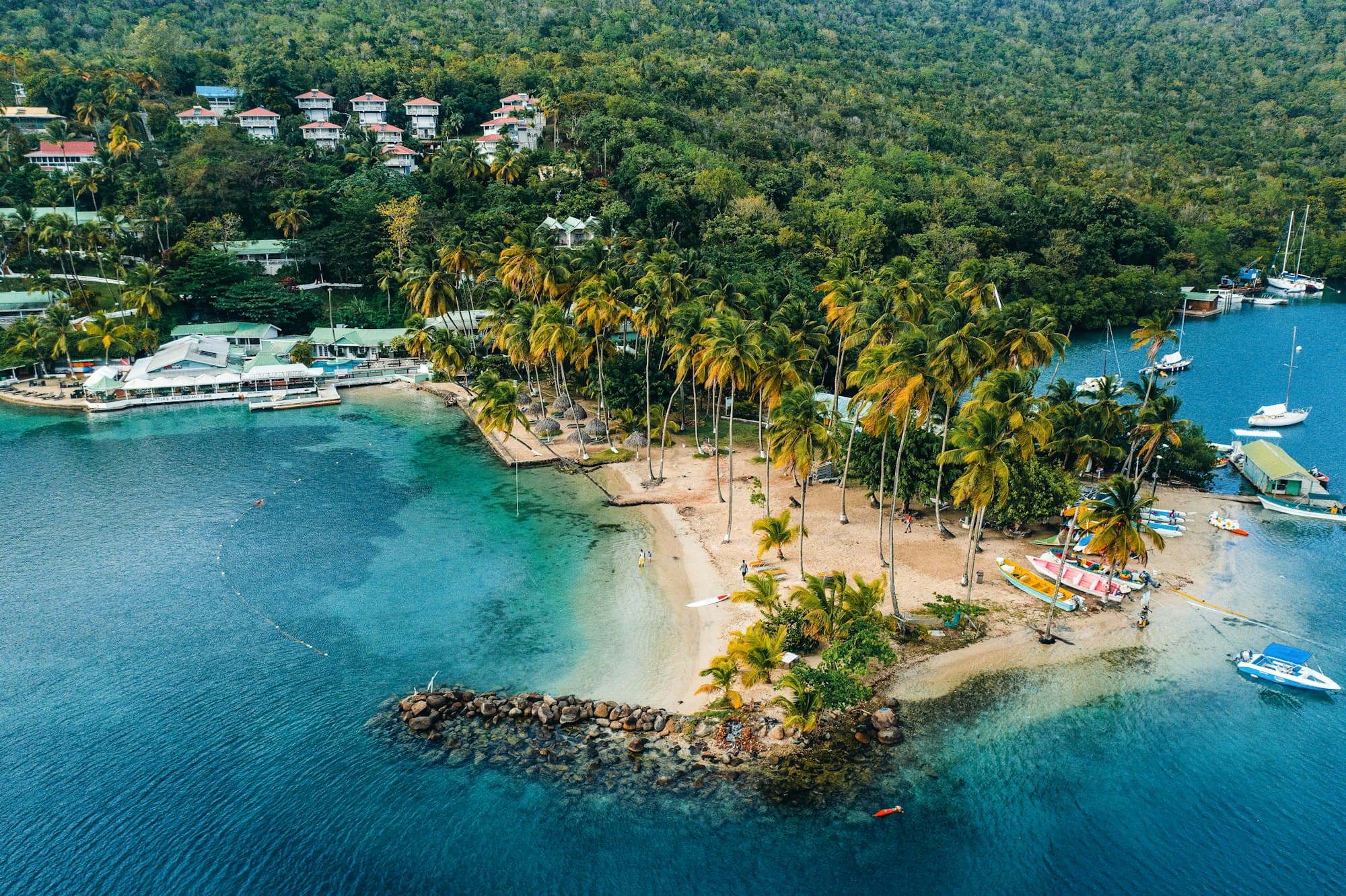
Saint Lucia is small: about 184,000 people on a green, mountainous island in the eastern Caribbean, with Castries as the capital. English is the main language, and you'll also hear Kwéyòl, the local French Creole. For a lot of Americans, that combination is the draw: a place that feels foreign without a language barrier at the bank or the doctor's office.
Getting back to the States is easy by island standards. Hewanorra International Airport in the south has nonstop service from Atlanta on Delta, Miami on American, and New York JFK on American and JetBlue, plus Newark on United. Boston, Charlotte, Chicago and Philadelphia add seasonal flights in the winter months. Miami is about four hours in the air; New York is a little over five.
Money is simple, too. The Eastern Caribbean dollar has been fixed at 2.70 to the U.S. dollar since 1976, so your Social Security check or remote salary buys the same amount month after month. Four commercial banks operate on the island.
Day to day, life is outdoors: hiking in the rainforest interior, swimming off the west coast, sailing out of Rodney Bay. The island is family friendly and pet friendly, and the pace is slow in the way people mean when they say they want slow.
Here's the catch
Saint Lucia has fewer long-stay options than many places Americans move, and a few things rule it out for some people.
First, there's no retirement visa; the closest thing to a nomad visa is the Live It extended stay. Visitors get up to six weeks on arrival and then extend in 30-day blocks or apply for Live It. Settling for good means buying property, getting a work permit, putting in five years toward permanent residence, or buying citizenship. We walk through each route below.
Second, it's not a safe place for everyone. Consensual same-sex activity is still illegal, with penalties of up to 10 years in prison. There are no anti-discrimination protections. The U.S. State Department rates Saint Lucia Level 2, Exercise Increased Caution, and names armed robbery, assault, burglary and rape among its concerns.
Third, serious medical care may mean a flight off the island. Hospital capacity is limited, private providers often want cash up front, and the State Department strongly recommends medical evacuation coverage. If you manage a complex condition, plan around that before anything else.
If none of that stops you, keep going. The rest of this guide covers costs, how to stay legally, healthcare, taxes, banking, where people live, and who can help.
- Cost of living (single)
- $1,600/mo
- Safety index
- 65/100
- English proficiency
- 90/100
- Internet speed
- 55 Mbps
- Capital
- Castries
- Currency
- East Caribbean Dollar (XCD)
02 · The numbers
What a month in Saint Lucia costs
$2,600
Monthly budget, couple
all in, comfortable
$1,600
Monthly budget, single
all in, comfortable
$3,500
Monthly budget, family
housing included
$500
Rent, 1-bed central
$400 farther out
$8
Inexpensive meal out
local spots, not resorts
$60
Monthly transportation
limited outside towns
$44
Home internet, monthly
about 55 Mbps
12.5%
Standard VAT rate
on most purchases
Where your money goes on the island
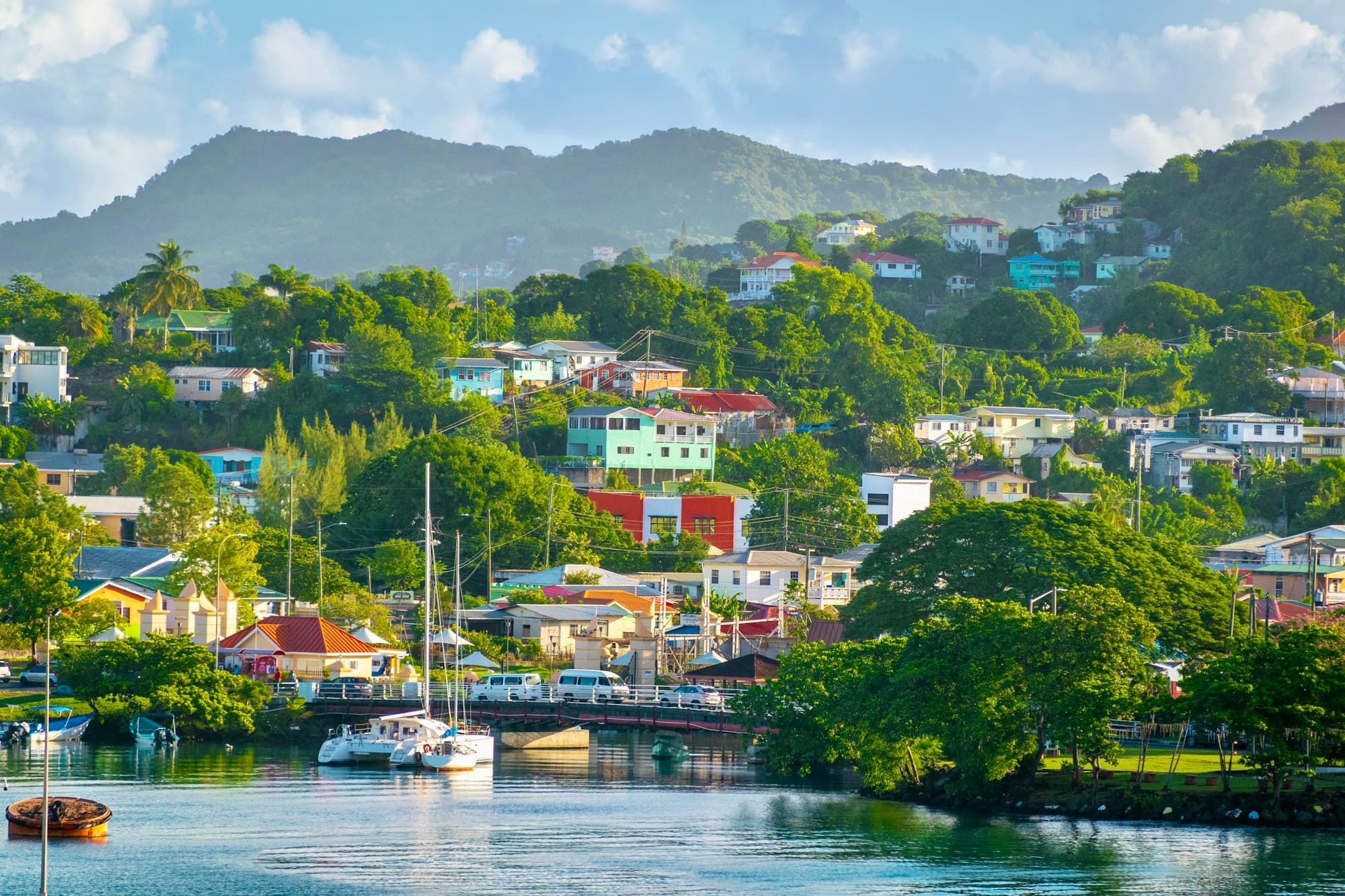
As of 2026, our data puts a comfortable budget at about $2,600 a month for a couple, $1,600 for a single person, and $3,500 for a family with housing included. Those are real figures for real island life, not a resort vacation, and they assume you live like a resident: local restaurants, the minibus or a used car, and a long-term rental rather than a villa.
Housing sets the tone. Our average for a one-bedroom is about $500 in a central area and $400 farther out, but the areas foreigners like cost more. Our area data shows Rodney Bay rentals at roughly $700 to $1,200 a month and Marigot Bay at $600 to $1,100, while Vieux Fort, near the main airport, runs about $400 to $700. If you want the marina and restaurants, budget for the top of those ranges.
Eating local is affordable, with a simple meal around $8. Imported goods are where prices climb, and a 12.5% VAT applies to most purchases. Home internet runs about $44 a month at around 55 Mbps--fine for video calls but not blazing fast.
Two costs catch people off guard. The first is healthcare: private doctors and hospitals often expect payment at the time of service, so keep a cash cushion even if you're insured. The second is staying legal. Visitor extensions cost XCD 200 (about $74) per person for each 30 days, and a work permit for an American runs XCD 5,000 (about $1,852) a year. Neither shows up in a cost-of-living index, and both belong in your budget.
Your budget isn't the hard part. Your status is.
Many countries set a monthly income floor for residency. Saint Lucia doesn't publish one for retirees, because it doesn't have a retirement visa. What decides whether you can live here is which legal route fits you: extended visitor stays, owning property, a job offer, or an investment. The next chapter matches each one to a type of mover.
03 · Staying legally
Five ways Americans stay on the island
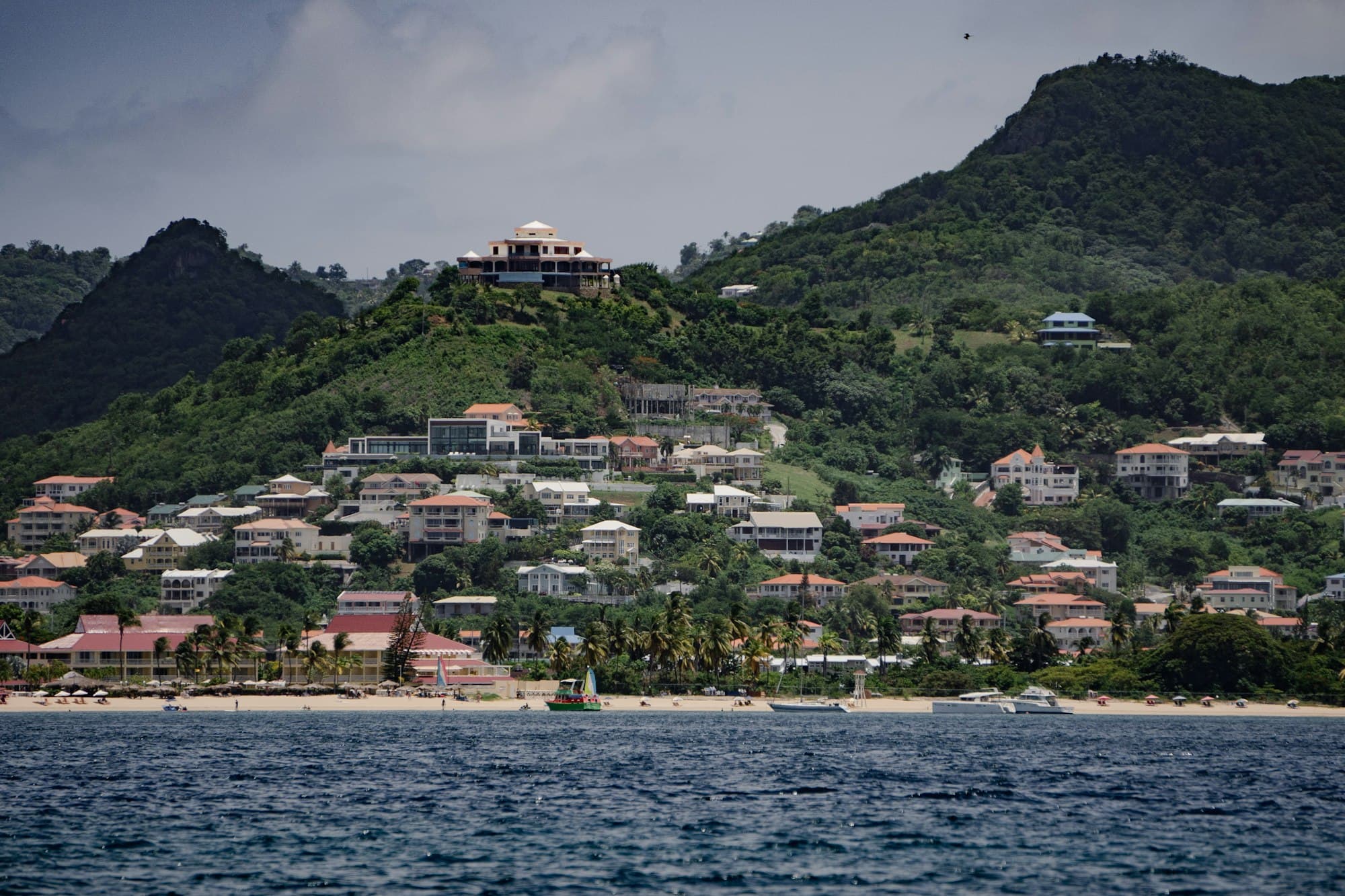
Your route depends on whether you're testing the waters, buying a home, taking a job, or investing. Here's how each one works as of September 2026.
Testing it out: visitor stays and Live It
U.S. citizens don't need a visa to visit. You'll need a passport, a return or onward ticket, proof of where you're staying, and proof you can support yourself, and the Ministry of External Affairs says visitors get up to six weeks. After that, the Immigration Department extends stays in 30-day increments. Each extension costs XCD 200 (about $74) and takes about five working days; first-timers need a passport photo, a local host with ID, and proof of accommodation.
For longer trial runs there's Live It, the island's extended-stay program. It allows stays of up to one year, and you can apply straight to the Immigration Department by email or through one of the tour operators the tourism authority lists. When the one-year option launched in 2021, trade press reported a fee of $75 and said it was aimed at remote workers. The rule people miss: you can keep working for a foreign employer or clients, but you can't work for a Saint Lucian company. We couldn't confirm the 2026 fee on an official page, so check with the Immigration Department before you book.
Buying a home: the Alien Landholding License
Foreigners can own property, but only with government permission. You first apply for a Certificate of Eligibility, then for an Alien Landholding License to buy, lease or hold land. Property guides report a nonrefundable application fee of XCD 1,500 (about $556) and a wait of around six to eight weeks, putting total buyer costs at about 3% to 5.5% of the price. Once you hold the license, you can apply for an Alien Investor Entrance Permit, which the government's investment site says carries indefinite residency rights. For retirees who plan to buy anyway, this is the most natural path to living here full time.
Taking a job: the work permit
Anyone working for a Saint Lucian employer needs a work permit, and Americans pay the highest tier: XCD 5,000 (about $1,852) for each year of employment. Caribbean nationals pay XCD 2,000 and other Commonwealth citizens XCD 4,000. You'll need a police record from your last country of residence, proof of qualifications, and job advertisements, and the government asks for applications at least two months before your start date. Permits renew yearly, and your family can live with you but can't work on your permit. Even residents need one, since residence status doesn't exempt you.
Buying citizenship: the CBI program
Saint Lucia's Citizenship by Investment Programme has run since 2017. As of 2026, the lowest-cost route is a $240,000 donation to the National Economic Fund, which covers one person or a family of up to four. Government bonds start at $300,000 plus a $50,000 fee and must be held five years, interest-free. Approved real estate also starts at $300,000, and enterprise projects at $3.5 million. Add due diligence fees of $2,000 to $8,000 for the main applicant and $1,000 to $5,000 per dependent. Everyone 16 and older is interviewed, and one firm reported processing near 18 months in late 2025. Saint Lucia allows dual citizenship, so Americans keep their U.S. passport on this route.
Two cautions. Since March 5, 2026, Saint Lucian passport holders need a visa for the UK. After the U.S. partly suspended visas for Antigua and Barbuda and Dominica from January 1, 2026 over their programs, local press reported Saint Lucia was unaffected but called vulnerable. The rules may tighten, including a possible residence requirement.
Staying for good: permanent residence and naturalization
After five years of continuous residence, you can apply for permanent residence. It doesn't include the right to work, so a job still needs a permit. Ordinary naturalization takes seven years of residence, and it generally requires giving up your other citizenship, which for Americans means the U.S. passport. That's a real trade-off. If you want a Saint Lucian passport and want to keep your American one, the investment route is the one that allows both.
The routes at a glance
Visitor stay and Live It
Up to six weeks on arrival, 30-day extensions at XCD 200 each, or up to a year on Live It. Foreign remote work only.
Property owner
Alien Landholding License, then an Alien Investor Entrance Permit with indefinite residency rights.
Local job
Work permit at XCD 5,000 (about $1,852) a year for Americans, renewed yearly.
Citizenship by investment
From a $240,000 donation for up to four people, plus due diligence fees. U.S. citizenship kept.
| Visa | Category | Application cost | Processing | Difficulty | Guide |
|---|---|---|---|---|---|
| Citizenship by Investment Program (CIP) | investment | $10,000 | ~90 days | 4/5 | Guide |
| Work Permit | skilled work | — | Up to 1 year, renewable annually; not transferable between employers | 3/5 | Guide |
04 · The practical stuff
Healthcare, taxes and banking on a small island

The three questions that shape daily life here, with the parts Americans most often get wrong.
Healthcare
Owen King E.U. Hospital near Castries is the main public hospital, with 122 beds. On the private side, Tapion Hospital has 22 beds and offers dialysis, CT scans, mammography and ultrasound, and St Jude's Hospital in the south has a six-bed ICU and affiliations with major Toronto hospitals. Private clinics and pharmacies operate in Rodney Bay, Soufrière and Vieux Fort. The State Department says facilities fall short of U.S. standards and that providers often expect immediate cash payment, and it strongly recommends medical evacuation insurance. The country is building a Universal Health Coverage program, but its own health minister said in February 2026 that the work isn't finished, and we couldn't confirm foreign residents can join. Plan on international health insurance that includes evacuation. Dengue occurs year-round, so repellent and screens matter.
Taxes
This is where the online hype goes wrong. Saint Lucia taxes people who are resident and ordinarily resident on income from all sources, inside or outside the country. You're generally tax resident if you spend 183 days or more there in a year or keep your permanent home there. The first XCD 18,400 (about $6,815) a year is tax-free, and the top rate is 30% on taxable income above XCD 30,000 (about $11,111). Non-residents are taxed on foreign income only when it's brought onto the island. The U.S. taxes you wherever you live, so you'll file in both countries. MyExpatTaxes handles the U.S. side; get local advice on the Saint Lucian return, which is due March 31.
Banking
The four commercial banks are Bank of Saint Lucia, 1st National Bank, CIBC Caribbean and Republic Bank. Expect to show your passport, proof of address, evidence of where your money comes from, and tax residency paperwork, and know that approval isn't automatic for non-residents. The fixed exchange rate makes budgeting easy, and Moneycorp can move larger sums from U.S. accounts, like a property deposit, at better rates than a typical bank. On the U.S. side, some brokerages limit accounts for customers living abroad, so talk to Beacon Global Advisors before you move your address.
Bringing a pet
Dogs and cats need an import permit from the Veterinary Authority before they fly. Coming from the U.S., your pet needs an ISO microchip, a rabies shot, and a FAVN rabies blood test, and it can't enter until three months after the vet draws that blood. You'll also need a vet health certificate, and the veterinary division wants three days' notice of your arrival port. Start early: the blood-test wait alone is three months.
This guide is dated on purpose
Saint Lucia raised its investment minimums in 2024, a regional regulator for citizenship programs was expected to start in 2026, and U.S. pressure on Caribbean passport programs is still unfolding. Everything here reflects what we could verify as of September 2026. Confirm fees and rules with the Immigration Department or a licensed professional before you file.
05 · Finding your spot
Where people settle on the island
Most foreign residents choose between the busy north and the quieter south and west. The north around Rodney Bay and Gros Islet has the marina, most of the restaurants, and private clinics and pharmacies, and it's where our rent data runs highest. Castries is the working capital, handy for government offices and banks. Along the west coast, Marigot Bay and Soufrière trade convenience for scenery, with the Pitons and the rainforest close by. In the south, Vieux Fort sits next to Hewanorra International Airport, where the U.S. flights land, and rents run lower.
Getting around takes planning: public transportation is limited outside the towns, traffic keeps left, and you'll need a local temporary driver's license. Spend time in two or three areas before you sign a lease, and our city guides below will grow as we add them.
06 · Your move team
The people who can take this off your plate
A move to a small island runs on paperwork: investment applications, a police record for a work permit, a pet's blood test months ahead, and two tax returns every spring. These are the Expatsi-vetted people who handle those pieces, grouped by what they do.
None of them will make the decision for you, but each one has walked Americans through their part of the move before, and the right one early saves months later.

Holborn Assets
Portugal Golden Visa
A financial advisory firm focused on residency and citizenship by investment, with Saint Lucia among the programs it handles. Jason Swan, an award-winning leader in the golden visa investment field, works with North American clients.
Learn more
Legalize That Doc
Document Preparation
A document concierge led by Melissa Di Nardo. They get U.S. records like FBI background checks and birth and marriage certificates issued, apostilled and legalized for use abroad.
Learn more
Aqua Moving Services
Worldwide Shipping and Moving Service
International movers who survey your belongings once and return three competing quotes from vetted shipping partners, with one point of contact throughout.
Learn more
Hunter Schultz
Healthcare Coach
A healthcare coach with more than 20 years of expat living and a background in air medical transport. His one-hour consult builds a care plan for your destination country and flags the gaps before they cost you.
Learn more
ExpatInsure
Global Health Insurance
Expatsi's international health-insurance partner, led by Andy Seale and Stephanie Edwards. They match you with a plan that fits where you'll live and what coverage you need.
Learn more
MyExpatTaxes
U.S. Expat Tax Service
Tax software and preparers built for Americans abroad, filing U.S. expat returns since 2018.
Learn more
Beacon Global Advisors
Financial Planning
Wealth management for Americans overseas: keeping 401(k)s, IRAs and brokerage access working after you leave, and staying compliant on both sides.
Learn more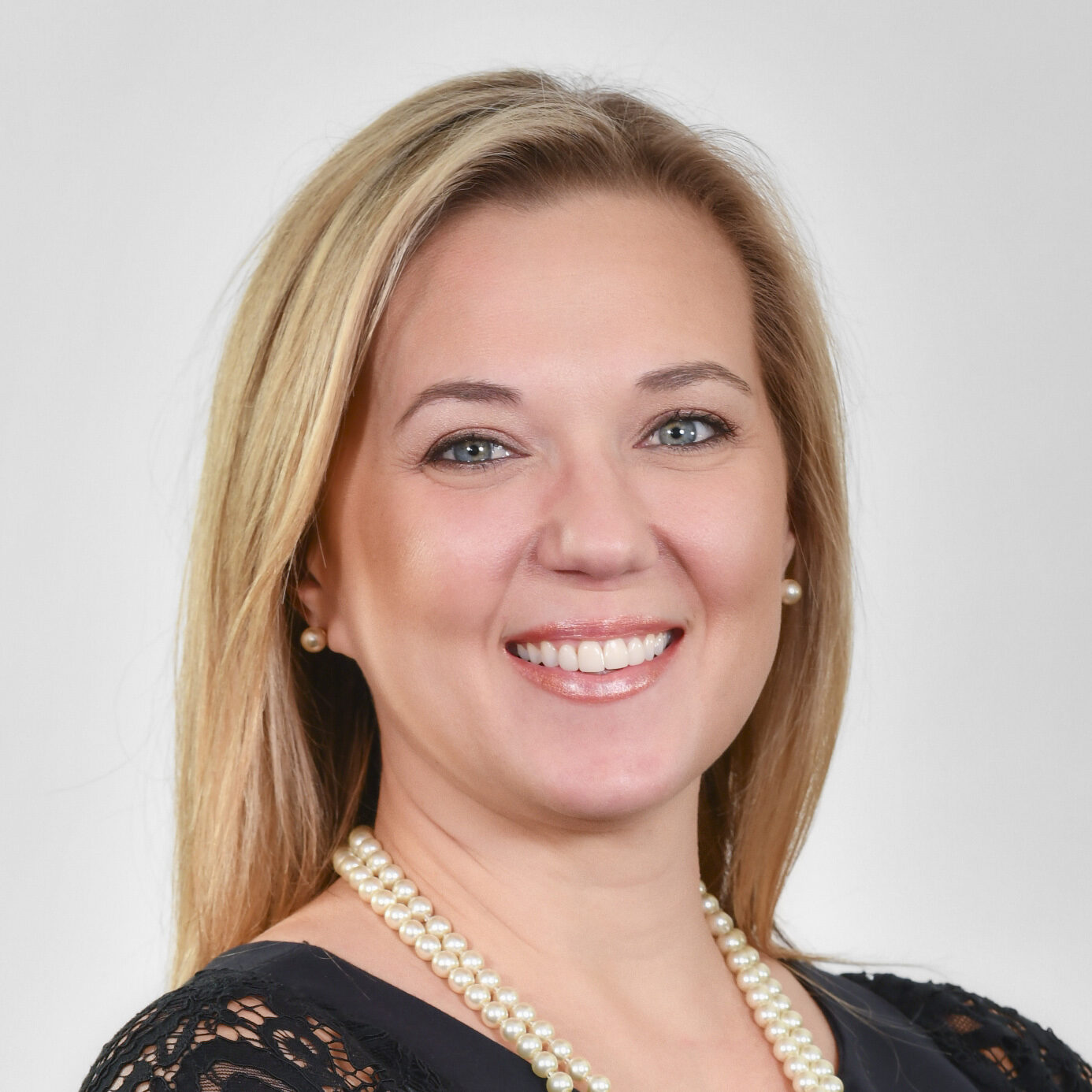
Moneycorp
Currency Exchange
A currency and international payments specialist working since 1979, led for U.S. clients by Kelly Cutchin. Useful for large transfers and for locking in a rate ahead of a purchase.
Learn more
Bodzin Pet Travel Solutions
Pet Relocation
A pet travel concierge run by founder Aliza Bodzin. They plan the permits, vet visits and flight logistics so your dog or cat arrives without surprises.
Learn more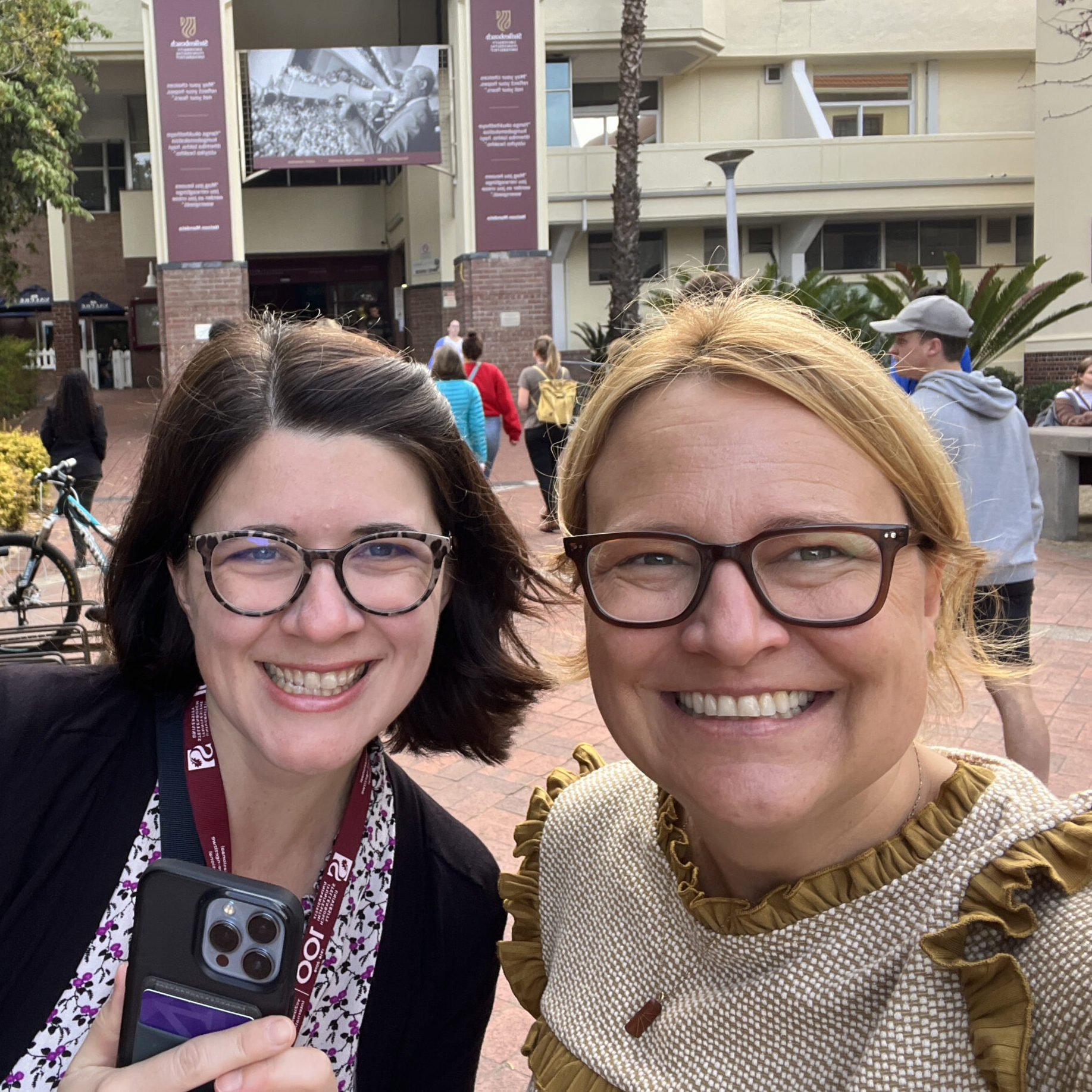
Culturosity Co.
Cultural Skills Coach
Jennifer and Janka coach individuals and families on adapting to a new culture, using research-backed frameworks. Sharing a language with your neighbors isn't the same as sharing their habits.
Learn more07 · Quick answers
Moving to Saint Lucia: frequently asked questions
Can I work remotely from Saint Lucia?
Yes, through the Live It extended-stay program, which allows stays of up to one year. You can work for foreign employers or clients but not for a Saint Lucian company. A local job requires a work permit, which costs Americans XCD 5,000 (about $1,852) a year.
Does Saint Lucia have a retirement visa?
No. Saint Lucia has no dedicated retirement visa with an income requirement. Retirees usually start with visitor extensions or the Live It program, and those who buy a home can apply for an Alien Investor Entrance Permit, which carries indefinite residency rights once they hold an Alien Landholding License.
How much does it cost to live in Saint Lucia?
As of 2026, Expatsi's data puts a comfortable budget at about $2,600 a month for a couple, $1,600 for a single person, and $3,500 for a family. A one-bedroom averages about $500 in a central area, though popular spots like Rodney Bay cost more.
Is Saint Lucia tax-free for foreign residents?
No. Residents who are ordinarily resident are taxed on worldwide income, with a top rate of 30% and the first XCD 18,400 (about $6,815) tax-free. Non-residents pay tax on foreign income only when it's brought into Saint Lucia. Americans also file U.S. returns wherever they live.
Can I keep my U.S. citizenship if I become a Saint Lucian citizen?
Yes, if you become a citizen through the investment program, since Saint Lucia allows dual citizenship. Ordinary naturalization after seven years of residence is different: it generally requires renouncing your other citizenship, which for Americans means the U.S. passport.
Do Americans need a visa to move to Saint Lucia?
Not to arrive. U.S. citizens can visit without a visa, and visitors get up to six weeks. To stay longer you extend in 30-day blocks at XCD 200 (about $74) each, apply for the Live It extended stay of up to a year, or qualify for a longer route such as an Alien Investor Entrance Permit, a work permit, or citizenship by investment.
How much is Saint Lucia citizenship by investment?
As of 2026, the lowest option is a $240,000 donation to the National Economic Fund, covering a single applicant or a family of up to four. Bonds and approved real estate start at $300,000, and due diligence fees add $2,000 to $8,000 for the main applicant. Applicants 16 and older are interviewed.
Is healthcare in Saint Lucia good enough for American retirees?
It covers routine care, but serious cases may need treatment abroad. The U.S. State Department says facilities fall short of U.S. standards, that providers often expect cash payment, and that medical evacuation insurance is strongly recommended. Plan on international health insurance that includes evacuation.
Sources
- Visiting Saint Lucia · Ministry of External Affairs, Saint Lucia (checked September 2026)
- Information for visitors (extensions) · Consulate General of Saint Lucia in New York (checked September 2026)
- Live It: options to stay for up to one year · Consulate General of Saint Lucia in Toronto (checked September 2026)
- General information to obtain a work permit · Government of Saint Lucia (checked September 2026)
- Citizenship by investment options · CIP Saint Lucia (checked September 2026)
- Alien landholding · CIP Saint Lucia (checked September 2026)
- Saint Lucia Travel Advisory · U.S. Department of State (checked September 2026)
- Saint Lucia international travel information · U.S. Department of State (checked September 2026)
- Medical assistance, St. Lucia · U.S. Embassy Bridgetown (checked September 2026)
- Saint Lucia individual taxes on personal income and residence · PwC Worldwide Tax Summaries (checked September 2026)
- A-Z of taxes · Inland Revenue Department, Saint Lucia (checked September 2026)
- Conditions for importing dogs and cats · Veterinary and Livestock Services Division (checked September 2026)
- EC dollar exchange rate · Eastern Caribbean Central Bank (checked September 2026)
- Saint Lucia CBI 2026 regulatory update · NTL International (checked September 2026)
- Saint Lucia told to move fast to avoid US visa restrictions · St. Lucia Times (checked September 2026)
- Cost of living and country data for Saint Lucia · Expatsi (checked September 2026)
See how Saint Lucia fits your life
Take the free Expatsi Test and compare Saint Lucia with other countries on what matters to you: cost, healthcare, climate, and safety.
Why not you?