Complete guide to moving to Canada
Moving to Canada: the honest 2026 guide for Americans
What it really costs, which visa actually fits you, and why Canada is hunting for skilled workers right now.
The no-spin playbook: real numbers, the careers Canada is short on, the right path for your situation, and who does the paperwork so you don't have to.

By Jen Barnett, Co-founder, Expatsi
Reviewed and updated August 29, 2026 · 12 min read

01 · The case for Canada
Why Canada, and who it's really for

Canada is one of the easier developed countries for an American to actually move to, and in 2026 it's going out of its way to recruit skilled workers. Here's the honest version of why, and who should probably look somewhere else.
Start with the basics. It's the second-largest country on earth, it's safe, it's stable, and it runs a universal public healthcare system that covers doctors and hospitals. English is spoken almost everywhere you'd want to live, about 95 out of 100 on proficiency, and French is the other official language. It's genuinely close to home, too. Toronto is a four-hour flight from most of the East Coast, the time zones line up with the US, and in a lot of places you can drive across the border. You don't have to give up your whole life to make the move.
It's also easy to like. Canada is multicultural and welcoming, it ranks near the top of the world on safety and quality of life, it's pet-friendly, cannabis is legal, and it scores high on LGBTQ acceptance. The cities are world-class and the outdoors is right there: mountains, lakes, and coastline in every direction. And you won't be the first American there. A large, settled community is already on the ground, which means the doctors, accountants, and Facebook groups that make a move easier already exist.
Here's the catch
Canada isn't right for everyone, and we'd rather say so now. Three honest reasons it might not fit.
First, it's not cheap. This is not Portugal or Mexico. The cost of living is close to what you're paying in the US, and housing in Toronto and Vancouver is brutal. The real savings are in healthcare, not rent, so if you're moving to stretch a fixed income, Canada probably isn't your bargain.
Second, the winters are real. Outside the mild west coast, most of the country gets a long, cold, snowy winter. Some people love it. Some people move to Vancouver for a reason.
Third, getting in is competitive, and the door just narrowed for some. Canada cut its overall immigration numbers for 2026 to 2028 and made it harder to arrive as a temporary worker or a student. But here's the twist that matters: it did the opposite for skilled permanent residents. If you bring a skill Canada is short on, your odds went up, not down. If you don't, it got tougher. The rest of this guide is about landing on the right side of that line.
- Cost of living (single)
- $2,400/mo
- Safety index
- 70/100
- English proficiency
- 95/100
- Internet speed
- 120 Mbps
- Capital
- Ottawa
- Currency
- Canadian Dollar (CAD)
02 · The numbers
What it actually costs to live in Canada
$3,700
Monthly budget, couple
all in, comfortable
$2,400
Monthly budget, single
all in, comfortable
$5,900
Monthly budget, family
housing included
$1,350
Rent, 1-bed city center
$1,150 outside the core
$18
Inexpensive meal out
about the same in the US
$76
Monthly transit pass
real transit in big cities
$62
Home internet, monthly
about 120 Mbps
70/100
Safety index
low crime

Here's the honest headline: Canada is not a place you move to save money. A single person lands around $2,400 a month all in, a couple around $3,700, and a family closer to $5,900 once you fold in housing. Those are US dollars, and they're roughly what you'd spend in a mid-size American city. If you're chasing a cheaper life, this isn't it.
Where you do save is healthcare. You're not writing a $1,500 check every month for a family plan or handing over a $300 copay at the doctor, and that difference is real money over a year. Groceries, transit, and internet land close to US prices, a bit lower in most cities. A monthly transit pass runs about $76, home internet about $62 for fast service, and a simple meal out about $18.
The wild card is housing, and it's the whole ballgame. Toronto and Vancouver are two of the priciest housing markets in North America, with one-bedrooms running CAD 2,200 to 3,400. But the national average is far lower, closer to $1,350 in US dollars for a city-center one-bedroom and $1,150 outside the core, because Montreal, Calgary, Ottawa, and Halifax cost a fraction of the two big coastal cities. If your budget is tight, the move is simple: look past Toronto and Vancouver. These are Expatsi cost-of-living estimates as of 2026, so treat them as a planning guide, not a quote.
Why the timing favors skilled workers
Canada just cut its overall immigration for 2026 to 2028, but it did the opposite for skilled workers. Economic immigrants now make up about 64 percent of all new permanent residents, the highest share in decades, and Canada plans to welcome roughly 380,000 permanent residents a year. Provinces got more spots, not fewer. So if you bring a skill Canada is short on, the timing is genuinely on your side. That's the next chapter.
03 · Who Canada actually wants
The skilled workers Canada is short on

Canada runs the most skills-driven immigration system in the developed world. Almost all of its labor-force growth comes from immigration, so it points its main system, Express Entry, straight at the jobs it can't fill at home. Here's how that works, and where the demand actually is.
Since 2023, Canada holds what it calls category-based draws. Instead of only inviting the highest overall scorers, it runs targeted rounds for people in specific in-demand fields, often at much lower scores than the general draws. In 2026 there are ten of these categories. If your work lands in one, your odds jump.
Healthcare and social services
This is the biggest and most reliable fast lane. Physicians, nurses, nurse practitioners, dentists, pharmacists, psychologists, and social workers get invited round after round, often at scores in the 460s while the general draws sit above 500. A healthcare draw in February 2026 invited 4,000 people at a cut-off of 467. If you work in health care, Canada wants you, and it will bend the numbers to get you.
Skilled trades
Canada has been short on carpenters, electricians, plumbers, welders, and machinists for years, and trades have their own standing category with their own draws. A Red Seal certification travels well here. One note for 2026: cooks were dropped from the trades list, so check where your exact occupation lands before you count on it.
Tech, and why it depends on the province
Tech is in demand, but this is where the answer is honestly 'it depends.' STEM is a federal category again in 2026, but the exact occupations shift, and software developers and data scientists spent a stretch off the priority list. In practice, a lot of tech talent gets in through the provinces instead. British Columbia, Alberta, and Ontario all run their own tech-focused streams, and a provincial nomination adds 600 points to your score, which all but guarantees an invitation. If you're in tech, watch the provinces, not just the federal draws.
French speakers, and a few more
If you speak French, you jump the line, full stop. Canada wants far more French speakers outside Quebec and holds dedicated draws for them at friendly scores. New for 2026, it also added categories for physicians, researchers, and senior managers with Canadian experience, plus transport and education roles. The theme never changes: come with a skill Canada is short on, and the system opens up.
Where the demand is right now
Healthcare and social services
Physicians, nurses, dentists, pharmacists, psychologists, and social workers.
Skilled trades
Carpenters, electricians, plumbers, welders, and machinists. A Red Seal helps.
Tech and STEM
In demand, but often through a provincial tech stream, not the federal draw.
French speakers
Speak French and you jump the line, especially outside Quebec.
Education
Teachers and early childhood educators have their own priority category.
Transport
Pilots, aircraft mechanics, and other transport roles.
04 · The right path for you
Your visa, matched to your situation

Canada has one big system and several side doors, and the right one comes down to your situation. Here are the paths that matter for most Americans.
Express Entry: the main door for skilled workers
The flagship. It isn't really a visa, it's the system that manages three programs, the Federal Skilled Worker, Federal Skilled Trades, and Canadian Experience Class, and ranks you against everyone else on a points score. Get invited and you apply straight for permanent residence, the green-card equivalent, with no employer required. The category-based draws above are how most in-demand workers get in below the general cut-off. See the full breakdown on our Express Entry page.
Provincial Nominee Program: let a province pick you
Every province except Quebec runs its own streams for the workers it needs, and a provincial nomination adds 600 points to your Express Entry score, which is essentially a guaranteed invitation. It's the best route when your occupation is hot in one province but not nationally, like tech in BC or Alberta. Provinces got more spots for 2026, about 91,500.
A job offer: the Work Permit
If a Canadian employer wants to hire you, a work permit can get you there fast, sometimes in weeks, usually after a Labour Market Impact Assessment. It's temporary, but time spent working in Canada is worth a lot of points toward permanent residence later. A solid on-ramp if you can line up the job first.
Building a business: the Start-up Visa
For founders with a real idea and backing from a designated Canadian investor or incubator. It leads straight to permanent residence. It's slow and demanding, but it's a genuine path if you're bringing a company with you.
Studying, then staying: the Study Permit
Study at a Canadian school, then use a post-graduation work permit and the Canadian Experience Class to convert to permanent residence. Fair warning: Canada cut student numbers hard for 2026, so this route is more competitive than it used to be.
You might already be Canadian
If you have a Canadian parent, grandparent, or earlier ancestor, a 2025 law change may mean you're already a citizen and simply have to prove it. No points, no income test, about CAD 75. It's worth checking before anything else. See if you qualify by descent.
One more thing on Quebec: it runs its own immigration system, so if you're set on Montreal or Quebec City, you apply through the province, not the federal streams above. Our team can map that route too.
Every Canadian visa, side by side
| Visa | Category | Application cost | Processing | Difficulty | Guide |
|---|---|---|---|---|---|
| Citizenship by Descent | citizenship | $54 | ~450 days | 3/5 | Guide |
| Express Entry | jobseeker | $1,325 | ~180 days | 4/5 | Guide |
| Provincial Nominee Program (PNP) | skilled work | $1,325 | ~180 days | 4/5 | Guide |
| Start-up Visa | self employment | $1,575 | ~365 days | 4/5 | Guide |
| Study Permit | student | $150 | ~60 days | 2/5 | Guide |
| Work Permit | skilled work | $155 | ~14 days | 3/5 | Guide |
05 · The practical stuff
Healthcare, taxes and banking

The three things every American asks about, answered straight.
Healthcare
This is the big draw. Canada has universal public healthcare, funded by taxes, and once you're a resident you're covered for doctor visits and hospital care with little or nothing out of pocket. Two honest caveats. First, some provinces make new residents wait up to three months for coverage to start, so you'll want private insurance to bridge that gap. Second, it isn't built for US-style speed, and wait times for some specialists and non-urgent procedures can be long, which is why plenty of people carry private coverage alongside the public plan. Prescriptions and dental usually aren't covered by the public system either, so budget for those or an employer plan. ExpatInsure, one of our partners, sets up the private coverage that bridges the wait and fills the gaps.
Taxes
Here's the catch, and it's the same one everywhere: as an American you file in two countries. Canada taxes residents on worldwide income, and the US taxes its citizens no matter where they live. The good news is that the US-Canada tax treaty, the Foreign Earned Income Exclusion, and foreign tax credits keep almost everyone from paying twice. Canadian rates do run higher than US rates, but you're getting healthcare and services for it. Get advice before you move, not after, especially about your 401(k) and IRA. Moneycorp, our currency partner, moves your dollars into Canadian dollars at better rates than a bank and sets up the recurring transfers your rent will need.
Banking
Open a Canadian bank account early, because you'll need it for rent, payroll, and daily life. The big banks have newcomer packages built for exactly this, and you can often start before you land. On the US side, tell your brokerage you're moving, since some restrict accounts for non-residents, so where your investments live is part of the plan. And if you're buying a home rather than renting, Simon Conn, another partner, arranges international mortgages for buyers across more than 50 countries, Canada included.
This guide is dated on purpose
Canada's immigration rules move fast. The levels plan, the Express Entry categories, and the citizenship-by-descent law all changed within the past year. Everything here reflects the rules as of July 2026. Draw scores shift with every round, so before you file anything, confirm the current numbers with a licensed professional. The experts below do this for a living.
06 · Finding your spot
Where to live in Canada

Toronto
Jobs and big-city life
Canada's largest city and financial engine, and the deepest job market in the country. It's diverse, walkable in the core, and endlessly connected, but it's also the priciest place to rent, with one-bedrooms running CAD 2,200 to 3,200. Love it if your paycheck can handle it.

Vancouver
Mountains meet the sea
Canada's West Coast anchor, where glass towers meet snow-capped peaks and the sea. The province's job engine, strong in tech and a film industry big enough to earn the 'Hollywood North' nickname. What you pay for it is rent, which rivals Toronto's for the priciest in Canada. Winters are mild but rainy.

Montreal
Culture and value
Bilingual, beautiful, and far cheaper than Toronto. The catch: Quebec runs its own immigration system, so you plan your visa through the province, and a little French goes a long way here.
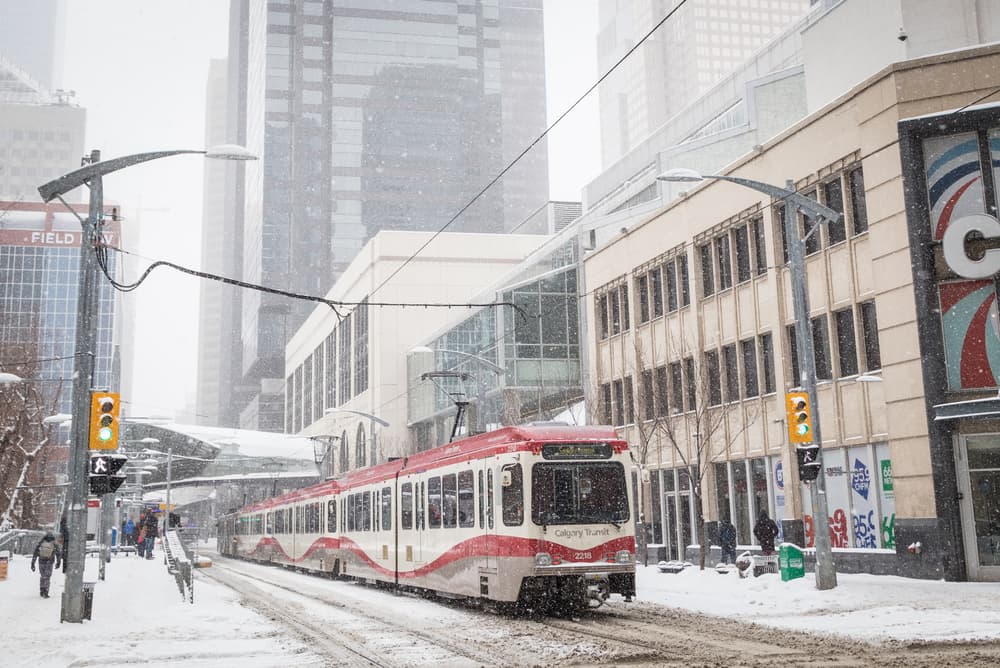
Calgary
Gateway to the Rockies
Banff is an hour west, the city is sunny and dry, and Alberta has no provincial sales tax. The economy still rises and falls with oil, and winter is long and cold, though chinook winds bring surprise thaws. Best for outdoorsy movers with a job lined up.
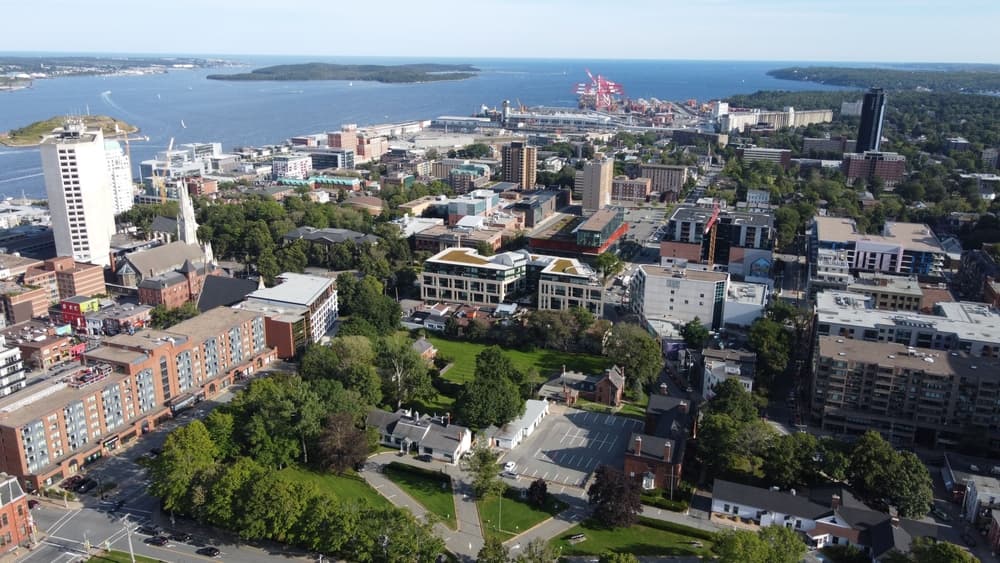
Halifax
Atlantic port city
The Maritimes' one real city, built around a working harbor, with six universities, an oyster and lobster coast, and beaches and fishing villages half an hour out. Winters are the mildest in Atlantic Canada. Housing got tight fast here, and the rest of the country is a long way west.

Victoria
Mildest winters in Canada
British Columbia's capital sits on the south tip of Vancouver Island, with gardens flowering in February, a harbor full of floatplanes, and the warmest winters in the country. Vancouver is a ferry or a short flight away. Island life means island prices and island logistics.

Quebec City
Walled and French
The only walled city north of Mexico, with a UNESCO old town, a February carnival built around the cold rather than in spite of it, and a level of French that isn't optional day to day. Quebec runs its own immigration selection, so you plan the visa through the province. Snow arrives in November and stays.

Winnipeg
Prairie capital
Manitoba's capital out on the prairie, with the Human Rights Museum, the market halls where the two rivers meet at the Forks, and a French quarter in St. Boniface that throws a winter festival. Housing runs a fraction of Toronto's. Winters hit thirty below, the mosquitoes are a summer legend, and crime rates are high for Canada.

Saskatoon
City of bridges
A prairie university city on the South Saskatchewan River, with seven bridges over it, a modern art gallery on the bank, and potash and farming underneath the whole economy. Summers are long and bright. Winter is the test: dry, still, and cold enough that block heaters are standard equipment.

St. John's
Jellybean row and fog
North America's oldest English-founded city, painted in jellybean colors on the hills around a narrow harbor, with Signal Hill above it and a street of pubs that barely closes. Closer to Ireland than to Calgary. Fog and wind are constants, and the economy rides on offshore oil.
07 · You don't do this alone
The vetted experts who actually move you
You've met a few of them already. Reading about Canada is the easy part. These are the Expatsi-vetted people who handle the visa, the paperwork, the money, and life once you land.
One thing we've learned from helping thousands of Americans plan a move: the people who do it smoothly almost always have help. Not because they couldn't figure it out, but because doing it once yourself, against a real bureaucracy and a points system that changes by the draw, is a lot harder than handing it to someone who's done it hundreds of times. Here are the people we trust, grouped by what they do best.

Master Immigration Services (Canada)
Canada Immigration
A Vancouver consultancy led by licensed consultant Sal Koyuncu, with 15-plus years and 200-plus reviews handling Express Entry, provincial nominations, and work permits. The people to call to map your fastest points route.
Learn more
Legalize That Doc
Document Preparation
Melissa Di Nardo's team assembles the paperwork the points system runs on: educational credential assessments, police checks, apostilles, and vital records for you and your family. It's where a lot of applications are quietly won or lost.
Learn more
Amanda Franzoni
Canada Local Guide
An American who made the move to British Columbia herself. The one to call for the on-the-ground stuff: neighborhoods, schools, driver's licenses, and finding your feet once you land.
Learn more
Moneycorp
Currency Exchange
A currency specialist led for US clients by Kelly Cutchin. They move your dollars into Canadian dollars at better rates than a bank and set up the recurring transfers your rent and bills will need.
Learn more
Simon Conn
International Mortgage Lending
More than 40 years arranging overseas property finance, sourcing mortgages for buyers in 50-plus countries, Canada included, for when you're ready to buy instead of rent.
Learn more
Lingoda
Language Learning
An online school with small live classes on your schedule. Handy for building the French that earns extra points and dedicated draws, and for daily life if you land in Quebec or a bilingual city.
Learn more
ExpatInsure
Global Health Insurance
Expatsi's international health-insurance partner. They set you up with the private coverage that bridges the provincial waiting period and covers what the public system doesn't, like dental and prescriptions.
Learn moreCanada webinars and guides
Want to go deeper before you talk to anyone? Here's the Canada shelf from our library.
How To Move To Canada
Thinking about relocating to Canada but not sure where to start? This webinar is your step-by-step guide to making the move with clarity and confidence. Whether you're considering a temporary stay, permanent residency, or exploring citizenship options.
Our full walk-through of every route into Canada, from Express Entry to the provincial programs, in one sitting.
Canada Healthcare Report
Healthcare guide for Canada
The free report on how Canada's public and private healthcare actually works for newcomers, including the provincial waiting period.
Connect with people like you

Canada
Expatsi Community
Moving is easier when you're not doing it alone. Our Canada group is full of Americans at every stage: some still deciding, some already unpacking in Calgary, all happy to answer the questions Google can't. Come ask yours.
Join the Canada community08 · Quick answers
Moving to Canada: frequently asked questions
Will I pay taxes in both Canada and the US?
You'll file in both, but you almost certainly won't pay twice. The US taxes its citizens everywhere, and Canada taxes its residents on worldwide income, but the tax treaty, the Foreign Earned Income Exclusion, and foreign tax credits stop double taxation for most people. Talk to a cross-border advisor before you move, especially about retirement accounts.
Does Canada have free healthcare for newcomers?
Once you're a permanent resident you're covered by the public system for doctor and hospital care, funded by taxes. Two catches: some provinces make you wait up to three months after arriving, and dental and prescriptions usually aren't included. Most newcomers carry private insurance to bridge the wait and fill the gaps.
Do I need a job offer to immigrate to Canada?
No, not for the main route. Express Entry ranks you on skills, education, language, and experience, and you can be invited without a job offer. A job offer or a provincial nomination adds points and speeds things up, but plenty of people get permanent residence without one.
Which jobs are most in demand in Canada?
Healthcare leads by a mile: doctors, nurses, pharmacists, and social workers get invited at lower scores than almost anyone else. Skilled trades like electricians, plumbers, and welders are a chronic shortage. Tech is wanted too, but usually through a provincial stream rather than the federal draw. Speaking French helps in every field.
Is it hard for an American to move to Canada?
Not as hard as most people assume, if you have skills Canada wants. Canada runs a transparent points system and it's actively recruiting healthcare workers, tradespeople, and French speakers. The honest hurdle isn't the paperwork so much as the competition: you're ranked against everyone else, so the higher your score, the faster you're in.
Could I already be a Canadian citizen?
Possibly. A 2025 law change removed the old one-generation limit, so if you have a Canadian parent, grandparent, or earlier ancestor, you may already be a citizen and just need to prove it. It costs about CAD 75 and has no income test, which makes it the cheapest, simplest route of all. Check it before anything else.
What's the difference between Express Entry and the Provincial Nominee Program?
Express Entry is the federal system that ranks skilled workers nationally. The Provincial Nominee Program lets a single province pick you for its own labor needs, and a nomination adds 600 points to your Express Entry score, which is close to a guaranteed invitation. Many people use both at once.
How much money do I need to live in Canada?
Plan on roughly $2,400 a month for a single person and $3,700 for a couple, all in and in US dollars, though Toronto and Vancouver run well above that. Canada isn't a place you move to save money; costs are close to the US. The savings show up in healthcare, not rent.
Sources
- Supplementary Information for the 2026-2028 Immigration Levels Plan (380,000 PR/yr, economic class 64%) · Government of Canada, IRCC (checked July 2026)
- Canada prioritizes top talent in 2026 immigration Express Entry categories · Government of Canada, IRCC (checked July 2026)
- Express Entry: Category-based selection · Government of Canada, IRCC (checked July 2026)
- Canada: Updates to Express Entry Category-Based Selection for 2026 · Fragomen (checked July 2026)
- Express Entry healthcare draws 2026 (Feb 20 2026 draw: 4,000 ITAs, CRS 467) · Moving2Canada (checked July 2026)
- Cost of living and country data for Canada · Expatsi (checked July 2026)
See how Canada fits your life
Take the free Expatsi Test and compare Canada to nearly 200 countries on what actually matters: cost, healthcare, climate, and jobs. About five minutes.
Why not you?