Your 2026 guide to the Emerald Isle
So you want to move to Ireland
Ireland speaks your language and hands EU passports to the grandchildren of its emigrants. Nearly twice as many Americans moved here last year as the year before. Here is the honest guide: the visas, the money, and the housing crunch.
We help Americans move abroad, and this is our working guide to Ireland: current for 2026 and honest about the parts that are hard.

By Jen Barnett, Co-founder, Expatsi
Reviewed and updated August 30, 2026 · 13 min read
01 · The case for Ireland
Why Ireland keeps topping American shortlists
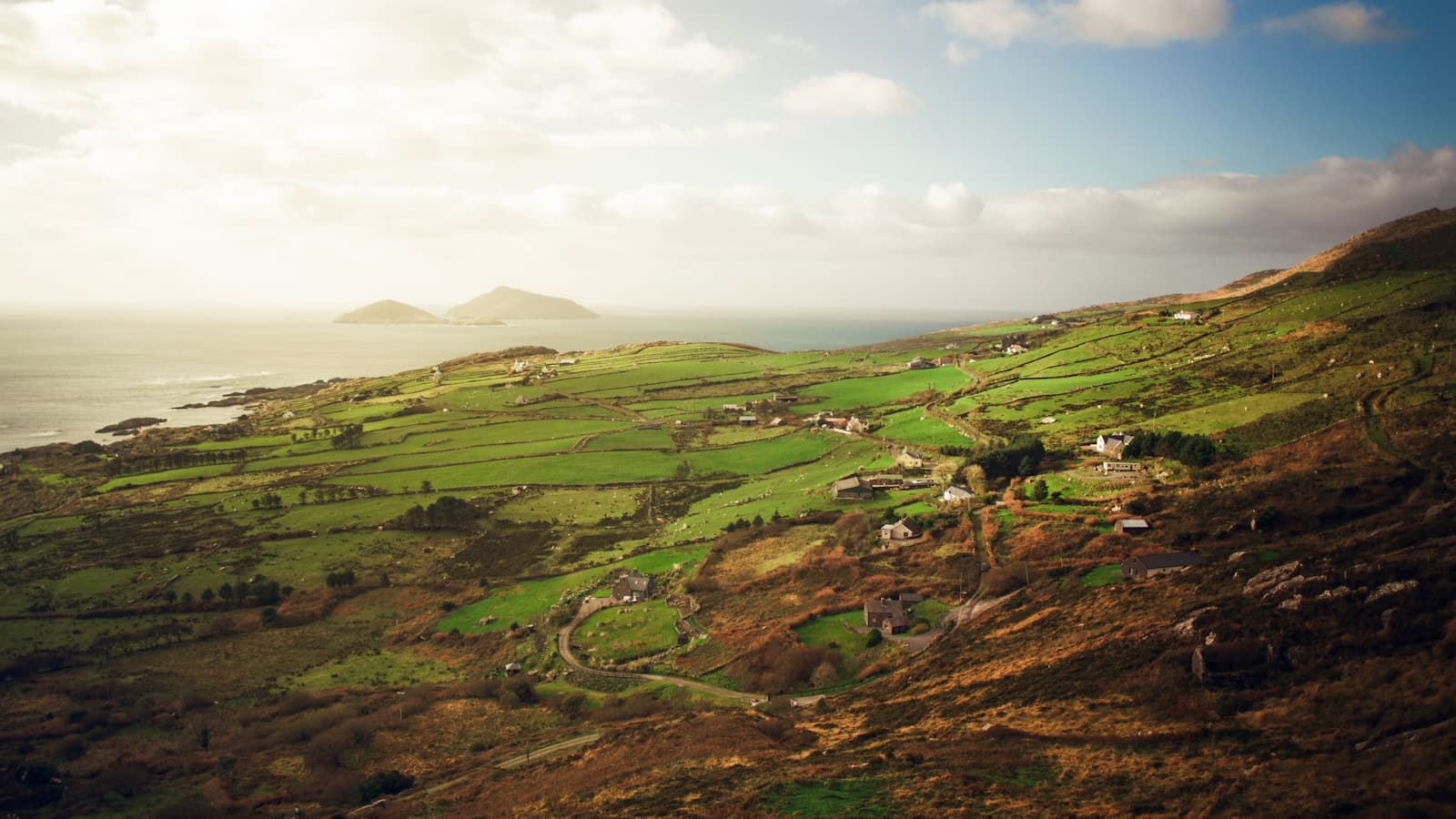
Ireland is the rare European move where you don't have to learn a new language, rebuild your life in a foreign tongue, or explain yourself at the pharmacy. Everyone speaks English, culture is familiar enough to feel easy and different enough to feel like a real change, and you're only about six hours from the East Coast.
The numbers back up the pull. About 9,600 U.S. citizens moved to Ireland in the year by April 2025, nearly double the year before, and the highest count since the state started tracking it roughly 40 years ago. For the first time in modern memory, more Americans are moving to Ireland than Irish citizens are leaving for the States. That happened in a year when overall immigration to Ireland actually fell, so American residents were climbing while most other arrivals dropped.
Two big engines drive that. One is work: Ireland is the European headquarters for a wall of U.S. tech and pharma companies, so Dublin, Cork and Galway are full of familiar employers and English-first offices. The other is family. Roughly 32 million Americans claim Irish roots; if the right grandparent was born on the island, you can claim an Irish and EU passport without ever living there. A lot of recent movers also name the quieter stuff out loud: no gun culture, strong human rights, and a politics that has felt steadier than home. Irish passport interest from the U.S. has hit record levels to match.
Here is the catch
Ireland isn't cheap, nor is it roomy. Dublin costs about as much as a big U.S. coastal city. The rain is real at roughly 150 wet days a year, and public transport thins out quickly once you leave the cities. The housing shortage is the thing that trips up most newcomers; we'll be blunt about it a couple of sections down. Winters are dark and damp rather than freezing, summers are mild, and a genuinely sunny stretch is treated as a minor national holiday.
Ireland fits you best if you value safety, walkable towns, easy language landing and EU access, and you're either bringing your own income, chasing a real job offer, or claiming a passport through anestry. It fits less well if your plan leans on cheap rent, year-round sun, or a car-free life in a tiny village. Be honest with yourself about which camp you're in before you fall for the postcard; the move is very doable for the first group, a slog for the second.
- Cost of living (single)
- $3,000/mo
- Safety index
- 70/100
- Internet speed
- 120 Mbps
- English proficiency
- 100/100
- Capital
- Dublin
- Population
- 5.3M
Ireland by the numbers
$4,400
Monthly budget for a couple
all in, comfortable
$3,000
Monthly budget for one
Dublin runs higher
$3,025
Average Dublin two-bed rent
per month, open market
1,800
Rentals in the whole country
Feb 2026, a record low
02 · The numbers
What it costs, and the housing wall
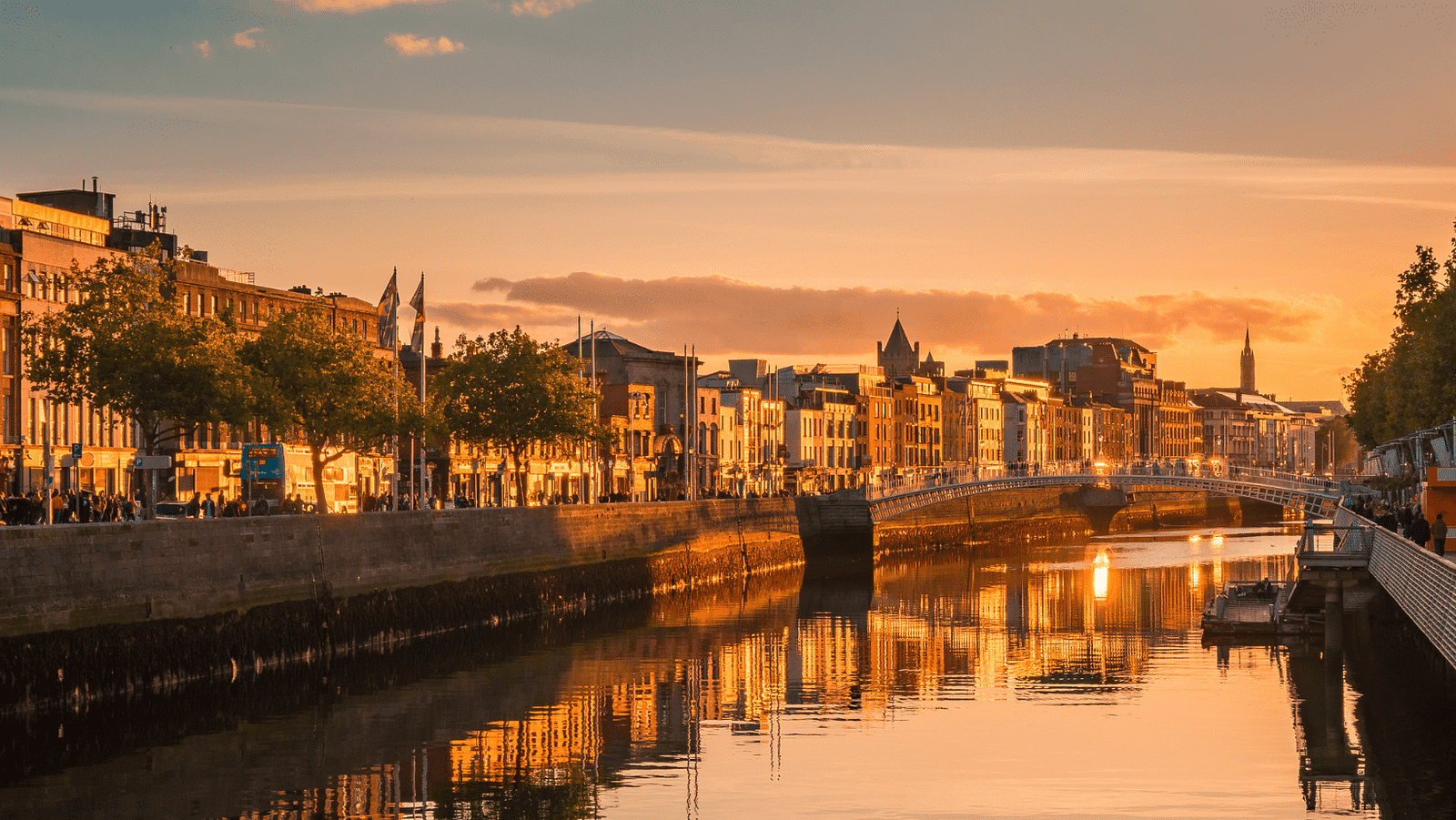
Let's talk money, since Ireland's quality of life comes with a Western European price tag. A comfortable budget runs around $3,000 a month for one person and about $4,400 for a couple, all in. Families should plan closer to $7,250 per month. These are livable numbers if your income is solid, and Irish salaries and social supports are built around them. Groceries, a pint and a nice dinner out will not shock you coming from a U.S. city.
Rent is the real wall
Here is the catch, and it's a big one: renting in Ireland is genuinely hard right now. On February 1, 2026, there were fewer than 1,800 homes available to rent in the entire country - the lowest since records began in 2006 and down more than a fifth in a year. The national vacancy rate sits around one to two percent; in Dublin, it's closer to one. Rents rose 4.4 percent in 2025 and are about 80 percent higher than they were a decade ago.
In practice, a two-bed apartment in Dublin now averages about $3,025 a month on the open market, with city-centre one-beds pushing toward $2,030 and up. New rules that took effect in March 2026 cap rent increases at 2 percent a year for a sitting tenant. Landlords can reset to market rates when a tenancy ends, so the price you see advertised is usually the real one.
The good news is you have options. A two-bedroom averages closer to $2,465 in Cork, $2,655 in Galway and $2,535 in Limerick; the midlands and smaller towns can be 30 to 40 percent cheaper again. Rooms in shared houses are common and much cheaper for singles. If you work remotely or are retired, you don't have to fight the Dublin market at all. Line up housing before you land, budget for a few months of overlap, and treat a signed lease as the single hardest step of the move - harder even than the visa.
Buying is competitive, too. The national median sale price sits around $447,000 and climbs past $551,000 in Dublin. New construction generated roughly 37,000 homes in 2025, still running well under the 50,000 a year the country actually needs, so expect bidding wars. First-time buyers can tap state help-to-buy schemes, and international mortgage brokers work with non-residents.
Everything else is more predictable. A monthly transport pass runs around $100, decent broadband about $55, and a casual meal out costs around $21. Ireland runs a mixed healthcare system: a public service everyone contributes to, plus a large private market. Public care is real but non-urgent wait times can be long. Most expats carry private cover on top, and some visa routes will require it outright.
Why the money and the visa line up
The income that clears the Stamp 0 test, about $58,000 a year for one person (50,000 euros), is close to what a comfortable life outside Dublin actually costs. Prove the visa on paper and you've mostly proven you can afford the life here. The one thing that breaks the math is Dublin rent, which is exactly why so many newcomers settle in Cork, Galway or a smaller town instead.
03 · Everyday life
What daily life is actually like
The language and the welcome
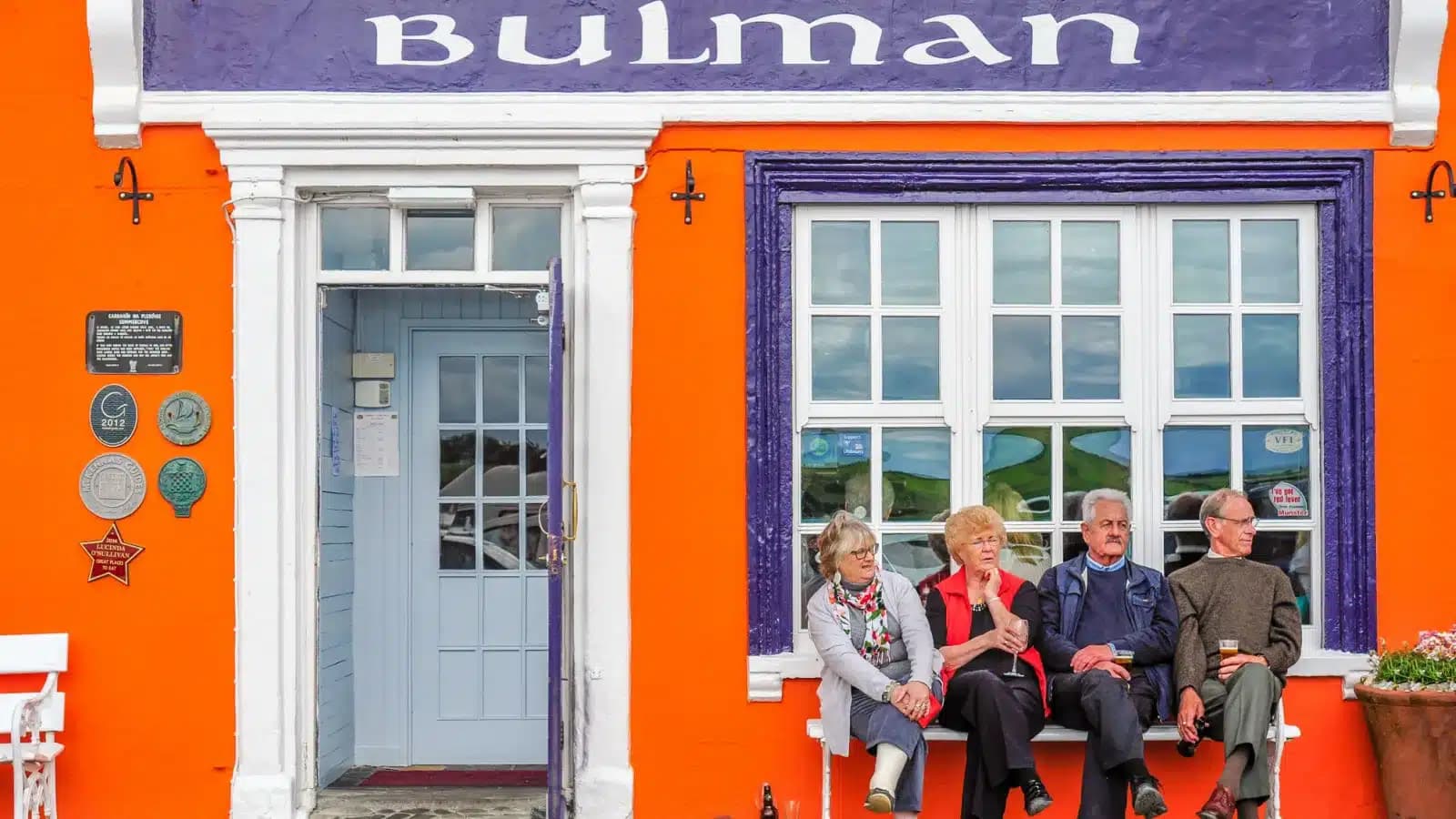
The single most underrated thing about Ireland is that you arrive fluent. You can rent a flat, argue with the phone company, read a lease and make friends from day one. Irish people are genuinely warm and talkative: the pub is more of a living room than a bar, and small talk is close to a national sport. Most Americans settle socially faster here than almost anywhere else in Europe.
Healthcare, public and private
Everyone living in Ireland can use the public health system run by the HSE, which is solid for serious and emergency care. The trade-off is waiting lists for non-urgent treatment, which is why a big share of residents also buy private insurance from names like VHI, Laya or Irish Life Health. Cover costs a fraction of a U.S. plan. A GP visit runs roughly $58 to $75 out of pocket, though children under eight and lower-income households on a medical card pay nothing. One thing to know upfront: if you come on the retirement route, private insurance isn't optional but a condition of your visa.
Families and schools
Ireland is an easy landing for families. Schooling is free and generally strong, most primary schools are state-funded, and your kids fit right in with no language barrier. Childcare is expensive but now heavily subsidized by the state, softening the blow for younger families. Homeschooling is legal and recognized, which isn't true across much of Europe. Ireland is safe, LGBTQ friendly, and small enough that a single weekend can put you on a beach, up a mountain and inside a castle.
The pace
Life runs a notch slower than U.S. cities, in a good way. Shops close earlier, Sundays are quiet, and the weather teaches you to seize a sunny afternoon the moment it shows up. Errands take a beat longer and paperwork feels old-fashioned, so patience helps in the first few months. If you need 24-hour everything, Ireland will feel downright sleepy. If you're moving partly to slow down, you'll feel right at home.
What comes standard
English everywhere
No language test, no translation, no accent to hide behind. You land fluent on day one.
A door to the EU
An Irish passport lets you live and work in any of the 27 EU countries, for good.
Genuinely safe
Low violent crime and no gun culture, the reason a lot of families cite first.
Public plus private care
A universal HSE system, with affordable private cover to skip the longer queues.
Close to home
About six hours from the U.S. East Coast, so trips back stay short and cheap.
The famous welcome
Warm, talkative locals and a pub culture built for actually making friends.
04 · The visa paths
The visas, and which one is you

Ireland does not have a catch-all residence visa, so the right route depends on how you will support yourself. Four paths cover almost every American we talk to. It's worth reading all four before you decide, because the fastest one on paper is not always the best fit for your life.
Stamp 0, for people of independent means
This is the route we field the most questions about, and it's the closest thing Ireland has to a retirement visa. Stamp 0 lets you live in Ireland on your own money without working. You will need verifiable income of at least $58,000 a year per person and about $116,000 for a couple (50,000 and 100,000 euros), full private health insurance, and access to a lump sum that's roughly the price of an Irish home for emergencies. The Stamp 0 is granted one year at a time and reneweable. The honest catch: Stamp 0 is deliberately temporary and doesn't count toward citizenship; it's a way to live in Ireland, not a path to passport. Our full Stamp 0 guide walks you through the money test and the paperwork.
Citizenship by ancestry
If one of your grandparents was born anywhere on the island of Ireland, north or south, you can likely become an Irish and EU citizen through the Foreign Births Register, with no requirement to ever live here. Applications jumped from about 11,600 in 2024 to nearly 18,910 in 2025 as Americans rushed the door. There's no language test or investment required. If a parent was born in Ireland, you may already be a citizen and can skip straight to a passport. See our citizenship by descent guide for the grandparent rule and document chain.
One practical note on Stamp 0: your finances have to be laid out in euro on a spreadsheet and certified by an Irish accountant. Processing takes a few months, so start the paperwork well before you want to fly.
Work permits
Ireland actively recruits skilled workers, especially in tech, pharma, healthcare, engineering and finance. The Critical Skills Employment Permit is the fast lane: a job on the critical skills list paying at least $47,450 a year (40,904 euros) from March 2026 gets you a two-year permit, immediate family reunification, a spouse who can work immediately, and permanent residence in just two years. It's one of the quickest timelines in Europe. The General Employment Permit covers other jobs at a lower salary floor of about $42,500 (36,605 euros), with a labour-market test and a longer, five-year path to settlement. Either way, the employer usually applies on your behalf.
Students
A place at a recognised college earns you a student permission, with proof of funds and private insurance required. It's a common on-ramp, especially for younger movers who later switch onto a work permit. Worth knowing: Ireland's old investor visa closed in 2023 with no replacement yet, so simply writing a big check is not currently a way in.
Every Irish visa, side by side
| Visa | Category | Application cost | Processing | Difficulty | Guide |
|---|---|---|---|---|---|
| Citizenship by Descent (Foreign Birth Registration) | citizenship | $317 | ~270 days | 3/5 | Guide |
| Critical Skills Employment Permit | skilled work | $1,000 | ~30 days | 4/5 | Guide |
| General Employment Permit | skilled work | $1,000 | ~30 days | 4/5 | Guide |
| Stamp 0 (Retirement Visa) | retirement | $300 | ~60 days | 3/5 | Guide |
| Student Visa | student | $300 | ~30 days | 3/5 | Guide |
05 · Getting settled
Taxes, banking and the boring-but-vital stuff
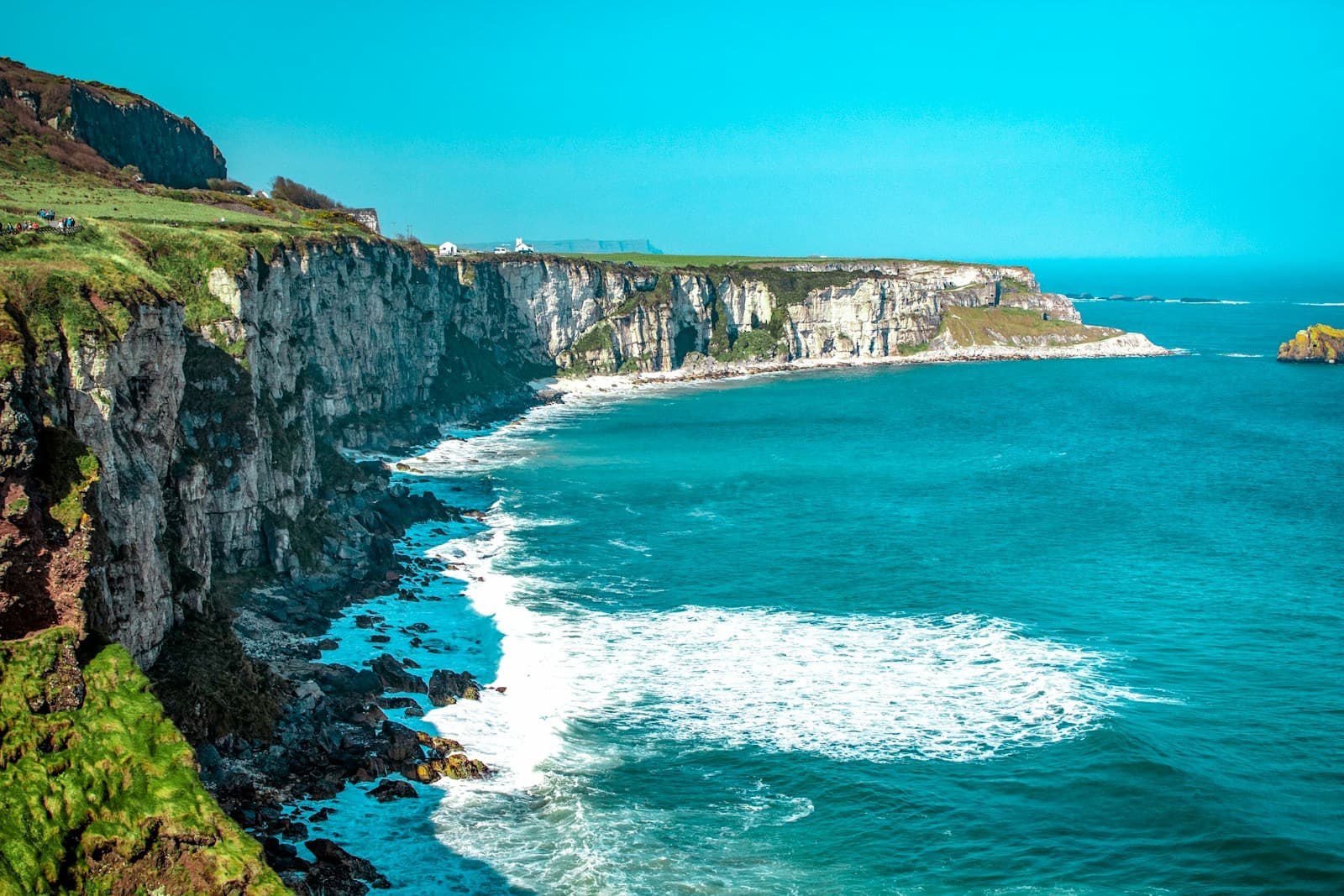
Tax, the honest version
Ireland taxes on residence, not citizenship, so simply holding an Irish passport while you live in the U.S. creates no Irish tax at all. Once you live here at least 183 days a year, you're taxed on worldwide income. Income tax has two rates: 20 percent up to about $51,000 a year (44,000 euros) for a single person and 40 percent above that. On top of thats sit two separate charges: the USC (which climbs to 8 percent) and PRSI (about 4 percent), which together push the marginal rate to around 52 percent on higher incomes. There's no wealth tax.
There's also a valuable wrinkle for newcomers: if you're a resident but non-domiciled, foreign income and gains are taxed only when you bring them into Ireland, which can be powerful for retirees living on U.S. pensions and investments. No matter what, you still file a U.S. return every year; the U.S. and Ireland tax treaty and the foreign earned income exclusion are built to keep you from paying twice.
Banking, PPSN and paperwork
Your first job on the ground is a PPS number, Ireland's version of a Social Security number. You need it for work, tax, healthcare and most public services. Opening a traditional bank account is doable but wants proof of an Irish address, which is a small chicken-and-egg problem while you're also hunting for a home. Many newcomers open a Revolut or similar app account first to get moving, then add a high-street bank once the address and PPSN are sorted. Line up an address, then the PPSN, then the bank, in that order.
Driving and getting around
A U.S. license lets you drive short-term, but there's no straight license swap. You'll have to sit for the Irish driving test, and test slots can have a wait, so book early. Dublin, Cork and Galway have decent buses, trams and trains, while the intercity rail is fine. Public transport is thin outside the cities, so most people who settle in a town or the countryside end up with a car. Remember: they drive on the left.
You won't be the first
There is a large and fast-growing U.S. community, with plenty of active expat groups. Ireland's small scale means word of mouth actually works when you need a plumber, a school place or a decent GP.
This guide is dated on purpose
Ireland changed its rent rules, work-permit salary floors and several fees in 2026, and citizenship processing times move with demand. We put real dates on the numbers so you can check them. Dollar figures here are converted at about $1.16 to the euro in late August 2026. The official thresholds are set in euro, so check the rate on the day you apply. Always confirm the current figures on the official Irish immigration and Revenue sites before you file anything.
06 · Where to live
Where Americans actually land
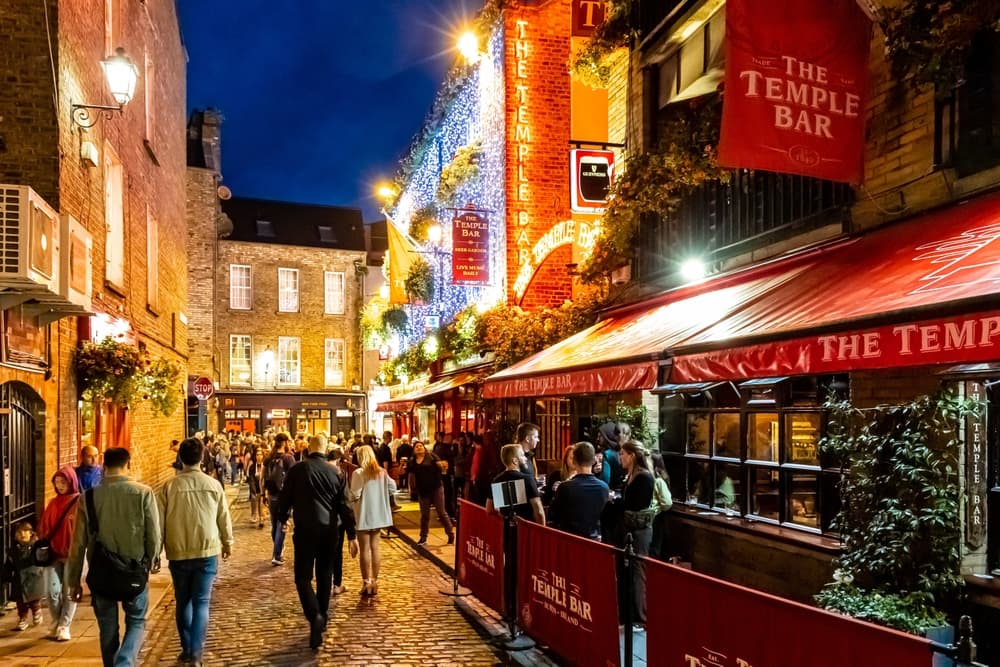
Dublin
The capital and the jobs
The economic and cultural engine, home to most of the big employers and the busiest social scene. It is also the priciest place to rent, so most people trade some space for the shorter commute.
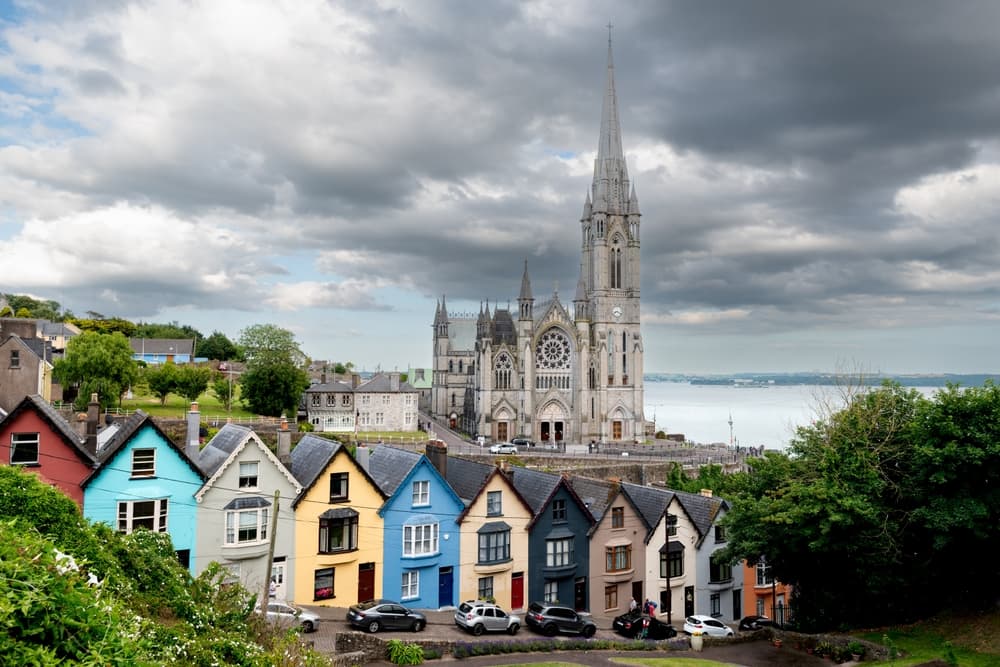
Cork
Second city, gentler prices
Ireland's laid-back second city, with a serious food scene, a deep-water harbour and pastel towns like Cobh and Kinsale close by. Rents run comfortably below Dublin.

Galway
Music and the Atlantic
A small harbor city that feels like a big pub session, with Connemara and the Wild Atlantic Way starting at the edge of town and a young university crowd. Housing is the problem: it's scarce and expensive for a city this size.
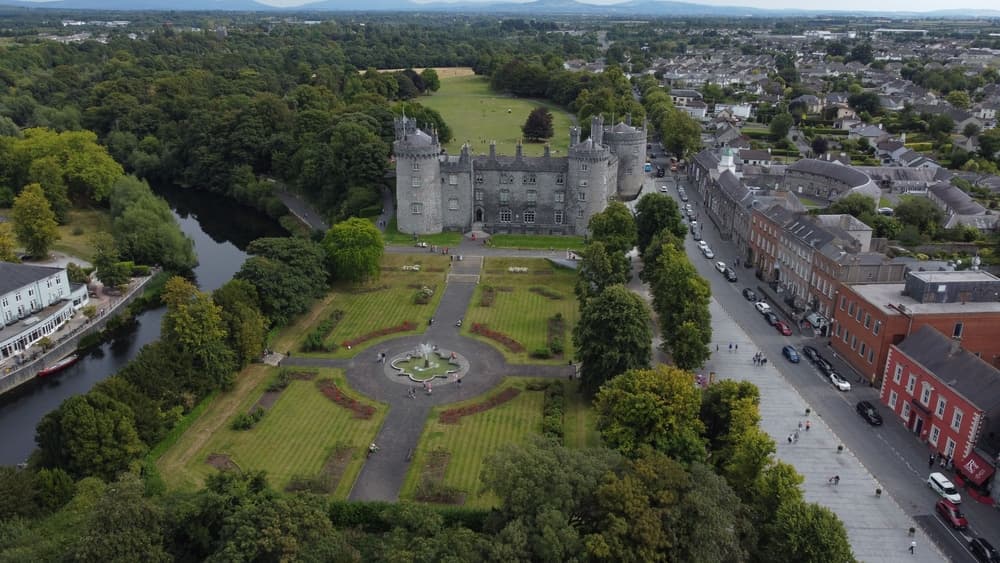
Kilkenny
Medieval mile
A medieval city small enough to walk end to end, with a castle at one end, a Norman cathedral at the other, and a lane of craft workshops and pubs along the mile between them. Dublin is under two hours by train, and a comedy festival takes the town over every June. Work outside tourism and crafts is limited.
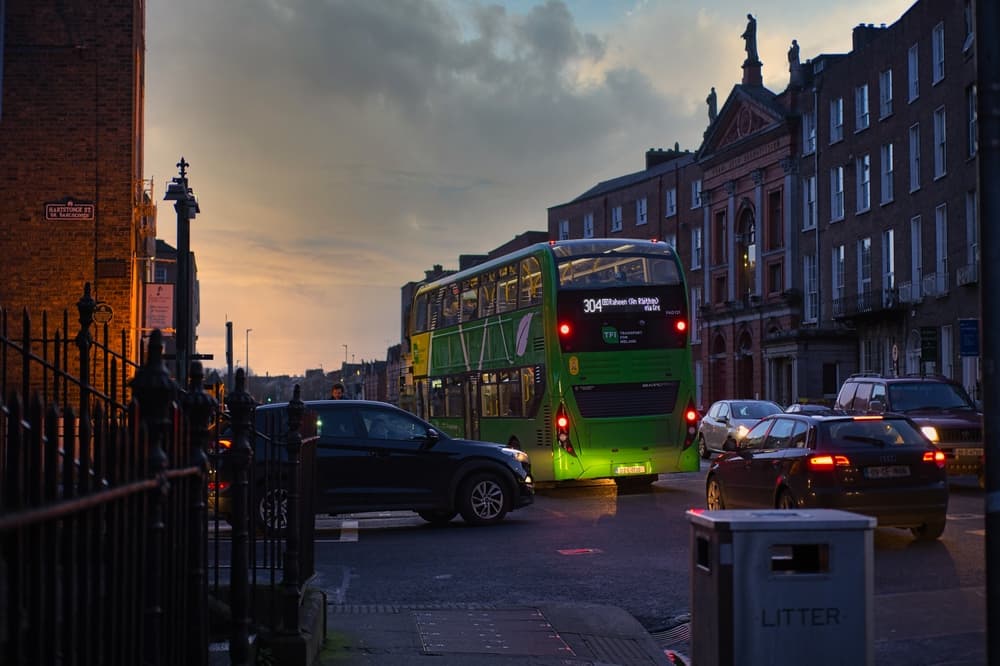
Limerick
Rugby on the Shannon
A river city that lives and dies by Munster rugby at Thomond Park, with a Norman castle on the Shannon, a large university, and Shannon airport half an hour out. US preclearance there means you land back home as a domestic arrival. The old reputation for rough edges has faded, but not entirely.
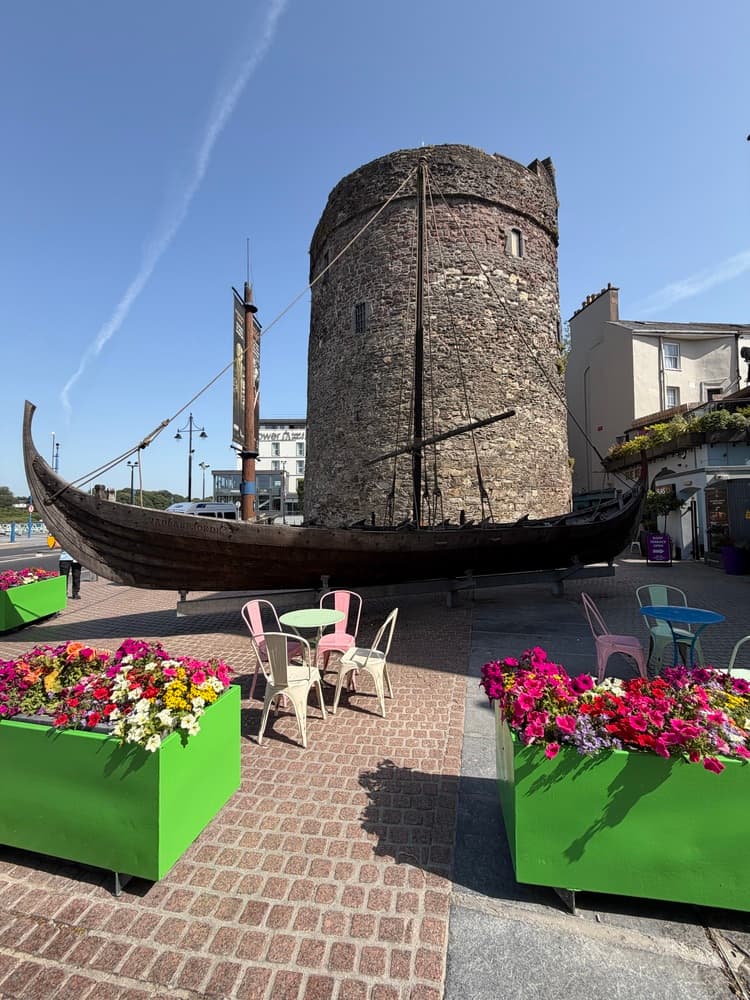
Waterford
Viking city, greenway town
Ireland's oldest city, founded by Vikings in 914, with a compact museum quarter in the Viking Triangle and a 46-kilometer greenway running inland along an old railway line. The crystal takes its name from here, and the local bread roll is a blaa. Smaller and slower than Cork or Galway.
07 · The people who make it easier
The people who make it easier
You don't have to figure Ireland out alone. These are vetted partners we send people to, grouped by the part of the move they handle, from claiming a passport through your grandparent to lining up a mortgage and health coverage once you're on the ground. We only list people that we'd use ourselves. We keep the list short on purpose so you aren't drowning in options.

Sovereign Roots
Citizenship by Ancestry
Specialists in claiming citizenship through your roots. If a grandparent or parent was Irish, they will tell you quickly whether you qualify and handle the Foreign Births Register from start to finish.
Learn more
Legalize That Doc
Document Preparation
The document side of an ancestry claim, from ordering certified birth and marriage certificates to apostilles, translations and FBI checks. This is where most descent applications actually stall.
Learn more
Plan-B Outbound Migration
Multi-Country Visa Support
Multi-country relocation and visa support with Ireland on their list. Handy if you are weighing Ireland against other EU options or want a hand assembling the Stamp 0 file.
Learn more
Jeremy Strozer
Move Abroad Coach, Neurodivergence Coach, Ireland Local Guide
An American move-abroad coach and local guide based in Ireland, who also works with neurodivergent movers and families. On-the-ground help with the parts no checklist covers.
Learn more
Simon Conn
International Mortgage Lending
International mortgage lending for buyers in Ireland, useful for retirees putting the Stamp 0 lump sum toward a home rather than renting in a tight market.
Learn more
ExpatInsure
Global Health Insurance
Global health insurance, including the comprehensive private cover the retirement route requires and most expats want on top of the public system.
Learn moreGo deeper
A few things worth reading and watching before you commit:
Moving To Ireland
Thinking about moving to Ireland? In this webinar, we’ll walk through the main pathways for relocating, including visa and residency options, housing realities, cost of living, healthcare, and what to plan for before you go. You’ll get a clear picture of what it really takes to make the move so you can decide if Ireland is the right next chapter for you.
Our full workshop on moving to Ireland, from the visa routes to landing logistics.
Do I have enough money?
Our partners at Beacon Financial outline how much money a move abroad could cost you as well as how much you may need to retire.
How to tell whether your income and savings clear the bar, which matters most for Stamp 0.
Can I get healthcare?
Our partner Hunter Schultz explains what you need to know if you're concerned about healthcare abroad.
What healthcare abroad really costs, and how public and private cover fit together.
Find your people
Ireland
Expatsi Community
Compare notes with other Americans who are researching, applying, or already unpacking boxes in Ireland. Real questions, honest answers, no sales pitch.
Join the Ireland communityCommon questions about moving to Ireland
How much does it cost to live in Ireland?
Plan around $3,000 a month for one person and $4,400 for a couple, all in, with families closer to $7,250. Dublin runs higher, mostly because of rent. Cork, Galway, Limerick and smaller towns are meaningfully cheaper.
Can I work in Ireland as an American?
You will need a work permit unless you hold an EU passport. The Critical Skills Employment Permit is the fast track for in-demand jobs paying at least $47,450 a year (40,904 euros), with immediate family reunification and permanent residence in two years. The General Employment Permit covers other roles at a lower salary floor.
Can I really get an Irish passport through a grandparent?
Yes, if your grandparent was born anywhere on the island of Ireland, north or south. You register on the Foreign Births Register and become an Irish and EU citizen without ever living here. If a parent was born in Ireland, you may already be a citizen and can apply straight for a passport.
Does Ireland have a retirement visa?
Not by that name. U.S. retirees use Stamp 0, the permission for people of independent means. You will need income of at least $58,000 a year per person (50,000 euros), full private health insurance, and access to a lump sum roughly the price of an Irish home. It is renewed yearly and does not lead to citizenship.
Is it hard to find a place to rent?
Honestly, yes. Rental supply hit a record low in early 2026 with fewer than 1,800 homes available nationwide, and Dublin's vacancy rate is near one percent. Line up housing before you arrive, budget for overlap, and consider a smaller city where the market is easier.
How long does citizenship by descent take?
Budget roughly 9 to 12 months for the Foreign Births Register certificate; the official estimate moves with demand and complex cases run longer. The Irish passport application afterward is separate and faster. The fee is about $320 for an adult (278 euros).
How long until I can become an Irish citizen on a work permit?
Generally five years of legal residence. A common path is two years on a Critical Skills permit plus three on Stamp 4. Ireland allows dual citizenship, so you keep your U.S. passport. Note that time spent on Stamp 0 does not count towards residency requirements.
Will I pay tax twice?
You'll always file a U..S return as an American, but the US-Ireland tax treaty and the foreign earned income exclusion are designed to stop double taxation. Ireland taxes residents on worldwide income, though non-domiciled residents are taxed only on foreign income they bring into Ireland.
Sources
- US immigration to Ireland hits a record, CSO figures · American Emigration Revue (checked 2026-07-30)
- Immigration permission stamps, including Stamp 0 · Immigration Service Delivery (checked 2026-07-30)
- Stamp 0: Ireland's visa for retirees and persons of independent means · Lewis Silkin (checked 2026-07-30)
- Critical Skills Employment Permit and 2026 salary thresholds · Citizens Information (checked 2026-07-30)
- Irish income tax bands, USC and PRSI for 2026 · CountryTaxCalc (checked 2026-07-30)
- Daft.ie Rental Report, Q1 2026: record-low supply · TheJournal.ie / Daft.ie (checked 2026-07-30)
- Irish citizenship through birth or descent · Citizens Information (checked 2026-07-30)

Ready to see if Ireland is your move?
Take the free Expatsi Test and get your best-fit countries, the visa routes that fit you, and a realistic budget in about two minutes.
green