Ethiopia moving guide
Moving to Ethiopia: the 2026 guide for Americans
Ethiopia has no retirement or remote-work visa, and most of the country sits under a Do Not Travel warning. Here's who can still build a life in Addis Ababa, and how.
Written for U.S. passport holders in September 2026: which residence routes exist, what Addis Ababa costs, where the currency and security situation stand, and who can help.

Reviewed and updated October 22, 2026 · 13 min read

01 · The case for Ethiopia
What draws Americans to Addis Ababa, and what holds them back
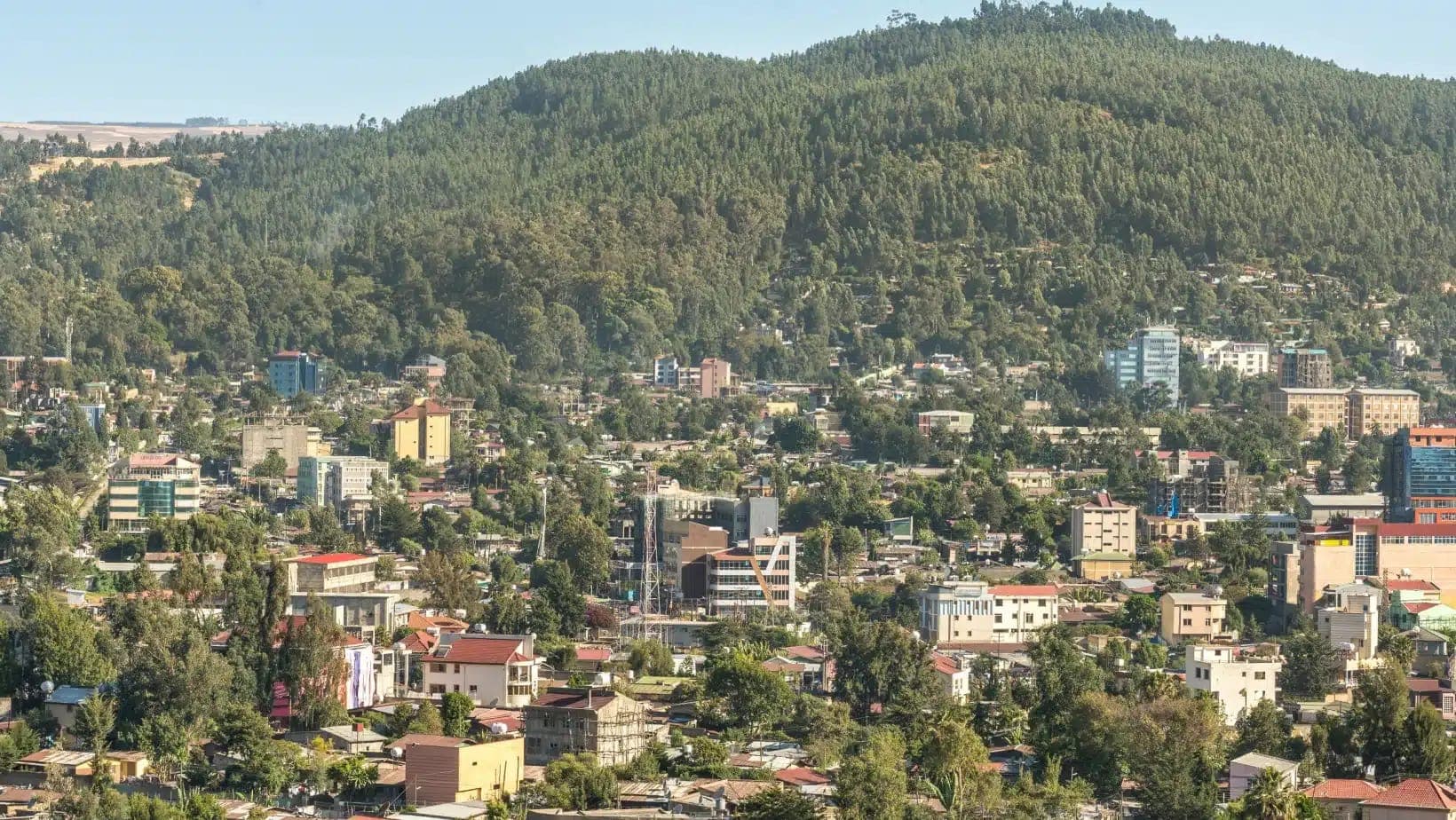
Ethiopia works best for Americans who arrive with a reason: family roots, a job with an aid group or an Ethiopian company, a spouse, or capital to invest. If that's you, there's plenty to like. If you're looking for an easy place to retire, read the second half of this section first.
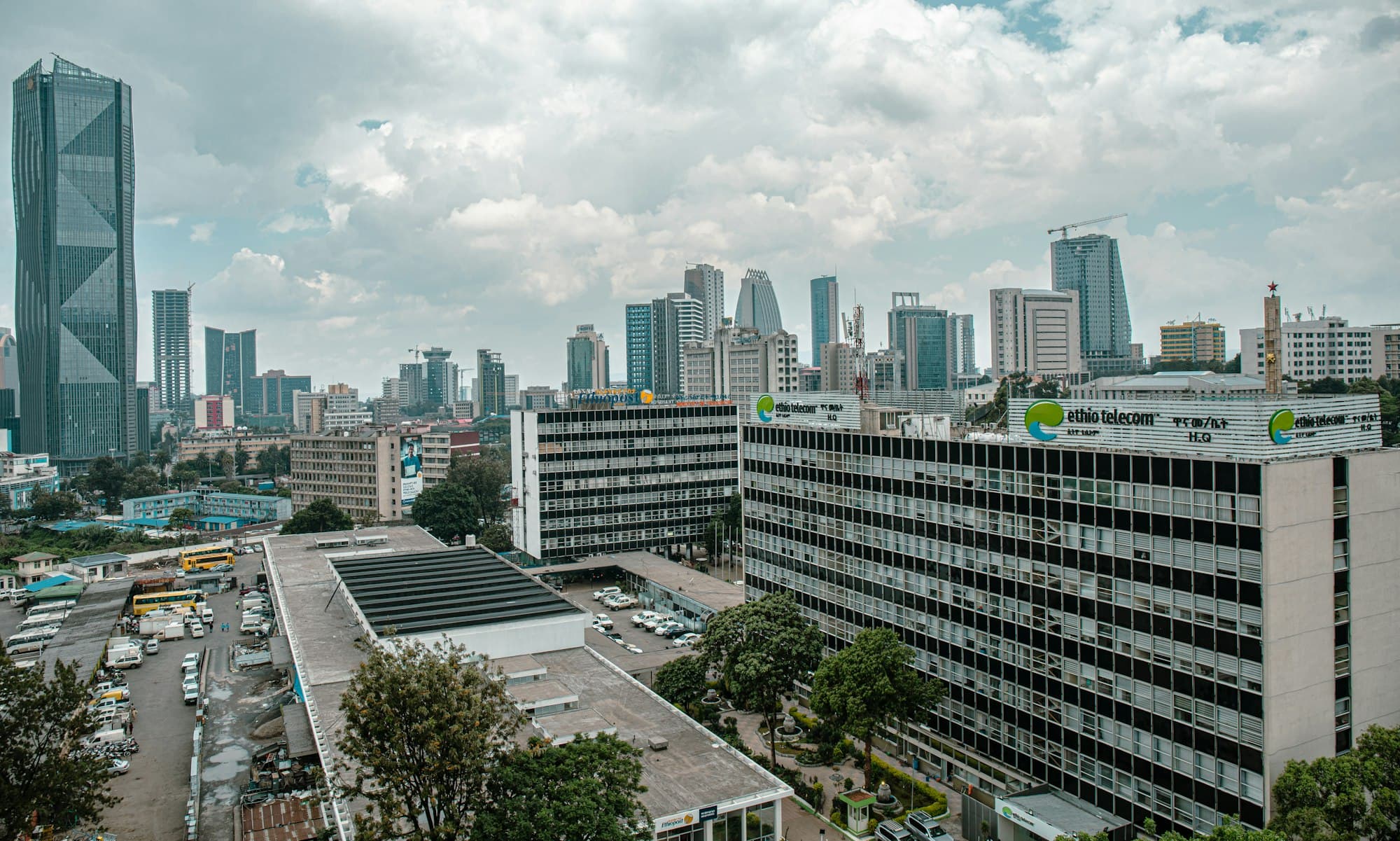
Start with the setting. Addis Ababa sits at 7,726 feet (2,355 meters), high enough that the capital stays mild all year even though it's in the tropics. The long rains run from June to mid-September, with a shorter wet spell from February to May. It's a big, fast-changing city of glass towers and hillside neighborhoods, with a 21-mile light rail network that opened in 2015.
It's also a diplomatic capital. The African Union and UN Economic Commission for Africa both have their headquarters here, so the city has more embassies, international organizations and aid groups than most people expect. Ethiopian Airlines connects it to the U.S., although flights heading to North America have stopped along the way to refuel in Dublin or Lomé.
Daily life runs on its own rhythms; you'll notice them in the first week. The country is on UTC+3 with no daylight saving time, which puts you seven to eight hours ahead of Eastern, by season. Ethiopians count daytime hours from dawn, so a meeting at "3 o'clock" can mean 9 a.m. The Ethiopian calendar has 12 thirty-day months plus a short 13th month, and it runs seven to eight years behind the one you use. Ask which clock and which calendar before you sign anything.
Your dollars go a long way here, too, which the next section spells out.
The Americans it suits
Four kinds of people tend to have a real shot. Ethiopian Americans reconnecting with family, who can use a special ID that skips most of the visa hassle. Professionals hired by an Ethiopian company, an aid group or an international organization, whose employer does the heavy lifting on permits. Americans married to Ethiopians. And investors with serious capital who want a foothold in a large economy that's opening up, including a new law that lets foreigners buy homes. Each of these has its own route, covered in section 03.
Here's the catch
Ethiopia is a hard move in 2026, and four things rule it out for a lot of readers.
First, there's no visa for the way most of our readers earn. Ethiopia has no retirement visa and no digital nomad visa. If your income is Social Security, a pension or a remote job, there's no residence category built for you, and a tourist e-visa is a visit, not a move. The routes that exist are for workers, investors, spouses of Ethiopians and people of Ethiopian descent.
Second, safety. As of August 2026 the State Department rates Ethiopia Level 3, Reconsider Travel, and lists much of the country as Do Not Travel, including Tigray, the Amhara region and the Oromia region that surrounds Addis Ababa (Bishoftu and Bale Mountains National Park are the exceptions). In late September 2026 the U.S. Embassy reported active fighting near Lalibela, and internet and phone service in Tigray went dark. The State Department calls Addis itself stable; in practice, you'd be living in one city and not exploring far beyond it.
Third, the rules have teeth. Unpaid immigration fines can trigger an exit ban, including for children, and some Americans have been assessed more than $100,000 before they were allowed to leave. The embassy's access to Americans who are detained is limited.
Fourth, not everyone will be safe or welcome. Consensual same-sex activity is illegal and punishable by prison. Ethiopia also doesn't allow dual citizenship, so there's no second passport at the end of this road unless you give up your U.S. one.
If you've got an employer, a spouse, Ethiopian roots or money to invest, and you're at peace with living in Addis, the rest of this guide is for you.
- Cost of living (single)
- $1,500/mo
- Safety index
- 38/100
- Internet speed
- 25 Mbps
- English proficiency
- 40/100
- Currency
- Ethiopian Birr (ETB)
- Capital
- Addis Ababa
02 · The numbers
Monthly costs in Ethiopia, in U.S. dollars
$1,500
Monthly budget, single
all in, 2026
$2,350
Monthly budget, couple
all in, 2026
$4,200
Monthly budget, family
housing included
$700
Rent, 1-bed city center
$350 outside center
$4
Inexpensive meal out
local restaurant
$13
Monthly transport
public transit
$158
Home internet, monthly
about 25 Mbps
38/100
Safety index
Level 3 advisory
Where your dollars go, and why the birr matters
Those cards come from Expatsi's own cost data for 2026, in U.S. dollars. Here's what sits behind them.
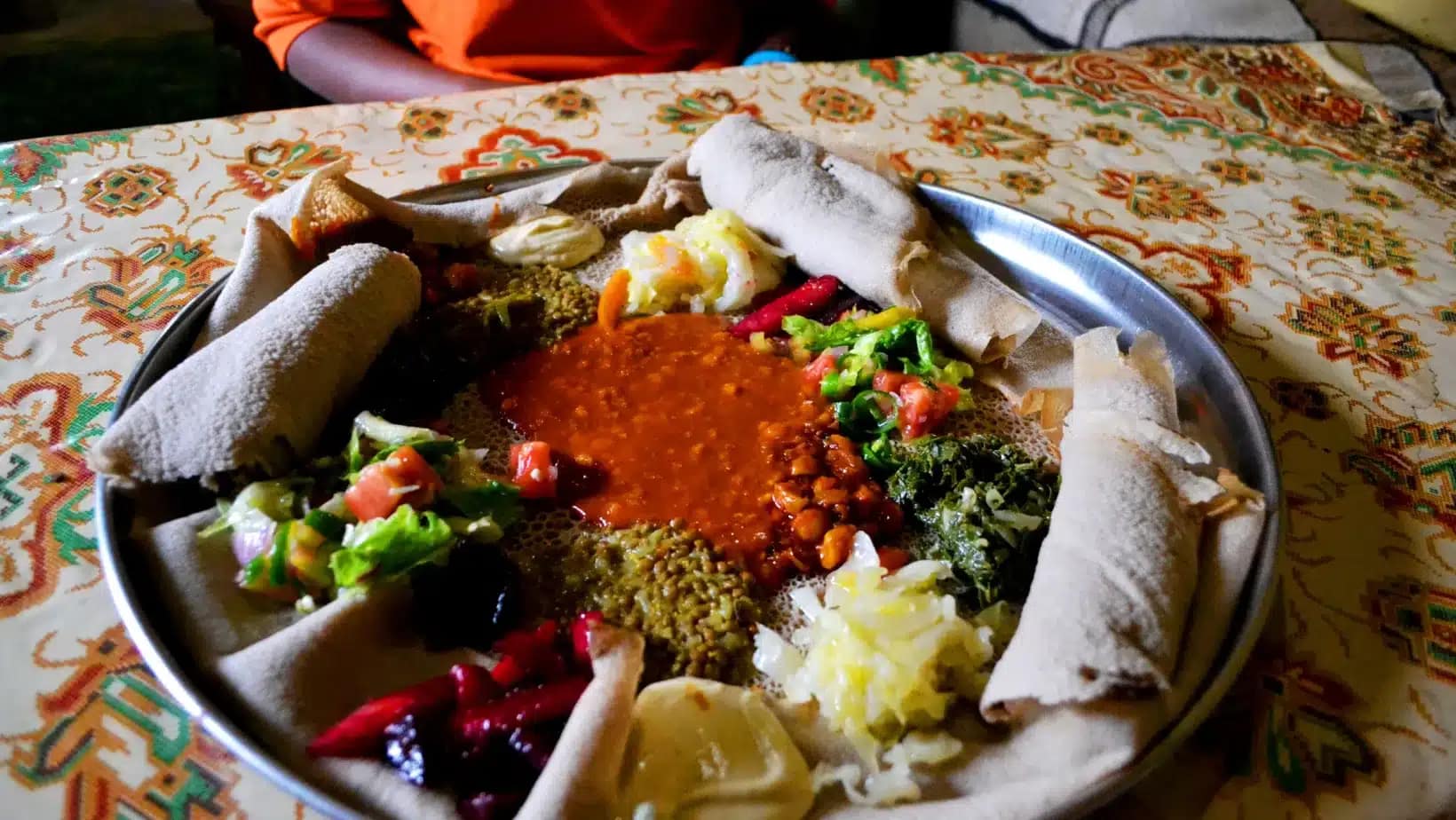
Rent is the lever you control. Living a little outside the center cuts the rent line in half. Food and local transport are where Ethiopia feels most affordable, especially if you eat where Ethiopians eat.
Internet is the line that surprises people. Home service costs more than you'd guess for slower speeds than you're used to. Safaricom started operating in October 2022 and ended Ethio Telecom's long monopoly on mobile service, but networks still get restricted or shut down during unrest. If you work online, budget for backup mobile data and plan around outages.
Then there's the currency. Ethiopia floated the birr on July 29, 2024, and it lost about 30% against the dollar at the start. By August 2026 the official rate had slid to a record of about 162 birr per dollar, while street rates sat near 180. That's good news if you earn dollars and hard on people paid in birr. It also means any cost figure, ours included, can move quickly. Inflation peaked at 38% in May 2022, so build a cushion into your budget.
Two money rules for arrival day: declare foreign cash over $10,000 or birr over 3,000 when you land. Add bottled water to the grocery list, because tap water isn't safe to drink.
Affordable doesn't mean open
In plenty of countries, a modest dollar income is exactly what the visa asks for. Ethiopia doesn't work that way: there's no category for living on a pension or a remote salary. What gets you residence is a job with an Ethiopian employer or registered organization, an investment, an Ethiopian spouse or Ethiopian descent. Find your situation in the next section before you run any more numbers.
03 · Your route in
The four ways Americans can stay longer than a visit

Your first step is likely the tourist e-visa, applied for online before arrival. News reports put it at $62 for stays of up to 30 days and say the 90-day e-visa has been discontinued. Fees have changed more than once, so confirm on the official evisa.gov.et site before you pay. Longer extensions mean an in-person visit to the Immigration and Citizenship Service (ICS) office in Addis Ababa. That's fine for a scouting trip, but it's no way to live here. Overstays are how people end up with fines and exit bans.
Residence permits come from ICS, usually for one year at a time, renewed annually. Apply about a month before yours expires. Four routes lead to one.
Working for an Ethiopian employer or organization
This is the route for Americans without Ethiopian roots who want to work. Your employer applies for the work permit with the labor ministry and has to show that no qualified Ethiopian is available for the job, which typically means advertising it locally first. The order is business visa, then work permit, then residence permit, and you need all three. Plan on 60 to 90 days end to end. The residence permit fee for foreign employees rose from $150 to $1,500 a year under Regulation 550/2024. Staff of registered NGOs and religious organizations have their own residence category through their organization.
Investing or buying a home
Foreign investors can get an investment visa, priced under the same 2024 regulation at $1,000 for three years of multiple entries or $3,000 for five. Separately, Proclamation 1388/2025 lets foreigners buy a house for the first time. The floor is $150,000 per house, paid in foreign currency through Ethiopian banks with no local financing, generally one house per person. You own the building, and the land is held on a long-term lease. When we checked, the implementing rules were still pending, and we couldn't confirm that buying a home earns residence by itself. Treat it as an investment, not a visa.
Married to an Ethiopian
Foreign spouses can apply for a temporary residence permit through marriage. ICS asks for proof of the marriage, your spouse's ID, and evidence of means: a bank statement showing 500,000 birr or more, a house title or a vehicle license. ICS says most applications take 5 to 10 business days.
Of Ethiopian descent: the Yellow Card
If you're a U.S. citizen with Ethiopian parents or roots, the Ethiopian Origin ID, known as the Yellow Card, is the strongest option here. It costs $300, or $400 expedited, and gives visa-free entry, the right to own property, and easier access to residency and jobs. You have to apply yourself; ICS won't accept a proxy. It's the practical answer to Ethiopia's ban on dual citizenship because you keep your U.S. passport and still get the rights that matter for daily life.
The long game
A permanent residence ID exists, valid for five years and renewable. Citizenship takes four years of residence, a working knowledge of an Ethiopian language, and renouncing your other nationality, which is why we don't treat it as a goal for Americans.
A realistic first year
Put the pieces in order and the sequence looks like this. Visit first on the 30-day e-visa and spend the time in Addis, meeting employers, lawyers or family. Line up your basis for residence before you ship anything: a signed job offer, an investment plan, your marriage documents or your Yellow Card application. If you're coming for work, give your employer the 60 to 90 days the permits take. Don't start working until the work permit and residence permit are both issued. Once you have residence, put the renewal date in your calendar a month early, every year. Nearly every step runs through the ICS office in Addis Ababa, so budget time for in-person visits and keep copies of everything.
Which route fits you
You have a job offer
Your employer handles the work permit, then you get a residence permit, $1,500 a year as of 2026.
You're investing
Investment visas start at $1,000 for three years. Homes start at $150,000 under the 2025 law, with rules still pending.
You're married to an Ethiopian
Residence through marriage, with proof of 500,000 birr in the bank or a house or vehicle title.
You have Ethiopian roots
The Yellow Card, $300, covers visa-free entry, property ownership and access to work.
Ethiopia visa guides
Employment Visa (WV) and Work Permit
- Employment contract with an Ethiopian enterprise
- Authenticated educational qualifications and work experience documents
- Local employee replacement (succession) plan from the employer
Investment Visa (IV) and Investor Residence Permit
- Minimum capital of USD 200,000 for a wholly foreign-owned project (USD 150,000 in a joint venture with an Ethiopian investor; USD 100,000 or USD 50,000 joint for architecture, engineering, technical consultancy or publishing)
- Investment permit or business licence from the Ethiopian Investment Commission
- Support letter from the Ethiopian Investment Commission
Student Visa
- Acceptance letter from an accredited Ethiopian educational institution
- Proof of tuition payment or scholarship
- Evidence of adequate financial support
04 · Day-to-day essentials
Doctors, taxes, money and staying safe
Healthcare
Plan on private care and your own insurance. Public hospitals in Addis are free or low-cost but often crowded and understaffed, and medical facilities thin out quickly beyond the major cities. Our healthcare index for Ethiopia is 45 out of 100. U.S. health insurance generally isn't accepted abroad, so an international plan that includes medical evacuation is the baseline. ExpatInsure, our health insurance partner, can set that up. Hunter Schultz, a healthcare coach with a background in air medical transport, can help you plan for care Addis can't provide.
Staying safe
Addis Ababa is the one place the State Department calls stable. Around it, the Oromia region is Do Not Travel apart from Bishoftu and Bale Mountains National Park, and Amhara, Tigray and several border areas are too. Enroll in the State Department's STEP alerts, keep your residence status current, and expect internet and phone service to drop during unrest. Photographing government buildings, military sites and infrastructure is banned, and binoculars and telephoto lenses are illegal to carry.
Taxes
You'll be dealing with two systems. The U.S. taxes its citizens on worldwide income wherever they live. Ethiopia treats you as a tax resident once you're domiciled there or present more than 183 days in any 12-month period. Since July 2025, the first 2,000 birr a month of employment income is tax-free, and earnings above 14,000 birr a month are taxed at 35%. We couldn't confirm how Ethiopia treats a resident's U.S. pension or investment income, so get advice before you move. MyExpatTaxes files the U.S. returns you'll still owe.
Banking and cash
Arrive with a plan for moving money. Since the float, the official and street rates for the birr have run well apart. We couldn't confirm which accounts a foreign resident can open under the 2024 currency rules, so ask an Ethiopian bank what your permit allows before you wire anything large. If you're buying a home, the purchase itself has to arrive as foreign currency through the Ethiopian banking system, and local mortgages are off the table for foreigners. Keep records of every transfer, because resale and moving money back out later depend on the original purchase being properly registered, with tax clearance. On the U.S. side, Moneycorp handles currency exchange and international transfers.
Language and getting around
Amharic is the main language, and our English proficiency score for Ethiopia is 40 out of 100. Expect English to carry you at work and in international circles, then use Amharic basics to matter everywhere else. Culturosity Co. coaches people through exactly this kind of adjustment. In Addis, the light rail's two lines cover part of the city. Before any trip outside the capital, check the State Department's advisory map, and know that Ethiopian Airlines suspended flights to some northern cities in September 2026.
Bringing pets
Dogs and cats need an import permit from Ethiopia's Ministry of Agriculture before they travel, a rabies shot given between 30 days and 12 months before entry, an ISO microchip, and an original health certificate from a U.S. vet. Starwood Pet Travel handles this kind of paperwork from start to finish.
Finished in September 2026, during active fighting
We wrote this guide in late September 2026, days after the U.S. Embassy reported fighting near Lalibela and Tigray lost internet and phone service. Travel advisories, visa fees and the birr have all shifted in the past two years. Check the State Department's Ethiopia page and ICS before you book or file anything. Lean on the professionals below to keep you current.
05 · Where to live
Choosing a base in Ethiopia
For an American moving in 2026, the map shrinks to Addis Ababa. It's the city the State Department describes as stable, it's home to the ICS office you'll visit for every permit, and it's where the better private medical care is. Bishoftu is the only town in the surrounding Oromia region that the advisory leaves off its Do Not Travel list. The historic northern cities, including Lalibela and Bahir Dar, sit in the Amhara region, which is Do Not Travel as of September 2026.
Our Ethiopia city guides appear below as we publish them, each with rent, costs and day-to-day detail from our data.
06 · The people who can help
Your Ethiopia move team
Nobody at Expatsi will pretend Ethiopia is a do-it-yourself move. The paperwork runs through your employer or ICS, your money runs through a currency that won't sit still, and healthcare means planning for the worst case. These are the vetted partners we'd call first, grouped by the job they do.
None of them is an Ethiopian immigration firm. For a work or residence permit, lean on your employer's HR team or a licensed Ethiopian lawyer, and use this team for everything around it.

Hunter Schultz
Healthcare Coach
A healthcare coach with more than 20 years of expat living and a background in air medical transport. His one-hour consultation maps out the care you'd need abroad, including a plan for when the local system can't handle it.
Learn more
ExpatInsure
Global Health Insurance
Expatsi's international health insurance partner, led by Andy Seale and Stephanie Edwards. They match you with private international coverage, which matters in a country where U.S. plans generally aren't accepted.
Learn more
Moneycorp
Currency Exchange
A currency exchange and international payments firm operating since 1979, with Kelly Cutchin leading its team for U.S. clients. They can lock an exchange rate for up to two years; ask early which Ethiopia transfers they support.
Learn more
MyExpatTaxes
U.S. Expat Tax Service
Online tax software built for Americans abroad, filing U.S. returns since 2018. You'll need it because the U.S. keeps taxing your worldwide income after you move.
Learn more
Starwood Pet Travel
Pet travel and transport
Moves dogs and cats internationally, handling health certificates, USDA endorsements, crate rules and airline coordination, the pieces an Ethiopian import permit depends on.
Learn more
Culturosity Co.
Cultural Skills Coach
Co-founders Jennifer and Janka run intercultural coaching and workshops built on research-backed frameworks, useful when you're adjusting to a new calendar, a different clock and unfamiliar social norms.
Learn more07 · Quick answers
Moving to Ethiopia: common questions
Does Ethiopia have a digital nomad visa?
No. Ethiopia has no digital nomad visa. Remote workers typically visit on the tourist e-visa, which news reports say now covers stays of up to 30 days, with longer extensions handled in person at the immigration office in Addis Ababa. That works for a scouting trip but not for living in Ethiopia on a remote salary.
Is Ethiopia safe for Americans in 2026?
Only parts of it. The State Department rated Ethiopia Level 3, Reconsider Travel, in August 2026 and lists Tigray, the Amhara region and most of the Oromia region as Do Not Travel. It describes the security situation in Addis Ababa as stable. In late September 2026 the U.S. Embassy reported active fighting near Lalibela and advised Americans in the country to make contingency plans to leave.
Can I retire in Ethiopia on Social Security?
Not through a retirement visa, because Ethiopia doesn't have one. A retiree needs another basis for residence, such as marriage to an Ethiopian, a qualifying investment, or Ethiopian descent through the Ethiopian Origin ID. For an American living on a pension alone, Ethiopia isn't a realistic place to settle as of September 2026.
What is the Ethiopian Yellow Card?
The Yellow Card is the Ethiopian Origin ID, issued to foreign citizens of Ethiopian descent. It costs $300, or $400 for expedited processing, and gives visa-free entry, the right to own property, and easier access to residency and jobs. Applicants must apply themselves rather than through a proxy.
What is the time difference between Ethiopia and the U.S.?
Ethiopia runs on East Africa Time, UTC+3, and doesn't use daylight saving time, so it's seven to eight hours ahead of U.S. Eastern time depending on the season. Ethiopians also count daytime hours from dawn, so 6 a.m. on your phone is 12 o'clock on the local clock.
Can foreigners buy property in Ethiopia?
Yes, under Proclamation 1388/2025. A foreign national can generally buy one residential house worth at least $150,000, paid in foreign currency through the Ethiopian banking system without local financing. The buyer owns the building while the land stays under long-term lease. Implementing regulations were still expected at last check, so confirm each deal with the authorities before paying.
Does Ethiopia allow dual citizenship with the U.S.?
No. Ethiopia does not permit dual citizenship, and naturalizing after four years of residence requires renouncing your other nationality. Dual U.S.-Ethiopian nationals can also face delays in U.S. embassy notification if they're arrested. Americans of Ethiopian descent can use the Ethiopian Origin ID instead, which keeps the U.S. passport while granting key rights.
Can Americans move to Ethiopia?
Yes, but only through specific routes. Americans can get residence in Ethiopia through a job with an Ethiopian employer or registered organization, an investment, marriage to an Ethiopian citizen, or the Ethiopian Origin ID for people of Ethiopian descent. There is no retirement or digital nomad visa, so people living on a pension or remote income have no dedicated category as of September 2026.
Sources
- Ethiopia Travel Advisory, Level 3 (August 27, 2026) · U.S. Department of State (checked September 2026)
- Security Alert: U.S. Embassy Addis Ababa (September 25, 2026) · U.S. Embassy in Ethiopia (checked September 2026)
- Ethiopia International Travel Information · U.S. Department of State (checked September 2026)
- Ethiopian Origin ID · Ethiopian Immigration and Citizenship Service (checked September 2026)
- Temporary Residence Permit Through Marriage · Ethiopian Immigration and Citizenship Service (checked September 2026)
- Fee rates under Council of Ministers Regulation No. 550/2024 · TBeST Law (checked September 2026)
- Work permits and employment of foreign nationals in Ethiopia: 2026 legal guide · Mondaq (checked September 2026)
- Foreign nationals can now own residential property in Ethiopia (Proclamation 1388/2025) · Mondaq (checked September 2026)
- Ethiopia's revised income tax explained (Proclamation 1395/2025) · TaxDev (checked September 2026)
- U.S. citizens and resident aliens abroad · IRS (checked September 2026)
- Cost of living and country data for Ethiopia · Expatsi (checked September 2026)
See where Ethiopia lands for you
Take the free Expatsi Test and compare countries on the things that decide a move: cost, healthcare, safety and climate.
Why not you?