Dublin: the easiest cultural transition in Western Europe
Ireland's capital pairs an easy cultural landing for Americans with some of the steepest rents in Europe.
- 592,713
- Population (2022)
- $3,800/mo
- Monthly budget · single
- 50°F / 10°C
- Avg temperature
Budget about $3,800 a month in U.S. dollars for a single person in Dublin, around $5,400 for a couple, and roughly $8,600 for a family of four. Housing is the reason those numbers run high: a one-bedroom averages about $2,400 in the city center and about $2,150 outside it, a smaller gap than in most cities because demand is intense everywhere. Ireland has had a housing shortage for years, and Dublin is where it bites hardest.
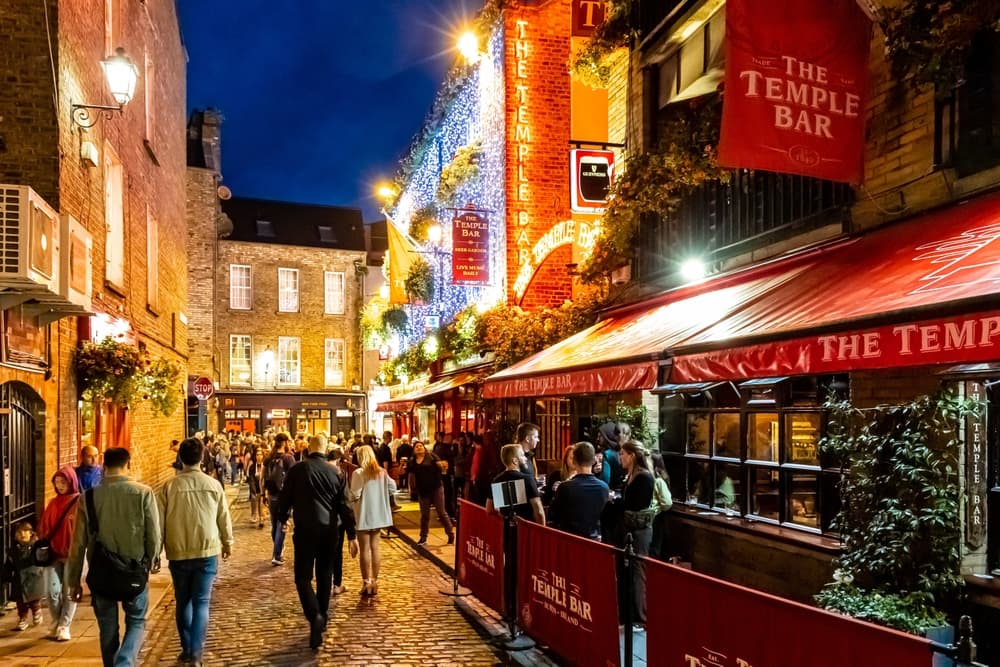
What you get for the money is the easiest cultural transition in Western Europe. Everything happens in English. Tech and pharma job markets are deep (Google, Meta, Microsoft, and Pfizer all have major operations here). Americans tend to find the social texture familiar, pub culture, live music, a talkative city of about 593,000 that still feels walkable and personal. Neighborhoods like Ranelagh, Portobello, Stoneybatter, and Drumcondra each have their own village feel within a short bus or tram ride of the center.
The honest drawback is the housing hunt itself. Finding a rental can take weeks of viewings with dozens of other applicants, and landlords hold all the leverage. Budget time and patience for this before anything else.
At a glance
$3,800
Monthly budget · single person
$2,400/mo 1-bed rent, center
57/100
Safety index
$55
Internet / month
50°Fannual average
Jan 42° · Jul 60°
Climate
592,713
Population (2022)
Expatsi estimates, updated Aug 2026, based on rental listings, government statistics, and local reporting.
Cost of living
What it costs to live in Dublin
Single person
$3,400–$4,300/mo
about 25% above Austin, TX
Couple
$4,800–$6,100/mo
about 15% above Austin, TX
Family of four
$7,600–$9,600/mo
about 10% above Austin, TX
Compared with Austin, TX (Expatsi estimate, 2026).
- $22 +10%
- Inexpensive meal
- $2,150–$2,700/mo +23%
- 1-bed rent, center
- $1,900–$2,400/mo +59%
- 1-bed rent, outside
- $55/mo −15%
- Internet
- $110/mo +167%
- Transit pass
- $720/sq ft +11%
- Buy price, center
Expatsi estimates, updated Aug 2026, based on rental listings, government statistics, and local reporting.
Daily life
How Dublin lives
- A- grade, 84th percentile among the cities we track
- Dining & cafésstrong
- A- grade, 85th percentile among the cities we track
- Arts & culturestrong
- A- grade, 82nd percentile among the cities we track
- Parks & outdoorsstrong
- A- grade, 73rd percentile among the cities we track
- Schools & educationstrong
- A- grade, 80th percentile among the cities we track
- Healthcare accessstrong
- A grade, 85th percentile among the cities we track
- Bike infrastructurestandout
- A+ grade, 97th percentile among the cities we track
- Public transitstandout
- A+ grade, good physical accessibility
- Accessibilitygood
Graded on OpenStreetMap amenity density relative to the 298 cities we track. Accessibility is the exception: it's graded against a fixed standard (terrain steepness and sidewalk surfaces), not a curve.
Climate
Weather through the year
Annual average 50°F (10°C) · 30 in of rain a year · Source: Meteostat station normals (03969, 1991-2020)
On the ground
Scenes from Dublin
Getting around
Transport in Dublin
Dublin runs on buses, trams, and commuter rail rather than a metro. Dublin Bus covers the widest territory. The Luas light rail runs two lines (the Green line north to south, the Red line east to west). Finally, the DART commuter train hugs the coast from Howth down through the city to Bray and Greystones, which makes seaside towns realistic places to live while working in the center. A single TFI Leap Card works across all of them; the stats here put typical monthly transport spending around $110.
The city center is compact and genuinely walkable. Much of daily life for people living in the inner neighborhoods happens on foot, and Dublinbikes, the public bikeshare, fills short gaps. Cycling infrastructure has improved along the canals and the coast, though drivers and cyclists still share plenty of contested road space.
A car is more burden than benefit inside the city. Traffic is slow, parking is scarce and expensive, and you'd be driving on the left. Where a car earns its keep is with weekend range: the west of Ireland, Wicklow, and the smaller towns are far easier with one. Many expats solve that with occasional rentals or the GoCar car-share service instead of owning.
- 91/sq mi
- Transit stops
- 70/sq mi
- Bike infrastructure
- 237/sq mi
- Wheelchair-accessible places
Mapped features per square mile from OpenStreetMap.
Keep exploring
Places like Dublin


Community
Community & practical notes
Community: Dublin is one of Europe's most international capitals relative to its size. Decades of tech hiring have pulled in workers from across the EU, India, and Brazil, and the American presence is long-standing, anchored by the U.S. multinationals headquartered here. Meetup groups, GAA clubs that welcome newcomers, and the pub-centered social default mean it's easier to fall into conversation here than in most of Europe. People note that turning acquaintances into close Irish friends takes longer than the friendliness suggests.
Healthcare: Ireland has a public system (the HSE), but most working expats carry private insurance from insurers like VHI or Laya, and many visa categories require it. Public care is solid once you're in it, yet waiting lists for non-urgent specialists are a well-known national complaint, making private coverage less a luxury than the standard workaround. GP visits are pay-per-visit for most people rather than free at the point of use.
Limited mobility: Transit is the strong part here. Every Luas tram and stop has level boarding. Dublin Bus runs low-floor buses with a ramp at the front door on every route. The DART works once staff bring a ramp to bridge the platform gap, which Irish Rail recommends arranging about four hours ahead. Buses take one wheelchair at a time. The buildings are where it gets harder: the Georgian terraces, older pubs, and small shops that give the city its character often have a step at the door and a bathroom up a flight, and the cobblestones around Temple Bar and Dublin Castle are rough going. The center is flat and the big parks are paved. Dublin Bus also runs a free travel assistance scheme that sends an assistant to ride with you the first few times on a new route, across bus, DART, and Luas.
Remote work: Internet runs about $55 a month, and fiber is widely available in the city. Coworking is plentiful, from Dogpatch Labs in the docklands to Iconic Offices locations around the center. If you eventually want local employment, tech, pharmaceuticals, finance, and aircraft leasing are the industries that hire internationals at scale. Note that Ireland doesn't currently offer a dedicated digital nomad visa, so remote workers will need another route to residency.
Retirement: Ireland's retirement route is the Stamp 0 permission, and it is demanding. You must show substantial independent annual income per person plus access to a lump sum, carry private health insurance, and renew regularly, all without a path to work. It suits well-funded retirees with a strong pull toward Ireland more than budget-driven ones. Compare the alternatives at retirement visa options and see the full picture in our Ireland guide.
Housing
Renting and buying
- 1-bed rent (center)
- $2,150–$2,700/mo
- 1-bed rent (outside center)
- $1,900–$2,400/mo
- Buy price (center)
- $720/sq ft
- Buy price (outside center)
- $506/sq ft
Expatsi estimates, based on rental listings, government statistics, and local reporting.
Good to know
Frequently asked questions
How hard is it to find an apartment in Dublin?
It is the hardest part of moving here. Ireland has a persistent housing shortage, listings on Daft.ie draw large numbers of applicants, and good rentals go within days. Arrive with documents ready (proof of income, references, ID), consider short-term housing for the first month or two, and expect the search to take real effort.
Is Dublin safe?
Dublin scores a 57 safety index against a 43 crime index, which puts it in moderate territory for a European capital. Violent crime against strangers is uncommon, and most complaints center on petty theft and some rough late-night areas around the city center. Standard big-city awareness covers most of the risk.
How can an American move to Dublin?
The common routes are an employment permit through a job offer (tech and pharma sponsor heavily), a student visa, or Irish citizenship by descent if you have an Irish-born parent or grandparent. Ireland has no digital nomad visa, so remote workers need one of those paths. Citizenship by descent through a grandparent, via the Foreign Births Register, is the single best option for the many Americans who qualify.
How much does it cost to live in Dublin?
Plan on about $3,800 a month for one person, around $5,400 for a couple, and roughly $8,600 for a family of four, all in U.S. dollars. A one-bedroom apartment averages about $2,400 in the city center and about $2,150 outside it. Rent is the dominant expense; day-to-day costs like an inexpensive restaurant meal (about $22) are high but not extreme.
What is the weather like in Dublin?
Mild, damp, and gray. The annual average is about 49.5 F (9.7 C), with cool summers, winters that rarely bring snow, and roughly 772 mm of rain a year that falls as frequent drizzle rather than downpours. The bigger adjustment for many Americans is the short, dark days of December and January.
Do I need a car in Dublin?
Not for city life. Dublin Bus, the Luas trams, and the DART coastal train cover daily travel, with typical transit spending around $110 a month, and the center is compact enough to walk. Driving is on the left, parking is scarce, and most expats rent a car only for trips outside the city.
How does healthcare work for expats in Dublin?
Most expats carry private insurance from an Irish insurer such as VHI or Laya, which many visa types require anyway. The public HSE system provides good care but has long waits for non-urgent specialists, and GP visits are paid out of pocket for most residents. Private cover mainly buys faster access to the same hospitals and doctors.
Can I retire in Dublin?
Yes, through Ireland's Stamp 0 permission for people of independent means, but the financial bar is high: substantial guaranteed annual income per person, a lump sum in reserve, and private health insurance, with no right to work. It also does not lead directly to citizenship. Retirees of Irish descent should check the Foreign Births Register first, since citizenship removes all of these hurdles.
See how Dublin fits your life
Take the free Expatsi Test and compare Ireland to nearly 200 countries on what actually matters: cost, healthcare, climate, and safety. About five minutes.
Why not you?