India move guide for Americans
Moving to India: the 2026 guide for Americans
India rewards Americans with a tie to it: Indian family, an Indian employer, a university place. Here's what each route requires, what life costs, and the trade-offs to weigh before you go.
Who can live in India, what it costs, and which visa fits your situation, whether you have Indian family, an Indian job offer, or just a long love affair with the place.

Reviewed and updated October 22, 2026 · 13 min read
01 · Is India for you
Who India works for, and who it doesn't

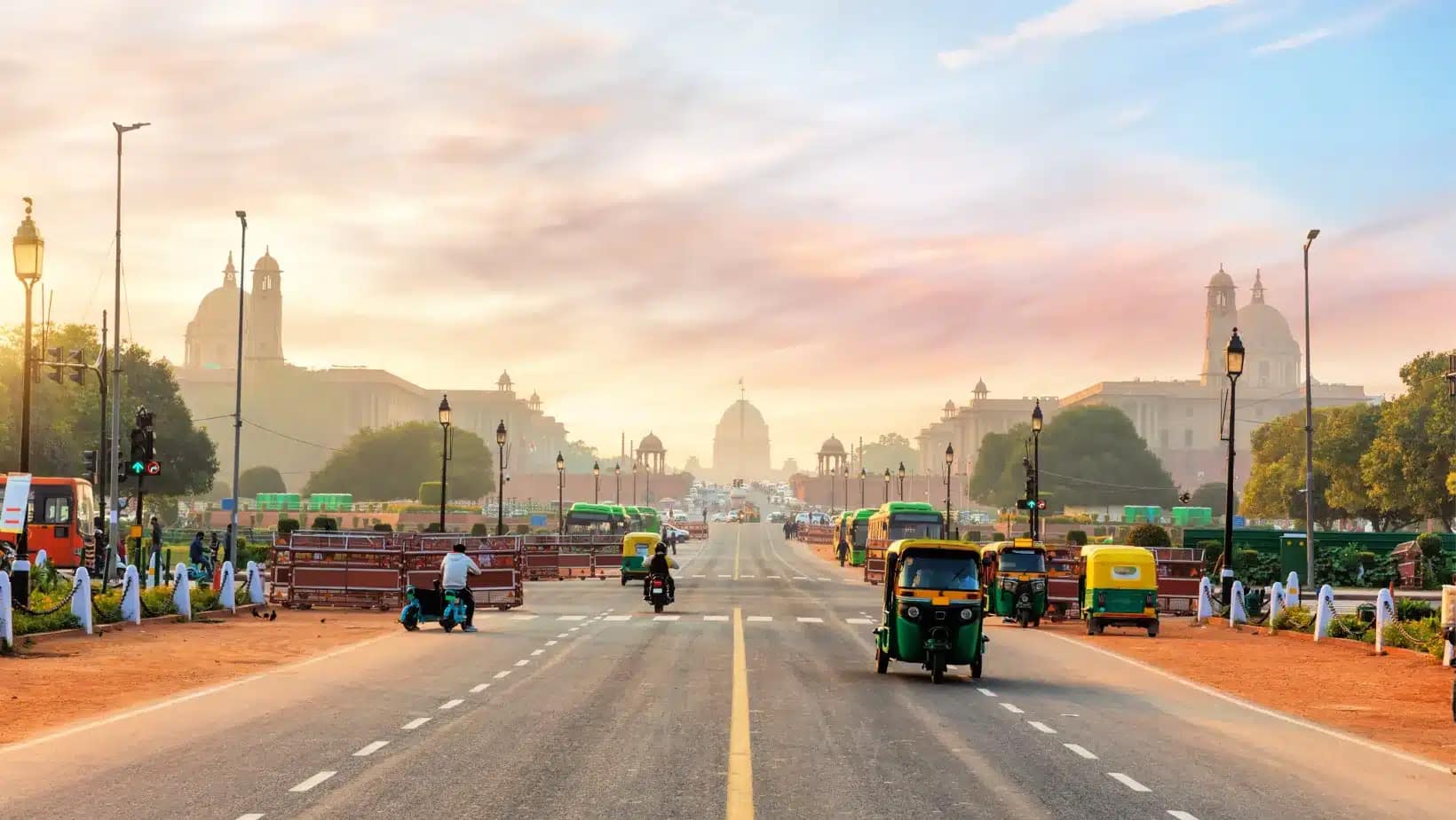
India works best for Americans who arrive with a tie to the country: an Indian spouse, Indian parents or grandparents, a job with an Indian company, or a place at an Indian university. That's no accident. India's immigration rules are built around those ties, and there's no residence visa for someone who simply wants to retire there or bring a laptop. If you have one of those ties, the door is wider than most people realize. If you don't, this guide shows you the limits before you spend money finding them.
For the people it fits, the pull is easy to understand. Your dollars stretch a long way, which the next chapter puts in hard numbers. Daily life runs on an enormous range of food, languages, religions and landscapes, from Himalayan hill towns to the desert forts of Rajasthan and the backwaters of the south. The big cities have private hospitals where most expats get their care, and a growing set of tech and business hubs.
Time zones matter if you keep a U.S. job or family calls. India runs on a single time zone, UTC+5:30, all year with no daylight saving, which puts it nine and a half to ten and a half hours ahead of Eastern, by season. Your 9 a.m. stand-up in New York lands in the Indian evening.
Some of the best reasons to go are personal. People with Indian roots often want their kids to grow up close to grandparents. Spouses of Indians want a real life in their partner's home country, not a string of vacations. For those readers, India isn't an experiment; it's family.
Where India gets hard
We'd rather you hear the difficult parts now.
There's no visa for retirees or remote workers. India doesn't recognize a digital nomad visa, and a tourist visa bans business activity. A U.S. retiree with no Indian ties is left with tourist visas, which limit how much of each year you can spend there. That makes India a long-stay destination for many Americans, not a full-time home.
The air can be rough. In IQAir's 2025 World Air Quality Report, India had three of the world's four most polluted cities. If you have asthma, heart trouble or young kids, where you live and when you're there matter a lot.
Safety takes more planning. The U.S. State Department rates India Level 2, Exercise Increased Caution, and advises against women traveling alone. Several areas carry a Level 4 do-not-travel warning, including Jammu and Kashmir (outside eastern Ladakh and Leh), the India-Pakistan border and Manipur.
It won't give you a second passport. India generally doesn't allow adult dual citizenship. Naturalizing takes 11 of the previous 14 years of residence plus the 12 months before you apply, and you'd have to give up your U.S. citizenship. Plan on residence, not a passport.
The paperwork has teeth. Under 2026 rules, anyone staying beyond 180 days must register with the Foreigners Regional Registration Office (FRRO) before day 180, and overstaying or breaking visa conditions can bring up to three years in prison and a ₹3 lakh fine (about $3,200).
Same-sex marriage isn't recognized. Consensual same-sex relations were decriminalized in 2018. In October 2023, the Supreme Court declined to recognize same-sex marriage, so spouse-based routes may not work for same-sex couples.
If you have a real tie to India and remain clear-eyed about the rest, keep reading. The rest of this guide covers costs, the visa that matches your situation, healthcare and taxes, and who can help.
- Cost of living (single)
- $500/mo
- Safety index
- 55/100
- English proficiency
- 70/100
- Internet speed
- 55 Mbps
- Capital
- New Delhi
- Currency
- Indian Rupee (INR)
02 · Money
What a month in India costs
$900
Monthly budget, couple
everything included
$500
Monthly budget, single
everything included
$1,550
Monthly budget, family
housing included
$2
Inexpensive meal out
local restaurant
$9
Transportation, monthly
public transit
$8
Home internet, monthly
about 55 Mbps
Your real monthly bill

Our 2026 data puts a comfortable monthly budget in India at about $900 for a couple and $500 for a single person, all in. A family with kids lands around $1,550 a month with housing included. Those are countrywide averages, so the city you choose moves your real number more than anything else.
Day to day, eating out and getting around cost very little by American standards. A simple meal at a local restaurant runs about $2, a month of transportation about $9, and home internet about $8 a month.
What to add to the budget
Health insurance. This is the line people forget. A local Indian plan for a healthy adult runs about ₹10,000 to ₹30,000 a year (roughly $120 to $360), while an international plan that also covers you back in the U.S. runs about $1,500 to $5,000 a year. Even the top of that range adds only about $420 a month.
Visas. For U.S. citizens, a five-year e-Tourist visa costs $80 and a one-year version $40, plus bank charges. Longer-term visas carry their own fees and, for some, an employer or sponsor.
Getting money there. You'll be moving dollars into rupees every month for rent and bills. Moneycorp, one of our partners, handles those transfers, and it's worth setting up before you land. If you're retired, check your Social Security with the SSA's Payments Abroad Screening Tool, since payments can go overseas but country-specific restrictions apply.
Your U.S. taxes don't stop. The IRS keeps taxing you wherever you live, and India has its own rules once you pass 182 days a year. The practical chapter below explains how the two fit together.
The budget works. The visa is the hard part.
India's prices suit a retiree on Social Security, but its visa rules don't have a retirement category. Without an Indian spouse, Indian heritage, job offer or a school place, the realistic setup is the five-year e-Tourist visa, capped at 180 days a calendar year and impossible to extend or convert. The budget works for half a year in India, but you'll need a plan for the other half. The next chapter shows who can stay year-round.
03 · Visa routes
India's visa routes, sorted by your tie to the country
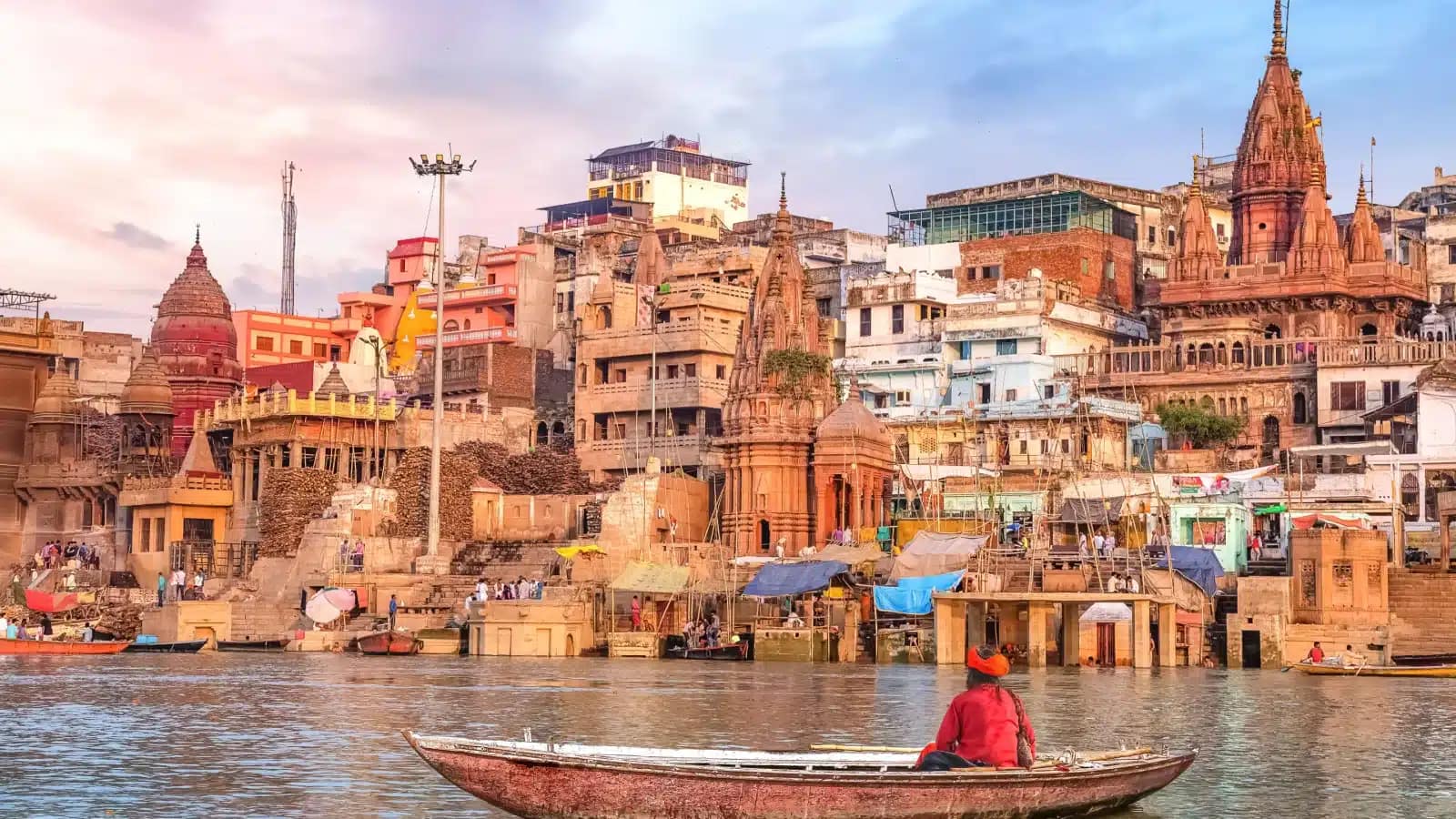
India has no single "move here" visa. Which door opens depends on who you are to India, not on how much you earn. Here are the routes that fit Americans, with the numbers as of September 2026.
Indian heritage or an Indian spouse: the OCI card
Overseas Citizenship of India (OCI) is the closest thing India has to a green card for its diaspora. You qualify if you were an Indian citizen, if a parent, grandparent or great-grandparent was, or if you're the foreign spouse of an Indian citizen or OCI holder in a registered marriage that has lasted at least two continuous years. People whose ancestry traces to Pakistan, Bangladesh or certain other countries are excluded.
What you get is a lifelong, multiple-entry visa for any purpose, with no need to register with the FRRO however long you stay. You can buy and sell non-agricultural property, but not farmland, farmhouses or plantations, and you can't vote. Journalism, research and mountaineering need special permission. The Ministry of External Affairs puts processing at about 30 days, though spouse applications need a Ministry of Home Affairs security clearance and take longer. One hard rule for spouses: a marriage-based OCI must be surrendered after a divorce.
OCI can lead to citizenship, since holders of five years who have lived in India for the 12 months before applying can register as citizens. For Americans, though, that means giving up U.S. citizenship; most people stop at OCI.
Married, but not yet two years: the Entry (X) visa
If your marriage to an Indian citizen or OCI holder is newer than two years, the Entry (X) visa bridges the gap. It's typically issued for up to five years and can be extended inside India through the FRRO. Once your registered marriage passes the two-year mark, you can apply for OCI from within India. Keep the X visa and your registration current until the OCI is in hand.
A job with an Indian company: the employment visa
The employment visa needs a sponsoring Indian company or registered NGO and a gross salary above ₹16.25 lakh a year, about $17,100 at September 2026 rates (some Indian missions still quote the floor as $25,000). Spouses and children of Indian citizens and OCI holders face a far lower floor of ₹3.60 lakh (about $3,800). It's generally granted for up to a year at first and extended in India, up to five years total. Your family comes on an Employment Dependent visa. It suits Americans hired by an Indian company or transferred in by their employer.
Keeping your U.S. job: the honest version
There's no nomad visa, and remote work on a tourist visa isn't allowed. Legal specialists at L&E Global say a valid business visa holder may work remotely for a foreign company from India, with each visit capped at six months. Past 182 days in India, you may owe Indian tax, and your employer may face permanent-establishment risk. Talk to your company's counsel before you try this.
Studying: the student visa
Every foreign student must first register on the government's Study in India portal and cite the ID it issues in the visa application. It fits Americans enrolling at an Indian university, including older students.
Big investors: Permanent Residency Status
India's PRS asks you to invest ₹10 crore within 18 months or ₹25 crore within 36 months (about $1.05 million or $2.6 million at September 2026 rates) and to employ at least 20 resident Indians every financial year. In return you get 10 years of multiple-entry residence, renewable for 10 more, the right to buy one home, work rights for your spouse and dependents in the private sector, and no FRRO registration. It's a business-builder's route, not a passive one.
Everyone else: the e-Tourist visa
For Americans without a tie, the five-year e-Tourist visa is the practical tool, within the 180-day calendar-year cap above. It can't be extended or converted, you can't enter on it by land, and it isn't valid in protected, restricted or cantonment areas. Apply at least four days before you fly.
OCI Card
Lifelong, any-purpose entry for the diaspora and their spouses
For former Indian citizens, their descendants, and foreign spouses. Lifelong status with no limit on how long you stay.
- Proof of Indian origin (previous citizenship or ancestry)
- Not a citizen of Pakistan or Bangladesh
- For spouses: married to Indian citizen/OCI for at least 2 years
PRS for Investors
For investors who will build and staff an Indian business
Ten years of multiple-entry residence, work rights for your spouse and dependents, and the right to buy one home.
- Minimum investment of ₹10 crore (approx. $1.5M) in 18 months or ₹25 crore (approx. $3.8M) in 36 months
- Investment must generate employment for at least 20 Indians annually
- Can purchase one residential property
04 · Daily-life logistics
Healthcare, taxes, housing, banking and pets

The questions every American asks about daily life in India, answered with the rules as they stand in September 2026.
Healthcare
India runs two systems side by side. Foreigners may use public hospitals, but most expats choose private hospitals, which cluster in the big cities. Insurance is the piece to plan carefully: Indian policies often make you wait two to four years before they cover pre-existing conditions, which matters a lot if you're over 50. Hunter Schultz, our healthcare coach, helps you pick hospitals and a care plan for your city. ExpatInsure, our health-insurance partner, can price international coverage that travels with you.
Taxes
You become an Indian tax resident once you're in the country 182 days or more in a tax year. The good news for newcomers is a status called Resident but Not Ordinarily Resident (RNOR). If you've been non-resident in nine of the previous ten years, or in India 729 days or fewer over the past seven, income you earn and receive outside India generally isn't taxed there. Once you become an ordinary resident, India taxes your worldwide income.
Under India's new tax regime, there's no income tax on annual income up to ₹12 lakh (about $12,700), and the top rate of 30% starts above ₹24 lakh (about $25,300). On the U.S. side, the treaty's saving clause lets the IRS tax you as if the treaty didn't exist, so you rely on foreign tax credits and exclusions, and there's no U.S.-India totalization agreement for social security taxes. MyExpatTaxes files U.S. returns for Americans abroad, and Flamingo Compliance counts your days in each country so you know when a tax or visa threshold is coming.
Housing and property
Plan on renting. Foreign nationals can lease a home for up to five years without Reserve Bank of India approval. A foreigner of non-Indian origin living outside India can't buy property there at all; OCI holders can buy homes and commercial property, just not farmland.
Banking
Once you're living in India, you can open and keep a resident rupee account, with your passport and the bank's know-your-customer identity checks. Rent and utilities are far easier to pay from a local account.
Pets
You can bring up to two dogs or cats as baggage. Each needs a rabies vaccination given more than one month and less than 12 months before travel, an official health certificate, and a No Objection Certificate from India's animal quarantine service, which can be issued in the seven days before you land. Starwood Pet Travel handles the paperwork and flights end to end.
Rules as of September 2026
India rewrote its immigration law in 2025 and moved the FRRO registration deadline to before day 180 in 2026, and fees, salary floors and tax slabs can change with each annual budget. Everything here reflects the rules and exchange rates as of September 2026. Before you apply for anything, confirm the current rules with the Indian consulate or a licensed professional.
05 · Where to settle
Choosing a city in India
Where you base yourself in India changes your budget, your air, your climate and how easy daily life feels, more than almost any other choice you'll make.
If you're working, you'll likely live where the employers are: Bengaluru, India's tech hub, known for its pleasant climate; Hyderabad, which pairs a big IT sector with historic sites and a famous food scene; Pune, a calmer city with a strong university presence that families like; and Mumbai, the financial capital, the most cosmopolitan of the group and the priciest to rent in. Chennai, on the southeast coast, has its own strong cultural identity and a large IT industry.
If you're moving for family, settling near them gives you a built-in support network no neighborhood guide can match. If you're splitting the year on tourist visas, pick your months around the weather and the air.
Before you commit anywhere, check the air-quality history for the months you'll be there, the distance to a good private hospital, and whether a landlord will sign a lease with a foreigner on your visa. As we publish India city guides, they'll appear below.
Cities
Indian cities in our guides

Bangalore
India's tech city
A mild-climate tech hub at about 900 meters, with pubs, parks and a huge share of India's software and startup jobs. Indiranagar and Koramangala are the expat neighborhoods. Traffic is notoriously bad, and commutes can eat hours.

Mumbai
India's finance capital
India's financial capital and film center, with sea-facing promenades, local trains and the most expensive housing in the country. Expats cluster in Bandra, Juhu and the south. Monsoon floods the streets, and flats are small for the price.
New Delhi
Capital region living
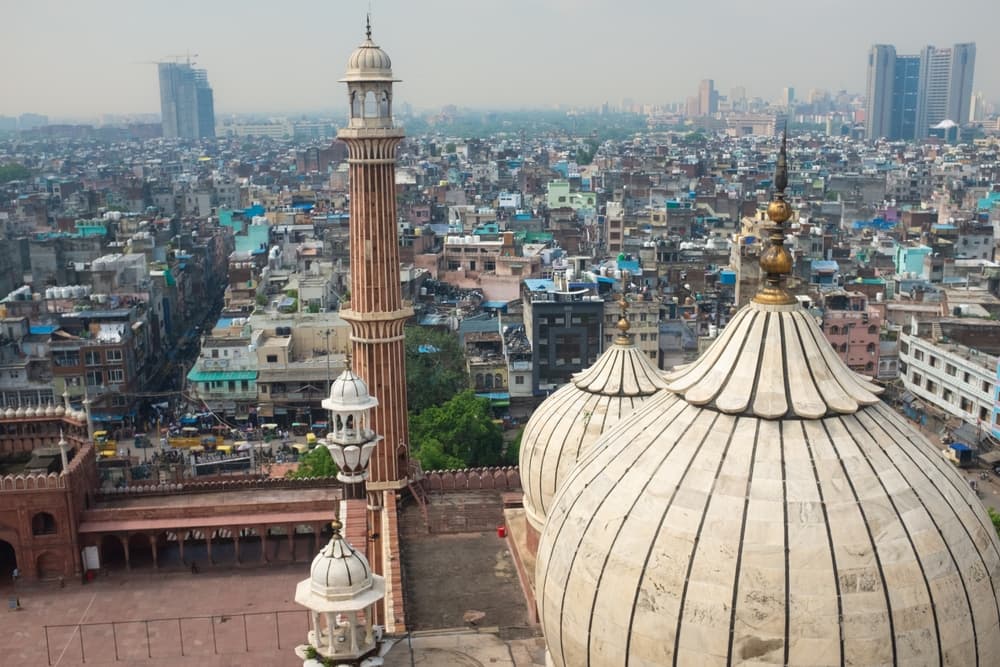
A capital of wide colonial avenues, old Mughal lanes and embassy enclaves, where expats live in South Delhi or commute from Gurgaon. The metro is reliable. Winter air pollution is severe, and heat in summer is intense.
Goa
Coastal villages, Portuguese roots
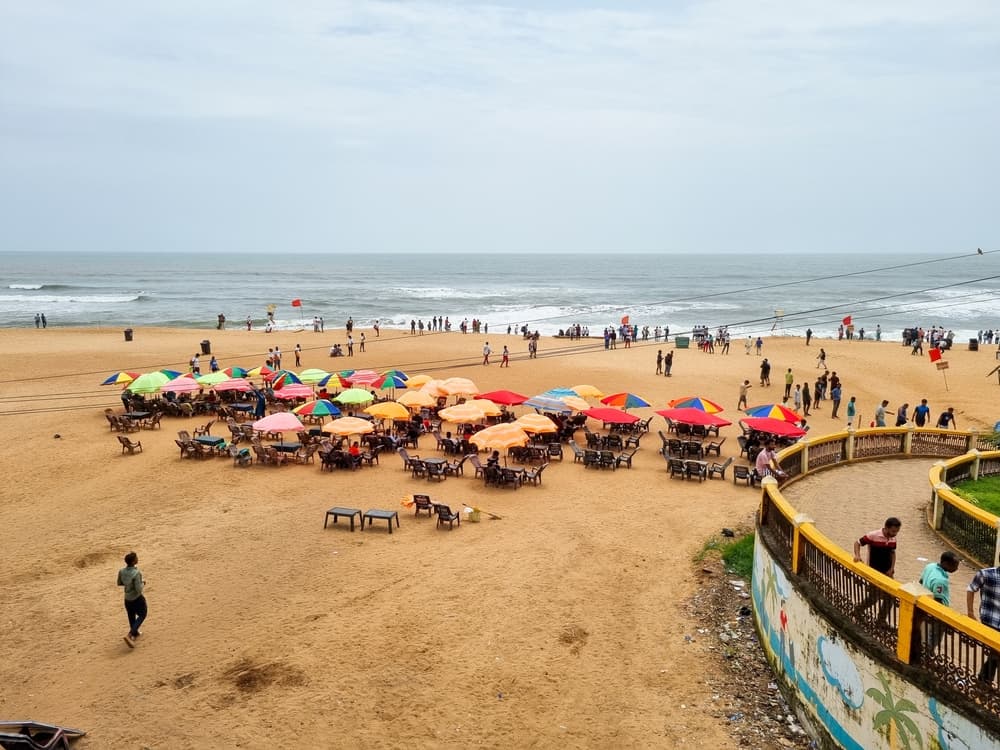
A laid-back state where expats rent houses in villages like Assagao and Siolim, with Portuguese-era churches, beach shacks and a strong yoga and creative scene. Panaji is the administrative center. Monsoon from June to September shuts down much of the coast.
06 · Help for the hard parts
Your India move team
India has fewer vetted partners on the ground than our European countries do, so this team covers the parts of the move that travel with you: health, money, taxes, pets and culture.
If you're moving with Indian family or an employer, they'll often help with the local side. The parts people underestimate are the rest: insurance that works in two countries, U.S. tax filings that don't stop, getting dollars into rupees without losing a slice every month, and adjusting to a very different culture. These are the people we trust for those jobs.

Hunter Schultz
Healthcare Coach
A healthcare coach with more than 20 years of expat living and a background in air medical transport. In a one-hour consultation he maps your health concerns to a care plan for your destination, using benchmarks from the White House Medical Unit.
Learn more
ExpatInsure
Global Health Insurance
Expatsi's international health-insurance provider, represented by Andy Seale and Stephanie Edwards. Their team matches you with a plan that fits your age, health and where you'll spend the year.
Learn more
MyExpatTaxes
U.S. Expat Tax Service
Tax software and support built for Americans filing U.S. returns from abroad, running since 2018. It handles the returns that keep going no matter where you live.
Learn more
Flamingo Compliance | Tax Residency and Visa Tracker Platform
Tax Residency and Visa Tracker Platform
An app that tracks your travel and counts days against tax and visa thresholds, then warns you as you near a residency trigger. Handy for India's 180-day and 182-day lines. Expatsi users get 15% off the first year.
Learn more


07 · Your questions
Questions Americans ask about moving to India
Who qualifies for an OCI card?
Former Indian citizens, people whose parents, grandparents or great-grandparents were Indian citizens, and foreign spouses of Indian citizens or OCI holders whose registered marriage has lasted at least two continuous years. Applicants with Pakistani, Bangladeshi or certain other ancestry are excluded. A spouse must surrender a marriage-based OCI after a divorce.
Does India have a retirement visa for Americans?
No. India has no visa category for retirees without Indian ties. Retirees without an Indian spouse or heritage can use the five-year e-Tourist visa, which costs U.S. citizens $80, but time on tourist visas is capped at 180 days per calendar year, and the visa can't be extended or converted inside India.
Do I have to register with the police or FRRO in India?
If you'll stay more than 180 days on most long-term visas, yes. Under rules updated in 2026, you must register with the Foreigners Regional Registration Office (FRRO) before your 180th day, and late registration is allowed only in limited circumstances. OCI cardholders and holders of Permanent Residency Status are exempt from registration.
Can Americans have dual citizenship with India?
No. India generally doesn't allow adults to hold dual citizenship. Naturalizing requires 11 of the previous 14 years of residence plus the 12 months before applying, and giving up your other nationality, which means your U.S. citizenship. The OCI card is the alternative: lifelong residence rights without an Indian passport.
Can a U.S. citizen move to India permanently?
Yes, but only through a route tied to a reason India recognizes. Americans of Indian origin and foreign spouses of Indian citizens or OCI holders married at least two years can get an Overseas Citizenship of India (OCI) card, a lifelong multiple-entry visa. Others need an employment visa with an Indian employer, a student visa, or Permanent Residency Status through an investment of ₹10 crore or more. There is no retirement or digital nomad visa.
Can foreigners buy property in India?
It depends on your status. A foreign national of non-Indian origin living outside India cannot buy property there. OCI cardholders can buy residential and commercial property but not agricultural land, farmhouses or plantations. Anyone can lease a home for up to five years without Reserve Bank of India approval.
Can I work remotely for a U.S. company while living in India?
Not on a tourist visa, which bans business activity, and India has no digital nomad visa. Legal specialists at L&E Global say a valid business visa holder may work remotely for a foreign company from India, with each visit capped at six months. Staying more than 182 days can make you liable for Indian tax and may create tax risk for your employer, so get advice first.
How much does it cost to live in India as an American?
Expatsi's 2026 data puts a comfortable budget at about $900 a month for a couple and $500 for a single person, all in, with a family around $1,550. Health insurance comes on top: roughly $120 to $360 a year for a local plan, or $1,500 to $5,000 a year for international coverage. Which city you pick moves these numbers the most.
Sources
- E-Visa fees and rules for U.S. nationals · Consulate General of India, San Francisco (checked September 2026)
- Visa Guidelines for USA Passport Holders · Consulate General of India, San Francisco (checked September 2026)
- Employment Visa · Consulate General of India, San Francisco (checked September 2026)
- FAQ on the Overseas Citizenship of India scheme · Ministry of External Affairs, Government of India (checked September 2026)
- Cabinet approves Permanent Residency Status for foreign investors · Prime Minister's Office, India (checked September 2026)
- India: visa registration rules and employment visa categories revised · Fragomen (checked September 2026)
- No income tax on annual income up to Rs. 12 lakh under the new regime · Press Information Bureau, Government of India (checked September 2026)
- India: individual residence · PwC Worldwide Tax Summaries (checked September 2026)
- Acquisition and transfer of immovable property in India · Ministry of External Affairs, Government of India (checked September 2026)
- India travel advisory · U.S. Department of State (checked September 2026)
- 2025 World Air Quality Report · IQAir (checked September 2026)
- Import of pets under the baggage rule · Animal Quarantine and Certification Service, India (checked September 2026)
- Cross-border remote work FAQs: India · L&E Global (checked September 2026)
- A guide to health insurance in India · Pacific Prime (checked September 2026)
- Cost of living and country data for India · Expatsi (checked September 2026)
See how India stacks up for you
Take the free Expatsi Test and compare India with other countries on cost, healthcare, climate and safety, weighted by what matters to you.
Why not you?