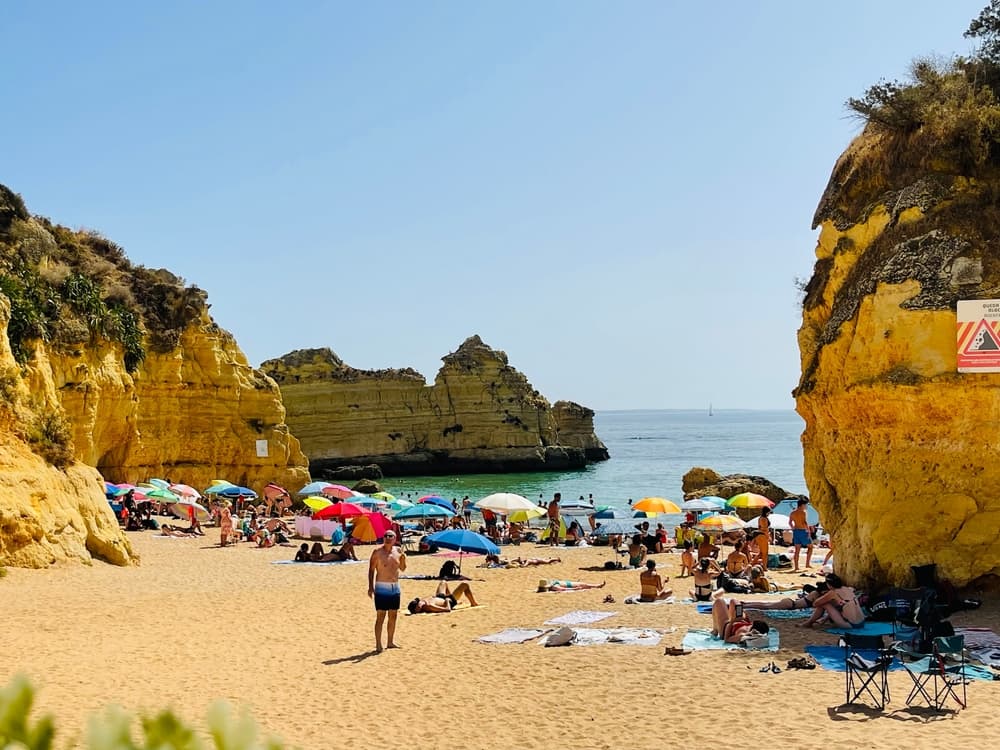
Lagos: the Algarve's beaches with a real town behind them
A walkable harbor town of about 31,000 on Portugal's south coast, with famous cliffside beaches and a large English-speaking expat community.
- 31,049
- Population (2011)
- $2,200/mo
- Monthly budget · single
- 63°F / 17°C
- Avg temperature
Budget about $2,200 a month in U.S. dollars for one person in Lagos, around $3,100 for a couple, or roughly $4,600 for a family of four. A one-bedroom averages about $1,150 in the center and about $900 outside it, and a meal at an inexpensive restaurant runs about $12. Those are Algarve resort prices, well above inland Portugal.
The town itself is a walled historic center wrapped around a marina, with Praia Dona Ana, Praia do Camilo, and the Ponta da Piedade cliffs just south. About 31,000 people live here year round: Portuguese families, British and German retirees, surfers, and a growing American contingent. You can handle daily life in English. It suits people who want ocean, sun, and a soft landing more than immersion in Portuguese city life.
The honest drawback is the seasonal swing: July and August bring the year's heaviest crowds and push restaurant waits and short-term rents to their peak, while January can feel very quiet, with some businesses shut until spring. Long-term leases are hardest to find heading into summer, when landlords switch to holiday lets.
At a glance
$2,200
Monthly budget · single person
$1,150/mo 1-bed rent, center
79/100
Safety index
$40
Internet / month
63°Fannual average
Jan 54° · Aug 74°
Climate
31,049
Population (2011)
Expatsi estimates, updated Aug 2026, based on rental listings, government statistics, and local reporting.
Cost of living
What it costs to live in Lagos
Single person
$1,800–$2,600/mo
about 30% below Austin, TX
Couple
$2,500–$3,700/mo
about 35% below Austin, TX
Family of four
$3,800–$5,400/mo
about 40% below Austin, TX
Compared with Austin, TX (Expatsi estimate, 2026).
- $12 −40%
- Inexpensive meal
- $950–$1,400/mo −41%
- 1-bed rent, center
- $750–$1,100/mo −33%
- 1-bed rent, outside
- $40/mo −38%
- Internet
- $372/sq ft −43%
- Buy price, center
Expatsi estimates, updated Aug 2026, based on rental listings, government statistics, and local reporting.
Daily life
How Lagos lives
- B grade, 51st percentile among the cities we track
- Dining & caféstypical
- B- grade, 30th percentile among the cities we track
- Arts & culturetypical
- A grade, 95th percentile among the cities we track
- Parks & outdoorsstandout
- B- grade, 26th percentile among the cities we track
- Schools & educationtypical
- C+ grade, 18th percentile among the cities we track
- Healthcare accessmodest
- B- grade, 29th percentile among the cities we track
- Bike infrastructuretypical
- B grade, 41st percentile among the cities we track
- Public transittypical
- B grade, moderate physical accessibility
- Accessibilitymoderate
Graded on OpenStreetMap amenity density relative to the 298 cities we track. Accessibility is the exception: it's graded against a fixed standard (terrain steepness and sidewalk surfaces), not a curve.
Climate
Weather through the year
Annual average 63°F (17°C) · 19 in of rain a year · Source: Open-Meteo Historical Weather API (temps: ERA5-Land 0.1°; precip/sunshine: ERA5 best-match; 1991-2020 normals)
On the ground
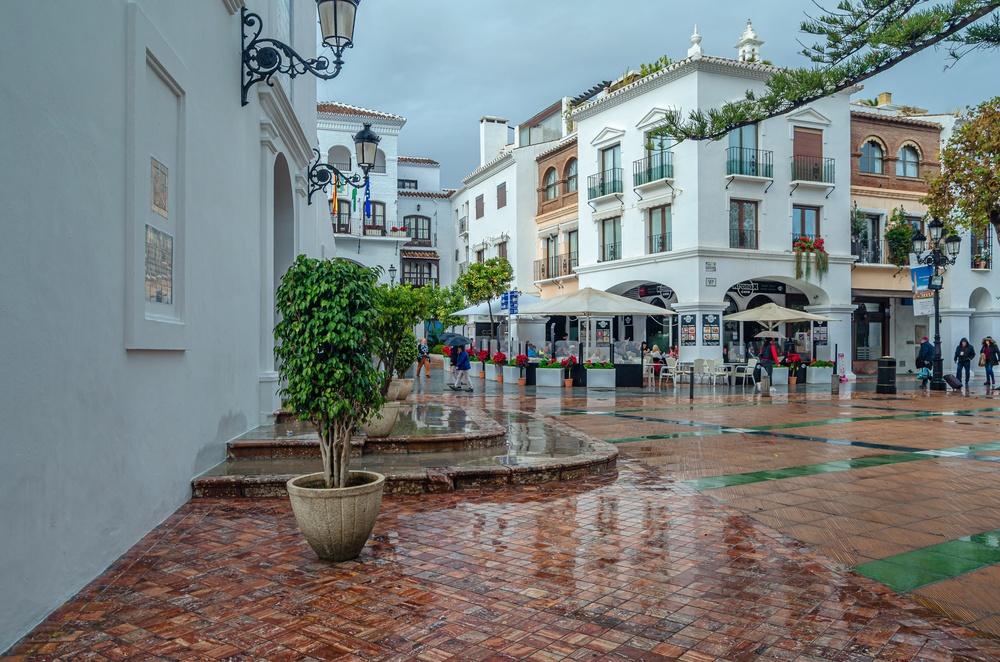
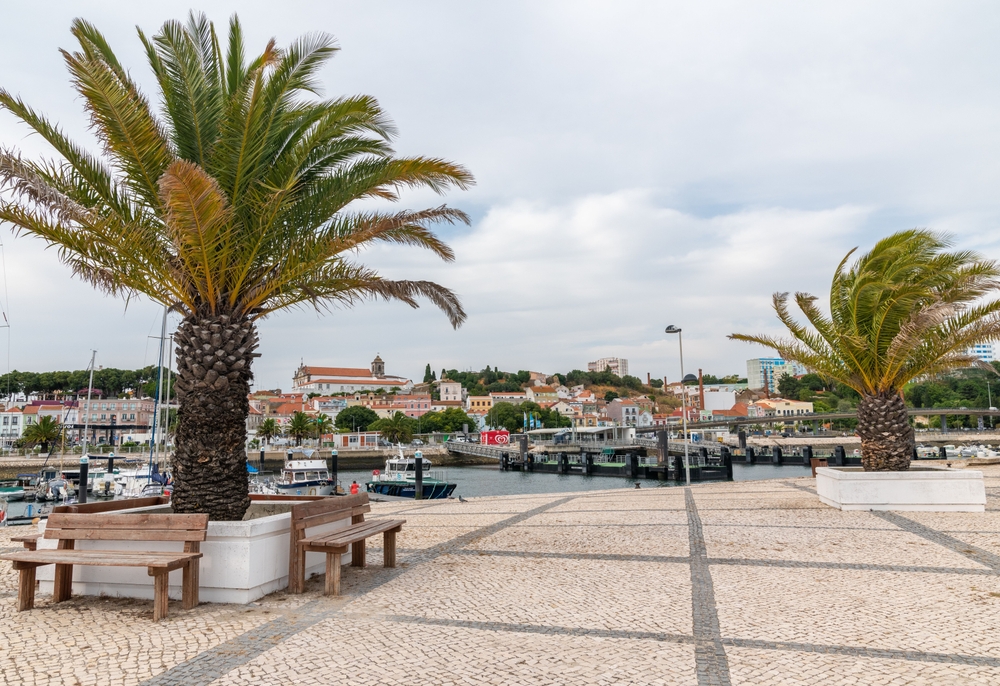
Scenes from Lagos
Getting around
Transport in Lagos
Lagos is compact enough that the historic center, marina and nearest beaches are all walkable, with most residents getting around on foot. The core is largely pedestrianized, so even car owners park and walk in town.
Local buses run under the Onda network, the municipal system that loops through town and out to the beaches and outlying villages. It's cheap and fine for errands, though frequencies drop outside summer; residents under 23 ride free on the national youth pass. Regional Vamus Algarve buses connect Lagos to Portimão, Sagres, and the rest of the coast.
The train station sits across the marina footbridge, at the western end of the Algarve regional line. Faro is about an hour and forty minutes east, and Lisbon takes roughly four hours with a change at Tunes. Faro Airport, the region's air link, is reached by coach or car rather than by rail.
A car is more useful here than in Lisbon or Porto. Big-box shopping, hardware stores and some medical appointments mean trips to Portimão or Lagoa, and the west coast beaches around Sagres are far easier with your own wheels. Uber and Bolt fill the gaps. Plenty of expats live car-free in the center, but families and anyone outside town usually buy one.
- 16/sq mi
- Transit stops
- 0.7/sq mi
- Bike infrastructure
- 13/sq mi
- Wheelchair-accessible places
Mapped features per square mile from OpenStreetMap.
Keep exploring
Places like Lagos

Community
Community & practical notes
Community: Lagos has one of the Algarve's most established international communities. British and German retirees have been coming here for decades. They now share the town with a surf scene and growing group of remote workers, so it doesn't read as a retirement enclave. English is spoken in nearly every shop and restaurant, which makes arrival easy and leaves Portuguese optional in practice, though making the effort to learn it helps you win over the locals.
Healthcare: Lagos has its own public hospital, the Hospital Terras do Infante on Avenida Dom Sebastião, which joined the national health service in 2022 and runs a 24-hour basic emergency service alongside 44 inpatient beds, an operating theatre, outpatient clinics and imaging. Complex cases still transfer to Portimão about 20 minutes east. Legal residents register with the public SNS through the Centro de Saúde de Lagos. Most newcomers carry private insurance on top because visas require it at first and because it buys faster specialist appointments. The friction is administrative: an SNS number and assigned family doctor can take months.
Limited mobility: Better than most Algarve towns, with real limits. Portugal's tourism board describes the central route as flat, with wide footpaths and a stable surface, and rates the Ponta da Bandeira fort and the Governors' Castle step-free, with removable ramps at the municipal museum. Against that, the old lanes are laid in calçada cobbles, several churches are entered up steps, and the cliff beaches at Dona Ana and Camilo are reached by long staircases. Four beaches in the municipality, Meia Praia, Batata, Porto de Mós and Luz, carry the national Praia Acessível award and offer amphibious wheelchairs. Onda buses have low floors, platform lifts and reserved spaces, but no Lagos taxi firm runs an adapted vehicle. Confirm the bus with the operator and book CP's assistance before a train.
Remote work: Fiber internet runs about $40 a month and coverage in town is good. Nest Coworking sits in the center with hot desks and call booths, and the Lagos Digital Nomads project runs meetups. Local hiring is mostly tourism and hospitality, so almost every working-age American here brings a remote job or online business.
Schools: Vale Verde International School, ten kilometers west at Luz, teaches a British curriculum to ages 5 to 18 and runs a bus with stops in Lagos. Nobel Algarve's Lagoa campus further east is the larger option. Portuguese state schools are free to legal residents.
Retirement: Portugal remains one of the more straightforward retirement moves for Americans. The D7 visa asks for stable passive income at the Portuguese minimum wage, plus proof of housing and health insurance, leading to permanent residency after five years. The old NHR tax break is closed to new arrivals, so plan on Portuguese taxation of your retirement income and get cross-border tax advice before you commit. Compare programs on our retirement visa options page, and see the full picture in our Portugal guide.
Housing
Renting and buying
- 1-bed rent (center)
- $950–$1,400/mo
- 1-bed rent (outside center)
- $750–$1,100/mo
- Buy price (center)
- $372/sq ft
- Buy price (outside center)
- $297/sq ft
Expatsi estimates, based on rental listings, government statistics, and local reporting.
Good to know
Frequently asked questions
Do I need a car in Lagos?
In the center, no. The town is walkable, local Onda buses cover the beaches and neighborhoods, and the train station connects you to Faro and Lisbon. Most residents end up wanting one anyway for supermarket runs to Portimão, medical appointments, and exploring the coast.
How is healthcare in Lagos, Portugal?
Better than the town's size suggests. The Hospital Terras do Infante is part of the public health service, with a 24-hour basic emergency service, inpatient beds and imaging, and complex cases go to Portimão about 20 minutes east. Legal residents register with the SNS at the Centro de Saúde de Lagos, though getting a family doctor assigned can take months, so most newcomers also carry private insurance.
How do I move to Lagos as an American?
Most Americans use Portugal's D7 visa, which needs stable passive income, or the digital nomad visa for remote workers. You apply at a Portuguese consulate, then convert to a residence permit after arrival. Line up proof of housing, income and health insurance first, and start the apartment hunt early, since long-term rentals are scarce in summer.
Is Lagos a good place to retire?
It's one of the Algarve's most popular retirement spots, and a couple can live here on about $3,100 a month. The D7 income floor for 2026 is 920 euros a month for one person, tied to the minimum wage, which most Social Security checks clear on their own. The trade-offs are summer crowds and a very quiet winter.
Is Lagos, Portugal safe?
Yes. Lagos scores 79 out of 100 on the safety index with a crime index of 21, and Portugal placed 7th of 163 countries in the 2026 Global Peace Index. The State Department keeps it at the lowest advisory level, while OSAC flags theft as common across the Algarve and rising in summer. The local hazard is the cliffs, which erode, so stay behind the barriers.
How much does it cost to live in Lagos, Portugal?
Plan on about $2,200 a month for one person, about $3,100 for a couple, and about $4,600 for a family of four, in U.S. dollars. A one-bedroom averages about $1,150 in the center and about $900 outside it, and an inexpensive restaurant meal is about $12.
What is the weather like in Lagos, Portugal?
Mild and dry. The annual average is about 63.5 F (17.5 C), and August, the warmest month, averages daytime highs near 83 F. Rain totals about 474 mm (under 19 inches) a year, nearly all of it between fall and early spring. Homes often lack central heating, so winter indoors feels colder than the thermometer suggests.
Is Lagos wheelchair accessible?
Partly. Portugal's tourism board maps a flat central route with wide footpaths and stable surfaces, and four municipal beaches hold the national Praia Acessível award with amphibious chairs. The cobbled lanes, stepped church entrances and staircase-only cliff beaches are the obstacles, and no local taxi firm has an adapted vehicle.
See how Lagos fits your life
Take the free Expatsi Test and compare Portugal to nearly 200 countries on what actually matters: cost, healthcare, climate, and safety. About five minutes.
Why not you?