Country guide
Paraguay: $900 a month, no tax on foreign income, and a two-year wait
The cheap-and-easy reputation is half right. Here's what a month costs, what residency takes now that the old shortcut is gone, and who Paraguay doesn't suit.
Paraguay sits in the middle of South America with no coastline, one big city and almost no marketing budget. It's cheap. Money you earn outside the country isn't taxed here. It hands out a ten-year residency card at the end of a two-year wait. That package is real. It's also the reason nearly every English-language page about Paraguay is written by somebody selling residency. This guide is not. Here's the money, the paperwork, the weather and the parts that will annoy you.

Reviewed and updated September 18, 2026 · 13 min read
01 · The case for Paraguay
The country nobody puts on the shortlist
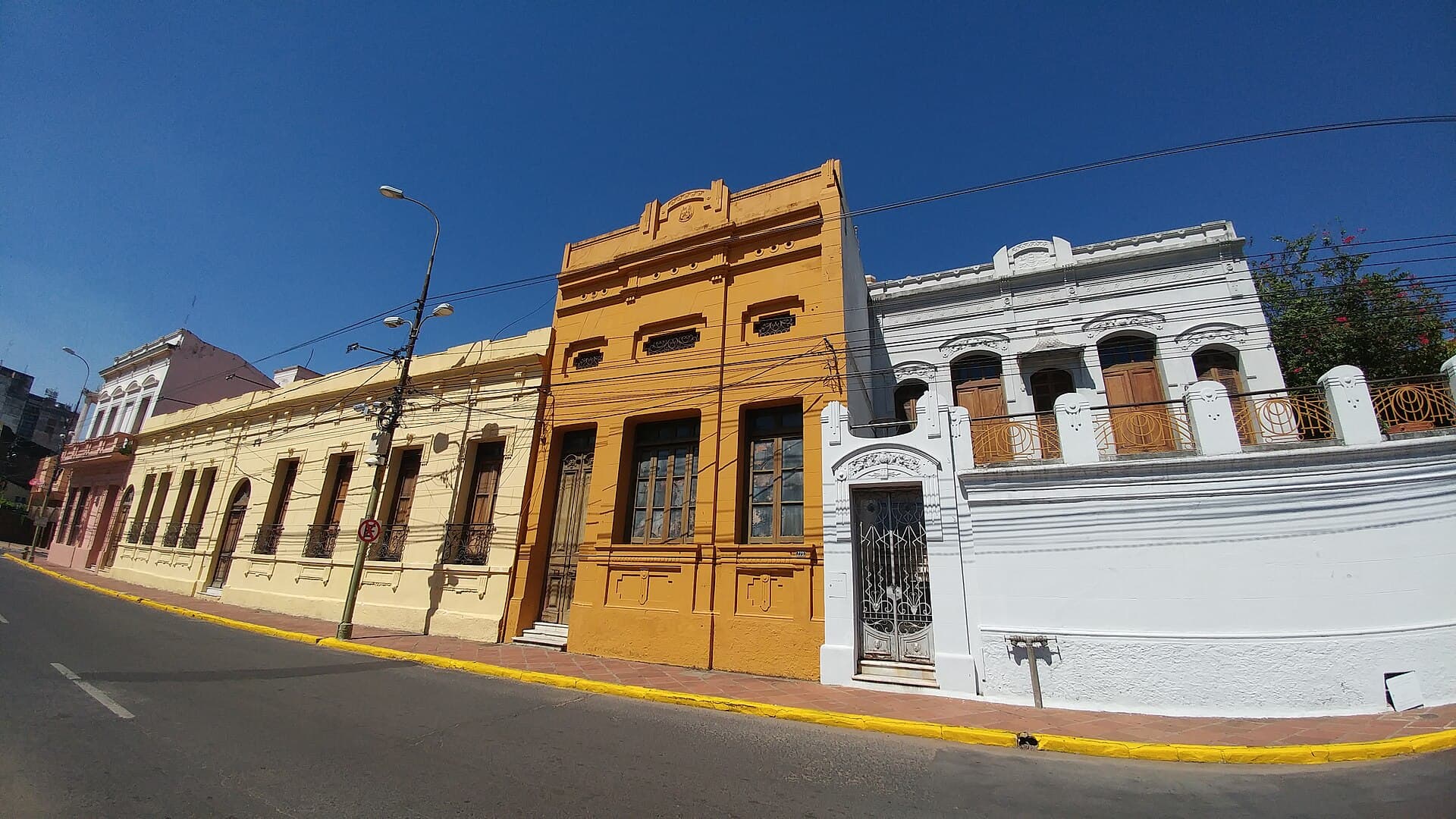
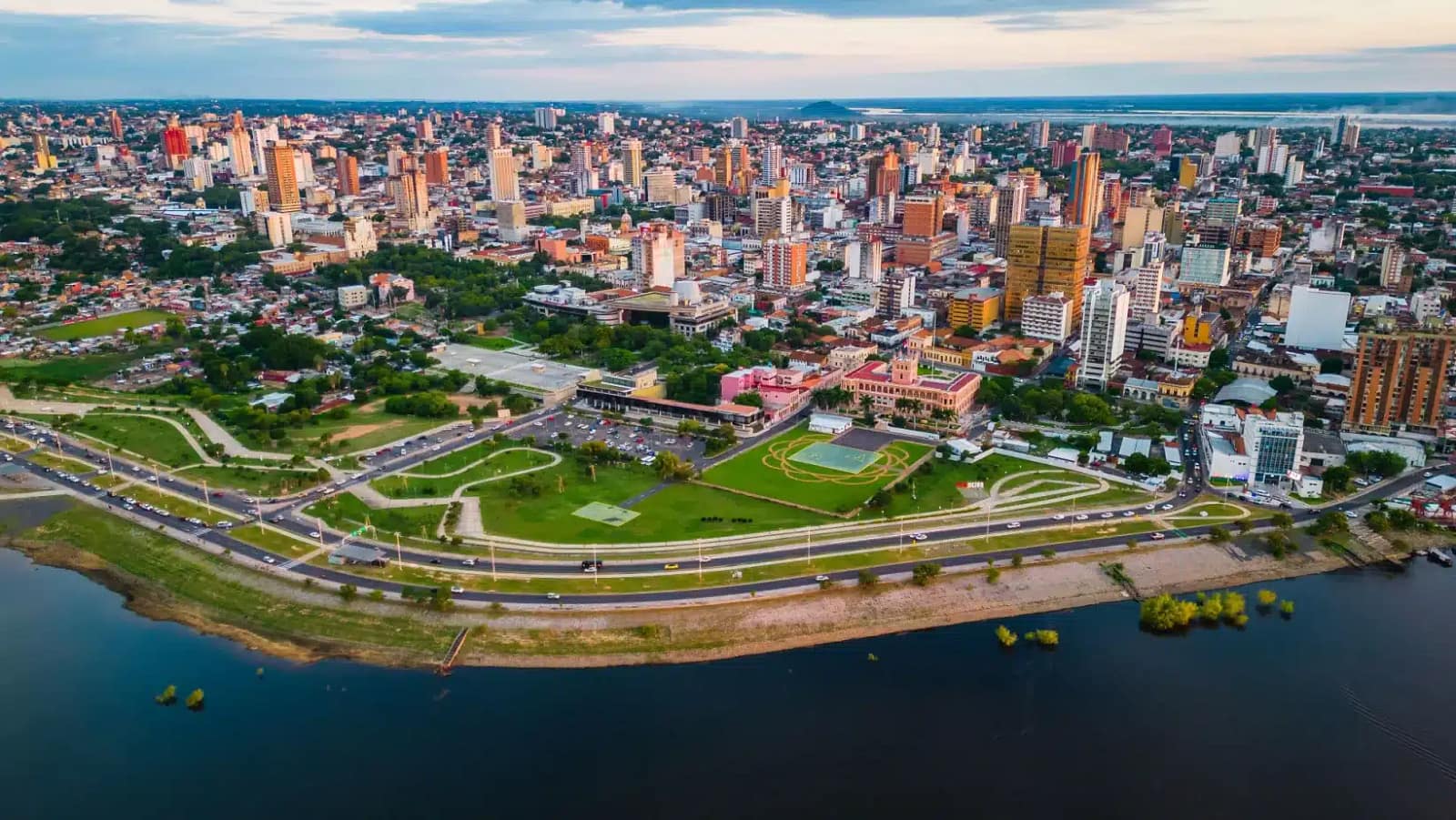
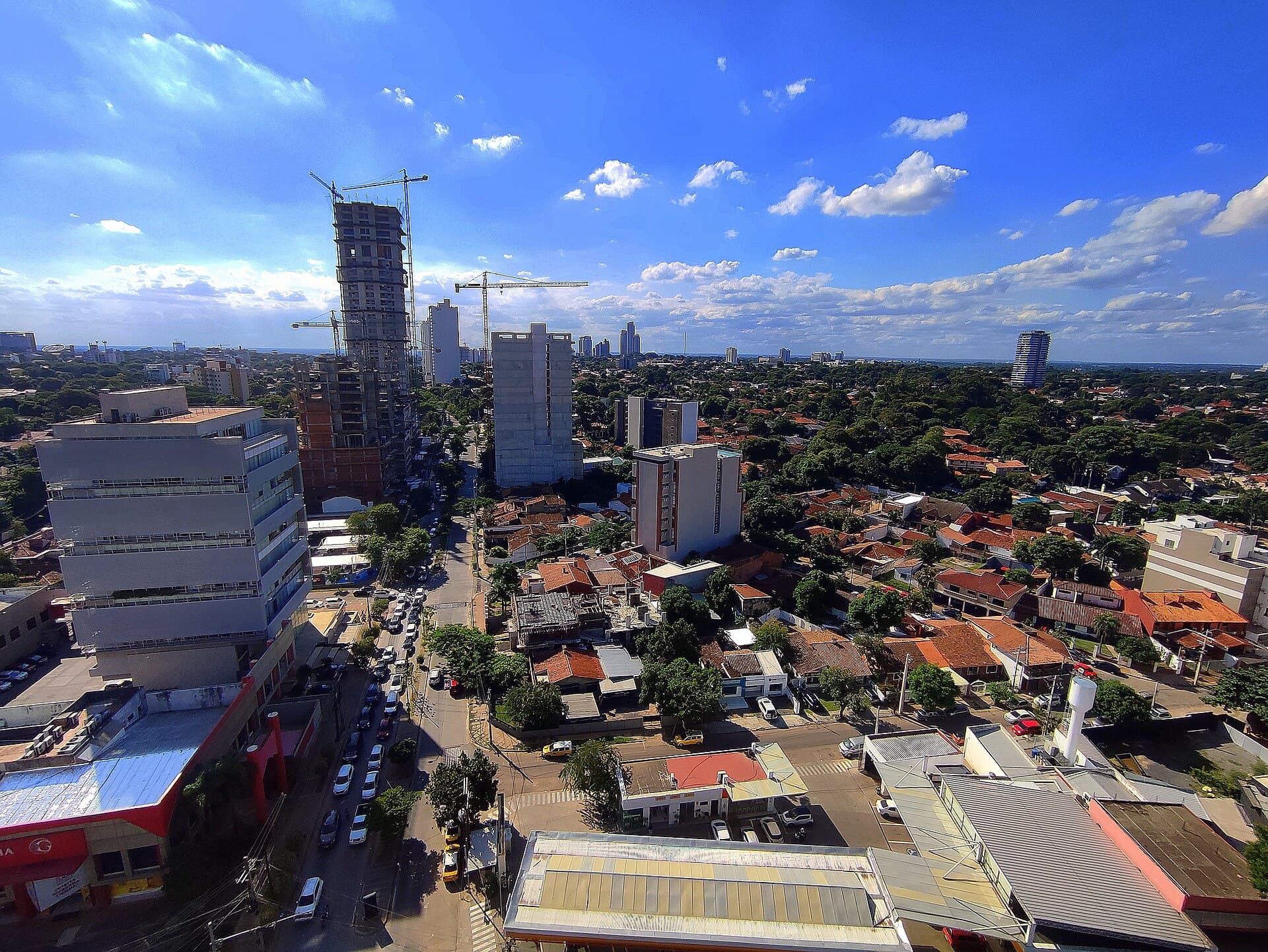
Start with what Paraguay isn't. It isn't the cheapest country on the continent. Our own country data puts a single person's month at $900, which ties Paraguay with Brazil, Colombia and Ecuador and leaves Bolivia cheaper still. It isn't undiscovered, either. Asunción has cranes in the skyline and fresh towers going up in Villa Morra.
What's unusual is the combination. Paraguay taxes only income earned inside Paraguay, and it did so long before territorial tax became a marketing term. The residency file asks for no minimum income and no investment on the standard route. A permanent resident can be out of the country for up to three years between visits. The macro picture underneath all of it is boring in the good way. Moody's moved Paraguay to investment grade in July 2024 and has kept it there. S&P followed in December 2025. Public debt sits near 41 percent of GDP.
Here's the catch
The dollar has fallen hard against the guaraní. A dollar bought around 8,000 guaraníes in the spring of 2025. By September 2026, it bought under 6,000. If your income is in dollars, Paraguay quietly got about a fifth more expensive inside a year, and no cost-of-living page has caught up. The permanent-residency shortcut is gone, too. Until late 2022, a small bank deposit bought permanent status outright. Everyone now starts with a two-year temporary card, and the rules for converting it got stricter in May 2026.
The people it works for
Remote earners paid from abroad, self-funded retirees, and families who want space and a low burn rate. People who want a legal home base that isn't the United States, and who are willing to spend real time in it. Paraguay is a poor fit if you need English to get through a Tuesday. It's also a poor fit if you want an ocean, a ready-made American crowd, or a summer you can walk around in.
- Safety index
- 55/100
- English proficiency
- 35/100
- Currency
- Paraguayan Guaraní (PYG)
- Capital
- Asunción
- Language
- Spanish
02 · The money
The price of an ordinary month
$900
One person, a month
Everything in, living like a resident
$1,500
A couple, a month
Ties Brazil, Colombia and Ecuador
$2,400
A family, a month
Before international school fees
$400
One-bedroom, central Asunción
Nearer $300 on the edges
$17
Home internet
Fiber competes street by street
$34
A month of city transit
Before you give in and buy a car
Cheap, and less cheap than it was last year

The numbers above come from our own country data and they describe an ordinary month, not a frugal one. They also assume you live like a Paraguayan resident rather than a visitor. Rent is the line where a newcomer overpays. Landlords in Villa Morra and Carmelitas quote in dollars, and a long unfurnished lease normally wants a local guarantor. A foreigner who doesn't have one is often asked for six months up front instead.
Two things stretch a budget here that don't show up in a comparison table. Household help is normal and affordable rather than a luxury, and it does more for a fixed income than any tax break does. Residential rent carries 5 percent VAT rather than the standard 10 percent. So does the basic food basket. Rent and food are the two heaviest lines in a household budget, and Paraguay taxes both in the lower band.
Then there's the part that moves. Paraguay prices durable things in dollars and everyday things in guaraníes. A strengthening guaraní therefore hits you twice. Your rent conversation stays flat while groceries, taxi rides and restaurant bills all cost more dollars than they did. The central bank's own expectations survey saw the rate drifting back toward 6,700 by the end of 2026. That would give some of it back. Nobody knows. Budget on today's rate and leave yourself room.
The bill here is paid in patience
Paraguay charges you in time rather than in money. Getting in costs very little. What it costs is patience: two years before permanent status, and five before you can ask for a passport. That's the reverse of the trade a lot of countries offer, and it's the thing to get straight before you start filling anything in.
03 · The permits
The two-step that replaced the shortcut
Paraguay replaced its old migration law in October 2022. Law 6984/22 repealed Ley 978/96 outright, and with it the roughly $5,000 bank deposit that used to buy permanent residency in a single trip. A lot of the English-language advice online still describes that deposit. It no longer exists, and any provider who offers it is quoting a dead rule.
Step one, the two-year temporary card
This is the standard entry point and it's light. There's no minimum income, no investment and no deposit. You bring a passport, an apostilled birth certificate, an FBI criminal-record summary, a medical certificate and a sworn declaration of what you plan to do and where you plan to live. Everything foreign has to be apostilled at home and translated in Paraguay by a court-registered translator. The card runs two years. You have to enter Paraguay at least once every twelve months to keep it.
Step two, converting to permanent
You file the conversion between months twenty-one and twenty-four of the temporary card. The permanent card that comes out is good for ten years. This is where 2026 tightened. Resolution DNM 407/2026 redefined the economic-solvency proof for the conversion, and a university degree on its own no longer counts. The office wants a paper trail that matches the occupation you declared on day one. Apostilled contracts if you're paid from abroad, or an active RUC tax number with filed returns if you earn locally.
The doors that skip the line
Investors can go straight to permanent residency. The long-running SUACE route asks for a productive investment from $70,000 with a real business plan and local hiring. A 2026 Investor Pass added property, financial-instrument and tourism tracks, reported at $200,000 for property or securities and $150,000 for tourism projects. None of these shortens what comes after.
The passport, roughly five years out
Article 148 of the constitution asks for four things: legal adulthood, a minimum of three years of residence, a profession or trade practiced in the country, and good conduct. In practice the Supreme Court counts those three years from the permanent-admission resolution, not from your first landing. So the honest arithmetic is two years plus three before you can file. Naturalization is a judicial decision rather than an administrative one. There's a written exam in Spanish or Guaraní on history, geography and civics, and a real test of whether you've lived here. Court processing adds a year or two on top.
Three permits, one ladder
| Visa | Category | Application cost | Processing | Difficulty | Guide |
|---|---|---|---|---|---|
| Permanent Residence Visa | residency | $160 | ~60 days | 5/5 | Guide |
| Temporary Residence Visa | residency | $160 | ~30 days | 3/5 | Guide |
| Work Visa | skilled work | $160 | ~30 days | 4/5 | Guide |
04 · Tax and money
Zero on the money you earn somewhere else
Paraguay's tax code is short and the headline is true. Under Law 6380/2019, individuals are taxed on Paraguayan-source income only, whether they live here or abroad. A pension paid from the United States, dividends from a foreign brokerage, rent from a house you kept in Ohio: none of it enters the Paraguayan tax base.
The territorial rule, precisely
What is taxed is work performed in Paraguay and assets sitting in Paraguay. Personal-services income runs on a progressive scale of 8, 9 and 10 percent. No tax is due at all below a gross threshold of 80 million guaraníes a year, which was roughly $13,500 in September 2026. Capital gains on Paraguayan assets are a flat 8 percent. Companies pay 10 percent. The line that trips people up is sourcing, not rates. If you sit in Asunción and do the work from there, the tax office can treat that as Paraguayan-source income even when every client is foreign.
You still file at home
The United States and Paraguay have no income tax treaty. Your U.S. return doesn't go away. The Foreign Earned Income Exclusion doesn't touch investment income. An account in an Asunción bank crosses the FBAR line the moment it passes $10,000. Where Paraguay does help an American is state tax, because a real residence somewhere else is the thing that ends a California or New York claim on you.
The cédula comes before the bank
Plan on this being slow. Paraguayan banks want your physical ID card, a tax number and a local address before they'll open anything. The identification office has been running months behind on cédulas. Keep a U.S. account and a multi-currency account working until the local one exists.
Land is open, and cheap to hold
A foreigner can buy land here on exactly the terms a Paraguayan can, with no restriction and no permit. Annual property tax is 1 percent of the fiscal value, and fiscal values sit well under market. There are no stamp taxes.
This guide is dated on purpose
Both the exchange rate and the migration rulebook shifted while this page was being written. The guaraní has gained roughly a fifth on the dollar in eighteen months. Every tax threshold quoted above is legally a guaraní figure, so its dollar value slides without anyone changing the law. The solvency test for permanent residency was rewritten in May 2026 and an investor track opened in April 2026. September 2026 is the date on all of it. Run the rate again before you sign anything.
05 · Daily life
Heat, doctors and the ride home
The summer is the real adjustment
Asunción is subtropical and December through February is brutal. The State Department's own country page warns that temperatures regularly exceed 100F with high humidity, and the rainy season runs October to March. Air conditioning isn't optional here. It's the main utility bill. The winter is mild and short, and it's the part nobody complains about.
Care is cheap until it isn't
Private medicine in Asunción is good value and quick. A private consultation runs about $20 to $50, and the wait for a specialist is days rather than months. Public hospitals are free to anyone with ID, and they're thin. Families may be asked to bring medicines and supplies, and the State Department warns that ambulances are unreliable and aren't staffed by trained paramedics. IPS, the social-security health system, is tied to formal employment, so retirees and freelancers can't buy in. The common pattern among foreign residents is cash for routine care plus a private or international policy for the rest. For complex treatment the regional answer is a flight to São Paulo or Buenos Aires. Evacuation is worth having in writing.
Working from here
Home fiber is the strong card. Ookla's 2026 index puts the median fixed download near 115 Mbps, ahead of several richer countries, and a mid-tier plan runs under $20 a month. Mobile is ordinary at about 27 Mbps. Coverage thins fast outside the cities, so anyone landing in a small town should price Starlink instead of hoping.
Buses, Bolt and the flight home
There's no passenger rail anywhere in the country. City buses are old, and the U.S. embassy bars its own staff from riding them. Uber and Bolt both work in Asunción and are cheap. A lot of residents end up with a car. You'll want an International Driving Permit, and you should know that Paraguay doesn't require vehicle insurance and a lot of drivers carry none. Flying is the other friction. No airline flies nonstop between the United States and Asunción, so every trip home routes through Panama City, Bogotá, Lima or São Paulo.
Spanish, and the language underneath it
Spanish gets you through the bank, the notary and the migration office. Guaraní gets you everything else. It's co-official under the 1992 constitution. National household data has 30 percent of people speaking mainly Guaraní at home, 28.5 percent mainly Spanish, and 38.7 percent moving between the two. Everyday speech blends them into jopara. Nobody expects a foreigner to learn Guaraní. Learning ten words of it changes how people treat you.
Where the advisory changes color
The State Department's August 2026 advisory leaves Paraguay at Level 1, the bottom rung of a four-step risk scale, and asks for nothing beyond normal precautions. Five departments carry a Level 2 warning inside that: Alto Paraná, Amambay, Canindeyú, Concepción and San Pedro, all along the smuggling corridor on the Brazilian border. Street crime in the cities is ordinary and real. Phone snatching from motorcycles is the classic version.
06 · Where to live
Paraguayan city guides, as we publish them
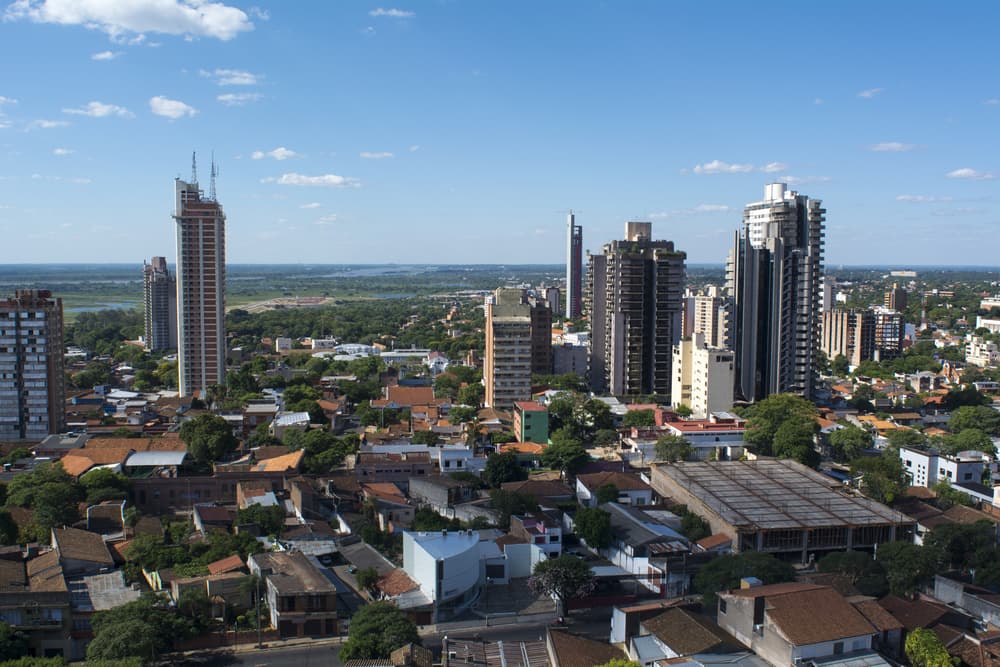
Asunción
Cranes and heat
The capital and the only real big city in Paraguay, with Villa Morra as the expat address. Private clinics are cheap, and fiber is fast. Summers pass 100 degrees and there's no rail, so a car or Uber is how you get around.
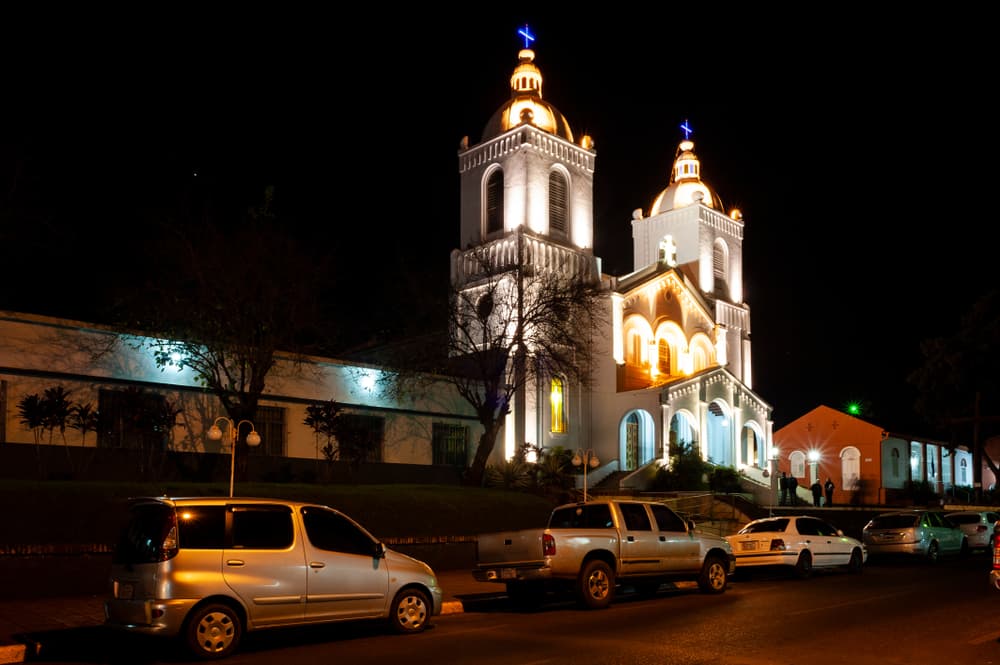
Encarnación
River beach town
A calm city on the Parana with a long riverfront beach strip, and Posadas across the bridge. It's cheaper and slower than Asunción. Expect little English, summer heat, and a long drive to the capital.
One city, and four ways to avoid it
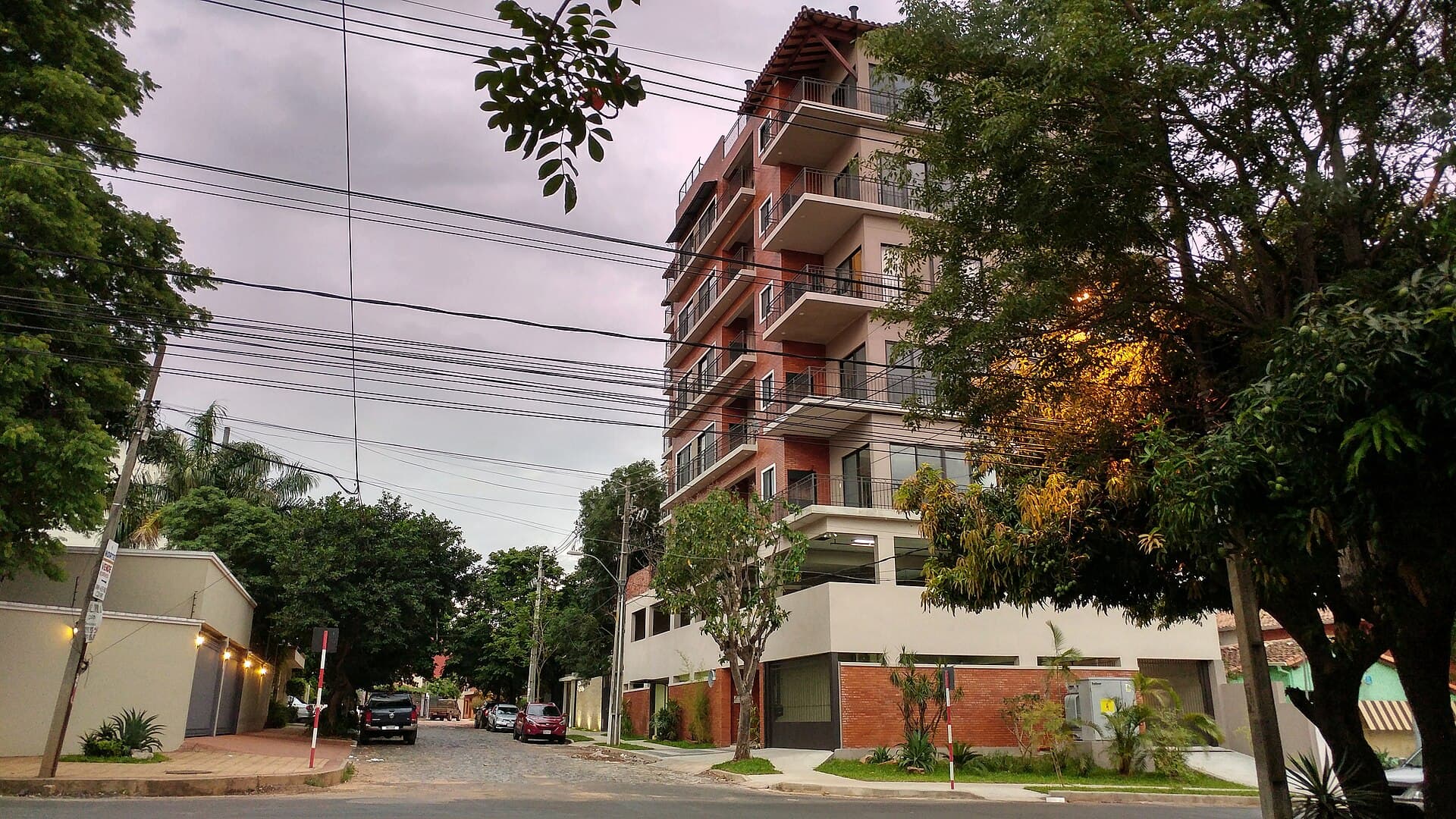
The 2022 census counted 6.1 million people in a country a little smaller than California, and the eastern third holds nearly all of them. Almost everyone lands in the capital first and then decides.
Asunción
The capital, and where the international schools, the private hospitals foreigners use and the main airport are. Villa Morra and Carmelitas are where newcomers cluster, with Las Mercedes a quieter version next door. Rents in those pockets have climbed as the foreign crowd grew.
Encarnación
On the Paraná river facing Argentina, with a river beach, a big carnival and a calmer pace. Cheaper than Asunción, easier to walk, and with much less in the way of services.
Ciudad del Este
The trade city on the Brazilian border, next to Iguazú Falls. It's a commercial machine rather than a lifestyle choice, and it sits inside one of the Level 2 departments.
San Bernardino and Areguá
Lake towns an hour from Asunción, historically where the capital goes for the summer. Weekend energy, limited winter services, and a lake with real water-quality problems.
The Chaco and the colonies
About 60 percent of the country's land and under 4 percent of its people. The Mennonite colonies out there run dairy and beef and speak Plautdietsch and German. It's remote in a way that Americans underestimate.
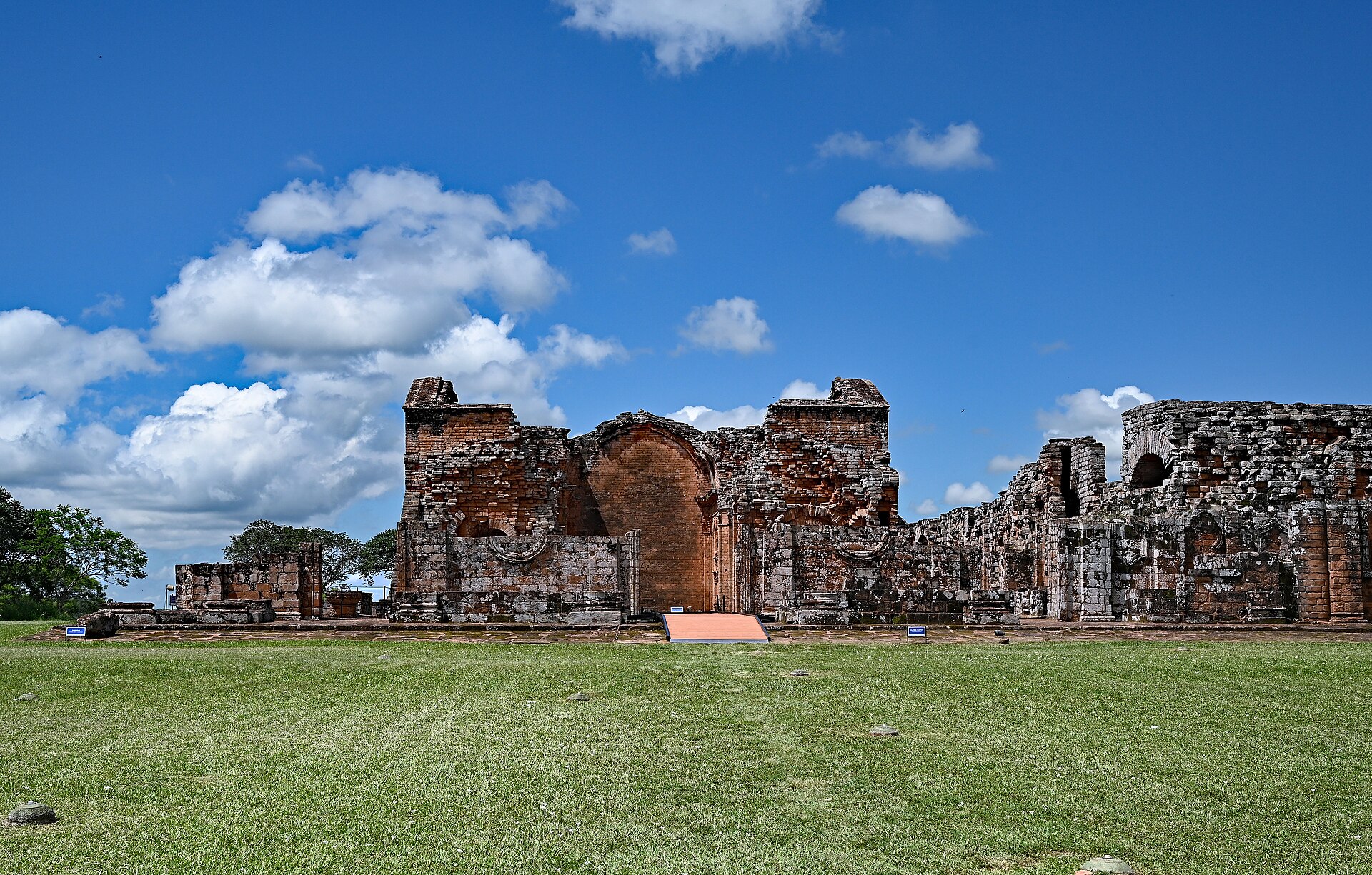
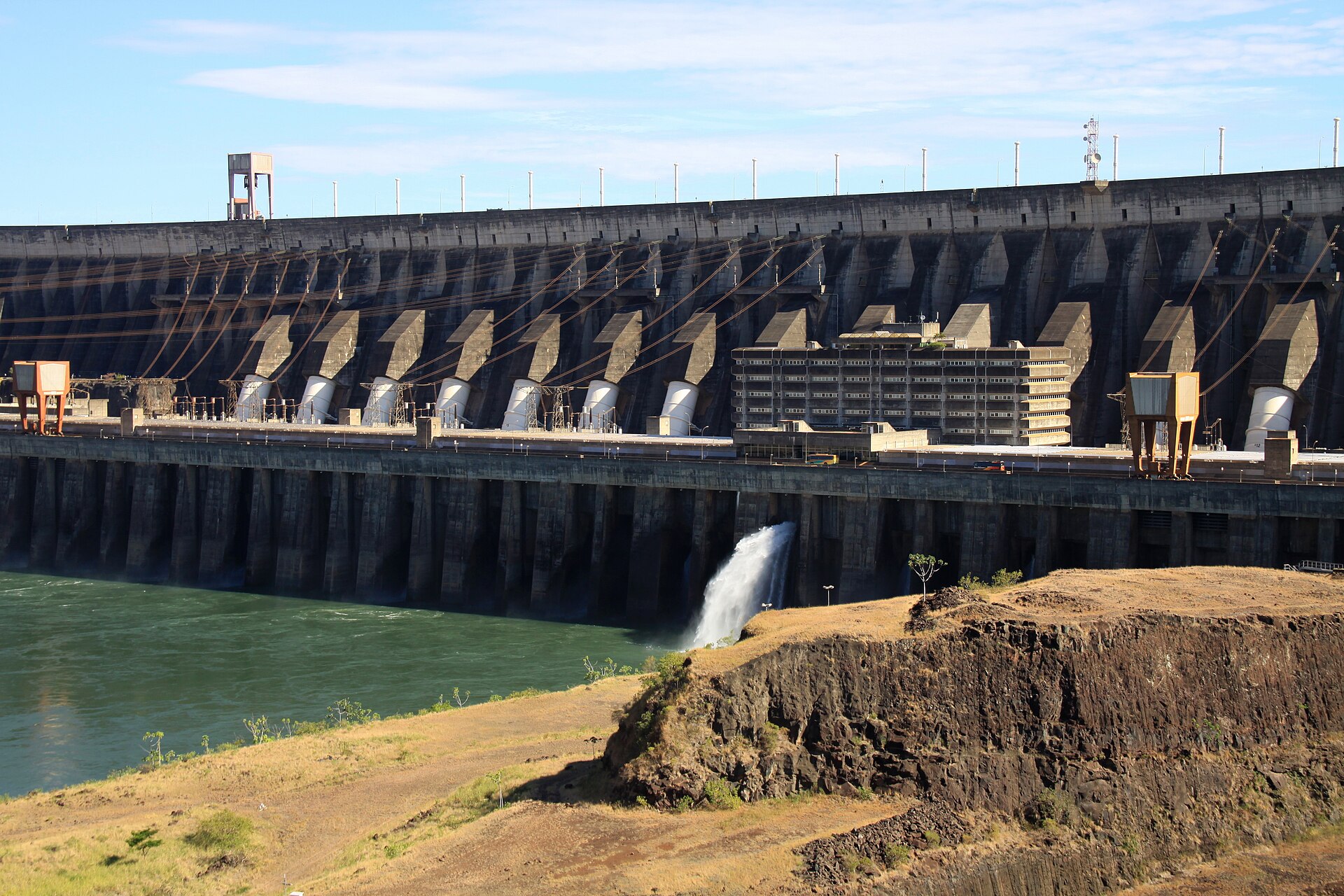
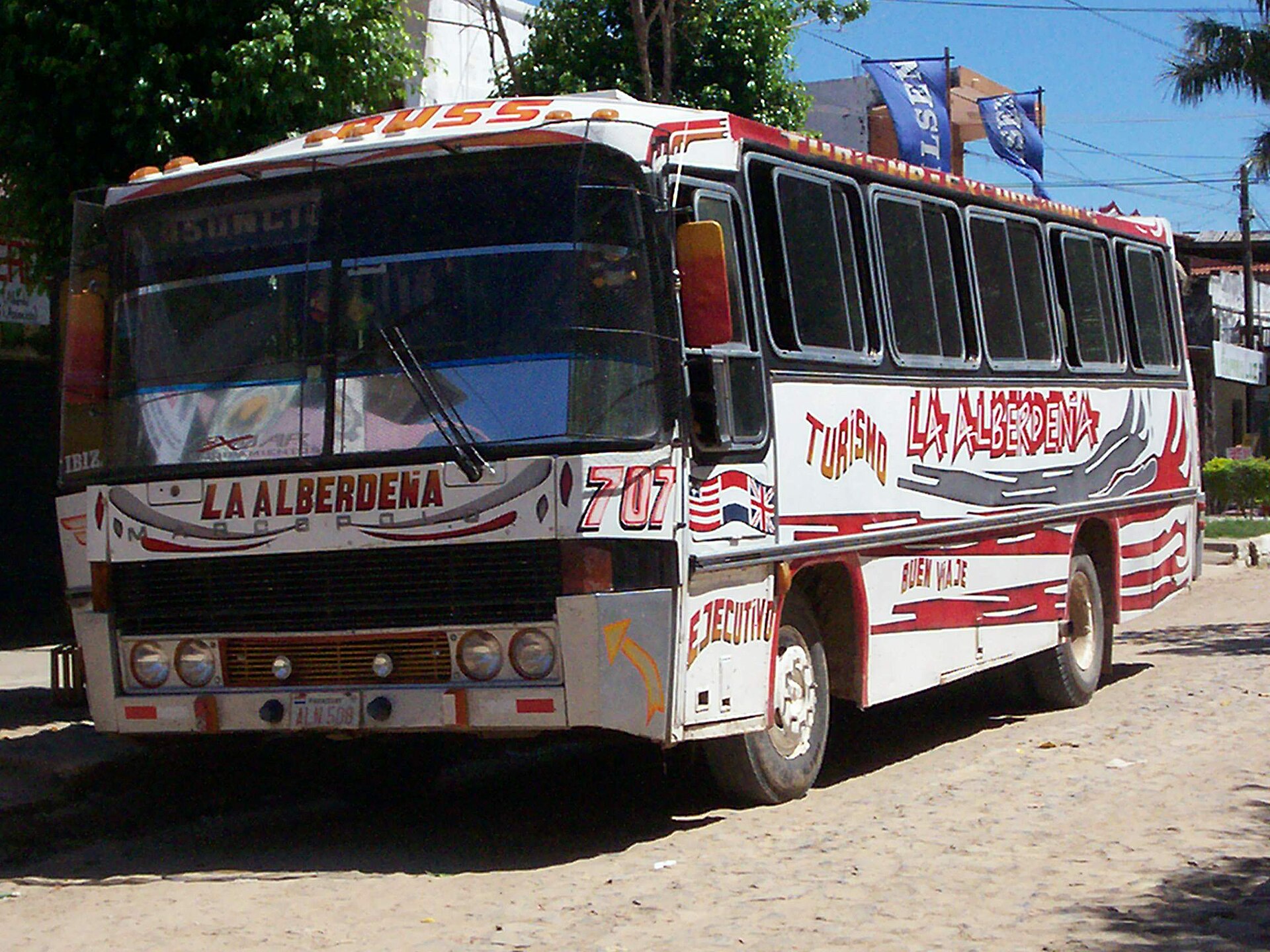
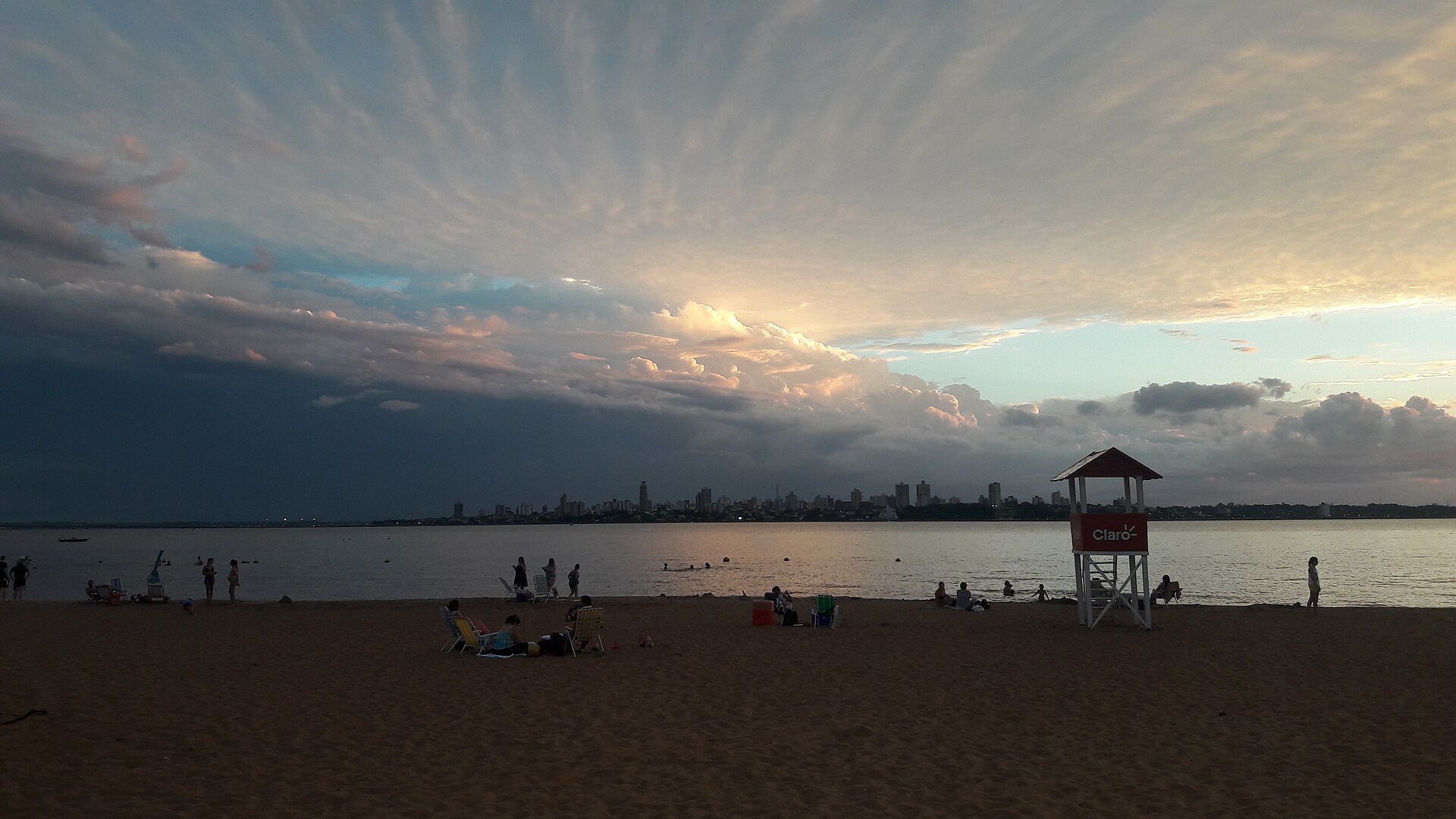
Almost everyone here is selling you something
Here's an honest warning about researching this country. Paraguay has a small advisory market and an enormous residency-sales market, and the second one wrote a large share of what you'll find online. Firms quote rules that died in 2022, promise judicial outcomes nobody can promise, and disagree with each other about fees. Check that anyone you hire is admitted to the Colegio de Abogados del Paraguay and has a real office in Asunción. These are the people in our network who touch a Paraguay file.

BKM Internacionmal Sociedad
Paraguay Relocation and Real Estate
BKM handles relocation and real estate in Paraguay, which is the useful pairing here. A lease or a title deed is the kind of documentary anchor the Supreme Court later reads as arraigo. Ask them to put the address in your own name from the start.
Learn more
Christine Reynolds
Paraguay Local Guide, Malaysia Local Guide
Christine Reynolds guides expats in Paraguay and also in Malaysia, which is a rarer pairing than it sounds. If you're weighing a South American base against an Asian one, she has stood in both.
Learn more

Somewhere to ask the dumb questions
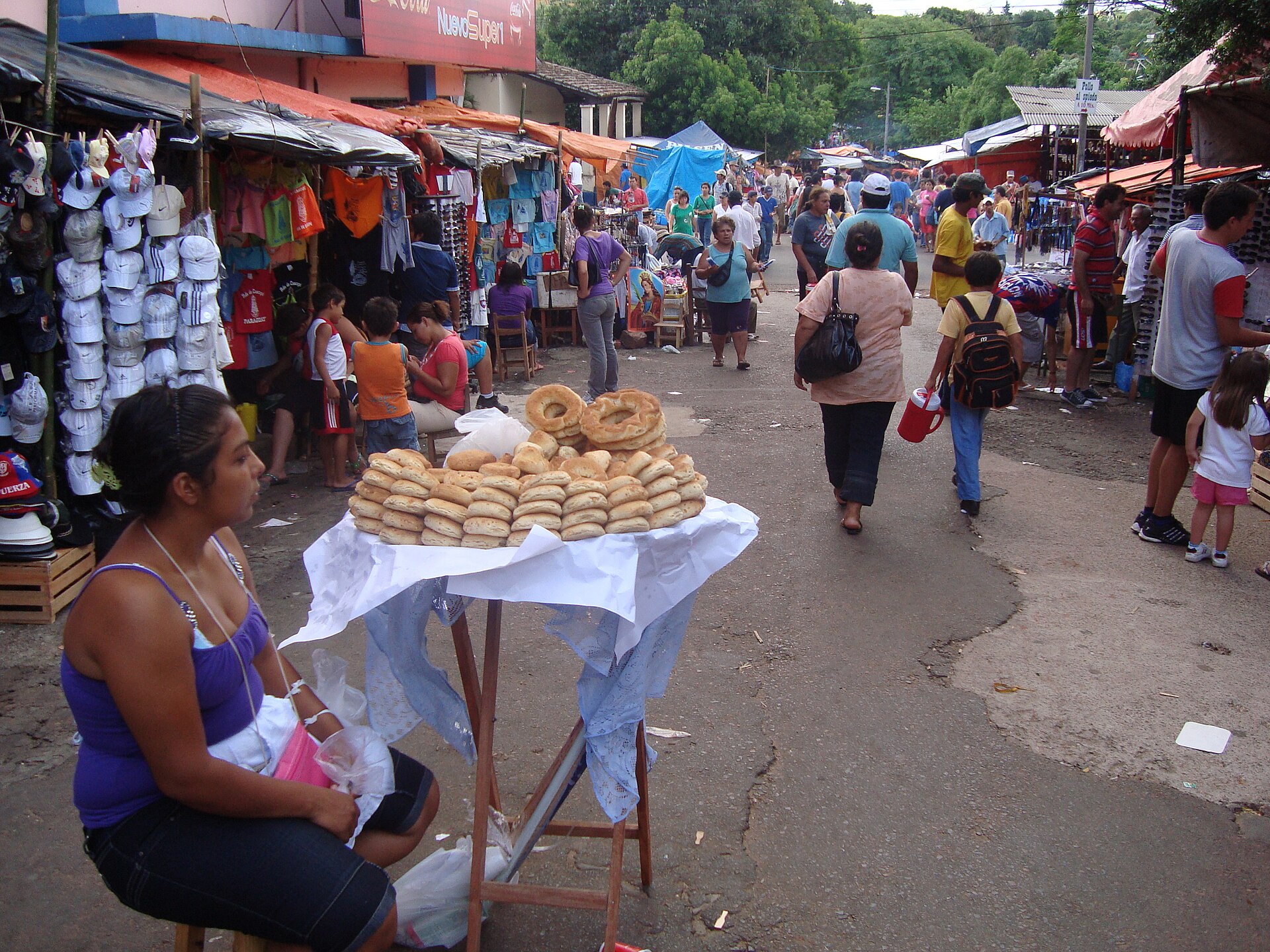
Paraguay
Expatsi Community
Paraguay's foreign community is young and small, and the biggest one by far is Brazilian, not American. That makes secondhand experience worth more than usual. Our Paraguay room is where people compare notaries, cédula wait times and neighborhoods.
Join the communityThe questions that come up first
Do you need to speak Spanish in Paraguay?
Yes, for anything official. English appears in a few hotels, international schools and private clinics and almost nowhere else. Paraguay is bilingual for real: Guaraní is co-official, and plenty of people move between the two languages inside a single sentence. You don't need Guaraní to live here, but the country is warmer to people who try a little of it.
Is Paraguay safe?
Paraguay holds a Level 1 rating from the State Department, which is as low as that scale goes. Five departments on the Brazilian border carry a Level 2 warning for crime: Alto Paraná, Amambay, Canindeyú, Concepción and San Pedro. In Asunción the everyday risk is theft rather than violence, and phones taken by riders on motorcycles are the standard story.
How much money do you need to live in Paraguay?
Our country data has a single person spending about $900 a month, a couple about $1,500 and a family about $2,400. A central Asunción one-bedroom lands near $400. Those figures assume you live locally rather than importing an American lifestyle. They also move with the exchange rate, which has run against dollar earners since 2025.
What is healthcare like in Paraguay?
Private care in Asunción is affordable and fast, with consultations around $20 to $50 and short waits for specialists. Public hospitals are open to anyone with ID but under-resourced, and families are sometimes asked to supply medicines. The social-security health system is tied to formal employment, so retirees buy private plans. Complicated treatment tends to mean flying to Brazil or Argentina.
Does Paraguay tax foreign income?
No. Paraguay taxes Paraguayan-source income only, under Law 6380/2019. Foreign pensions, foreign dividends and foreign rental income sit outside the tax base. Local personal-services income is taxed at 8 to 10 percent above a threshold of 80 million guaraníes a year. As an American you still file a US return regardless, because there's no tax treaty between the two countries.
How long does it take to get Paraguayan citizenship?
Longer than the headlines say. The constitution asks for three years of residence, but the Supreme Court counts them from the date you become a permanent resident. Add the two temporary years first and you're at five years before you can file, plus court processing. Naturalization is a judicial decision and includes an exam on Spanish or Guaraní, history and civics.
Is Paraguay a good place for Americans to live?
It suits a specific person. If you're paid from abroad, comfortable in Spanish and willing to spend real time in the country, Paraguay gives you a low cost base, no tax on foreign income and a clear road to a second passport. It's a poor fit if you need English, want an ocean, or expect a large ready-made American community. The foreign population here is mostly Brazilian.
How do you get residency in Paraguay in 2026?
Everyone on the standard route starts with a two-year temporary residency. There's no minimum income and no bank deposit. Between months twenty-one and twenty-four you convert it to a ten-year permanent card, and that conversion now needs documented proof you can support yourself. Investors putting $70,000 or more into a Paraguayan business can go straight to permanent residency.
Sources
Where these numbers come from
- Paraguay Travel Advisory, Level 1, issued 19 August 2026 · U.S. Department of State (checked 2026-09-18)
- Paraguay country information: health, roads, weather and entry · U.S. Department of State (checked 2026-09-18)
- Paraguay: taxes on personal income, reviewed February 2026 · PwC Worldwide Tax Summaries (checked 2026-09-18)
- Paraguay: VAT, property tax and social security rates · PwC Worldwide Tax Summaries (checked 2026-09-18)
- Principales resultados finales del Censo 2022 · Instituto Nacional de Estadística (checked 2026-09-18)
- Paraguayan guaraní exchange rate and history · Trading Economics (checked 2026-09-18)
- Dollar hits a five-year low as the guaraní surges · Asunción Times (checked 2026-09-18)
- Household survey on the languages spoken in Paraguay · Asunción Times (checked 2026-09-18)
- Moody's keeps Paraguay at investment grade · The Rio Times (checked 2026-09-18)
- Residency rules changed: income now decides · The Rio Times (checked 2026-09-18)
- Healthcare for foreign residents: IPS, public and private · The Rio Times (checked 2026-09-18)
- Citizenship and Article 148, with the constitutional text · Move to Paraguay (checked 2026-09-18)
- Internet speeds and providers, with Ookla figures for 2026 · Move to Paraguay (checked 2026-09-18)
- Permanent residency and Resolution DNM 407/2026 · GoParaguay (checked 2026-09-18)
- Cost of living by city, including rent and guarantor practice · Move to Paraguay (checked 2026-09-18)
- Demographics of Paraguay, including the Chaco share · Wikipedia (checked 2026-09-18)
- Miami to Asunción flight options · Google Flights (checked 2026-09-18)

Worth a look, or not your country?
Talk to an Expatsi advisor about your needs and where you want to go. We'll help you get there.
Why not you?