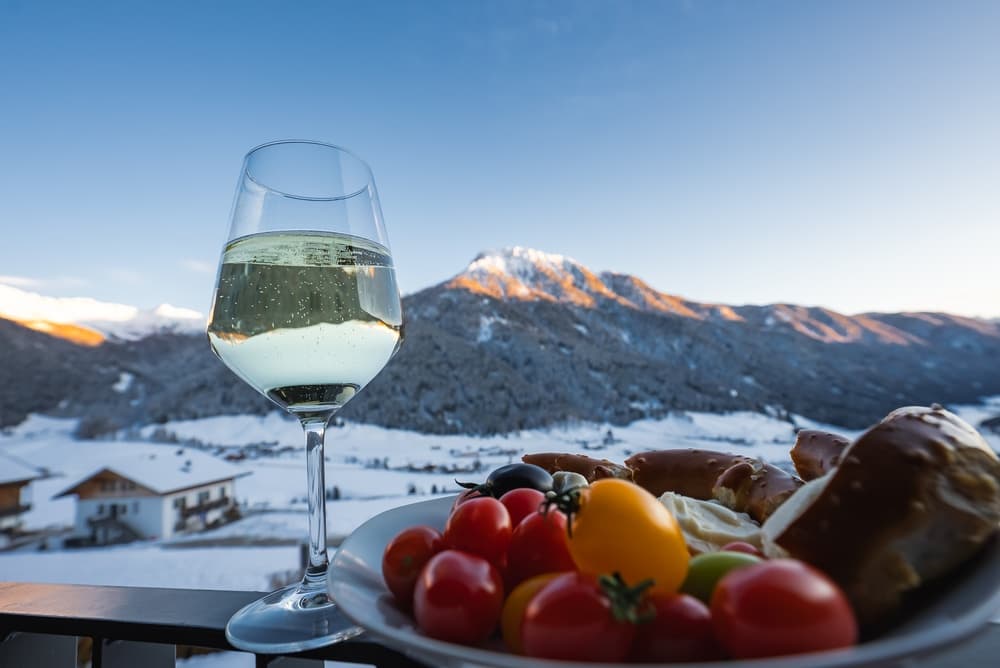
Living in the Dolomites: Bolzano as your base, the peaks as your weekend
South Tyrol is Italy's wealthiest province, run in two main languages, with ski lifts and hiking trails a bus ride from the city.
- 107,436
- Population
- $2,400/mo
- Monthly budget · single
- 55°F / 13°C
- Avg temperature
Plan on roughly $2,400 a month for one person living in Bolzano, the city most people end up in when they say they want to live in the Dolomites, and about $3,400 for a couple. A one-bedroom in the center rents for around $1,050, or about $850 farther out. All figures are U.S. dollars, as of 2026.
The Dolomites are a mountain range, not a town, so this guide uses Bolzano (Bozen in German) as its anchor: the provincial capital, home to about 107,000 people, with a hospital, a university and a station on the main rail line over the Brenner Pass. It suits hikers, skiers and climbers who still want city services, and people who'd enjoy living between Italian and German.
It's a harder fit if you want mild winters, an English-speaking circle, or a big expat scene. The foreign community here is small, and daily life runs in the two local languages.

Reviewed and updated October 1, 2026 · 3 min read
At a glance
$2,400
Monthly budget · single person
$1,050/mo 1-bed rent, center
86/100
Safety index
$30
Internet / month
55°Fannual average
Jan 36° · Jul 73°
Climate
107,436
Population
Expatsi estimates, updated Aug 2026, based on rental listings, government statistics, and local reporting.
Cost of living
What it costs to live in Dolomites
Single person
$2,000–$2,800/mo
about 25% below Austin, TX
Couple
$2,800–$4,000/mo
about 25% below Austin, TX
Family of four
$4,100–$6,500/mo
about 35% below Austin, TX
Compared with Austin, TX (Expatsi estimate, 2026).
- $19 −5%
- Inexpensive meal
- $850–$1,250/mo −46%
- 1-bed rent, center
- $700–$1,000/mo −37%
- 1-bed rent, outside
- $30/mo −54%
- Internet
- $483/sq ft −26%
- Buy price, center
Expatsi estimates, updated Aug 2026, based on rental listings, government statistics, and local reporting.
Daily life
How Dolomites lives
- C+ grade, 16th percentile among the cities we track
- Dining & cafésmodest
- C+ grade, 21st percentile among the cities we track
- Arts & culturemodest
- C+ grade, 23rd percentile among the cities we track
- Parks & outdoorsmodest
- C+ grade, 23rd percentile among the cities we track
- Schools & educationmodest
- C grade, 11th percentile among the cities we track
- Healthcare accessmodest
- B+ grade, 56th percentile among the cities we track
- Bike infrastructurestrong
- B- grade, 33rd percentile among the cities we track
- Public transittypical
- B- grade, moderate physical accessibility
- Accessibilitymoderate
Graded on OpenStreetMap amenity density relative to the 369 cities we track. Accessibility is the exception: it's graded against a fixed standard (terrain steepness and sidewalk surfaces), not a curve.
Climate
Weather through the year
Annual average 55°F (13°C) · 42 in of rain a year · Source: Open-Meteo Historical Weather API (temps: ERA5-Land 0.1°; precip/sunshine: ERA5 best-match; 1991-2020 normals)
On the ground
Scenes from Dolomites
Getting around
Transport in Dolomites
Bolzano's center sits on the flat valley floor, so many residents walk or bike for errands. Buses and regional trains across the province run as one network, südtirolmobil, with about 200 bus routes and 3,000 stops reaching all 116 municipalities. If you live here, skip single tickets: the network's own advice to residents is a Südtirol Pass, which comes in versions for students, people 65 and over, and families.
Trains on the Brenner line link Bolzano with Merano (Meran), Bressanone (Brixen) and Brunico (Bruneck) inside the province, Verona to the south, and Innsbruck to the north, about two hours away. For flights to the U.S., Munich and Innsbruck airports both have transfer shuttles into South Tyrol.
Do you need a car? In Bolzano, Merano or Bressanone, you can manage without one. In a village at the head of a side valley, check the bus timetable for your exact stop before you sign a lease, because winter evenings and Sundays are when a car starts to feel necessary.
- 8.0/sq mi
- Transit stops
- 8.1/sq mi
- Bike infrastructure
- 5.8/sq mi
- Wheelchair-accessible places
Mapped features per square mile from OpenStreetMap.
Keep exploring
Places like Dolomites
Community
Community & practical notes
Language: In the 2024 census, 57.6% of South Tyrol's residents declared German as their language group, 22.6% Italian and 3.7% Ladin. Bolzano itself flips that: Italian speakers are the majority in the city. In practice, Italian gets you through most of daily life in town, while German is what you'll hear in the villages and up the valleys. Public offices work in both, but plan on doing paperwork in one of them, not English.
Community: Americans are a small group here, and you won't find the organized expat scene of Rome or Milan. The province's economy leans on apples, tourism and engineering (Leitner, which builds cable cars, is based here), so local jobs cluster in those fields. Mountain clubs and sports are the easiest way into local life.
Healthcare: South Tyrol runs its own branch of Italy's public health system, the Azienda Sanitaria dell'Alto Adige (Südtiroler Sanitätsbetrieb). Once you're a legal resident, you register at your district's administrative office with your residence certificate, ID and Italian tax code, and choose a family doctor at the same visit. If you aren't working in Italy, ask about the annual fee for voluntary registration before you budget; many foreign residents also keep private coverage for faster specialist appointments.
Limited mobility: Bolzano is mixed. The old town has smooth stretches alongside bumpy cobblestones, and buses aren't consistently accessible, so wheelchair users often find a car the most reliable way around. The mountains can be easier than you'd expect in places: the cable car up to Alpe di Siusi is fully accessible, and the plateau has paved roads and barrier-free paths.
Remote work: Home internet runs about $30 a month. Italy's digital nomad visa is the legal route for people working remotely for clients or employers outside Italy.
Retirement: Bolzano works for active retirees who want a walkable city with hospitals close by and mountains for the summer. Winter is the trade-off: January averages highs near 45F and lows near 27F in the valley, and it's colder up the side valleys. Most retirees use Italy's elective residence visa, built for people living on pensions and investments. Compare retirement visa options and read our full Italy guide.
Housing
Renting and buying
- 1-bed rent (center)
- $850–$1,250/mo
- 1-bed rent (outside center)
- $700–$1,000/mo
- Buy price (center)
- $483/sq ft
- Buy price (outside center)
- $353/sq ft
Expatsi estimates, based on rental listings, government statistics, and local reporting.
Good to know
Frequently asked questions
Is Bolzano safe to live in?
Yes. Bolzano scores 86 out of 100 on the safety index we use, where higher means safer, and 14 on the matching crime index. As in any city, watch your bag at the train station and on crowded buses.
Where do people live when they move to the Dolomites?
Bolzano is the main city and the easiest base, with a hospital, a university and a station on the Brenner rail line. Other towns on the rail network include Merano, Bressanone and Brunico. Living in a smaller mountain village puts you closer to the trails and slopes but further from services.
How much does it cost to live in the Dolomites?
Using Bolzano as the benchmark, one person spends about $2,400 a month, with a typical range of $2,000 to $2,800. A couple spends about $3,400 and a family of four about $5,300. A one-bedroom apartment in the center rents for around $1,050 a month, or about $850 outside the center. Figures are in U.S. dollars, as of 2026.
Do you need a car to live in the Dolomites?
Not if you live in Bolzano, Merano or Bressanone. The province's bus and train network runs about 200 bus routes and 3,000 stops, and residents can buy a yearly Südtirol Pass. In small villages up the side valleys, a car makes winter evenings and Sundays far easier.
Do I need to speak German or Italian to live in the Dolomites?
You'll need at least one. In the 2024 census, 57.6% of South Tyrol's residents declared German and 22.6% Italian, but Italian speakers are the majority inside Bolzano. Italian covers most daily life in the city; German matters more in the villages. Government offices work in both languages, not English.
What is the weather like in Bolzano?
Warm summers and cold winters. July averages highs near 81F and lows near 63F, while January averages highs near 45F and lows near 27F. The valley gets about 42 inches of precipitation a year, and the mountain villages are colder than the city.
Can Americans retire in the Dolomites?
Yes. Most American retirees in Italy use the elective residence visa, which is meant for people living on passive income such as pensions and investments. Once you're a resident, you can register with South Tyrol's public health service and choose a family doctor. Expect long, cold winters in the valleys: January highs average about 45F in Bolzano.
See how Dolomites fits your life
Take the free Expatsi Test and compare Italy to over 100 countries on what actually matters: cost, healthcare, climate, and safety. About five minutes.
Why not you?