
Tulum: beach-town life among cenotes and ruins
A small Caribbean-coast town of about 33,000 people where remote workers and retirees trade big-city convenience for cenotes, white sand, and year-round heat.
- 33,374
- Population (2020)
- $2,100/mo
- Monthly budget · single
- 79°F / 26°C
- Avg temperature
Plan on about $2,100 a month in U.S. dollars for one person in Tulum, around $2,900 for a couple, and roughly $4,200 for a family. A one-bedroom runs about $1,000 in the center and around $650 outside it, which is a wide gap for a town this size. Rent near the pueblo's core or anywhere with beach access carries a heavy tourism premium, while a place a few blocks inland in Aldea Zama or the residential grids off the main avenue can cost far less.
Tulum suits remote workers who want warm weather and a laptop-friendly cafe scene, and semi-retired couples who prioritize nature over nightlife (though there is plenty of the latter). The town of about 33,000 people sits on Quintana Roo's Caribbean coast, surrounded by cenotes, Mayan ruins, and the Sian Ka'an biosphere reserve. Restaurants are everywhere, and an inexpensive local meal sets you back about $9.
The honest drawback: Tulum is a boomtown built faster than its infrastructure. Power and water outages happen, sargassum seaweed can blanket the beach from about May through October, and prices in the tourist zone climb to resort levels. If you come expecting a polished city, you'll be frustrated. If you come expecting a beach town still figuring itself out, Tulum delivers.
At a glance
$2,100
Monthly budget · single person
$1,000/mo 1-bed rent, center
50/100
Safety index
$25
Internet / month
79°Fannual average
Jan 75° · Aug 82°
Climate
33,374
Population (2020)
Expatsi estimates, updated Aug 2026, based on rental listings, government statistics, and local reporting.
Cost of living
What it costs to live in Tulum
Single person
$1,700–$2,500/mo
about 30% below Austin, TX
Couple
$2,400–$3,400/mo
about 35% below Austin, TX
Family of four
$3,300–$5,100/mo
about 45% below Austin, TX
Compared with Austin, TX (Expatsi estimate, 2026).
- $9 −55%
- Inexpensive meal
- $800–$1,200/mo −49%
- 1-bed rent, center
- $550–$750/mo −52%
- 1-bed rent, outside
- $25/mo −62%
- Internet
- $232/sq ft −64%
- Buy price, center
Expatsi estimates, updated Aug 2026, based on rental listings, government statistics, and local reporting.
Daily life
How Tulum lives
- B grade, 41st percentile among the cities we track
- Dining & caféstypical
- C grade, 15th percentile among the cities we track
- Arts & culturemodest
- B grade, 50th percentile among the cities we track
- Parks & outdoorstypical
- C+ grade, 24th percentile among the cities we track
- Schools & educationmodest
- B- grade, 27th percentile among the cities we track
- Healthcare accesstypical
- C+ grade, 24th percentile among the cities we track
- Bike infrastructuremodest
- C+ grade, 23rd percentile among the cities we track
- Public transitmodest
Graded on OpenStreetMap amenity density relative to the 298 cities we track. Accessibility is the exception: it's graded against a fixed standard (terrain steepness and sidewalk surfaces), not a curve.
Climate
Weather through the year
Annual average 79°F (26°C) · 46 in of rain a year · Source: Open-Meteo Historical Weather API (temps: ERA5-Land 0.1°; precip/sunshine: ERA5 best-match; 1991-2020 normals)
On the ground
Scenes from Tulum
Getting around
Transport in Tulum
Tulum has no formal city transit system. Day to day, people get around by bicycle, scooter, colectivo, and taxi. Colectivos are shared white vans that run constantly along Highway 307 between Tulum, Playa del Carmen, and points in between; you flag them down, pay in pesos, and hop off where you like. Within town, taxis are plentiful but unmetered, so agree on the fare before you get in. Quintana Roo legalized ride-hailing in 2023, but the local taxi union has kept Uber and DiDi out of Tulum in practice, so don't plan around them.
The pueblo itself is compact and flat, and many residents do most errands by bike. A dedicated bike path connects the town center to the beach road, a ride of roughly 15-20 minutes. The beach zone stretches for miles, though, so living on one end and socializing on the other means a lot of pedaling in the tropical heat.
For longer trips, the Tulum airport (opened in late 2023) has direct flights to several U.S. cities, while the Tren Maya train links Tulum to Cancun and the rest of the Yucatan. Both are recent, so service levels are still settling; the train station sits about four miles outside downtown.
A car is genuinely useful here, moreso than in most expat destinations within Mexico. Cenotes, ruins, and bigger-city errands all sit outside biking range. Plenty of residents get by with a bike plus occasional rentals, but families and anyone living outside the center usually end up buying a vehicle.
- 4.0/sq mi
- Transit stops
- 0.3/sq mi
- Bike infrastructure
- 2.2/sq mi
- Wheelchair-accessible places
Mapped features per square mile from OpenStreetMap.
Keep exploring
Places like Tulum
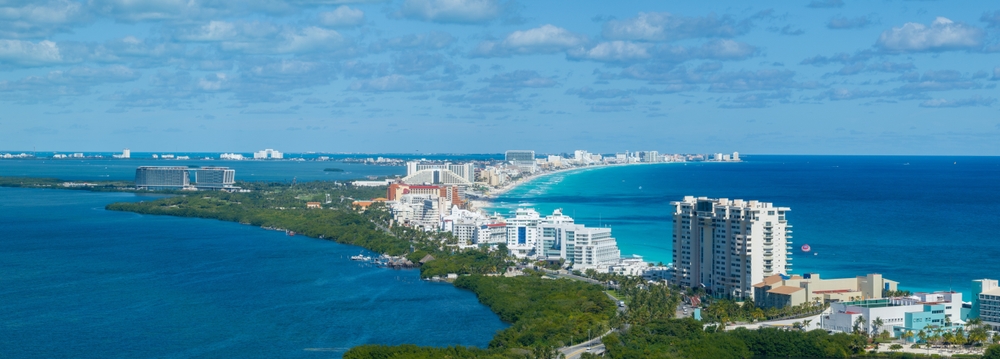
Riviera Maya
Mexico
$2,100/mo
 Coming soon
Santo Domingo
Dominican Republic
2.2M people · $2,100/mo
Puerto Vallarta
Mexico
224.2K people · $2,300/mo
 Coming soon
Sharjah
United Arab Emirates
1.2M people · $2,200/mo
Canggu
Indonesia
7.1K people · $2,100/mo
Belize City
Belize
64K people · $1,900/mo
Community
Community & practical notes
Community: Tulum's foreign population is large relative to the town itself and skews younger than most Mexican expat hubs: remote workers, yoga and wellness people, and hospitality entrepreneurs, with a steady rotation of digital nomads passing through. English is widely spoken in the tourist economy, and Facebook and WhatsApp groups are the main channels for housing and advice. The flip side of the transience is that building a stable friend circle takes deliberate effort. Learning Spanish connects you to the town beyond the expat bubble.
Healthcare: Tulum has a private hospital with 24-hour emergency care, plus clinics, pharmacies, and a public health center. The limit is depth rather than absence: for anything complex, residents drive to Playa del Carmen (about an hour) or Cancun (about two hours), where the private hospitals are far bigger. Most newcomers carry private insurance and pay cash for small visits, since American coverage stops at the border. Legal residents can enroll in public IMSS, though most expats treat it as a backup.
Limited mobility: Mexican law prohibits disability discrimination but, as the State Department puts it, is not enforced consistently, and it names sidewalks, intersections, and public transportation among the usual gaps. Tulum shows all three. The flat terrain is the one real advantage, and residents who need step-free access generally solve it with a car or a standing arrangement with a driver rather than counting on the street grid. Tour a neighborhood in person before signing a lease.
Remote work: Internet runs about $25 a month, and fiber reaches the town center and newer developments like Aldea Zama, though outages tied to the power grid are a known annoyance. Coworking spaces and work-friendly cafes are easy to find. Local hiring is almost entirely tourism and hospitality, so nearly every American here brings a U.S. income with them.
Retirement: Mexico's temporary resident visa is the usual route. You qualify on income or on savings, one test or the other rather than both. The income bar sits well above a typical Social Security check, so a lot of retirees qualify on the savings side instead. Thresholds reset every January and each consulate sets its own requirements, so confirm with yours before your appointment. After four years, you can convert to permanent residency or qualify directly with higher savings. Start with our overview of retirement visa options and the full Mexico guide.
Housing
Renting and buying
- 1-bed rent (center)
- $800–$1,200/mo
- 1-bed rent (outside center)
- $550–$750/mo
- Buy price (center)
- $232/sq ft
- Buy price (outside center)
- $172/sq ft
Expatsi estimates, based on rental listings, government statistics, and local reporting.
Good to know
Frequently asked questions
Is Tulum wheelchair accessible?
Only partly. The terrain is flat, which helps, but sidewalks are uneven and often disappear outside the center, and newer developments have sandy or unpaved streets. There is no accessible public transit, so taxis or a private car do the work, and the beach zone and cenotes are hardest to reach.
Do I need a car in Tulum?
Not strictly, but it helps more than in most Mexican expat towns. The center is flat and bikeable, colectivo vans cover the highway to Playa del Carmen, and taxis fill the gaps. But there's no formal city transit, and cenotes, ruins, and big-box shopping sit outside biking range, so many residents eventually buy a car.
What is the weather like in Tulum?
Hot and humid year-round, with an annual average of about 79°F (26°C) and roughly 46 inches (1,158 mm) of rain a year, most of it falling from late spring through fall. There is no winter to speak of. Hurricane season runs June through November, and sargassum can pile up on beaches in the warmer months.
Can I retire in Tulum?
Yes, and many Americans do, usually on a temporary resident visa that converts to permanent residency after four years. You qualify on either income or savings rather than both, and the income bar is higher than most retirees expect, so many use the savings route. Complex medical care means a trip to Playa del Carmen or Cancún.
How do I move to Tulum from the US?
Americans can stay as visitors up to 180 days per entry at immigration's discretion, which is how many people test the town first. To live there long term, apply for a temporary resident visa at a Mexican consulate in the U.S. by showing income or savings, then finish the process in Mexico. Most people arrive with a short-term rental booked and find a lease locally.
How much does it cost to live in Tulum?
Budget about $2,100 a month for a single person, around $2,900 for a couple, and roughly $4,200 for a family. A one-bedroom averages about $1,000 in the center and around $650 outside it. An inexpensive restaurant meal is about $9, and internet about $25 a month.
Is Tulum safe for Americans?
Tulum scores 50 on the safety index, a middle-of-the-road result. The State Department puts Quintana Roo at Level 2, exercise increased caution, and notes that shootings between rival gangs have injured and killed bystanders. It advises paying attention after dark and staying on well-lit streets and in tourist zones. Most crime affecting foreigners is theft.
How is healthcare in Tulum?
Tulum has a private hospital with 24-hour emergency care, along with clinics and pharmacies, but specialist depth is limited. Residents go to the larger private hospitals in Playa del Carmen or Cancún for anything complex. U.S. Medicare does not pay for care in Mexico, and most hospitals will not bill an American insurer.
See how Tulum fits your life
Take the free Expatsi Test and compare Mexico to nearly 200 countries on what actually matters: cost, healthcare, climate, and safety. About five minutes.
Why not you?