Czechia country guide
Czechia for Americans: how the move works in 2026
Safe streets, four seasons and a central spot in Europe, with a catch: no retirement visa and plenty of notarized paperwork. Here's which route fits your income, what it costs, and who can help.
Checked in September 2026 against this year's nomad income floor, embassy fees and self-employed minimums, with every koruna figure converted to dollars.

Reviewed and updated September 27, 2026 · 12 min read

01 · Is Czechia for you
A safe, affordable base in the middle of Europe, with a lot of forms
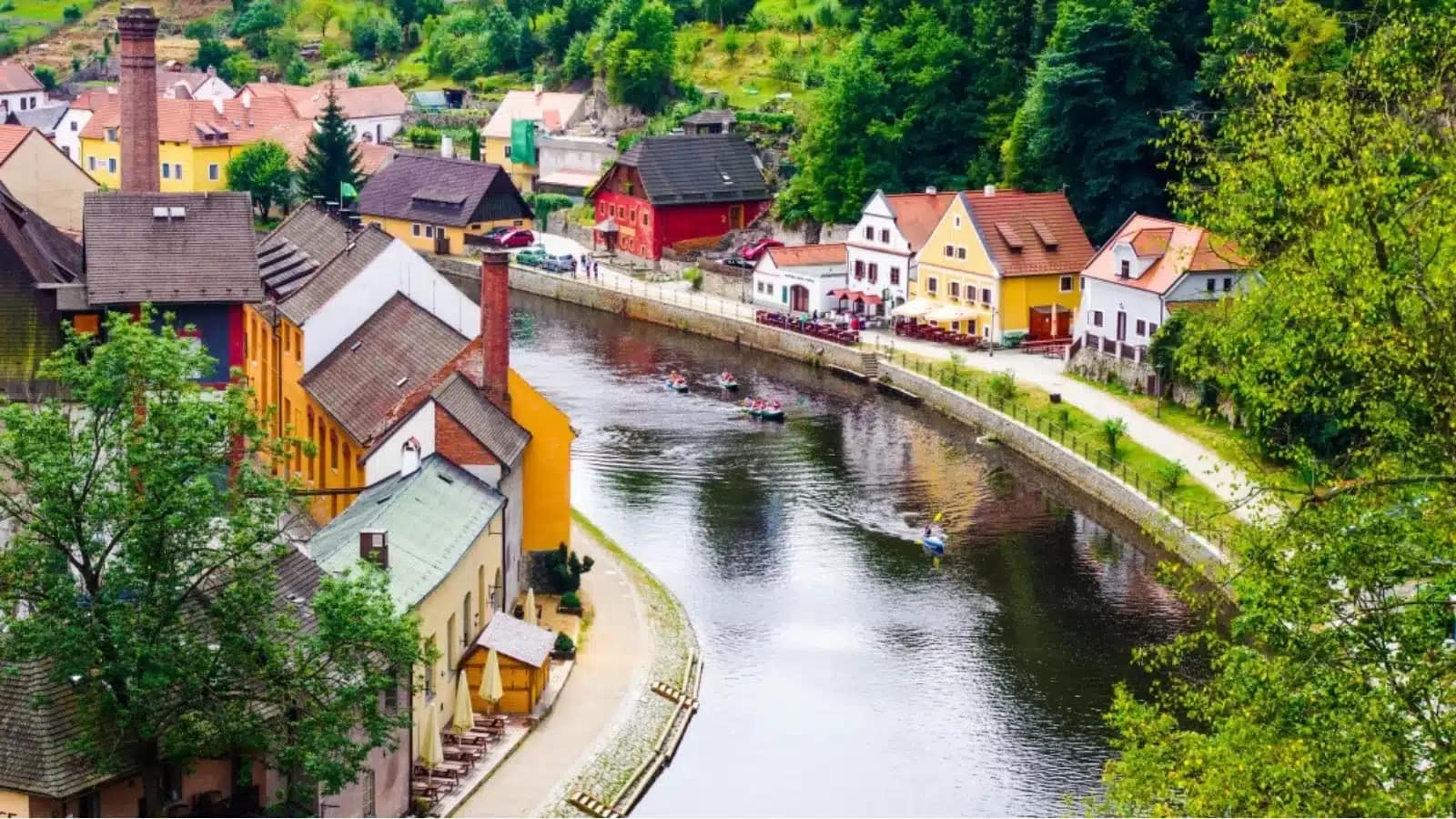
Czechia (you'll still hear "Czech Republic") pulls in Americans who want Europe without Western European prices. It's a landlocked country of about 10.5 million people in the middle of the continent, with Prague as the capital and Brno as the second city.
Safety comes up first, and the rankings back it up. Czechia placed 11th of 163 countries in the 2025 Global Peace Index, ahead of every neighbor except Austria. In daily life, that means walking home after dark without a second thought.
Money is the second draw; the next section puts dollar figures on it. You'll also get four real seasons, plus forests and river towns within easy reach of the capital.
English goes further than people expect. Czechia ranks 23rd on the EF English Proficiency Index, with a score of 582, though speaking is its weakest skill. In Prague and Brno you'll get by in English at cafes, clinics and co-working spaces. At the Foreign Police counter or in a village, you won't.
Freelancers have a route built for them, too. The trade license, the živnostenský list or simply "živno," lets self-employed people run a Czech business and hold residence on it. And Czech law has allowed dual citizenship since 2014, so an American who naturalizes keeps the U.S. passport. Prague sits six hours ahead of the East Coast for most of the year.
Who should look elsewhere
Here's the catch: Czechia has no retirement visa. Retirees can get in, but through a general "other purposes" visa that asks a Czech person or organization to vouch for why you're there. If you want a plain income-based retiree visa, Portugal's D7 is simpler.
If you'd need a Czech paycheck, run the numbers first. The 2026 minimum wage is 22,400 koruna a month, about $1,050 before tax. Czechia works best when your income comes from outside the country.
The process runs on notarized paper. Leases need notarized signatures, U.S. documents need apostilles that can take months, and visa applications go in person at a Czech embassy or consulate in the U.S., followed by a 90 to 120 day wait.
And winters are long and gray. Our climate data shows an average temperature around 48°F and roughly 170 sunny days a year.
None of that rules most people out. It just means planning a few months further ahead than you'd like.
- Cost of living (single)
- $1,800/mo
- Safety index
- 75/100
- English proficiency
- 70/100
- Internet speed
- 100 Mbps
- Currency
- Czech koruna (CZK)
- Capital
- Prague
02 · Costs
Monthly costs in Czechia, in dollars
$1,800
Monthly budget, single
all in, comfortable
$2,800
Monthly budget, couple
all in, comfortable
$4,600
Monthly budget, family
housing included
$850
Rent, 1-bed city center
$700 outside the center
$10
Inexpensive meal out
simple sit-down meal
$26
Monthly transit pass
trams, metro and buses
$22
Home internet, monthly
about 100 Mbps
75/100
Safety index
low crime
Where the money goes, and the costs the visa adds

Our cost figures are in U.S. dollars as of 2026. The couple's number, about $2,800 a month, covers rent, food, transport, utilities and a normal social life. Prices are set in koruna, though, so your dollar costs move with the exchange rate. In September 2026, a dollar bought about 21.4 koruna.
Rent is the number to watch
A one-bedroom in a city center averages about $850, and about $700 further out. Housing is tightest in Prague and Brno; it matters twice because your visa file needs proof of accommodation. A short-term rental won't count. The landlord signs a notarized confirmation or you show a lease, and the documents have to be in Czech. Line up a real place before your embassy appointment, not after.
Insurance comes on top
Unless a Czech employer insures you, you'll carry private comprehensive health insurance for foreigners until you reach permanent residence. For an adult, expect about $700 to $1,300 a year (15,000 to 28,000 koruna), and more for applicants over 60 or so, who may also face a medical exam.
So does proof of funds
For most long-term visas you show 15 times the Czech existence minimum for your first month (46,950 koruna) plus 6,260 koruna for each month after. A full year works out to about $5,400 (115,810 koruna). Business visas ask for a flat 156,500 koruna, about $7,300.
And freelancers pay monthly minimums
On a trade license, the minimum social security advance in 2026 is 5,720 koruna a month, about $268, whether or not it was a good month.
The money is rarely the hard part
A year's stay on most long-term visas means showing about $5,400 in the bank, less than two months of a couple's budget here. The nomad route asks for about $3,450 a month in income. For Americans with savings, what decides the move is fitting your income into one of a few specific routes, each with its own rules about who qualifies.
03 · Visas
Which Czech visa fits: nomad, živno, other purposes, or a job

Every route below starts at a Czech embassy or consulate in the U.S. Don't plan on filing from a neighboring country: since January 2026, the Czech consulate in Dresden has taken no standard Employee Card or business visa applications.
Remote workers in IT or marketing: the Digital Nomad Program
Czechia's nomad route is narrow. It's open to citizens of a short list of countries, the U.S. included, doing highly qualified IT or marketing work, either as a remote employee of a foreign company or as a freelancer with a Czech trade license. For May 2026 through April 2027 you need at least 73,823 koruna a month, about $3,450, which is 1.5 times the Czech average wage. The figure resets every May.
The Ministry of Industry and Trade reviews you first and has 45 days to do it. Then you apply at the embassy for a long-term visa good for up to a year, and extensions require an integration course. Your spouse and kids can be included. Two cautions: there's no legal right to a spot, and the program runs on an annual quota of 2,000 applications that the government has discussed raising. If your work isn't IT or marketing, this route isn't for you.
Freelancers and small businesses: the trade license (živno)
The živno is the route for self-employed people: English teachers, writers, designers, consultants. You register a trade license, then apply for a long-term visa for business. Expect to show 156,500 koruna (about $7,300), a notarized accommodation confirmation, travel medical insurance, a criminal history affidavit, and your trade registration. The Washington embassy charges $240, interviews you in person, and quotes 90 to 120 days; you also need to be in the U.S. when the visa is issued. Applicant guides suggest bringing letters of intent or contracts from at least two clients, and put the whole process at four to five months.
Once you land, you have three business days to register with the Foreign Police. Before the visa runs out (it lasts up to a year), you apply in Czechia for a long-term residence permit for business: valid up to two years, 2,500 koruna (about $117), decided within 60 days, and it needs comprehensive health insurance. From then on, you're running a small Czech business with monthly social security advances and annual tax returns.
Retirees and passive income: the "other purposes" visa
There's no Czech retirement visa. Retirees usually apply for a long-term visa for other purposes (purpose code 99). It needs proof of funds (about $5,400 for a year), notarized accommodation, travel medical insurance, and the tricky part: either an invitation approved by the Foreign Police or a notarized affidavit from a Czech person or organization describing why you're staying. The Washington embassy fee is $120, processing runs 90 to 120 days, and the embassy can't speed it up because the ministry decides. For a longer stay you then apply for a long-term residence permit inside Czechia. This route works best if you have a real Czech connection, like family or a partner there. Married to a Czech citizen or resident? Family reunification is its own route.
Hired by a Czech company: the Employee Card
The Employee Card combines work and residence for a job with a Czech employer, valid up to two years. Filed from the U.S., it costs $240 at the Washington embassy, and the ministry has 60 days to decide, or 90 in complicated cases. You can change jobs by reporting it, and if a job ends you get 90 days to find another or switch status. It's also the route that puts you in the public health system, since Czech employers insure their staff.
Students
Studying in Czech at a public university is free for every nationality. English-taught programs run from free to $22,350 a year, and the student visa is $120 at the Washington embassy.
Where these routes lead
After five years of continuous residence you can apply for permanent residence: a 2,500 koruna fee plus the Czech A2 exam, which costs 3,200 koruna (about $150). The free exam vouchers ended in August 2023, and applicants over 60 are exempt. Citizenship comes after five years of permanent residence, with B1 Czech, a civics test, three years of income records and a 2,000 koruna fee. That's a ten-year project at minimum, but you don't give up your U.S. passport at the end.
Digital Nomad Visa
For U.S. employees and freelancers in IT or marketing
A long-term visa of up to a year after the Ministry of Industry and Trade signs off. Your spouse and kids can be included.
- Valid passport
- Proof of remote work for non-Czech employer
- Monthly income of at least €3,500
Long-term Residence Permit
The permit a long-term visa turns into
Filed inside Czechia before your long-term visa expires, valid up to two years and renewable. Freelancers switch to it after the business visa.
- Valid passport
- Long-term visa (if applicable)
- Purpose of stay documentation
04 · Day to day
Healthcare, taxes, money, driving and pets

The pieces of Czech life that catch Americans off guard, and who can help with each.
Healthcare
Czechia has public health insurance, but many newcomers can't join it at first. You're in if you work for a Czech employer or once you hold permanent residence. Everyone else, freelancers on a trade license included, buys comprehensive insurance for foreigners until permanent residence. It must cover at least about $456,000 (€400,000) per event, with no co-payment. Our healthcare data rates care quality at 80 out of 100. If you're older or managing a condition, talk to our healthcare coach Hunter Schultz before you pick a policy, and ExpatInsure can walk you through international plans.
Taxes
Once you're a Czech tax resident, Czechia taxes your worldwide income: 15% up to 1,762,812 koruna a year (about $82,500) and 23% above that. The U.S. taxes you too, as a citizen, wherever you live. A U.S.-Czech income tax treaty signed in 1993 and the usual foreign tax credits keep most people from paying twice, and a separate Social Security agreement means you pay into one system rather than both. If you collect U.S. Social Security, Treasury pays it to you in Czechia every month. MyExpatTaxes handles the U.S. return from abroad, and Beacon Global Advisors keeps 401(k)s and IRAs working once you've left.
Money
Czechia uses the koruna (CZK), not the euro, so every price in this guide moves with the exchange rate. Your visa file also needs funds sitting in an account, which makes the conversion rate matter early. Moneycorp can move dollars into koruna and lock a rate ahead of time.
Driving
A U.S. license plus an International Driving Permit (from AAA, renewed every year) covers a short visit. Once you live there, the U.S. Embassy says you need a Czech license, which means passing the Czech driving test. There's no simple swap.
Pets
Dogs and cats need an ISO microchip before their rabies shot, a wait of at least 21 days after a first vaccination, and an EU health certificate endorsed by the USDA. Starwood Pet Travel handles that paperwork trail for you.
One new rule
In 2026 Czechia added a three-strikes rule: three finalized administrative offenses within a year can cost a foreigner their residence permit. Pay the fines and keep your registrations current.
Figures checked in September 2026
Czech thresholds move on a schedule. The nomad income floor resets every May, self-employed minimums every January, and the EU's ETIAS travel authorization is expected to start in the last quarter of 2026. Dollar figures use the Czech National Bank rate from September 2026 (21.359 koruna per dollar). Confirm current numbers with a licensed professional before you file anything.
05 · Where to live
Picking a base: the capital or a smaller city
Most Americans take their first look at Prague, the capital and the biggest city. Brno, the second city, is a university town with a younger feel, and EF's English index scores it above the capital. Beyond those two, smaller cities trade some English for lower rents and faster access to hills and forests.
Wherever you land, the visa rule shapes the search: you need a long-term lease or a notarized accommodation confirmation, so choose your city before you file, not after. Our city guides cover neighborhoods, monthly costs and climate for each place.
Czech city guides

Prague
The obvious first stop
The capital is where most Americans start: Vinohrady and Žižkov for neighborhood cafes, a tram and metro system that makes a car pointless, and the most English-language work, coworking and expat services in the country. The catch is rents that have climbed well past the rest of Czechia, plus tour crowds around the Old Town.
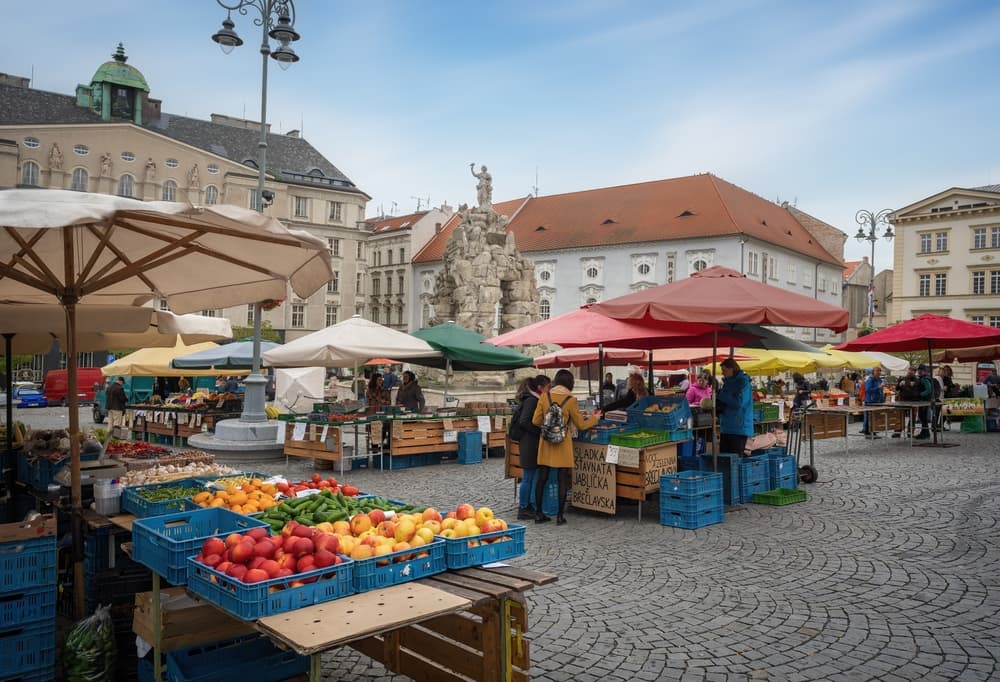
Brno
Second city, student energy
Czechia's second city is a university town with a walkable center, wine country to the south, and direct trains to Prague and Vienna. It has a real tech and research scene and noticeably easier rents than the capital. The catch is a smaller expat community and fewer English-language jobs.
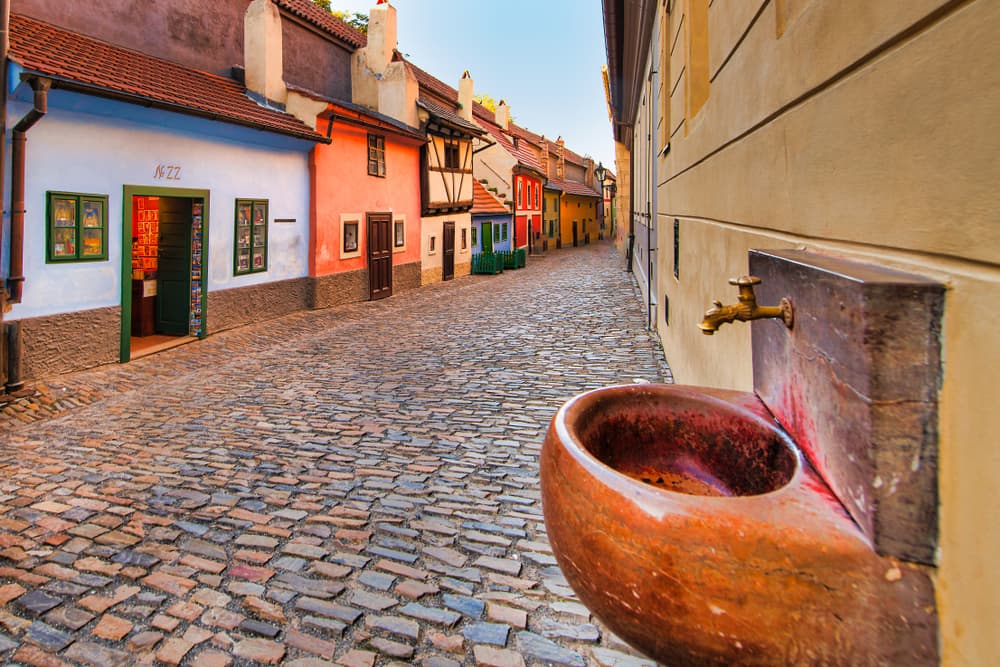
Plzeň
Pilsner town, quiet pace
Home of Pilsner Urquell, with a huge square under a Gothic cathedral spire and a manageable city feel, an easy train ride from Prague. Good for people who want calm, cheap and Czech. The catch is that English is limited outside a few cafes and the university, so it rewards learning some Czech.
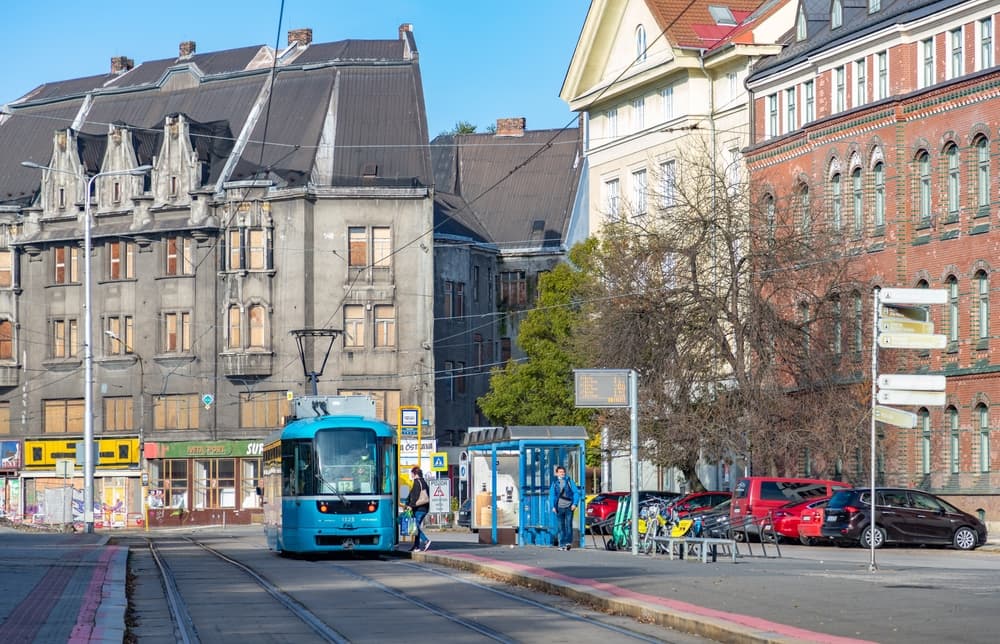
Ostrava
Reinvented industrial city
A former coal and steel city that has remade itself, with the Dolní Vítkovice ironworks turned into a venue, the Colours of Ostrava festival in summer and the Beskydy mountains close by. Rent is a fraction of Prague's. The catch is a grayer, rougher feel and very few expats.
06 · Your move team
Your Czechia move team
Czech immigration rewards getting the paperwork right the first time, because every resubmission means another trip to the embassy and another 90-day wait. These are the people we trust with the pieces that trip Americans up: settling in, insurance, taxes, currency, pets, shipping and the culture shift.
Start with Thais Silva, our local guide in Czechia, then add whoever fits your situation.

Thais Silva
Czech Republic Local Guide
Brazilian-born and living in Czechia since 2020, Thais brings more than 14 years in HR and coaching, plus a decade as an expat in the Netherlands. She helps you decide whether Czechia fits, then settle in and build a social life once you arrive.
Learn more
Hunter Schultz
Healthcare Coach
A healthcare coach with more than 20 years of expat living and a background in air medical transport. His one-hour consultation maps out a care plan for your destination country, using benchmarks drawn from the White House Medical Unit.
Learn more
ExpatInsure
Global Health Insurance
Andy Seale and Stephanie Edwards's team matches Americans moving abroad with international health insurance plans and explains the options before you commit.
Learn more
MyExpatTaxes
U.S. Expat Tax Service
Tax software built for Americans abroad, e-filing U.S. returns since 2018. It handles your U.S. filing from Czechia without a big-firm CPA bill.
Learn more
Beacon Global Advisors
Financial Planning
Wealth management for U.S. citizens living overseas: keeping 401(k)s, IRAs and investment accounts reachable and compliant with both countries after you move.
Learn more
Moneycorp
Currency Exchange
Kelly Cutchin's team at this 1979-founded FX firm converts dollars to koruna at better-than-bank rates, assigns you a dedicated specialist, and can lock a rate for up to two years.
Learn more
Starwood Pet Travel
Pet travel and transport
International movers for dogs and cats. They take care of health certificates, USDA endorsements, crate rules and airline bookings from start to finish.
Learn more
Culturosity Co.
Cultural Skills Coach
Jennifer and Janka run intercultural coaching and group workshops built on research-backed cultural frameworks, so you adjust faster to a new country's unwritten rules.
Learn more
International TEFL Academy
TEFL Instruction, Certification
A Chicago TEFL school founded in 2010, offering certification courses online or in person plus lifetime job assistance. Worth a look if you plan to teach English in Czechia on a trade license.
Learn more
Aqua Moving Services
Worldwide Shipping and Moving Service
Part of the Clearview Group. One survey of your belongings produces three quotes from vetted international movers, so you can compare prices before shipping anything overseas.
Learn more07 · Common questions
Moving to Czechia: frequently asked questions
How much does it cost to live in Czechia?
Expatsi's 2026 cost data puts a comfortable budget at about $1,800 a month for a single person, $2,800 for a couple and $4,600 for a family, all in. A one-bedroom apartment in a city center averages about $850 a month. Add private health insurance of roughly $700 to $1,300 a year per adult if you aren't employed by a Czech company.
Can I keep my U.S. citizenship if I become a Czech citizen?
Yes. Czech law has allowed dual citizenship since 2014, so Americans don't have to give up U.S. citizenship to naturalize. Non-EU applicants need at least five years of permanent residence, which itself comes after five years of continuous residence, plus B1-level Czech, a civics test, income records for the prior three years and a 2,000 koruna fee.
Can Americans move to Czechia?
Yes. Americans staying longer than 90 days need a Czech long-term visa, applied for in person at a Czech embassy or consulate in the U.S. The main routes are the Digital Nomad Program for IT and marketing workers, a trade license (živno) for freelancers, the long-term visa for other purposes that retirees usually use, the Employee Card for jobs with Czech employers, and student visas. The Washington embassy quotes 90 to 120 days to process business and other-purpose visas as of September 2026.
Do Americans living in Czechia pay Czech taxes?
Czech tax residents pay Czech income tax on their worldwide income: 15% up to 1,762,812 koruna a year (about $82,500) and 23% above that. Americans still file U.S. returns. A U.S.-Czech income tax treaty and foreign tax credits help prevent double taxation, and a U.S.-Czech Social Security agreement means you pay into only one country's system.
Does Czechia have a retirement visa?
No. Czechia has no dedicated retirement visa. Retirees usually apply for a long-term visa for other purposes, which requires proof of funds (about $5,400 for a one-year stay in 2026), notarized accommodation, travel medical insurance, and either a Foreign Police-approved invitation or a notarized affidavit from a Czech person or organization explaining the stay. Others use a trade license or family reunification.
How much income do I need for the Czech digital nomad visa?
For May 2026 through April 2027, the Czech Digital Nomad Program requires at least 73,823 koruna a month, about $3,450. The floor is 1.5 times the Czech average wage and resets every May. The program is limited to highly qualified IT or marketing work and to citizens of a short list of countries that includes the United States.
Is healthcare free for foreigners in Czechia?
No. Foreigners generally join Czech public health insurance as employees of Czech companies or as permanent residents. Others, including freelancers on a trade license, must buy comprehensive health insurance for foreigners covering at least €400,000 (about $456,000) per event. For an adult that typically costs 15,000 to 28,000 koruna a year, about $700 to $1,300, and older applicants pay more.
How long does a Czech long-term visa take to get?
The Czech embassy in Washington quotes 90 to 120 days for business and other-purpose long-term visas, counted from receipt of a complete application. Appointments are given within 30 days, the application is filed in person, and you must be in the U.S. when the visa is issued. Digital nomads first need Ministry of Industry and Trade approval, which takes up to 45 days.
Sources
- Digital Nomad Program · Czech Ministry of Industry and Trade (checked September 2026)
- Czech Digital Nomad Visa guide (2026 income floor) · Move To Prague (checked September 2026)
- Business Visa · Embassy of the Czech Republic in Washington (checked September 2026)
- Visa for Other Purposes · Embassy of the Czech Republic in Washington (checked September 2026)
- Visa Fees · Embassy of the Czech Republic in Washington (checked September 2026)
- Proof of funds for the purposes of a long-term visa · Czech Ministry of the Interior (checked September 2026)
- Long-term Residence Permit for the Purpose of Doing Business · Czech Ministry of the Interior (checked September 2026)
- Employee Card · Czech Ministry of the Interior (checked September 2026)
- Permanent Residence Permit after 5 Years · Czech Ministry of the Interior (checked September 2026)
- Conferment of Czech citizenship · Czech government portal (checked September 2026)
- Health Insurance for Foreigners in Czechia 2026 · Around Prague (checked September 2026)
- Every new law and change coming to Czechia in 2026 · Expats.cz (checked September 2026)
- Czech Republic: Taxes on personal income · PwC (checked September 2026)
- Totalization Agreement with Czech Republic · U.S. Social Security Administration (checked September 2026)
- Central bank exchange rate fixing · Czech National Bank (checked September 2026)
- Cost of living and country data for Czechia · Expatsi (checked September 2026)
See how Czechia stacks up for you
Take the free Expatsi Test and compare Czechia with other countries on the things that decide a move: cost, healthcare, climate and safety.
Why not you?