Philippines country guide
Living in the Philippines as an American: visas, costs and tradeoffs for 2026
A retirement visa you can get at 40, a condo-not-land property rule, and typhoon season to plan around. The practical guide to making the move work.
What a month costs in dollars, which visa matches your age and income, and the tradeoffs to weigh before you ship anything.

Reviewed and updated September 28, 2026 · 13 min read

01 · Is it for you
English, family ties and a dollar that stretches

A lot of Americans come to the Philippines with a reason already in hand. Some married a Filipino. Some are Filipino-American and thinking about going home for good. Others are veterans, retirees chasing warm weather, or people who simply want their monthly income to cover a lot more than it does back home. The country makes a strong case for all of them, with a few tradeoffs you should know up front.
Start with language. English is widely spoken, and the Philippines scores 85 out of 100 on our English proficiency measure. You can sign a lease, see a doctor, open a bank account and argue with your internet provider without a translation app, removes the biggest daily friction of living abroad.
Then there's the money. A dollar income covers rent and food here at a level that's hard to match at home, and the next chapter has the figures.
The ties to the U.S. run deep, too, which matters more than people expect. The Department of Veterans Affairs runs a regional benefit office and an outpatient clinic at the U.S. Embassy's Seafront Compound in Pasay City, in Metro Manila. The Social Security Administration's Federal Benefits Unit in Manila takes claims for every type of Social Security benefit. Philippine Airlines flies nonstop to Manila from Honolulu, Los Angeles, San Francisco, Seattle and New York, with Chicago added in November 2026. Getting home for a wedding or a grandbaby becomes one long flight instead of a string of connections.
Retirees also get an approachable residence program. The Special Resident Retiree's Visa opens at age 40, runs on a bank deposit rather than a big investment, and involves no language test. Chapter 3 walks through it.
Finally, there's the place itself: more than 7,000 islands, reef diving and island-hopping, cool mountain towns, big malls and hospitals in Metro Manila and Cebu, and a family-centered culture where neighbors learn your name fast and invite you to the fiesta.
Here's the catch
Three things deserve a hard look before you commit.
First, plan to bring your income with you. A work visa depends on a Philippine employer hiring you, and the remote-worker visa isn't usable yet (more on that below). The Philippines works best on Social Security, a pension, investment income, or savings.
Second, you can't own land. Foreigners can own a condo unit but not the lot a house sits on. Renting is affordable, and a long-term lease is the other option.
Third, weather and infrastructure. About 20 tropical cyclones enter Philippine waters in an average year and roughly 8 or 9 cross the country, mostly from July through October. Traffic in Metro Manila is heavy with limited public transit. Power can be shaky: in spring 2026, a national energy emergency brought rotating brownouts to parts of Luzon. The State Department notes that healthcare in rural areas may fall below U.S. standards.
If a condo instead of a yard, a typhoon plan and the occasional brownout sound manageable, you're probably a good fit.
- Cost of living (single)
- $900/mo
- Safety index
- 45/100
- English proficiency
- 85/100
- Internet speed
- 200 Mbps
- Capital
- Manila
- Currency
- Philippine Peso (PHP)
02 · What it costs
A month in the Philippines, in dollars
$1,550
Monthly budget, couple
comfortable, as of 2026
$900
Monthly budget, single
comfortable, as of 2026
$2,600
Monthly budget, family
housing included
$300
Rent, 1-bed city center
$200 outside the center
$4
Inexpensive meal out
local eateries
$14
Monthly transportation
jeepneys and buses
$30
Home internet, monthly
about 200 Mbps
45/100
Safety index
moderate crime
Where the money goes, and where it leaks
As of 2026, our data puts a comfortable month at about $1,550 for a couple and $900 for a single person, with a family closer to $2,600. The peso traded at about 62 to the dollar in September 2026. A dollar income converts well, but every swing in that rate changes your budget.
Where you live moves those numbers more than anything else. Our country data puts a one-bedroom in Makati, the business district of Metro Manila, at $400 to $1,200 a month, compared with $250 to $600 in Cebu City and $200 to $500 in Davao City. If Manila's prices make you wince, the provincial cities are where the budget loosens up.
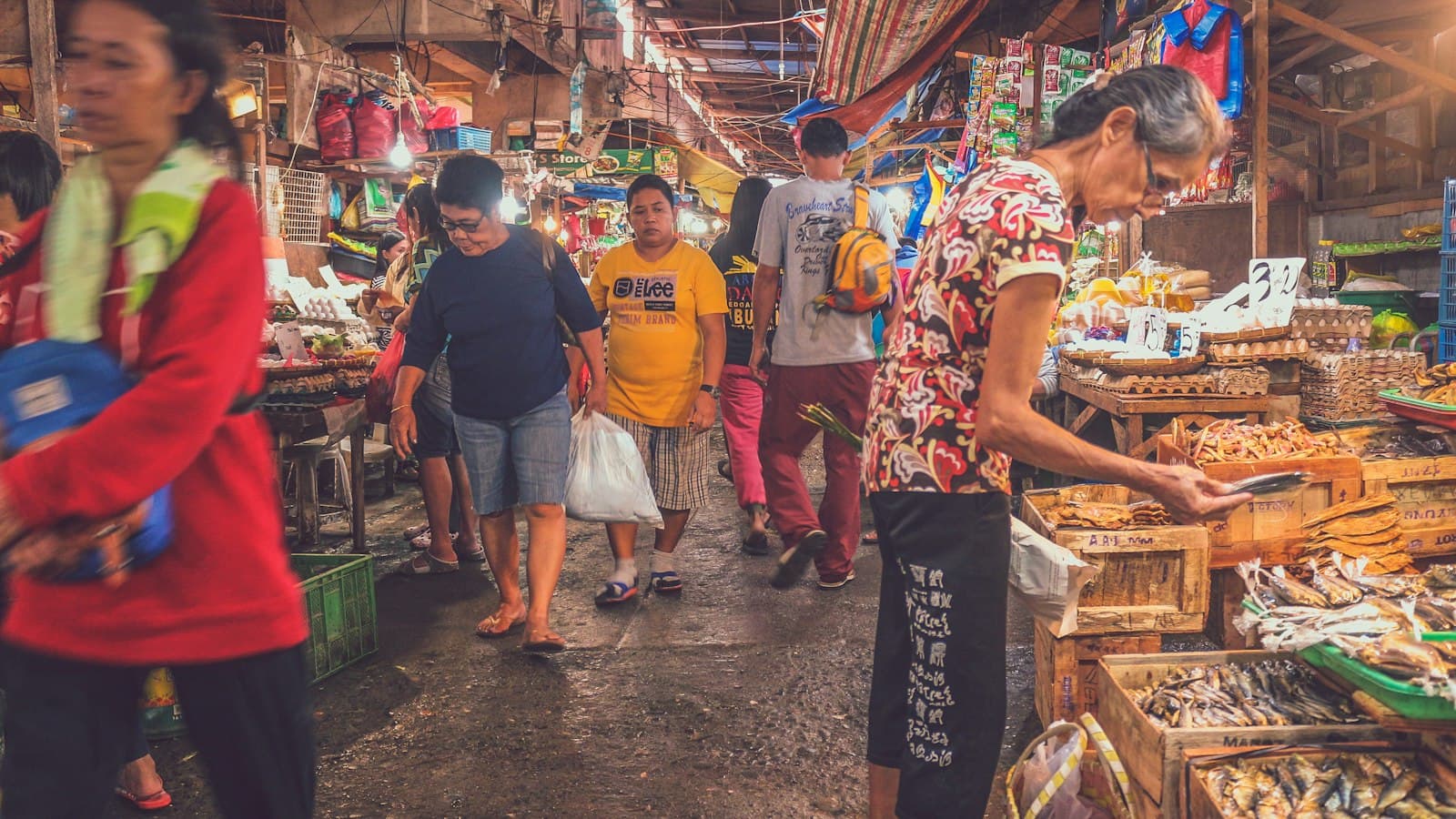
Local food is the other big savings. A simple meal is around $4, and a wet market like the one pictured is where locals buy fish, rice and produce. Imported goods are a different story: they can be expensive, so the budget holds up best when you eat like a local most of the week.
Two costs catch newcomers off guard. The first is legal status: staying on tourist extensions means paying the Bureau of Immigration every month or two, and a retirement visa ties up a deposit (the next chapter has both). The second is healthcare, because Medicare doesn't follow you abroad and private coverage is its own line in your budget. Build a cushion for both before you commit to a number.
The pension line that halves your deposit
The SRRV counts you as a pensioner if your pension is at least $800 a month on your own, or $1,000 with a spouse or kids. Clear that bar at 50 or older and your required deposit drops from $30,000 to $15,000. A couple whose pension alone covers the $1,550 monthly budget above clears it with room to spare, which is why the pensioner track is the place to start your math.
03 · Your visa options
Staying legally, from 30 days to permanent residence
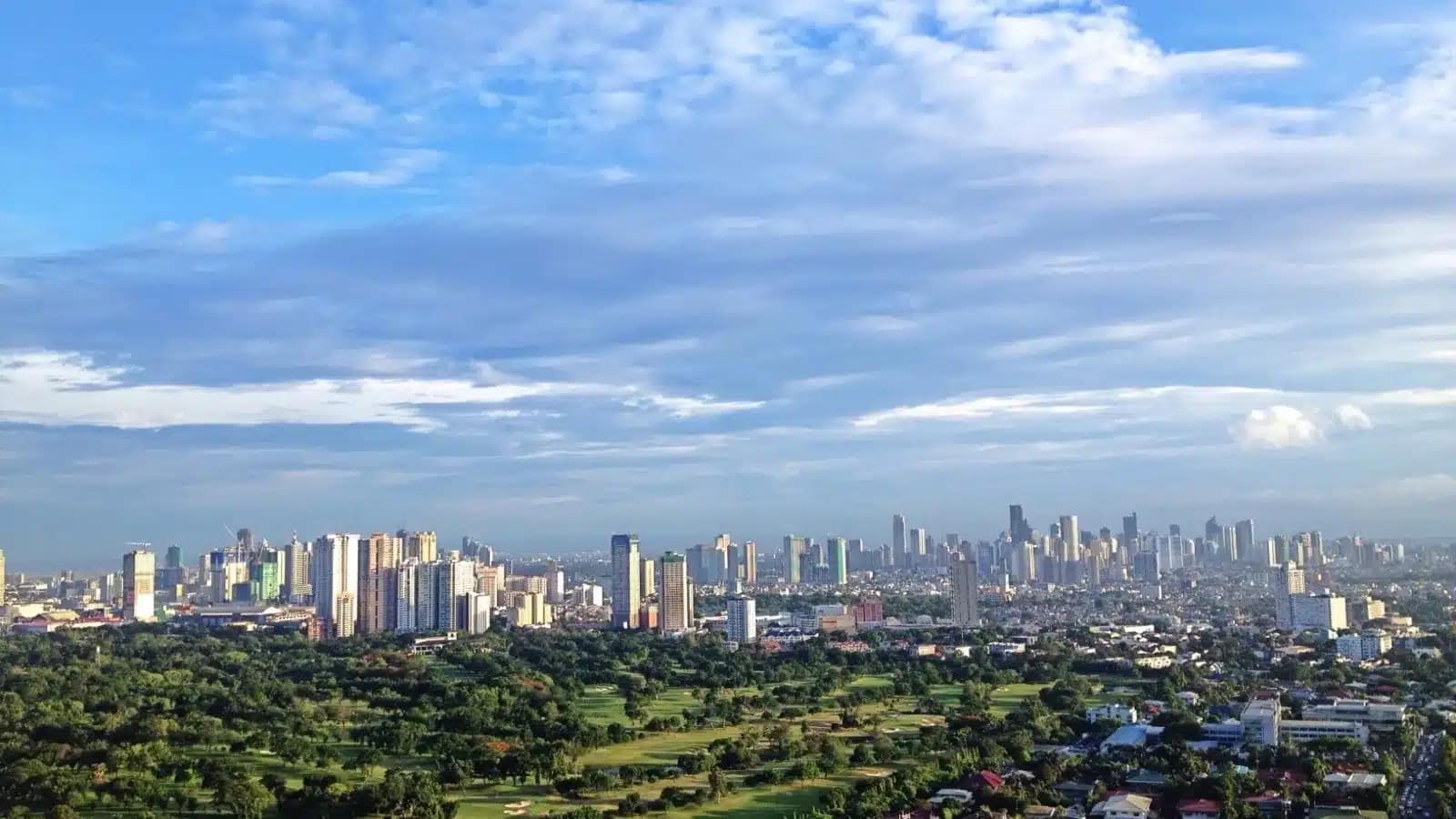
How you stay in the Philippines depends on three things: your age, whether you're married to a Filipino (or are one), and where your money comes from. Here's how each route actually works for Americans.
Retiring: the Special Resident Retiree's Visa
The SRRV is run by the Philippine Retirement Authority, not the immigration bureau, and it's the long-term route built for retirees. It gives you multiple entries and an indefinite stay, and your spouse and unmarried children under 21 can come along as dependents. In September 2025, the PRA lowered the minimum age from 50 to 40 and cut two older tiers, so ignore any guide that still quotes the Smile or Human Touch options.
The price of entry is a time deposit in a Philippine bank. At 50 or older, it's $15,000 with a qualifying pension and $30,000 without one. From 40 to 49, it's $25,000 with a pension and $50,000 without. After the visa is issued and a 30-day wait passes, you can convert the deposit into property worth at least $50,000, or into a 25-year lease that can be renewed.
You apply from inside the country. The PRA expects you to be physically present through processing and quotes about 10 days at its head office for its own part. You'll need a medical certificate, a police clearance, and apostilled U.S. documents, and since September 2025 every principal and spouse also needs a clearance certificate from the Bureau of Immigration.
Trying it first: tourist extensions
Americans get 30 days visa-free on arrival. From there you can extend: the first extension takes you to 59 days, and after that you extend in one- or two-month blocks, or six months at a time on a long-stay extension. Past 59 days you'll also need an ACR I-Card, the foreigner ID, which means a trip to a Bureau of Immigration office for biometrics. The ceiling is 36 months, after which you must leave. It's a sensible way to test a few islands before you tie up an SRRV deposit.
The first extension runs about ₱3,030 (roughly $50), and a six-month extension about ₱11,500 to ₱13,900 (roughly $185 to $225), based on 2026 figures from a relocation guide. The bureau's own schedule changes, so check it before you file.
Married to a Filipino, or Filipino by birth
If you're married to a Filipino citizen, the 13(a) immigrant visa is the permanent route. It starts as a probationary visa and converts to permanent status later. The bureau lists the principal fee at ₱8,620 (about $140) plus about $50 for the ACR I-Card.
Before that, the balikbayan privilege may cover you: a former Filipino who naturalized abroad gets an initial one-year visa-free stay, and a foreign spouse and children qualify too when they enter together with the balikbayan.
If you were born Filipino and became a U.S. citizen, look at Republic Act 9225 first. You can reacquire Philippine citizenship at a Philippine consulate for $50 (plus $25 per minor child), keep your U.S. passport, and get full rights at home, including owning land.
Working for a Philippine company: the 9(g)
The 9(g) is the work visa, issued for one, two or three years to foreigners employed in the Philippines. It exists for people with a job offer from a Philippine employer, not for people looking for one.
Remote workers: not yet
Executive Order No. 86, signed in April 2025, created a digital nomad visa of up to one year, renewable, for people earning from clients or employers outside the country. The catch is reciprocity: it's limited to nationals of countries that offer a similar visa to Filipinos. As of September 2026, no application procedure had been published, and it isn't clear Americans qualify. For now, the practical option for remote workers is tourist extensions.
What the SRRV costs you up front
Single retiree, 50+, with a pension
About $16,860 to start: the $15,000 deposit, a $1,500 application fee and the first $360 annual fee.
Couple, 50+, with a pension
About $17,160 to start. Your spouse joins as a dependent for a $300 application fee, and the $360 annual fee covers you both.
Single retiree, 50+, no pension
About $31,860 to start: a $30,000 deposit plus the same $1,500 and $360 fees.
Couple, 50+, no pension
About $32,160 to start: the $30,000 deposit, $1,800 in application fees and the $360 annual fee.
Philippine visas side by side
| Visa | Category | Application cost | Processing | Difficulty | Guide |
|---|---|---|---|---|---|
| Non-Quota Immigrant Visa by Marriage 13(a) | family | $196 | 1-year probationary visa, then amended to permanent resident status | 2/5 | Guide |
| Pre-arranged Employment Visa 9(g) with Alien Employment Permit | skilled work | $356 | 1-3 years, tied to the employment contract and renewable | 4/5 | Guide |
| Special Investor's Resident Visa (SIRV) | investment | $493 | 6-month probationary visa to place the funds, then indefinite while the US$75,000 investment is maintained | 3/5 | Guide |
| Special Resident Retiree's Visa (SRRV) Classic | retirement | $1,500 | Indefinite stay while the deposit is maintained and the annual PRA fee is paid | 2/5 | Guide |
04 · Day-to-day essentials
Healthcare, taxes, property and safety
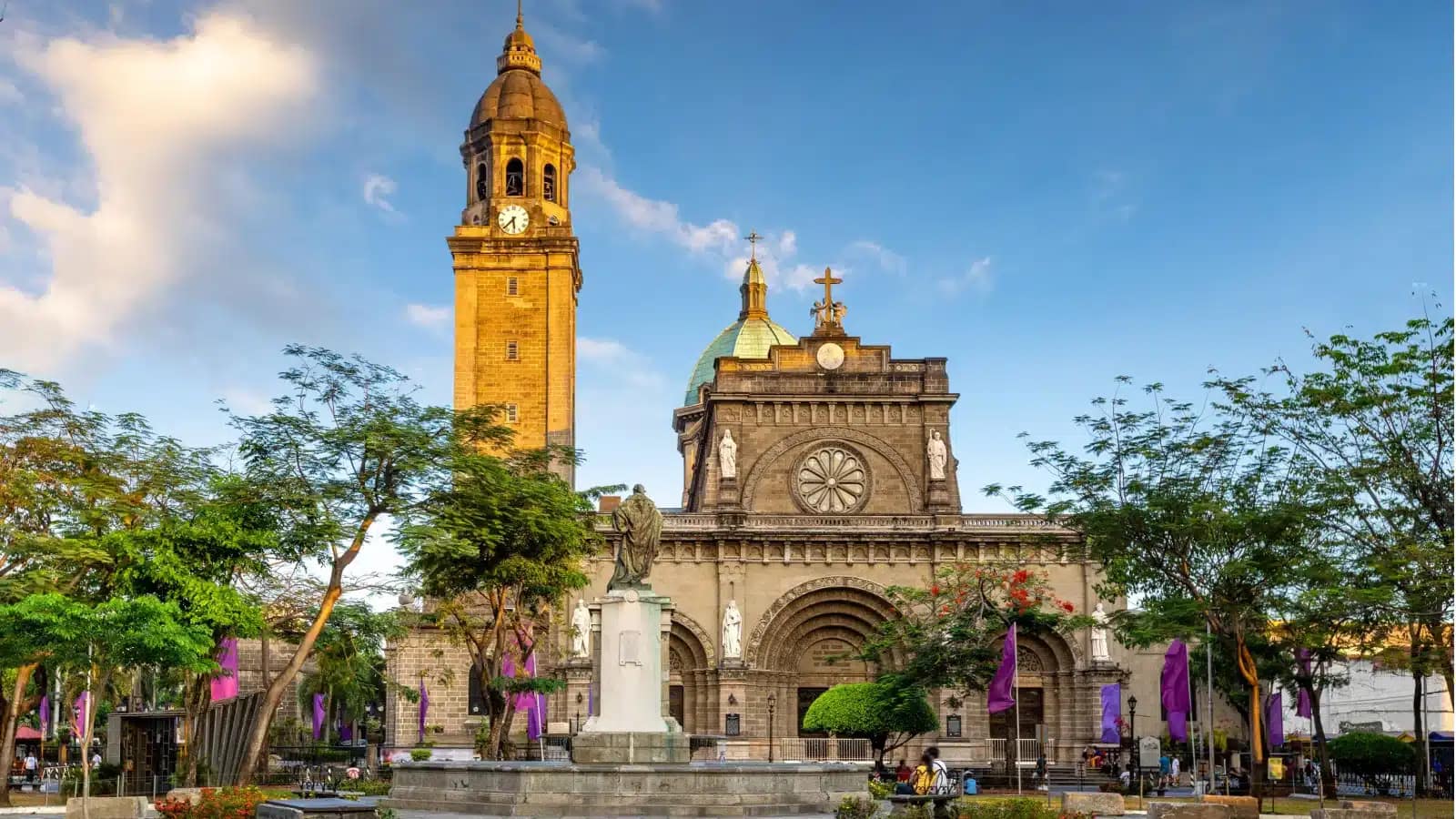
Healthcare
The State Department says adequate facilities exist across the country but rural care may fall below U.S. standards, and that hospitals and doctors often want payment or proof of insurance before they treat you. Medicare usually doesn't pay for care outside the U.S., so plan on coverage here.
A common setup has three layers. PhilHealth, the national insurer, is open to foreign residents: about ₱15,000 a year (roughly $240) for SRRV holders and ₱17,000 (roughly $275) for other residents, according to a 2026 Cebu insurance guide. It pays a fixed amount per condition, which helps at public hospitals but covers only part of a private bill. On top of that, people buy a local HMO plan or international coverage. Check age limits before you fall in love with a plan: Maxicare's flagship plan turns away applicants over 60, while MediCard's Health Plus has no age limit. ExpatInsure can quote international coverage, and Hunter Schultz can help you figure out which hospitals near you meet the bar you want.
Taxes
Here's the good news for retirees. Under Philippine rules, foreigners are taxed only on income from Philippine sources, whether or not they're residents. Your Social Security, pension, IRA withdrawals and U.S. investment income aren't taxed by the Philippines; earn money from a Philippine source and graduated rates apply, from 0% on the first ₱250,000 (about $4,000) up to 35% above ₱8 million (about $128,000). The U.S. side doesn't change: you still file a U.S. return every year. MyExpatTaxes handles expat returns, and Beacon Global Advisors can keep your 401(k), IRA and brokerage accounts working once you've moved.
Property and money
Foreigners can't own land. Private land is reserved for Filipinos and for companies at least 60% Filipino-owned, so beware of any arrangement that puts land in a spouse's or a nominee's name without solid legal advice. What you can own is a condo unit, as long as foreign owners hold no more than 40% of the building, under the Condominium Act. For moving money, Moneycorp converts dollars to pesos at better-than-bank rates and sets up recurring transfers. One more rule for travel days: carrying more than $10,000 or ₱50,000 in or out of the country means declaring it.
Safety and the law
The State Department rates the Philippines Level 2, exercise increased caution. Most of Mindanao is Level 3, reconsider travel, with Davao City, Davao del Norte, Siargao and the Dinagat Islands carved out; the Sulu Archipelago and Marawi City are Level 4, do not travel. The embassy's everyday warnings are about robbery, scams and taxis without meters. Drug laws are enforced hard, with penalties up to life in prison, and medical marijuana is illegal even with a U.S. prescription. Drink filtered or bottled water; the embassy advises against tap water.
Rules current as of September 2026
Philippine immigration rules move. The SRRV was restructured in September 2025, the digital nomad visa still had no published application process in September 2026, and extension fees change without much notice. Everything here reflects the rules as of September 2026. Confirm the current rules with the agency or a licensed professional before you file anything or move money.
05 · Picking your island
Big city or provincial city
Americans tend to cluster in a few places; the choice comes down to how much city you want and how far you want your dollars to go.
Metro Manila is the capital and economic hub. Makati is the polished financial district with high-rises and upscale malls, and Quezon City, the most populous city, has major universities, government offices and a lively food scene. Cebu City, in the Visayas, pairs a growing tech industry with beaches and diving spots nearby. Davao City, on Mindanao, has a reputation for cleanliness, sits near Mount Apo, and is one of the areas the State Department carves out of its Mindanao warning.
Before you pick, check the typhoon track for that island and the distance to the nearest good hospital. Those two answers narrow the list fast.
06 · Your move team
The people who make the move easier
Reading gets you oriented. These are the Expatsi-vetted people who handle the parts that are easy to get wrong from the other side of the Pacific: health coverage, taxes, money transfers, the pets and the shipping container.
The expensive mistakes here are specific: a condo in a building already at its foreign cap, a health plan that won't take you after 60. Here's who we trust, grouped by what they do.

Hunter Schultz
Healthcare Coach
A healthcare coach with more than 20 years of expat living and a background in air medical transport. In a one-hour consultation he maps your health needs to the care available where you plan to live.
Learn more
ExpatInsure
Global Health Insurance
Expatsi's international health insurance partner, led by Andy Seale and Stephanie Edwards. They compare global plans and connect you with coverage that fits your age, health and budget.
Learn more
MyExpatTaxes
U.S. Expat Tax Service
Software built for Americans abroad who still owe the IRS a return every year, with e-filing and support for more complex cases. Filing U.S. expat returns since 2018.
Learn more
Beacon Global Advisors
Financial Planning
Financial planners for Americans overseas. They keep 401(k)s, IRAs and investment accounts working after you leave the U.S.
Learn more
Moneycorp
Currency Exchange
Currency exchange and international payments since 1979, with Kelly Cutchin as the point person for U.S. clients. Free transfers, rates that beat most banks, and the option to lock a rate for up to two years.
Learn more
Starwood Pet Travel
Pet travel and transport
Moves dogs and cats internationally from start to finish: health certificates, USDA endorsements, crate rules and airline bookings.
Learn more
Aqua Moving Services
Worldwide Shipping and Moving Service
International moving logistics from the Clearview Group. One survey of your belongings produces three competing quotes from vetted movers, with a single point of contact.
Learn more
Culturosity Co.
Cultural Skills Coach
Intercultural coaching from co-founders Jennifer and Janka, both certified in research-backed assessment tools. One-on-one sessions and workshops help you settle into a new culture with fewer missteps.
Learn more
Yaran Bali Indonesia
Housing | Accessible Housing | Resort Living
Yaran Bali Indonesia offers affordable apartment living in a community that's both accessible and convenient to local markets.
Learn more07 · Common questions
Moving to the Philippines: your questions answered
Is the Philippines safe for American expats?
The State Department rates the Philippines Level 2, exercise increased caution, mainly for crime, terrorism, civil unrest and kidnapping. Most of Mindanao is Level 3, though Davao City, Davao del Norte, Siargao and the Dinagat Islands are excluded, and the Sulu Archipelago and Marawi City are Level 4. Typhoons are the other big risk, peaking from July through October.
What is the minimum deposit for the Philippine retirement visa (SRRV)?
As of September 2026, the SRRV Classic requires a time deposit of $15,000 if you're 50 or older with a pension of at least $800 a month ($1,000 with dependents), or $30,000 without a qualifying pension. Applicants aged 40 to 49 deposit $25,000 with a pension or $50,000 without. On top of that come a $1,500 application fee and a $360 annual fee.
Does the Philippines have a digital nomad visa for Americans?
Not in practice yet. Executive Order No. 86 created a digital nomad visa in April 2025, but it's limited to nationals of countries that offer a similar visa to Filipinos, and as of September 2026 no application procedure had been published. Remote workers from the U.S. can use tourist extensions instead, which run up to 36 months.
Does the Philippines tax Social Security and U.S. pensions?
No. Philippine tax law taxes foreigners, resident or not, only on income from Philippine sources, so U.S. Social Security, pensions, IRA withdrawals and U.S. investment income aren't taxed there. You still file a U.S. tax return every year as a U.S. citizen.
Does Medicare cover me in the Philippines?
Generally no. Original Medicare usually doesn't pay for health care outside the U.S. A common setup in the Philippines combines PhilHealth, the national insurer that foreign residents can join, with a local HMO plan or international health insurance. Veterans can also use the VA outpatient clinic at the U.S. Embassy compound in Pasay City.
Can Americans buy property in the Philippines?
Americans can buy a condominium unit as long as foreign ownership in the building stays at or below 40%, under the Condominium Act. They can't own land, which is reserved for Filipinos and companies at least 60% Filipino-owned. Former Filipinos who reacquire citizenship under Republic Act 9225 regain the right to own land.
How long can an American stay in the Philippines without a visa?
U.S. citizens get 30 days visa-free on arrival. You can extend at a Bureau of Immigration office, first to 59 days and then in one-, two- or six-month blocks, up to a maximum of 36 months before you have to leave. Stays past 59 days also require an ACR I-Card. Your passport should be valid for six months beyond your planned stay.
Can I retire in the Philippines at 40?
Yes. Since September 2025 the Philippine Retirement Authority accepts SRRV applicants from age 40. Applicants aged 40 to 49 pay a larger deposit than those 50 and older: $25,000 with a qualifying pension or $50,000 without, as of September 2026.
Sources
- Special Resident Retiree's Visa (SRRV) · Philippine Retirement Authority (checked September 2026)
- Citizen's Charter: Processing of SRRV Application · Philippine Retirement Authority (checked September 2026)
- SRRV Philippines 2026: bank-deposit tiers and the September 2025 restructure · Live in PH (checked September 2026)
- Temporary Visitor (9A) Visa Waiver · Bureau of Immigration Philippines (checked September 2026)
- Immigrant Visa by Marriage (13A) · Bureau of Immigration Philippines (checked September 2026)
- Executive Order No. 86: Digital Nomad Visa · Supreme Court E-Library (checked September 2026)
- Dual Citizenship (RA 9225) · Philippine Consulate General in San Francisco (checked September 2026)
- Philippines: Taxes on personal income · PwC Worldwide Tax Summaries (checked September 2026)
- Philippines Travel Advisory · U.S. Department of State (checked September 2026)
- Philippines International Travel Information · U.S. Department of State (checked September 2026)
- Tropical Cyclone Information · PAGASA (checked September 2026)
- Travel outside the U.S. · Medicare.gov (checked September 2026)
- Health insurance in Cebu for expats: PhilHealth, HMO and international · Live in PH (checked September 2026)
- How does the Condominium Act affect foreign real estate investors? · NDV Law (checked September 2026)
- Cost of living and country data for the Philippines · Expatsi (checked September 2026)
See how the Philippines fits your life
Take the free Expatsi Test and compare the Philippines with other countries on cost, healthcare, climate and safety.
Island life, on paper first