Antigua and Barbuda
Moving to Antigua and Barbuda: an English-speaking island with no income tax
A couple lives here on roughly $2,500 to $4,000 a month, nobody pays personal income tax, and Miami is three and a half hours away. The bills that surprise people are power and water.
Two small islands, about 105,000 people and a single airport. Antigua and Barbuda is the rare place where an American can hold a tax residence, buy a house and speak nothing but English. Here's what a month costs, which of the three routes fits you, and what the sales pages leave out.

By Jen Barnett, Co-founder, Expatsi
Reviewed and updated September 17, 2026 · 14 min read
01 · The case, and the catch
An island that runs on English and imports almost everything else
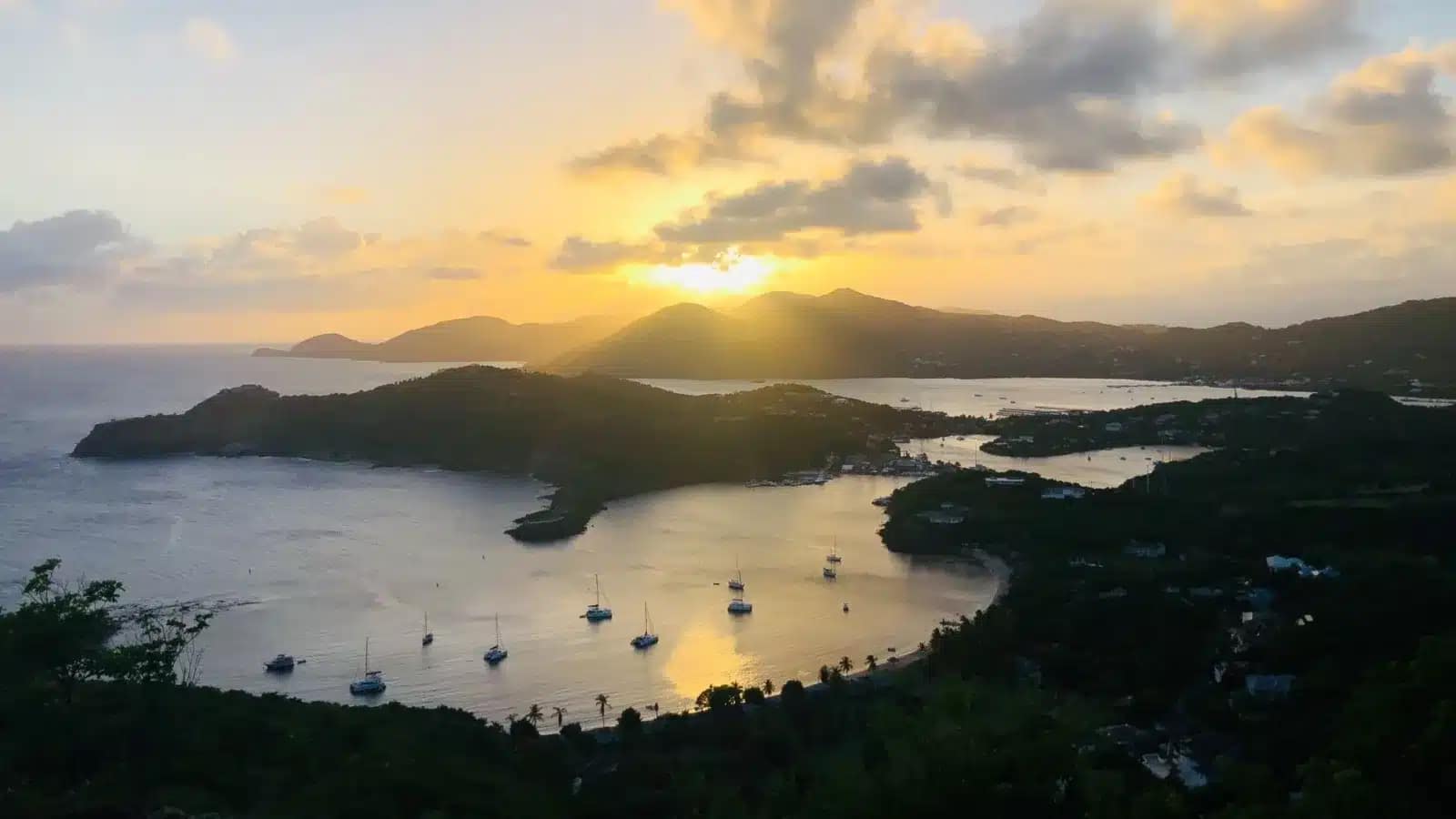
Antigua sits in the Eastern Caribbean, about 3 hours and 30 minutes from Miami. English is the national language, not a tourist convenience, so leases, court documents, bank forms and doctor's appointments all happen in it. The Eastern Caribbean dollar has been pegged at EC$2.70 to the U.S. dollar for decades, which takes exchange-rate risk off the table entirely.
The country abolished personal income tax in April 2016 and hasn't brought it back. Capital gains, wealth and inheritance go untaxed, too. Antigua also runs the Caribbean's oldest citizenship-by-investment program, which is why so much of what you'll read online about the place is written for people buying a passport rather than for people planning a life.
Who tends to land well here
Retirees with a paid-off house and fixed income, remote workers who already earn in dollars, and sailors. That last group is not a joke: English Harbour and Falmouth are a working superyacht economy; the marine trades are a rare place where an outsider can plug into the local job market. Antigua Sailing Week fills the island every spring. Being in the Eastern time zone helps too, since the islands stay on UTC-4 all year. This puts you on the same clock as New York in summer and one hour ahead of it in winter.
Here's the catch
It's small, and small is the whole experience. There's one supermarket chain worth the name and no way to drive somewhere else for the weekend. Electricity is expensive, tap water comes mostly out of a desalination plant, and hurricane season runs June through November every year. If a September spent watching the forecast makes you tense, this is not your island.
- Safety index
- 65/100
- Internet speed
- 55 Mbps
- Capital
- St. John's
- Currency
- Eastern Caribbean Dollar (XCD)
- Population
- 105,182
The four numbers that set your budget
$2,500 to $4,000
What a couple spends a month
all in, and rent decides it
$800 to $1,200
A one-bedroom around St John's
roughly double on the resort coasts
37 cents
Per kilowatt hour of electricity
imported fuel, and the AC runs all year
Over 90%
Of the tap water is desalinated seawater
the islands have no rivers at all
Where the money goes, and why the utility bill is the shock
Every figure on this page is a range, which is deliberate. No authority publishes a rent series for Antigua. The cost-of-living sites that do are built on a few dozen submissions, and the gap between a house inland and the same house on the water is big enough to swallow any average. A modest retired couple sits at the bottom of the card above; anyone who wants a sea view sits well past the top of it.
Rent is the lever, and that $800 to $1,200 is the inland number. Go a little further out, a one-bedroom drops between $600 to $900. Go the other way to Jolly Harbour or Dickenson Bay where foreigners cluster, rent climbs to $1,500 or $2,500. Waterfront carries a premium of 40 to 80 percent over a comparable place inland, while a three-bedroom house with a garden runs $2,000 to $4,500.
The bills nobody budgets for
Power is the first surprise. The cause is structural: islands burn imported fuel to generate while the tariff stacks a fuel surcharge on top, so the rate moves with the oil price. Run the air conditioning the way an American expects to and a monthly bill of $150 to $300 is normal; and heavy users can clear $350. Basic utilities on a mid-sized apartment average around $300 a month. Solar panels and a water cistern aren't a green gesture here. They're how residents get their bills down and their supply steady.
The supermarket versus the fish truck
Anything in a box crossed an ocean to get here, and it's priced that way. Imported groceries run 30 to 50 percent above what you pay at home. Local fish, fruit and vegetables are cheap, and the St John's market is where residents actually shop. Gasoline costs around $6 a gallon. Broadband is about $70 a month. Private health insurance for a middle-aged American runs roughly $240 to $375 a month with evacuation coverage included, climbing steeply with age.
Why a high cost of living can still leave you ahead
Antigua isn't a cheap Caribbean island; anyone promoting it as one is selling something. What it is instead is a place where the government takes nothing off your income. On a $120,000 pension and investment income, the difference between a zero-tax jurisdiction and a state that taxes you is usually far bigger than the extra you pay for cheese and electricity. Run that comparison before you compare rents.
03 · Daily life
One good road, no rivers, and a car you cannot avoid
You will be buying a car
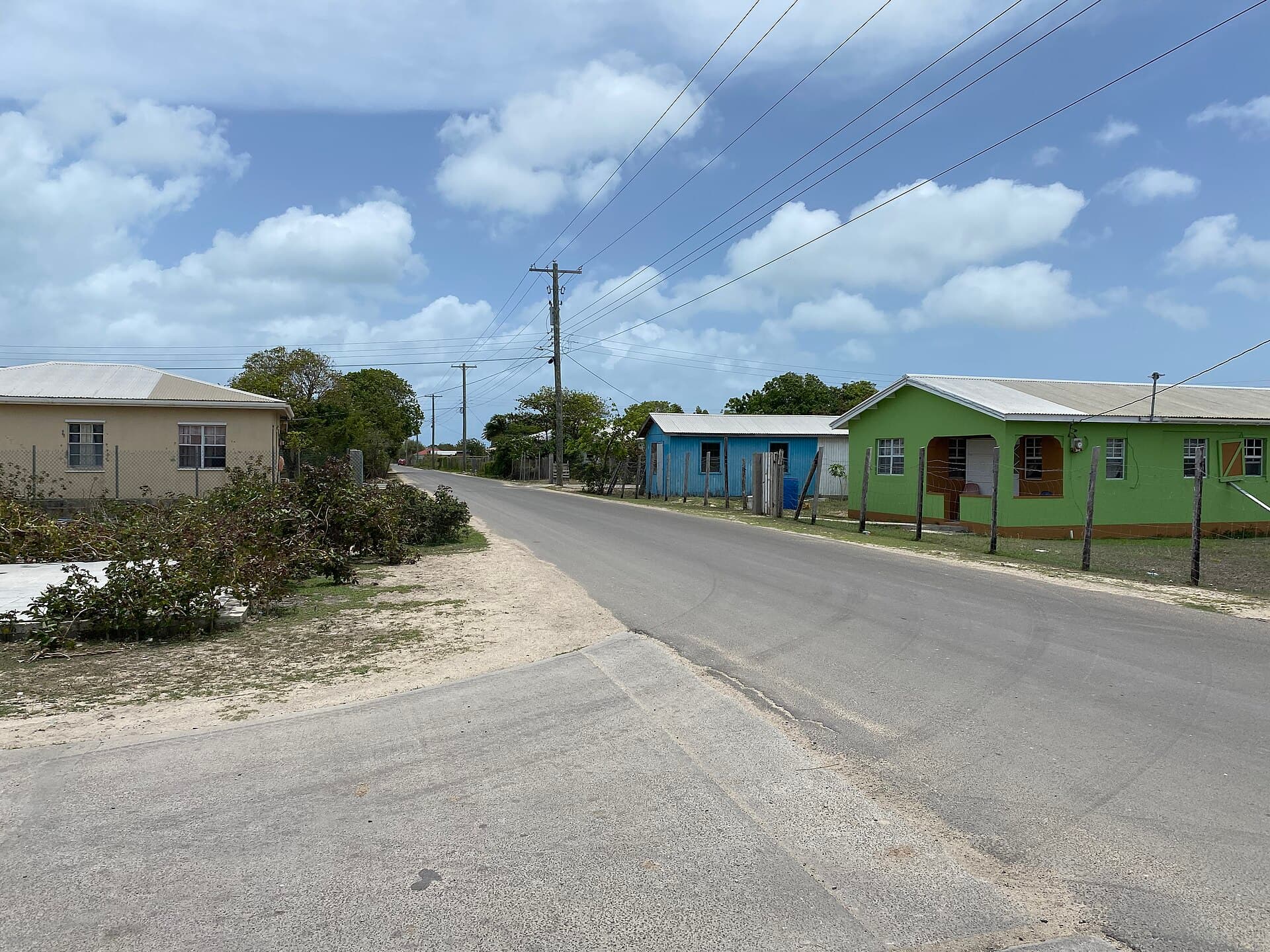
There's no real public transport system. Minibuses run set routes for about $1.50 to $2.50 a trip, but they're built around where Antiguans work rather than where expats live. They thin out in the evening. Taxis aren't metered, so agree on the fare before you get in the car. Traffic drives on the left, a British inheritance, and you'll need a local driving permit. Roads outside St John's are narrow and unlit, which is why local advice is to stay off them after dark.
The water story nobody mentions
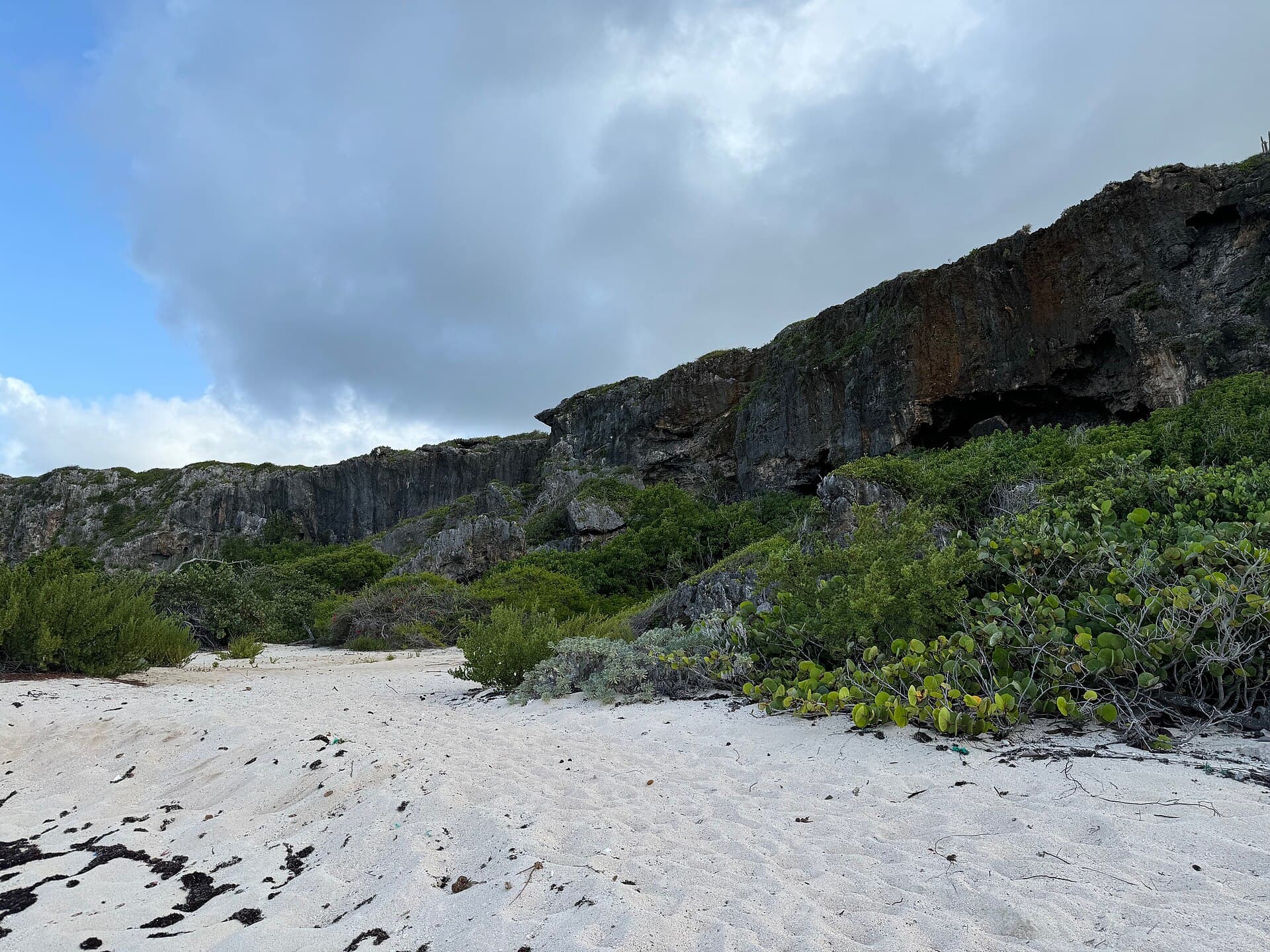
This is the fact that should shape your house hunt. The islands have no perennial rivers. The United Nations classes Antigua and Barbuda as one of the most water-stressed countries in the Caribbean, with renewable freshwater of about 566 cubic meters per person a year, well under the scarcity line. Nearly all of the drinking water now comes from reverse-osmosis desalination. Capacity has gone from 3 million imperial gallons a day in 2014 to about 11 million, with another 3 million promised in the 2026 budget. Drought was live as this was written in September 2026, with Potworks Reservoir dry and the utility having stopped drawing from it. Every new house is required by law to have rainwater collection and storage, telling you what residents already know: ask about the cistern before you ask about the view.
September is a real month
Hurricane season runs from June 1 to November 30. Antigua came through 2017 lightly; Barbuda did not. Hurricane Irma emptied the island of its entire population that September. Rebuilding still isn't finished. Insurance, shutters and a plan are part of living here, not paranoia.
What you get, and what you give up
English, everywhere
The national language, so no paperwork happens in translation.
A currency that never moves
The EC dollar is pegged at 2.70 to the US dollar.
Three and a half hours to Miami
Nonstops also run to New York, Newark and Atlanta by season.
CARICOM rights
Citizens can live, work and study across 15 Caribbean states.
One hospital
Anything complex means a flight to Guadeloupe, Barbados or Miami.
A hurricane belt address
Six months a year you are watching the Atlantic forecast.
04 · The ways to stay
A passport, a two-year permit, and a tax certificate
Americans get up to six months visa-free on arrival as visitors, which matters more than it sounds: if you just want a season on the island, don't need anything at all. Everything below is for people who want longer or a legal tax address.
Citizenship by investment, the headline route
Antigua has run this since 2013 under the Citizenship by Investment Act. The cheapest door is a non-refundable $230,000 contribution to the National Development Fund, which covers a family of up to four, with about $15,000 per extra dependent. Approved real estate starts at $300,000 and must be held for five years. Families of six or more can use the University of the West Indies fund at $260,000.
Government processing runs around $30,000 for a family of four and due diligence is $8,500 for the main applicant, so treat $270,000 to $280,000 as the realistic all-in number before advisers. You must spend five days in the country within your first five years. A 30-day rule has been legislated but its start date is unclear. Everyone 18 and over sits a virtual interview. Dependents can include a spouse, children under about 30, parents and grandparents over 55, and unmarried siblings, which is unusually generous.
Nomad Digital Residence, for a remote salary
A two-year permit for people working remotely for employers or clients outside the country. You declare income of at least $50,000 a year for each of the two years, which works out around $4,166 a month. You show health insurance and a clean police record for everyone 16 and over. The fee is $1,500 on your own, $2,000 with a spouse or one dependent, $3,000 for three or more, plus $650 for each dependent past three. Decisions come fast, usually inside two weeks. You cannot take a local job on it, and it leads nowhere: there's no built-in step to residency or citizenship.
Tax residency for 30 days a year
The route almost nobody writes about, and the one that suits a lot of high earners. Keep a home in the country, spend at least 30 days a year there, show income of at least $100,000 a year, and pay a flat $20,000 a year. You get a Certificate of Residency and a tax identification number. The alternative is the ordinary rule: 183 days in a calendar year makes you a tax resident.
Permanent residency, the slow way
Ordinary permanent residency is a long game built on years of legal residence rather than a payment, and the process is administered case by case. Nobody uses it as a plan A; its official description reads vaguely for exactly that reason.
The three routes in our database, side by side
| Visa | Category | Application cost | Processing | Difficulty | Guide |
|---|---|---|---|---|---|
| Citizenship by Investment | investment | $230,000 | ~90 days | 4/5 | Guide |
| Nomad Digital Residence | digital nomad | — | ~14 days | 2/5 | Guide |
| Permanent Residency | investment | — | ~60 days | 3/5 | Guide |
About that data card
The table above comes straight from our database, and some of it needs a footnote. The Nomad Digital Residence row says the income threshold varies; it doesn't, it's $50,000 a year. That row also shows no fee, when the real one is $1,500 to $3,000 depending on family size. It calls the permit renewable, which several specialist sources dispute. The $230,000 on the citizenship card is the fund contribution alone, not the cost of the passport. And the three-to-six-month timeline is the official one; licensed agents describe a backlog at the Citizenship by Investment Unit, with real files running far longer. We've flagged all of it for correction.
05 · The part that decides it
Tax, doctors, property, and a passport under pressure
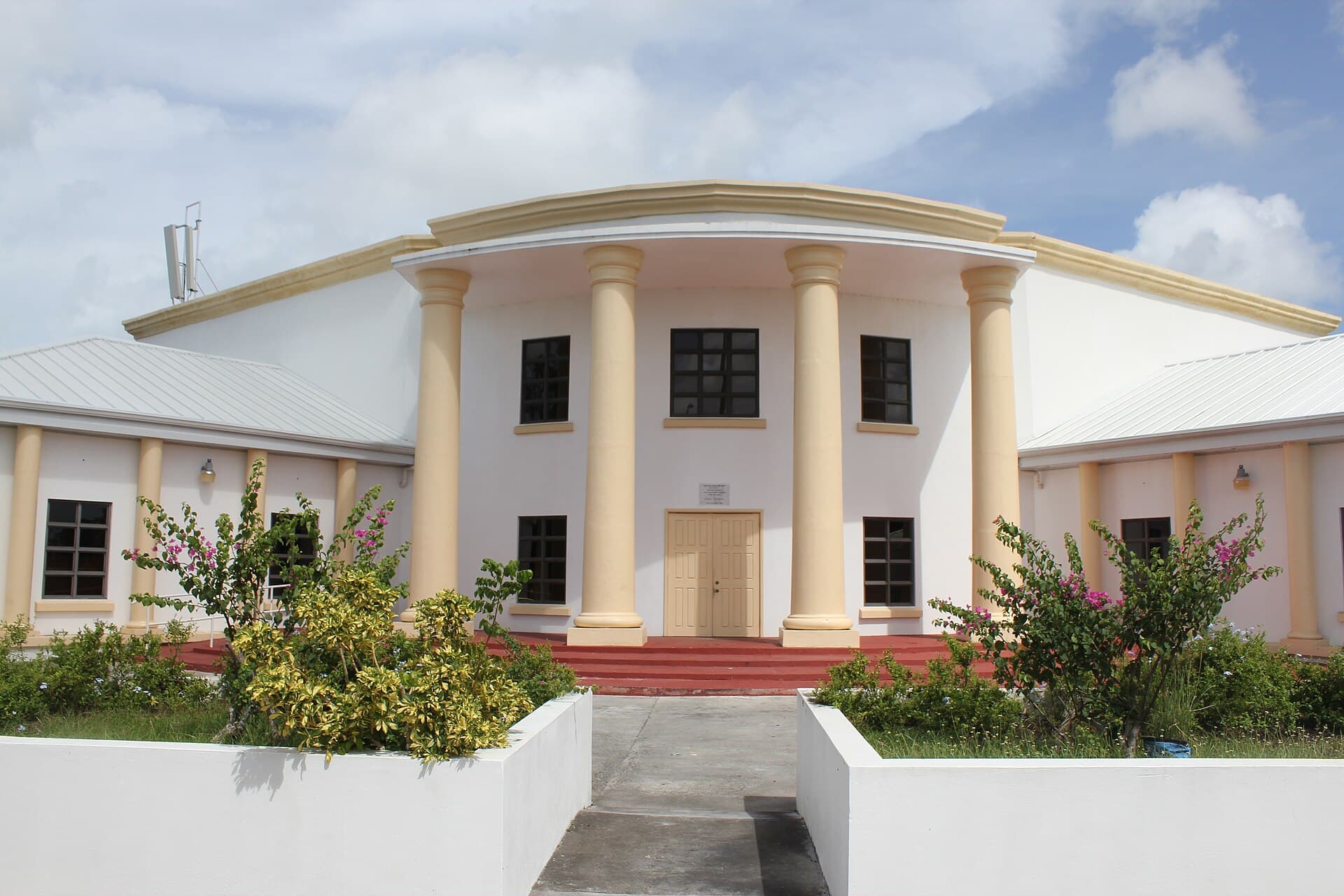
The tax math for an American, done honestly
Zero local income tax sounds like a zero tax bill. It's not; that gap between those two things is where Americans get caught. The U.S. taxes citizens on worldwide income wherever they live, so you keep filing a 1040 plus FBAR and FATCA reports. There's no U.S. tax treaty here or totalization agreement. Because you pay nothing locally, you have no foreign tax credit to claim; the move does nothing for tax on a pension, dividends, capital gains or Social Security. Earned income can sit under the foreign earned income exclusion; everything else is taxed exactly as it was. Antigua reports under FATCA and the Common Reporting Standard, so your accounts are visible. Talk to a cross-border accountant like MyExpatTaxes before you move, not after.
What you do pay locally is 15 percent sales tax on almost everything, property tax of 0.1 to 0.5 percent of assessed value, and customs duty on imports.
Healthcare is competent, and thin
Mount St John's Medical Center in St John's is the only full hospital, a teaching hospital of around 185 beds, backed by roughly 25 community health centers across six districts. Barbuda has an eight-bed facility and nothing more. Emergency treatment is free to anybody, including visitors. The Medical Benefits Scheme covers under-16s and over-60s at no charge. Anything complex means flying to Guadeloupe, Barbados, Puerto Rico or Miami, and air ambulance costs are widely quoted between $15,000 and $50,000, which is why evacuation coverage through a broker like ExpatInsure is not a nice-to-have.
Two honest notes: the decompression chamber exists but is not always working, and abortion is broadly illegal here with narrow exceptions centered on the mother's life, which is worth knowing if reproductive access is part of why you are leaving.
Buying, and the license a foreigner needs
Foreigners can own freehold property, but a non-citizen needs an Alien Landholding License costing 5 percent of the value, which takes a couple of months. Add 2.5 percent stamp duty for the buyer and 1 to 2 percent in legal fees, so budget 8 to 10 percent on top of the price. Sellers pay 7.5 percent, and a non-resident seller pays a further 5 percent appreciation tax. Sit on undeveloped land as a non-resident and you're taxed 10 to 20 percent of its value, rising the longer you hold it, which is deliberate. The license is waived on approved property bought through the citizenship program, and nobody foreign can buy a building plot on Barbuda, where land is held communally. The market is thin; a house can take 6 to 18 months to sell, so buy here to live in what you own.
The passport's worth less than the brochures say
Two governments moved against it in 2026. From January 1, a U.S. proclamation partially suspended visa issuance to Antiguan and Barbudan nationals, covering immigrant visas plus visitor, student and exchange categories. The Congressional Research Service says plainly that the country was listed because of its citizenship-by-investment program. In June, the European Commission wrote to Antigua and four neighbors asking them to wind those programs down by June 2028 or risk losing visa-free Schengen access. No Schengen suspension has happened. Dual nationals traveling on an unaffected passport are exempt from the U.S. measure, so an American who naturalizes here still enters the U.S. on a U.S. passport. If you want this citizenship for travel, read both documents first. If you want it for a zero-tax base, a Caribbean home and CARICOM rights across 15 countries, none of that is under threat.
This guide is dated on purpose
Everything above was checked in September 2026. Three things on this page are moving: the 30-day residence requirement for new citizens; the European Commission's next report on visa-free travel, which is due in December 2026; and the 180-day review cycle written into the U.S. proclamation. Antigua quotes its fees in U.S. dollars and pegs its own currency to ours, so there's no exchange rate to re-run. There are dates to re-check, and those are the three you want to focus on.
06 · Where to live
Island guides, as we publish them
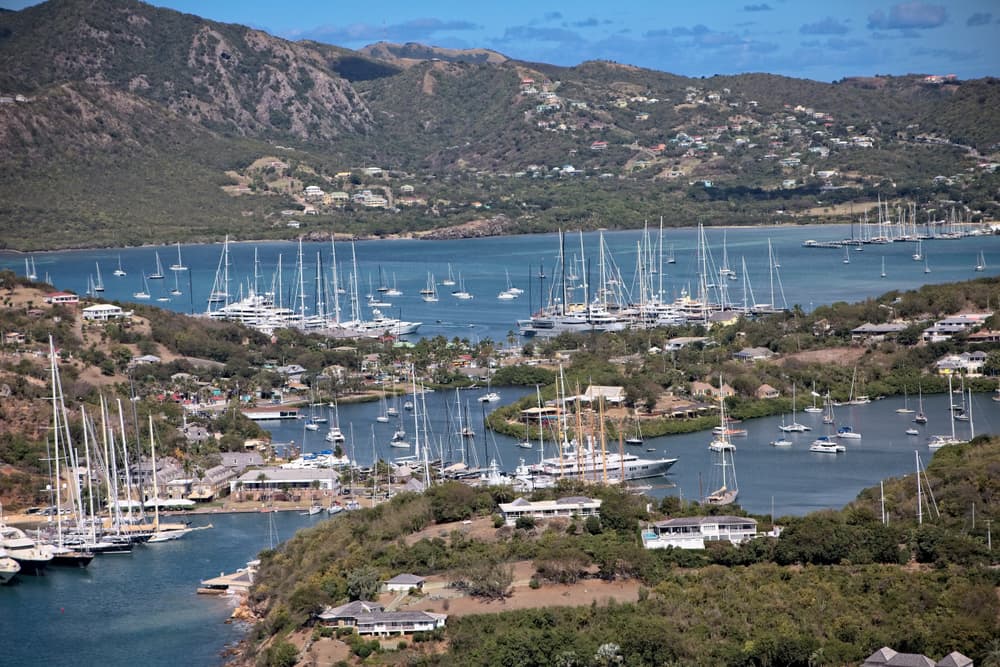
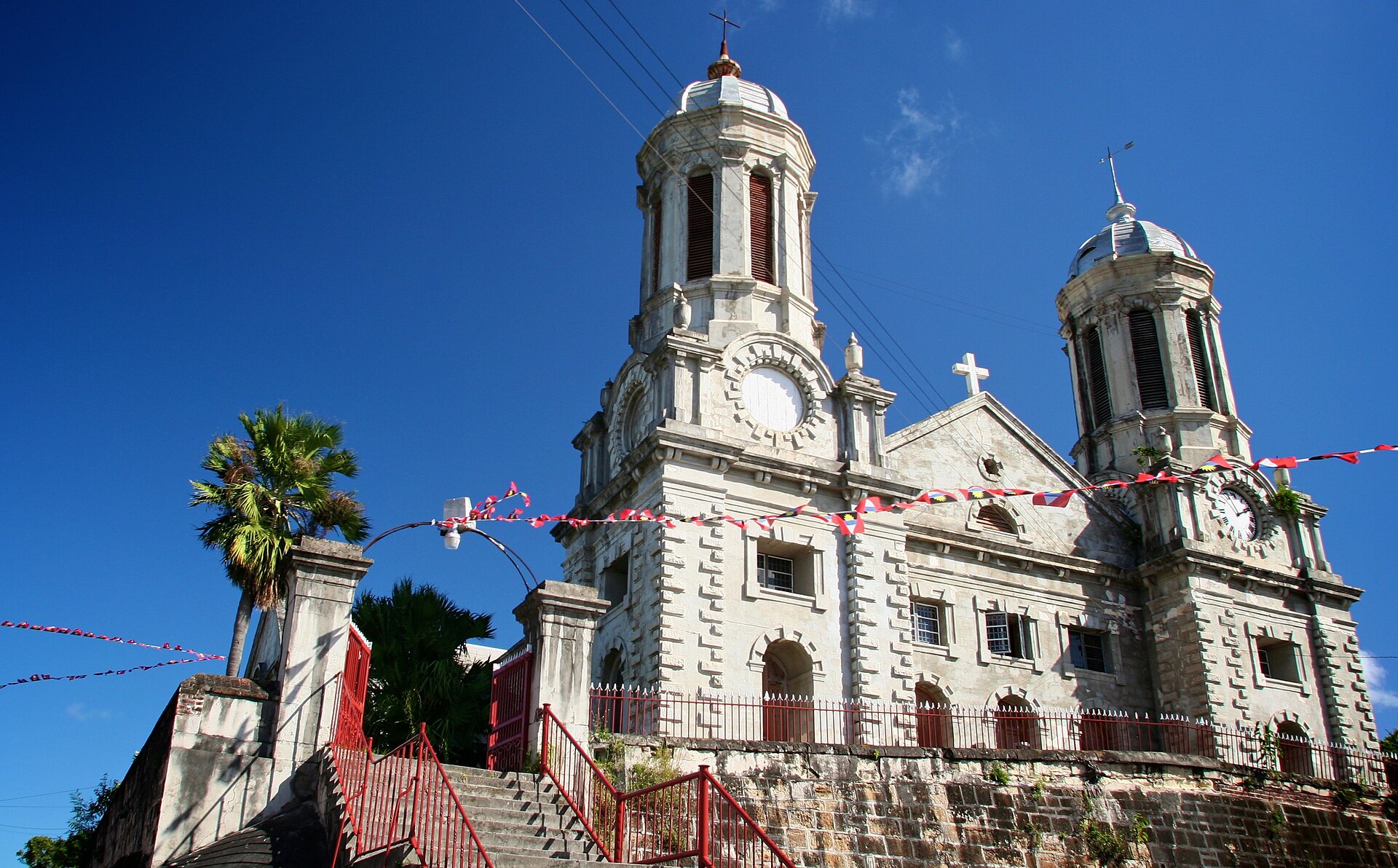
St. John's
Capital and market town
The practical base for island life: the cruise dock, the Saturday market, the main hospital and most banks are here, and the airport is a short drive. It's a working town, not a pretty one, and you'll want a car to reach the beaches.
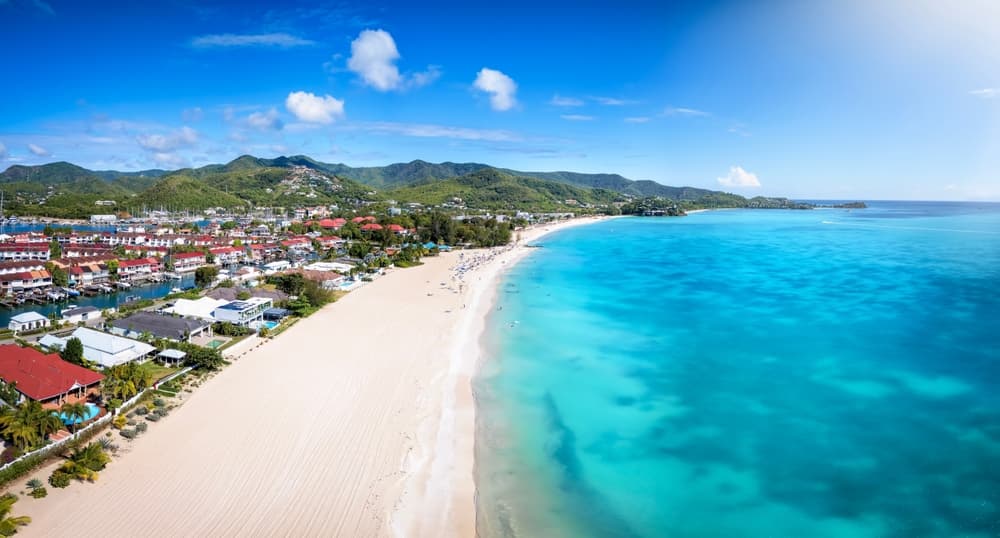
Jolly Harbour
Marina and condo living
A planned resort community on the west coast built around a marina, a golf course and a long beach, and the easiest landing for English-speaking retirees. Nearly everything is condo or villa, and anything beyond the local shops means driving to St. John's.
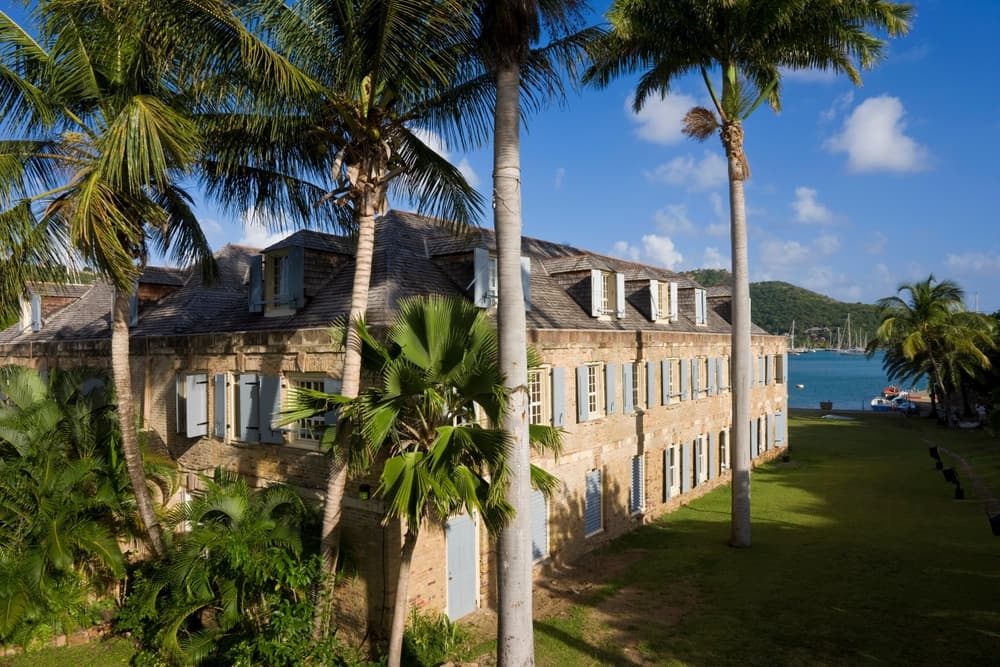
English Harbour
Sailing village
The Nelson's Dockyard end of the island, where charter crews, riggers and yacht captains set the rhythm and Sailing Week takes over each spring. Hilly, green and very small year-round. It gets quiet and pricey off-season, and the roads in are narrow.
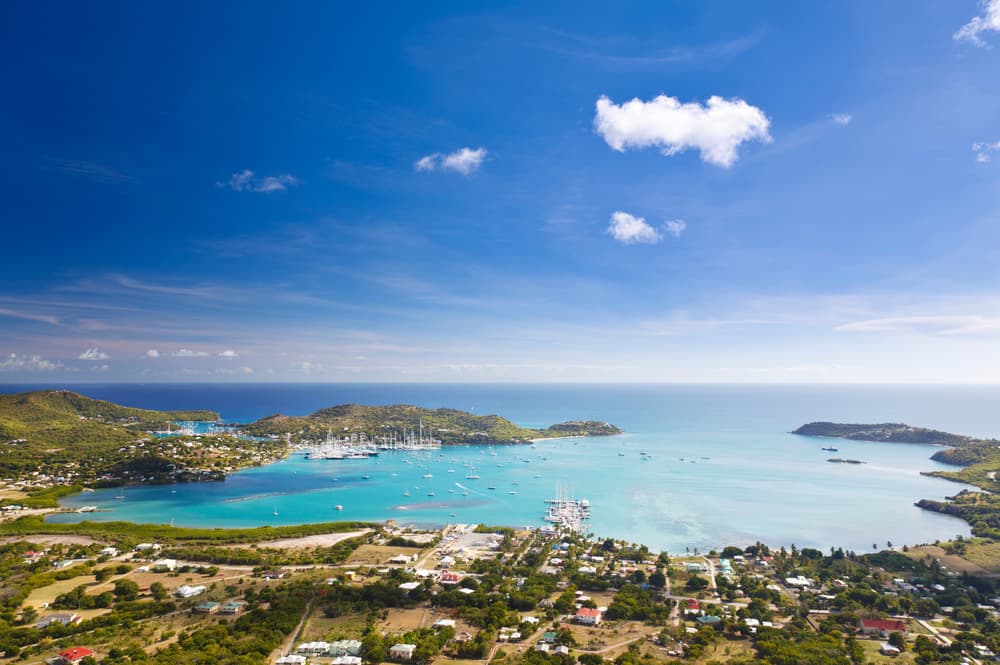
Falmouth Harbour
Superyacht harbor
The bay next to English Harbour, lined with marinas and yacht-service businesses, where the superyacht fleet ties up each winter. Good for sailors and anyone who wants a harbor view. There's little here beyond the marina strip, so bigger shopping means a drive.
Six addresses, and they are not interchangeable
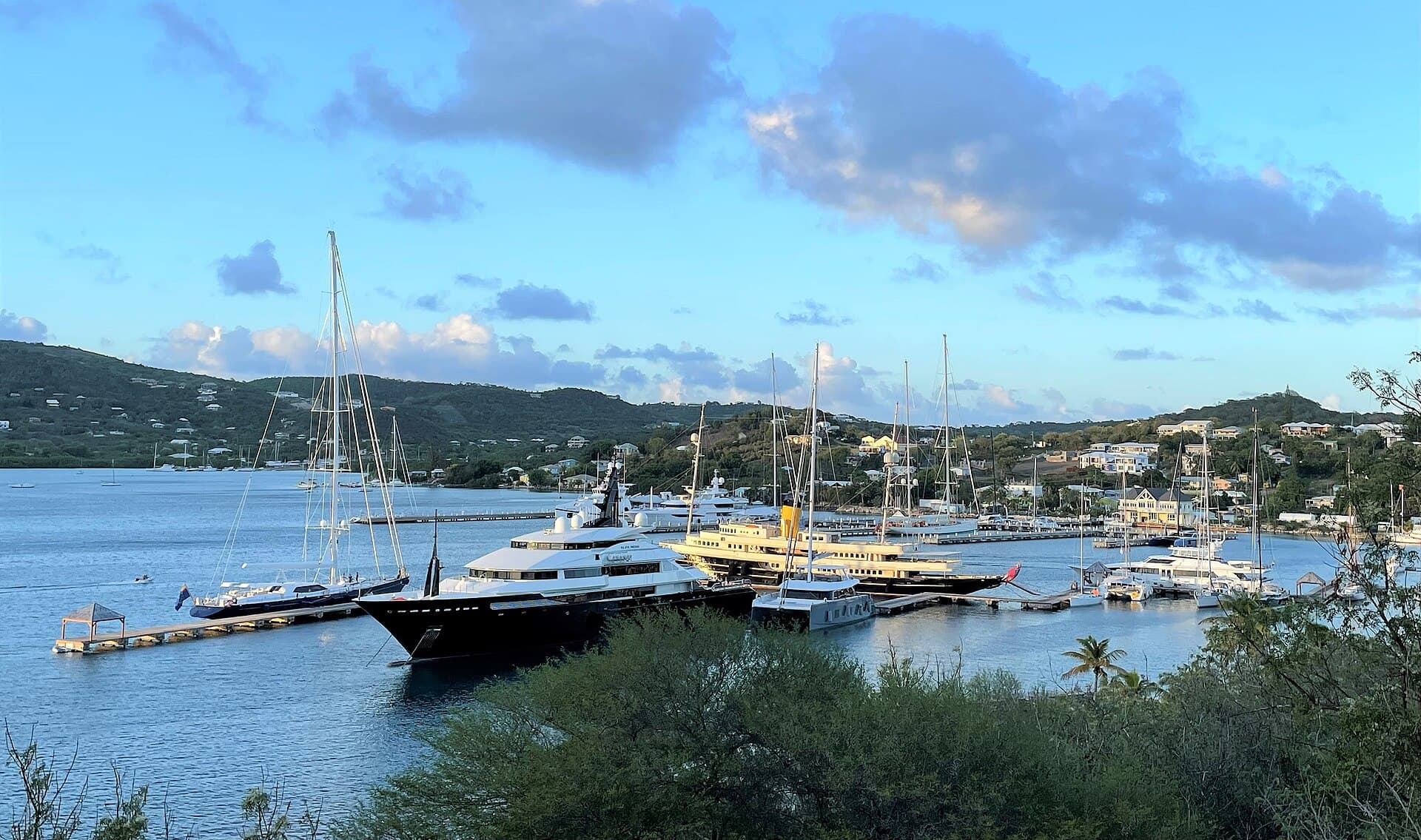
Antigua is 108 square miles. You can drive across it in under an hour, yet the difference between these places is the difference between two budgets and two social lives.
St John's
The capital and only real town: the hospital, market, banks, cruise berths and the government offices. Cheapest rents, most errands within reach, least charm.
Jolly Harbour
The west-coast marina development that comes up first in every search aimed at foreign buyers. Gated, walkable, supermarket and golf onsite, a ready-made social scene, and priced accordingly.
English Harbour and Falmouth
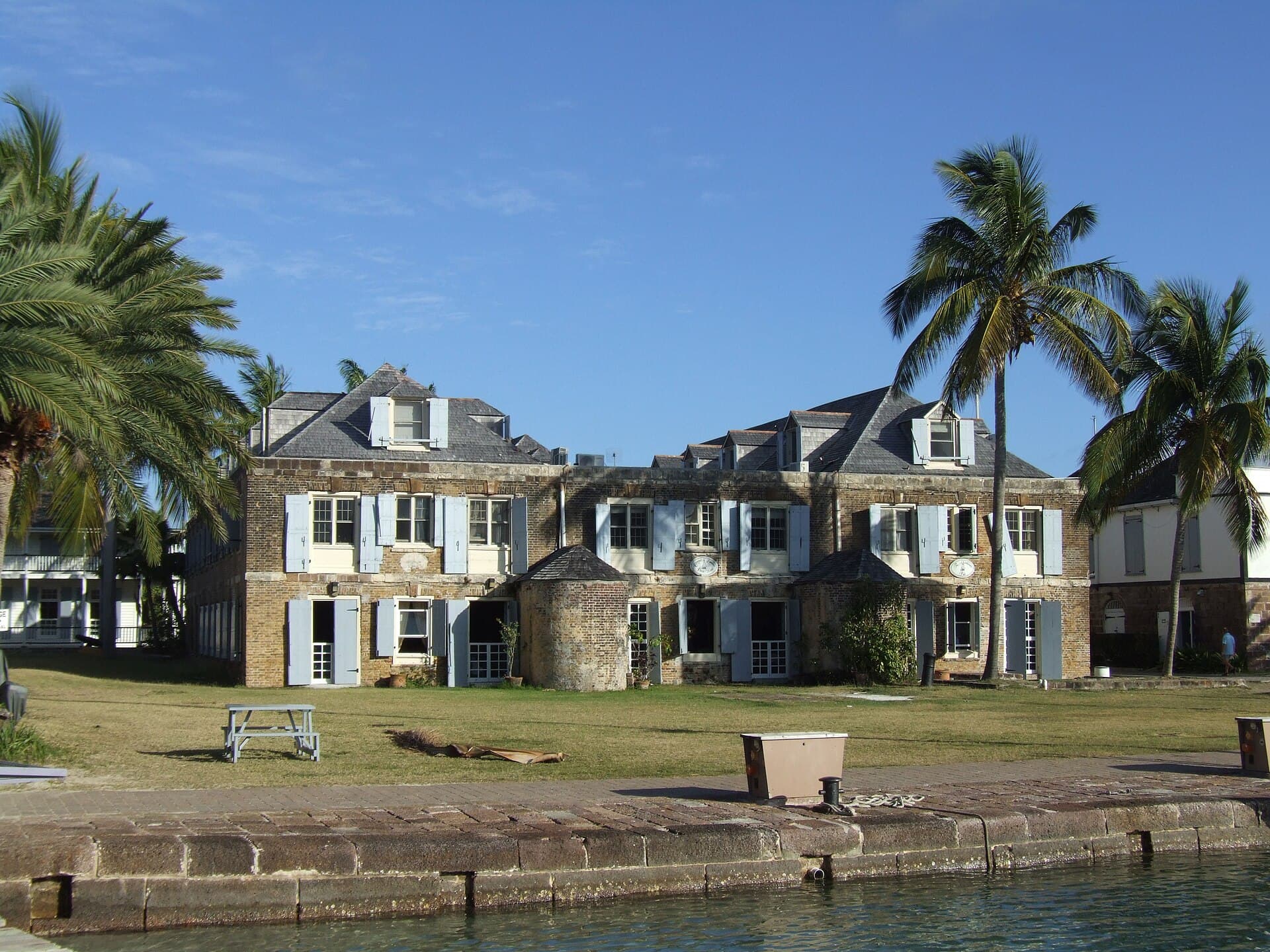
The sailing end of the island, wrapped around Nelson's Dockyard, a UNESCO World Heritage Site since 2016. Superyachts all winter, a real marine trade, Shirley Heights on a Sunday, and the closest thing here to a year-round expat village.
Dickenson Bay and Hodges Bay
The north-coast resort strip. Restaurants and beach clubs, the shortest run to the airport, and holiday-let pricing that follows.
Cedar Valley and Five Islands
Inland and residential, where the rent drops and the commute is five minutes. Where people move once the novelty of a sea view wears off.
Barbuda
Thirty miles north, roughly 1,600 people, pink sand and a frigate bird colony. A ferry or a charter hop away, with a clinic rather than a hospital and communal land you cannot buy into. Extraordinary, but not a first move.


07 · Help
Who to call before you wire anything
Antigua has a small professional bench and a very large marketing industry wrapped around its passport. Here's who we send readers to, and what each one is worth a call about.


MyExpatTaxes
U.S. Expat Tax Service
MyExpatTaxes files U.S. returns for Americans abroad. The question to bring them is which of your income streams a zero-tax move genuinely helps, and which it does not touch at all.
Learn more
Flamingo Compliance | Tax Residency and Visa Tracker Platform
Tax Residency and Visa Tracker Platform
Flamingo Compliance tracks days and residency across borders. Here the counting matters three times over: five days for a new citizen, 30 for the tax certificate, 183 for ordinary tax residency.
Learn more

Moneycorp
Currency Exchange
Moneycorp moves currency internationally. The pegged EC dollar means the rate isn't your risk, so compare them on fees and on how they handle one large payment like a property closing. This choice can save you thousands in processing fees alone.
Learn more
Aqua Moving Services
Worldwide Shipping and Moving Service
Aqua Moving Services ships household goods worldwide. Customs duty on what you bring runs from nothing to 70 percent depending on the item, so what you ship is a budget decision.
Learn moreGo deeper
We don't have an Antigua-specific report yet. These three cover the ground this page keeps running into.
Do I have enough money?
Our partners at Beacon Financial outline how much money a move abroad could cost you as well as how much you may need to retire.
The budgeting session to watch before you pick a neighborhood, since rent is what decides your number here.
Can I get healthcare?
Our partner Hunter Schultz explains what you need to know if you're concerned about healthcare abroad.
Useful groundwork for a country where the public system is fine for routine care and thin for anything else.
US Expat Taxes 101
Moving abroad doesn't mean leaving the US tax system behind. In this webinar, we'll cover the basics every American expat should know, including filing requirements, foreign income exclusions, tax treaties, reporting foreign bank accounts, and common mistakes to avoid. Whether you're planning your move or already living overseas, this session will help you better understand your tax obligations and where to turn for professional guidance.
The filing obligations that follow you to a zero-tax island, which is the part people get wrong.
Talk to people working the same problem

Visa Path: Golden visas
Expatsi Community
We don't have an Antigua and Barbuda room yet. The investment-residency group is where the people comparing Caribbean passports, fees and residence rules are already talking, and they've read the same pitches you have.
Join the communityWhat people ask us about Antigua and Barbuda
What is healthcare like in Antigua and Barbuda?
Good for everyday medicine, thin for anything serious. The islands have one general hospital, Mount St John's Medical Center, plus a network of community clinics, and the public Medical Benefits Scheme makes care free for children and over-60s and cheap for everyone else. Routine appointments and chronic conditions are handled competently. Advanced diagnostics, complex surgery and cancer care happen off-island, which is why residents carry private insurance with a high evacuation limit.
What do people wish they had known before moving to Antigua?
Utilities. Nothing here runs off a river, because there is not one, and United Nations figures put Antigua and Barbuda below the international water-scarcity threshold. Over 90 percent of what comes out of the tap was seawater until a desalination plant got hold of it, and parts of the island still receive water on named days rather than around the clock. Power costs about 37 US cents a kilowatt hour on imported fuel. A cistern and solar panels are ordinary here, not eccentric.
Does Antigua and Barbuda really have no income tax?
There is no personal income tax in Antigua and Barbuda, none on capital gains, and none on wealth or inheritance. The tax was scrapped in 2016 and the government funds itself through a 15 percent sales tax, customs duty and a small property tax. The catch for Americans is that you keep owing US tax on worldwide income, and with nothing paid locally there is no foreign tax credit to offset it.
Is the Antigua and Barbuda passport still worth buying?
The answer depends on what you want the passport to do. Washington narrowed several US visa categories for Antiguan and Barbudan nationals from January 2026, naming the investment-citizenship program as the reason, and Brussels asked Antigua and four Caribbean neighbors in June 2026 to wind their programs down by 2028 or see Schengen access reviewed. Nothing has been withdrawn yet. If the point of the purchase was travel, that value is now at real risk. If it was a tax address, a house and the freedom of the Caribbean Community, nothing has changed.
Is Antigua and Barbuda safe?
The US State Department keeps Antigua and Barbuda at Level 1, its lowest of four advisory tiers, and reissued that rating in May 2026 with no change. Violent crime is uncommon; the recurring problems are opportunistic theft around tourist areas and unlit rural roads after dark. Numbeo's crowd-sourced safety score is more middling, around 47 to 51, so read the island as low-crime rather than risk-free.
How much does it cost to live in Antigua and Barbuda?
One person in Antigua and Barbuda spends roughly $2,000 to $3,000 monthly, and a couple $2,500 to $4,000. Rent decides where in that band you land, and the resort coasts run about double the inland neighborhoods for the same apartment. Two line items catch newcomers out: electricity at $150 to $300 a month, and imported groceries priced 30 to 50 percent above mainland US shelves.
How do Americans get residency in Antigua and Barbuda?
Three routes do the work. Remote workers take the Nomad Digital Residence: two years, a declared $50,000 of annual income, and $1,500 for a single applicant rising with each dependent. Buyers take citizenship by investment, which starts at $230,000 into the National Development Fund for a family of four. High earners who want only a tax address take the residency program: keep a home there, show up 30 days a year, earn $100,000 and pay $20,000 a year in flat tax. Anyone who wants just a season needs no permit, since arrival gives an American up to half a year.
Can you retire in Antigua and Barbuda?
Yes, and zero income tax plus warmth all year is the draw, but Antigua and Barbuda has no retirement visa as such. Retirees generally arrive through citizenship by investment or the tax residency program. Weigh the medical side hard before you commit: with a single general hospital on the islands, anything complex is treated off-island, so an insurance policy with a large evacuation limit is the load-bearing purchase.
Sources
- Citizenship by Investment Unit: National Development Fund · Government of Antigua and Barbuda (checked 2026-09-17)
- Nomad Digital Residence Visa · Antigua and Barbuda Department of Immigration (checked 2026-09-17)
- Expanded Travel Ban to Take Effect January 1, 2026 · Congressional Research Service (checked 2026-09-17)
- Suspension of Visa Issuance to Foreign Nationals · US Department of State (checked 2026-09-17)
- Caribbean CBI Passports Face Schengen Reckoning · Forbes (checked 2026-09-17)
- Antigua and Barbuda Travel Advisory, Level 1 · US Department of State (checked 2026-09-17)
- Antigua and Barbuda: water and sanitation profile · United Nations Department of Economic and Social Affairs (checked 2026-09-17)
- Water Production in Antigua · Antigua Public Utilities Authority (checked 2026-09-17)
- Hotter, Drier Days Ahead Due to El Nino · Antigua and Barbuda Meteorological Service, Climate Section (checked 2026-09-17)
- Mount St. John's Medical Center · Ministry of Health, Wellness and the Environment (checked 2026-09-17)
- Medical Benefits Scheme · Government of Antigua and Barbuda (checked 2026-09-17)
- Antigua and Barbuda cost of living for expats · Expat Focus (checked 2026-09-17)
- Flights to and from V.C. Bird International Airport · FlightConnections (checked 2026-09-17)
- Antigua and Barbuda taxes for U.S. expats · Greenback Expat Tax Services (checked 2026-09-17)
Does a small island add up for you?
Schedule a call with out Expatsi advisor to plan your own path abroad.
teal