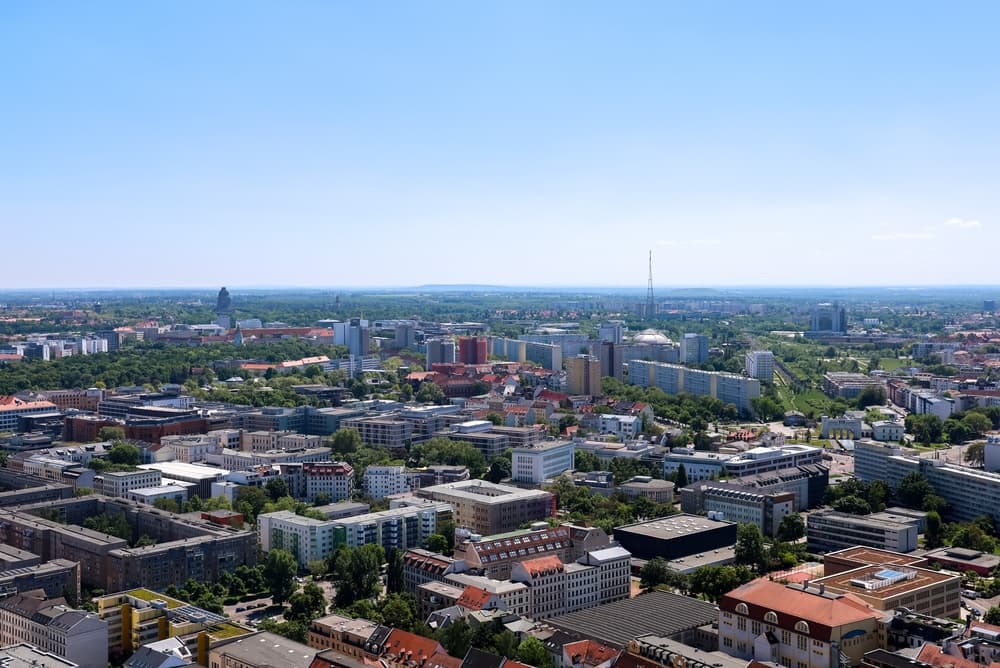
Leipzig: galleries in a cotton mill, lakes where the mines were
A university city in Saxony where artists took over a giant old mill, flooded coal pits became swimming lakes, and trams do most of the commuting.
- 611,850
- Population (2024)
- $2,100/mo
- Monthly budget · single
- 50°F / 10°C
- Avg temperature
Budget around $2,100 a month in U.S. dollars to live alone in Leipzig as of 2026, with most singles landing between $1,800 and $2,300. A couple needs about $3,300, and a family of four about $5,200. A one-bedroom apartment costs about $850 a month in the center and about $650 farther out. Of the seven German cities we cover, that's the lowest budget and the lowest central rent; Berlin runs about $2,800 for one person.
Leipzig is a university city of about 612,000, and it fits remote workers, freelancers and creatives, families who want an English-language school, and retirees who'd rather have museums and trams than a beach. The west side (Plagwitz, Lindenau, and leafy Schleußig) draws the art crowd. Südvorstadt is known for its bars and restaurants, and Gohlis, to the north, is quieter with more parks.
Two things to weigh before you move: the winters are long and dim, and daily life, from the landlord to the foreigners office, runs in German.

Reviewed and updated September 26, 2026 · 4 min read
At a glance
$2,100
Monthly budget · single person
$850/mo 1-bed rent, center
67/100
Safety index
$45
Internet / month
50°Fannual average
Jan 34° · Jul 67°
Climate
611,850
Population (2024)
Expatsi estimates, updated Aug 2026, based on rental listings, government statistics, and local reporting.
Cost of living
What it costs to live in Leipzig
Single person
$1,800–$2,300/mo
about 30% below Austin, TX
Couple
$2,900–$3,700/mo
about 30% below Austin, TX
Family of four
$4,600–$5,800/mo
about 35% below Austin, TX
Compared with Austin, TX (Expatsi estimate, 2026).
- $14 −30%
- Inexpensive meal
- $750–$950/mo −56%
- 1-bed rent, center
- $550–$700/mo −52%
- 1-bed rent, outside
- $45/mo −31%
- Internet
- $70/mo +70%
- Transit pass
- $404/sq ft −38%
- Buy price, center
Expatsi estimates, updated Aug 2026, based on rental listings, government statistics, and local reporting.
Daily life
How Leipzig lives
- B+ grade, 69th percentile among the cities we track
- Dining & cafésstrong
- A- grade, 84th percentile among the cities we track
- Arts & culturestrong
- A- grade, 83rd percentile among the cities we track
- Parks & outdoorsstrong
- A grade, 86th percentile among the cities we track
- Schools & educationstandout
- A grade, 86th percentile among the cities we track
- Healthcare accessstandout
- A- grade, 85th percentile among the cities we track
- Bike infrastructurestrong
- A- grade, 72nd percentile among the cities we track
- Public transitstrong
- A grade, good physical accessibility
- Accessibilitygood
Graded on OpenStreetMap amenity density relative to the 369 cities we track. Accessibility is the exception: it's graded against a fixed standard (terrain steepness and sidewalk surfaces), not a curve.
Climate
Weather through the year
Annual average 50°F (10°C) · 24 in of rain a year · Source: Meteostat station normals (D2928, 1991-2020)
On the ground
Scenes from Leipzig
Getting around
Transport in Leipzig
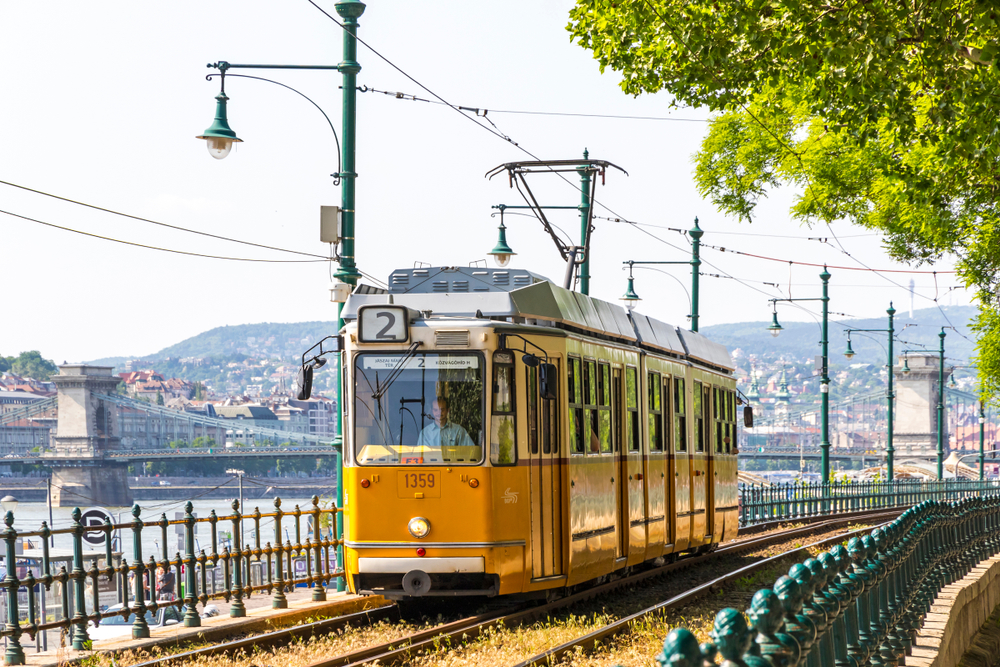
Trams carry most of Leipzig's daily trips, with buses filling the gaps and the S-Bahn running through a tunnel under the city center out to the suburbs and the airport. LVB, the city's transit company, runs the trams and buses, and fares follow the regional MDV price schedule. Budget about $70 a month for transit. That lines up with the Deutschlandticket, a nationwide pass Germany prices at €63 a month in 2026, which covers local buses, trams, S-Bahn and regional trains anywhere in the country, though not the fast ICE and IC trains.
For longer trips, Leipzig/Halle Airport has its own station, about 14 minutes by train from the main station. An ICE to Berlin ride takes about an hour and 15 minutes, which is handy when you need a bigger airport or a weekend in the capital.
Inside the city, a car is optional. Bike routes run south through the Auwald floodplain forest to the Neuseenland, a chain of lakes made from flooded lignite mines. The closest, Cospudener See, sits on the southern edge of town with a loop path of about 7 miles (11 km). A car mostly earns its keep on trips into the countryside.
- 46/sq mi
- Transit stops
- 67/sq mi
- Bike infrastructure
- 266/sq mi
- Wheelchair-accessible places
Mapped features per square mile from OpenStreetMap.
Keep exploring
Places like Leipzig
Community
Community & practical notes
Community: About 14% of Leipzig's residents held a foreign passport at the end of 2025, according to Saxony's integration commissioner. The foreign share of the local workforce more than tripled between 2014 and 2024, from 3.1% to 10.8%. Expect an international scene that's growing rather than long established. The Spinnerei in the west, once the largest cotton mill in continental Europe, now holds about 100 artists' studios plus a cluster of galleries; its open days are an easy way into the city's creative circles. For meeting Germans, a sports club or German class does more than any expat bar.
Healthcare: Germany won't issue a residence permit without health insurance, and coverage has to stay continuous while you live here. Salaried employees normally join the public system through payroll. Retirees and many self-employed Americans end up with private German coverage, since Medicare doesn't count and public insurers often won't take newcomers without prior German or EU insurance history. University of Leipzig Medical Center treats about 400,000 patients a year, and the city publishes its Health Guide for Migrants in English, a useful starting point for finding care.
Schools: Leipzig International School, open since 1992, teaches in English from nursery through grade 12 and finishes with the IB Diploma. It has about 1,000 students from more than 70 countries, and Americans are among the largest groups after Germans. The main campus is in Schleußig and the kindergarten is in Plagwitz, which makes the west side convenient for families using it.
Remote work: Home internet runs about $45 a month. For a desk outside the apartment, Basislager is a large coworking space near the center on the south side, and SpinLab runs one inside the Spinnerei. Leipzig is on Central European Time, so a U.S. workday starts in your afternoon.
Limited mobility: Transit is workable but uneven. At the end of 2024, just under 70% of tram stops and 56% of bus stops in the city were barrier-free, according to the city's answer to a council question, and LVB's LeipzigMOVE app marks accessible stops with a wheelchair symbol so you can plan around the rest. Residents with a German severe-disability pass and the right designation ride local transit free. Ask about elevators and step-free entrances before you sign a lease.
Retirement: Germany has no dedicated retirement visa. Americans who want to retire here apply for a general residence permit under Section 7(1) of the Residence Act, showing pension, Social Security, or investment income that covers their costs, plus private German health insurance. There's no published income floor, and the local foreigners office decides case by case, so Leipzig's lower costs help when it weighs whether your income is enough. Compare routes in our guide to retirement visa options, and get the country overview in our Germany guide.
Housing
Renting and buying
- 1-bed rent (center)
- $750–$950/mo
- 1-bed rent (outside center)
- $550–$700/mo
- Buy price (center)
- $404/sq ft
- Buy price (outside center)
- $237/sq ft
Expatsi estimates, based on rental listings, government statistics, and local reporting.
Good to know
Frequently asked questions
Can Americans retire in Leipzig?
Yes, but not on a retirement visa, because Germany doesn't have one. Retirees apply for a general residence permit under Section 7(1) of Germany's Residence Act, proving steady income such as a pension or Social Security and holding private German health insurance, since Medicare isn't accepted. There's no fixed income minimum; the local foreigners office decides each case.
What is the weather like in Leipzig?
Leipzig has four distinct seasons. July averages highs near 77F and lows near 58F, while January averages highs near 39F and lows near 29F. The city gets about 24 inches of precipitation a year, and November through February are the grayest months.
Do I need to speak German to live in Leipzig?
Not for a visit, but it matters for settling in, because government offices and official paperwork work in German. The city does run an English section of its website and publishes its health guide for migrants in English, and Leipzig International School teaches in English.
Is Leipzig safe?
Yes, by big-city standards. Leipzig scores 67 out of 100 on our safety index, with a crime index of 33. That's a little above Berlin and Hamburg, both at 64, and below Munich at 80. Normal big-city caution applies.
How far is Leipzig from Berlin?
About an hour and 15 minutes by ICE train, main station to main station. That puts Berlin in easy range for a day trip or for flights from its larger airport.
Do you need a car in Leipzig?
No. Trams, buses and the S-Bahn cover the city, and a transit budget of about $70 a month is enough for most people. That matches the Deutschlandticket, which Germany prices at €63 a month in 2026 and which covers local and regional transit anywhere in the country. A car mainly helps for trips into the countryside.
How much does it cost to live in Leipzig?
Plan on about $2,100 a month for one person in Leipzig as of 2026, with a typical range of $1,800 to $2,300. A couple spends about $3,300 and a family of four about $5,200. Rent is the biggest line: a one-bedroom averages about $850 in the center and $650 outside it.
See how Leipzig fits your life
Take the free Expatsi Test and compare Germany to nearly 200 countries on what actually matters: cost, healthcare, climate, and safety. About five minutes.
Why not you?