Living in Budapest on a U.S. income
What a month costs in Hungary's capital, how safe it feels, how you get around, and why staying past 90 days takes planning.
- 1,685,209
- Population (2025)
- $2,100/mo
- Monthly budget · single
- 53°F / 12°C
- Avg temperature
Plan on roughly $2,100 a month for one person in Budapest in 2026, and most singles land somewhere between $1,800 and $2,400. A couple spends about $3,000 and a family of four about $4,400. Rent is the biggest line: around $950 for a one-bedroom in the center, or $700 farther out. All figures are in U.S. dollars.
The city suits remote workers and founders earning in dollars, people with a Hungarian job offer, and anyone with Hungarian family. About 1.7 million people live here, split between flat, busy Pest and the hillier, quieter Buda side of the Danube.
Living here is the easy half. Staying is harder, because Hungary has no residence permit for retirees or people living on savings. Sort out your route in before you sign a lease.

Reviewed and updated October 8, 2026 · 4 min read
At a glance
$2,100
Monthly budget · single person
$950/mo 1-bed rent, center
68/100
Safety index
$15
Internet / month
53°Fannual average
Jan 33° · Jul 73°
Climate
1,685,209
Population (2025)
Expatsi estimates, updated Oct 2026, based on rental listings, government statistics, and local reporting.
Cost of living
What it costs to live in Budapest
Single person
$1,800–$2,400/mo
about 30% below Austin, TX
Couple
$2,600–$3,400/mo
about 35% below Austin, TX
Family of four
$3,900–$4,900/mo
about 45% below Austin, TX
Compared with Austin, TX (Expatsi estimate, 2026).
- $11 −45%
- Inexpensive meal
- $850–$1,050/mo −51%
- 1-bed rent, center
- $600–$800/mo −48%
- 1-bed rent, outside
- $15/mo −77%
- Internet
- $30/mo −27%
- Transit pass
- $465/sq ft −29%
- Buy price, center
Expatsi estimates, updated Oct 2026, based on rental listings, government statistics, and local reporting.
Daily life
How Budapest lives
- A grade, 94th percentile among the cities we track
- Dining & cafésstandout
- A+ grade, 97th percentile among the cities we track
- Arts & culturestandout
- A grade, 85th percentile among the cities we track
- Parks & outdoorsstandout
- A grade, 86th percentile among the cities we track
- Schools & educationstandout
- A grade, 90th percentile among the cities we track
- Healthcare accessstandout
- A- grade, 76th percentile among the cities we track
- Bike infrastructurestrong
- A grade, 95th percentile among the cities we track
- Public transitstandout
- B+ grade, moderate physical accessibility
- Accessibilitymoderate
Graded on OpenStreetMap amenity density relative to the 298 cities we track. Accessibility is the exception: it's graded against a fixed standard (terrain steepness and sidewalk surfaces), not a curve.
Climate
Weather through the year
Annual average 53°F (12°C) · 22 in of rain a year · Source: Meteostat station normals (12843, 1991-2020)
On the ground
Scenes from Budapest
Getting around
Transport in Budapest
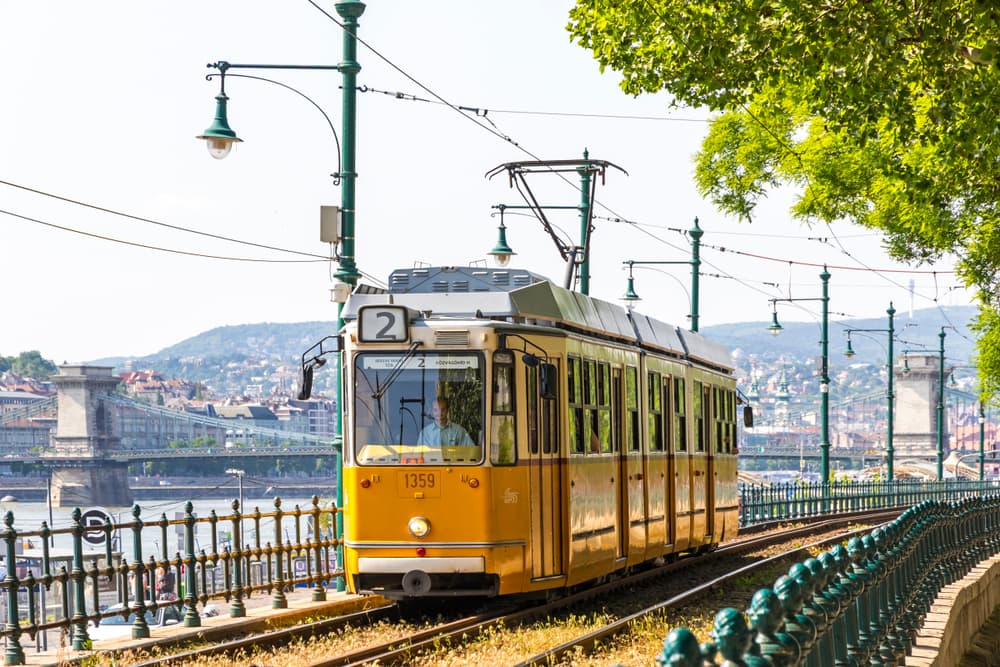
Budapest runs on BKK, the city transit agency: metro, trams, buses and trolleybuses, all on one monthly pass that costs about $30. The pass covers almost every BKK line inside city limits, metro included, plus the H5 to H9 suburban HÉV trains. It needs a photo ID to go with it, and it doesn't cover the 100E airport express bus, so budget a separate ticket for trips to the airport.
Budapest is flat, so walking and short tram hops cover a lot of daily life there. Buda's hills make walking slower and the bus more useful.
Taxis are where newcomers get burned. The U.S. State Department warns that hailing one on the street is risky, with rigged meters and long routes, and names Főtaxi, City Taxi and 6×6 as reputable companies. Book through one of them instead.
Do you need a car? Not for city life. A car makes sense for weekends in the countryside, and renting one for those is simpler than parking one in the inner districts.
- 84/sq mi
- Transit stops
- 40/sq mi
- Bike infrastructure
- 217/sq mi
- Wheelchair-accessible places
Mapped features per square mile from OpenStreetMap.
Keep exploring
Places like Budapest
Living here
Community and practical notes
Safety
The U.S. State Department rated Hungary Level 1, exercise normal precautions, in April 2026. The problems it describes in Budapest are mostly petty: pickpockets on crowded metros and at big stations, and Americans overcharged for food, drinks or taxis. Check prices before you order. The advisory also notes violent crimes reported in the Ruin Bar District over the past year, so treat late nights there the way you would any big nightlife strip.
Healthcare
Most hospitals abroad won't take your U.S. insurance, so you'll need a policy that works here; every permit application asks for proof of coverage anyway. For care in English, private clinics fill the gap. FirstMed, for one, says its English-speaking doctors have served expats for 27 years. The public system runs on a TAJ number tied to your residence status, and our Hungary guide explains who can get one and when. In an emergency, dial 112 for English-speaking responders.
Remote work
Home internet runs about $15 a month. The constraint is the clock: Budapest is usually six hours ahead of New York, so an East Coast team's afternoon lands in your evening.
Schools
The American International School of Budapest was founded by the U.S. Embassy in 1973 and teaches in English. Its main campus is in Nagykovácsi, just outside the city limits, so check the commute before you choose a neighborhood.
Limited mobility
Budapest is a mixed picture. Every station on the M4 metro line has a lift, but on M2 only three stations are step-free, and M3 has step-free access at only some of its stations. Above ground is better: BKK says over 90% of its buses are low-floor, only low-floor buses run at night and on weekends, and every trolleybus line has low-floor vehicles. Trams lag, with low-floor cars on roughly 30% of lines. BKK's app and timetables flag which departures are accessible. Buda's hills are hard going in a wheelchair; flat Pest is easier.
Retirement
Budapest has plenty to offer a retiree, thermal baths and Danube views among them, and a couple's budget of about $3,000 a month. The visa is the problem. Hungary's 2024 immigration law abolished the flexible permit that retirees used to rely on, and nothing replaced it for people living on a pension. Realistic routes run through Hungarian family, Hungarian ancestry or an investment fund. Compare the alternatives in our guide to retirement visas, and read the full guide to moving to Hungary before you decide.
Housing
Renting and buying
- 1-bed rent (center)
- $850–$1,050/mo
- 1-bed rent (outside center)
- $600–$800/mo
- Buy price (center)
- $465/sq ft
- Buy price (outside center)
- $307/sq ft
Expatsi estimates, based on rental listings, government statistics, and local reporting.
Good to know
Frequently asked questions
Does U.S. health insurance work in Budapest?
Usually not. The U.S. State Department notes that most hospitals and doctors abroad don't accept U.S. health insurance, so plan on an international or Hungarian policy, which residence permit applications require anyway. Private clinics with English-speaking doctors, such as FirstMed, serve many foreign residents. In an emergency, dial 112 for English-speaking responders.
Is Budapest safe for Americans?
Generally, yes. The U.S. State Department rated Hungary Level 1, exercise normal precautions, in April 2026. The main risks in Budapest are pickpocketing on crowded metros and at stations, and overcharging at bars, restaurants and taxis. Check prices before ordering, don't hail taxis on the street, and take extra care late at night in the Ruin Bar District, where the State Department notes violent crimes have been reported.
Can an American retire in Budapest?
Not on a pension alone. Hungary has no retirement or passive-income residence permit; its 2024 immigration law abolished the flexible permit retirees once used. A U.S. passport allows visitor stays of up to 90 days in any 180 across the Schengen area, which isn't residency. Americans who retire in Budapest usually qualify through a Hungarian spouse or relative, Hungarian ancestry, or the guest investor fund route.
What is the weather like in Budapest?
Budapest has four distinct seasons. July is the warmest month, with average highs near 83F, and January the coldest, with average highs near 38F and average lows near 28F. The city gets about 22 inches of precipitation a year, with late spring and summer the wettest months.
Can I work remotely from Budapest?
Yes, through Hungary's White Card, a residence permit for people who work for a company based outside Hungary or own a foreign company. It lasts one year and can be extended once. It doesn't lead to permanent residence, doesn't let family join you, and requires private health insurance for the whole stay. Check the current income requirement with the immigration office before you apply.
Do I need a car in Budapest?
No. Metro, trams, buses and trolleybuses run on one BKK monthly pass of about $30, which covers almost every line within the city. The pass doesn't include the 100E airport express bus. For taxis, book a reputable company such as Főtaxi, City Taxi or 6×6 rather than hailing one on the street.
How much does it cost to live in Budapest per month?
In 2026, one person in Budapest spends about $2,100 a month, with most falling between $1,800 and $2,400. A couple spends about $3,000 and a family of four about $4,400. A one-bedroom apartment in the center rents for around $950 a month, or about $700 outside the center. These are U.S. dollar figures.
See how Budapest fits your life
Take the free Expatsi Test and compare Hungary to over 100 countries on what actually matters: cost, healthcare, climate, and safety. About five minutes.
Why not you?