Complete guide to moving to Madagascar
Moving to Madagascar: the 2026 guide for Americans
A huge, wild island where a couple can live on about $1,250 a month, with French-speaking paperwork, patchy power, and a residence system built for retirees, investors and hired workers. Here's how it works and who it fits.
Madagascar rewards people who come prepared: a pension or a business plan, a French-speaking helper, and real patience. This guide covers the costs, the residence routes, the day-to-day tradeoffs, and who to call.

Reviewed and updated October 22, 2026 · 13 min read
01 · Is it for you
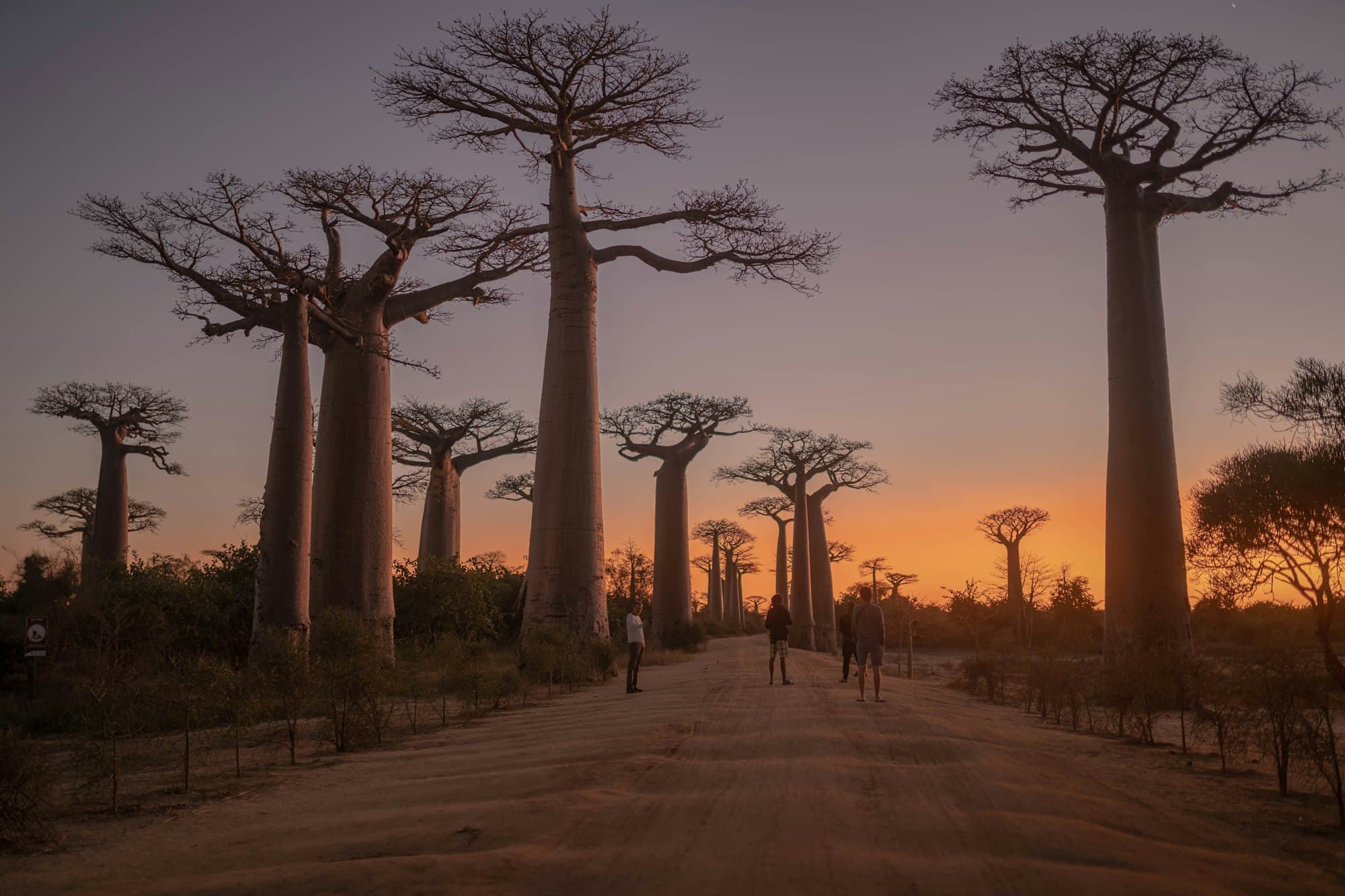
An island for people who want something far from ordinary
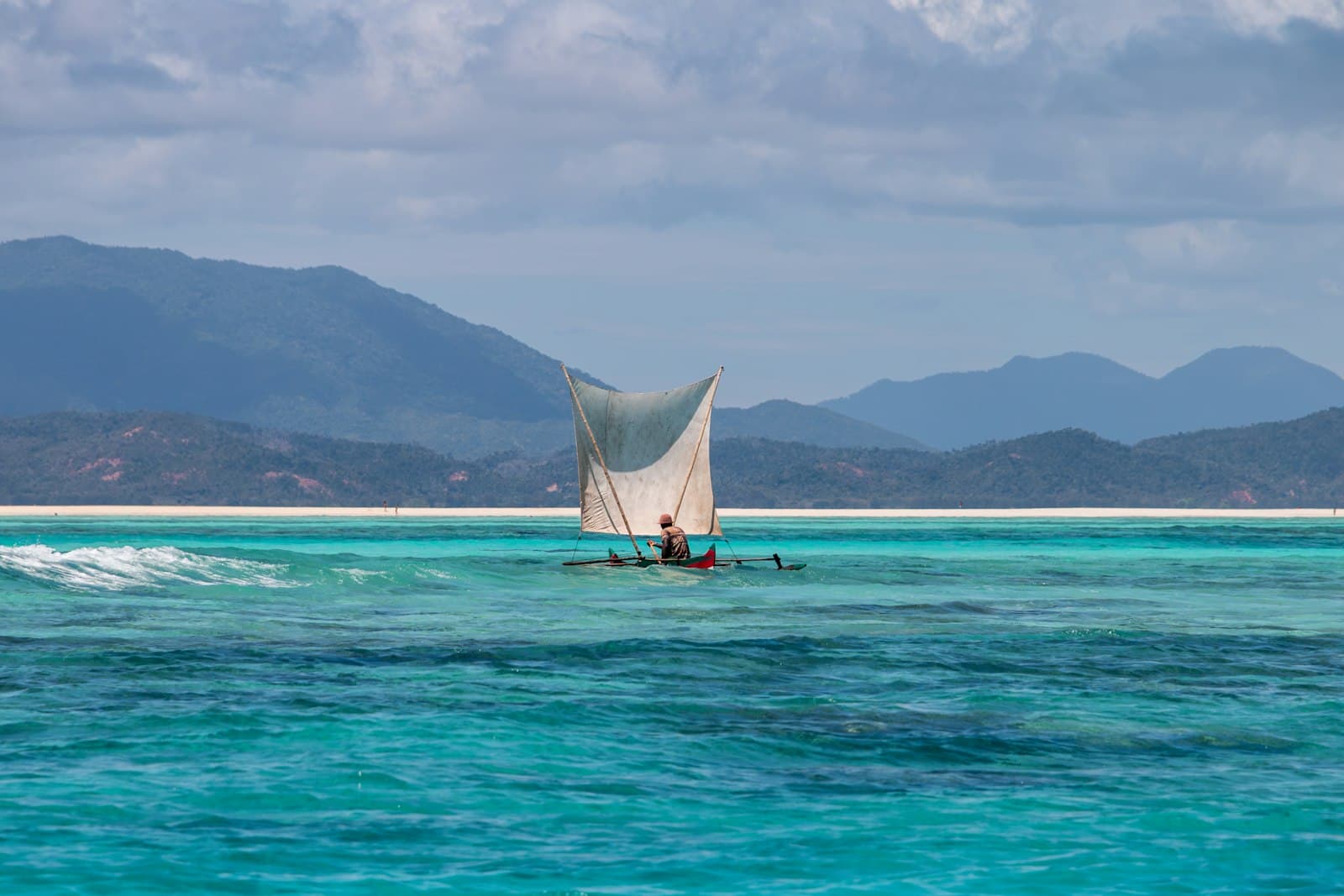
Very few Americans move to Madagascar, and that's part of the draw for the ones who do. This is a country for people who want wild coastline, lemurs in the forests, and a daily life nothing like the one they're leaving. It's not a country for people who want things to run on time.
Then there's the money. Everyday costs sit far below what most Americans pay at home, and for a retiree on Social Security that changes what's possible. The full numbers are in the next chapter.
The landscapes are the other reason people come. The island stretches from cool central highlands, where the capital Antananarivo sits, down to dry spiny forest in the south and beaches in the north and west. In the highlands, July highs average about 68°F with lows near 52°F, so you won't need air conditioning there. The coasts are hot and humid for much of the year.
The foreign community is small and mostly European. People who have moved there describe it as mainly French, Italian, German and Canadian, which tells you something useful: the systems, the paperwork and a lot of the social life run in French. Malagasy and French are the official languages, and about a quarter of the population speaks French.
Here's the catch
Madagascar asks a lot of newcomers, so here's the plain version before you fall for the photos.
First, politics. In September 2025, youth-led protests broke out over power and water cuts that had become routine across the country. Within weeks the president had fled, and on October 17, 2025, Colonel Michael Randrianirina was sworn in at the head of a military-led transition council. The new government has promised elections within 18 to 24 months. The U.S. lowered its travel advisory back to Level 2 in December 2025, but you're moving into a transition, not a settled system.
Second, infrastructure. The national utility, Jirama, still cuts power on a rotating basis when plants fail or reservoirs run low. Healthcare is thin outside a few private clinics in the capital, and serious cases leave the country.
Third, there's no easy door for remote workers. Madagascar has no digital nomad visa, and a tourist visa can't be turned into residence once you've landed.
If you've got steady retirement income, a real business plan, or a job offer, and you're comfortable in French or willing to hire help, keep reading. The rest of this guide covers costs, the residence routes, the practical stuff, where people settle, and who can help.
- Cost of living (single)
- $750/mo
- Safety index
- 45/100
- Internet speed
- 20 Mbps
- Currency
- Malagasy Ariary (MGA)
- English proficiency
- 20/100
- Capital
- Antananarivo
02 · Money
Madagascar's monthly costs, in U.S. dollars
$1,250
Monthly budget, couple
comfortable, all in
$750
Monthly budget, single
comfortable, all in
$2,050
Monthly budget, family
housing included
$350
Rent, 1-bed city center
$100 outside the center
$3
Inexpensive meal out
local restaurants
$9
Monthly local transport
local buses
$52
Home internet, monthly
about 20 Mbps typical
45/100
Safety index
use care after dark
Where your money goes, and where it doesn't stretch
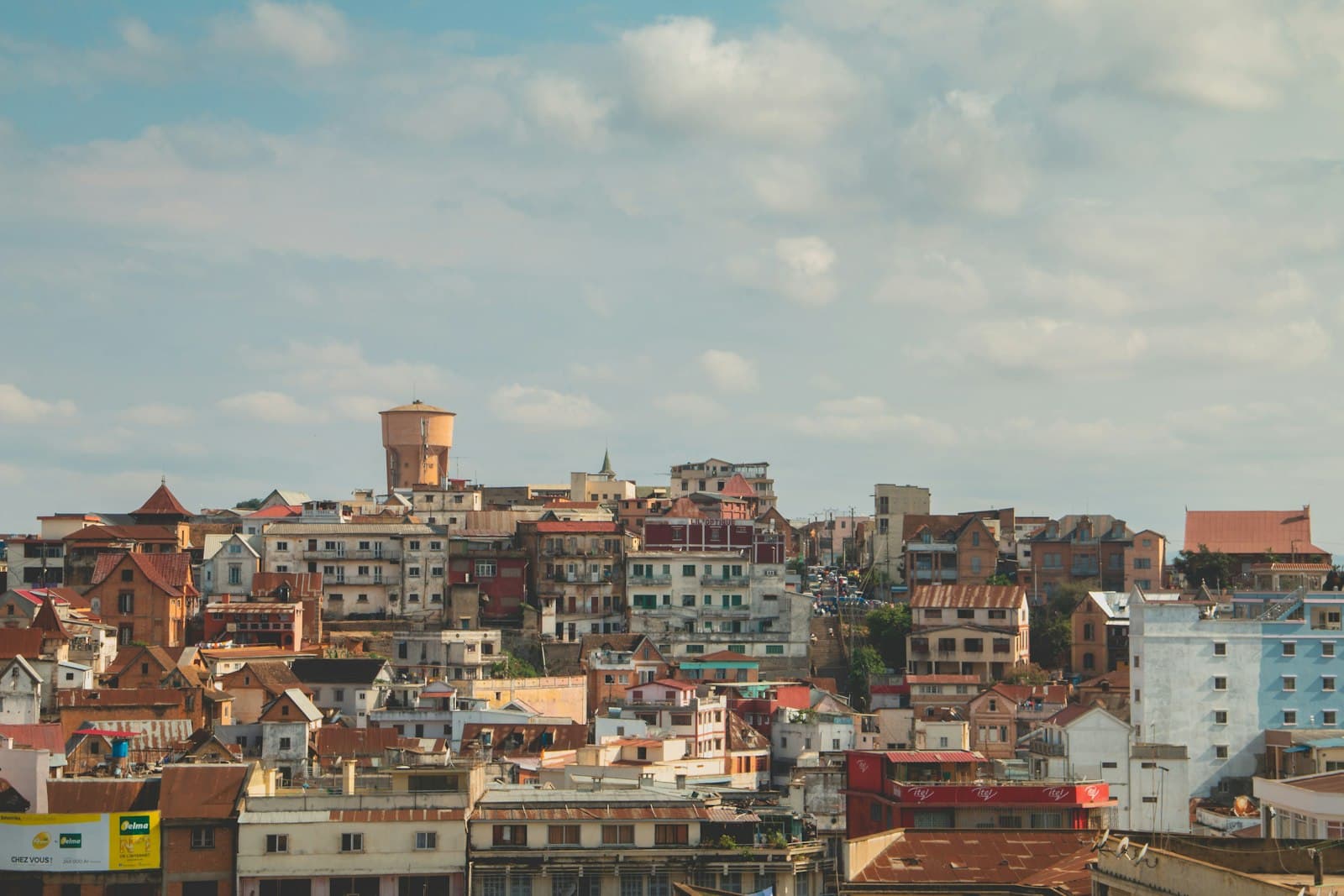
The figures above are national averages from our 2026 data, and the gap between center and outer rents is the story: the neighborhoods foreigners want, with a guard, a generator and a reliable water supply, cost far more than the averages suggest.
The local currency is the ariary, and it moves. In September 2026 a dollar bought about 4,323 ariary and a euro about 4,935. Local reporting ties the ariary's slide to import bills for fuel, food and equipment outpacing export income. If your income is in dollars, a weaker ariary works in your favor, but prices of imported goods climb with it.
The bigger costs are the ones you won't see on a price list. Imported foods, cheese, wine and electronics cost more than you're used to because almost everything arrives by ship or plane. It's worth budgeting for a backup generator or solar setup because the grid isn't reliable. Home internet averages about $52 a month in our data, at speeds around 20 Mbps, and a satellite connection costs extra. And health insurance with evacuation coverage isn't optional here, which we'll get to.
The practical takeaway: the headline numbers are real for a simple local life, but a comfortable American-style setup in Antananarivo or on Nosy Be costs more than the averages. Budget toward the top of the range, and keep a cushion for flights home.
A low bar for retirees, on paper
Madagascar's retiree file asks for proof of a pension transfer of at least 500 euros a month, about $570 at September 2026 rates. That's below the $750 our data puts on a comfortable single budget, so the visa floor isn't the hard part. Covering real costs, private healthcare and evacuation insurance is. More on the routes now.
03 · Getting residency
Four ways to live in Madagascar legally, and the one that doesn't exist
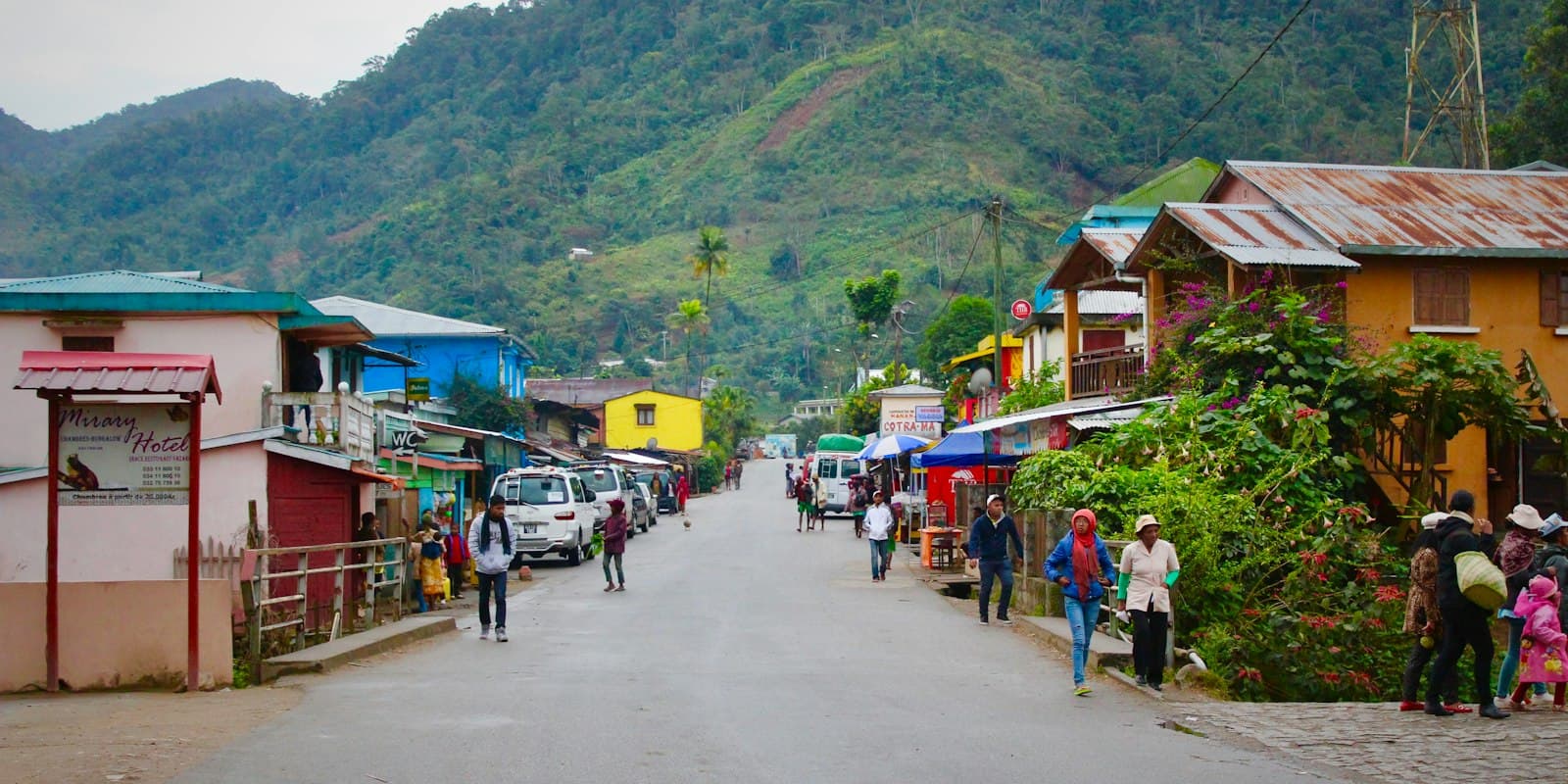
Every long-term route into Madagascar runs through the same two-step system, so learn that first. Then pick the category that matches why you're going.
How it works: the transformable visa
You can't show up as a tourist and switch to residence later. The embassy says it plainly: a short-stay visa can't be converted into a long-stay visa inside Madagascar. Instead, before you fly, you apply at a Malagasy embassy for a one-month "transformable" visa in your category. For Americans that means the embassy in Washington, DC, where the government fee is $48.16 per person as of 2026. Once you land, you have one month to file for your resident card at the Ministry of the Interior, using the same documents in their originals. The Paris embassy processes complete files in three working days, but the in-country step takes longer and runs in French.
The retiree, investor, worker and student files all need a criminal record extract less than three months old, so for Americans that means an FBI background check, ordered early.
Retiring on a pension: the retiree visa
This is the most workable route for most Americans. The Paris embassy's file asks for a retirement attestation, proof you've opened a bank account in Madagascar, and a bank attestation showing an international transfer of at least 500 euros a month from your pension or a foreign bank. Ask the Washington embassy how it wants Social Security income documented, since each embassy sets its own list. The Paris fee is 39 euros.
Starting a business: the investor visa
The investor route is for people who actually set up a company. The embassy file asks for a company that already exists: its statutes, tax and statistical cards, a declaration of existence from EDBM (the government's one-stop shop for investors), a trade register extract, and a company bank attestation from a bank in Madagascar. There's no published minimum investment. Advisers note that job creation for Malagasy workers weighs in the review. Plan on a local lawyer.
Taking a job: the worker visa
If a company in Madagascar hires you, it handles most of this. You'll need an employment contract endorsed by the labor ministry at EDBM and an employment authorization from the same ministry, plus the company's registration papers. NGO staff and people on long missions have their own separate categories on the embassy's list.
Studying: the student visa
Students need enrollment at a public or private university accredited by the Malagasy state, proof of funds or a scholarship, and a housing attestation from the school.
What about remote workers?
There's no digital nomad visa, and the embassy's list of long-stay categories has no remote-work option. Visitors can get a visa on arrival or an eVisa for up to 90 days, which costs 50 euros (about $59) as of 2026. Beyond that, remote workers either qualify through another category or don't stay long term.
A spouse and children under 21 can join the main applicant through family reunification, at 39 euros per person in Paris.
Madagascar Retiree Visa
The most workable route for Americans
For retirees with a pension or Social Security. Show a monthly transfer from abroad, open a local bank account, then file for your resident card within a month of landing.
- Valid passport (6+ months validity)
- Completed application form
- Passport photo
Madagascar Investor Visa
For people who register a real company
Set up a company through EDBM first, then apply with its registration papers and a local bank attestation. No published investment minimum.
- Valid passport (6+ months validity)
- Completed application form
- Passport photo
Madagascar Work Visa
Your employer does the heavy lifting
For people hired by a company in Madagascar. Needs a contract endorsed at EDBM and an employment authorization from the labor ministry.
- Valid passport (6+ months validity)
- Completed application form
- Passport photo
Madagascar Student Visa
For degree and long research programs
Requires enrollment at a state-accredited school plus proof of funds or a scholarship and a housing letter.
- Valid passport (6+ months validity)
- Completed application form
- Passport photo
04 · Daily realities
Healthcare, safety, taxes, money and the power grid

This is the chapter that decides whether Madagascar works for you. None of it is a secret, but people underestimate it.
Healthcare
The State Department describes medical infrastructure as very limited in populated areas and extremely limited in rural ones. Foreigners use private clinics in Antananarivo, such as Espace Médical, for routine care, and plan to leave the country for anything serious. Complex surgery generally means South Africa. That's why the State Department tells travelers to carry insurance that includes medical evacuation, and why you should treat that coverage as part of your rent, not an extra.
Plan for tropical health risks, too. Malaria is present everywhere except the city of Antananarivo, so anyone traveling outside the capital needs a plan with their doctor. Madagascar also reports plague cases every year. Talk to a travel medicine clinic before you go.
Safety
Madagascar sits at Level 2, "Exercise increased caution," in the U.S. advisory issued in December 2025. Violent crime, including armed robbery, happens across the country, especially after dark, in remote areas and on national roads in the south and west. A handful of areas carry a Level 3 rating for carjacking, banditry and kidnapping. U.S. government staff need special permission to drive between cities after dark, which is a good rule for you too. Protests over politics and the economy happen regularly, especially near elections, and with elections promised within two years of the October 2025 takeover, expect more of them.
Taxes
Madagascar taxes its residents on worldwide income, and having a home there as an owner or tenant is enough to make you resident. Salary tax starts at 0% on the first 350,000 ariary a month (about $81) and tops out at 20% above 600,000 ariary (about $139). The U.S. taxes you wherever you live, and there's no U.S. income tax treaty with Madagascar. Foreign tax credits and the Foreign Earned Income Exclusion thus do the work of avoiding double tax. MyExpatTaxes, one of our partners, files U.S. returns for Americans abroad. Get advice on how Madagascar would treat your pension before you move.
Banking and money
You'll need a local bank account for the retiree and investor files anyway. ATMs exist in large cities and generally take only Visa-network cards, so bring a Visa debit card and a backup. Outside the big cities, plan on cash.
Power and internet
The grid is the daily frustration. In June 2026, Jirama announced rotating cuts of about 30 minutes per neighborhood during the evening peak in the capital after a plant failure, and outages were a trigger for the 2025 protests. Starlink has sold home service in Madagascar since June 2024, one way to stay online when the grid goes down.
Getting home
There are no direct flights from the U.S. Antananarivo connects nonstop to Paris, Addis Ababa, Nairobi, Johannesburg and Mauritius, so plan on one connection and a long travel day. The island runs on East Africa Time, seven to eight hours ahead of Eastern, by season.
This guide is dated on purpose
Madagascar changed governments in October 2025, raised visa fees in February 2026, and is heading toward new elections. Everything here reflects what we could verify as of September 2026. Before you file, confirm the current document list and fees with the Malagasy embassy in Washington and a local professional.
05 · Where people land
Highland capital or island coast: picking a base
Most foreigners start in Antananarivo, the capital, because that's where the embassies, the Ministry of the Interior, the banks, the private clinics and the international flights are. It sits in the cool highlands, it's hilly and crowded, and it's the one place where malaria isn't a daily concern. For anyone still finishing residence paperwork, living near the ministry saves a lot of trips.
The other pull is the coast. Nosy Be, the island off the northwest tip, has frequent flights to the capital and a well-established resort scene. Diego-Suarez in the far north, with its big natural harbor, and Sainte-Marie off the east coast suit people who don't mind longer supply lines. Toamasina is the working port on the east coast, and Mahajanga is the northwest's relaxed beach city. Coastal life comes with trade-offs: cyclone risk from January to March on the east side, more malaria, and a longer trip to good medical care.
Madagascar is a very big island with slow roads, so where you live shapes your whole routine. Most people rent for months before committing, and many split time between the capital and the coast. City guides for Madagascar are on the way; the ones that are live appear below.
06 · Your move team
The people who make a Madagascar move work
Madagascar is a place where the right help matters more than the right guidebook. The paperwork is in French, the healthcare plan has to include getting you out, and your money has to cross a volatile currency every month.
We don't yet have a vetted relocation firm on the ground in Madagascar, so we'll say so instead of pretending. What we do have are the Expatsi-vetted partners who handle the parts of this move that don't depend on a local office: your health coverage, your documents, your money, your taxes, your pets, and the language and culture shift.

Hunter Schultz
Healthcare Coach
A healthcare coach with more than 20 years of expat life and a background in air medical transport. His one-hour consultation maps the care plan you need for your destination, which in Madagascar starts with how you'd get out in an emergency.
Learn more
ExpatInsure
Global Health Insurance
Expatsi's international health-insurance partner, led by Andy Seale and Stephanie Edwards. They match you with a global plan, and they're the people to ask about coverage that includes medical evacuation.
Learn more
Legalize That Doc
Document Preparation
Melissa Di Nardo's document concierge gets U.S. birth and marriage certificates, FBI background checks and pension letters apostilled and legalized for use abroad, the stack every Malagasy residence file asks for.
Learn more
Moneycorp
Currency Exchange
A currency and international-payments firm working since 1979, led for U.S. clients by Kelly Cutchin. Useful for setting up the recurring transfer from your U.S. accounts that the retiree file expects.
Learn more
MyExpatTaxes
U.S. Expat Tax Service
Tax software and support built for Americans abroad, running since 2018. They file the U.S. returns you still owe once you live overseas, including foreign tax credits and the income exclusion.
Learn more
Bodzin Pet Travel Solutions
Pet Relocation
Aliza Bodzin's pet travel concierge plans the vaccines, microchip, crate and customs paperwork for a dog or cat on a long, multi-leg trip.
Learn more
Lingoda
Language Learning
An online language school founded by brothers Felix and Fabian Wunderlich, with live classes you can fit around a move. Handy for getting your French to a level that works at the ministry.
Learn more
Culturosity Co.
Cultural Skills Coach
Jennifer and Janka run intercultural coaching and workshops, using research-backed frameworks to help you adjust to a culture very different from home.
Learn more07 · Quick answers
Moving to Madagascar: frequently asked questions
Does Madagascar have a digital nomad visa?
No. Madagascar's long-stay categories cover retirees, investors, hired workers, students, family members and a few mission types, with no remote-work option. Visitors can stay up to 90 days on a visa on arrival or eVisa, which costs 50 euros (about $59) as of 2026.
Do I need to speak French to live in Madagascar?
It helps a lot. Malagasy and French are the official languages, residence paperwork runs through French-language ministries, and English is limited. About a quarter of Malagasy people speak French, so learning it, or hiring a French-speaking helper, makes daily life and paperwork far easier.
How much money do I need to retire in Madagascar?
The retiree file at the Paris embassy asks for proof of an international pension transfer of at least 500 euros a month, about $570 at September 2026 exchange rates. Real living costs are higher: Expatsi's data puts a comfortable budget at about $750 a month for one person and $1,250 for a couple, before health insurance with evacuation coverage.
Will I pay taxes in both Madagascar and the U.S.?
Possibly. Madagascar taxes residents on worldwide income, and having a home there as an owner or tenant can make you resident. The U.S. taxes citizens wherever they live, and there's no U.S.-Madagascar income tax treaty, so Americans rely on foreign tax credits and the Foreign Earned Income Exclusion. Get tax advice before you move.
Is Madagascar safe for Americans?
The U.S. State Department rates Madagascar Level 2, Exercise increased caution, as of its December 2025 advisory. It warns that armed robbery and assault occur nationwide, especially after dark, in remote areas and on national roads in the south and west, and it rates a few areas Level 3 for banditry and kidnapping. Protests happen regularly, particularly near elections.
Can foreigners buy property in Madagascar?
Foreigners can't own land outright on a freehold title. The common route is a 99-year lease that can be renewed for another 99 years, or holding property through a locally registered company, which still uses a long lease for the land. Putting land in a Malagasy friend's name gives you no legal claim to it.
Are there direct flights from the U.S. to Madagascar?
No. There are no nonstop flights from the United States. Antananarivo has nonstop service to Paris, Addis Ababa, Nairobi, Johannesburg and Mauritius, so expect at least one connection. Madagascar is seven to eight hours ahead of U.S. Eastern time, depending on the season.
Can Americans move to Madagascar?
Yes, but not on a tourist visa. Americans apply first at the Malagasy embassy in Washington, DC for a one-month transformable visa in a set category, such as retiree, investor, worker or student, then file for a resident card at the Ministry of the Interior within one month of arriving. A short-stay visa can't be converted into residence once you're in the country.
Sources
- Madagascar Travel Advisory and country information (Level 2, December 2025) · U.S. Department of State (checked September 2026)
- Visas d'entrée et de séjour à Madagascar (long-stay categories) · Embassy of Madagascar in France (checked September 2026)
- Visa transformable, retraité expatrié · Embassy of Madagascar in France (checked September 2026)
- Visa transformable, investisseur · Embassy of Madagascar in France (checked September 2026)
- Visa transformable, travailleur expatrié · Embassy of Madagascar in France (checked September 2026)
- Madagascar Long Term Stay Visa for U.S. Citizens (Washington, DC) · TravelDocs (checked September 2026)
- Madagascar triples its 15-day e-Visa fee (February 2026) · VisasNews (checked September 2026)
- Madagascar: Taxes on personal income and residence · PwC Worldwide Tax Summaries (checked September 2026)
- United States income tax treaties, A to Z · IRS (checked September 2026)
- L'ariary de nouveau sous pression (September 2026) · Madagascar Newsroom (checked September 2026)
- La Jirama annonce un délestage (June 2026) · L'Express de Madagascar (checked September 2026)
- Michael Randrianirina · Wikipedia (checked September 2026)
- Can foreigners buy property in Madagascar? · Madagascar Invest (checked September 2026)
- Cost of living and country data for Madagascar · Expatsi (checked September 2026)
See how Madagascar stacks up for you
Take the free Expatsi Test and compare Madagascar with other countries on cost, healthcare, climate and safety before you commit to anything.
Why not you?