Complete guide to moving to Zambia
Moving to Zambia: the 2026 guide for Americans
Victoria Falls, wildlife close to home and English widely spoken, from about $800 a month. The trade-offs are real: permits instead of easy visas, thin healthcare, and a tiny American community.
The honest playbook: which permit fits your situation, what healthcare can and can't do for you, and what a month costs in 2026.

Reviewed and updated September 28, 2026 · 14 min read
01 · The case for Zambia
Big country, small expat scene, and the falls next door
Zambia is a big, landlocked country in the middle of southern Africa, and very few Americans live there. That's the first thing to know. The second is that the people who do tend to love it, and for reasons that are easy to explain.
Wild places on the doorstep
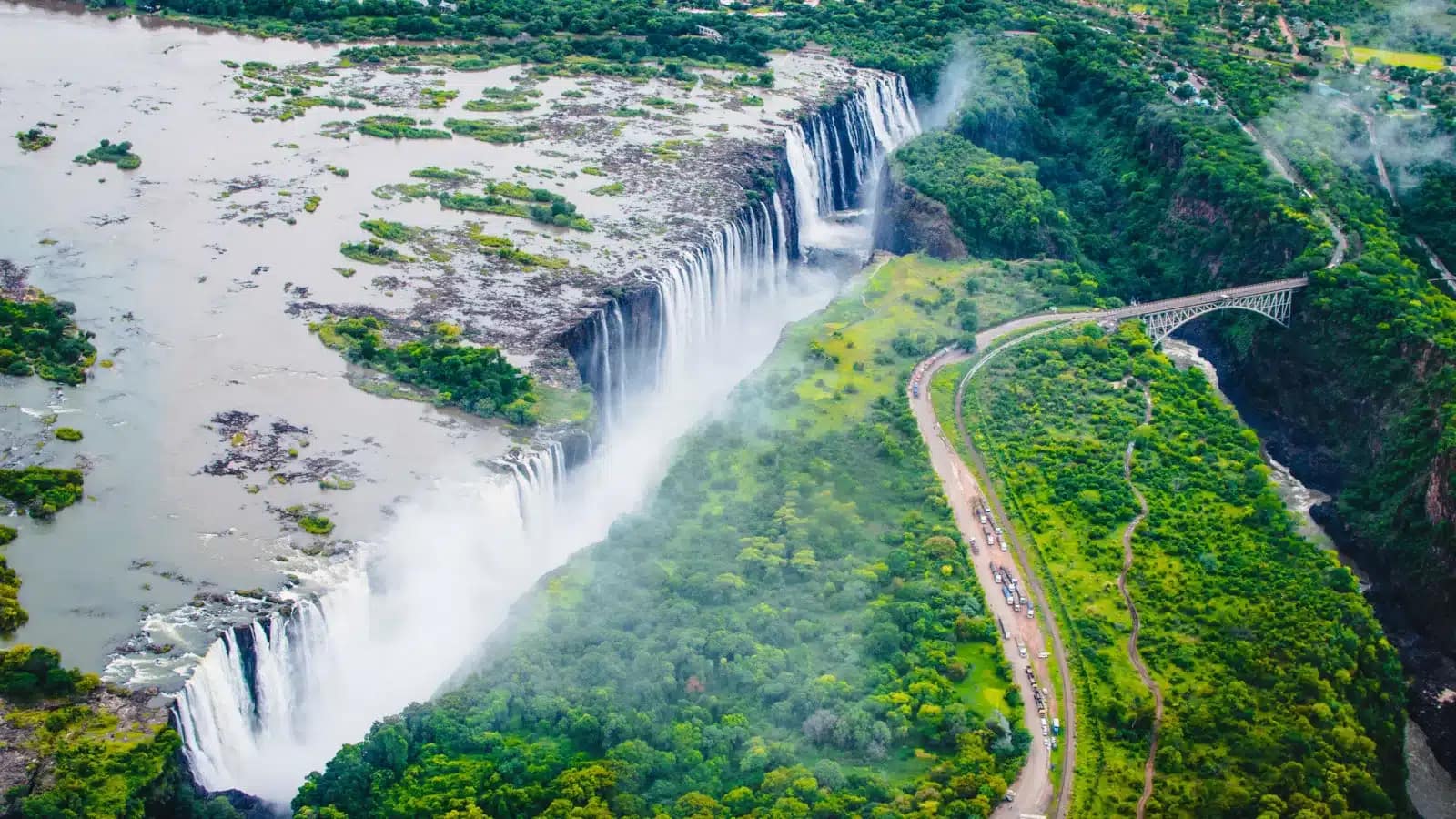
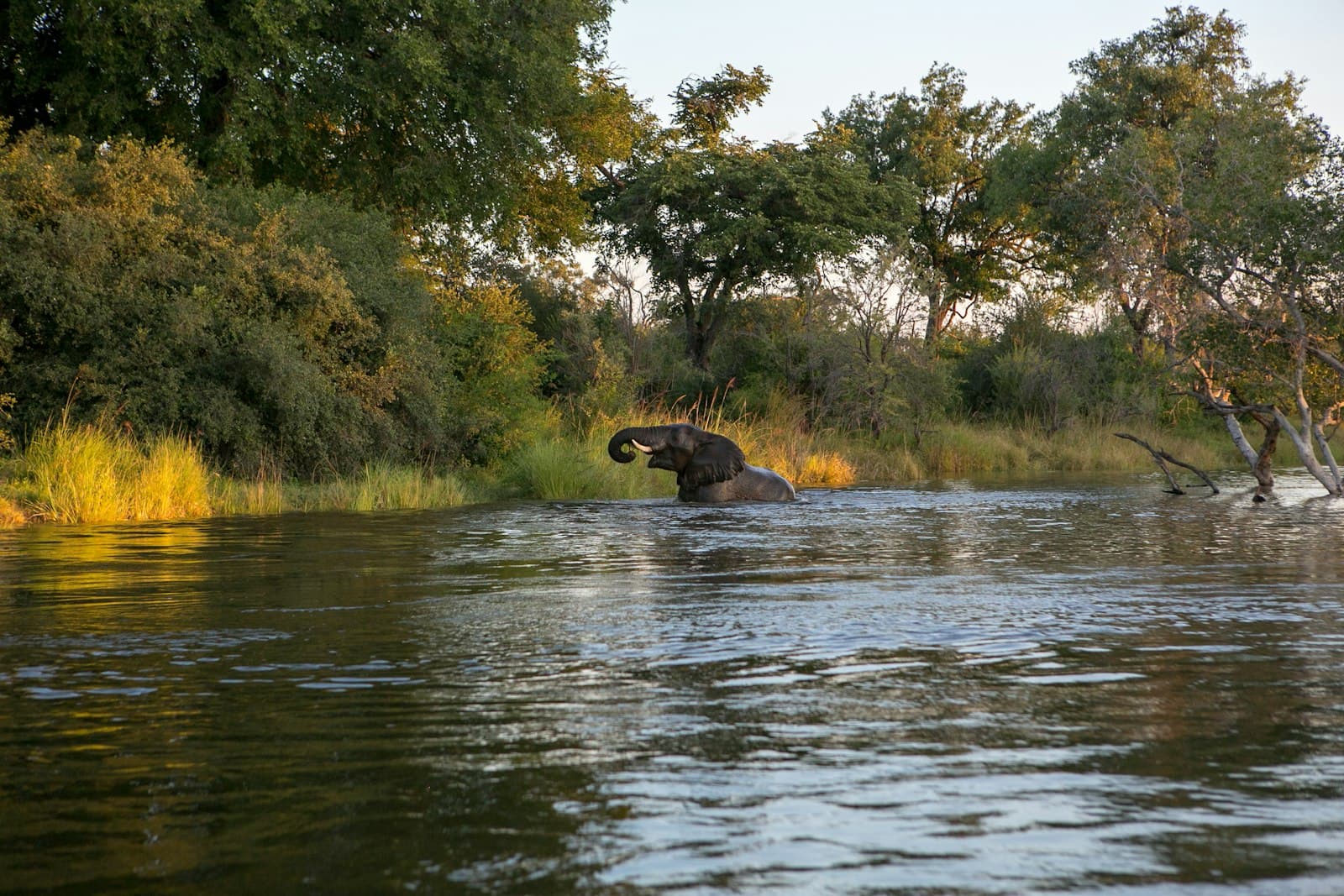
Start with the landscape. Zambia shares Mosi-oa-Tunya, the falls most people know as Victoria Falls, with Zimbabwe. It's a UNESCO World Heritage site, listed in 1989, and roughly 1,708 meters (about 5,600 feet) wide. If wildlife, birding, fishing or long drives through open country are what you picture for your next chapter, Zambia is built for that. A weekend away can mean elephants and hippos rather than outlet malls.
English, and an easy first entry
English is widely used, and Zambia scores about 90 out of 100 on our English proficiency measure. You won't need a language course before you land. Getting in to look around is easy too: U.S. citizens haven't needed a visa to visit since November 2022, and you can spend up to 90 days in any 12-month period on that visa-free entry.
Your dollars go far
Our cost data puts a comfortable single life at about $800 a month and a couple at about $1,450, as of 2026. That's a fraction of U.S. costs. The kwacha has been swinging hard, which we cover in the numbers chapter, but even with that the math works for someone on Social Security or a modest pension.
A settled climate
Lusaka sits at 1,279 meters (4,196 feet), so it's milder than people expect for the tropics. The rains come November through March, and our climate data counts about 255 sunny days a year. Zambia is also on Central Africa Time with no daylight saving, putting it six to seven hours ahead of U.S. Eastern, by season. That's workable for family calls in the evening.
Here's the catch
Zambia is a hard fit for most Americans, and we'd rather say so now. Four reasons you might look elsewhere:
There's no nomad visa or simple retirement visa. Remote workers get the visitor days and not much more. Retirees can apply for residence, but the rules are thin on paper and depend on proof of a permanent pension. On top of that, the whole immigration law is being replaced (details in chapter 03).
Healthcare has a ceiling. Private clinics in Lusaka handle everyday care, but the U.S. State Department says major emergencies usually mean evacuation to South Africa, Europe or the United States. If you have a serious chronic condition, that's a big deal.
Same-sex relationships are a crime. Zambian law punishes consensual same-sex activity with 15 years to life in prison. LGBTQ Americans should take that literally.
The community is small. You'll find other foreigners in Lusaka, but there's no big retiree scene and no English-speaking bubble built for Americans. You'll build your own life, and that takes more effort than landing somewhere that already has hundreds of people like you.
The people it works for
Zambia makes the most sense for four kinds of movers. Retirees with a steady pension who would rather spend their days outdoors than at a golf club. Investors ready to put real money into a Zambian business, since that's the quickest route to permanent status. People with a job offer from a Zambian employer. And anyone married to a Zambian, who gets the most affordable and straightforward permit of all. If you earn a remote salary and want a long-term base, the paperwork won't cooperate, and you're better off looking at a country with a nomad visa.
If none of that scares you off, keep going. The rest of this guide covers what it costs, the permits that actually exist, how healthcare, taxes and money work, where people live, and who can help.
- Cost of living (single)
- $800/mo
- Safety index
- 52/100
- English proficiency
- 90/100
- Internet speed
- 18 Mbps
- Capital
- Lusaka
- Currency
- Zambian Kwacha (ZMW)
02 · The numbers
Zambia's monthly costs, line by line
$800
Monthly budget, single
comfortable, 2026
$1,450
Monthly budget, couple
comfortable, 2026
$2,950
Monthly budget, family
housing included
$200
Rent, 1-bed city center
$100 further out
$7
Inexpensive meal out
local restaurants
$39
Monthly transportation
local transit
$118
Home internet, monthly
about 18 Mbps
K19
Kwacha per dollar
early 2026, volatile
What the budget covers, and where it stretches
As of 2026, our data puts a comfortable budget at about $800 a month for one person, $1,450 for a couple and $2,950 for a family. For comparison, the average one-bedroom rents for about $200 in a city center and $100 further out. A simple meal out runs about $7, and a month of local transportation about $39.
Two numbers stand out, and they pull in opposite directions.
Housing is affordable, but the good stuff costs more
Those rent averages describe the whole market, including plenty of housing most newcomers won't want. Our own city notes put Lusaka rents at $300 to $900 a month and Livingstone at $250 to $700, which is a better guide to the houses and apartments Americans end up renting. That's still well below a U.S. city, but plan on the upper end for a quiet street and good security.
Internet costs more than you'd guess
Home internet averages about $118 a month in our data, and speeds average around 18 Mbps. Mobile data through MTN or Airtel runs anywhere from 2.5 to 25 Mbps. If you work online, budget for a good fiber line plus a mobile backup, and test your actual street before signing a lease.
Watch the exchange rate
The kwacha has been anything but steady. It strengthened more than 34 percent against the dollar in the twelve months to February 2026, reaching below K19 per dollar, after the Bank of Zambia restricted the use of foreign currency in domestic payments in December 2025 and copper prices hit records. A stronger kwacha means your dollars buy less than they did a year earlier. Build some slack into your budget, and move money in chunks rather than all at once.
Power is steadier, for now
ZESCO, the state utility, said in June 2026 that supply had stabilized and it doesn't expect nationwide load-shedding to return this year or in the foreseeable future. Local outages from faults and vandalism still happen, so plan for backup power, such as solar panels or a generator.
Affordable to live, harder to stay
At about $1,450 a month, a couple on Social Security can live well in Zambia. The hard part isn't the money, it's the paperwork. Zambia's residence rules don't set a published income floor, so a strong application rests on proof of a permanent pension and clean documents. That's why the next chapter matters more than the budget.
03 · Permits, not visas
How Americans stay longer than 90 days
Zambia doesn't have long-stay visas in the usual sense. There's no retirement visa with a published income floor or digital nomad visa. Instead, everything past a visit runs through a set of permits issued by the Department of Immigration in Lusaka. Here's how they line up for Americans, as of September 2026.
First, the law is changing
Zambia passed a brand-new Immigration Control Act (Act No. 3 of 2026), signed March 31, 2026, which repeals the 2010 Immigration and Deportation Act. It only takes effect on a date the minister sets by statutory instrument; as of September 2026, the Immigration Department's own website still lists the 2010 law. Fragomen, a global immigration firm, expects more compliance requirements for applicants and employers under the new rules. Treat every fee and timeline below as the current rule, and confirm with a registered consultant before you file.
Visiting and scouting: visa-free days, then a visiting permit
U.S. citizens enter without a visa and get 90 days in any 12-month period, counted from the day you first arrive. Extending those days at an immigration office is free. If you want to stay longer, a visiting permit can stretch your time to a maximum of nine months a year, and the new law lets you apply for one before your visitor days run out. The government's fee listing puts it at K1,700 (about $90 at early-2026 rates). It's a good way to test Zambia for a season. It isn't a work permit.
Retiring on a pension: the residence permit
Retirees apply for a residence permit, the closest thing Zambia has to permanent residency. Your file needs proof of a permanent pension (an irrevocable annuity) or a retirement account, bank statements showing you can support yourself, and, where it applies, a lease or title for your home. No official page we found publishes a minimum pension amount, which means the officer's judgment matters. If your income is Social Security plus savings, a registered consultant can tell you how similar files have fared. The fee is K5,000 (about $260).
Working for a Zambian employer: the employment permit
If you have a job offer, the employer, a practicing lawyer or a registered immigration consultant files for you. The government's fee listing puts the private-sector permit at K6,000 to issue and K7,000 to renew (about $320 and $370). The old law allowed employment permits of up to 10 years. Fragomen reports the new law's permits typically run up to two years. Ten continuous years on employment permits opens the door to a residence permit.
Investing in a business: the investor's permit
Put at least US$250,000 into a new Zambian business, or US$150,000 into an existing one, and you can apply for an investor's permit. You'll show the money moved (bank records or a ZRA customs form), a police clearance issued within the last six months, and your company papers. The fee is K4,000 (about $210). After more than three years, you can apply for residence, and as a registered investor you can also hold land. This is the fastest route to permanent status on paper.
Married to a Zambian: the spouse permit
The spouse permit is the most affordable at K750 (about $40). After five years, you can apply for residence. After five years of marriage, you can register as a Zambian citizen.
Remote workers
None of the permits on the Immigration Department's list is built for people who earn from abroad. Your realistic options are visitor days plus a visiting permit, or a residence permit if you also qualify as a retiree or investor. Working for a U.S. employer while on a visitor's status is a gray area, so get advice before you plan a year around it.
The routes at a glance
Visiting
Visa-free, 90 days in any 12 months. A visiting permit can take you to nine months a year.
Retiring
Residence permit with proof of a permanent pension or retirement account. No published minimum.
Working
Employment permit filed by your employer, lawyer or registered consultant.
Investing
US$250,000 in a new business or US$150,000 in an existing one. Residence after three years.
Married to a Zambian
Spouse permit, with residence and citizenship both open after five years.
Remote work
No dedicated permit. Visitor days or another route you qualify for are the options.
Employment Permit
- Employment contract or offer letter from a Zambian employer
- Proof the job was advertised in two newspapers, with the outcome
- Succession or understudy training plan for a Zambian worker
Investor's Permit
- Aged over 18
- Investment of at least USD 250,000 for a new business, or USD 150,000 when joining an existing company
- Certificate of incorporation, share capital and minimum capital documents
Residence Permit (Retiree Category)
- Proof of a permanent pension, irrevocable annuity or retirement account
- Bank statement showing sufficient funds (no fixed minimum published)
- Proof of land ownership or lease in Zambia where applicable
Study Permit
- Acceptance letter from a Zambian educational institution
- Medical report from a Zambian government medical facility
- Sponsor letter with proof of the sponsor's status and finances
04 · The practical stuff
Healthcare, taxes, money and safety
The day-to-day questions, answered straight. This is where Zambia differs most from places like Portugal or Mexico, so read it slowly.
Healthcare and evacuation coverage
Private clinics and hospitals in Lusaka, such as Lusaka Trust Hospital in Woodlands and Pearl of Health Hospital in Rhodes Park, give reasonable everyday care. For anything serious, the State Department says patients usually get evacuated to South Africa, Europe or the United States, and doctors and hospitals expect cash up front. So the insurance you want is international coverage with medical evacuation built in, not a local plan. Malaria is present, and the State Department recommends preventive medication even for short stays. HIV prevalence among adults is around 11 percent. Hunter Schultz, our healthcare coach, and ExpatInsure, our insurance partner, both appear below. This is one country where talking to them before you go pays off.
Taxes
You'll become a Zambian tax resident if you're in the country 183 days or more in a tax year. Zambia mostly taxes income earned in Zambia, though residents also pay on foreign interest and dividends. For 2026, the first K61,200 of annual income is tax-free (about $3,200), with rates of 20 and 30 percent above that and 37 percent over K110,400 (about $5,800). Meanwhile, the U.S. still taxes you on everything, wherever you live, so you'll file a U.S. return every year no matter what. MyExpatTaxes handles that filing for Americans abroad, and Beacon Global Advisors helps keep U.S. investment accounts working once you've left.
Money and banking
Zambia runs on the kwacha; since the central bank restricted foreign currency in domestic transactions in December 2025, expect rent, school fees and bills in kwacha. Because clinics want cash, keep some on hand, and use a transfer service rather than your U.S. bank's wire desk to fund a local account.
Safety and the law
The State Department rates Zambia Level 1, its lowest advisory, though that rating dates from July 2023. Crime against Westerners in Lusaka is mostly theft of unattended things and confidence scams. Politics can get tense: in the August 13, 2026 election, President Hakainde Hichilema won a second term with about 61.4 percent of the vote, but counting was briefly suspended over reports of violence against polling staff and stolen ballots. Stay away from rallies. On the road, Zambia drives on the left; secondary roads are poorly maintained, so stick to major routes.
Buying property
You can't just buy land as a foreigner. Non-Zambians can hold land only as permanent residents, registered investors, or with presidential consent. Land is held on leases of up to 99 years. Most people rent for the first years, which also gives you time to learn the neighborhoods.
This guide is dated on purpose
Zambia signed a new Immigration Control Act in March 2026 that hasn't taken effect yet, the kwacha has moved more than a third in a year, and the country just held a general election. Everything here reflects the rules and figures as of September 2026. Before you file anything or sign a lease, confirm the current rules with a registered Zambian immigration consultant or lawyer.
05 · Finding your base
Lusaka, Livingstone or the Copperbelt
Three parts of Zambia are the natural places to start looking, and they're very different from each other.
Lusaka is the capital, the commercial hub and the practical choice. It has the private hospitals named in chapter 04, modern shopping centers, and the main international airport, Kenneth Kaunda International, with connections through Johannesburg, Dubai and Doha.
Livingstone is the small, relaxed town next to Victoria Falls, built around tourism and the Zambezi River. It suits people who want nature at the edge of town and don't need a big-city hospital nearby.
The Copperbelt, around Ndola and Kitwe, is mining and manufacturing country, and quieter than Lusaka. It makes sense if your job is there.
When Expatsi publishes city guides for Zambia, they'll appear below with full cost, climate and neighborhood detail.
06 · Your move team
Help with a move few Americans make
Zambia is the kind of move where hiring help early saves you months. Very few Americans do it, the immigration law is mid-change, and the official pages leave a lot unsaid. We don't have a Zambia-based specialist yet, so here are the vetted people who handle the parts of this move that don't depend on where you land: coverage, taxes, money, paperwork, pets and settling in.
For the permit itself, hire a Zambian practicing lawyer or a registered immigration consultant. For employment permits, they're the only people besides your employer who can file.

Hunter Schultz
Healthcare Coach
A healthcare coach with more than 20 years of expat life and a background in air medical transport. His one-hour consultation maps the care you'll need and where you'd get it, which counts for a lot where serious cases mean a flight out.
Learn more
ExpatInsure
Global Health Insurance
Expatsi's international health-insurance partner. They'll match you with private international coverage, and it's worth asking them directly about the medical evacuation benefit.
Learn more
MyExpatTaxes
U.S. Expat Tax Service
Tax software and filing help built for Americans abroad, running since 2018. They take care of the U.S. return you'll still owe every year.
Learn more
Beacon Global Advisors
Financial Planning
Helps U.S. citizens living abroad keep access to their investment options and manage their finances across borders after the move.
Learn more


07 · Quick answers
Moving to Zambia: frequently asked questions
Is Zambia safe for Americans?
The U.S. State Department rates Zambia Level 1, exercise normal precautions, its lowest advisory level. Crime against Westerners in Lusaka is mostly opportunistic theft and scams. The August 2026 election saw reports of violence against polling staff, so avoid political gatherings. Same-sex sexual activity is illegal and carries 15 years to life in prison, a real risk for LGBTQ Americans.
What is healthcare like in Zambia?
Private clinics in Lusaka and other major cities provide reasonable everyday care, and doctors and hospitals expect cash payment up front. For major emergencies, the U.S. State Department says patients usually need evacuation to South Africa, Europe or the United States. Buy international health insurance that includes medical evacuation, and take malaria prevention medication, which is recommended even for short stays.
Can I keep my U.S. citizenship if I become a Zambian citizen?
Yes. Zambia has allowed dual citizenship since 2016, and the U.S. permits it too. Adult foreigners can apply for Zambian citizenship after ten years of ordinary residence, or after five years of marriage to a Zambian citizen.
How much does it cost to live in Zambia?
Expatsi's 2026 estimates put a comfortable monthly budget at about $800 for a single person, $1,450 for a couple and $2,950 for a family. An average one-bedroom rents for about $200 in a city center, though Expatsi's city notes put Lusaka rents at $300 to $900 a month for the housing newcomers tend to pick. Home internet is pricey at about $118 a month, and the kwacha has swung sharply, so leave room in your budget.
Do Americans need a visa to visit Zambia?
No. U.S. citizens have been visa-exempt since November 2022 and can spend up to 90 days in any 12-month period in Zambia, counted from the day of first entry. Your passport needs at least six months of validity when you arrive and three blank pages for each entry. Entry is still up to the immigration officer at the border.
Can foreigners buy property in Zambia?
Only in limited cases. Non-Zambians can hold land if they're permanent residents, registered investors, or have written presidential consent. All land in Zambia is held on leases of up to 99 years rather than outright freehold. Most newcomers rent first.
Can I retire in Zambia as an American?
Yes, through a residence permit. Retirees apply with proof of a permanent pension (an irrevocable annuity) or a retirement account, plus bank statements showing they can support themselves. No official page publishes a minimum pension amount, so the strength of your documents matters. The government fee listing puts the residence permit at K5,000 (about $260 at early-2026 exchange rates). Zambia passed a new immigration law in March 2026 that hasn't taken effect yet, so confirm the rules with a registered consultant before you apply.
Does Zambia have a digital nomad visa?
No. None of the permits on the Zambian Immigration Department's list is designed for people who work remotely for employers or clients abroad. Americans can stay 90 days in any 12 months visa-free, and a visiting permit can extend a stay to a maximum of nine months a year, but neither is a work authorization. Get professional advice before planning a longer remote-work stay.
Sources
- Visa Requirement Waiver for Selected Countries takes effect · Zambia Department of Immigration (checked September 2026)
- For Visitors · Zambia Department of Immigration (checked September 2026)
- Permit Types · Zambia Department of Immigration (checked September 2026)
- The Immigration Control Act, 2026 (Act No. 3 of 2026) · ZambiaLII (checked September 2026)
- Zambia: New Immigration Law Brings Process Clarity but More Compliance Requirements · Fragomen (checked September 2026)
- Immigration permits and fees · Zambia eRegistry (checked September 2026)
- Zambia International Travel Information · U.S. Department of State (checked September 2026)
- Zambia: Individual taxes on personal income and residence · PwC Worldwide Tax Summaries (checked September 2026)
- Kwacha Soars to Two-Year High · Open Zambia (checked September 2026)
- ZESCO Rules Out Return To Nationwide Load Shedding · Lusaka Times (checked September 2026)
- Citizenship of Zambia Act, 2016 · ZambiaLII (checked September 2026)
- Zambia Business Travel · International Trade Administration (checked September 2026)
Find out if Zambia fits your life
Take the free Expatsi Test and see how Zambia stacks up against other countries on cost, healthcare, climate and safety.
Why not you?