Country guide · Dominican Republic
Moving to the Dominican Republic: the Caribbean without the small-island limits
A couple lives well on about $1,750 a month, a $1,500 pension opens a residency route with no age minimum, and the nonstop from Miami is under three hours.
More than ten million people, four international airports, a metro in the capital, and hospitals that do transplants. Whatever else this country is short of, it isn't infrastructure. It is short of reliable electricity, which turns out to be a different problem. You'll find the numbers here rather than the postcard: what a month costs, which residency route a consulate will issue you, what happens to your taxes once this country counts you as resident, and which of six very different places you'd want to live in.

Reviewed and updated September 18, 2026 · 14 min read
01 · The case for the Dominican Republic
Not a small island, and that is the whole point
Most Caribbean countries are small islands, and smallness sets the price of everything on one: how many supermarkets compete for your money, what an imported box costs by the time it lands, whether the hospital can handle a heart attack on a Sunday.
The Dominican Republic shares the eastern two thirds of Hispaniola and runs on its own domestic economy. There's a metro in the capital, a manufacturing sector, universities, and enough local demand that rent, groceries and labor get priced for people who earn pesos. That's why a couple's budget here buys a life that the same money would not buy on a small island next door.
It's the largest economy in the Caribbean and one of the faster-growing in the hemisphere, which shows up in ordinary ways: a new hospital wing; a toll road that got finished; fiber in towns that had nothing a decade ago. For an American, the practical draw is a short flight, familiar time zone, a residency route built around pension income with no age minimum written into it, and prices that have not been inflated by a passport program.
Here's the catch
The Dominican Republic is not a gentle country to move to. The national grid collapsed twice in three months, once in late 2025 and again on February 23, 2026, when a transmission failure blacked out the capital and stopped the Santo Domingo metro. Washington keeps the country on the second of its four advisory tiers, for crime; its own summary says violent crime reaches everyone living here regardless of nationality. Spanish is not optional outside the hotel corridor. Paperwork runs on apostilles, certified translations and a consular visa you have to hold before you board the plane.
None of that is hidden, nor is it a reason to stay home. It's the tradeoff. You get a real country with real infrastructure problems instead of a tidy small island with a tidy small hospital.
- Safety index
- 45/100
- English proficiency
- 35/100
- Currency
- Dominican Peso (DOP)
- Capital
- Santo Domingo
- Population
- 10.4M
- Cost of living (single)
- $1,050/mo
02 · The money
The cost base, in U.S. dollars
$1,050
One person, everything in, monthly
Outside the resort towns, rent included
$1,750
A couple, everything in, monthly
A retired couple's working number, before extras
$450
One-bedroom, city center, national average
The capital runs higher than the average
$150 to $300
Power, with the air conditioning on
$40 to $80 a month if you can live without it
Rent is where the savings are, and power is where they go

On Numbeo's numbers, an American household spends about 40 percent less here than at home, and the rent line falls by nearly 60 percent. Almost all of that gap is housing and labor. A housekeeper twice a week, a private doctor's appointment, a plate of lunch at a neighborhood comedor: those are the line items that feel like a different decade.
Food splits in two. Anything grown here is cheap and good. Anything shipped in carries import duty plus 18 percent ITBIS, the local sales tax, so a jar of American peanut butter can cost more here than it does in Florida. Households that eat Dominican eat for very little. Households that rebuild an American pantry do not.
Electricity is the line that wrecks budgets, and it's worth understanding why. Power is expensive to generate here. The grid is fragile, and the households that cope buy their way around it with an inverter bank or a generator. Run air conditioning in two bedrooms all night through August and the bill stops looking Caribbean. The usual compromise is AC in the bedroom, fans everywhere else, and a battery that carries the fridge and the wifi through an outage.
Cars are the other import shock. Vehicles carry duty on top of the sales tax, so the same used car costs noticeably more here than it would in the States, and gasoline runs around $5 a gallon. In Santo Domingo you can skip the car entirely because there is a metro and Uber works. Outside the capital, you'll want to buy one.
The honest summary: $2,000 a month is a good life in Santiago, the mountains or the north coast, and a tight one in Cap Cana.
Read those two numbers together
The pensionado route asks for $1,500 a month of pension income. The cards above put one person at about $1,050 a month and a couple at about $1,750. Those numbers are close enough that they answer each other. A single retiree who clears the income test clears it with room to spare. A couple clears the same test and then lives right at the edge of it, unless the second person brings income too. Price the town first. Then work out what the floor leaves you once rent is paid.
03 · The day to day
Spanish, blackouts, and the drive to the supermarket
The language is not optional
Spanish is the working language of the country, and there's no English fallback the way there is in Belize or Antigua. Resort staff, private specialists in the capital and a good slice of the north coast speak English. Your landlord, the power company, the officer at a highway checkpoint and the clerk at Migración mostly will not. Americans who arrive with restaurant Spanish and take it seriously for a year do fine. Americans who plan to get by on English end up paying somebody to be their voice.
The grid
Blackouts are a fact of Dominican life, and 2026 made the point at a national scale. The February failure took out the capital, stopped the metro and the cable cars, and knocked the country's internet traffic offline from late morning until nearly midnight. A similar collapse had happened a few months before. Day to day, what matters is not the headline outage but the ordinary one, which is why inverters and generators are normal household equipment here rather than prepper gear. Ask about the inverter before you sign a lease.
The roads
The State Department publishes a Dominican road death rate of 65.2 per 100,000 people and calls it the highest in the world. Motorcycles are a big part of it. The response from long-term residents is boring and effective: don't drive at night outside the cities. Don't ride a motoconcho. Use Uber in Santo Domingo and hire a driver for long trips.
Being asked for your papers
This one rarely makes the guidebooks. The country runs regular operations to detain and expel Haitian migrants, which means highway checkpoints and street stops. The State Department warns that some U.S. citizens have been mistakenly identified as Haitian and temporarily detained, in rare cases with physical assault, recommending Americans carry their passports at all times. Black Americans in particular should read that sentence twice and plan around it.
The fixed parts of a Dominican life
Flights that already exist
Four international airports and nonstops to a dozen U.S. cities, so going home is a flight, not an expedition.
Quoted in dollars, paid in pesos
Rent, property and plenty of price lists are written in U.S. dollars even though pesos are what you hand over.
Foreigners own on the same terms
No restriction on buying as a foreigner, and closing costs land around 3 to 4 percent of the price.
Half the year is storm season
Tropical storms and hurricanes run May through November, and Hispaniola is seismically active as well.
Your calendar barely moves
Atlantic Standard Time all year, which puts you level with the U.S. East Coast or an hour ahead of it.
Private school is the school
International schools in Santo Domingo and Punta Cana run roughly $3,000 to $12,000 a year per child.
04 · The ways in
Everything starts at a consulate, before you fly
Dominican residency has one feature that catches Americans out. You cannot start it after you arrive. The first step is a Residence Visa, the RS, issued by a Dominican consulate in the United States, and it has to be in your passport before the flight. Everything after that happens at the Dirección General de Migración once you land. A U.S. passport on its own buys a tourist card and a month of legal stay; past that, you pay an overstay fine on the way out, starting around $56 for one extra month.
The file is document-heavy rather than money-heavy. A birth certificate and police clearance, both apostilled and translated into Spanish by a certified translator. A medical exam at a clinic Migración approves, not your own doctor. A guarantee policy and a repatriation policy from an insurer Migración approves. And a letter from a Dominican bank, which means opening an account before you have residency. Migración's own fee schedule for the retiree file is RD$28,800 to deposit it, RD$3,500 for the card and RD$6,300 for the exams, about $655 in total at September 2026 rates. Its published processing time is ninety working days, and any application left untouched on the portal for ninety calendar days expires and must be filed again.
Pensionado, for pension income
Law 171-07 sets the floor at $1,500 a month from a government, agency or company pension, plus $250 a month for each dependent. Salary doesn't count. The law says in so many words that there's no minimum age, so a 48-year-old with a military or corporate pension qualifies on the same terms as a 70-year-old.
Rentista, for income that isn't a paycheck
The same law covers people living on foreign investment income at $2,000 a month, again plus $250 per dependent. Dividends, foreign rental income and annuities count. This is also the closest thing the country has to a digital nomad visa, because it doesn't have an official one.
Investor, for $200,000
Decree 950-01 covers a $200,000 investment in Dominican property or a Dominican company. What it really buys is speed at the citizenship stage rather than anything you feel on arrival.
The ordinary route, and the ladder
Without one of those three, you get a one-year temporary residency and renew it annually. Five years of that opens permanent residency. That is the route the comparison table below describes.
Citizenship
Law 1683 of 1948 asks for two consecutive years of residence, or six months for someone who owns real estate here or runs a business here. There's a Spanish-language interview and an oath; approval arrives by presidential decree, which is not a calendared process. Advisers who do this work put the realistic arc at 18 months to three years.
The two routes we track, and the gap beside them
| Visa | Category | Application cost | Processing | Difficulty | Guide |
|---|---|---|---|---|---|
| Permanent Residency (RP-1) | residency | — | ~60 days | 3/5 | Guide |
| Temporary Residency Visa (RS) | residency | — | ~30 days | 4/5 | Guide |
About that data card
Two rows is all our database carries for this country, which is why the table is so short. The three routes Americans actually use, pensionado, rentista and the investor category, have no rows at all, which is why they're written out in full above and flagged for our data team. Read one more thing carefully. Commercial sites describe pensionado and rentista as permanent residency from day one, skipping the five-year ladder entirely. Migración's own service page for the retiree category calls it residency for a period of one year. The law and the counter disagree, and the counter is the one you will be standing at.
05 · Insurance, tax and title
Insurance first, then the tax year, then the deed
Healthcare, and the part retirees miss
The country runs two tiers: SENASA and the ARS plans on the public side, private hospitals and private insurance on the other. The trap for an American retiree is that the contributory public scheme is entered through an employer. A retired or self-employed foreigner has no ordinary way in, and the income you had to prove for the visa disqualifies you from the subsidized tier by definition. So you buy a local ARS plan, roughly $40 to $100 a month, or an international policy at $150 to $400, and you use the private system.
That system is genuinely good in a handful of cities and thin everywhere else: CEDIMAT and Hospital General de la Plaza de la Salud in Santo Domingo, HOMS in Santiago, Hospiten in Bávaro, Bournigal in Puerto Plata. The State Department notes that private hospitals want payment or proof of accepted insurance before they admit you, that ambulances are only reliable in those same cities, and that Medicare does not travel. If you're choosing between a mountain town and a city, this is the paragraph that should decide it.
The tax year starts at 182 days
Cross 182 days in the country and you are a Dominican tax resident. Dominican-source income is taxed on a scale frozen since 2018: nothing on the first RD$416,220 a year, about $7,050, then 15, 20 and 25 percent above it. Law 30-26 lifts that exemption to RD$480,000 and adds a 27 percent top bracket, but not until fiscal year 2027. Foreign investment income is exempt for your first three years of residence under the ordinary rules, and permanently exempt for people holding Law 171-07 status. None of it changes your U.S. obligations, which is the half of the problem MyExpatTaxes handles.
Buying, and the warning worth repeating
Foreigners buy property on the same terms as Dominicans, with closing costs around 3 to 4 percent, and plenty do. The State Department's caution is the one to take seriously: property rights are irregularly enforced, title insurance is recommended, and absentee owners and holders of undeveloped land are the ones who get squatted. Hire a Dominican attorney who does nothing but title work, and don't let the seller pick them for you.
This guide is dated on purpose
Three Dominican numbers are moving under this page, so read everything above as a September 2026 snapshot. The peso floats; over the past year, it's drifted between roughly 58 and 61 to the dollar, which quietly rewrites every dollar figure converted from pesos. Migración publishes its fees in pesos and revises them. The income tax scale that has sat still since 2018 changes on January 1, 2027 under Law 30-26. Check the rate, the fee page and the tax table on the day you file, not the day you read this.
06 · Where to live
City guides, as fast as we can write them
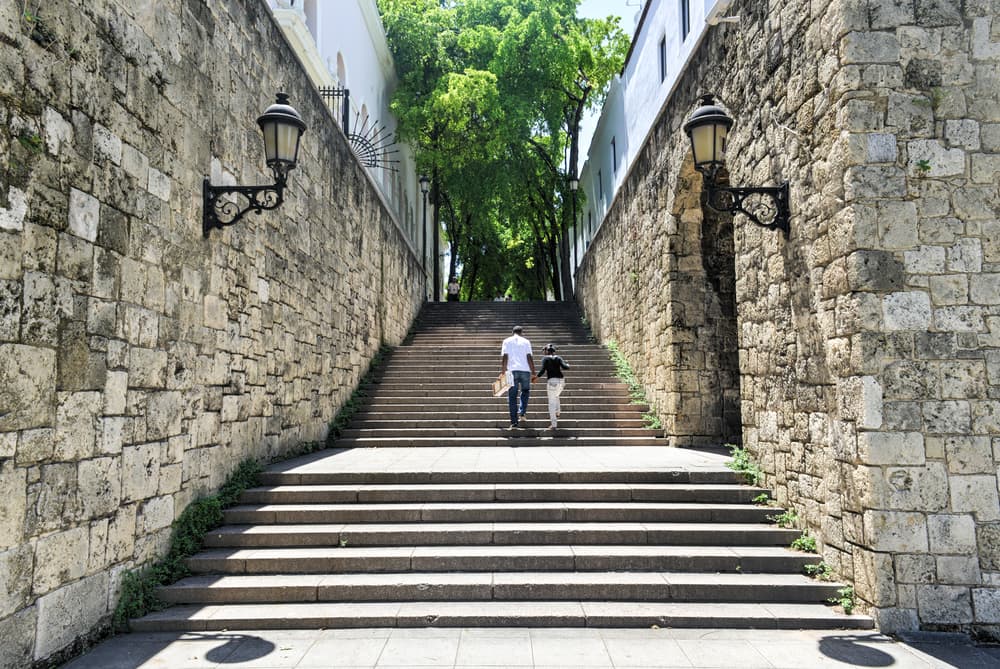
Santo Domingo
Colonial capital
The country's big, busy capital, with the old stone streets of the Zona Colonial, modern towers in Piantini and Naco, and the best hospitals in the country. It's a real city, not a resort. Traffic is heavy, and most Americans end up driving or using Uber.
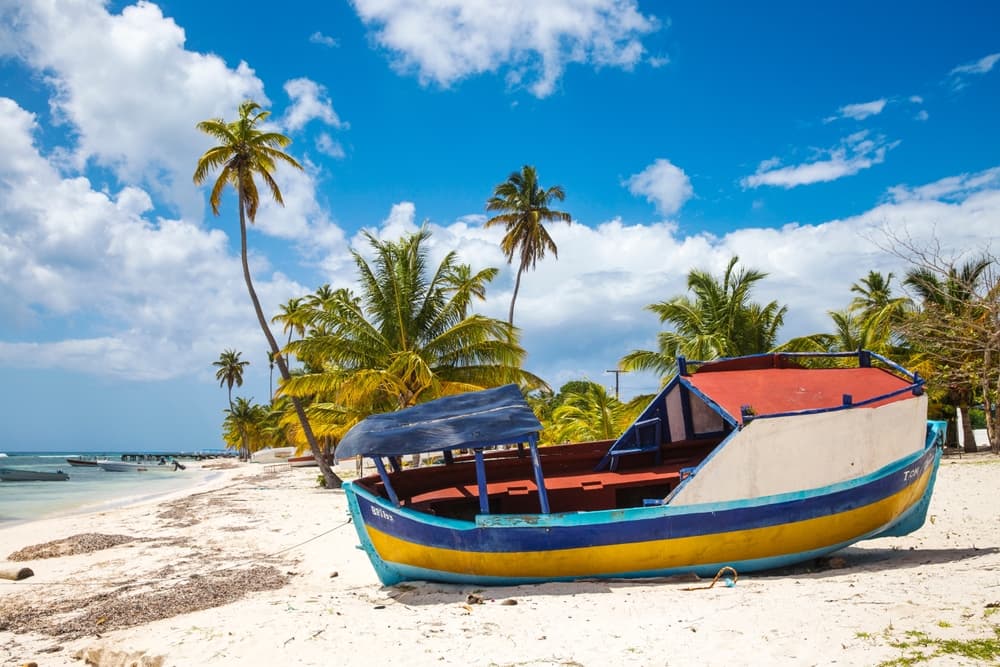
Punta Cana
Resort coast
Gated golf and beach communities near an airport with nonstop flights to many US cities, so family visits are easy. English is widely spoken in the resort zones. It's built around tourists and developers, so local texture is thin and you'll need a car.
Santiago de los Caballeros
Second city, inland
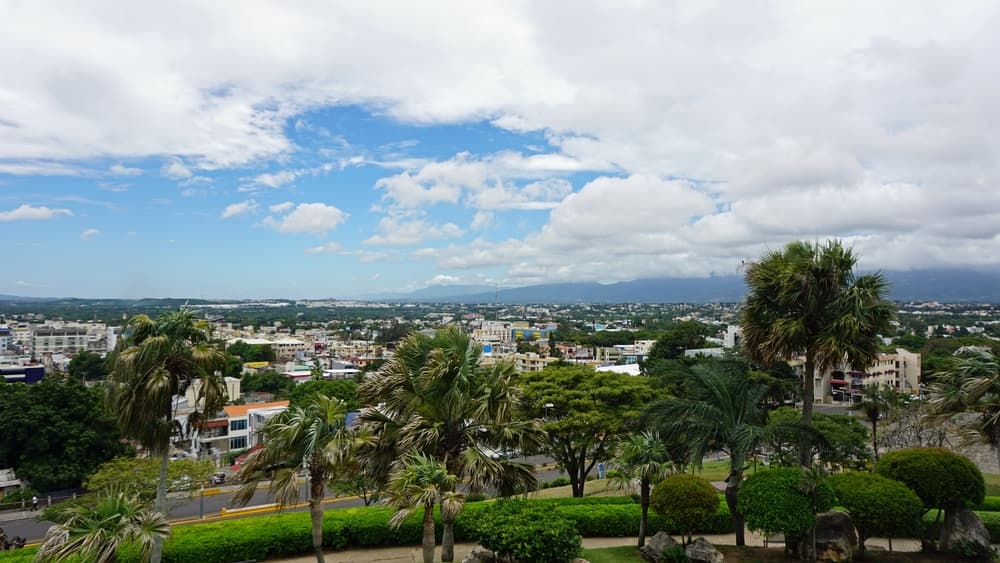
The Dominican Republic's second city in the northern Cibao valley, with a strong local economy, universities and cooler evenings than the coast. You'll live among Dominicans, with few other expats and little life in English. The north coast beaches are roughly an hour away.
Puerto Plata
North coast port town
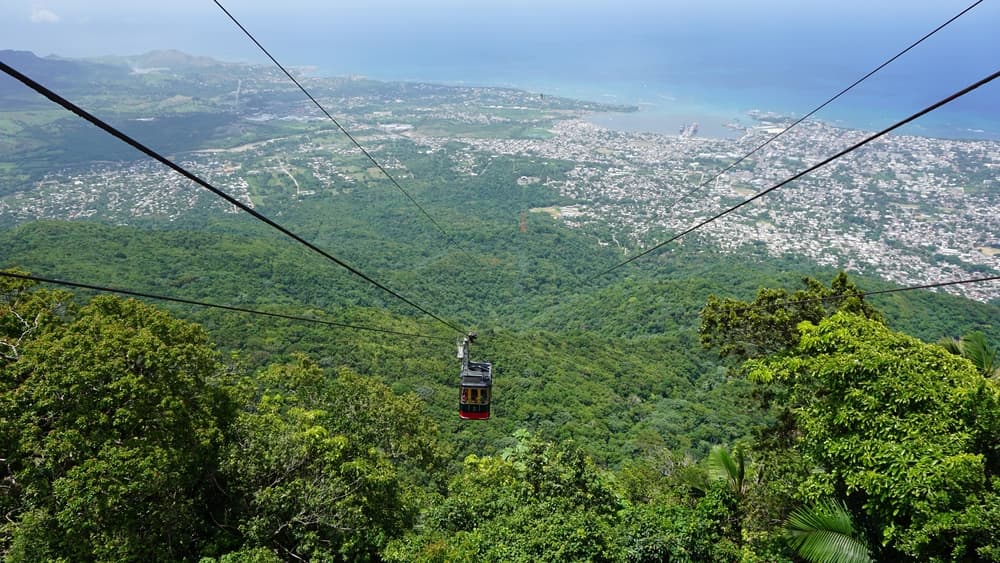
A historic port with a cable car up Mount Isabel de Torres, an old Victorian center and easy access to beaches at Sosua and Cabarete. Cheaper than the resorts. The center is rough around the edges, and services run thinner than in Santiago.
North coast, capital, peninsula, mountains
Six places come up over and over when Americans describe where they landed, and they are not versions of the same country. The rents below are 2026 asking ranges for a one-bedroom.
The north coast: Puerto Plata, Sosúa, Cabarete
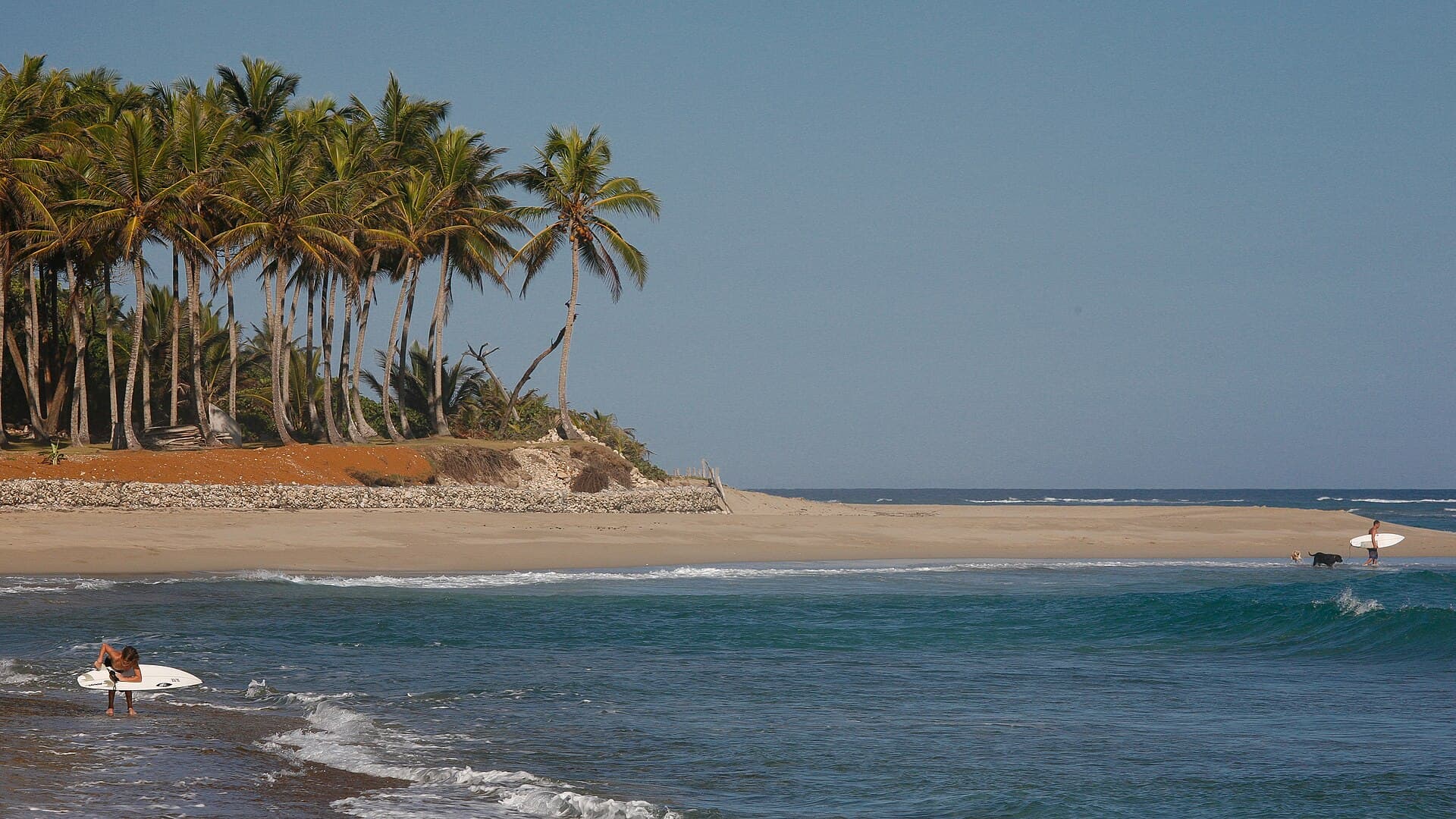
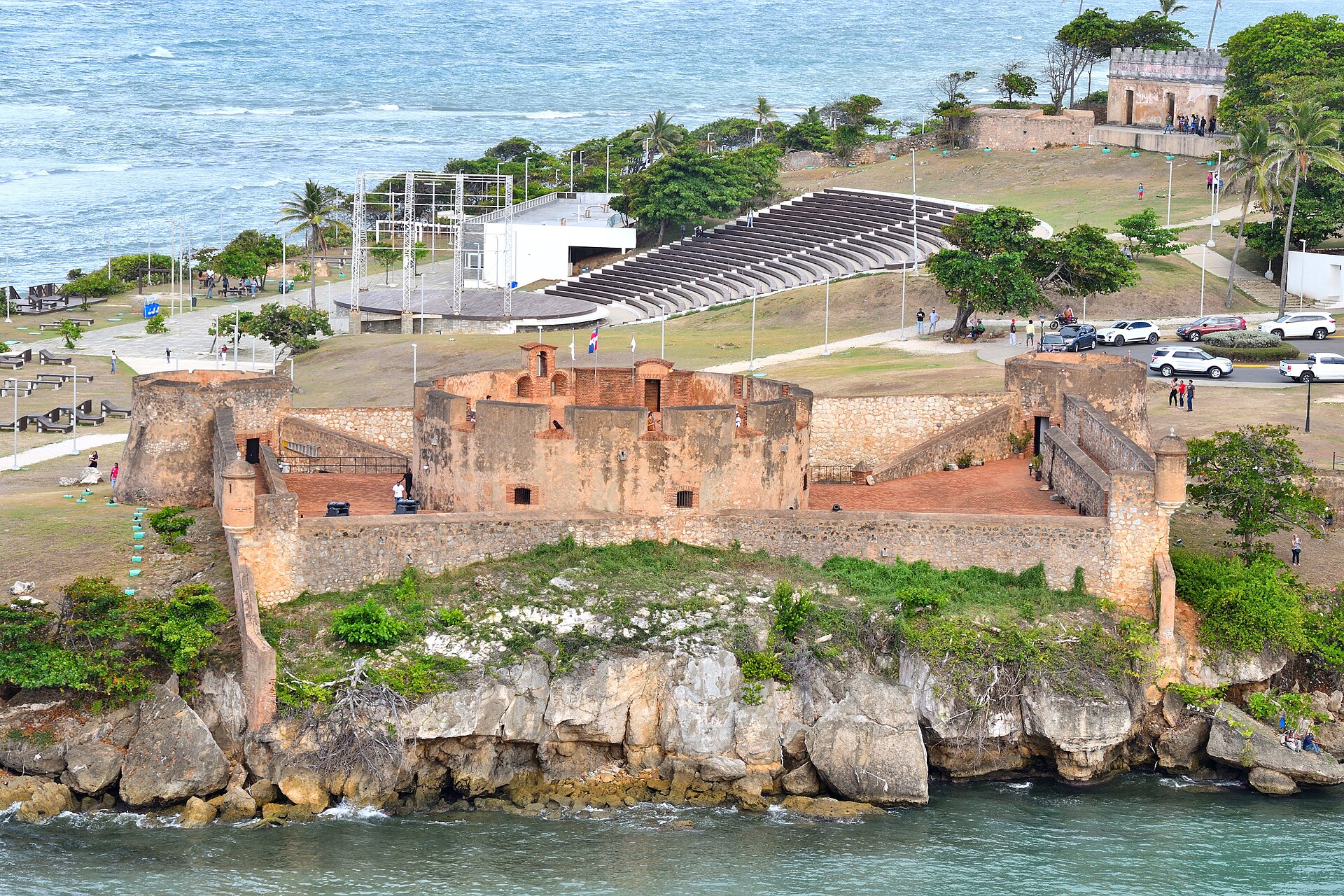
The oldest American and Canadian cluster in the country, strung along one road. Sosúa and Cabarete run about $450 to $800. Cabarete is the kitesurfing town and skews young; Sosúa skews retired. Puerto Plata has the airport, the fortress and a hospital that can hold a serious case.
Las Terrenas and the Samaná peninsula
The French and Italian corner, now the remote-worker corner. One-bedrooms run about $500 to $1,200. Beautiful, walkable, and a long drive from a hospital that can handle something major, which is the trade.
Santo Domingo
The capital, and the place on this list with the deepest bench of specialists, plus a metro, an embassy and nonstops to everywhere. Central one-bedrooms run $500 to $1,200, with Piantini and Naco at $900 to $1,500 and Gazcue cheaper than either. You give up the beach and gain a city.
Santiago
The second city, inland in the Cibao valley, running on the local economy instead of on tourism. One-bedrooms from about $350 to $700, and HOMS is among the best hospitals in the country. Almost no English, which is either the problem or the point.
Punta Cana, Bávaro and Cap Cana
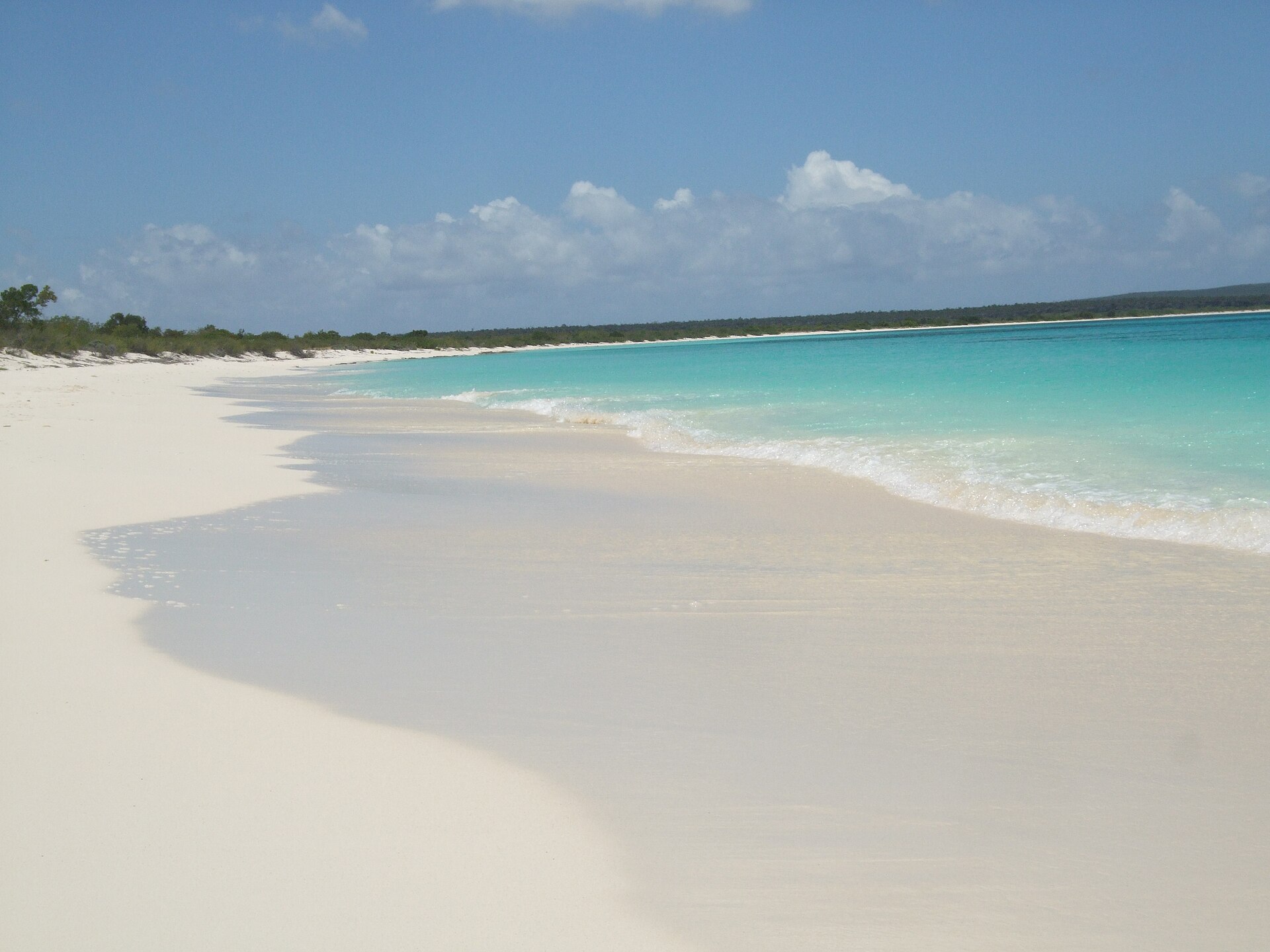
The resort east: gated, new, easy, and priced accordingly at $600 to $2,500. There is an airport, a hospital and a U.S. consular agent. There is also the least Dominican daily life on this list.
Jarabacoa and Constanza
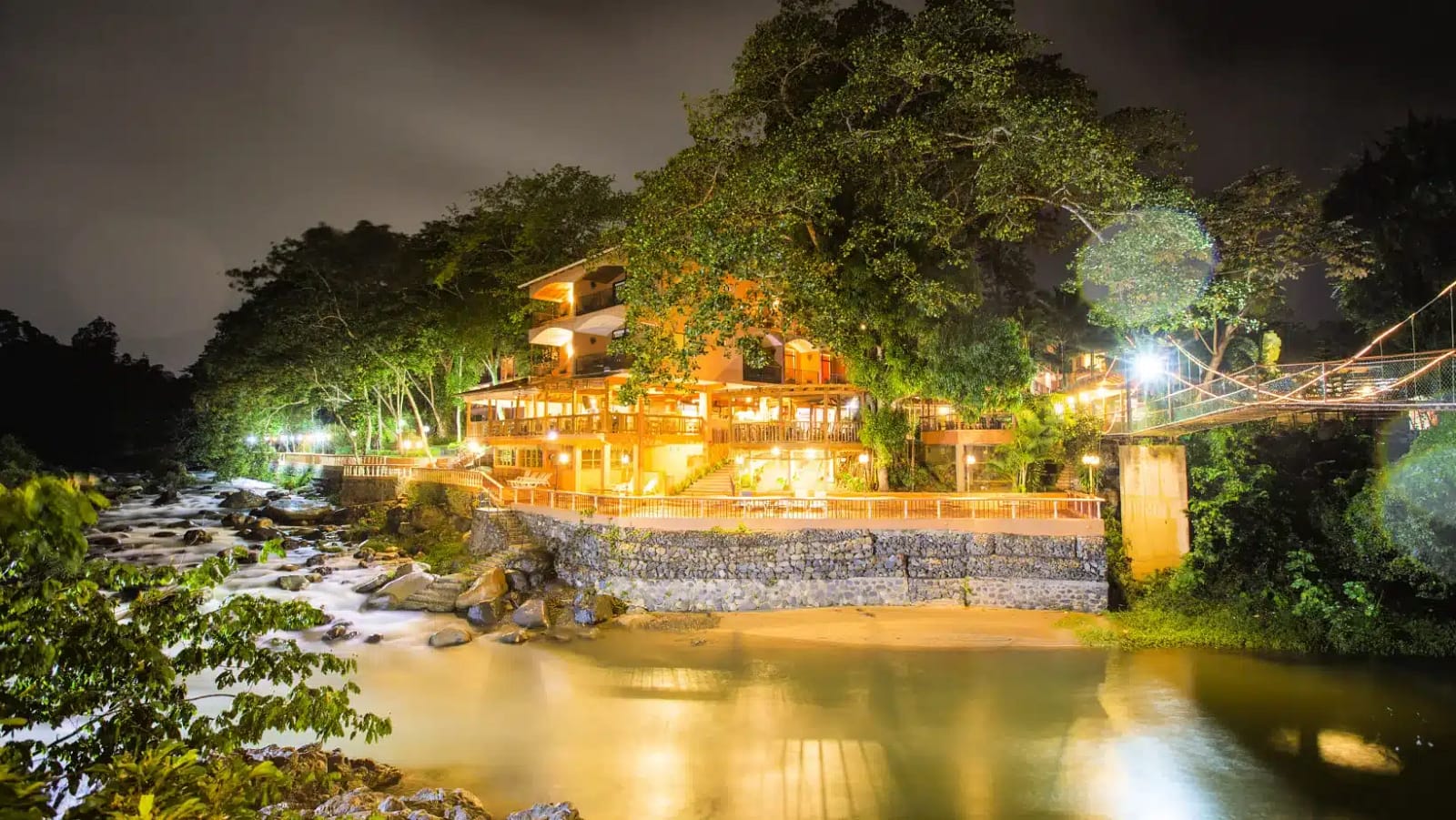
The mountains. Cool nights, pine forest, rivers, agriculture, and rents that run below anything coastal. This is the answer for people who don't want a beach at all, and it is the furthest from serious medicine.
The help you need here is mostly paperwork help
The Dominican advisory industry grew up around selling real estate, not around moving people, and that shapes what you will find. Plenty of firms will walk your residency file through Migración as a free extra on a condo purchase. Far fewer will simply take the file and charge you for it. Meanwhile the slow, expensive part of a Dominican application happens in the United States, at a records office and an apostille desk, months before anyone in Santo Domingo touches it. The useful shortlist for this country is short and unglamorous.

Go deeper
None of these are Dominican Republic specific. All three answer a question this page raises and cannot settle for you.
Do I have enough money?
Our partners at Beacon Financial outline how much money a move abroad could cost you as well as how much you may need to retire.
Beacon works through whether your income can carry a move at all, which is the question hiding under both of those visa floors.
Can I get healthcare?
Our partner Hunter Schultz explains what you need to know if you're concerned about healthcare abroad.
What changes when your coverage stops being American. Especially relevant in a country whose public scheme will probably not take a retiree.
US Expat Taxes 101
Moving abroad doesn't mean leaving the US tax system behind. In this webinar, we'll cover the basics every American expat should know, including filing requirements, foreign income exclusions, tax treaties, reporting foreign bank accounts, and common mistakes to avoid. Whether you're planning your move or already living overseas, this session will help you better understand your tax obligations and where to turn for professional guidance.
What you still file after you leave. The Dominican exemptions described above touch none of it.
Things people write in and ask
Is the Dominican Republic the same as Dominica?
No, and the mix-up is constant. Dominica is a small English-speaking island of about seventy thousand people. The Dominican Republic is a Spanish-speaking country of more than ten million on Hispaniola. If somebody is offering you a passport for a fee, they are describing Dominica. The Dominican Republic sells residency, and its citizenship is earned by living there.
Do I need to speak Spanish to live in the Dominican Republic?
To apply for residency, no. To live here, effectively yes. Tourist zones and the north coast carry a fair amount of English, and private hospitals in the capital have English-speaking specialists. Everything official happens in Spanish, and so does most of daily life. You will also face a Spanish interview if you go on to apply for citizenship.
What happens to my healthcare and Medicare?
Medicare does not work outside the United States. The Dominican public scheme is entered through an employer, so a retiree generally cannot join it. The practical answer is a local ARS plan at roughly $40 to $100 a month, or an international policy at $150 to $400, plus living within reach of Santo Domingo, Santiago, Punta Cana or Puerto Plata.
How much does it cost to live in the Dominican Republic?
Outside the resort towns, rent included, one person lands around $1,050 a month and a couple around $1,750. In Santiago or the mountains you'll beat that comfortably. In Cap Cana or central Santo Domingo you won't. The variable nobody plans for is electricity, which can swing a few hundred dollars depending on how much air conditioning you run.
Can I retire to the Dominican Republic on Social Security?
The pensionado category under Law 171-07 asks for $1,500 a month of pension income plus $250 for each dependent, and the law sets no minimum age. A Social Security benefit counts. A paycheck does not. If your benefit falls short, the rentista route at $2,000 a month of foreign investment income or the ordinary one-year residency are the alternatives.
Can I get Dominican citizenship, and how fast?
Law 1683 asks for two consecutive years of residence, or six months if you own property or run a business here, plus a Spanish interview and an oath of allegiance. Approval comes by presidential decree, which has no published timetable. Treat eighteen months to three years as the realistic range and treat any shorter promise as a sales pitch.
Is the Dominican Republic safe for Americans?
It sits on tier two of the State Department's four-tier advisory scale, and crime is the stated reason. The advisory is explicit that violent crime reaches residents and visitors alike. Statistically the bigger danger is the road, and the same advisory is blunt about how bad Dominican driving is. Long-term residents handle both the same way, by not driving at night and not advertising what they own.
How long does Dominican residency take?
Migración publishes ninety working days for a retiree file once it has been deposited. That clock only starts after you have obtained the RS visa at a consulate in the States and completed an approved medical exam here. Getting documents apostilled and translated beforehand usually takes longer than the government's own part of the process.
Sources
- Residence for retired or pensioned foreigners · Dirección General de Migración (checked September 17, 2026)
- Dominican Republic travel advisory and country guidance · U.S. State Department (checked September 17, 2026)
- Impuesto sobre la Renta · DGII (checked September 17, 2026)
- ISR withholding table and Law 30-26 · Siempre al Día (checked September 17, 2026)
- Law 1683 of 1948, the naturalization statute · Refworld (checked September 17, 2026)
- Dollar exchange rate, September 7, 2026 · Banco Central, via Cibao Noticias (checked September 17, 2026)
- USD to DOP rate history · Wise (checked September 17, 2026)
- Cost of living, Dominican Republic against the U.S. · Western Union, on Numbeo data (checked September 17, 2026)
- Cost of living in the Dominican Republic, 2026 · DRListings (checked September 17, 2026)
- Dominican Republic hit by major blackouts · AFP, via Jamaica Observer (checked September 17, 2026)
- Widespread power outage hits the Dominican Republic · CBS News (checked September 17, 2026)
- Q1 2026 internet disruption summary · Cloudflare Radar (checked September 17, 2026)
- Healthcare in the Dominican Republic for expats · Expat Focus (checked September 17, 2026)
Test the Dominican Republic against your actual life
Speak with an Expatsi advisor to get your personalized roadmap and experts who can help.
Why not you?