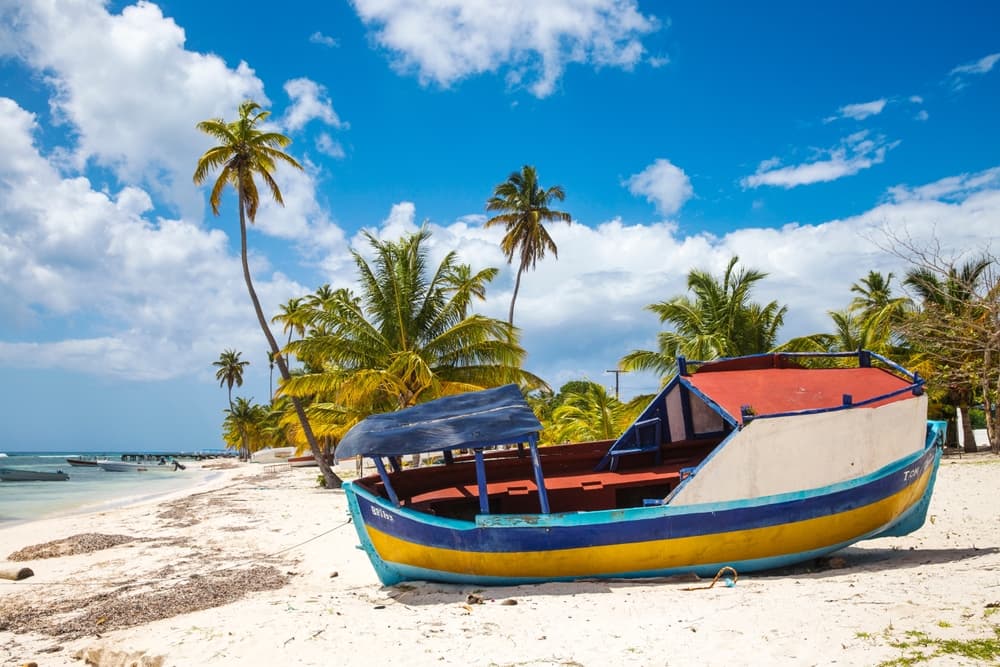
Punta Cana: gated beach living with the airport next door
What a resort-coast life costs, how safe it is, which private hospitals take emergencies, and why nearly everyone here owns a car.
- 138,919
- Population (2022)
- $2,300/mo
- Monthly budget · single
- 79°F / 26°C
- Avg temperature
Budget about $2,300 a month in U.S. dollars for one person in Punta Cana, with most single budgets landing between $1,900 and $2,700. A couple spends about $3,300, and a family of four about $4,800. A one-bedroom near the center rents for around $1,100 a month, or about $800 farther out. Those are 2026 figures.
Punta Cana isn't one town so much as a string of resort and residential zones on the Dominican Republic's eastern tip: Bávaro, Punta Cana Village, Cap Cana, and the working town of Verón among them. About 139,000 people lived here as of 2022, and the developments are built around tourists and second-home buyers.
It suits people who want warm weather all year, a gated community where English is common, and a short flight home to family. It's a harder fit if you want Dominican street life, walkable errands, or neighbors who've lived on the same block for generations.

Reviewed and updated October 9, 2026 · 4 min read
At a glance
$2,300
Monthly budget · single person
$1,100/mo 1-bed rent, center
58/100
Safety index
$50
Internet / month
79°Fannual average
Feb 76° · Aug 81°
Climate
138,919
Population (2022)
Expatsi estimates, updated Oct 2026, based on rental listings, government statistics, and local reporting.
Cost of living
What it costs to live in Punta Cana
Single person
$1,900–$2,700/mo
about 25% below Austin, TX
Couple
$2,700–$3,900/mo
about 30% below Austin, TX
Family of four
$3,900–$5,700/mo
about 40% below Austin, TX
Compared with Austin, TX (Expatsi estimate, 2026).
- $10 −50%
- Inexpensive meal
- $900–$1,300/mo −44%
- 1-bed rent, center
- $650–$950/mo −41%
- 1-bed rent, outside
- $50/mo −23%
- Internet
- $223/sq ft −66%
- Buy price, center
Expatsi estimates, updated Oct 2026, based on rental listings, government statistics, and local reporting.
Daily life
How Punta Cana lives
- C- grade, 5th percentile among the cities we track
- Dining & cafésmodest
- C grade, 6th percentile among the cities we track
- Arts & culturemodest
- C grade, 13th percentile among the cities we track
- Parks & outdoorsmodest
- C- grade, 2nd percentile among the cities we track
- Schools & educationmodest
- C- grade, 0th percentile among the cities we track
- Healthcare accessmodest
- C- grade, 0th percentile among the cities we track
- Bike infrastructuremodest
- C grade, 8th percentile among the cities we track
- Public transitmodest
Graded on OpenStreetMap amenity density relative to the 298 cities we track. Accessibility is the exception: it's graded against a fixed standard (terrain steepness and sidewalk surfaces), not a curve.
Climate
Weather through the year
Annual average 79°F (26°C) · 44 in of rain a year · Source: Open-Meteo Historical Weather API (temps: ERA5-Land 0.1°; precip/sunshine: ERA5 best-match; 1991-2020 normals); precipitation: Meteostat station 78479 normals 1991-2020
On the ground
Scenes from Punta Cana
Getting around
Transport in Punta Cana
Plan on owning a car. Punta Cana spreads along miles of coast, the zones are linked by highway rather than sidewalks, and most residents drive for groceries, the hospital, and the airport.
Uber arrived in late 2020 after a fight with the local taxi association, and it now works across Bávaro and Punta Cana Village, usually for less than a taxi. Taxis don't run meters, so settle the fare before you get in. Guaguas, the local minibuses, run along the main roads for about $1 to $2 a ride. They're crowded and leave little room for bags, but they're how plenty of resort workers commute.
Here's the catch: the roads are a bigger risk than the neighborhoods. The U.S. State Department puts the country's road death rate at 65.2 per 100,000 people, citing drivers without headlights at night and reckless motorcycle riding. Long-term residents tend to avoid night driving outside the resort zones. Santo Domingo, with the U.S. Embassy and more specialist care, is about two hours away by road.
- 0.4/sq mi
- Transit stops
- 0.0/sq mi
- Bike infrastructure
- 1.2/sq mi
- Wheelchair-accessible places
Mapped features per square mile from OpenStreetMap.
Keep exploring
Places like Punta Cana
Community
Community & practical notes
Community: Foreign residents mostly live in gated developments in Bávaro and Cap Cana, and English is widely spoken in the resort zones, which makes the first months easy. The trade-off is that daily life can stay inside the gates. At the bank, the utility office, or a roadside checkpoint, Spanish is what gets things done. The U.S. has a consular agency in Bávaro at the Palma Real Shopping Center.
Healthcare: Three private hospitals run 24-hour emergency rooms: Hospiten Bávaro, Centro Médico Punta Cana, and Hospital IMG. Hospiten Bávaro has 71 beds, seven of them in intensive care. Private hospitals ask for payment or proof of accepted insurance before they admit you, so keep your policy details on your phone. The State Department says ambulances are more reliable here than in most of the country, and residents often go to Santo Domingo for complex surgery. Our healthcare expert Hunter Schultz can advise you more extensively on the particulars.
Remote work: Home internet runs about $50 a month.
Schools: Puntacana International School is a nonprofit bilingual school running from toddler classes through 12th grade. Cap Cana Heritage School teaches a U.S.-type curriculum from preschool through high school, and Bavaro Bilingual School teaches in English and Spanish across the same grades.
LGBTQ expats: The State Department says same-sex relationships face no legal restrictions in the Dominican Republic, but the law doesn't recognize same-sex marriages, civil unions, or families. If you're married, ask an immigration lawyer how your U.S. marriage will be treated on a residency application before you plan around it.
Black Americans: The State Department reports that some U.S. citizens have been mistaken for Haitian migrants during immigration operations and temporarily detained, in rare cases with physical assault. It advises carrying your passport at all times and contacting the embassy right away if you're detained.
Limited mobility: Mixed. The airport and newer resorts are built with ramps and step-free access. Beyond them, the State Department says accessible facilities and ease of movement are limited in most of the country and not usually up to U.S. standards. Look for a newer building with an elevator, and plan to drive or be driven.
Retirement: Punta Cana works for retirees who want warm winters (January highs average about 79°F), English-speaking neighbors, a hospital nearby, and an easy trip back to the grandkids. Compare countries on our retirement visa page, and read the residency routes in our Dominican Republic guide.
Housing
Renting and buying
- 1-bed rent (center)
- $900–$1,300/mo
- 1-bed rent (outside center)
- $650–$950/mo
- Buy price (center)
- $223/sq ft
- Buy price (outside center)
- $158/sq ft
Expatsi estimates, based on rental listings, government statistics, and local reporting.
Good to know
Frequently asked questions
When is hurricane season in Punta Cana?
Tropical storms and hurricanes in the Caribbean generally run from May through November, according to the U.S. State Department. In Punta Cana, September, October, and November are the rainiest months on average, so plan home insurance and storm prep around that stretch.
Can you retire in Punta Cana?
Yes, once you qualify for Dominican residency. Retirees come for year-round warmth, gated communities where English is common, private hospitals nearby, and nonstop flights to U.S. cities. A retired couple should budget about $3,300 a month as of 2026.
What is healthcare like in Punta Cana?
Punta Cana has three private hospitals with 24-hour emergency rooms: Hospiten Bávaro, Centro Médico Punta Cana, and Hospital IMG. They expect payment or proof of accepted insurance before admission, so most foreign residents carry private or international coverage. For complex surgery, people often travel to Santo Domingo, about two hours away.
Is Punta Cana safe for Americans?
The U.S. State Department rates the Dominican Republic Level 2, exercise increased caution, because of crime, and notes that violent crime remains a concern even with more police in tourist areas. For most residents the larger everyday risk is the road: the country's crash death rate is 65.2 per 100,000 people, so avoid driving at night outside the resort zones.
Do people speak English in Punta Cana?
In the resort zones and gated developments, English is widely spoken. Outside them, at banks, government offices, and local shops, Spanish is the working language, so plan on learning at least the basics.
How much does it cost to live in Punta Cana?
One person typically spends $1,900 to $2,700 a month in Punta Cana, in U.S. dollars, as of 2026. A couple spends about $3,300 and a family of four about $4,800. Rent is the biggest variable: a one-bedroom near the center averages about $1,100 a month.
Do you need a car to live in Punta Cana?
Most residents do. The area is spread along the coast and linked by highway. Uber works across Bávaro and Punta Cana Village, taxis are unmetered so you agree on the fare first, and local minibuses called guaguas cost about $1 to $2 a ride.
See how Punta Cana fits your life
Take the free Expatsi Test and compare Dominican Republic to over 100 countries on what actually matters: cost, healthcare, climate, and safety. About five minutes.
Why not you?