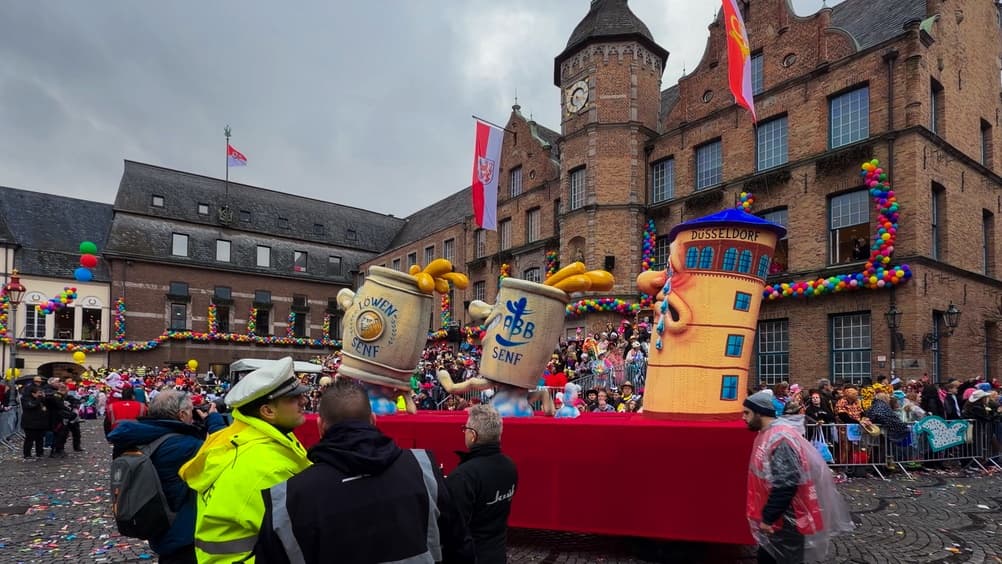
Düsseldorf on $2,500 a month
What it costs to live in Düsseldorf, how safe it is, what the weather does, and who Germany's corporate city on the Rhine actually suits.
- 631,217
- Population (2023)
- $2,500/mo
- Monthly budget · single
- 52°F / 11°C
- Avg temperature
One person lives in Düsseldorf on about $2,500 a month. A couple runs about $3,800, and a family about $6,200. A one bedroom in the center averages $1,150, or about $950 a few stops out. Dinner out is around $16, home internet $40, and a monthly transit pass $70.
That's less than Berlin, Hamburg, Frankfurt and Munich, and about level with Cologne. Düsseldorf is the capital of North Rhine-Westphalia and the city that international companies post people to. It holds the largest Japanese community in Germany. The safety score is 70 out of 100, second only to Munich among the German cities we cover. About 630,000 people live here, and the city is compact enough that most of daily life sits within a short ride. It suits families on a company transfer, remote workers who want a compact city rather than a capital, and anyone who likes things well-run.
The trade-off is churn. A lot of the international crowd arrives on a three to five year posting and then leaves, so friendships turn over faster than they would in Berlin. Winter is the other caveat, since December is the darkest month here.

Reviewed and updated September 26, 2026 · 4 min read
At a glance
$2,500
Monthly budget · single person
$1,150/mo 1-bed rent, center
70/100
Safety index
$40
Internet / month
52°Fannual average
Jan 38° · Jul 67°
Climate
631,217
Population (2023)
Expatsi estimates, updated Aug 2026, based on rental listings, government statistics, and local reporting.
Cost of living
What it costs to live in Düsseldorf
Single person
$2,200–$2,800/mo
about 20% below Austin, TX
Couple
$3,300–$4,300/mo
about 15% below Austin, TX
Family of four
$5,500–$6,900/mo
about 20% below Austin, TX
Compared with Austin, TX (Expatsi estimate, 2026).
- $16 −20%
- Inexpensive meal
- $1,000–$1,300/mo −41%
- 1-bed rent, center
- $800–$1,050/mo −30%
- 1-bed rent, outside
- $40/mo −38%
- Internet
- $70/mo +70%
- Transit pass
- $701/sq ft +8%
- Buy price, center
Expatsi estimates, updated Aug 2026, based on rental listings, government statistics, and local reporting.
Daily life
How Düsseldorf lives
- A- grade, 83rd percentile among the cities we track
- Dining & cafésstrong
- A- grade, 82nd percentile among the cities we track
- Arts & culturestrong
- B grade, 53rd percentile among the cities we track
- Parks & outdoorstypical
- A grade, 89th percentile among the cities we track
- Schools & educationstandout
- A- grade, 84th percentile among the cities we track
- Healthcare accessstrong
- A grade, 87th percentile among the cities we track
- Bike infrastructurestandout
- A grade, 92nd percentile among the cities we track
- Public transitstandout
- A+ grade, good physical accessibility
- Accessibilitygood
Graded on OpenStreetMap amenity density relative to the 369 cities we track. Accessibility is the exception: it's graded against a fixed standard (terrain steepness and sidewalk surfaces), not a curve.
Climate
Weather through the year
Annual average 52°F (11°C) · 30 in of rain a year · Source: Meteostat station normals (10400, 1991-2020)
On the ground
Scenes from Düsseldorf
Getting around
Transport in Düsseldorf
Rheinbahn runs everything: the Stadtbahn that locals call the U-Bahn, plus trams and city buses. Several lines keep going past the city limits to Neuss, Meerbusch, Duisburg, Krefeld and Ratingen, so a commute from a neighboring town often needs no transfer.
Our data puts a monthly pass at $70. That's the nationwide Deutschlandticket, which covers local and regional trains anywhere in Germany, though not the fast ICE services.
The city is small and close to flat, sitting about 125 feet above sea level, so walking and cycling work year round. The Rheinuferpromenade and the paths along both banks do a lot of that work, while the ride from Oberkassel into the center takes minutes.
From the airport, the S11 stops directly under the terminal and reaches the Hauptbahnhof in about a quarter of an hour. Other trains stop at Düsseldorf Flughafen station, where the SkyTrain monorail finishes the trip.
You don't need a car in the inner districts, though parking will make you resent owning one. A car earns its keep on weekends when the Dutch and Belgian borders are close enough for a day out.
- 69/sq mi
- Transit stops
- 76/sq mi
- Bike infrastructure
- 307/sq mi
- Wheelchair-accessible places
Mapped features per square mile from OpenStreetMap.
Keep exploring
Places like Düsseldorf
Community
Community & practical notes
Community: The international scene here is corporate rather than bohemian, so it's organized around work. Little Tokyo, the stretch of Immermannstraße beside the main station, has Japanese supermarkets, ramen counters and a long-running Japanese bookshop. It anchors the largest Japanese community in Germany and third largest in Europe after London and Paris. The EKŌ-Haus cultural center and Buddhist temple sits across the river in Niederkassel, and Japan-Tag fills the Rhine promenade with fireworks each May. Oberkassel and Kaiserswerth hold the international families, Flingern is the creative quarter, and Pempelfort and Bilk cover the middle. English works inside international employers and in Little Tokyo. It doesn't work at a government counter, and permanent residence still expects German.
Healthcare: Insurance is mandatory from your first day in Germany, and you register with a Hausarzt who gates the specialists. The Universitätsklinikum Düsseldorf is the city's largest hospital and runs a coordination office for international patients. The Florence-Nightingale-Krankenhaus in Kaiserswerth, part of the Kaiserswerther Diakonie, is the other big name. Booking a first specialist appointment can still take weeks, and the paperwork arrives in German.
Schools: The International School of Düsseldorf opened in Kaiserswerth in 1968 and teaches the full IB in English. ISR International School on the Rhine sits across the river in Neuss, with the IB, IGCSE exams and a US-style diploma. There's a Japanese International School in Oberkassel and a French lycée in the city. German public schools are free and taught in German.
Remote work: Home internet runs about $40 a month, and fiber is normal in the central districts. The real constraint is the clock, because Düsseldorf sits six hours ahead of New York. An American team's morning is your evening.
Limited mobility: The ground here is nearly level, the mapped street surfaces are in good repair, and most Rheinbahn vehicles are low floor. The Hauptbahnhof has lifts between platforms, and the airport S-Bahn stops under the terminal. Rheinbahn will send an escort to help you through a trip if you book a day ahead, and Düsseldorf Tourismus publishes a barrier-free city brochure. The obstacle is the housing stock, since older apartment buildings are walk-ups with no elevator. Ask about the elevator before you view anything.
Retirement: Germany has no dedicated retirement visa, which is the honest starting point. Retirees usually arrive through citizenship by descent, an EU passport, family, or a discretionary permit granted case by case on proof of income and insurance. The city itself is kind to older residents. It's flat, offers thorough transit, quality hospitals, and low crime. Our retirement visa guide covers the routes country by country, and the Germany moving guide has the tax and residency picture.
Housing
Renting and buying
- 1-bed rent (center)
- $1,000–$1,300/mo
- 1-bed rent (outside center)
- $800–$1,050/mo
- Buy price (center)
- $701/sq ft
- Buy price (outside center)
- $441/sq ft
Expatsi estimates, based on rental listings, government statistics, and local reporting.
Good to know
Frequently asked questions
Is Düsseldorf safe?
Düsseldorf scores 70 out of 100 on safety and 30 on crime, the second best reading of the seven German cities we cover, behind Munich. Petty theft is the realistic risk rather than violence. The area around the Hauptbahnhof and Worringer Platz feels rougher after dark, and the Altstadt bar district is where pickpockets work on weekends.
What is the weather like in Düsseldorf?
Mild and grey. The annual average is 52F, with July average highs near 76F and hotter spells on top. January nights average just above freezing. Rain is spread evenly through the year and adds up to about 30 inches. The light is what surprises Americans: December is the darkest month, with November and January close behind.
Is Düsseldorf wheelchair accessible?
Mostly yes. The ground is nearly level, mapped street surfaces are in good repair, and most Rheinbahn vehicles are low floor. The main station has lifts between platforms, and Rheinbahn offers an escort service booked a day ahead. The weak point is housing, because older buildings are often walk-ups, so confirm the elevator before you sign.
How do Americans move to Düsseldorf?
Almost always through work. A company transfer, an EU Blue Card, a skilled work visa or the Opportunity Card job-seeker permit are the usual routes, and freelancers can apply for the self-employment visa. Students use the student visa. You register your address at the Bürgeramt within two weeks of moving in, and that registration opens the door to a bank account and a residence permit.
Can you live in Düsseldorf without speaking German?
For a while, yes. International employers, the Japanese business community and the international schools all run in English. Government offices, leases, insurance and most doctors do not. Berlin is the easier German city for an English-only landing, so plan on German classes if you are staying past a first posting.
Can Americans retire in Düsseldorf?
There is no German retirement visa, so retiring here is possible but not simple. Most retirees come in through citizenship by descent, an EU passport, a family route, or a discretionary residence permit granted on proof of income and health insurance. The city suits aging in place, with flat ground, thorough transit, a university hospital and a high safety score.
Do you need a car in Düsseldorf?
No. Rheinbahn covers the city with the Stadtbahn, trams and buses, and the $70 monthly pass is the nationwide Deutschlandticket. The city is compact and nearly flat, so walking and cycling handle short trips. A car helps for weekends in the countryside or across the Dutch border, and car sharing covers that for most people.
How much does it cost to live in Düsseldorf?
Figure about $2,500 a month for one person, $3,800 for a couple, and $6,200 for a family. Rent is the swing factor: a one bedroom averages $1,150 in the center and about $950 outside it. An inexpensive dinner out runs $16, home internet $40, and a monthly transit pass $70.
See how Düsseldorf fits your life
Take the free Expatsi Test and compare Germany to nearly 200 countries on what actually matters: cost, healthcare, climate, and safety. About five minutes.
Why not you?