Cambodia for Americans, 2026 edition
Moving to Cambodia: the 2026 guide for Americans
You enter on a 30-day visa and extend it from inside the country, a year at a time. The trade-offs are real: evacuation-grade health insurance, a separate permit to work, and land you can't own.
Written for U.S. passport holders and checked against Cambodia's Constitution and nationality law, the U.S. State Department and the IRS as of September 2026. Where a number comes from agents or applicants rather than the government, we say so.

Reviewed and updated October 22, 2026 · 13 min read
01 · The case for Cambodia
A dollar economy with a once-a-year visa errand
In Cambodia, you don't need your long-term visa sorted before you land. You arrive on a $35 ordinary (E) visa. Once you're in the country you extend it for one, three, six or twelve months at a time, depending on why you're there. That's the whole appeal for a lot of Americans: you sort out your status after you land, and a 12-month extension means no leaving the country every few months to reset the clock.
Retirees get their own version, the ER, open to anyone 55 or older with no legal minimum income attached. Workers, students and job seekers each have one too, and chapter 03 walks through all four.
The money side is familiar, too. U.S. dollars are accepted for rent, bills and bigger purchases, so you won't be doing currency math on your lease. The Cambodian riel is still around for the small stuff: purchases under about $10 to $20 happen almost entirely in riel, and your change usually comes back in riel at roughly 4,000 to 4,100 to the dollar.
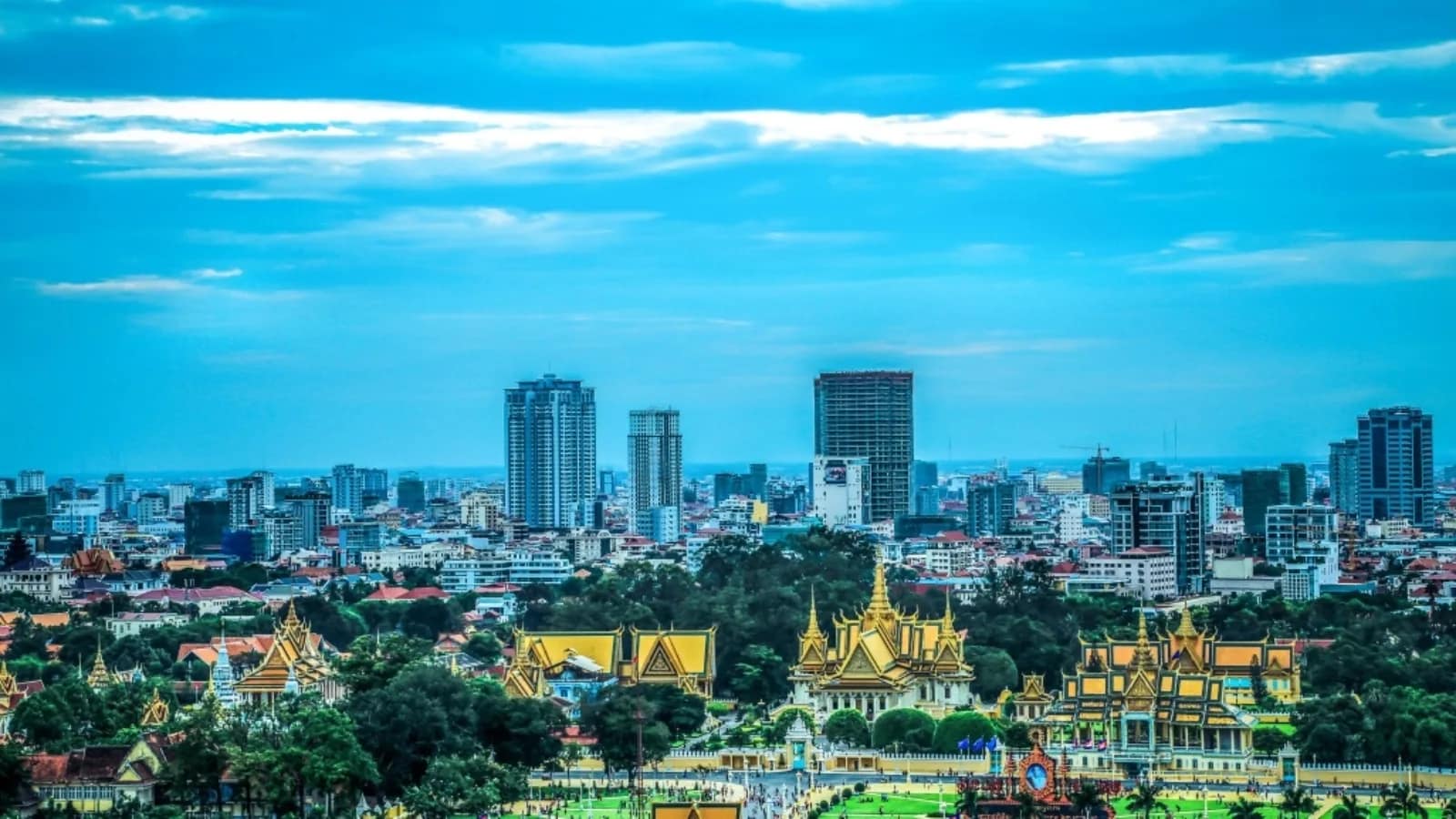
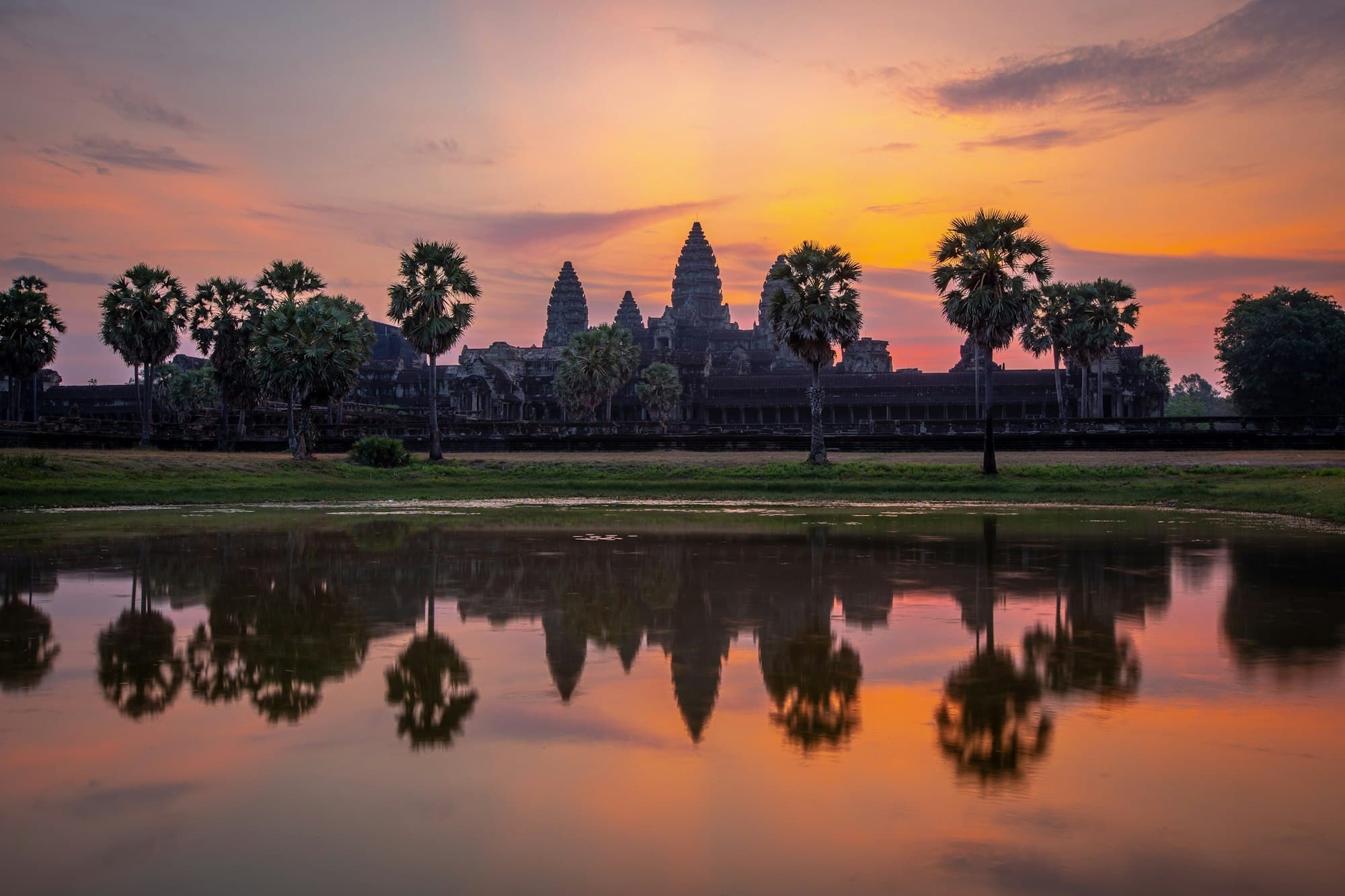
Day-to-day costs are low enough that a fixed income goes a long way; chapter 02 has the line-by-line numbers. Plus, the setting is hard to beat: the temples of Angkor outside Siem Reap, quiet river towns in the south, and a capital whose new international airport opened in October 2025.
Here's the catch
Cambodia doesn't suit everyone, and it's better to hear why now rather than after you've signed a lease.
Healthcare is the big one. The U.S. State Department says Cambodia's medical facilities don't meet international standards and strongly recommends medical evacuation insurance. For anything serious, expats are typically flown to Bangkok or Singapore. If you have a chronic condition that needs specialists, weigh this before anything else. Medicare won't follow you, either.
Work isn't simple. The visa lets you stay; a separate work permit from the Ministry of Labor lets you work, and that includes the self-employed.
You can't own land. The Constitution reserves land to Khmer nationals, so foreigners buy condos under strata title or sign long leases. The State Department notes that some Americans have faced threats and extortion in business disputes, especially over real estate.
Daily life has its rough edges. The State Department rates Cambodia Level 2, Exercise Increased Caution, and tells Americans to stay 50 km (about 31 miles) back from the Thai border. English scores 45 out of 100 in our data, and Khmer is the only official language. Same-sex relations are legal, but same-sex marriage is prohibited. April highs sit around 95°F.
If you can live with all of that, the rest of this guide covers what a month costs, which extension fits you, how healthcare, taxes and banking work, and who can take the paperwork off your hands.
- Cost of living (single)
- $1,000/mo
- Safety index
- 55/100
- English proficiency
- 45/100
- Internet speed
- 35 Mbps
- Currency
- Cambodian Riel (KHR)
- Capital
- Phnom Penh
02 · The numbers
Cambodia's monthly costs, line by line
$1,700
Monthly budget, couple
comfortable, all in
$1,000
Monthly budget, single
comfortable, all in
$2,750
Monthly budget, family
housing included
$400
Rent, 1-bed city center
$250 outside the center
$3
Inexpensive meal out
street and local spots
$10
Local transport, monthly
our transport estimate
$23
Home internet, monthly
about 35 Mbps
$275-$300
ER extension, per person
per year via agent, 2026
Where the money goes
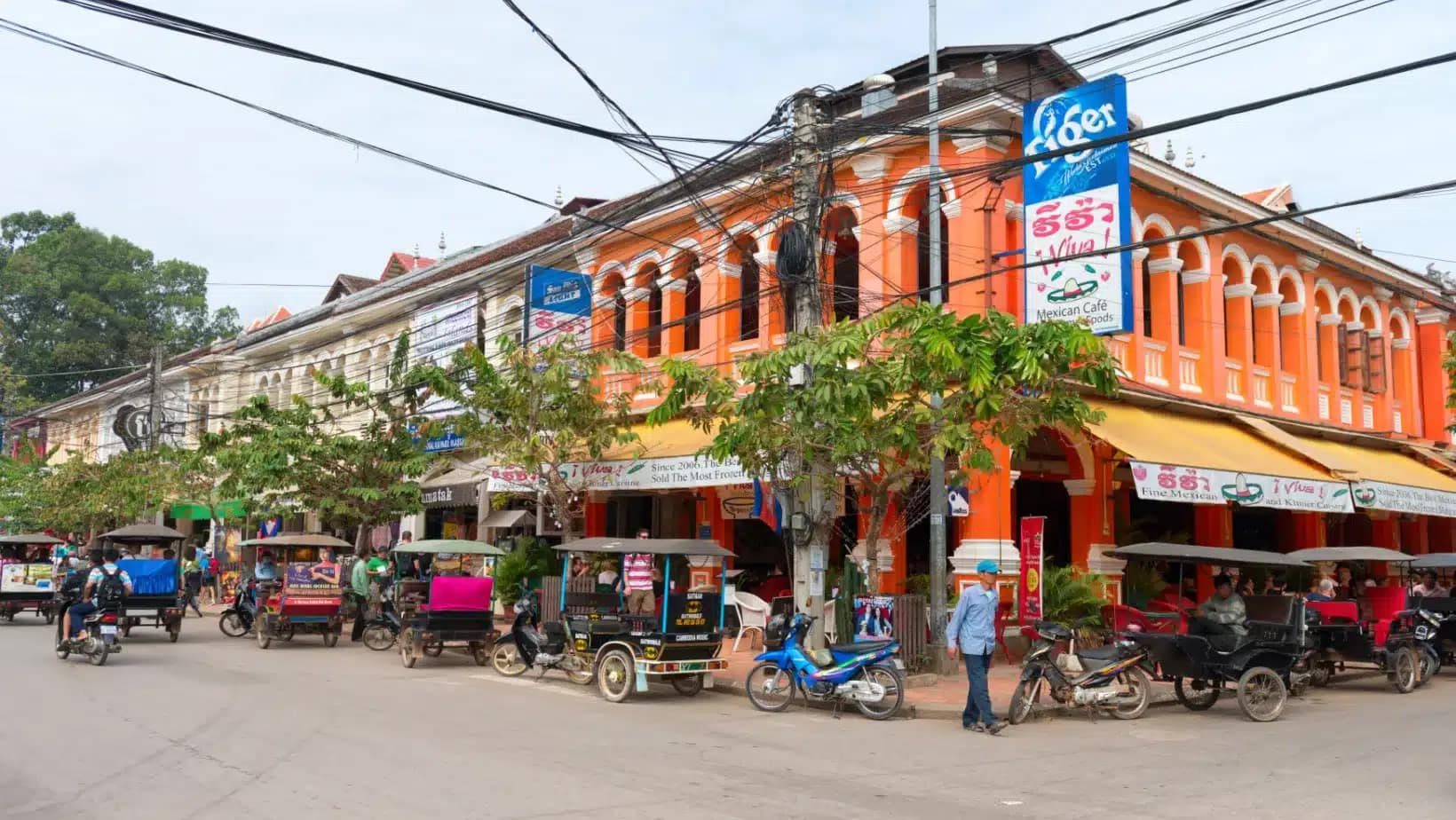
As of 2026, our cost data puts a comfortable month in Cambodia at about $1,700 for a couple, $1,000 for one person and $2,750 for a family, housing included. Those budgets assume you live like a resident, not a tourist: local restaurants, a mid-range apartment, and getting around by tuk-tuk rather than a car of your own.
Rent is the line that moves most. A one-bedroom in a city center averages about $400 a month, and about $250 further out. Phnom Penh sits at the top of that range, while quieter towns come in lower. Food is where the budget stretches: a simple meal out runs about $3. Our local transport estimate is about $10 a month, which assumes you live close to where you shop and eat.
The lines that surprise people run the other way. Health insurance with evacuation coverage is a real monthly cost here, not an optional extra, and it isn't in our budget figures, so price it separately at your age before you commit. Visa extensions add about $275 to $300 a year per person for a 12-month ER through an agent, so a couple should set aside $550 to $600 a year for staying legal. Home internet is about $23 a month at roughly 35 Mbps--fine for video calls but modest if you move large files for work.
One money habit to pick up early: carry crisp bills. The State Department notes that ripped or stained U.S. notes get rejected, and small change comes back in riel. Keep a few dollars and a stack of riel in separate pockets and you'll stop thinking about it.
Why retirees and this budget fit together
A retired couple living on about $1,700 a month doesn't have to prove any set income to hold the ER extension. What they do need is to be 55 or older, show retirement paperwork, and pay roughly $275 to $300 each per year through an agent. That's why the ER is the natural fit for Americans over 55, and why the next chapter starts with it.
03 · Staying legally
Four ways to stay past your first month

Everything long-term in Cambodia starts the same way: an ordinary (E) visa, $35 at the embassy in Washington, good for 30 days after you land. The tourist (T) visa is $30 and extends only once, by 30 days, so skip it if you plan to stay. Your passport needs six months of validity. Flying into Phnom Penh or Siem Reap, you'll also fill in the free e-Arrival card online, up to seven days before you land.
Once you're in, you convert that E visa into one of several extensions. The prices below are what agents charge to file them for you. Extensions of one or three months are single entry, and six- or twelve-month extensions allow multiple entries. Which one you pick depends on what you'll be doing here.
Retired and 55 or older: the ER extension
This is the simplest path for retirees. You need to be 55 or older and show proof of retirement, such as a pension statement, a Social Security letter or retirement-account paperwork. There's no legal minimum income; the $1,000 to $1,500 figures you'll see online are rules of thumb, not law. A 12-month ER runs about $275 to $300 through an agent and usually processes in 7 to 15 business days. The one hard rule: ER holders can't work or run a business in Cambodia.
Working, remote work and business: the EB extension
The EB is the extension for people who work or run a business here. It comes in 1, 3, 6 or 12 months; agents charge about $160 to $190 for six months and $285 to $300 for twelve. Since 2024, 6- and 12-month EB renewals have required a valid work permit if you work here. The permit is a separate document from the Ministry of Labor, issued through its online FWCMS portal, valid for one year and renewed early each year. Government fees run about $130 a year according to one expat guide, though others quote $100 to $300. Self-employed people need one too, and employers work under a cap of 10 percent foreign staff. If you're a remote worker who'll spend most of the year here, one Cambodian outlet suggests registering as self-employed so your status is clean.
Studying or job hunting: the ES and EG extensions
The ES is for students enrolled at a Cambodian school, extended to match the course. The EG is a job-seeker extension that tops out at six months, single entry, renewable once. If you find a job, you move to the EB with a work permit.
The long-term option: Cambodia My 2nd Home
Introduced in June 2022 with Ministry of Interior approval, this program offers a 10-year visa with unlimited entries. A United Nations investment summary describes the entry bar as at least $100,000 in investment capital plus property in Cambodia. It's run by a private company that doesn't publish fees. Its claim that holders can apply for a passport after five years sits awkwardly next to the seven-year residence rule in Cambodia's nationality law. Treat it as a niche option and get independent legal advice before paying anyone.
A note on the long game: naturalization takes seven years from the date you receive a residence card, and you'll need to speak Khmer, read the script and know some Khmer history. Cambodia allows dual citizenship for ordinary citizens, so becoming Cambodian doesn't cost you your U.S. passport. Stay on top of renewals: overstays cost $10 a day, and long ones can mean arrest and deportation.
Retirement Visa (ER)
Proof of retirement, no set income floor
Show a pension statement or Social Security letter and renew once a year. No work or business allowed while you hold it.
- Passport valid for at least 6 months at entry
- Age 55 or older
- Proof of pension or sufficient savings
Employment Visa (EG)
Time to find a job, then switch
A job-seeker extension that tops out at six months, single entry. Once you're hired, you move to the EB with a work permit.
- Passport valid for at least 6 months at entry
- Proof of job search or intent to work
Student Visa (ES)
Tied to your course
For students enrolled at a Cambodian school, with the extension matched to the length of study.
- Passport valid for at least 6 months at entry
- Admission letter or supporting documents from a Cambodian educational institution
04 · The practical stuff
Healthcare, taxes, banking and buying a home
Four things decide whether a move here works on paper. Here's how each one stands as of September 2026.
Healthcare
Plan your healthcare before you plan anything else. The State Department says medical facilities in Cambodia don't meet international standards and strongly recommends evacuation insurance. Royal Phnom Penh Hospital, part of Thailand's Bangkok Dusit Medical Services group, describes itself as the country's only JCI-accredited hospital and can arrange air evacuation to Bangkok with a medical team on board. For serious illness or injury, expats are typically evacuated to Thailand or Singapore. Medicare and Medicaid don't pay overseas, so you'll want international coverage that includes evacuation, sized for your age. Hunter Schultz, a healthcare coach with a background in air medical transport, can help you judge what level of care you need. ExpatInsure can quote the policy.
Taxes
Cambodia doesn't have a traditional personal income tax. It taxes salary. If you're in the country more than 182 days in a year, you're a tax resident, and your salary is taxed at 0 to 20 percent a month on worldwide salary: nothing on the first 1,500,000 riel (about $370) and 20 percent above 12,500,000 riel (about $3,100). Non-residents pay a flat 20 percent on Cambodian-source salary. The sources we checked describe only this salary tax, so if you live on a pension or investments, confirm with a tax professional how your income is treated. On the U.S. side, you still file every year. There's no U.S.-Cambodia tax treaty and no Social Security totalization agreement. If you earn a salary here, the Foreign Earned Income Exclusion ($132,900 for tax year 2026) can shelter much of it from U.S. tax. MyExpatTaxes files U.S. returns from abroad, and Beacon Global Advisors keeps American retirement accounts working after you leave.
Money and banking
Banks want more than a tourist visa. Expect to show your passport, a long-stay E-class extension, a lease and a Cambodian phone number. ABA Bank is the usual choice for foreigners; accounts come in both dollars and riel. Moneycorp can move your dollars from a U.S. account on a schedule, which helps with rent.
Buying a home
Foreigners can't own land; the Constitution reserves it to Khmer nationals. What you can buy is a condo under strata title, above the ground floor, in a building where foreigners hold no more than 70 percent of the units, with a 4 percent transfer tax. Leases of up to 50 years are the other route and must be registered if they run past 15 years. Stay away from nominee arrangements where a Cambodian holds land in their name for you: they aren't recognized under Cambodian law. Rent first, and buy only with a lawyer who works for you, not the seller.
Bringing a pet
Dogs and cats need a microchip and a rabies shot given at least 30 days before arrival, plus a health certificate endorsed by the USDA. There's no import permit or quarantine needed if the paperwork is right. Starwood Pet Travel handles this end to end.
05 · Safety, weather and getting there
What to know before your first month
A Level 2 advisory
The State Department's September 2026 advisory says Exercise Increased Caution. Phone and bag snatching is frequent where foreigners gather, with Phnom Penh singled out.
Keep clear of the Thai border
Fighting that began in July 2025 displaced more than 500,000 people on both sides. A second ceasefire came in December 2025, but State still says stay 50 km (31 miles) back.
Landmines in the northwest
Landmines remain a danger in several provinces, including Battambang and Siem Reap provinces. Stick to marked paths and roads outside towns.
Roads take getting used to
State warns that drivers routinely ignore traffic laws and vehicles are poorly maintained, and it advises against driving at night outside cities.
Hot year round, wet half the year
Rains run mid-May to early October. Highs go from about 82°F in January to about 95°F in April, so budget for air conditioning.
New airports, 11-12 hours ahead
Phnom Penh's Techo airport opened in October 2025; Siem Reap's opened in October 2023, 34 miles from town. Cambodia is 11 to 12 hours ahead of Eastern, by season.
This guide is dated on purpose
Extension prices, the work permit rules and the border situation have all moved in the past two years. Everything here reflects what we could verify in September 2026, and several prices come from agents rather than a government fee schedule. Check the current rules with a licensed professional before you file or pay anything.
06 · Finding your spot
Choosing a base in Cambodia
Your first decision is the capital or a smaller town, and the two feel like different countries.
Phnom Penh has Royal Phnom Penh Hospital and the new airport. It's also the most expensive place to rent and where the State Department's warnings about street crime apply most. Siem Reap is smaller and slower, built around the Angkor temples, with its own international airport. Down south, Kampot is a riverside town known for pepper farms and a relaxed pace. Battambang in the west has colonial-era streets and an arts scene. Sihanoukville is on the coast but has changed fast in recent years.
Whichever you pick, rent for a few months before you sign anything long-term. The city guides below go deeper as we publish them.
Cambodia city guides
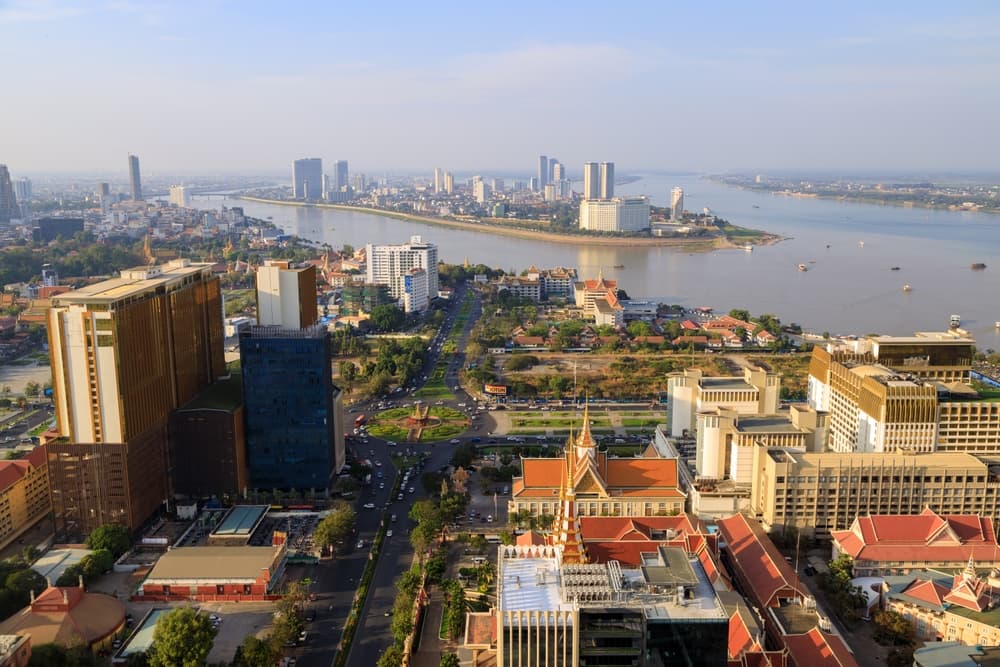
Phnom Penh
Capital on the river
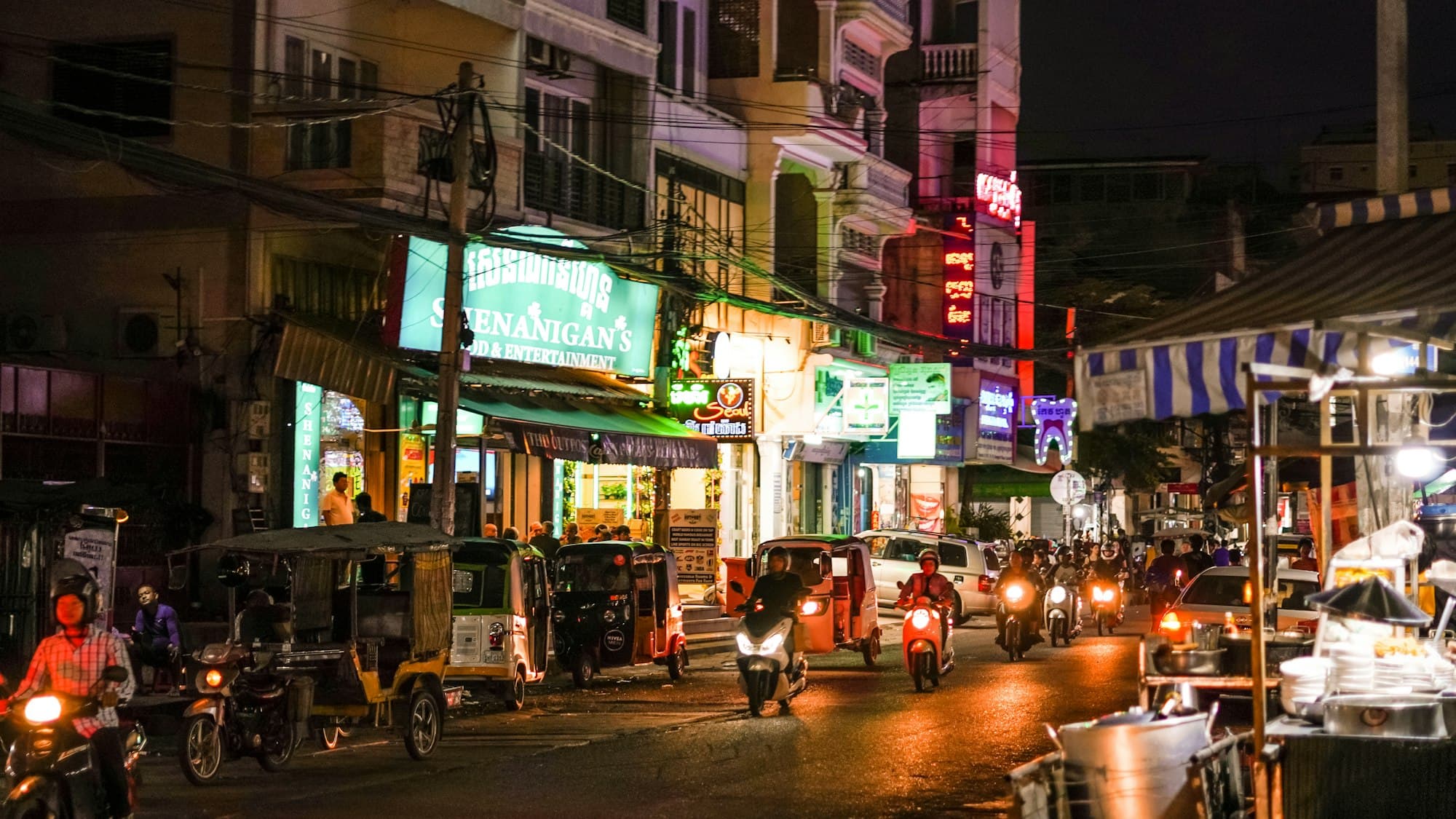
The expat base for Cambodia, with the riverside promenade along Sisowath Quay, a strong cafe scene and the widest choice of international schools and clinics. Rent and bills are paid in dollars. Traffic is chaotic, sidewalks are mostly parking, and snatch thefts from passing motorbikes are a real risk.
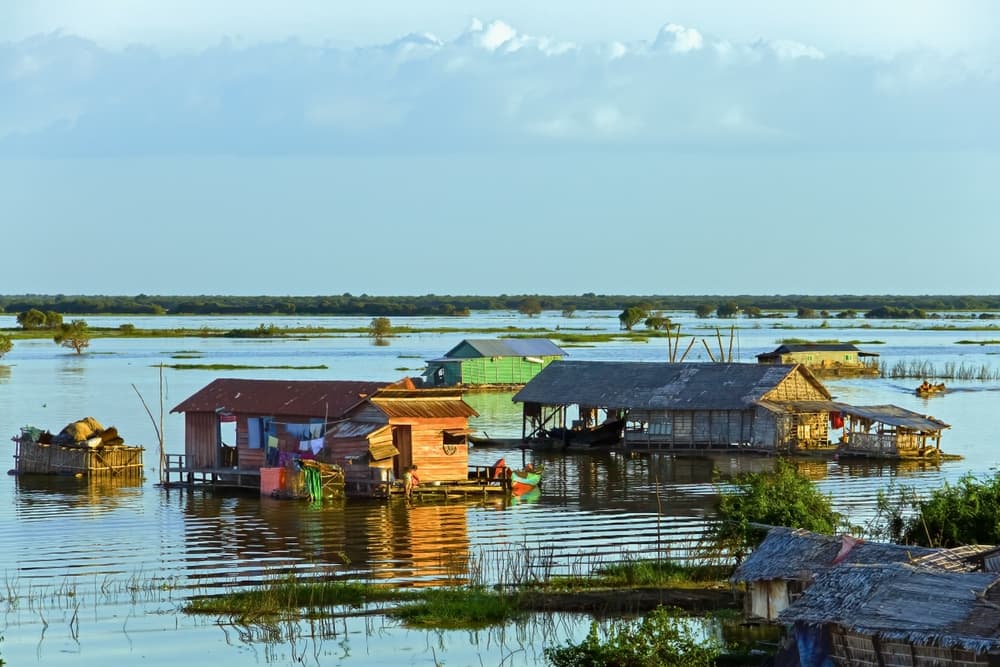
Siem Reap
Angkor's small town
A relaxed town of cafes, tuk-tuks and tree-lined river streets, where many expats run guesthouses, NGOs or remote jobs. Angkor is a short ride away. The new airport sits about 45 km east, close to an hour's drive, and serious medical care often means a flight to Phnom Penh or Bangkok.
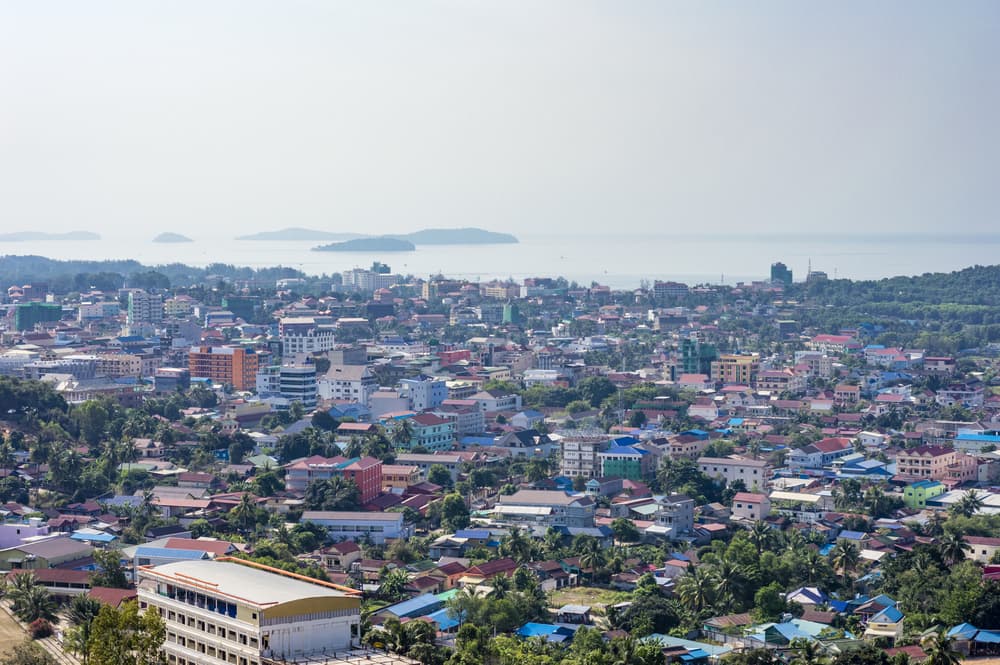
Sihanoukville
Beach port, rough edges
Cambodia's main port and gateway to islands like Koh Rong, with beaches at Otres and Ochheuteal. Years of Chinese casino building left half-finished towers and a rougher feel. Come for the coast, but go in with eyes open about crime and scams.
07 · Your move team
The people who handle the hard parts
You've met a few of them already in this guide. For a place where healthcare, taxes and paperwork each carry real weight, it pays to have someone who's done it before handle each piece.
These are Expatsi-vetted partners for the parts of a Cambodia move that don't depend on being on the ground: health coverage, U.S. taxes and money, getting your pets there, and settling into a new culture. For the extension itself, a local visa agent in Phnom Penh or Siem Reap does the filing.

Hunter Schultz
Healthcare Coach
A healthcare coach with more than 20 years of expat living and a background in air medical transport. His one-hour consultation maps the level of care you need and how to get it where you're moving.
Learn more
ExpatInsure
Global Health Insurance
Expatsi's international health insurance partner, led by Andy Seale and Stephanie Edwards. They match you with a plan that fits; ask them about the evacuation coverage the State Department recommends for Cambodia.
Learn more
MyExpatTaxes
U.S. Expat Tax Service
Tax software and support built for Americans abroad, filing U.S. expat returns online since 2018, including the exclusions and credits you'll lean on while living in Cambodia.
Learn more
Beacon Global Advisors
Financial Planning
Financial planners who keep 401(k)s, IRAs and investment accounts working once you're a non-resident, so your retirement income keeps flowing to Cambodia.
Learn more
Flamingo Compliance | Tax Residency and Visa Tracker Platform
Tax Residency and Visa Tracker Platform
An app that counts your days in each country and warns you as you near a residency trigger, handy with Cambodia's 182-day tax rule. Expatsi users get 15% off the first year.
Learn more

08 · Quick answers
Moving to Cambodia: your questions answered
Can I become a Cambodian citizen and keep my U.S. passport?
Cambodia allows dual citizenship for ordinary citizens, so naturalizing doesn't require giving up U.S. citizenship. Naturalization requires seven years from the date you receive a residence card, plus the ability to speak Khmer, read Khmer script and show some knowledge of Khmer history.
Do I pay Cambodian tax on my Social Security or pension?
Cambodia has no traditional personal income tax; it taxes salary, at 0 to 20 percent a month for residents who spend more than 182 days there in a year. The tax guides we checked describe only this salary tax and don't address foreign pensions, so confirm your situation with a tax professional. Americans still file U.S. returns every year, and there's no U.S.-Cambodia tax treaty.
How much does it cost to live in Cambodia per month?
Expatsi's 2026 data puts a comfortable month at about $1,000 for a single person, $1,700 for a couple and $2,750 for a family, housing included. A one-bedroom apartment in a city center averages about $400 a month, and about $250 outside the center. International health insurance with evacuation coverage isn't included and should be priced separately.
Is healthcare in Cambodia good enough for American retirees?
The U.S. State Department says Cambodian medical facilities don't meet international standards. Royal Phnom Penh Hospital, part of a Thai hospital group, describes itself as the country's only JCI-accredited hospital. Serious cases are typically evacuated to Bangkok or Singapore. Medicare doesn't pay overseas, so retirees need international health insurance that includes medical evacuation.
Can I work remotely in Cambodia?
The EB business extension is the one that covers work. Since 2024, 6- and 12-month EB renewals have required a Cambodian work permit for people who work in the country, and the self-employed need one too. Some local advisers suggest registering as self-employed if you'll spend most of the year there. Check the current rules with an agent before you renew.
Can foreigners buy property in Cambodia?
Foreigners can't own land in Cambodia; the Constitution reserves it to Khmer nationals. They can buy condo units under strata title above the ground floor, as long as foreigners hold no more than 70 percent of a building, and pay a 4 percent transfer tax. Long leases of up to 50 years are the other option. Nominee arrangements aren't recognized under Cambodian law.
Is Cambodia safe for Americans?
As of September 2026, the U.S. State Department rates Cambodia Level 2, Exercise Increased Caution. It flags frequent phone and bag snatching in areas where foreigners gather, landmines in several northwestern provinces, and armed conflict near the Thai border, where it tells Americans to stay 50 km (about 31 miles) away.
Can Americans retire in Cambodia?
Yes. Americans 55 and older can hold Cambodia's retirement (ER) extension, which is renewed from inside the country after arriving on a $35 ordinary (E) visa. Cambodia sets no legal minimum income for it; applicants show proof of retirement such as a pension statement or Social Security letter. A 12-month ER costs about $275 to $300 through an agent as of 2026, and holders can't work or run a business.
Sources
- Cambodia Travel Advisory · U.S. Department of State (checked September 2026)
- Cambodia International Travel Information · U.S. Department of State (checked September 2026)
- Business (Type E) visa · Royal Embassy of Cambodia, Washington (checked September 2026)
- Constitution of the Kingdom of Cambodia (Articles 5 and 44) · Constitute Project (checked September 2026)
- Law on Nationality (1996) · Refworld (checked September 2026)
- Cambodia: taxes on personal income · PwC Worldwide Tax Summaries (checked September 2026)
- Tax inflation adjustments for tax year 2026 · Internal Revenue Service (checked September 2026)
- The Complete Guide to Cambodia Visas, Extensions and Work Permits in 2026 · Cambodia Expats Online (checked September 2026)
- Cambodia retirement visa · Emerhub (checked September 2026)
- Cambodia introduces Cambodia My 2nd Home programme · UNCTAD Investment Policy Hub (checked September 2026)
- Foreign property ownership mechanisms · Realestate.com.kh (checked September 2026)
- The 2nd Cambodia-Thailand ceasefire · CSIS (checked September 2026)
- Cost of living and country data for Cambodia · Expatsi (checked September 2026)
Find out whether Cambodia fits your life
The free Expatsi Test compares Cambodia with other countries on the things that decide a move: cost, healthcare, climate and safety.
Why not you?