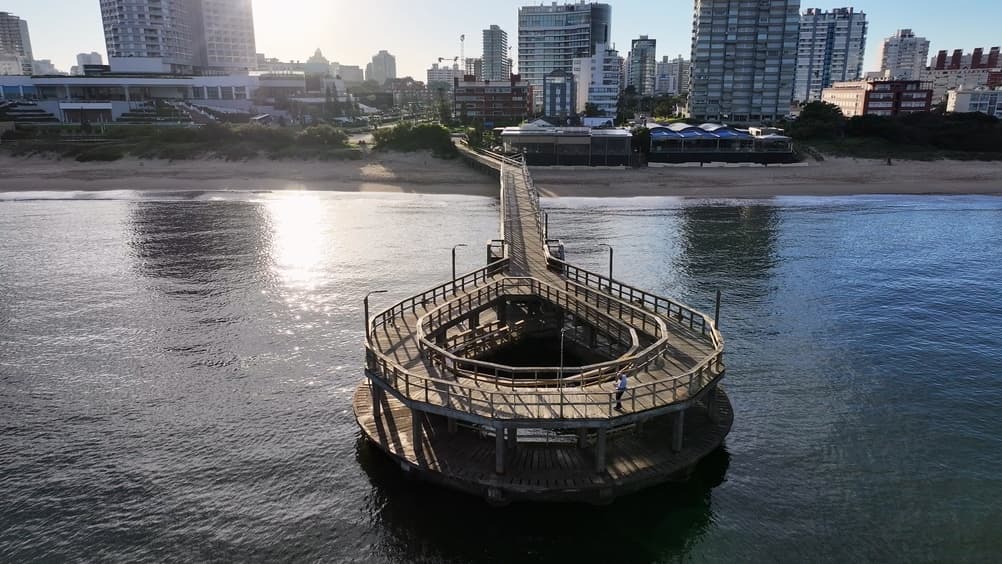
Punta del Este: Uruguay's beach life with real infrastructure
A walkable beach peninsula with real infrastructure, private medical care minutes away, and a quiet winter once the vacationers go home.
- 9,277
- Population (2011)
- $2,100/mo
- Monthly budget · single
- 62°F / 16°C
- Avg temperature
Budget about $2,100 a month in U.S. dollars to live in Punta del Este as one person, around $3,000 as a couple, and roughly $4,400 for a family. A one-bedroom runs about $900 in the center and around $650 outside it. Those are year-round numbers, and the year is what you should understand about this place.
Punta del Este suits retirees who want a beach town that still has real infrastructure, remote workers who can live with a very quiet winter, and people who want Uruguay's stability with the ocean at the end of the street. The peninsula is walkable and private medical care is minutes away in Maldonado.
The trade-off is seasonality. This is a resort of roughly 9,300 permanent residents that fills with Argentine and Brazilian vacationers from December through February and then empties out. Rentals follow the same curve, and a landlord who can earn a summer's income in eight weeks is not always eager to sign a 12-month lease. Some people find the quiet half of the calendar restorative; others may find it lonely.
At a glance
$2,100
Monthly budget · single person
$900/mo 1-bed rent, center
72/100
Safety index
$40
Internet / month
62°Fannual average
Jul 52° · Jan 71°
Climate
9,277
Population (2011)
Expatsi estimates, updated Aug 2026, based on rental listings, government statistics, and local reporting.
Cost of living
What it costs to live in Punta del Este
Single person
$1,700–$2,500/mo
about 30% below Austin, TX
Couple
$2,500–$3,500/mo
about 35% below Austin, TX
Family of four
$3,600–$5,200/mo
about 45% below Austin, TX
Compared with Austin, TX (Expatsi estimate, 2026).
- $15 −25%
- Inexpensive meal
- $750–$1,050/mo −54%
- 1-bed rent, center
- $550–$750/mo −52%
- 1-bed rent, outside
- $40/mo −38%
- Internet
- $321/sq ft −51%
- Buy price, center
Expatsi estimates, updated Aug 2026, based on rental listings, government statistics, and local reporting.
Daily life
How Punta del Este lives
- C+ grade, 19th percentile among the cities we track
- Dining & cafésmodest
- C+ grade, 20th percentile among the cities we track
- Arts & culturemodest
- C grade, 11th percentile among the cities we track
- Parks & outdoorsmodest
- C grade, 11th percentile among the cities we track
- Schools & educationmodest
- B- grade, 26th percentile among the cities we track
- Healthcare accesstypical
- B grade, 41st percentile among the cities we track
- Bike infrastructuretypical
- B- grade, 28th percentile among the cities we track
- Public transittypical
Graded on OpenStreetMap amenity density relative to the 298 cities we track. Accessibility is the exception: it's graded against a fixed standard (terrain steepness and sidewalk surfaces), not a curve.
Climate
Weather through the year
Annual average 62°F (16°C) · 44 in of rain a year · Source: Open-Meteo Historical Weather API (temps: ERA5-Land 0.1°; precip/sunshine: ERA5 best-match; 1991-2020 normals)
On the ground
Scenes from Punta del Este
Getting around
Transport in Punta del Este
The peninsula is the walkable part. Punta del Este's core sits on a narrow spit where the Río de la Plata meets the Atlantic. From there, you can reach the port, both beaches, Avenida Gorlero and the bus terminal on foot. Playa Mansa faces the river and stays calm, while Playa Brava faces open ocean. Past that core the city stretches along the coast for miles and walking stops being practical.
CODESA runs the departmental buses, linking Punta del Este with Maldonado, San Carlos, La Barra, Manantiales, José Ignacio and west toward Punta Ballena and Piriápolis. The Maldonado run is the one you will actually use, leaving about every 20 minutes. Service thins in winter and on the outer routes, so check a timetable. Uber works here, which isn't the case for most Uruguayan beach towns, and taxis are metered.
Where you live decides the car question. The peninsula works without one; Pinares, San Rafael, La Barra and anything out toward José Ignacio really does not.
Buses leave for Montevideo about every 30 minutes and take a little over two hours; driving the Ruta Interbalnearia takes about two, also. The airport at Laguna del Sauce, 20 minutes west, handles regional flights to Buenos Aires and São Paulo that thin out sharply outside summer. Nothing flies nonstop to the United States, so trips home route through Montevideo's Carrasco airport.
- 6.3/sq mi
- Transit stops
- 3.4/sq mi
- Bike infrastructure
- 2.0/sq mi
- Wheelchair-accessible places
Mapped features per square mile from OpenStreetMap.
Keep exploring
Places like Punta del Este

Community & practical notes
Living in Punta del Este day to day
Community: The foreign presence is a mix of Argentines who bought in decades ago, Brazilians, Europeans and a small but growing group of Americans, many of them part-timers rather than residents. You meet people through your neighborhood rather than an expat club, with the winter crowd small enough that regulars know each other. Daily life runs in Spanish. You'll find English thins out fast past the restaurants and real estate offices.
Healthcare: Uruguay runs on mutualistas, private nonprofit health plans where a monthly membership covers most care with small copays, and residents can join one directly. Sanatorio SEMM Mautone on Avenida Roosevelt is the main private hospital for Punta del Este and Maldonado, with the public Hospital de Maldonado nearby. Complex specialist work still means a trip to Montevideo.
Limited mobility: Mixed, and worth checking in person. Flat ground and the seafront rambla work in your favor. Against you: a town built in bursts, so the quality of the pavement changes block by block and lifts aren't a given in older buildings. Look at the specific street and building before you sign any lease.
Remote work: Home internet runs about $40 a month and Antel's fiber reaches the built-up parts of the coast. Formal coworking amounts to a couple of small spaces, so most people here work from a spare room. Uruguay runs one to two hours ahead of U.S. Eastern by season, keeping American hours easy to hold.
Schools: International College, part of the Nord Anglia group, teaches ages 2 to 18 in English and Spanish and offers the Uruguayan curriculum alongside IGCSEs and the IB Diploma. Maldonado has bilingual private schools too. Places are limited and fees run high locally, so start early.
Retirement: This is a realistic landing spot for retirees who want beach life without giving up hospitals and pharmacies, and Uruguay makes the paperwork easier than most of the region. The residency file is slow, so the first year takes patience more than money. Compare retirement visa options and read our full Uruguay guide for the process end to end.
Housing
Renting and buying
- 1-bed rent (center)
- $750–$1,050/mo
- 1-bed rent (outside center)
- $550–$750/mo
- Buy price (center)
- $321/sq ft
- Buy price (outside center)
- $209/sq ft
Expatsi estimates, based on rental listings, government statistics, and local reporting.
Good to know
Frequently asked questions
What is Punta del Este like to live in year-round?
Two different towns. From December through February the Argentine and Brazilian summer crowd arrives, and traffic, nightlife and prices all rise to match. The rest of the year the permanent population of roughly 9,300 has the beaches to itself, many restaurants close, and life gets very quiet. Anyone weighing a move should visit in June or July, not January, before deciding.
What is the weather like in Punta del Este?
Mild, and Southern Hemisphere, so the seasons are flipped. January is warmest, averaging highs near 76F and nights around 67F, which is pleasant rather than tropical. July is coldest, averaging highs near 56F and nights near 48F, cool enough that you will want heating. Rain totals about 44 inches a year and falls fairly evenly across the months, so there is no real dry season. Wind off the water is constant.
Can you retire in Punta del Este?
Yes, and a fair number of people do. Uruguay has no dedicated retirement visa and no minimum income written into law. You apply for legal residency after arriving, show stable income such as a pension or Social Security, and stay in the country while the file processes, which usually takes a year or more. Retirees can join a mutualista health plan directly instead of paying American-style premiums. Budget around $3,000 a month for a couple.
Do you need a car in Punta del Este?
On the peninsula, no. The core is compact enough to walk, CODESA buses reach Maldonado in about 20 minutes, and Uber operates in town. Anywhere else, a car is close to essential, because the city spreads for miles along the coast and bus service thins in winter. Cars carry heavy import taxes in Uruguay and cost noticeably more than in the U.S., so many residents rent as needed rather than buy.
Is Punta del Este safe?
By the numbers, yes. Punta del Este scores 72 on our safety index, with a crime index of 28. Two caveats belong next to those figures. The U.S. State Department has Uruguay at Level 2, exercise increased caution, and lists Maldonado, the department Punta del Este sits in, among the four where crime is most common. OSAC adds that summer crime migrates with the crowds to resort towns. In practice that means opportunistic theft in high season.
How much does it cost to live in Punta del Este?
One person should plan on about $2,100 a month, a couple about $3,000, and a family about $4,400. Typical ranges run roughly $1,700 to $2,500 for a single person. Rent is the biggest variable at about $900 for a one-bedroom in the center and $650 further out. A cheap restaurant meal is around $15 and home internet about $40. Summer rentals cost far more than those year-round figures.
Is Punta del Este wheelchair accessible?
Partly. The terrain is close to flat and the seafront rambla gives you long, level walking. Curb cuts are inconsistent, most beach access is not adapted, and accessible public transit is limited. It is workable for some people and difficult for others, so view any apartment and its immediate streets yourself before committing.
See how Punta del Este fits your life
Take the free Expatsi Test and compare Uruguay to nearly 200 countries on what actually matters: cost, healthcare, climate, and safety. About five minutes.
Why not you?