
Mijas: a white village on the hill, a beach town below, one town hall
Mijas Pueblo sits about 1,400 feet up the slope and Mijas Costa runs down to the sea. Here's what it costs, how safe it is, and whether it works for retiring.
- 95,104
- Population (2025)
- $2,200/mo
- Monthly budget · single
- 66°F / 19°C
- Avg temperature
Plan on about $2,200 a month in U.S. dollars for one person in Mijas, roughly $3,200 for a couple, and about $4,700 for a family of four (2026 figures). A one-bedroom near the center rents for around $1,050, and closer to $850 farther out. That's about $200 a month less than Málaga for a single person, with center rents roughly $350 lower.
Mijas is two places sharing one name. The village, Mijas Pueblo, is the postcard: whitewashed streets on the hillside with views down the coast. Mijas Costa is where most daily life happens, from Las Lagunas, the busy, practical district beside Fuengirola, to the beach neighborhoods of La Cala de Mijas and Calahonda. The municipality has about 95,000 residents.
It suits retirees and remote workers who want sun, a large English-speaking community, and Málaga within reach. It's a weaker fit if you want a Spanish-speaking city around you, or plan to live car-free up in the hills.

Reviewed and updated October 1, 2026 · 3 min read
At a glance
$2,200
Monthly budget · single person
$1,050/mo 1-bed rent, center
75/100
Safety index
$35
Internet / month
66°Fannual average
Jan 55° · Aug 80°
Climate
95,104
Population (2025)
Expatsi estimates, updated Aug 2026, based on rental listings, government statistics, and local reporting.
Cost of living
What it costs to live in Mijas
Single person
$1,800–$2,600/mo
about 30% below Austin, TX
Couple
$2,600–$3,800/mo
about 30% below Austin, TX
Family of four
$3,900–$5,500/mo
about 40% below Austin, TX
Compared with Austin, TX (Expatsi estimate, 2026).
- $14 −30%
- Inexpensive meal
- $850–$1,250/mo −46%
- 1-bed rent, center
- $700–$1,000/mo −37%
- 1-bed rent, outside
- $35/mo −46%
- Internet
- $297/sq ft −54%
- Buy price, center
Expatsi estimates, updated Aug 2026, based on rental listings, government statistics, and local reporting.
Daily life
How Mijas lives
- C grade, 13th percentile among the cities we track
- Dining & cafésmodest
- B- grade, 25th percentile among the cities we track
- Arts & culturetypical
- B- grade, 34th percentile among the cities we track
- Parks & outdoorstypical
- C grade, 5th percentile among the cities we track
- Schools & educationmodest
- C grade, 7th percentile among the cities we track
- Healthcare accessmodest
- C- grade, 0th percentile among the cities we track
- Bike infrastructuremodest
- C+ grade, 23rd percentile among the cities we track
- Public transitmodest
Graded on OpenStreetMap amenity density relative to the 369 cities we track. Accessibility is the exception: it's graded against a fixed standard (terrain steepness and sidewalk surfaces), not a curve.
Climate
Weather through the year
Annual average 66°F (19°C) · 20 in of rain a year · Source: Meteostat station normals (08482, 1991-2020)
On the ground
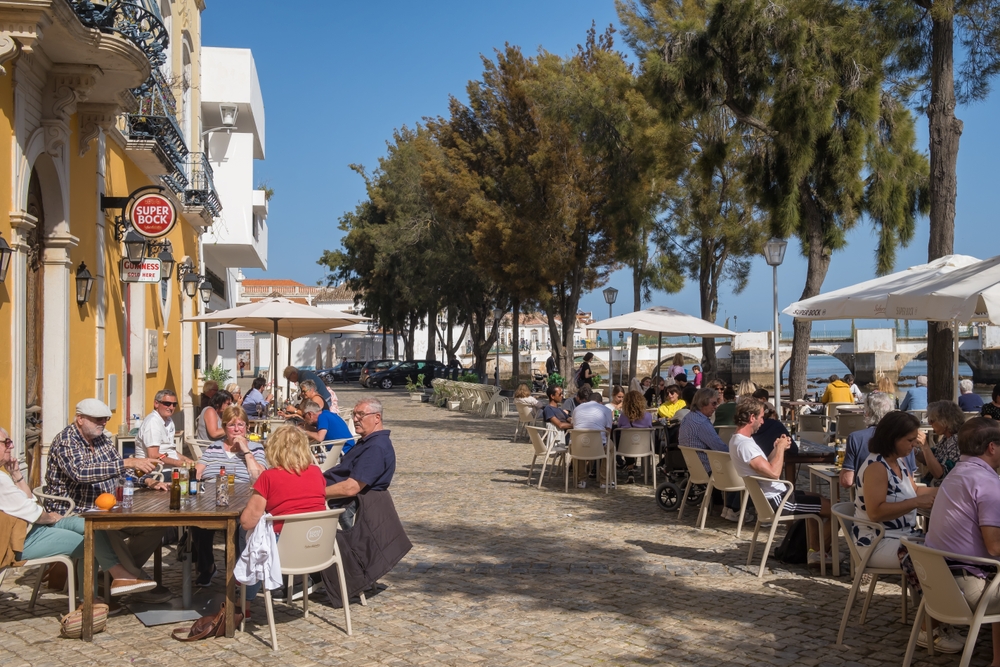
Scenes from Mijas
Getting around
Transport in Mijas
Mijas has no train station of its own. The C-1 commuter line ends next door in Fuengirola, an easy hop from Las Lagunas, and runs east to Málaga Airport and central Málaga. Extending it west along the coast to Estepona has been discussed for years, but it's a long-term plan, not something to count on.
Buses fill the gap. They're part of the Málaga area's metropolitan transport consortium, with town lines around Las Lagunas and regional lines linking Mijas Pueblo, La Cala and Calahonda to Fuengirola, Málaga, Marbella, and Torremolinos and Benalmádena. The town hall's bus page has a live schedule checker, which helps on the less frequent hill routes.
By road, the A-7 runs along the coast, the AP-7 toll motorway parallels it, and the A-387 climbs from the Málaga side toward the village.
The car question depends on where you live. In Las Lagunas, close to Fuengirola's station and shops, you can manage without one. In the village, or in the hillside urbanizaciones (housing developments) above La Cala and Calahonda, plan on a car for groceries, doctor visits and evenings out.
- 3.2/sq mi
- Transit stops
- 0.0/sq mi
- Bike infrastructure
- 0.5/sq mi
- Wheelchair-accessible places
Mapped features per square mile from OpenStreetMap.
Keep exploring
Places like Mijas

Community
Community & practical notes
Who your neighbors are: According to the town hall, nearly 40% of Mijas residents are foreign nationals, from 125 countries, mostly British, Scandinavian and German. The town hall runs a Foreign Residents Department in La Cala whose staff work in Spanish, English, French and German and help with local paperwork by appointment. It also sends local news by email in Spanish and English. Regional and national paperwork, like residency and health registration, still runs in Spanish.
Healthcare: Public primary care is based at the Las Lagunas health center, with smaller clinics in Mijas Pueblo and La Cala. A public specialist center (the CARE) is also in Las Lagunas, and the hospital that serves Mijas is Hospital Costa del Sol in Marbella. The town hall says the health centers coordinate volunteer translators for international residents, which helps while your Spanish catches up.
Limited mobility: This depends heavily on which Mijas you pick. The village is steep: three of its steepest streets average a 23% grade, with uneven steps up to front doors, and the council started rebuilding them with new stairs and landings in January 2026. Expect stairs, not lifts. If walking is hard for you, the coastal side, especially Las Lagunas near Fuengirola's train and shops, is the more practical base.
Getting online: Home internet runs about $35 a month. Most Americans here bring a remote job or retirement income rather than work locally, and Spain's digital nomad visa is built for the first group.
Retiring here: Mijas fits retirees well, as long as the hills and the car question work for you. Most Americans retire to Spain on the non-lucrative visa, which needs passive income and private health insurance and doesn't allow work. Once you're a Spanish tax resident, Spain taxes your worldwide income, so talk to a cross-border tax advisor first. Compare retirement visa options and read our full guide to moving to Spain.
Housing
Renting and buying
- 1-bed rent (center)
- $850–$1,250/mo
- 1-bed rent (outside center)
- $700–$1,000/mo
- Buy price (center)
- $297/sq ft
- Buy price (outside center)
- $242/sq ft
Expatsi estimates, based on rental listings, government statistics, and local reporting.
Good to know
Frequently asked questions
How much does it cost to live in Mijas, Spain?
Plan on about $2,200 a month for one person, with a realistic range of $1,800 to $2,600, depending on housing and lifestyle. A couple spends about $3,200 a month and a family of four about $4,700 (2026 figures, in U.S. dollars). A one-bedroom apartment near the center rents for about $1,050 a month.
Is Mijas, Spain safe?
Yes. Mijas scores 75 out of 100 on the safety index we use, higher than nearby Málaga's 69. Use the same care with bags and parked cars you would in any busy tourist area, especially around the village square in high season.
Should I live in Mijas Pueblo or Mijas Costa?
Mijas Pueblo is the hilltop village: quiet evenings, views, steep streets, and day-trippers in the square. Mijas Costa is the coastal side, with Las Lagunas for shops, services and the train next door in Fuengirola, and La Cala de Mijas and Calahonda for beach living. Most people who don't drive, or don't want hills every day, choose the coast.
What is the weather like in Mijas?
Mild winters and hot, dry summers. Average highs are near 63F in January and around 88F to 89F in July and August, and July averages almost no rain. Most of the year's roughly 20 inches of rain falls between October and March. These are long-term averages from a weather station about 10 miles away.
Do you need a car to live in Mijas?
It depends where you live. Las Lagunas sits next to Fuengirola, where the commuter train to Málaga Airport and Málaga starts, so you can manage there without a car. In Mijas Pueblo or the hillside developments above La Cala and Calahonda, most people find a car close to essential, because Mijas has no train station and hill buses run less often.
Is Mijas a good place to retire?
For many Americans, yes. It has year-round sun, a large international community, public health centers in each part of town, and Hospital Costa del Sol in Marbella. Most retirees come on Spain's non-lucrative visa, which needs passive income and private health insurance. The trade-off is terrain: the village is steep, so retirees with limited mobility usually do better on the coastal side.
Do people speak English in Mijas?
Widely, in services aimed at residents. The town hall says nearly 40% of residents are foreign nationals, mostly British, Scandinavian and German, and its Foreign Residents Department works in English. Official paperwork with the regional and national governments is in Spanish, so learning some Spanish still makes daily life easier.
See how Mijas fits your life
Take the free Expatsi Test and compare Spain to nearly 200 countries on what actually matters: cost, healthcare, climate, and safety. About five minutes.
Why not you?