Bulgaria
Moving to Bulgaria: cheap, in the EU, and now paying in euros
Two people can run a comfortable month here for about $2,100. Income tax is a flat 10 percent. Since January 2026 the money in your account is euros, at a rate fixed by law. Here's the honest version of the rest.
Most people arrive at Bulgaria from a spreadsheet. They priced Portugal, then Spain, then Greece. The numbers never worked, and somebody in a forum said try the Balkans. That's a reasonable way to find a country and a terrible way to choose one. So this guide is the whole picture: what a month costs, every legal route an American has, how the famous flat tax works once contributions land on top of it, and the three things about Bulgaria that no cost-of-living page will tell you.

Reviewed and updated September 17, 2026 · 15 min read
01 · The case for Bulgaria
An EU member, a Schengen border, and a Balkan cost base
Bulgaria joined the EU in 2007 and spent most of the next two decades treated as the waiting room. That's over. Its air and sea borders opened to Schengen in March 2024, its land borders in January 2025, and the euro arrived in January 2026. Three things countries normally wait a generation for landed inside two years.
What that buys an American is unusual: a genuinely inexpensive country, priced for Bulgarian salaries rather than for visitors, inside the legal architecture of the EU. Roads and hospitals part-funded by Brussels, a phone that works from Lisbon to Helsinki, and the same currency you would spend on a weekend in Vienna.
The people this actually suits
Retirees on a fixed dollar income, because a pension that feels thin in Florida is comfortable in Plovdiv. Remote workers billing American or Western European clients, because Bulgaria finally has a permit built for exactly that. Skiers and hikers, because the Rila and Pirin ranges are properly alpine at a fraction of Alpine prices.
Here's the catch
Bulgaria is moving the wrong way on rights, and that matters to a lot of the people reading this. In August 2024, parliament amended the school education act to prohibit "propaganda, promotion or incitement" of what it calls non-traditional sexual orientation or gender identity anywhere in the education system. ILGA-Europe's 2026 Rainbow Map now ranks Bulgaria second from the bottom among EU members. Same-sex partnerships remain unrecognized despite rulings from the European Court of Human Rights and the EU's top court.
Governance is rough, too. Transparency International's 2025 index, published in February 2026, ranked Bulgaria 84th of 182 countries, tied with Hungary for last place in the EU and its worst result since the index was rebased in 2012. Transparency named the causes: the anti-corruption commission shut down, key regulator appointments stalled, pressure on civil society, and the first partially annulled parliamentary election in the country's modern history.
- Safety index
- 65/100
- Internet speed
- 50 Mbps
- English proficiency
- 45/100
- Capital
- Sofia
- Language
- Bulgarian
02 · The money
Start with these four figures
$2,100
Monthly budget, couple
Everything in, living comfortably
$1,200
Monthly budget, one person
Most of a US Social Security check
$500
One-bedroom, city center
About $400 outside the center
$12
A meal out
And roughly $30 buys a month of city transit
What the cheap number hides
Those are Expatsi's figures for Bulgaria, in U.S. dollars, and they match what people report paying. A couple can run a normal European life here for what a studio costs in Denver. Groceries, restaurants, haircuts, dentistry and domestic help are all priced off Bulgarian wages. Bulgaria's 2026 minimum wage is about $715 a month, a floor the government sets at 620.20 euros.
The catch isn't in the rent. It's in everything imported or insured. A car, a laptop, a decent mattress and most brand-name goods cost roughly what they do in Germany because that is where they come from. Private health insurance is a real monthly line rather than an optional extra. And if you want the Sofia apartment with new wiring, a lift and secure parking, you're bidding against well-paid Bulgarian tech workers, not against the national average.
The honest version is that Bulgaria is inexpensive to live in and ordinarily priced to buy things in. Budget for the first, don't assume the second.
The one currency question, answered
You'll still find 2026 travel pages telling Americans that Bulgaria uses the lev. It doesn't. The euro became legal tender in January 2026. Lev cash circulated alongside it for that one month only. Since February, the euro is the only currency you can pay with. The Council of the EU fixed the rate at 1.95583 lev to the euro, the peg the lev had held for decades, so nothing was re-priced in the conversion.
03 · Everyday life
The alphabet, the smoke, and the empty villages
Bulgaria is easy to visit. Settling in is harder than the price tag suggests, and these are the three frictions that show up.
The alphabet is the real barrier
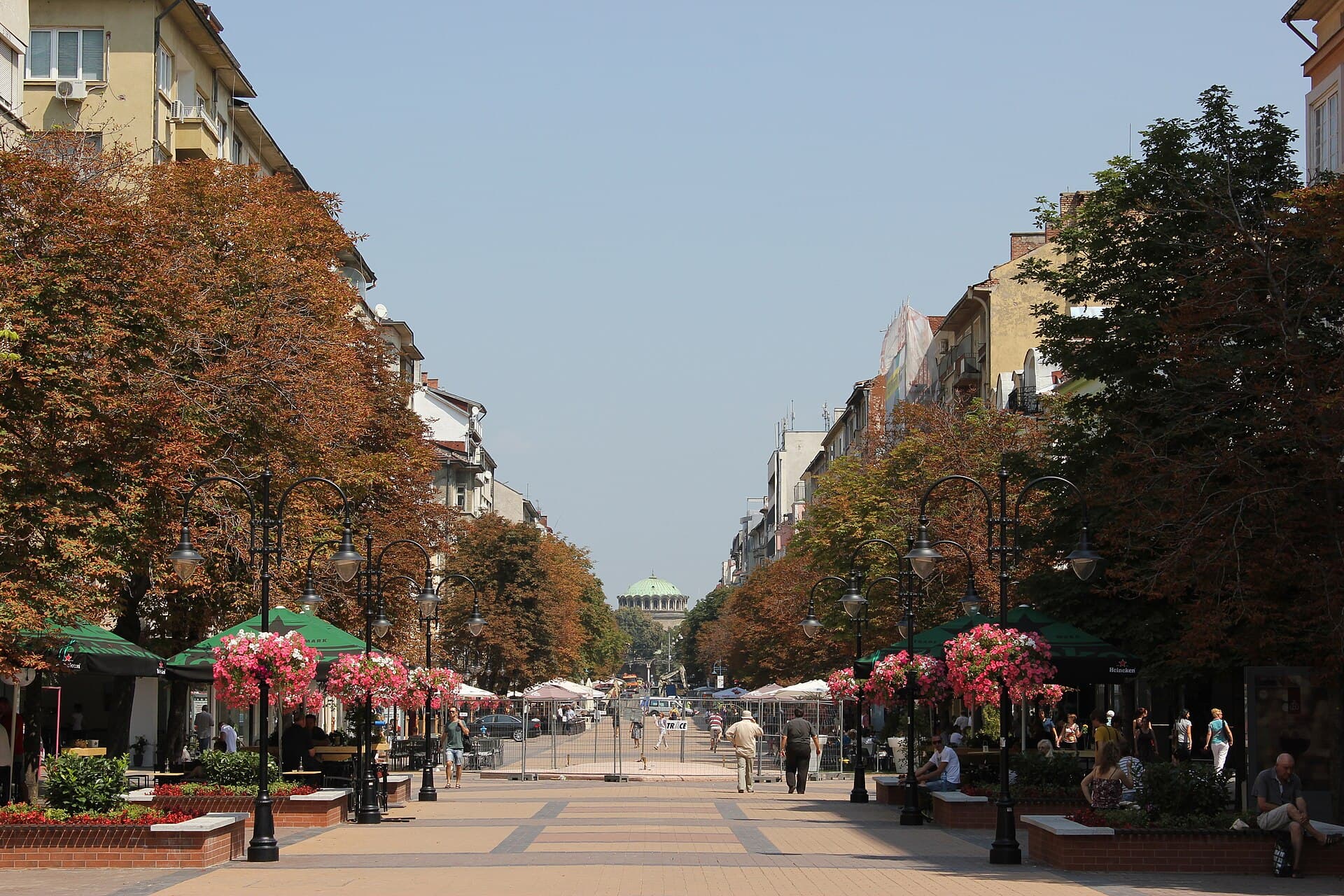
Bulgarian is written in Cyrillic, which the country contributed to the EU as its third official alphabet. Sofia's street signs are bilingual. Younger people in the big cities often speak good English. Expatsi scores English proficiency here well below the European average; it drops fast outside Sofia, Plovdiv and Varna. Reading a lease, utility bill or pharmacy label means learning thirty letters first. Most people who stay do it, and it takes weeks rather than years.
A country that is emptying
Bulgaria's population peaked near nine million in 1988 and the national statistics institute counted about 6.4 million at the end of 2024: a loss of roughly 2.5 million people, close to 30 percent, in under four decades, with no EU country anywhere near it. The northwest has lost more than half its people and nearly 200 villages now have no residents at all. Sofia is the exception and still grows. This is why village property looks impossibly underpriced, and why a village with no shop, no bus and no doctor isn't the bargain it looks like.
Winter is the pollution season
Bulgarian cities rank among the most polluted in Europe, and the driver is household heating rather than industry. Plenty of homes still burn wood and low-grade coal, which is where most of the country's fine-particle emissions come from. Sofia also sits in a valley under Vitosha that traps the smoke under a temperature inversion on still winter days. Summer air reads fine. If you have asthma or a small child, ask how a building is heated before you sign, and budget for an air purifier.
Small print that changes the answer
Schengen, with a warning
A Bulgarian card gets you short trips across the whole Schengen area. It does not give you the right to work in another EU country.
Low-crime, high-scam
Bulgaria sits at Level 1 on the State Department's four-step scale, its least severe grade, and the advisory warns about card skimming and unofficial taxis, not violence.
Always a connection
No nonstop flights exist between the U.S. and Sofia. You change in Frankfurt, Munich, Vienna or Istanbul, and it is close to a full day from the West Coast.
Dividends at five percent
Bulgaria taxes dividends at a flat 5 percent, the lowest in the EU, and exempts gains on shares and ETFs traded on EU or EEA markets.
A driving license footnote
Your U.S. license only works here alongside an International Driving Permit. Get one at home, because fixing it from Sofia is genuinely annoying.
04 · Ways to stay
How Americans legally stay past ninety days
Americans don't need a visa to visit. You get 90 days of visa-free time. Here's the change nobody has absorbed. Now that Bulgaria sits fully inside Schengen, those days come out of the shared 90-days-in-any-180 Schengen allowance instead of running on their own Bulgarian clock. Bulgaria and Romania used to be where people went to reset the count. That trick is gone.
Anything longer works the same way. You apply for a Type D long-stay visa at a Bulgarian consulate in the U.S., on one specific legal ground. The D visa lasts up to six months. It's only the entry ticket. Once you land, you file at the Migration Directorate for the residence card itself, issued for up to a year and renewed annually while your ground holds. Every American document needs an apostille from the U.S. State Department and certified Bulgarian translation; most offices reject anything issued more than six months ago.
The pensioner route
The standard retiree path: document a state pension, open a Bulgarian bank account for it to land in, show a notarized lease or deed, carry private insurance. For Americans the proof is the Social Security Administration's benefit verification letter, and private or company pensions are often refused. The income bar is where the guides disagree wildly, and the honest answer is that Bulgaria publishes no euro figure for this category. It's assessed against a general sufficient-means test benchmarked to the Bulgarian minimum wage and minimum pension, so a typical Social Security check clears comfortably while a thin one poses a real refusal risk.
The digital nomad permit, which is brand new
Bulgaria had nothing like this until December 2025. Parliament amended the Foreigners Act in June 2025, the implementing rules passed on 11 December, and applications opened on 20 December. It covers remote employees of a non-EU employer, owners of more than a quarter of a non-EU company, and freelancers with a year of remote work behind them. The income test is about $35,700 a year, which Bulgaria sets in euros as fifty times its gross monthly minimum wage, roughly 31,000 euros for 2026. One year, renewable once, no Bulgarian clients. And this permit does not count toward permanent residence, so treat it as a two-year trial rather than a road to a passport.
Working for a Bulgarian employer
With a job offer the ordinary route is the Single Permit, which bundles work and residence into one card. The EU Blue Card is the better version if you qualify: no labor market test and easier job changes after year one. It wants a degree or documented IT experience plus a gross salary above roughly $27,000, one and a half times the national average wage and writes as just over 23,500 euros for 2026.
Business, and the route people misunderstand
Registering a Bulgarian company,or trade representative office of the foreign company you already own, are both real grounds. The second suits consultants: a representative office cannot trade, so it owes no turnover tax. Since 2024, the authorities actively verify the parent is a genuine business, checking registry filings, signed contracts and a working address, and they reject shell companies. What Bulgaria doesn't have is a golden visa: citizenship by investment was abolished in March 2022.
Bulgaria's employment permits, compared
| Visa | Category | Application cost | Processing | Difficulty | Guide |
|---|---|---|---|---|---|
| EU Blue Card | skilled work | $320 | ~45 days | 3/5 | Guide |
| Type D Visa (Long-Stay) | skilled work | $100 | ~30 days | 3/5 | Guide |
About that data card
The table above is honest about what our database holds, and our database is thin on Bulgaria. Our Type D row shows a timeline of "Over 90 days": that's the condition that triggers the visa, not how long it lasts. The visa itself runs up to six months. The fee column prints in dollars, but Bulgaria bills consular fees in euros, so read the rate as approximate. And both rows are employment routes, so the pensioner path, the new nomad permit and the business grounds above have no card here. We've flagged it for our data team.
05 · The fine print
Tax, doctors, a deed you cannot hold, and a ten-year clock
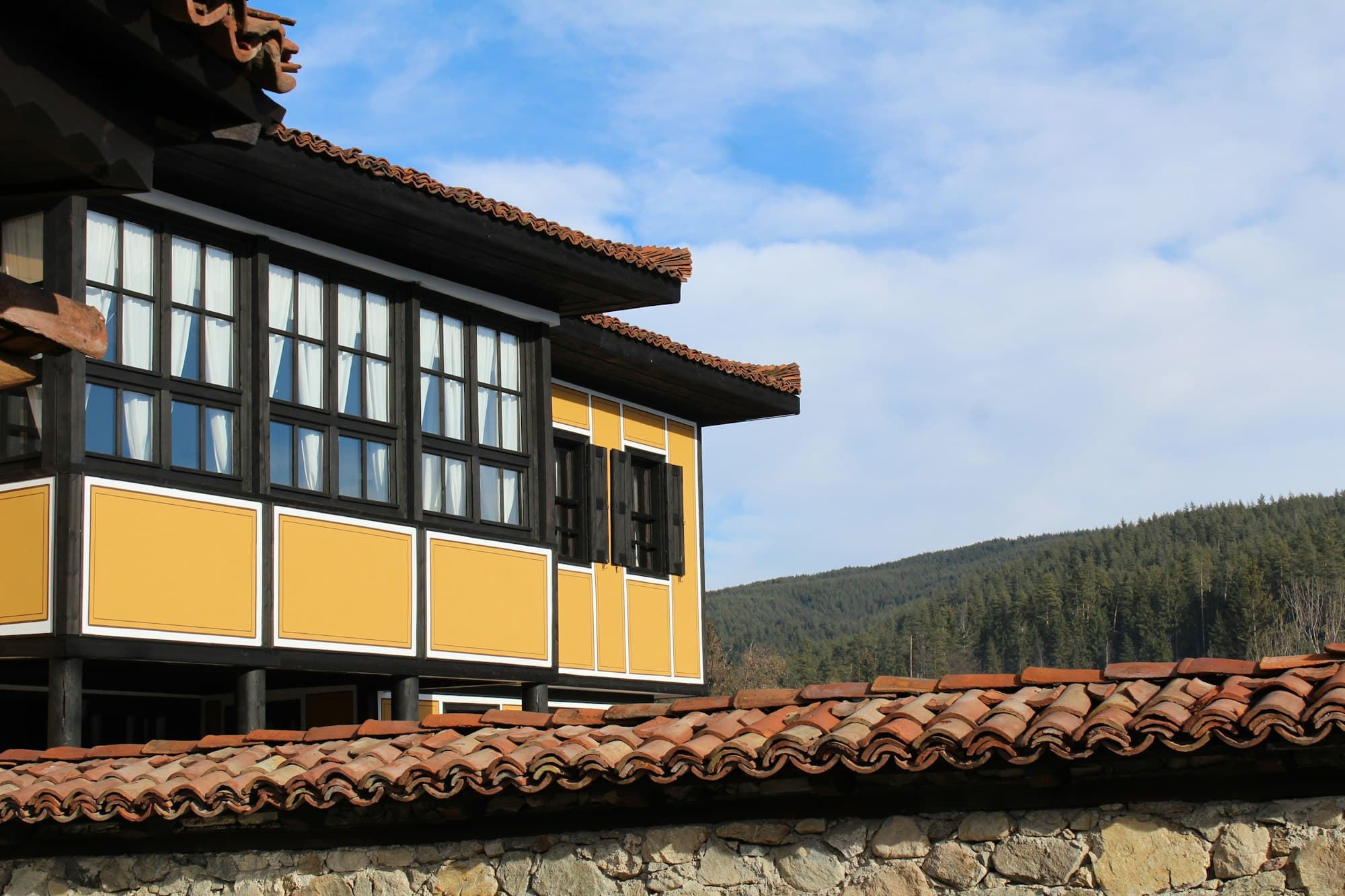
The flat tax is real, and it isn't 10 percent
Bulgaria charges a flat 10 percent on personal income, unchanged since 2008 and tied with Romania for the lowest headline rate in the EU. Corporate tax is 10 percent too, dividends 5 percent, VAT 20 percent. Here's what the nomad forums leave out: 10 percent is the income tax only. A registered freelancer gets a 25 percent expense deduction. That cuts effective income tax to about 7.5 percent of gross. Mandatory social and health contributions of 27.8 percent then land on top, or 31.3 percent with the sickness and maternity fund. Those apply to a declared monthly insurable income between a floor and ceiling; that ceiling is what makes the system generous to high earners and punishing to small ones. For a normal freelance income, the all-in rate is nearer 25 percent. Nobody actually pays 10.
Americans get a second layer. The two countries have had an income tax treaty since 2008, so the foreign tax credit and the foreign earned income exclusion both work normally. There is no totalization agreement on social security, though, so a self-employed American owes US self-employment tax on top of the Bulgarian contributions, with no credit either way. That is the most expensive thing on this page to discover late. Tax residency turns on 183 days in the country or your center of vital interests being here, and the residence card alone does not create it.
Healthcare, and the gap in year one
The public system is the National Health Insurance Fund, funded by a contribution of 8 percent of insurable income. GPs act as gatekeepers and you pick your own. The wrinkle the guides skip: mandatory membership attaches to foreigners holding long-term or permanent residence, not to someone on a first-year continuous-residence card. So a new retiree or nomad is typically outside the fund and on private insurance. That is not optional anyway. The Type D visa and every renewal require a private policy with at least $34,500 of coverage including repatriation, a floor Bulgaria writes as 30,000 euros. A travel policy usually will not satisfy a consulate. Bulgarian plans run about $35 to $90 a month. Expect two to eight weeks between landing and being registered anywhere, and bridge it.
On quality, the picture is mixed. The doctors are well trained. The buildings outside Sofia are underfunded. Out-of-pocket spending runs about a third of all health spending. Informal payments to hospital staff are a persistent and documented problem. English is not standard in public facilities. Most foreigners end up paying privately for speed and a shared language.
The deed you cannot hold
This one is constitutional and it surprises everybody. Article 22 of the Bulgarian constitution bars foreign individuals from owning land, and the European Land Registry Association puts it plainly: a non-EU national may own buildings but not land. You can buy an apartment, or any unit in a building, in your own name with no permit and no approval, because the ground underneath is held in common. A house with a garden, a building plot, farmland or forest cannot be held that way. The standard fix is a Bulgarian single-member company. It costs a couple of euros in share capital and registers in under a week. As a Bulgarian entity it has full land rights. The cost of that fix is permanent: annual accounts and an accountant for as long as you own the house. Closing costs run 5 to 6 percent all in, including a municipal acquisition tax of up to 3 percent in the big cities.
The ten-year clock
Five years of continuous residence, then permanent residence, then five more before you can apply to naturalize. Being eligible to apply is not the same as being handed a passport. Long absences also reset your progress. Anyone splitting the year with the US has to count days like an accountant. One exception worth checking first: a Bulgarian parent, grandparent or great-grandparent gets you citizenship by descent and skips residence entirely.
This guide is dated on purpose
Written in September 2026. Dollar equivalents use about $1.15 to the euro, and that rate drifts, so treat the euro figure as the legal one and the dollar as a snapshot. Two numbers here move every January with Bulgarian wage benchmarks: the digital nomad income test and the Blue Card salary floor. The contribution floor and ceiling changed in August 2026 and will change again. Check the figure for the year you file.
06 · Where to live
Bulgaria, city by city
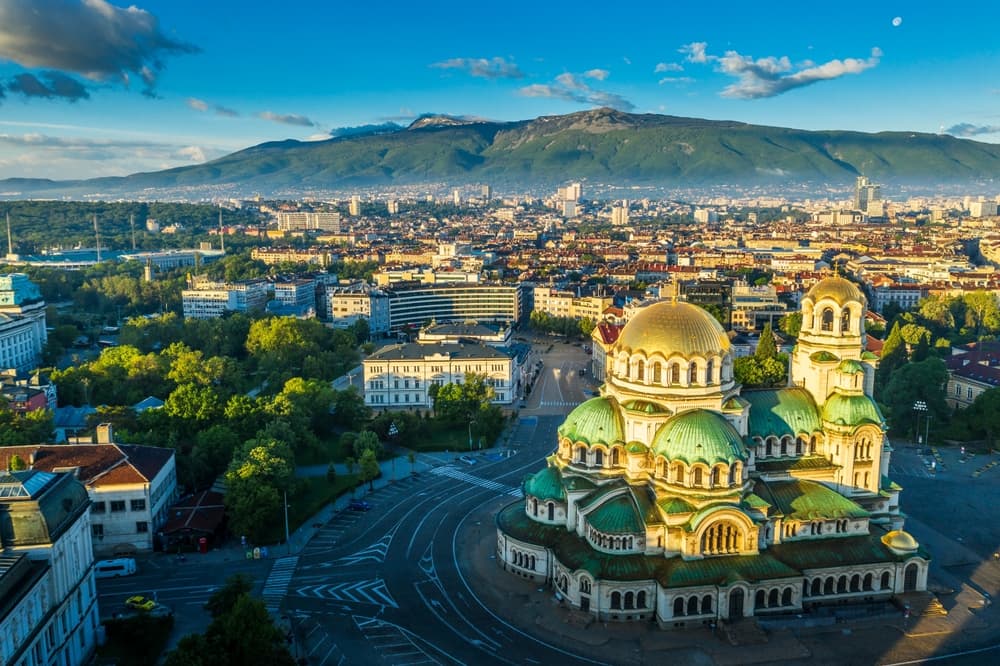
Sofia
Capital and tech hub
The practical choice for most Americans: the best hospitals, the most English, a metro, and Vitosha mountain trails and ski runs at the edge of the city. Winter brings smog from home heating and the Cyrillic signs take a few weeks to read.
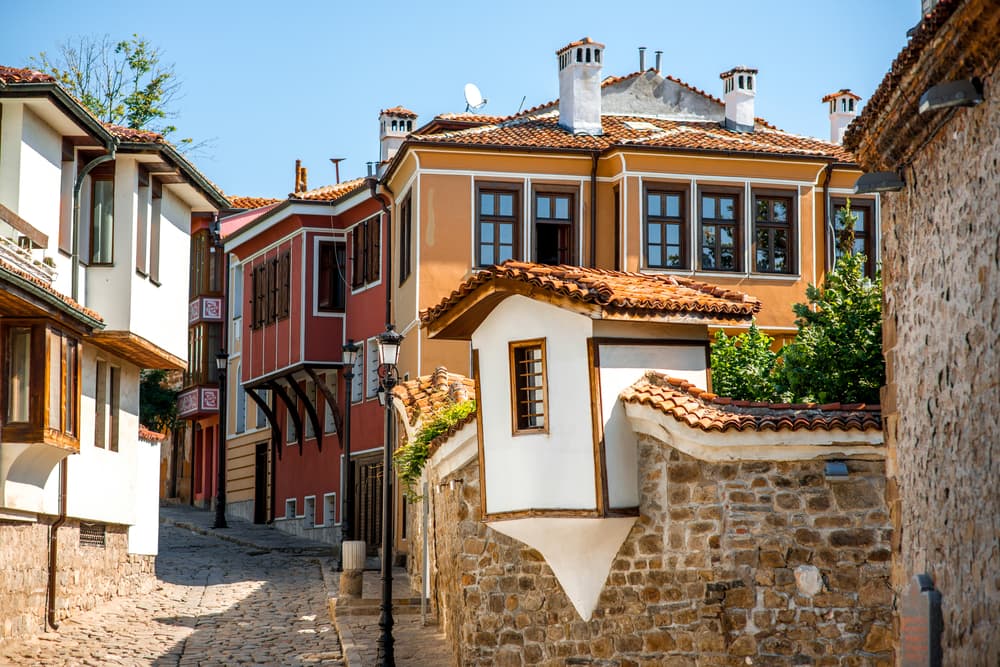
Plovdiv
Seven hills, old town
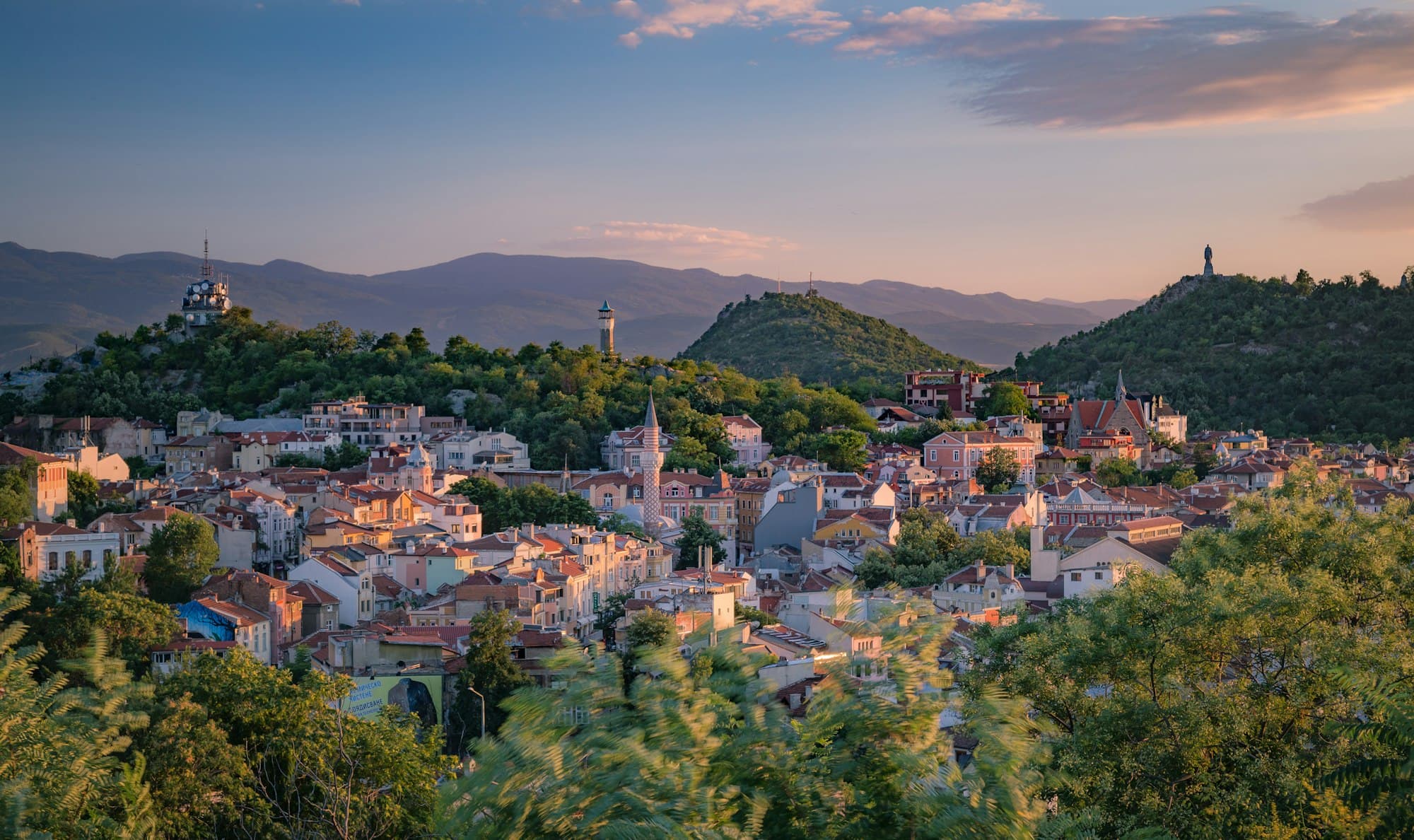
A Roman theater sits in the old town, the Kapana quarter is full of galleries and cafes, and the city was a European Capital of Culture in 2019. A calm, walkable alternative to Sofia. The job market is small and you'll drive to Sofia for most flights.

Varna
Black Sea summer capital
A big seaside city with the Sea Garden park, a long beach promenade, a university crowd and an airport with European connections. Winters are mild by Bulgarian standards. The coast empties out and turns gray from November to March.
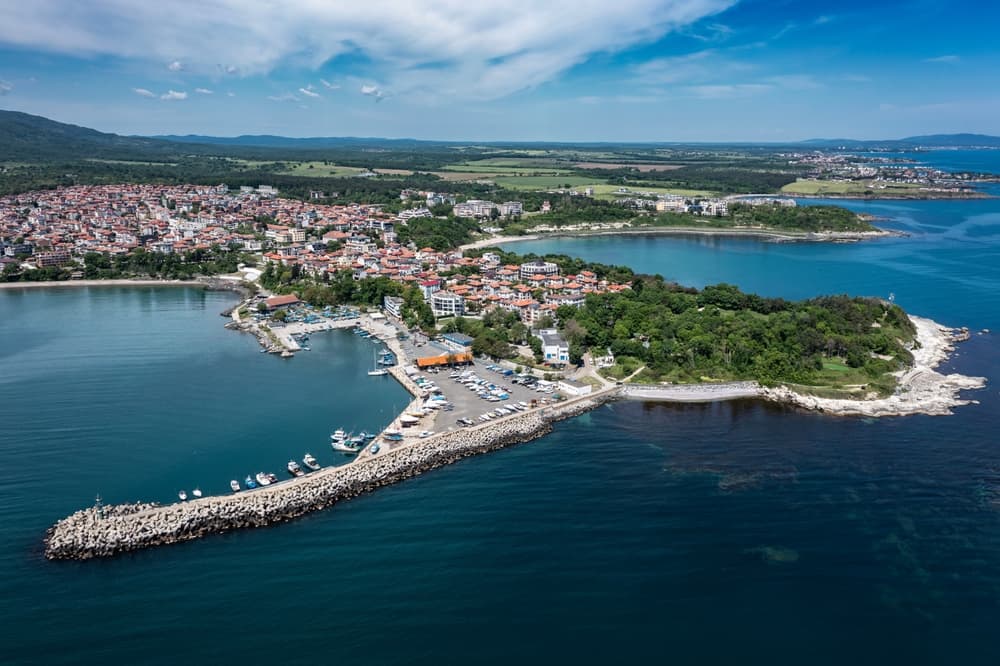
Burgas
Calm Black Sea port
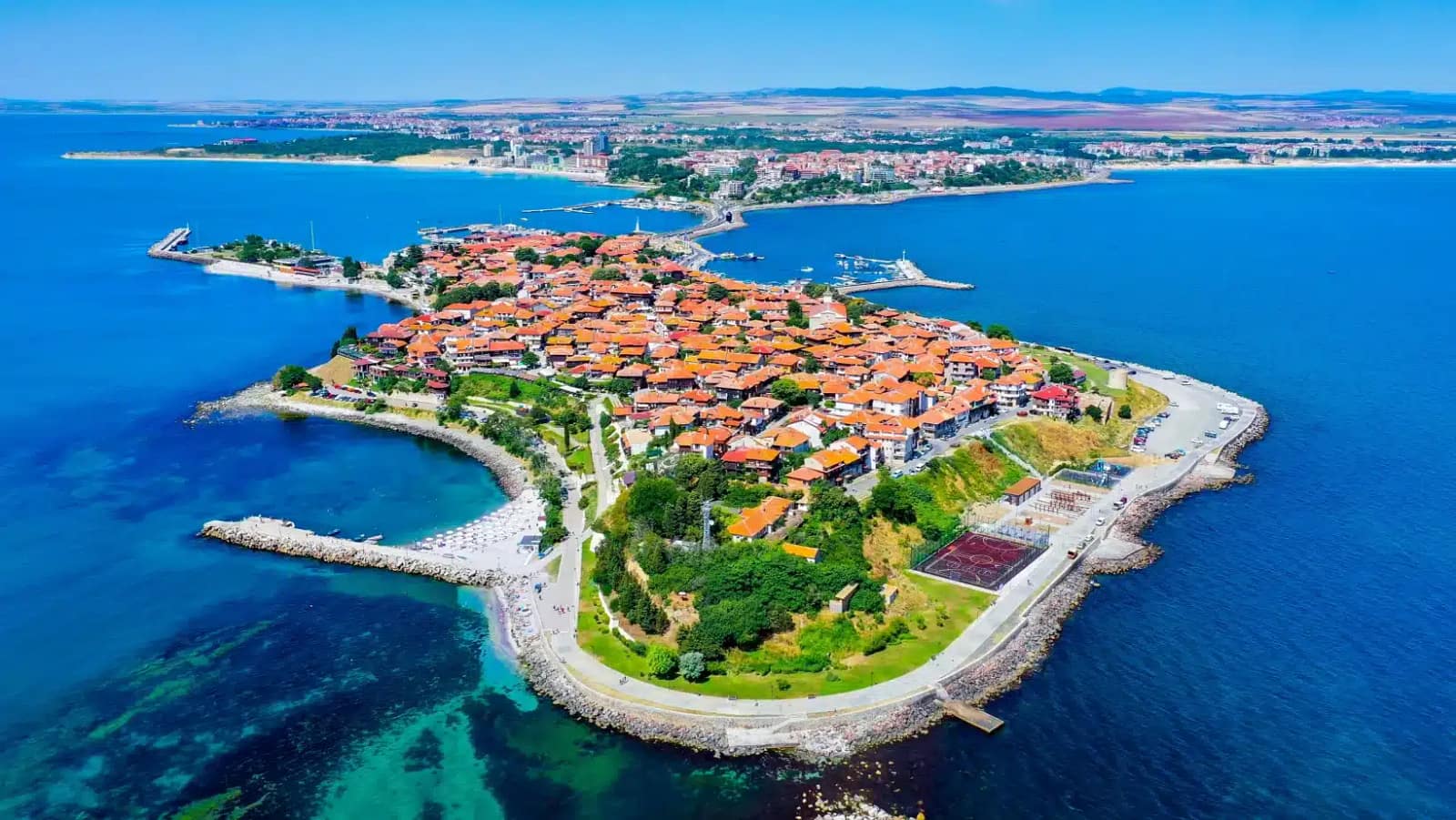
A flat, easygoing city with a big seaside garden and a pier out into the bay, and Nessebar and Sunny Beach a short drive north. It's good for people who want sea access without a resort feel. Winters are quiet and there's little expat infrastructure.
Sofia is not the whole country
Bulgaria is roughly the size of Virginia, and the places Americans consider are not interchangeable.
Sofia
The capital, a little over 1.2 million people, and the only address with a real job market, a choice of international schools, English-speaking specialists and salaries that look Western. It's also the priciest place in the country and the one with the winter air problem. Vitosha mountain starts at the edge of town, which is a strange thing for a capital to have.
Plovdiv
The second city and the one most people fall for. A Roman theater still in use, the Kapana arts quarter, a walkable core, rents well under Sofia's. Slower and hotter in summer. Small enough that you'll run out of English-speaking specialists.
Varna and Burgas
The two Black Sea cities. Varna is bigger with more year-round life, Burgas smaller and calmer. Both run on a summer economy, so expect a loud June and very quiet February. Both grew on tourism and European retirees who bought here in the 2000s.
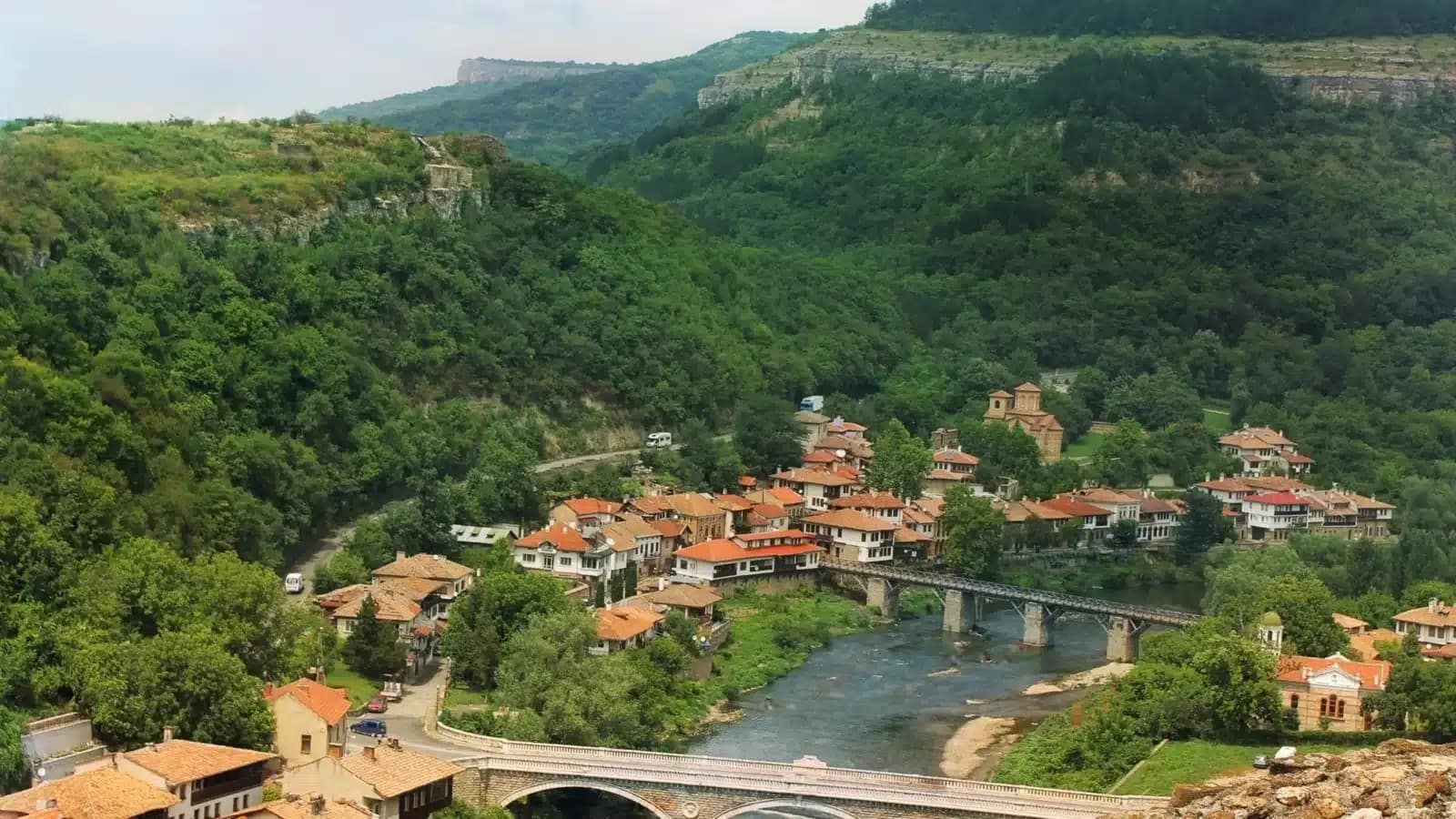
Veliko Tarnovo
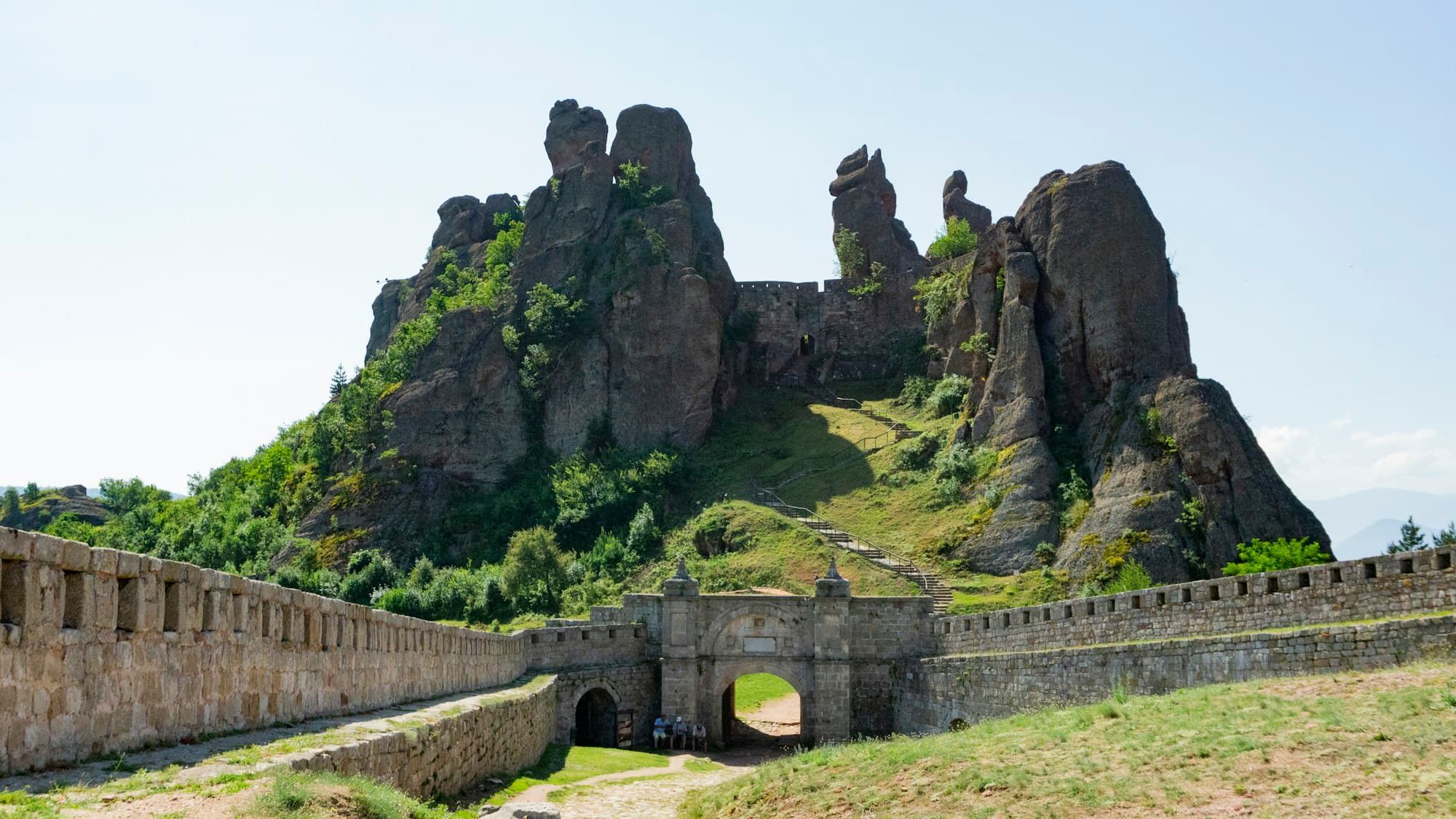
The medieval capital, stacked above a river bend under a hilltop fortress and kept young by its university. Inexpensive, beautiful, properly provincial.
Bansko
A Pirin ski town that turned into an unlikely remote-work hub, with coworking space and a foreign crowd that appears in November and thins out by May.
The short list we hand people
Bulgaria has nothing like the expat-services industry that grew up around Portugal or Spain. That cuts both ways. Far fewer people will try to sell you a package, and far fewer have handled a file like yours. Here's who we send Americans to, and what each one is for.
MyExpatTaxes
U.S. Expat Tax Service
American filing follows you to Sofia. For most people the live question isn't whether to file but which relief to claim in which year, because the exclusion and the foreign tax credit interact and switching later isn't free. Worth an hour before your first Bulgarian tax year, not after.
Learn more
Moneycorp
Currency Exchange
The changeover removed one currency risk and left the one that matters. There's no lev leg anymore, so your whole exposure is dollars to euros, and a property purchase is one large transfer where the spread costs more than the fee. Price it against your bank rather than assuming.
Learn more
Go deeper
Three things from our library that map onto the decisions on this page.
Do I have enough money?
Our partners at Beacon Financial outline how much money a move abroad could cost you as well as how much you may need to retire.
Bulgaria is the country where the math works, which is exactly why people skip doing it. Start here.
Can I get healthcare?
Our partner Hunter Schultz explains what you need to know if you're concerned about healthcare abroad.
Relevant because of the year-one gap described above: you will be on private insurance before you are in the public fund, and that needs planning.
Strategies for Buying or Renting in Europe
we'll dive into the real-world process of searching for property across some of Europe’s most popular destinations. You'll get practical tips on using the top real estate portals, how to contact agents effectively, what red flags to watch for.
The land rule makes buying here work differently from buying elsewhere in Europe. Renting first is a defensible answer.
Ask the people who already went
Bulgaria
Expatsi Community
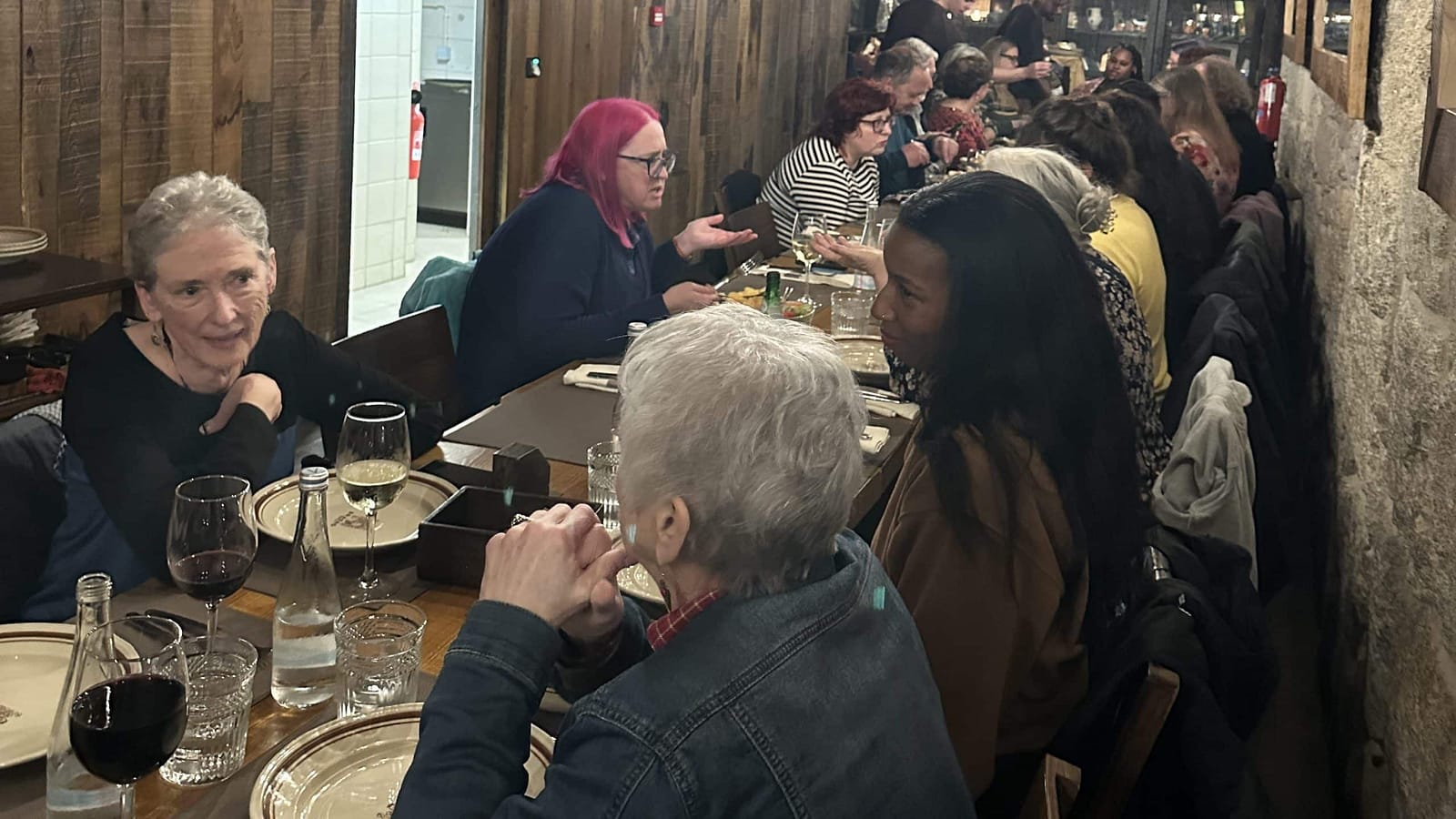
Our Bulgaria group is where the small stuff gets answered: which consulate is currently quickest, which insurer a migration office accepted, what a January heating bill came to. No one there is selling you anything.
Join the communityWhat Americans want to know first
Does Bulgaria use the euro now?
Yes. Bulgaria adopted the euro on 1 January 2026 as the euro area's twenty-first member, and since 1 February 2026 it has been the only legal tender. The rate was fixed by law at 1.95583 lev per euro, the peg the lev had held for decades, so balances, wages and pensions converted without anyone gaining or losing.
Is Bulgaria a good place for LGBTQ Americans?
Honestly, no, and it is the clearest reason to look elsewhere. Same-sex marriage and partnership are unrecognized, legal gender recognition is effectively impossible, and in August 2024 parliament banned discussion of non-traditional sexual orientation and gender identity in schools. ILGA-Europe's 2026 Rainbow Map scores Bulgaria 20 percent, second lowest in the EU. Sofia has an active community and LGBTQ-friendly clinics, but the law is moving backwards.
Is Bulgaria's 10 percent flat tax really 10 percent?
Not for most people. The flat 10 percent is genuine but it is income tax alone. A registered freelancer gets a 25 percent expense deduction, taking effective income tax to about 7.5 percent. Then mandatory social and health contributions of 27.8 percent apply on a capped monthly base. A normal professional income lands nearer 25 percent all in. Americans owe US self-employment tax too, because there is no totalization agreement.
How much does it cost to live in Bulgaria?
Plan on roughly $1,200 a month solo, or $2,100 for two, with nothing important left out. Center-of-town one-bedrooms go for about $500 and nearer $400 on the edges, a restaurant meal is about $12 and a monthly transit pass about $30. Rent and services track Bulgarian wages, so they stay cheap. Imported goods and cars cost what they do in Germany.
Is Bulgaria safe?
By the numbers, yes. Bulgaria holds Level 1 on the State Department's four-step scale, its least severe grade. The risks the advisory names are financial rather than violent: card and ATM skimming, unofficial taxis and online scams, concentrated in Sofia and the summer resort strip. Expatsi rates crime here low and everyday safety solidly above average.
Can I retire in Bulgaria on Social Security?
For most people, yes. Bulgaria has a pensioner residence category and a typical US Social Security check clears its sufficient-means test comfortably against local benchmarks. No euro minimum is published, so a small pension is a real refusal risk and you should ask your consulate directly. You will need a legalized benefit verification letter, a Bulgarian bank account, proof of housing and private insurance.
Can Americans buy property in Bulgaria?
You can buy an apartment, or any unit in a building, in your own name with no permit and no approval, because the land underneath is held in common. You cannot personally own land, which the constitution reserves, so a house with a garden or a building plot has to be bought through a Bulgarian company you own. That registers in under a week and commits you to annual accounts for as long as you hold it.
Can Americans move to Bulgaria, and what visa do you need?
Yes. Americans visit visa-free for 90 days, which now counts against the shared Schengen allowance rather than a separate Bulgarian one. To stay longer you apply for a Type D long-stay visa at a Bulgarian consulate in the US on a single named ground: retirement, remote work, employment, business, study or family. That visa gets you in, then you file inside Bulgaria for a residence card renewed annually.
Sources
- Bulgaria joins the euro area · European Central Bank (checked 2026-09-17)
- Bulgaria ready to use the euro from 1 January 2026: Council takes final steps · Council of the European Union (checked 2026-09-17)
- Bulgaria Travel Advisory · US Department of State (checked 2026-09-17)
- Rainbow Map 2026 · ILGA-Europe (checked 2026-09-17)
- Corruption Perceptions Index 2025: Bulgaria · Transparency International (checked 2026-09-17)
- Limitations to Foreigners: Bulgaria · European Land Registry Association (checked 2026-09-17)
- Is Bulgaria's 10% flat tax really 10%? The honest maths for freelancers and remote workers · Remote Work Europe (checked 2026-09-17)
- Bulgaria digital nomad visa now live with EUR 31,000 income threshold · Remote Work Europe (checked 2026-09-17)
- Bulgaria Residence Permits: Every Route Explained (2026) · Melssa (checked 2026-09-17)
- Health Insurance: obligations of foreign citizens · Bureau for Information and Services, Bulgaria (checked 2026-09-17)
- A dwindling nation: Bulgaria is on the brink of a demographic collapse · OSW Centre for Eastern Studies (checked 2026-09-17)
- Bulgaria Air Quality and Air Pollution information · IQAir (checked 2026-09-17)
Bulgaria looks good on a spreadsheet. Run yours.
Schedule a call with an Expatsi advisor to get your personalized roadmap to life abroad.
navy