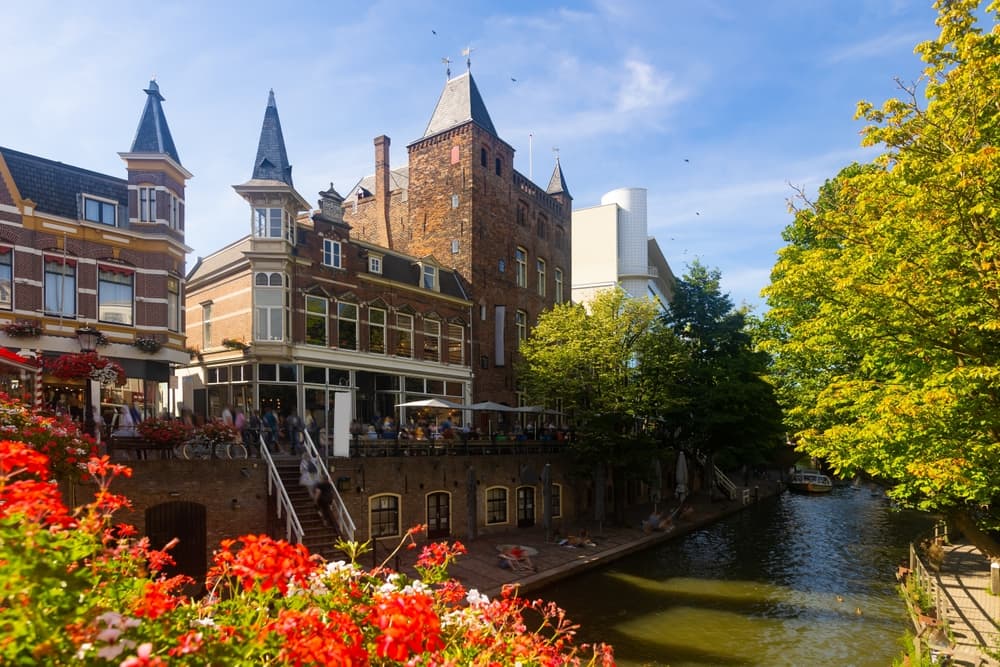
Utrecht: Dutch life at bike speed, half an hour from everywhere
A medieval canal city of about 359,000 people with a fast train to everywhere, if you can win the housing hunt.
- 359,370
- Population (2021)
- $3,100/mo
- Monthly budget · single
- 51°F / 10°C
- Avg temperature
Living in Utrecht costs about $3,100 a month for one person, around $4,600 for a couple, and roughly $7,200 for a family, in U.S. dollars. A one-bedroom runs about $1,800 in the center and about $1,450 outside it. That undercuts Amsterdam by roughly a quarter on both.
Utrecht sits in the middle of the Netherland; that's the practical reason it works. Utrecht Centraal is the busiest railway station in the country, which puts Amsterdam inside half an hour and most Dutch cities within an hour. It suits remote workers, researchers, and families who want a compact medieval center at a calmer pitch than the capital. The safety index reads 74, and English will carry you through daily life.
The hard part is housing. Utrecht is the most squeezed corner of a national housing shortage, good listings are gone in days, and most landlords want gross income of about three times the rent. Start that search before anything else.
At a glance
$3,100
Monthly budget · single person
$1,800/mo 1-bed rent, center
74/100
Safety index
$50
Internet / month
51°Fannual average
Jan 38° · Jul 64°
Climate
359,370
Population (2021)
Expatsi estimates, updated Aug 2026, based on rental listings, government statistics, and local reporting.
Cost of living
What it costs to live in Utrecht
Single person
$2,800–$3,500/mo
about the same as Austin, TX
Couple
$4,000–$5,100/mo
about the same as Austin, TX
Family of four
$6,300–$8,100/mo
about 10% below Austin, TX
Compared with Austin, TX (Expatsi estimate, 2026).
- $21 +5%
- Inexpensive meal
- $1,600–$2,050/mo −8%
- 1-bed rent, center
- $1,300–$1,650/mo +7%
- 1-bed rent, outside
- $50/mo −23%
- Internet
- $110/mo +167%
- Transit pass
- $683/sq ft +5%
- Buy price, center
Expatsi estimates, updated Aug 2026, based on rental listings, government statistics, and local reporting.
Daily life
How Utrecht lives
- B+ grade, 69th percentile among the cities we track
- Dining & cafésstrong
- A- grade, 74th percentile among the cities we track
- Arts & culturestrong
- A- grade, 78th percentile among the cities we track
- Parks & outdoorsstrong
- A- grade, 80th percentile among the cities we track
- Schools & educationstrong
- B grade, 54th percentile among the cities we track
- Healthcare accesstypical
- A+ grade, 95th percentile among the cities we track
- Bike infrastructurestandout
- B grade, 55th percentile among the cities we track
- Public transittypical
- A+ grade, good physical accessibility
- Accessibilitygood
Graded on OpenStreetMap amenity density relative to the 298 cities we track. Accessibility is the exception: it's graded against a fixed standard (terrain steepness and sidewalk surfaces), not a curve.
Climate
Weather through the year
Annual average 51°F (10°C) · 34 in of rain a year · Source: Meteostat station normals (06260, 1991-2020)
On the ground
Scenes from Utrecht
Getting around
Transport in Utrecht
Utrecht runs on bicycles, and the infrastructure backs up that reputation. The garage under the station square holds about 12,500 bikes, the largest bicycle parking facility in the world, and the first 24 hours are free. Distances are short, lanes are separated from traffic, and bikes get their own signals and crossings.
For what the bike doesn't cover, U-OV runs the buses and trams, linking Utrecht Centraal to the Utrecht Science Park and out to Nieuwegein and IJsselstein. The trams are low-floor throughout after a conversion finished in 2022, so boarding is step-free. You pay by tapping a contactless bank card or phone with OVpay, which works nationwide. Riding transit heavily runs about $110 a month, second-priciest of the nine Dutch cities we track.
Trains are the other half. Utrecht Centraal is the hub of the Dutch network, with intercity service in every direction. The direct trains reach Amsterdam in a little under half an hour, the stopping Sprinters take longer, and holding an Amsterdam job from here is ordinary.
A car is unnecessary in the city and a nuisance in the center, where parking is scarce and the streets are built around bikes and pedestrians. Households that keep one use it for trips abroad, not for crossing town.
- 30/sq mi
- Transit stops
- 193/sq mi
- Bike infrastructure
- 115/sq mi
- Wheelchair-accessible places
Mapped features per square mile from OpenStreetMap.
Keep exploring
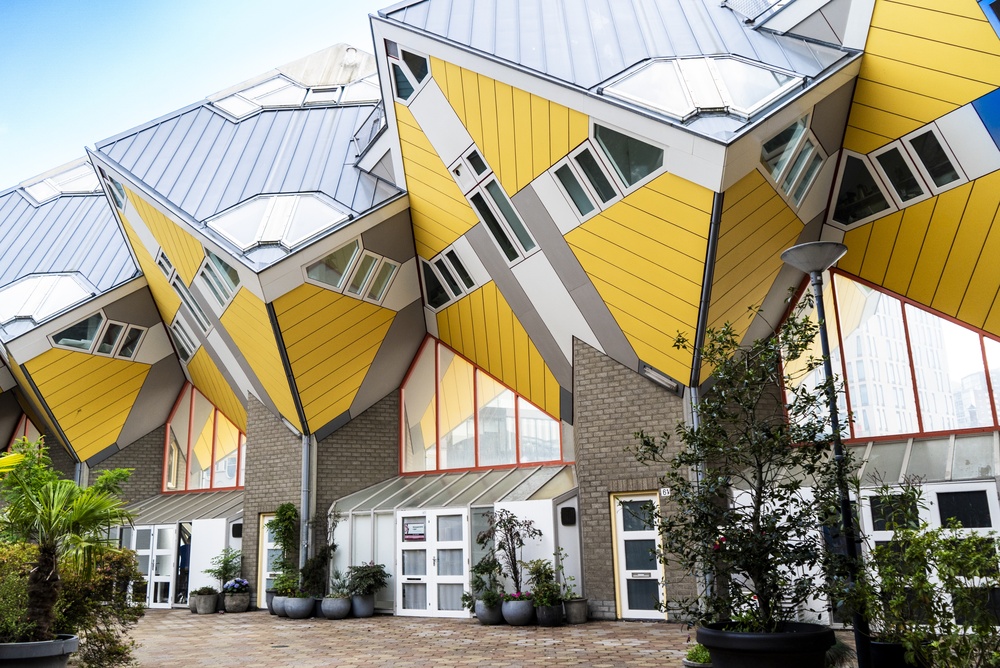
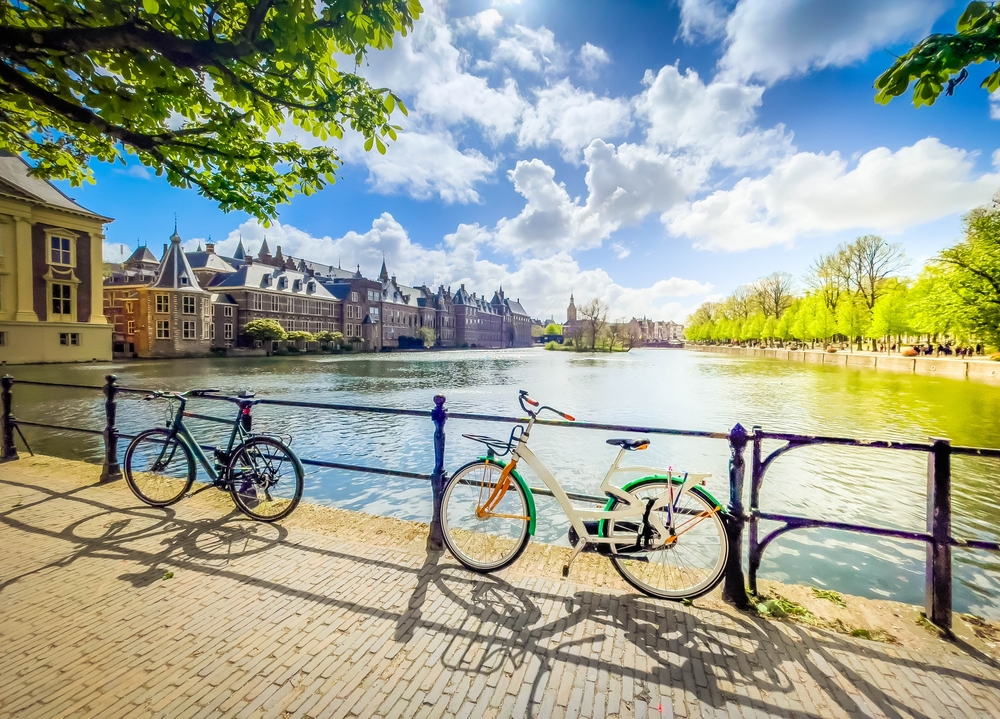
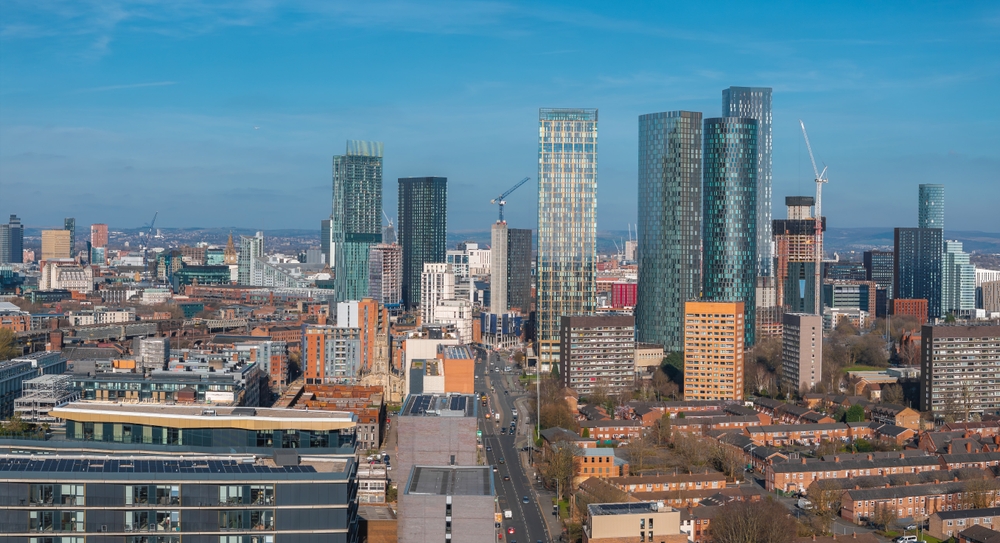
Places like Utrecht
Community
Community & practical notes
Community: Utrecht's international crowd skews young: students, researchers, and people in tech and life sciences, not retirees. Utrecht University dates to 1636; with the applied sciences and arts schools, about one in five residents is a student. The university hospital draws medical staff from everywhere, and Internations and university meetups make English-speaking company easy to find. It's less of an expat bubble than Amsterdam, so you integrate with Dutch neighbors faster, partly because you have to. For families, International School Utrecht runs the full IB program for ages 4 to 18 and is state subsidized, so it costs far less than private options. Places are competitive, so apply early.
Healthcare: Dutch basic health insurance is compulsory for everyone living here, and the government sets what every policy covers. The friction isn't cost or quality but getting on a list. Many Utrecht practices are closed to new patients. A huisarts can refuse you if you live more than about 15 minutes away, so the search is tied to your postcode. If nobody will take you, your insurer is legally obliged to find you a spot, and the word to ask for is zorgbemiddeling. Americans are often surprised by how conservative Dutch doctors are: paracetamol first, antibiotics reluctantly.
Limited mobility: The ground is flat, and the rebuilt station and newer west-side districts like Leidsche Rijn are step-free. The old center is the harder half of the same city. The Oudegracht wharf cellars are reached down steps by design, many old shop and cafe entrances still have one, accessible public toilets are scarce, and the city runs a keep-the-sidewalk-clear campaign because parked bikes and terraces block it. The gemeente funds shopfront adaptations and has laid tactile guide routes from Centraal into the center, and admits it is not done, including in its own buildings.
Remote work: Internet runs about $50 a month for fiber. Tribes sits opposite Centraal on Leidseveer, Spaces has centers near Jaarbeursplein and the Maliebaan, and independent desks fill the gaps. The local job market leans toward healthcare, life sciences, IT, education, and the head offices clustered around the country's busiest station, and the short train to Amsterdam opens that up too. For Americans working for themselves, the Dutch-American Friendship Treaty (DAFT) is an unusually accessible self-employment permit.
Retirement: There's no Dutch retirement visa, which is the blunt answer. Americans without EU citizenship need a work-based permit, the DAFT self-employment route, or a family claim, because passive income alone is not a recognized path like in Portugal or Spain. Some retirees make DAFT work with a small consulting practice, but it has to be a real business. Compare retirement visa options elsewhere, and see our full Netherlands guide for the routes that do exist.
Housing
Renting and buying
- 1-bed rent (center)
- $1,600–$2,050/mo
- 1-bed rent (outside center)
- $1,300–$1,650/mo
- Buy price (center)
- $683/sq ft
- Buy price (outside center)
- $511/sq ft
Expatsi estimates, based on rental listings, government statistics, and local reporting.
Good to know
Frequently asked questions
How can an American move to Utrecht?
Most Americans arrive on a work permit through an employer, a student visa, or the Dutch-American Friendship Treaty, which lets U.S. citizens get a residence permit by running their own business with a modest capital deposit. You register with the municipality on arrival, which gets you a BSN number, a bank account, and health insurance. The hardest practical step is finding an apartment, so start there.
Can I retire in Utrecht?
Not on passive income alone. The Netherlands has no retirement visa, so retirees without EU citizenship need another route, most often DAFT self-employment with genuine business activity, or family ties to a resident. If a straightforward passive-income visa matters to you, other European countries fit better. See our retirement visa guide.
Do I need a car in Utrecht?
No. Most residents do almost everything by bike, and U-OV buses and trams cover the rest for about $110 a month if you ride a lot. Utrecht Centraal connects you to the whole country by train, and the fast services get to Amsterdam in a little under 30 minutes. Parking in the center is scarce and expensive, so a car mostly earns its keep on trips out of the country.
Is Utrecht safe?
Yes. Utrecht's safety index is 74, with a crime index of 26. Every Dutch city we track lands between 69 and 80, so it sits mid-band in a tight and generally high group. The everyday risks are bike theft and pickpocketing around the station, not violent crime. Locals use two locks.
How much does it cost to live in Utrecht?
All figures here are in U.S. dollars. Plan on roughly $3,100 a month for a single person, about $4,600 for a couple, and around $7,200 for a family. Center one-bedrooms average about $1,800, and $1,450 further out. A cheap restaurant meal runs about $21, and internet about $50.
How does healthcare work for expats in Utrecht?
Once you have a residence permit and register locally, you must buy Dutch basic health insurance within four months. The 2026 national average premium is about 157 euros per adult per month, and the annual deductible is fixed by law at 385 euros, with visits to your huisarts, the family doctor, exempt from it. Care is excellent, but many Utrecht practices have full patient lists, so register as soon as you have an address.
What is the weather like in Utrecht?
Mild, damp, and gray for much of the year. The annual average is about 51F (10.4C), with roughly 34 inches (855 mm) of rain spread fairly evenly across the seasons rather than in one wet season. Winter days average highs near 44F and nights near 34F, so frost is common but deep cold is not. July averages highs near 74F. November through February is the stretch that wears on people.
Is Utrecht cheaper than Amsterdam?
Yes, and by more than people expect. One person needs about $3,100 a month here against roughly $4,100 in Amsterdam, and a center one-bedroom is about $1,800 against $2,400. You also get a calmer, less touristed city with most of the same amenities, and the capital is a short train ride away. Many people treat Utrecht as a way to hold an Amsterdam job without paying Amsterdam rent.
See how Utrecht fits your life
Take the free Expatsi Test and compare Netherlands to nearly 200 countries on what actually matters: cost, healthcare, climate, and safety. About five minutes.
Why not you?