Napier trades big-city buzz for art deco streets and Hawke's Bay sun
A small seaside city on the North Island's east coast, rebuilt in a single architectural style after the 1931 earthquake, with vineyards just inland.
- 66,300
- Population (2020)
- $2,300/mo
- Monthly budget · single
- 58°F / 14°C
- Avg temperature
Plan on roughly $2,300 a month in U.S. dollars to live alone in Napier, or about $3,300 as a couple (2026 figures). A family of four should budget near $4,800. A one-bedroom rents for about $1,150 in the center and about $1,000 farther out.
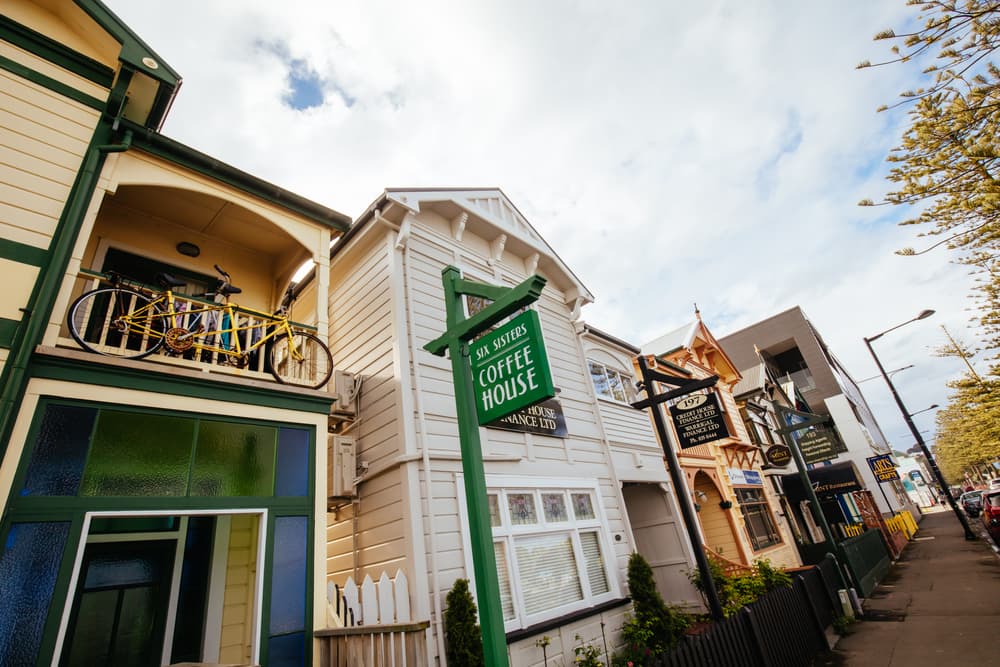
Napier suits people who want a small, sunny coastal town more than a career city: retirees, remote workers who can live with the time difference, and anyone drawn to wine country. After the 1931 earthquake flattened it, the center was rebuilt in art deco, so downtown reads as one period piece. The Hawke's Bay vineyards sit just inland, there's a gannet colony out at Cape Kidnappers, and every February an art deco festival fills the streets with vintage cars.
It's a poor fit if you want a deep job market or nightlife. With about 66,300 people, the pace is quiet. Cyclone Gabrielle is also worth knowing about: in February 2023 it left Napier without power, communications or road access, so check flood risk on any address before you sign a lease.

Reviewed and updated October 1, 2026 · 3 min read
At a glance
$2,300
Monthly budget · single person
$1,150/mo 1-bed rent, center
68/100
Safety index
$55
Internet / month
58°Fannual average
Jul 49° · Jan 67°
Climate
66,300
Population (2020)
Expatsi estimates, updated Aug 2026, based on rental listings, government statistics, and local reporting.
Cost of living
What it costs to live in Napier
Single person
$1,900–$2,700/mo
about 25% below Austin, TX
Couple
$2,700–$3,900/mo
about 30% below Austin, TX
Family of four
$3,700–$5,900/mo
about 40% below Austin, TX
Compared with Austin, TX (Expatsi estimate, 2026).
- $14 −30%
- Inexpensive meal
- $950–$1,350/mo −41%
- 1-bed rent, center
- $850–$1,200/mo −26%
- 1-bed rent, outside
- $55/mo −15%
- Internet
- $353/sq ft −46%
- Buy price, center
Expatsi estimates, updated Aug 2026, based on rental listings, government statistics, and local reporting.
Daily life
How Napier lives
- B- grade, 26th percentile among the cities we track
- Dining & caféstypical
- B- grade, 36th percentile among the cities we track
- Arts & culturetypical
- B+ grade, 58th percentile among the cities we track
- Parks & outdoorsstrong
- B- grade, 34th percentile among the cities we track
- Schools & educationtypical
- C+ grade, 22nd percentile among the cities we track
- Healthcare accessmodest
- B+ grade, 70th percentile among the cities we track
- Bike infrastructurestrong
- B- grade, 37th percentile among the cities we track
- Public transittypical
- A+ grade, good physical accessibility
- Accessibilitygood
Graded on OpenStreetMap amenity density relative to the 369 cities we track. Accessibility is the exception: it's graded against a fixed standard (terrain steepness and sidewalk surfaces), not a curve.
Climate
Weather through the year
Annual average 58°F (14°C) · 34 in of rain a year · Source: Open-Meteo Historical Weather API (temps: ERA5-Land 0.1°; precip/sunshine: ERA5 best-match; 1991-2020 normals)
On the ground
Scenes from Napier
Getting around
Transport in Napier
Napier shares its bus system, goBay, with neighboring Hastings. The network was redrawn in January 2026, adding nearly 100 stops across the two cities and running buses in both directions. On the Napier side, routes reach Taradale, Onekawa, Maraenui, Tamatea, Westshore, Bay View and Bluff Hill, then carry on to Hastings, the regional hospital, EIT and the airport. A Bee Card gets you the lowest fares, and SuperGold Card holders ride free off-peak.
You'll still want a car. The network is built around Napier and Hastings, so wineries, beaches and day trips mostly mean driving, on the left. The art deco center and the seafront are compact and easy on foot.
Hawke's Bay Airport is about 10 minutes from town. Air New Zealand flies to Auckland, Wellington and Christchurch, and Sunair to Gisborne, Tauranga and Hamilton. Flights are domestic, so getting to the U.S. means connecting, typically in Auckland.
- 11/sq mi
- Transit stops
- 26/sq mi
- Bike infrastructure
- 2.5/sq mi
- Wheelchair-accessible places
Mapped features per square mile from OpenStreetMap.
Keep exploring
Places like Napier

Community
Community & practical notes
Community: There's no expat district here and the international crowd is small, so friendships come through clubs, volunteering, wine-region events and the festival calendar. Napier has a large retired population, which feels like a feature if you're retiring and less so if you're 30 and looking for a scene.
Healthcare: The region's main public hospital, Hawke's Bay Fallen Soldiers' Memorial Hospital, is in Hastings on Omahu Road, not in Napier. It has a 24-hour emergency department plus maternity, surgical, children's and mental health services. Whether you can use the public system depends on your visa, so carry private health insurance until you've confirmed you qualify, and ask local GP practices whether they're taking new patients before you choose a neighborhood. Our New Zealand healthcare planner walks through eligibility.
Limited mobility: The art deco center and the seafront sit on flat ground and are compact, so they're the easiest parts of town to get around. Bluff Hill and the streets climbing above the center are steeper, so test the walk from any rental to shops and a bus stop before committing.
Remote work: Home internet runs about $55 a month. The harder part is the clock: New Zealand is most of a day ahead of the U.S., so live meetings with American colleagues tend to land early in your morning.
Retirement: New Zealand has no simple retirement visa. The Temporary Retirement Visitor visa is for people 66 and older who can invest a large sum in New Zealand and show savings and income on top of it. It lasts two years, requires insurance the whole time, and doesn't lead to residence. If that doesn't fit, the realistic route is residence through work or family first. Compare retirement visa options and read our full New Zealand guide.
Housing
Renting and buying
- 1-bed rent (center)
- $950–$1,350/mo
- 1-bed rent (outside center)
- $850–$1,200/mo
- Buy price (center)
- $353/sq ft
- Buy price (outside center)
- $297/sq ft
Expatsi estimates, based on rental listings, government statistics, and local reporting.
Good to know
Frequently asked questions
Is Napier a good place to retire?
It can be, if you can get the visa. Napier is quiet, sunny, walkable in the center and has a large retired population. The catch is immigration: New Zealand's Temporary Retirement Visitor visa is limited to people 66 and older with a large investment, lasts two years, and doesn't lead to residence. Many retirees need residence through work or family first.
Is Napier safe for Americans?
Yes, by everyday standards. Napier scores 68 on a 100-point safety index, and crime isn't the main concern for most residents. Natural hazards are: the city was leveled by an earthquake in 1931, and Cyclone Gabrielle cut it off from power and communications in February 2023. Check flood and hazard maps for any address you're considering.
Do you need a car in Napier?
Most people will want one. The goBay buses connect Napier with Hastings, the hospital and the airport, and the compact center is walkable, but wineries, beaches and day trips mostly mean driving. New Zealand drives on the left.
Can Americans move to Napier?
Yes, but you need a New Zealand visa first; there's no Napier-specific route. The common options are skilled work visas, including jobs on the Green List, working holiday visas for people under 31, and investor visas. Your visa also decides whether you can use the public health system.
How much does it cost to live in Napier, New Zealand?
A single person in Napier typically spends between about $1,900 and $2,700 a month in U.S. dollars, with $2,300 a common middle figure. Couples usually land between about $2,700 and $3,900. Rent is the biggest line: a one-bedroom outside the center ranges from about $850 to $1,200 a month.
What is the weather like in Napier?
Mild and fairly dry. January averages highs near 75F, and July, midwinter in New Zealand, averages highs near 55F with lows near 44F. The city gets about 34 inches of rain a year, and the sunniest stretch runs from November through January.
See how Napier fits your life
Take the free Expatsi Test and compare New Zealand to over 100 countries on what actually matters: cost, healthcare, climate, and safety. About five minutes.
Why not you?