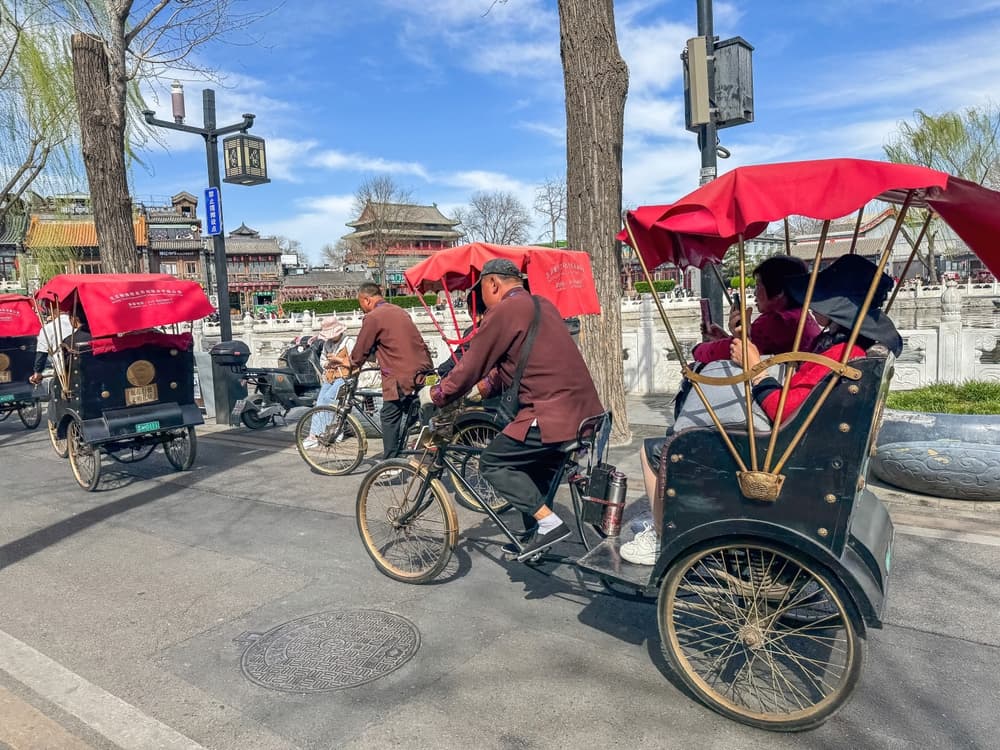
Living in Beijing: what it costs and who it suits
China's capital runs on QR codes, a huge subway and a sponsor. Here's what daily life takes, from the air to healthcare, and why it's a hard pick for retirees.
- 21,893,095
- Population (2020)
- $2,500/mo
- Monthly budget · single
- 56°F / 13°C
- Avg temperature
Plan on about $2,500 a month for one person in Beijing, with most single budgets landing between $2,000 and $3,000. A couple needs about $3,600, and a family of four about $5,200. Rent drives the spread: a one-bedroom near the center runs about $1,300 a month, and about $800 farther out.
Beijing suits people who arrive with a sponsor: teachers, embassy and company staff, researchers and graduate students. Many settle in Chaoyang, east of the old city, or out in Shunyi near the international schools.
It's a harder fit if you want to retire or work remotely for a U.S. company, because China has no visa for either.

Reviewed and updated October 15, 2026 · 4 min read
At a glance
$2,500
Monthly budget · single person
$1,300/mo 1-bed rent, center
76/100
Safety index
$15
Internet / month
56°Fannual average
Jan 28° · Jul 81°
Climate
21,893,095
Population (2020)
Expatsi estimates, updated Oct 2026, based on rental listings, government statistics, and local reporting.
Cost of living
What it costs to live in Beijing
Single person
$2,000–$3,000/mo
about 20% below Austin, TX
Couple
$3,000–$4,200/mo
about 20% below Austin, TX
Family of four
$4,300–$6,100/mo
about 35% below Austin, TX
Compared with Austin, TX (Expatsi estimate, 2026).
- $5 −75%
- Inexpensive meal
- $1,050–$1,550/mo −33%
- 1-bed rent, center
- $650–$950/mo −41%
- 1-bed rent, outside
- $15/mo −77%
- Internet
- $25/mo −39%
- Transit pass
- $1,486/sq ft +129%
- Buy price, center
Expatsi estimates, updated Oct 2026, based on rental listings, government statistics, and local reporting.
Daily life
How Beijing lives
- B+ grade, 56th percentile among the cities we track
- Dining & cafésstrong
- A- grade, 72nd percentile among the cities we track
- Arts & culturestrong
- B grade, 50th percentile among the cities we track
- Parks & outdoorstypical
- B grade, 53rd percentile among the cities we track
- Schools & educationtypical
- B- grade, 31st percentile among the cities we track
- Healthcare accesstypical
- B grade, 54th percentile among the cities we track
- Bike infrastructuretypical
- B+ grade, 67th percentile among the cities we track
- Public transitstrong
- A- grade, good physical accessibility
- Accessibilitygood
Graded on OpenStreetMap amenity density relative to the 369 cities we track. Accessibility is the exception: it's graded against a fixed standard (terrain steepness and sidewalk surfaces), not a curve.
Climate
Weather through the year
Annual average 56°F (13°C) · 21 in of rain a year · Source: Meteostat station normals (54511, 1991-2020)
On the ground
Scenes from Beijing
Getting around
Transport in Beijing
You won't need a car in Beijing. The subway reaches nearly everywhere you'll need, and since September 2024 you can tap an overseas Visa or Mastercard at the gates, airport lines included. Many residents pay with a QR code in Alipay or WeChat Pay, or carry a Yikatong transit card (a ¥20 deposit, about $3) that also works on most buses.
DiDi is the main ride-hailing app. It has an English option and takes foreign cards. Shared bikes handle short hops and are a good way to wander the hutongs. From Capital Airport, the Airport Express reaches Dongzhimen in 20 to 25 minutes for ¥25, about $4.
Driving isn't an option at first. China doesn't accept U.S. or international licenses, so you'd need to pass the Chinese test, and Beijing hands out new license plates by lottery. When you cross the street, keep in mind the State Department's warning that pedestrians don't have the right of way.
- 39/sq mi
- Transit stops
- 7.4/sq mi
- Bike infrastructure
- 7.7/sq mi
- Wheelchair-accessible places
Mapped features per square mile from OpenStreetMap.
Keep exploring
Places like Beijing


Living here
Community and practical notes
The expat scene: Foreign Beijing is built around institutions (embassies, companies, universities and schools), so many people arrive with colleagues already in place. Sanlitun in Chaoyang is the bar-and-restaurant hub. Lido was one of the city's earliest expat areas and still draws families, Wangjing has more reasonably priced housing, and Shunyi is a villa suburb in the northeast, home to the International School of Beijing. Julie Marx, our China guide, started out as a language student in Beijing and can tell you what the first months feel like.
Healthcare: Expats mostly use private and international hospitals, where general practitioners speak English. Beijing United Family Hospital and International SOS are long-standing names. Public hospitals cost little, but waits are long and quality varies. Wherever you go, expect to pay before treatment, even in an emergency, since hospitals don't take U.S. insurance. Private international coverage makes the international hospitals workable: ExpatInsure sets that up, and Hunter Schultz, our healthcare coach, can help you work out what level of care you need.
The air: Better than its reputation. Beijing averaged 27.0 micrograms of PM2.5 per cubic meter in 2025, its first year under 30, with 311 days of good or moderate air and a single heavy-pollution day. Spring dust and smog can still flare.
Schools: The International School of Beijing is in Shunyi and teaches Early Years 2 through Grade 12, offering a dual English and Chinese program through Grade 5 and the IB Diploma in the last two years.
Internet and remote work: Home internet runs about $15 a month, but many U.S. apps and sites are blocked, and the State Department says VPN use is illegal in most cases. Beijing is 12 to 13 hours ahead of Eastern, by season, so U.S. calls land early morning or late evening.
LGBTQ expats: Same-sex relationships are legal, and the State Department reports few incidents of violence. China doesn't recognize same-sex marriage and has no law against discrimination by sexual orientation or gender identity, so a same-sex spouse can't count on a family visa.
Black Americans: Black Americans who've taught in China have written about language schools and clients preferring white teachers, even non-native speakers. Ask schools direct questions before you sign, and talk to Black teachers already working there. Americans of Chinese descent should know the State Department warns they may face extra scrutiny.
Limited mobility: Expect a mixed picture. The State Department warns that sidewalks can be uneven or missing, and the hutong lanes that give the old city its charm are narrow. In major cities, public restrooms at tourist sites usually have at least one accessible toilet.
Retirement: Beijing isn't a retirement city for most Americans. China has no retirement visa, and winters are cold and dry, with average January highs near 36F. If you're retiring, our retirement visa hub compares countries that do have a route, and the guide to moving to China covers the work, study and family paths.
Housing
Renting and buying
- 1-bed rent (center)
- $1,050–$1,550/mo
- 1-bed rent (outside center)
- $650–$950/mo
- Buy price (center)
- $1,486/sq ft
- Buy price (outside center)
- $836/sq ft
Expatsi estimates, based on rental listings, government statistics, and local reporting.
Good to know
Frequently asked questions
Is Beijing safe for Americans?
For everyday crime, yes. Violent crime is uncommon in China, and pickpocketing on crowded buses and subways is the main thing to watch. The bigger risks are legal: as of September 2026 the State Department rates mainland China Level 2, Exercise Increased Caution, and warns about exit bans and surveillance of phones and messages.
Where do expats live in Beijing?
Many foreign residents live in Chaoyang District, around Sanlitun, Chaoyang Park and Lido, or in Wangjing, where housing costs less. Families with kids at international schools often choose Shunyi, a villa suburb northeast of the city that's home to the International School of Beijing.
Can I move to Beijing without a job?
Generally no. China's long-stay visas are tied to an employer, a university, a family member or a talent program, and there's no digital nomad visa. To look around first, Americans can use China's visa-free transit option of up to 10 days if they fly on to a third country.
How much does it cost to live in Beijing?
About $2,500 a month for one person in 2026, with most single budgets between $2,000 and $3,000. A couple should plan on about $3,600 and a family of four about $5,200. Rent is the biggest swing: about $1,300 for a central one-bedroom versus about $800 farther out.
Can I retire in Beijing?
Not on a retirement visa, because China doesn't have one. Long stays run through a job, a school or a family member who sponsors you. If retiring is the goal, look at countries with a dedicated retirement or passive-income visa.
Is the air in Beijing still bad?
It has improved a lot. Beijing averaged 27.0 micrograms of PM2.5 per cubic meter in 2025, the first year below 30, and recorded 311 days of good or moderate air and just one heavy-pollution day, according to the city's environment bureau. Spring dust and smog still happen.
What is the weather like in Beijing?
Beijing has four sharp seasons. January averages highs near 36F and lows near 19F, and it's very dry. July is the hottest and wettest month, with average highs near 89F. April and October are the mild months, with average highs near 70F and 67F.
See how Beijing fits your life
Take the free Expatsi Test and compare China to over 100 countries on what actually matters: cost, healthcare, climate, and safety. About five minutes.
Why not you?