The 2026 guide to moving to Bosnia and Herzegovina
Bosnia and Herzegovina gives Americans 90 days. Staying longer takes a reason.
A couple lives comfortably here on about $2,050 a month. There's no retirement visa and no nomad visa, so the real question is which residence ground fits your life.
What a month costs, which residence grounds the government accepts, and the everyday realities, from winter smog to a two-entity government, that most guides skip.

Reviewed and updated September 27, 2026 · 13 min read
01 · The case for Bosnia and Herzegovina
The appeal, and the honest trade-offs
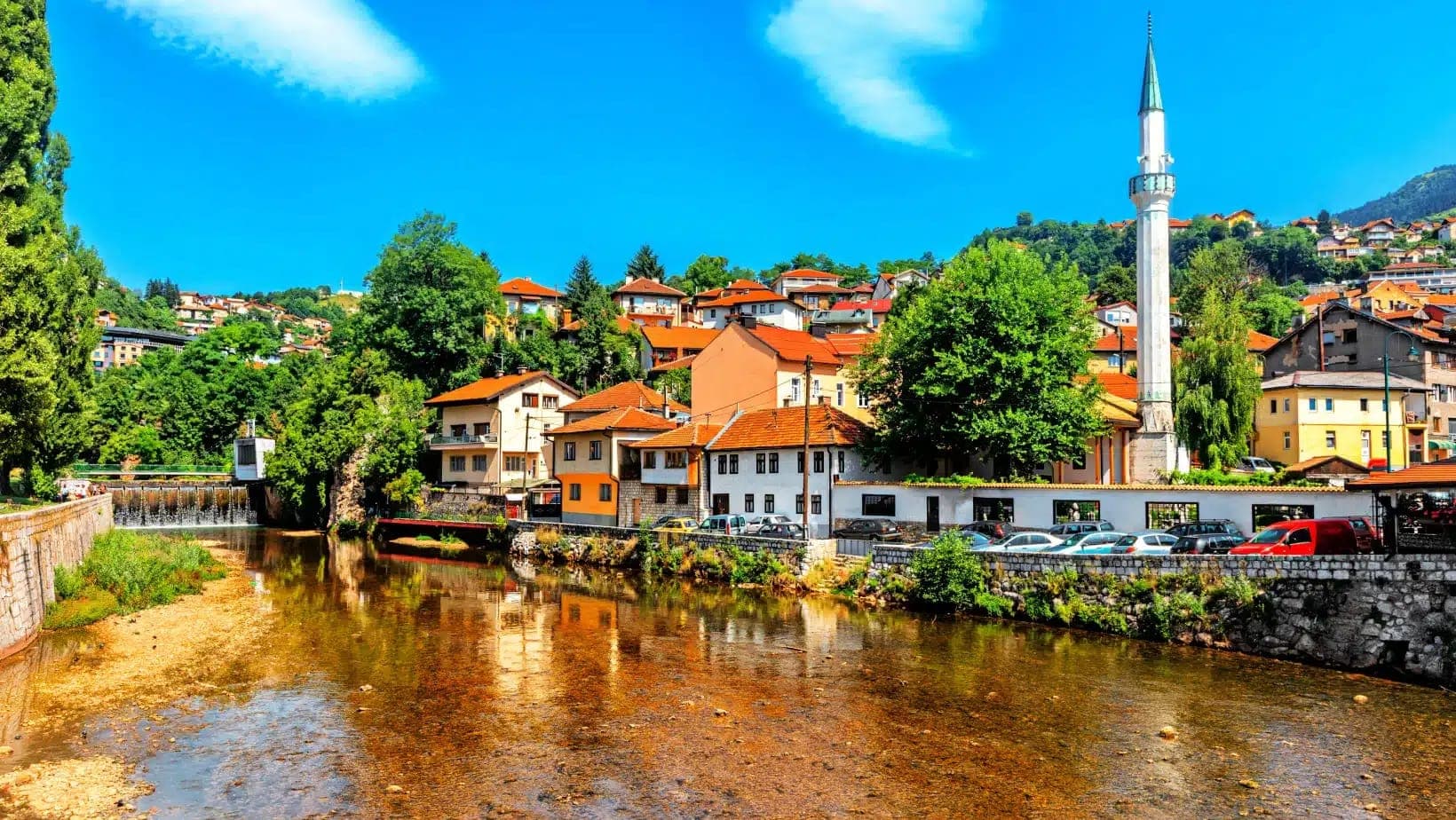
Bosnia and Herzegovina doesn't make many shortlists, and for a certain kind of American that's the draw. It's a country of about 3.2 million people in the Balkans, with Sarajevo as its capital, four distinct seasons, and a landscape of forests, rivers and mountains. The everyday costs sit well below Western Europe's, and you won't be one of thousands of Americans on the same street.
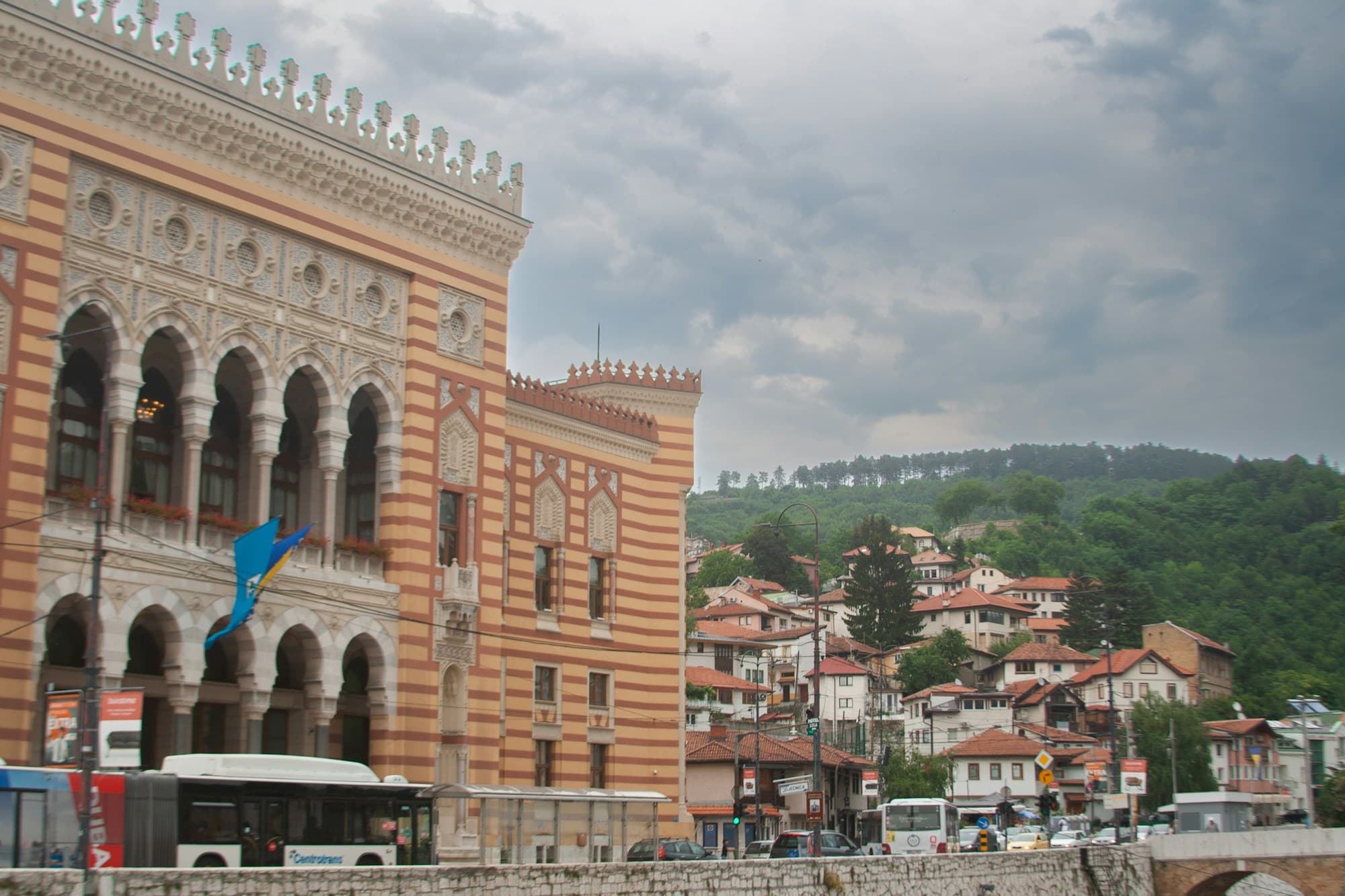
The history is layered and easy to see. Ottoman, Austro-Hungarian and Yugoslav buildings share the same blocks in Sarajevo and Mostar. The country that came out of the war of the 1990s is still organized around the 1995 Dayton Agreement: two entities, the Federation of Bosnia and Herzegovina and Republika Srpska, plus the self-governing Brčko District. That split touches more of your move than you'd guess, from the income tax rate you pay to which office handles a work permit.
The direction of travel is toward Europe. The EU made Bosnia and Herzegovina a candidate in December 2022, and EU leaders agreed to open accession talks in March 2024. Membership isn't close, but it matters if you're thinking long term. The money side is steady too. The convertible mark (written KM or BAM) is fixed to the euro at 1.95583 marks per euro under a currency board, so your costs move with the euro rather than with local politics.
Getting in is the simple part. A U.S. passport gets you up to 90 days in any six-month period with no visa, which is enough time to rent an apartment, live through a few weeks of ordinary life and decide whether you like it before you file anything.
Here's the catch
Staying longer takes a legal reason, and Bosnia and Herzegovina doesn't offer the two that most Americans are looking for. There's no retirement visa and no digital nomad visa. Residence is granted for family reunification, study, humanitarian reasons, employment, or "other justified reasons," and owning a home counts only in exceptional cases. If you plan to live on Social Security or keep a remote U.S. job, you'll need a lawyer to build a case, and approval isn't guaranteed.
Working locally is hard to make pay. Wages are low by American standards, and a foreigner's work permit comes with a labor market test and annual quotas.
A few things about daily life are better known now than discovered later. Sarajevo's winter smog can keep children indoors and ground flights. Landmines are still in the ground in parts of the country. The State Department says discrimination based on sexual orientation is common and that accessibility for people with disabilities is limited. Chapter 04 has the details on each.
And if a second passport is the long-term goal, this isn't the place. Naturalization takes roughly eight years of legal residence, and you'd be expected to give up U.S. citizenship to get it.
Still interested? Then you're probably the reader this guide is for: someone with a family tie, a job offer or a study place, or someone willing to make a case for staying, who wants mountains, deep history and a slower pace somewhere few Americans have settled. The rest covers the money, the residence rules, the practical side and who can help.
- Cost of living (single)
- $1,250/mo
- Safety index
- 60/100
- English proficiency
- 55/100
- Internet speed
- 60 Mbps
- Currency
- Bosnia and Herzegovina Convertible Mark (BAM)
- Language
- Bosnian
02 · The numbers
A month in Bosnia and Herzegovina, in dollars
$2,050
Monthly budget, couple
all in, comfortable
$1,250
Monthly budget, single
all in, comfortable
$3,300
Monthly budget, family
all in, comfortable
$550
Rent, 1-bed city center
$400 outside the center
$12
Inexpensive meal out
inexpensive restaurant
$60
Local transport, monthly
best in bigger cities
$48
Home internet, monthly
about 60 Mbps
60/100
Safety index
State Dept. Level 2
Where your money goes
These are our 2026 estimates in U.S. dollars for a comfortable life, not a bare-bones one, and they cover rent, food, transport, utilities and the usual extras.
The biggest lever is where you live. Sarajevo is the capital and the priciest rental market, and our city data lists lower rent ranges in Tuzla, Zenica and Trebinje. Leaving the city center cuts rent further, as the cards above show. A car isn't essential in the larger cities, but public transport thins out quickly outside of them.
Everyday prices are in convertible marks. Because the mark is fixed to the euro, the only exchange rate you're really watching is dollars to euros. VAT is 17% across the whole country, and it's already built into shelf prices, so there's no surprise at the register.
For context on what locals earn, the average net salary was 1,691 KM in May 2026, about $990 a month, according to the country's statistics agency. That's why the math works so well for people with income from home and so poorly for anyone hoping to live on a local job.
Two costs aren't in the budget above. The first is health coverage. Foreigners pay their own medical bills unless a treaty or an employer covers them, so budget for a private international plan. The second is the paperwork itself: residence fees are modest, but document preparation and a lawyer's time add up, especially if your case rests on "other justified reasons."
The budget is the easy part
At about $1,250 a month for one person, the numbers work for most Americans with a pension, Social Security, savings or remote income. What doesn't come automatically is permission to stay past 90 days. Bosnia and Herzegovina's residence rules were written around family, work and study, so your route depends less on how much you earn than on your connection to the country. That's the next chapter.
03 · Residence
Staying past 90 days
Every long stay in Bosnia and Herzegovina runs through one permit: temporary residence. The question is which legal ground you file it on, and whether you have one at all.
Your first 90 days
U.S. citizens can stay up to 90 days in a six-month period, counted from the date of first entry, without a visa. Once you've used them, you have to wait another 90 days before coming back. Your passport needs at least three months of validity beyond the day you leave. Within 48 hours of arriving, you must register your address with the local police or the Service for Foreigners' Affairs.
How temporary residence works
A temporary residence permit lasts up to one year, and it can only be renewed on the same ground you first used. The issuing fee is 150 KM, about $90. If you arrived visa-free, file no later than 15 days before your 90 days run out. You can file inside the country at the Service for Foreigners' Affairs office that covers your registered address, or through a Bosnian embassy or consulate. Decisions take up to 60 days when you file in the country and up to 90 through an embassy, according to one immigration firm. To renew, apply between 15 and 60 days before the permit expires.
The core documents are a passport valid at least three months past your planned departure, proof of accommodation (a lease or a deed), proof of health insurance, and proof you can support yourself. Travel insurance valid for your whole stay is accepted as health coverage. For money, the Ministry of Security accepts proof of cash in local or foreign currency, or a written promise from a Bosnian citizen or resident to cover your costs. Its guidance sets 150 KM, about $90, per day of intended stay as the minimum a foreigner should carry in and out of the country.
Family, work or study
These are the grounds the system was built for. Marrying a Bosnian citizen or joining a family member who lives there is family reunification. Enrolling at a school or university is education. A job needs a work permit, and the employer normally applies to the employment institute of the Federation or of Republika Srpska, depending on where the job is. Expect a labor market test showing no registered local job seeker can fill the role, plus annual quotas set by the Council of Ministers.
Retiring or working remotely
There's no category for either. The realistic options are narrow. The first is "other justified reasons," a catch-all ground with no published criteria, decided case by case. The second is property: owning a home can support residence only in exceptional cases, and only when the owner's effective connection to Bosnia and Herzegovina is established. The third is opening a company, but actually working for it generally takes a work permit too; lawyers say founders are exempt only when their role isn't employment and lasts no more than three months a year. If one of these is your plan, talk to a local lawyer before you sign a long lease. Some people treat Bosnia and Herzegovina as one stop in a longer plan instead, using the 90 days and moving on.
Permanent residence and citizenship
After five years of continuous temporary residence you can apply for permanent residence. Absences of up to 10 months in total, or up to six months at a time, don't break the clock. You'll need sufficient funds, housing, health insurance, knowledge of an official language and a criminal record certificate no more than six months old. The fee is 200 KM, about $120.
Citizenship comes at least three years after permanent residence, so roughly eight years in all, and it requires knowing the language and script of one of the constituent peoples. You're expected to renounce your old citizenship unless a bilateral agreement says otherwise. Bosnia and Herzegovina has those agreements only with Croatia, Serbia and Sweden, so for Americans, a Bosnian passport means giving up the U.S. one.
Temporary Residence Permit
The one permit every long stay runs through
Issued for up to a year on a specific ground: family, work, study, or a case-by-case "other justified reason." It renews only on the ground you first used.
- Application submitted at least 15 days before the initial 90-day visa-free period expires
- Original FBI background check or local police report (no criminal record), issued within six months, with apostille certification
- Passport valid for at least three months after the requested permit period ends
04 · The practical side
Healthcare, taxes, safety and the rest
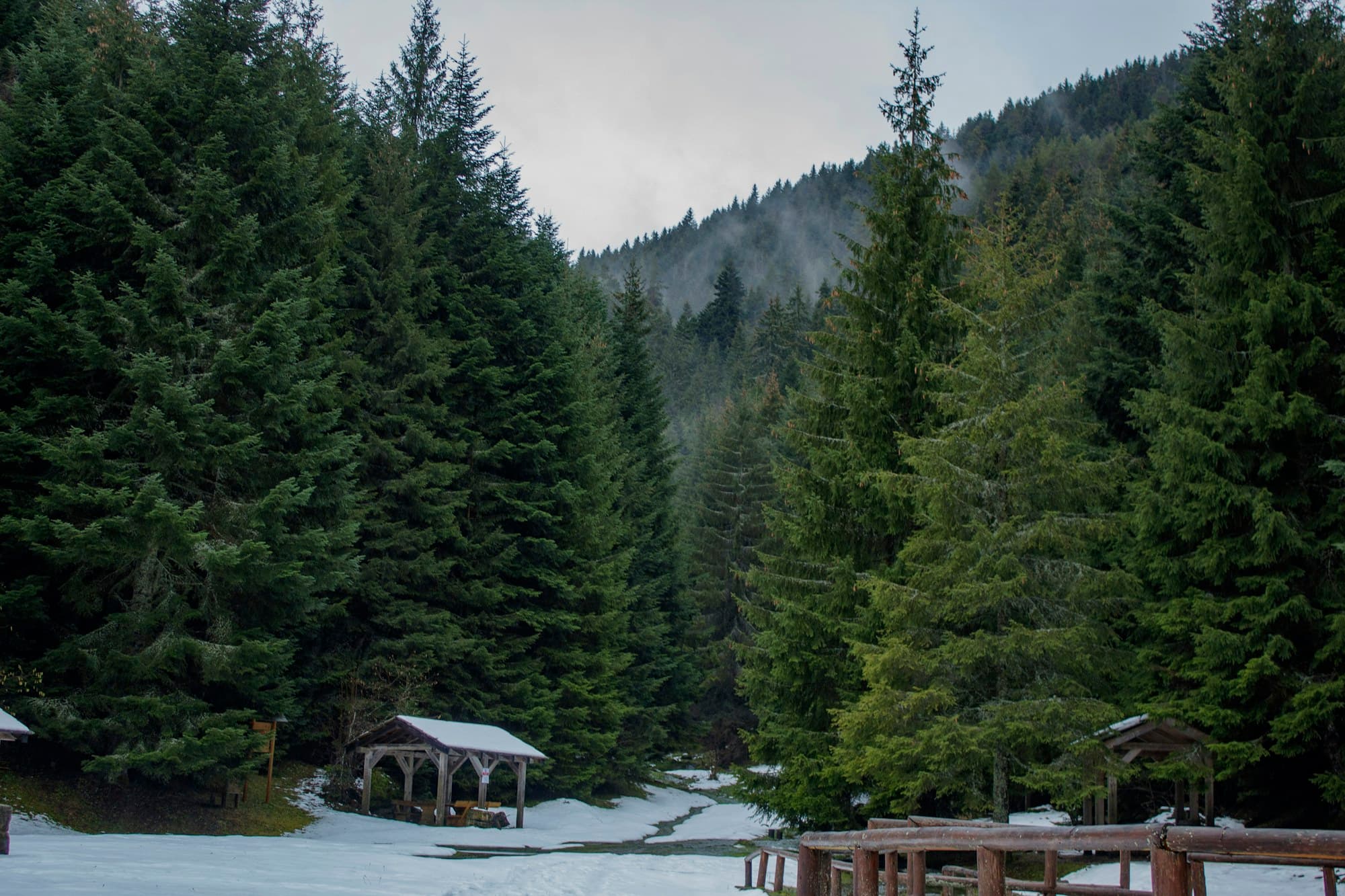
The four things Americans ask about most, answered with what the official sources say.
Healthcare
The public system is run by health insurance funds, and employers must enroll full-time workers. If you aren't employed there, you're on your own: foreigners pay their own medical costs unless a bilateral treaty covers them. The State Department warns that public clinics may lack basic supplies, staff may speak little or no English, and hospitals and doctors often want payment up front. That's why private international coverage makes sense. Travel insurance satisfies the residence office, but it isn't a plan for years of care. Hunter Schultz, our healthcare coach, can help you judge what level of care you'll need, and ExpatInsure can quote a policy.
Taxes and money
You become tax resident in the Federation after 183 days in a calendar year; Republika Srpska uses 183 days in any 12 months, or permanent residence. Residents are taxed on worldwide income, at a flat 10% in the Federation and 8% in Republika Srpska. Bosnia and Herzegovina credits tax you've already paid abroad, up to the amount it would have charged. We couldn't confirm that a U.S. income tax treaty is in force, so get advice before you pass 183 days. On the U.S. side, you still file every year, and you owe an FBAR once your foreign accounts total $10,000 at any point in the year. MyExpatTaxes handles U.S. returns from abroad, and Moneycorp can move dollars into marks or euros at better rates than a bank.
Safety and the headlines
The State Department rates Bosnia and Herzegovina Level 2, exercise increased caution, citing crime, landmines and terrorism. Landmines and unexploded ordnance remain in parts of the country, and explosions killed people as recently as August 2025. If you hike, follow marked trails and ask locally about cleared ground.
Politics make news more often than they change daily life. In February 2025, a court convicted Republika Srpska's president, Milorad Dodik, of failing to implement decisions of the international High Representative and banned him from office. A snap election in November 2025 went to the ruling party's candidate, Siniša Karan, with 50.3% of the vote on 35% turnout. The tension is between institutions; keep an eye on it, especially if you settle in Republika Srpska.
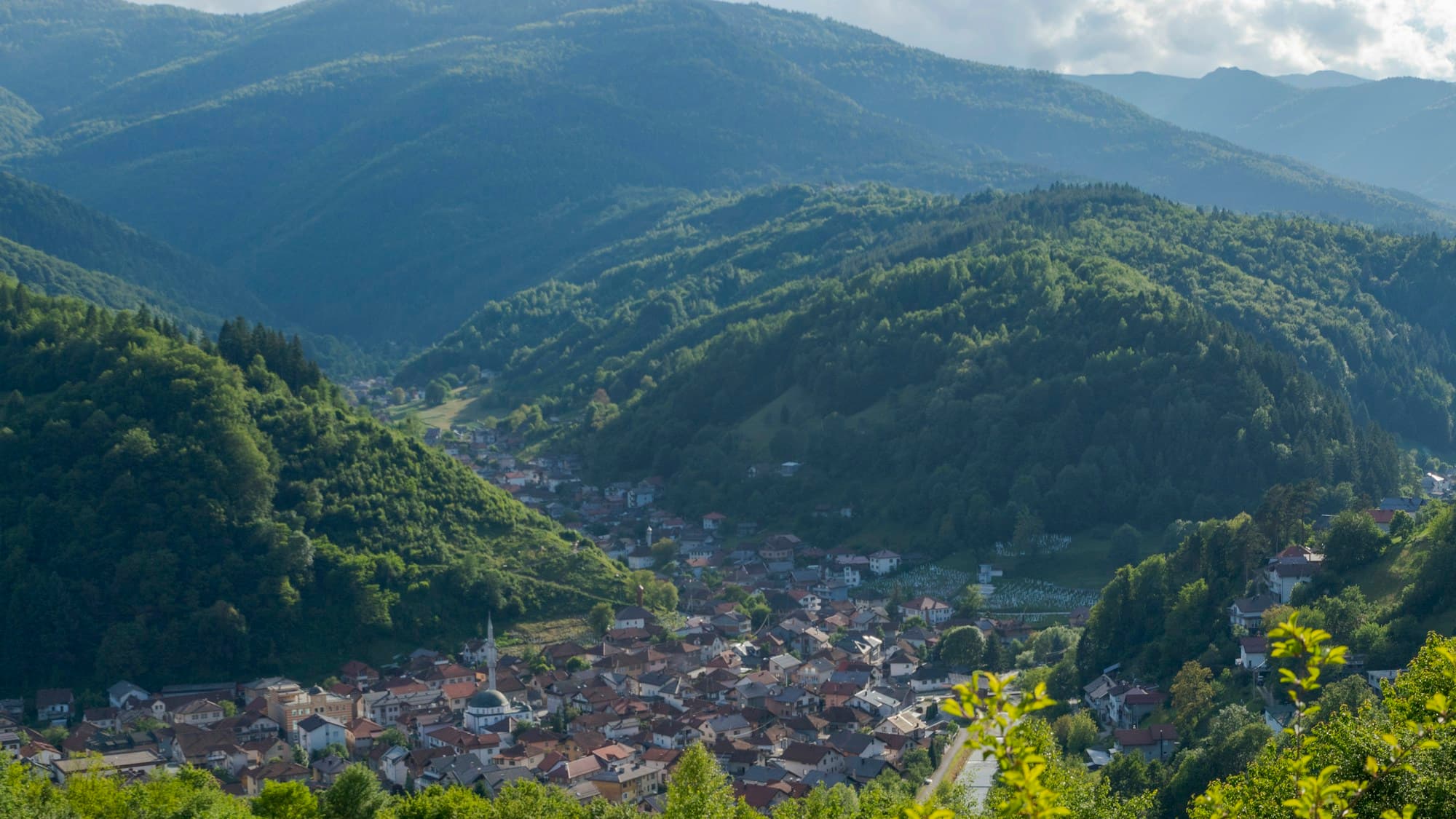
Winter air is the day-to-day issue. Sarajevo sits in a valley that can trap smoke from home heating and traffic for days without wind. In December 2025, children were told to stay indoors and flights out of Sarajevo were canceled. If you have asthma or heart trouble, spend a January there before you commit.
Getting there and bringing pets
There are no nonstop flights between the U.S. and Sarajevo, so every trip home includes at least one connection. Bosnia is six hours ahead of the East Coast for most of the year. Pets need a microchip, a rabies vaccination and an official health certificate, and animals from countries not on the approved list also need a rabies antibody test of at least 0.5 IU/ml. Confirm with a pet shipper such as Starwood Pet Travel whether a U.S. pet needs that test, since it can add time to your plans.
This guide is dated on purpose
The residence rules, work permit quotas and politics between the two entities all shift, and the "other justified reasons" ground is decided case by case. Everything here reflects what official sources said as of September 2026. Before you sign a lease or ship anything, confirm the current rules with a licensed lawyer in Bosnia and Herzegovina.
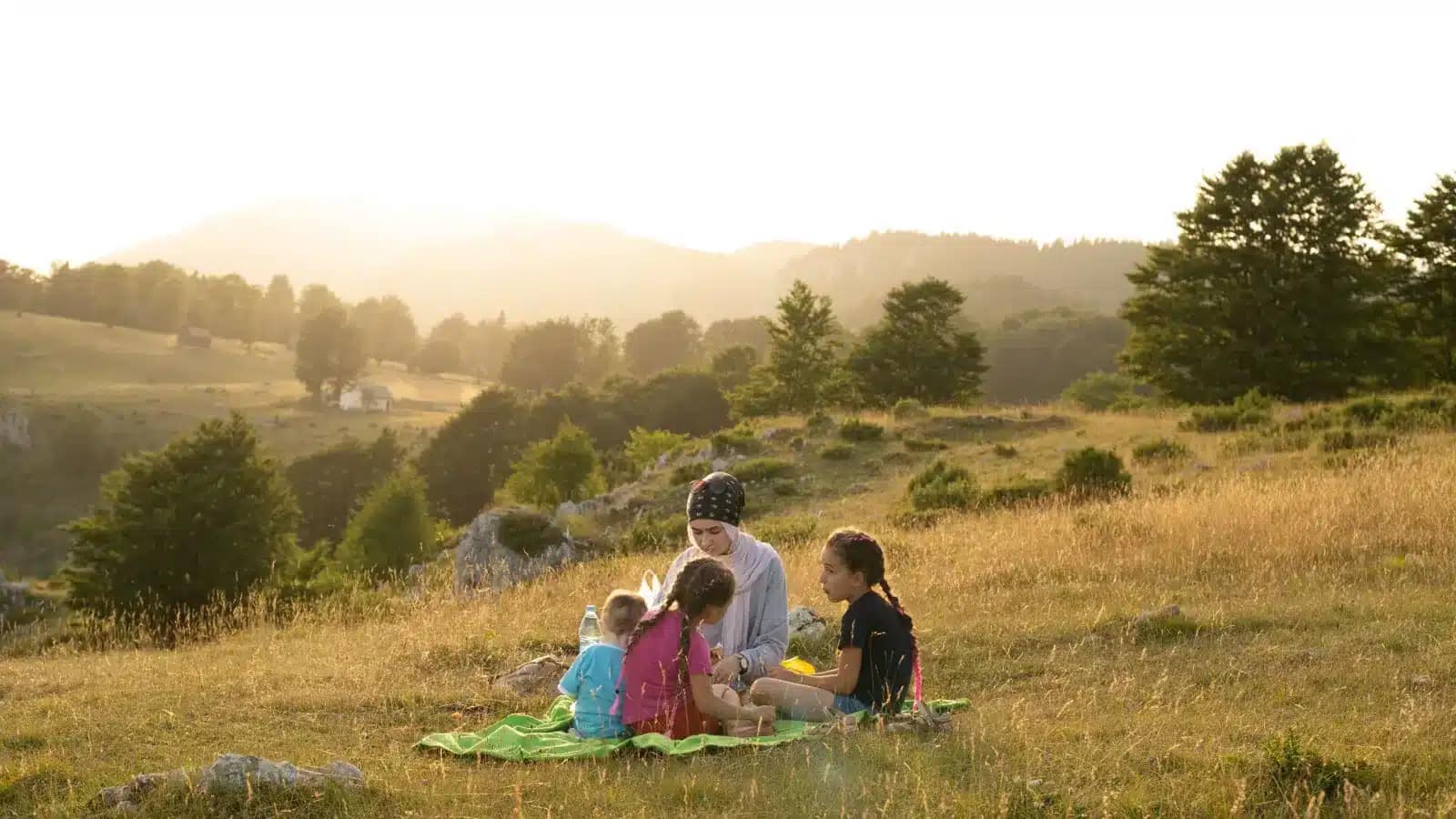
05 · Where to live
Choosing where to base yourself
The country is small, but where you land shapes your paperwork as much as your view. Your entity decides your income tax rate and which offices handle your paperwork, and Brčko District runs its own system.
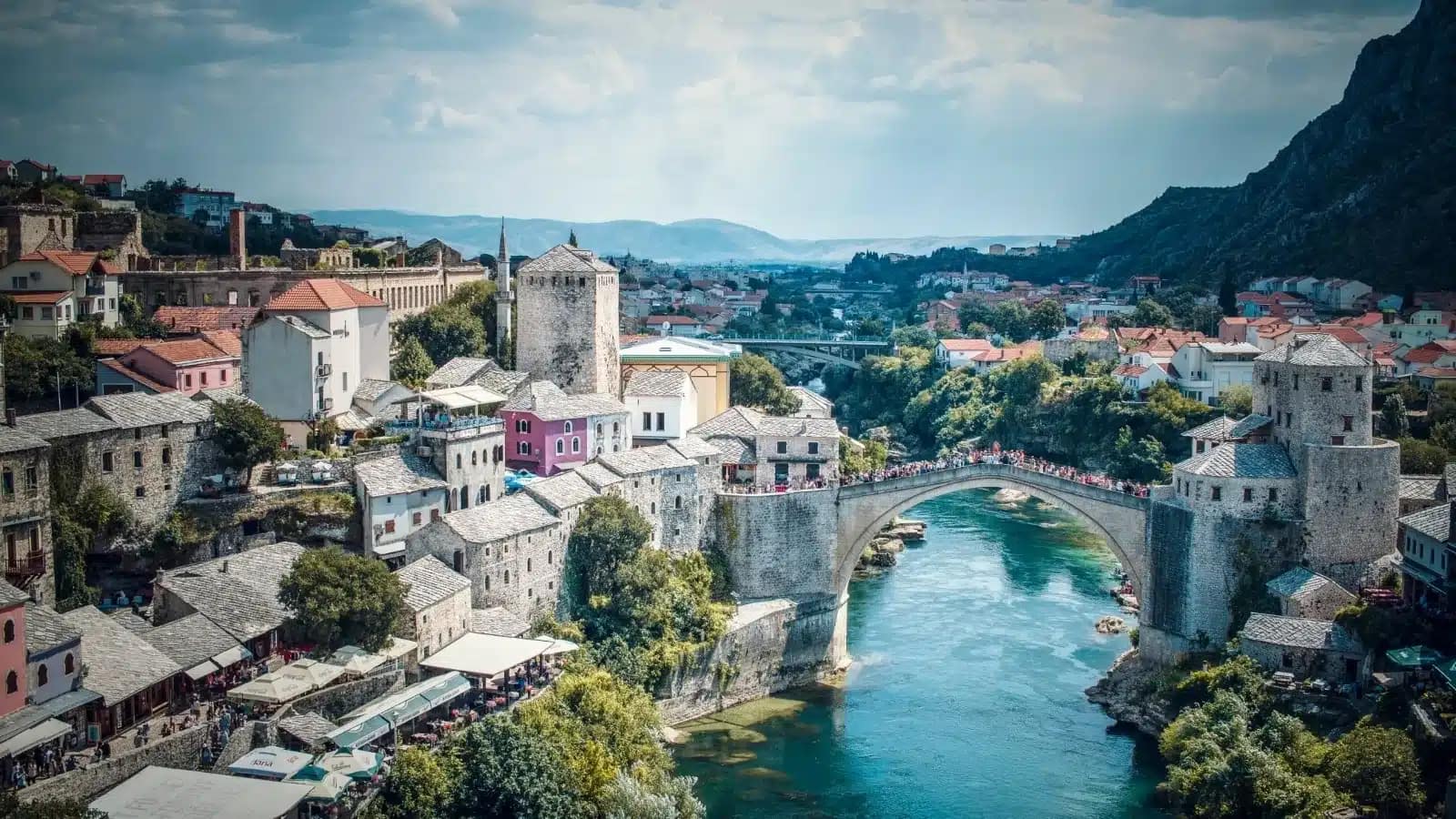
Sarajevo is the obvious start: the capital, the airport, and the biggest mix of Ottoman and Austro-Hungarian streets. It's also the most expensive rental market, and its valley holds winter smog. Mostar, in Herzegovina, is built around its famous Old Bridge and a lively riverside. Banja Luka is Republika Srpska's administrative center, greener and calmer. Tuzla is a university city known for its salt lakes. Trebinje, in the far south near the Adriatic, has a Mediterranean climate and vineyards, and gets you away from the continental winters.
Whichever you're drawn to, spend part of your 90 visa-free days there in winter as well as summer before you sign anything long term.
Cities we cover
City guides for Bosnia and Herzegovina
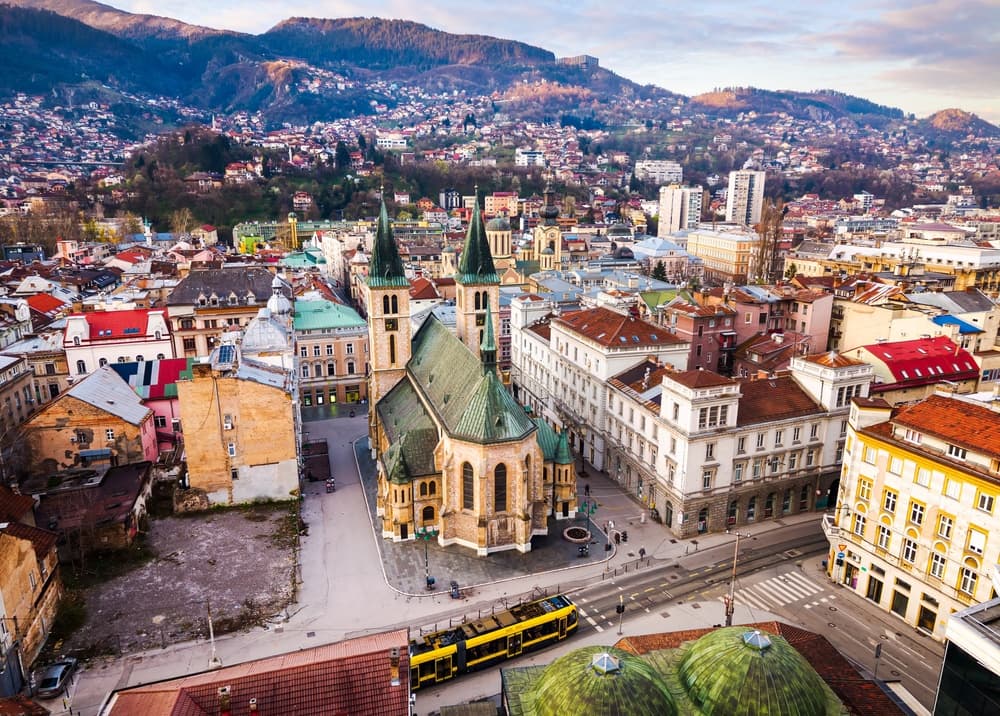
Sarajevo
Capital between two empires
A valley city where Ottoman bazaar streets meet Austro-Hungarian boulevards, with trams, cafes and mountains at the edge of town. The best-served place in the country for flights, hospitals and English speakers. The catch is winter smog, when the valley traps coal and wood smoke for weeks.
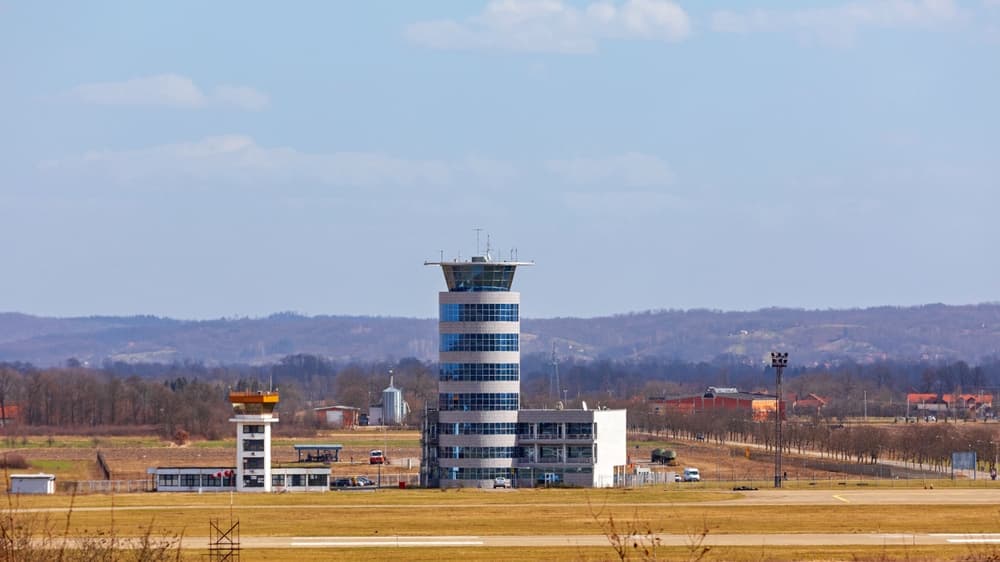
Banja Luka
Green river city
The second city of the country, laid out wide along the Vrbas River with tree-lined boulevards, cafe terraces and rafting just outside town. Calm and affordable, for anyone who wants a real city without Sarajevo's crowds. The catch is that it sits in Republika Srpska, so permit offices and politics work differently than in the Federation.
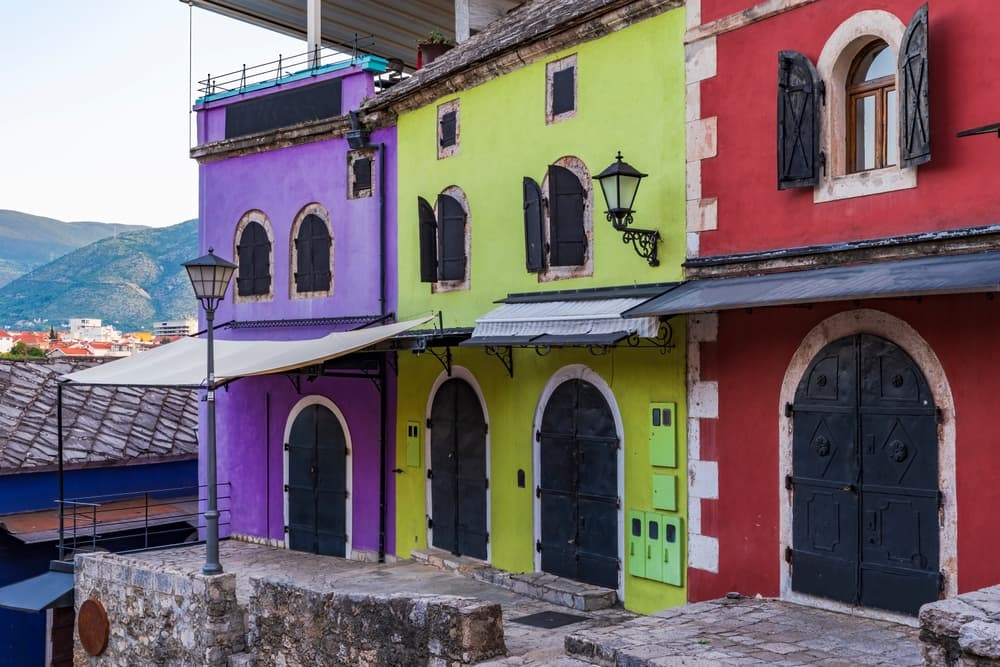
Mostar
Old Bridge town
A small city of stone streets around the rebuilt Stari Most, with the Neretva running green below it. Quiet outside tourist season, and the Adriatic coast and Dubrovnik are within a day trip by car. The catch is the heat in summer and that day-trippers crowd the old town from late morning to evening.
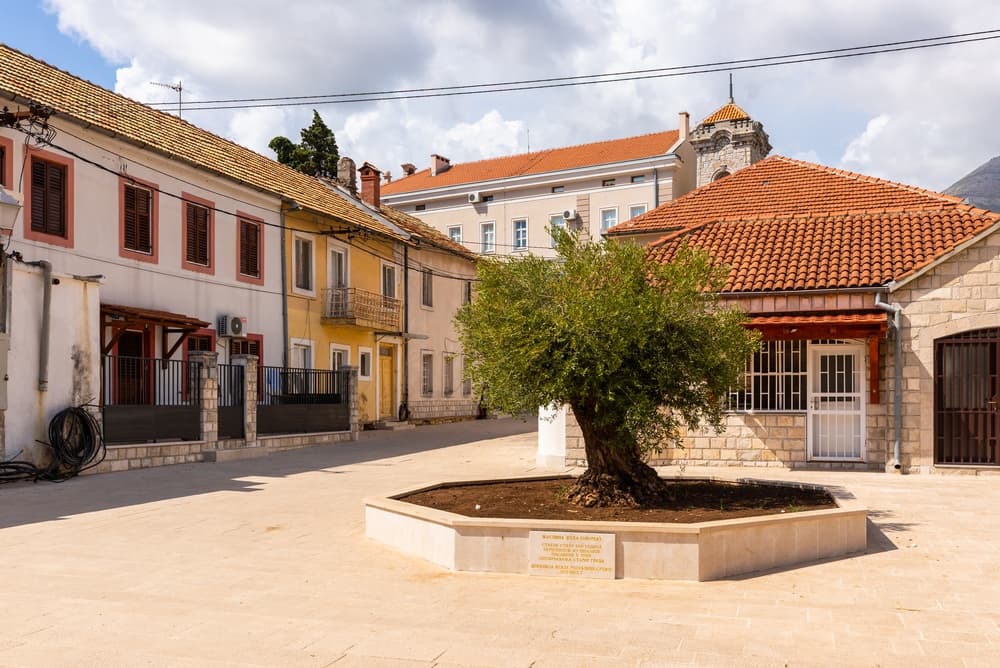
Trebinje
Stone town near Dubrovnik
A small stone town on the Trebišnjica River, with plane trees shading the main square, wineries in the hills around it, and Dubrovnik about 30 km away across the Croatian border. Slow, cheap and sunny. The catch is that there's little to do in winter and not much English outside a few cafes.
06 · Your move team
People who can do the hard parts
Nobody should file a residence case in a second language on their first try. These are the Expatsi-vetted people who can handle documents, health coverage, taxes, money and the move itself, grouped by what they do.

Plan-B Outbound Migration
Multi-Country Visa Support
A U.S.-based consultancy that works on outbound migration, residence permits and citizenship. A place to start when your case doesn't fit a standard category.
Learn more
Legalize That Doc
Document Preparation
Melissa Di Nardo's team gets U.S. documents ready for use abroad: FBI background checks, birth and marriage certificates, apostilles and embassy legalizations, planned around your filing dates.
Learn more
Hunter Schultz
Healthcare Coach
A healthcare coach with more than 20 years of expat living and a background in air medical transport. His one-hour consultation maps the care you'll need and where to find it.
Learn more
ExpatInsure
Global Health Insurance
Expatsi's international health insurance partner, led by Andy Seale and Stephanie Edwards. They match you with private coverage that works for residence and for real care.
Learn more
MyExpatTaxes
U.S. Expat Tax Service
Tax software built for Americans abroad, filing U.S. returns since 2018, with help for more complex cases like foreign tax credits.
Learn more
Beacon Global Advisors
Financial Planning
Wealth management for U.S. citizens overseas: keeping 401(k)s, IRAs and investment accounts working and compliant after you leave.
Learn more
Moneycorp
Currency Exchange
A currency and international payments company working since 1979. Kelly Cutchin's team moves dollars abroad at better-than-bank rates and can lock a rate for up to two years.
Learn more
Starwood Pet Travel
Pet travel and transport
International pet transport for dogs and cats, handling health certificates, USDA endorsements, crates and airline bookings from planning to arrival.
Learn more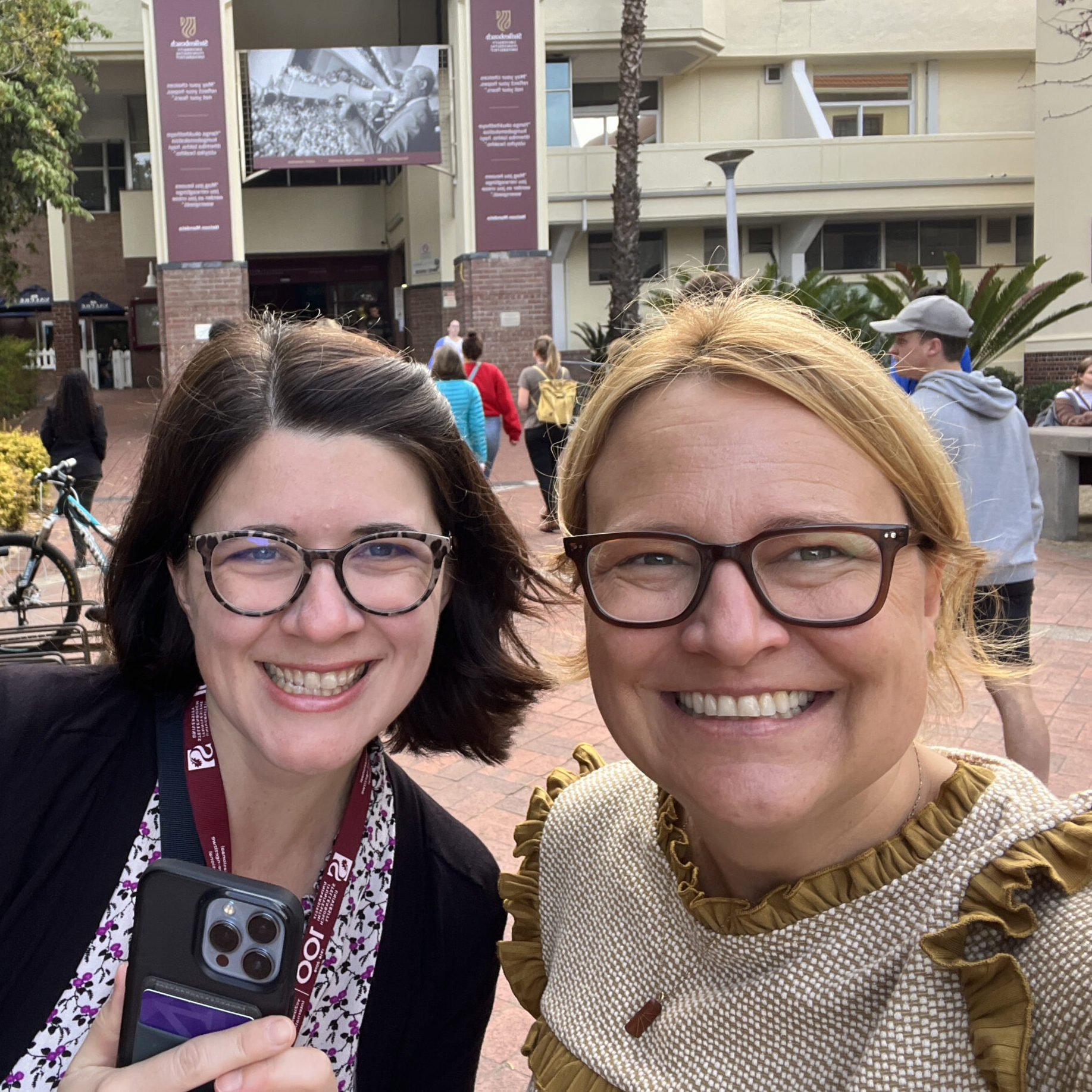
Culturosity Co.
Cultural Skills Coach
Jennifer and Janka run intercultural coaching and workshops that help you adjust to a new culture and build a social life once you land.
Learn more07 · Quick answers
Bosnia and Herzegovina: your questions answered
How long does it take to get permanent residence in Bosnia and Herzegovina?
Five years of continuous temporary residence. Absences of up to 10 months in total, or six months at a time, don't break the count. You'll also need funds, housing, health insurance, knowledge of an official language and a recent criminal record certificate, and the fee is 200 KM, about $120.
Is there a digital nomad visa in Bosnia and Herzegovina?
No. As of September 2026 there's no dedicated permit for remote workers. Remote workers can stay on the 90-day visa-free allowance, apply for temporary residence under "other justified reasons," or set up a local company, which usually means getting a work permit as well.
Can I get residency in Bosnia and Herzegovina by buying property?
Only in exceptional cases. The Ministry of Security says owning real estate can support a temporary residence permit only when your effective connection to Bosnia and Herzegovina is established. Foreigners also generally can't buy agricultural land or forests.
Is Bosnia and Herzegovina safe for Americans?
The U.S. State Department rates it Level 2, exercise increased caution, because of crime, landmines and terrorism. Landmines and unexploded ordnance remain in parts of the country, so hikers should stick to marked trails. In winter, Sarajevo's air pollution can get bad enough to keep children indoors.
Does Bosnia and Herzegovina have a retirement visa?
No. Bosnia and Herzegovina grants temporary residence for family reunification, education, humanitarian reasons, employment or "other justified reasons," and none of these is a pension category. Retirees without a family tie would have to apply under "other justified reasons," which is decided case by case with no published criteria.
Can Americans move to Bosnia and Herzegovina without a visa?
For a trial stay, yes. U.S. citizens can spend up to 90 days in any six-month period in Bosnia and Herzegovina without a visa, then must wait 90 days before returning. Living there longer takes a temporary residence permit, which you can file for inside the country no later than 15 days before your visa-free time ends.
How much does it cost to live in Bosnia and Herzegovina?
Expatsi's 2026 estimate puts a comfortable month for a couple at about $2,050, all in. Sarajevo is the most expensive place to rent. Private health insurance and the cost of residence paperwork come on top of that.
Can I keep U.S. citizenship if I become a citizen of Bosnia and Herzegovina?
Generally, no. Naturalized citizens must renounce their previous citizenship unless a bilateral agreement allows dual citizenship, and Bosnia and Herzegovina has those agreements only with Croatia, Serbia and Sweden. Naturalization also requires at least three years of permanent residence and knowledge of a local language.
Sources
- Basic information on entry and stay of aliens in BiH · BiH Ministry of Security (checked September 2026)
- Stay of aliens in BiH · Service for Foreigners' Affairs (checked September 2026)
- Bosnia and Herzegovina International Travel Information · U.S. Department of State (checked September 2026)
- Bosnia and Herzegovina: individual taxes on personal income · PwC Worldwide Tax Summaries (checked September 2026)
- Bosnia and Herzegovina: individual residence · PwC Worldwide Tax Summaries (checked September 2026)
- Monetary policy in Bosnia and Herzegovina · Central Bank of Bosnia and Herzegovina (checked September 2026)
- Bosnia and Herzegovina and the EU · Council of the European Union (checked September 2026)
- Health insurance in Bosnia and Herzegovina · EURAXESS Bosnia and Herzegovina (checked September 2026)
- Bosnia and Herzegovina: what's behind the change in leadership in Republika Srpska? · UK House of Commons Library (checked September 2026)
- Dual citizenship in Bosnia and Herzegovina · Dual Citizenship Report (checked September 2026)
- Non-commercial movement of pets to Bosnia and Herzegovina · Veterinary Office of Bosnia and Herzegovina (checked September 2026)
- Foreign exchange rates (H.10) · Federal Reserve Board (checked September 2026)
Put Bosnia and Herzegovina next to your other options
The free Expatsi Test weighs cost, healthcare, climate and safety against what matters to you, then shows where Bosnia and Herzegovina lands on your list.
Why not you?