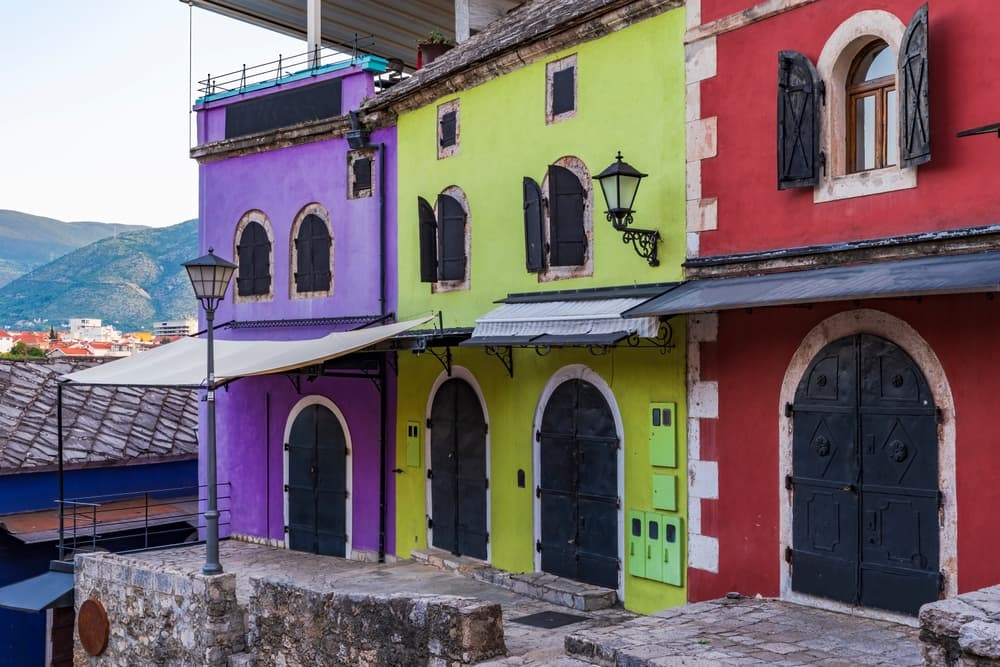
Mostar: a stone-built river city with two banks and one Old Bridge
A small Herzegovina city with a teaching hospital, two trains a day to Sarajevo, and buses to Split and Dubrovnik.
- 105,448
- Population (2003)
- $1,000/mo
- Monthly budget · single
- 61°F / 16°C
- Avg temperature
Plan on about $1,000 a month for one person in Mostar, and most single budgets fall between $800 and $1,300. A couple spends about $1,600, and a family of four about $2,400. A one-bedroom near the center rents for around $400, or about $300 farther out. All figures are 2026, in U.S. dollars, and our confidence in Mostar's estimates is low, so treat them as a starting point and price a few listings yourself.
Mostar suits retirees and remote workers who want a small city with a teaching hospital in town, winters where January lows average about 37°F, and quiet months once the tour buses thin out. The Old Bridge and its stone streets are the postcard; daily life happens in the residential neighborhoods on both banks of the Neretva.
It's a harder fit if heat wears you down: July and August highs average in the low 90s °F, and day-trippers pack the old town in season. Bosnia also has no retirement or remote-work visa, so long stays begin with the 90-day visa-free window and a temporary residence permit.

Reviewed and updated October 15, 2026 · 5 min read
At a glance
$1,000
Monthly budget · single person
$400/mo 1-bed rent, center
66/100
Safety index
$25
Internet / month
61°Fannual average
Jan 43° · Aug 80°
Climate
105,448
Population (2003)
Expatsi estimates, updated Oct 2026, based on rental listings, government statistics, and local reporting. Coverage here is thin, so treat these as a rough guide.
Cost of living
What it costs to live in Mostar
Single person
$800–$1,300/mo
about 70% below Austin, TX
Couple
$1,200–$2,100/mo
about 65% below Austin, TX
Family of four
$1,900–$2,900/mo
about 70% below Austin, TX
Compared with Austin, TX (Expatsi estimate, 2026).
- $6 −70%
- Inexpensive meal
- $300–$500/mo −79%
- 1-bed rent, center
- $250–$400/mo −78%
- 1-bed rent, outside
- $25/mo −62%
- Internet
- $139/sq ft −79%
- Buy price, center
Expatsi estimates, updated Oct 2026, based on rental listings, government statistics, and local reporting. Coverage here is thin, so treat these as a rough guide.
Daily life
How Mostar lives
- B grade, 51st percentile among the cities we track
- Dining & caféstypical
- B grade, 46th percentile among the cities we track
- Arts & culturetypical
- B grade, 41st percentile among the cities we track
- Parks & outdoorstypical
- B grade, 50th percentile among the cities we track
- Schools & educationtypical
- B grade, 51st percentile among the cities we track
- Healthcare accesstypical
- B grade, 42nd percentile among the cities we track
- Bike infrastructuretypical
- B- grade, 34th percentile among the cities we track
- Public transittypical
- C grade, challenging physical accessibility
- Accessibilitychallenging
Graded on OpenStreetMap amenity density relative to the 369 cities we track. Accessibility is the exception: it's graded against a fixed standard (terrain steepness and sidewalk surfaces), not a curve.
Climate
Weather through the year
Annual average 61°F (16°C) · 57 in of rain a year · Source: Meteostat station normals (14648, 1991-2020)
On the ground
Scenes from Mostar
Getting around
Transport in Mostar
If you live near the center, most errands are doable on foot. The stone streets around the Old Bridge are uneven, so good shoes matter more than a transit pass. For longer trips across town, use an officially marked taxi. The State Department says ride-share apps aren't available in Bosnia and most taxis take only cash in convertible marks (BAM), so keep small bills on you.
Two trains a day each way link Mostar and Sarajevo, a ride of a little under two hours on air-conditioned Talgo trains with a café car, running through the Neretva gorge. Buy tickets at the station: online sales were switched off as of September 2026. Buses fill the gaps. The East bus station, beside the train station, serves Sarajevo (about 2 to 2.5 hours) and inland Bosnia. The West station handles routes into Croatia and Montenegro, with Dubrovnik about 3 to 4 hours away and Split 3 to 4.5. Book summer buses ahead and bring your passport for border checks.
Mostar's small airport mostly handles pilgrim charters to nearby Medjugorje plus a few routes, several of them seasonal. For connections home, expect to use Sarajevo, Split, or Dubrovnik, and note that winter fog often delays or cancels Sarajevo flights.
A car helps for the coast and the mountains. You need your U.S. license plus an International Driving Permit obtained before you leave the U.S., snow tires from November through April, and the State Department advises against driving at night outside major cities. Off the main roads, stay on hard-surfaced roads and out of abandoned buildings, since landmines remain a risk.
- 8.3/sq mi
- Transit stops
- 2.8/sq mi
- Bike infrastructure
- 4.9/sq mi
- Wheelchair-accessible places
Mapped features per square mile from OpenStreetMap.
Keep exploring
Places like Mostar
Community
Community & practical notes
Community
Since the 1990s war, Mostar has been split largely by community: Bosniaks mostly on the east side, Croats mostly on the west. Residents cross between the two every day, and as a foreigner you can live on either side. The split shows up in schools, though. Reporting from 2022 found that Gimnazija Mostar, described as the city's one high school that isn't purely sectarian, still teaches separate Bosnian and Croatian curricula in every subject except IT and physical education. Families with kids should look closely before committing.
Register your address within 48 hours of arriving, with the local police or the Service for Foreigners' Affairs. If you rent privately, you and your landlord go in person. The State Department warns that skipping it can bring large fines, deportation, or being stopped at departure.
Healthcare
The main hospital is University Clinical Hospital Mostar, in the Bijeli Brijeg neighborhood, which has trained doctors with the University of Mostar's medical faculty since 1997. Expect to pay in cash in BAM, often before treatment, since cards aren't always accepted. The State Department strongly recommends supplemental insurance that covers medical evacuation, and it notes that mental health services are limited even in larger cities. You can bring only a 7-day supply of any medication that's a controlled substance in the U.S., and you shouldn't have medicine shipped to you. Tap water is generally safe to drink.
Internet and remote work
Home internet runs about $25 a month. Code Hub Mostar, in the center, and Lux Business Bar are listed as coworking spaces, but their listings are old, so confirm they're open before you plan your workweek around them. Bosnia's residence rules have no category for remote workers.
LGBTQ expats
Same-sex relationships are legal, but the State Department notes that violence and harassment against gay and lesbian people and organizations have occurred in Bosnia. We found no Mostar-specific reporting either way. Talk with LGBTQ groups in Bosnia and spend time here before you sign a lease.
Black Americans
We couldn't find a published account, including on the State Department's Bosnia page, of daily life for Black Americans in Mostar. Ask in Black expat communities that cover the Balkans, and plan a scouting stay first.
Limited mobility
The State Department names Mostar as one of three Bosnian cities with accessible infrastructure; outside them, it's generally unavailable. That's still limited. City buses often lack ramps, newer shopping centers are the most likely to have wheelchair access, and the old town's stone lanes are hard going. Look for a newer building with an elevator on level ground, and test your daily routes before you move.
Retiring here
Mostar fits retirees who want a hospital nearby, mild winters, and a slower pace, and who can handle the summer heat. Bosnia has no retirement visa. Its list of temporary residence grounds has no pension category, but it does include owning real estate in Bosnia and Herzegovina. Permits run up to a year at a time, and five uninterrupted years on temporary residence can lead to permanent residence. Our Bosnia and Herzegovina guide and temporary residence page walk through the process, and our retirement visa page compares countries that do have a pension route.
Housing
Renting and buying
- 1-bed rent (center)
- $300–$500/mo
- 1-bed rent (outside center)
- $250–$400/mo
- Buy price (center)
- $139/sq ft
- Buy price (outside center)
- $102/sq ft
Expatsi estimates, based on rental listings, government statistics, and local reporting. Coverage here is thin, so treat these as a rough guide.
Good to know
Frequently asked questions
How much does it cost to live in Mostar, Bosnia?
A single person in Mostar spends about $1,000 a month in 2026, with most budgets between $800 and $1,300 in U.S. dollars. A couple spends about $1,600 and a family of four about $2,400. Rent for a one-bedroom near the center is around $400 a month. These are low-confidence estimates, so check current listings before you budget.
Can Americans retire in Mostar?
Yes, but Bosnia has no retirement visa. Americans can stay up to 90 days in six months without a visa. For longer, you need a temporary residence permit on one of the listed grounds, such as owning real estate in Bosnia and Herzegovina. Permits last up to a year, and five uninterrupted years can lead to permanent residence.
How do you get from Mostar to Sarajevo?
Two trains a day each way run between Mostar and Sarajevo, taking a little under two hours along the Neretva gorge. Buses from Mostar's East station take about 2 to 2.5 hours. Buy train tickets at the station, since online sales were switched off as of September 2026.
What is the weather like in Mostar?
Mostar has hot, dry summers and mild, wet winters. July and August highs average in the low 90s °F, and January lows average about 37°F. November and December are the wettest months, and the city gets about 57 inches of precipitation a year.
What is healthcare like in Mostar?
Mostar's main hospital is University Clinical Hospital Mostar, a teaching hospital in the Bijeli Brijeg neighborhood. Doctors and hospitals usually want cash in convertible marks, often up front. The State Department strongly recommends insurance that covers medical evacuation, and mental health services are limited.
Do you need a car in Mostar?
Not for daily life if you live near the center, where errands are walkable and marked taxis are available. Ride-share apps don't operate in Bosnia, and most taxis take cash only. A car helps for trips to the coast or mountains; you'll need an International Driving Permit from the U.S. and snow tires from November through April.
Is Mostar safe for Americans?
Mostar scores 66 out of 100 on our safety index. The State Department rates Bosnia and Herzegovina Level 2, exercise increased caution, as of August 2026. Day to day, the practical risks are overcharging taxis (use marked ones only) and, outside town, landmines: stay on hard-surfaced roads and out of abandoned buildings.
See how Mostar fits your life
Take the free Expatsi Test and compare Bosnia and Herzegovina to over 100 countries on what actually matters: cost, healthcare, climate, and safety. About five minutes.
Why not you?