Country guide · Brazil
Moving to Brazil: the 2026 guide for Americans
A continent-sized country where a couple can live on about $1,550 a month, with a US$2,000 retirement visa, a remote-work visa and a real estate route to residency. Here's what the move takes, and where it gets hard.
Updated September 2026 with the new visitor e-visa, the 2026 income tax changes and every residence route that works for Americans.

Reviewed and updated October 22, 2026 · 13 min read

01 · The case for Brazil
Big, warm and affordable, with a paperwork habit

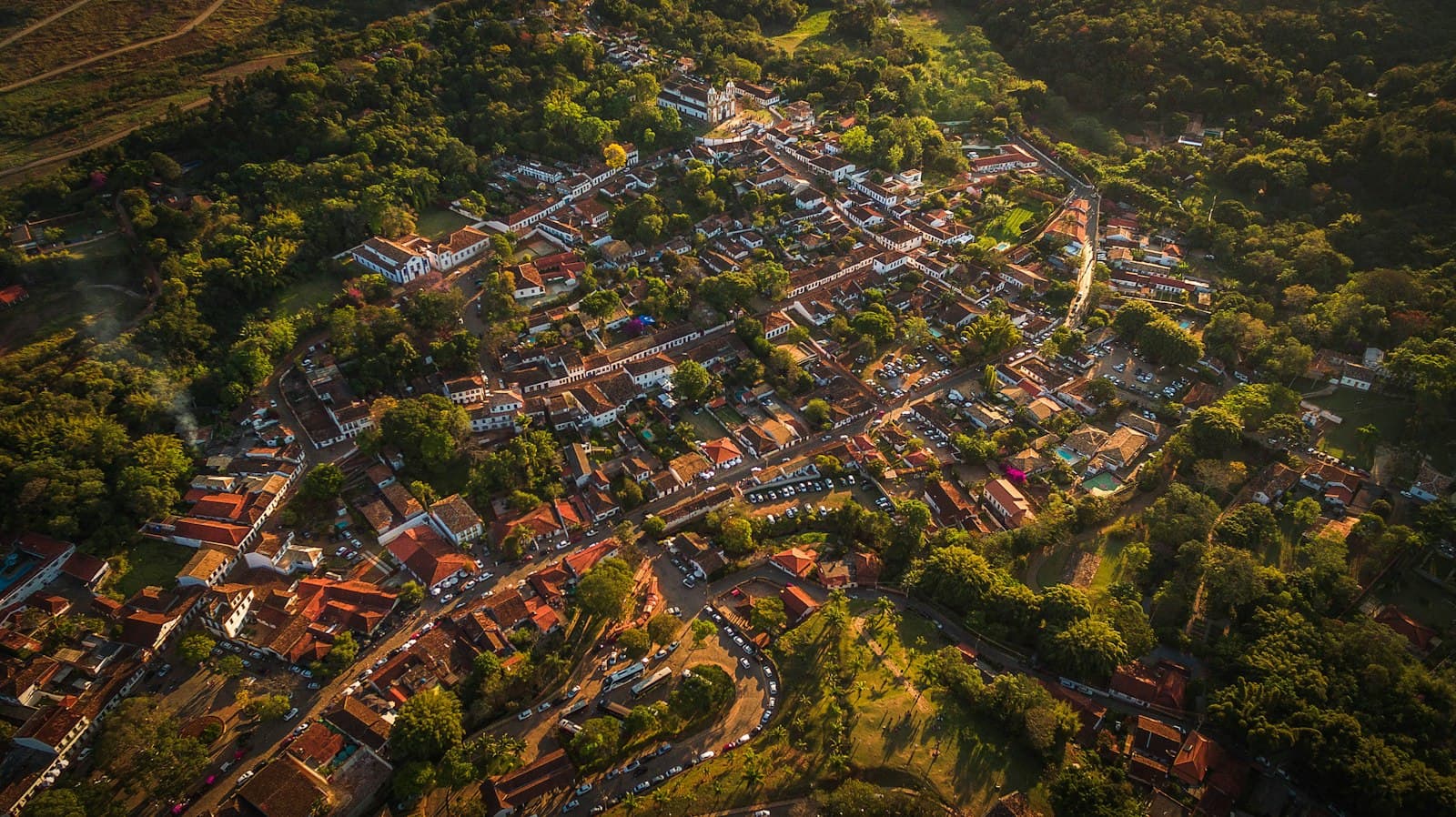
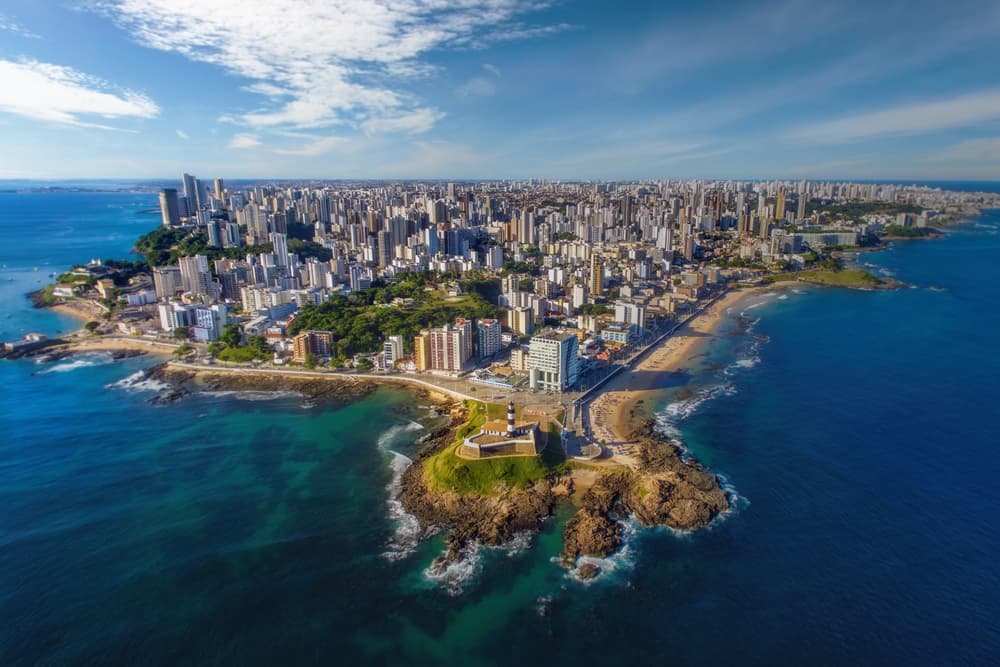
Brazil is so big that it doesn't feel like one place. Big business cities, cooler southern towns and a long Northeast coast full of colonial centers, like Salvador in this photo, all sit under one passport stamp. Choosing Brazil is only the first decision. Choosing your region is the one that shapes daily life.
The money is what gets many Americans to look. A U.S. pension, remote salary or investment income goes a long way here, and the cost chapter below has the numbers.
The visa menu is friendlier than people expect. There's a dedicated retirement visa, a remote-work visa, and residency for buying property or investing in a company, each covered in detail below. And if you stay, Brazil lets you keep your U.S. passport when you naturalize.
Healthcare is another quiet selling point. The public system, SUS, is free at the point of care for everyone on Brazilian soil, foreigners included. Many expats pair it with a private plan for speed.
Here's the catch
Three things deserve a hard look before you commit.
Portuguese isn't optional. Brazil ranks 75th on the EF English Proficiency Index. Outside tourist areas and international offices, you'll run your life in Portuguese: the landlord, the clinic, the Federal Police appointment. Plan on real lessons before you land.
Safety takes daily attention. As of August 2026, the U.S. State Department rates Brazil Level 2, Exercise Increased Caution, citing crime and kidnapping; it puts favelas and the land border zones at Level 4. Living well there comes down to choosing neighborhoods carefully and adopting local habits, and that's a real cost of admission.
The bureaucracy is famous for a reason. You'll need a CPF tax number for almost everything, sworn translations of your documents, a Federal Police registration within weeks of arriving, and patience. Local wages are also low, with the 2026 minimum wage at R$1,621 a month (about $310), so Brazil works best when your income comes from outside the country.
If those don't scare you off, the rest of this guide covers costs, the visa that matches your income, healthcare, taxes, and the people who can help.
- Cost of living (single)
- $900/mo
- Safety index
- 40/100
- English proficiency
- 35/100
- Internet speed
- 90 Mbps
- Currency
- Brazilian Real (BRL)
- Capital
- Brasília
02 · The numbers
Monthly costs in Brazil, in dollars
$1,550
Monthly budget, couple
all in, comfortable
$900
Monthly budget, single
all in, comfortable
$2,600
Monthly budget, family
housing included
$350
Rent, 1-bed city center
$250 outside center
$6
Inexpensive meal out
a lunch plate
$42
Monthly transit pass
big-city buses and metro
$19
Home internet, monthly
about 90 Mbps
R$1,621
Minimum wage, monthly
about $310 (2026)
Where the money goes

The cards above are national averages from our 2026 data, though Brazil is big enough that averages hide a lot. Rent is the swing factor: the most sought-after neighborhoods in the largest cities cost well above the average, while smaller cities and interior towns come in under it. Budget from the neighborhood you actually want, not the national figure.
The minimum wage card matters too. At R$1,621 a month in 2026, local pay is low, which is exactly why services, restaurants and help at home are affordable on a U.S. income, and why a job in Brazil rarely covers an American lifestyle. Street markets and lunch counters are where your dollars stretch furthest.
The rent you see isn't the rent you pay
Apartment listings show the base rent, but most buildings add a monthly condo fee (condomínio) and the city property tax (IPTU). Renters are often surprised: in big cities those two can add 30% to 50% to the headline number, so ask for the total before you fall in love with a view.
Landlords also want a guarantee. Brazilians usually name a fiador, a local homeowner who co-signs, which newcomers don't have. Your options are a caução deposit of up to three months' rent, or seguro-fiança, a rent-guarantee insurance policy that costs roughly 8% to 15% of a year's rent. Standard leases run 30 months, which is why many people start with a furnished short-term rental while they learn the neighborhoods.
Imported goods are the other surprise. Import taxes push up prices on electronics and household goods, so think hard about what you ship versus what you buy there.
A U.S. pension and a Brazil budget, side by side
Brazil's retirement visa asks for a pension of at least US$2,000 a month that you can transfer to Brazil. Our 2026 data puts a comfortable budget for a couple at about $1,550. In other words, a retiree who qualifies for the visa already has more than enough to live on, with room left for travel, a private health plan, or savings. That's rare, and it's why the retirement route comes first below.
03 · Your way in
The Brazil visa that matches your income

Start with the basics: since April 10, 2025, Americans need a visa just to visit. The e-visa costs US$80.90, lasts 10 years with multiple entries, and allows stays of up to 90 days at a time, with a ceiling of 180 days in any 12 months. You can scout on it first. To live in Brazil, you need a residence route; the right one depends on where your money comes from.
Retiring on a pension: VITEM XIV retirement
This is the cleanest route for American retirees. Under Resolution 40/2019 you show a retirement or pension income of at least US$2,000 a month, plus a bank letter proving you can transfer it to Brazil each month. Social Security and private pensions both count. The current rule has no extra amount per dependent (the US$1,000-per-dependent figure you'll see online comes from a revoked rule). You can apply at a Brazilian consulate, or apply for residence from inside Brazil. Residence starts at up to two years; at renewal, you ask for indefinite residence. Ask for it: the switch isn't automatic.
Working remotely: VITEM XIV digital nomad
If you earn from a company or clients outside Brazil, Resolution 45/2021 lets you live there on US$1,500 a month in foreign income, or US$18,000 in the bank. It's granted for up to one year and renews once for another year. You can apply at a consulate, which requires health insurance valid in Brazil, or online from inside Brazil through the Ministry of Justice's MigranteWeb system. Two limits matter: working for a Brazil-registered company disqualifies you, and renewals don't lead to permanent residence. It's a two-year trial, and staying longer means switching to another route.
Buying property: the real estate investor route
Resolution 36 grants residence for buying urban real estate worth at least R$1,000,000 (about $193,000), or R$700,000 (about $135,000) in the North and Northeast. Several properties can add up to the total, rural land doesn't count, and your spouse and children can be included. Residence runs four years and becomes indefinite if you keep the property. Leave Brazil for more than two years, though, and it lapses.
Investing in a business
Putting R$500,000 (about $96,000) into a Brazilian company, backed by a three-year business plan, qualifies you under Resolution 13/2017. Innovation or research projects can qualify at R$150,000 (about $29,000). This suits founders more than passive investors.
Work, family and study
A Brazilian employer can sponsor you by filing a work permit request with the Ministry of Labor first, but local salaries are low, so this tends to fit people transferred by multinationals. Married to a Brazilian or in a stable union with one? The family reunion visa covers you, and naturalization can come after one year. Students enroll first, then apply for a student visa.
Staying legal while you sort it out
Scouting on the e-visa is fine, but watch the calendar. Visitors max out at 180 days in any 12 months, and overstays are fined for every extra day, up to roughly R$10,238 (about $1,970), collected by the Federal Police when you leave. Unpaid fines follow your passport and can complicate your next visa. If you're heading for residence, file before your visitor time runs out.
Think ahead about citizenship, too. For naturalization, the four-year clock generally starts when you receive indefinite residence, not on your first day with a temporary visa. So on any route, ask for indefinite residence as soon as you're eligible. Documents from the U.S. usually need an apostille and a sworn Portuguese translation, so order them early.
Whichever you pick, register with the Federal Police within 90 days of arriving on a residence visa to get your CRNM card. If you applied from inside Brazil, you get 30 days from approval.
VITEM XIV
A one-year trial, renewable once
Live in Brazil on U.S. income without a Brazilian employer. Apply at a consulate or online from inside Brazil.
- Valid passport
- Proof of remote work for foreign company
- Monthly income of at least $1,500
Investment Visa
Residency through real estate or a company
Urban property from R$700,000 in the North and Northeast, or R$500,000 in a Brazilian company with a business plan.
- Valid passport
- Completed application
- Proof of investment (R$500,000+ in a company, R$150,000+ in research, or real estate purchase of R$700,000–1,000,000 depending on region)
Work/Technical Assistance or Technology Transfer Visa
Employer-sponsored residence
Your Brazilian employer files a work permit request with the Ministry of Labor before you apply for the visa.
- Valid passport
- Completed application
- Employment contract or invitation letter
VITEM IV
For degrees, exchanges and language courses
Enroll with a Brazilian school first, then apply with the acceptance letter, proof of funds and insurance.
- Valid passport
- Acceptance letter from Brazilian educational institution
- Proof of sufficient funds
04 · Daily life
Healthcare, taxes, the CPF and staying safe
The practical side of living there, with the 2026 numbers.
Healthcare
Brazil's public system, SUS, gives free care to every person in the country, and foreigners have the same rights as Brazilians. To register, bring your CPF, passport or CRNM, and proof of address to a local health unit. The trade-off is time: specialist appointments can take anywhere from two months to more than a year. That's why many expats also carry a private plan, which runs about R$200 to R$1,500 a month (about $40 to $290) depending on age and coverage. Many keep SUS as the backup for serious, expensive care. Our Brazil healthcare report goes deeper, and healthcare coach Hunter Schultz, below, can help you build a plan before you go.
Taxes
Here's the rule that surprises remote workers: on a temporary visa you become a Brazilian tax resident on your 184th day in the country within any 12 months, whether or not the days are consecutive. With a permanent visa, you're a tax resident from the day you land. After that, Brazil taxes your worldwide income, and the U.S. still taxes you as a citizen. There's no U.S.-Brazil income tax treaty, so relief comes from foreign tax credits on both sides. Retirees should know that Brazil's over-65 exemption doesn't cover foreign pensions. The good news is that from 2026, Brazil exempts monthly income up to R$5,000 (about $960), with a partial break up to R$7,350. You'll still file a U.S. return every year, plus an FBAR once your foreign accounts top $10,000 combined. MyExpatTaxes handles the U.S. side, and Flamingo Compliance counts your days so the 184-day line doesn't sneak up on you.
For future retirement benefits, a U.S.-Brazil Social Security agreement has been in force since October 1, 2018, so work credits from both countries can be combined.
Banking and the CPF
The CPF is Brazil's taxpayer number, and you need it for a bank account, a phone plan, a lease, utilities, private insurance and Pix, the instant payment system Brazilians use for everything from rent to coconut water. It's free, and you can request it at a Brazilian consulate before you travel. Moneycorp can move your dollars into reais at better rates than a bank.
Your first month, in order
The paperwork goes smoothest in this order. Get your CPF first, ideally at a consulate before you fly. Book your Federal Police registration for the CRNM card inside the 90-day window. With a CPF and an address, open a bank account and set up Pix, then register at your local SUS health unit. Sign a long lease only after you've lived in the neighborhood for a while. Each step needs the one before it, so skipping ahead usually means repeating a trip.
Safety
Level 2 is the second of four levels, and the details matter. The State Department warns about robbery, carjacking and assaults involving drugged drinks, especially in Rio. Pick your neighborhood with local advice, keep your phone out of sight on the street, and use ride-hailing at night.
Getting around and bringing pets
You can drive on your U.S. license for up to 180 days after entering. After that you'll need a Brazilian license, which requires medical and psychological exams. Dogs and cats need a USDA-endorsed health certificate issued within 10 days of arrival, and a first rabies shot at least 30 days before entry, but there's no quarantine when the papers are complete.
Rules checked in September 2026
Brazil brought back visitor visas for Americans in April 2025 and rewrote its income tax brackets for 2026, but consulates still differ on paperwork. Everything here reflects the rules as of September 2026. Visa fees and processing times vary by consulate, so confirm the current list with your consulate or a licensed professional before you file anything.
05 · Picking your region
Choosing where in Brazil to land
Before you look at a single apartment, pick a climate and a pace. Brazil runs from tropical coast to highland towns with cooler nights, and the region you choose decides your weather, your rent and, for property investors, whether the lower R$700,000 threshold applies (it covers the North and Northeast).
It pays to rent for a few months before committing, since standard leases run 30 months. Visit in the rainy season too, and check how far you'd be from a private hospital. The city guides below go neighborhood by neighborhood as we publish them.
Where to live
Brazilian cities we cover

Rio de Janeiro
Beach city with edges
The beach lifestyle is real, with morning runs along Ipanema and Leblon and the mountains in every view. Zona Sul is where most Americans land. Robbery is the daily worry, so you learn to carry little and keep the phone out of sight.

São Paulo
Brazil's business capital
A huge city for people who want work, restaurants and international flights over beaches. Pinheiros and Jardins are the usual landing barrios. Traffic is heavy, it's gray more than the postcards suggest, and robbery is something you plan around.
Salvador
Afro-Brazilian Bahia
For people drawn to Bahian food, drumming and a deeply Afro-Brazilian culture, centered on the colonial Pelourinho up on the hill. It's warm all year and the bay beach at Porto da Barra is close. The catch is crime: Salvador had the highest homicide rate of any state capital in the 2026 Atlas da Violência.

Brasília
Planned capital
A planned city of wide avenues, embassies, modernist buildings and a government-job rhythm. It's calmer and greener than Rio or São Paulo. You almost need a car, and few people come here for the nightlife.
06 · Your move team
People who make a Brazil move easier
Brazil rewards people who show up with help. A local who knows which documents need a sworn translation, which neighborhood suits you, and how the Federal Police appointment really works will save you weeks. These are the Expatsi-vetted people we'd call first, grouped by what they handle.

Rodrigo Martinez
Brazil Local Guide
A tech entrepreneur who spent 24 years in Brazil building and selling businesses and investing in real estate. He advises on where to live, how daily life works, and buying property, with a focus on São Paulo and Rio.
Learn more
Hunter Schultz
Healthcare Coach
A healthcare coach with more than 20 years of expat living and a background in air medical transport. His one-hour consultation maps your health needs to the care you'll find abroad.
Learn more
ExpatInsure
Global Health Insurance
Expatsi's international health insurance partner, led by Andy Seale and Stephanie Edwards. They match you with a private plan, including the coverage a consulate asks for with a nomad visa.
Learn more
MyExpatTaxes
U.S. Expat Tax Service
Tax software and preparers built for Americans abroad, filing U.S. returns online since 2018. Useful the first year Brazil and the IRS both expect a return.
Learn more
Flamingo Compliance | Tax Residency and Visa Tracker Platform
Tax Residency and Visa Tracker Platform
An app that tracks your days in each country and warns you before you cross a tax residency or visa limit, like Brazil's 184-day line. Expatsi users get 15% off their first year.
Learn more
Beacon Global Advisors
Financial Planning
Wealth managers for Americans abroad who keep 401(k)s, IRAs and brokerage accounts working after you move, and keep you compliant in both countries.
Learn more
Moneycorp
Currency Exchange
A currency and payments firm working since 1979, led for U.S. clients by Kelly Cutchin. They convert dollars at better-than-bank rates and can lock a rate for up to two years.
Learn more
Bodzin Pet Travel Solutions
Pet Relocation
A pet travel concierge founded by Aliza Bodzin in Pennsylvania. They plan the vet visits, USDA paperwork and flights so your dog or cat arrives without delays.
Learn more
Culturosity Co.
Cultural Skills Coach
Intercultural coaches Jennifer and Janka help you adjust to a new culture through one-on-one sessions and workshops, useful when daily life suddenly runs in Portuguese.
Learn more07 · Quick answers
Moving to Brazil: common questions
Do Americans need a visa to visit Brazil?
Yes. Since April 10, 2025, U.S. citizens need a visa to enter Brazil, even as tourists. The e-visa costs US$80.90, is valid for 10 years with multiple entries, and allows stays of up to 90 days per visit and 180 days in any 12-month period. Apply at least two to three weeks before your trip.
How much money do I need to retire in Brazil?
Brazil's retirement visa requires a retirement or pension income of at least US$2,000 a month that you can transfer to Brazil, proven with a bank letter. Social Security counts. Expatsi's 2026 data puts a comfortable monthly budget for a couple at about $1,550, so a pension that meets the visa rule usually covers living costs.
Can Americans use public healthcare in Brazil?
Yes. Brazil's public health system, SUS, provides free care to everyone in the country, and foreigners have the same rights as Brazilians. You register at a local health unit with your CPF, passport or residence card, and proof of address. Because specialist waits can run months, many expats also buy a private plan.
Do I need a CPF to live in Brazil?
Yes, in practice. The CPF is Brazil's taxpayer number and you need it to open a bank account, sign a lease, get a phone plan, buy private insurance and use Pix payments. It's free, and you can request one at a Brazilian consulate before you move.
Can I get residency in Brazil by buying property?
Yes. Buying urban real estate worth at least R$1,000,000, or R$700,000 in the North and Northeast regions, qualifies you for residence under Resolution 36. Several properties can be combined, rural land doesn't count, and family can be included. Residence becomes indefinite if you keep the property, but it lapses if you leave Brazil for more than two years.
Does Brazil have a digital nomad visa?
Yes. Brazil's digital nomad visa, created by Resolution 45/2021, requires US$1,500 a month in income from outside Brazil or US$18,000 in savings. It lasts up to one year and can be renewed once. You can't work for a Brazilian company on it, and renewals don't lead to permanent residence.
Can I become a Brazilian citizen and keep my U.S. passport?
Yes. Brazil doesn't require you to give up your U.S. citizenship when you naturalize. Ordinary naturalization takes about four years of residence, counted from when you receive indefinite residence, plus Portuguese proof such as the CELPE-Bras exam. Spouses of Brazilians and parents of Brazilian children may qualify after one year.
Will I pay taxes in Brazil and the U.S.?
Often both file, but you shouldn't pay twice on the same income. On a temporary visa you become a Brazilian tax resident after 184 days in Brazil within 12 months, and then Brazil taxes worldwide income. The U.S. taxes citizens everywhere. There's no U.S.-Brazil income tax treaty, so foreign tax credits do the work of preventing double tax.
Sources
- New visitor visa requirements for U.S. citizens traveling to Brazil · U.S. Embassy and Consulates in Brazil (checked September 2026)
- Travel Advisory: Brazil, August 2026 · U.S. Embassy and Consulates in Brazil (checked September 2026)
- Residente e não residente (tax residency rules) · Receita Federal (checked September 2026)
- Prazo para registro e CRNM após autorização de residência · Polícia Federal (checked September 2026)
- Decreto nº 12.797/2025 (2026 minimum wage) · Presidência da República (checked September 2026)
- Retiring in Brazil: the visa text, the pension and the tax (Resolution 40/2019) · Carvalho Barros Advogados (checked September 2026)
- Brazil digital nomad visa: requirements and tax rules · BrasilTax (checked September 2026)
- Real estate investment visa: Resolution 36 · Oliveira Lawyers (checked September 2026)
- Ordinary naturalization in Brazil · Oliveira Lawyers (checked September 2026)
- Tabela do Imposto de Renda 2026 · Contabilizei (checked September 2026)
- SUS healthcare guide for foreigners in Brazil · ZS Advogados (checked September 2026)
- Agreement on Social Security between the United States and Brazil: entry into force · Federal Register (checked September 2026)
- Cost of living and country data for Brazil · Expatsi (checked September 2026)
Compare Brazil with the rest of your shortlist
The free Expatsi Test weighs Brazil against other countries on the things that decide a move: cost, healthcare, climate, safety and the visa you'd qualify for.
Why not you?