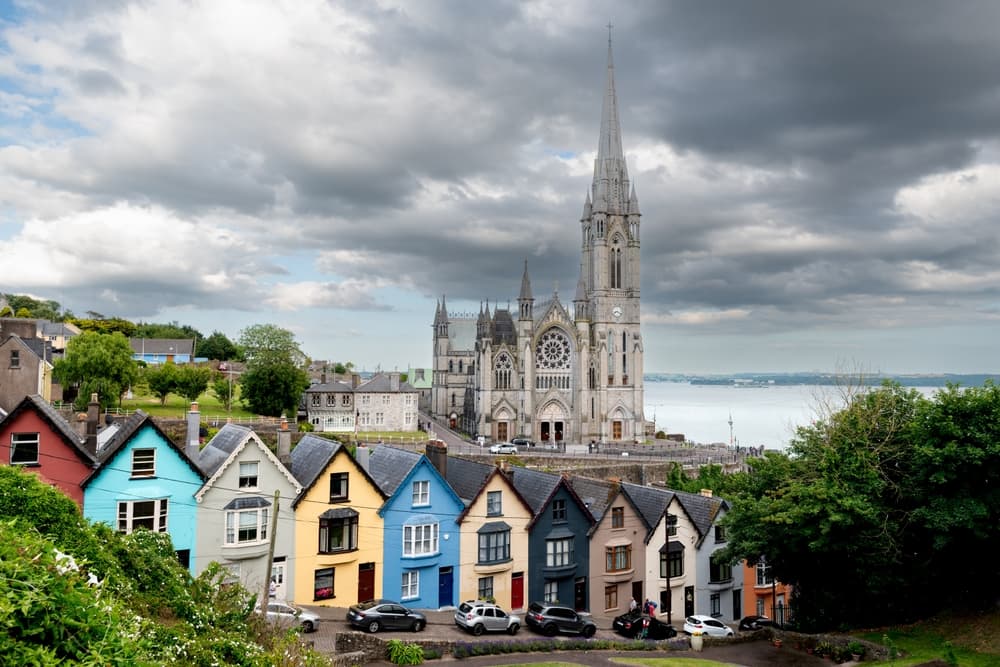
Cork: English-speaking Europe at a livable scale
A walkable university city on the River Lee with a serious food scene, a major pharma and tech job base, and none of Dublin's scale or crush.
- 222,333
- Population (2022)
- $3,500/mo
- Monthly budget · single
- 50°F / 10°C
- Avg temperature
Plan on about $3,500 a month in U.S. dollars for one person in Cork, around $5,000 for a couple, and roughly $7,300 for a family of four. Rent is the biggest line item: a one-bedroom averages about $2,150 in the city center and about $1,800 outside it. Ireland's housing shortage is national, and Cork has not escaped it. Budget on the high side and expect competition for good apartments.
Cork suits Americans who want an English-speaking European base at a livable scale. The city of about 222,000 wraps around an island in the River Lee, with the English Market, University College Cork, and a dense cluster of pubs, cafes, and small venues all within a walk of each other. The wider region hosts big pharmaceutical and tech employers (Pfizer, Apple's European headquarters, and a long list of medical device firms), so it draws working transplants as well as retirees.
The honest drawback is the weather combined with the housing market. Cork gets about 49 inches of rain a year spread across a lot of gray days, and finding a rental can take weeks of viewings and rejected applications before something sticks. Budget your money and patience accordingly.
At a glance
$3,500
Monthly budget · single person
$2,150/mo 1-bed rent, center
68/100
Safety index
$55
Internet / month
50°Fannual average
Jan 42° · Jul 59°
Climate
222,333
Population (2022)
Expatsi estimates, updated Aug 2026, based on rental listings, government statistics, and local reporting.
Cost of living
What it costs to live in Cork
Single person
$3,100–$3,900/mo
about 15% above Austin, TX
Couple
$4,400–$5,600/mo
about 10% above Austin, TX
Family of four
$6,000–$8,600/mo
about 10% below Austin, TX
Compared with Austin, TX (Expatsi estimate, 2026).
- $21 +5%
- Inexpensive meal
- $1,900–$2,400/mo +10%
- 1-bed rent, center
- $1,600–$2,000/mo +33%
- 1-bed rent, outside
- $55/mo −15%
- Internet
- $75/mo +82%
- Transit pass
- $451/sq ft −31%
- Buy price, center
Expatsi estimates, updated Aug 2026, based on rental listings, government statistics, and local reporting.
Daily life
How Cork lives
- B grade, 52nd percentile among the cities we track
- Dining & caféstypical
- B grade, 49th percentile among the cities we track
- Arts & culturetypical
- B grade, 51st percentile among the cities we track
- Parks & outdoorstypical
- B grade, 55th percentile among the cities we track
- Schools & educationtypical
- B+ grade, 58th percentile among the cities we track
- Healthcare accessstrong
- A- grade, 73rd percentile among the cities we track
- Bike infrastructurestrong
- B+ grade, 63rd percentile among the cities we track
- Public transitstrong
- A grade, good physical accessibility
- Accessibilitygood
Graded on OpenStreetMap amenity density relative to the 298 cities we track. Accessibility is the exception: it's graded against a fixed standard (terrain steepness and sidewalk surfaces), not a curve.
Climate
Weather through the year
Annual average 50°F (10°C) · 49 in of rain a year · Source: Meteostat station normals (03955, 1991-2020)
On the ground
Scenes from Cork
Getting around
Transport in Cork
Cork is compact enough that most daily life happens on foot. The city center sits on a flat island between two channels of the Lee, and errands, restaurants, and nightlife cluster within a 20-minute walk of St Patrick's Street. A monthly transport pass runs about $75.
Buses do the heavy lifting for anything farther out. Bus Éireann runs the city network, with frequent routes connecting the center to suburbs like Ballincollig, Douglas, and Blackpool, and a TFI Leap Card gets you tap-on fares across the system. Service is decent on main corridors, thinner in the evenings and on Sundays, which is a common complaint among locals.
There's also a commuter rail line from Kent Station running east to Midleton and Cobh, useful if you settle in one of the harbor towns. Direct intercity trains to Dublin take about two and a half hours. Cork Airport, just south of the city, has direct flights to the UK and continental Europe, though U.S. routes connect through Dublin or London.
Whether you need a car depends on where you land. In the city proper you can skip one, and parking is scarce enough that many residents do. If you choose a village in West Cork or a rural townland, a car becomes essential. Just remember that Ireland drives on the left.
- 38/sq mi
- Transit stops
- 34/sq mi
- Bike infrastructure
- 109/sq mi
- Wheelchair-accessible places
Mapped features per square mile from OpenStreetMap.
Keep exploring
Places like Cork



Community
Community & practical notes
Community: Cork has a real international population without feeling like an expat hub. University College Cork and the pharma and tech employers bring in workers and students from across Europe, India, and the U.S. Americans blend in easily in an English-speaking city where striking up conversation in a pub is the default social mode. Corkonians are famously proud of their city (locals only half-jokingly call it the real capital); newcomers who lean into that tend to be adopted quickly.
Healthcare: Ireland has a two-tier health system. Legal residents can access public care through the HSE, but public waiting lists are long; most working expats carry private insurance from providers like VHI, Laya, or Irish Life Health. Retirees on the Stamp 0 route are required to hold private coverage. Cork has two major hospitals, Cork University Hospital and the Mercy, and finding a GP taking new patients can take some phoning around, a friction newcomers everywhere in Ireland report.
Limited mobility: Cork works at river level and gets hard above it. The city-center island is flat, footpaths are in decent repair, and most daily errands sit on that flat ground. Cross either channel of the Lee and find the streets climb sharply toward Shandon and St Luke's, steeply enough in places to have steps instead of footpaths. Older buildings often put a step at the door and no elevator upstairs. Transit is the strong part: every Bus Éireann city bus is low-floor with a ramp and wheelchair space that needs no advance booking. Staffed Kent Station arranges boarding help if you contact Irish Rail before you travel. Choose a flat neighborhood and look at Independent Travel Support, a free service in Cork that sends a travel assistant to ride your routes with you the first few times.
Remote work: Home internet runs about $55 a month, and fiber coverage in the city is solid. Cork has a handful of coworking spaces, including Republic of Work on South Mall, and the local hiring base skews pharmaceutical, medical devices, and tech thanks to Apple, Pfizer, and the cluster around Ringaskiddy. Note that Ireland does not currently offer a digital nomad visa, so remote workers need another route to residency.
Retirement: Ireland's retirement route is Stamp 0, which requires proof of roughly €50,000 per person per year in independent income plus access to a lump sum, along with private health insurance. It does not lead to citizenship and must be renewed annually, so it suits well-funded retirees rather than those on Social Security alone. Compare retirement visa options and see our full Ireland guide.
Housing
Renting and buying
- 1-bed rent (center)
- $1,900–$2,400/mo
- 1-bed rent (outside center)
- $1,600–$2,000/mo
- Buy price (center)
- $451/sq ft
- Buy price (outside center)
- $307/sq ft
Expatsi estimates, based on rental listings, government statistics, and local reporting.
Good to know
Frequently asked questions
What is the weather like in Cork?
Mild, damp, and gray more often than not. The annual average temperature is about 50°F (10°C), with cool summers and winters that rarely see hard freezes or snow. The city gets about 49 inches of rain a year, so a good rain jacket matters more than a heavy coat.
Can I retire in Cork?
Yes, but Ireland's Stamp 0 permission sets a high bar: roughly €50,000 per person per year in independent income, a lump sum for contingencies, and private health insurance. It renews annually and does not lead to citizenship. Retirees with Irish ancestry should look at citizenship by descent instead, which removes those requirements entirely.
How does healthcare work for expats in Cork?
Legal residents can use Ireland's public HSE system, but waiting lists push most expats toward private insurance from VHI, Laya, or Irish Life Health, and Stamp 0 retirees must carry private cover. Cork University Hospital is one of Ireland's largest. Expect some effort to find a GP accepting new patients.
Do I need a car in Cork?
Not if you live in or near the city center, which is compact and walkable, with Bus Éireann covering the suburbs and a monthly transport pass around $75. A commuter rail line reaches Midleton and Cobh. If you settle in a rural part of County Cork, a car becomes necessary, and you'll be driving on the left.
Is Cork cheaper than Dublin?
Generally yes, especially on rent, though Cork is not a bargain by European standards. Ireland's housing shortage keeps rents high nationwide, and a Cork city-center one-bedroom still averages about $2,150 a month. Day-to-day costs like dining and transport also tend to run below Dublin levels.
How do Americans move to Cork?
You need a legal basis to stay beyond the 90-day visa-free visit: a work permit through an employer (Cork's pharma and tech firms sponsor regularly), a student visa through UCC, the Stamp 0 independent-means route for retirees, or Irish citizenship by descent if you have an Irish-born parent or grandparent. That last route is common for Americans and worth checking first.
Is Cork safe?
Yes, by American standards. Cork scores 68 on the safety index with a crime index of 32, and violent crime is rare. The usual city advice applies around the center late on weekend nights, but most residents walk everywhere without much thought.
How much does it cost to live in Cork, Ireland?
Budget about $3,500 a month for one person, around $5,000 for a couple, and roughly $7,300 for a family of four, all in U.S. dollars. A one-bedroom apartment averages about $2,150 in the city center and about $1,800 outside it. An inexpensive restaurant meal runs about $21.
See how Cork fits your life
Take the free Expatsi Test and compare Ireland to nearly 200 countries on what actually matters: cost, healthcare, climate, and safety. About five minutes.
Why not you?