Singapore for Americans, updated September 2026
Moving to Singapore: the 2026 guide for Americans
One person spends about $4,350 a month here, and nearly every long-stay pass starts with a Singapore employer. There's no retirement visa and no nomad visa. Here's who gets in, what it costs, and what changes in January 2027.
Checked against Singapore's manpower, immigration and tax authorities in September 2026, with Singapore dollar figures converted at about 1.28 to the U.S. dollar.

Reviewed and updated October 22, 2026 · 13 min read
01 · The case for Singapore
What Singapore does well, and who should skip it

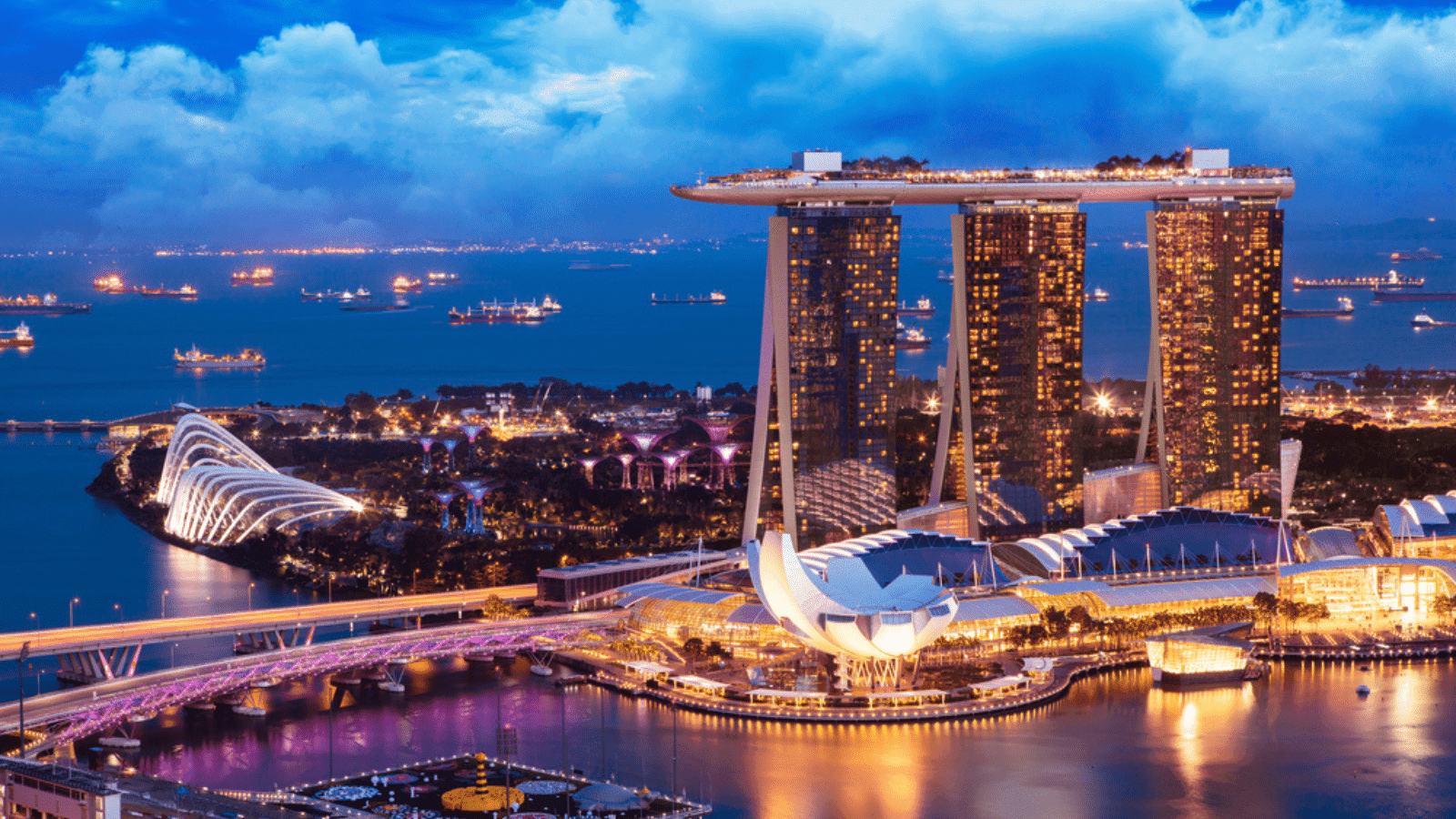
Singapore is one city on one island, home to about 5.9 million people, and it's built for getting things done. English is the language you'll use at work, at the bank and at the doctor's office, public transit scores 95 out of 100 in our data, and the U.S. State Department rates Singapore Level 1, its lowest travel advisory.
It's also a practical base for Asia and a workable one for family back home. Five U.S. airports fly nonstop to Changi: San Francisco, Los Angeles, Seattle, New York JFK and Newark. The Newark flight is scheduled at 19 hours 10 minutes, so this isn't a place you pop home from for a long weekend. The clock is the other distance. Singapore doesn't change its clocks, so it's 12 hours ahead of Eastern in summer and 13 in winter.
Looking around first is easy. Americans can stay up to 90 days without a visa, after filling in the online SG Arrival Card in the three days before landing. What you can't do on that visit is work, and that includes remote work for your U.S. employer: visitors aren't allowed to do any paid employment in Singapore.
The tax system is the other draw. Singapore's income tax is low. It has no capital gains tax or inheritance tax, and it generally doesn't tax foreign income an individual brings into the country. For Americans who keep filing with the IRS wherever they live, that picture has a wrinkle we cover in chapter 04.
Here's the catch
Singapore is hard to move to without a job, and we'd rather say that up front. Four things rule people out.
First, there's no pass built for retirees or remote workers. Almost every way in is a work pass that a Singaporean employer applies for on your behalf, with a salary floor set by age. If your income is a pension, Social Security or U.S. remote salary, there isn't a door marked for you. The workarounds that do exist are in chapter 03.
Second, it's expensive; housing is why. The numbers are just below, and a car is a luxury purchase on top of them.
Third, the laws are strict and enforced. Drug offenses can bring caning or the death penalty, and vapes are illegal to buy, own or use. Singapore doesn't recognize same-sex marriages, so a same-sex spouse can't get a Dependant's Pass even with a U.S. marriage certificate.
Fourth, the passport isn't the prize. Singapore doesn't let adult citizens hold a second nationality, so becoming Singaporean would mean giving up U.S. citizenship. Americans who stay long-term do it on a work pass or permanent residence.
If you have a job offer, or skills a Singapore company will pay well for, none of that is a dealbreaker. It just tells you where to start.
- Cost of living (single)
- $4,350/mo
- Safety index
- 85/100
- English proficiency
- 95/100
- Internet speed
- 250 Mbps
- Currency
- Singapore Dollar (SGD)
- Language
- English
02 · The numbers
A month in Singapore, in U.S. dollars
$4,350
Monthly budget, single
all in, 2026
$5,850
Monthly budget, couple
all in, 2026
$10,350
Monthly budget, family
before school fees
$3,150
Rent, 1-bed city center
$2,300 further out
$9
Inexpensive meal out
a simple sit-down meal
$93
Monthly transit
trains and buses
$36
Home internet, monthly
about 250 Mbps
85/100
Safety index
very low crime
Where the money goes
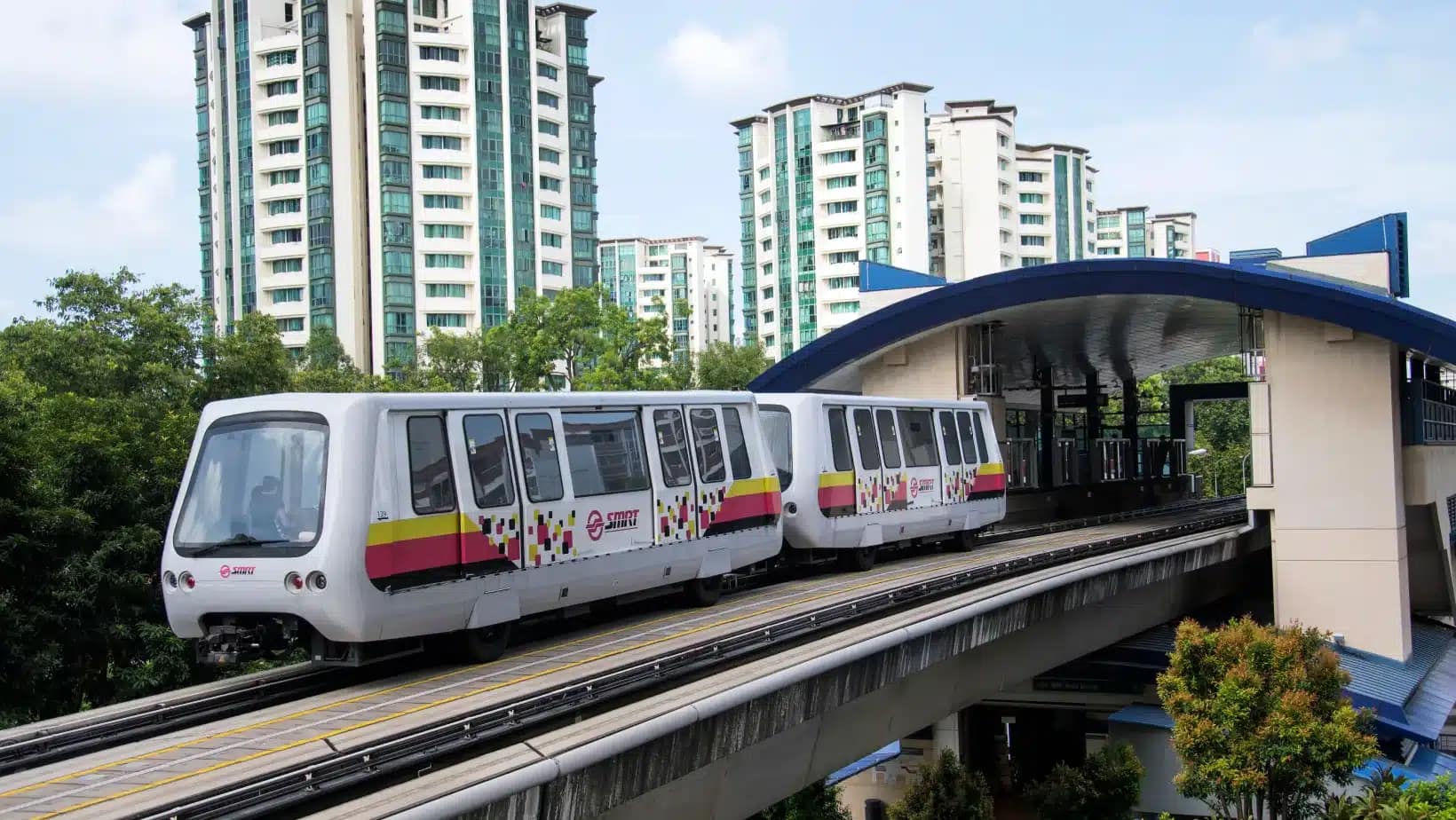
Rent decides whether Singapore works on your pay, and the gap between the center and the rest of the island is about $850 a month on our figures. HDB flats are the government-built apartment blocks you see from every train. You can rent one as a foreigner if you hold an Employment Pass, S Pass, Student Pass, Dependant's Pass or Long-Term Visit Pass with at least six months left on it. Tourists can't.
If you buy, Americans get a breakh that skips most foreigners. Under the U.S.-Singapore free trade agreement, U.S. nationals pay the same stamp duty on a home as Singapore citizens.
Skip the car if you can. Before you even buy the vehicle, you need a Certificate of Entitlement, and at the September 23, 2026 bidding one cost S$131,890 (about $103,200) for a smaller car.
For families, school is the other big line. An American child in a government school pays S$1,035 a month at primary level (about $810) and S$2,190 at secondary level (about $1,715) in 2026. International schools are a separate, larger budget, so get fee schedules directly from the schools you're considering. Also, budget for 9% GST, Singapore's sales tax, on most of what you buy.
The pass minimum isn't a family budget
To bring a spouse and children on Dependant's Passes, the main earner needs a fixed salary of at least S$6,000 a month, about $4,700. Our family budget is about $10,350 a month. The pass rules decide who may bring a family; they don't promise that salary covers one. Plan around the budget, not the floor.
03 · The routes in
Which pass your paycheck qualifies for

Singapore sorts newcomers by pay. The Ministry of Manpower (MOM) runs the work passes, and nearly all of them start with an employer applying for you. Here are the routes that matter for Americans, from the most common to the most exclusive.
Hired by a Singapore company: the Employment Pass
This is the main pass for professionals, managers and executives. Your employer applies, after first advertising the job on the government's MyCareersFuture job board. The salary floor depends on your age: S$5,600 a month (about $4,380) at 23 or younger, rising to S$10,700 (about $8,370) at 45 and up. Financial services jobs need more, from S$6,200 to S$11,800. You also need 40 points on COMPASS, MOM's scorecard for salary, qualifications and how the employer hires locals. Fees are S$105 to apply and S$225 when the pass is issued, and most online applications get an answer or an update within 10 business days. The first pass runs up to two years, and renewals up to three.
Mark the calendar: from January 1, 2027, new applications need S$6,000 at the young end and S$11,500 at 45 and up (S$6,600 to S$12,700 in finance). Renewals move to the new floors for passes expiring from January 1, 2028.
Skilled but mid-level: the S Pass
The S Pass covers skilled roles below Employment Pass pay. It starts at S$3,300 a month (about $2,580) at 23 or younger and rises to S$4,800 at 45 and up, or S$3,800 to S$5,650 in finance. The floor rises again in January 2027, starting at S$3,600. Employers are told to run MOM's self-assessment tool first, and if it says you're not eligible, the application will be refused.
Top earners: the ONE Pass and the PEP
The Overseas Networks & Expertise (ONE) Pass is for people earning at least S$30,000 a month (about $23,500), either from a Singapore job or from a large overseas employer with a market value of at least US$500 million or revenue of at least US$200 million. Standout people in the arts, sports and research can qualify without the salary. It lasts up to five years, lets you work for several companies or run your own at the same time, and your spouse can work on a simple Letter of Consent. It isn't in our Singapore visa list yet, so it has no card below.
The Personalised Employment Pass (PEP) sits a step lower at S$22,500 a month (about $17,600). It lasts up to three years, is issued only once, and isn't tied to one employer, so you can change jobs without reapplying and be out of work for up to six months. Freelancers can't use it.
Founding a company: the EntrePass
The EntrePass is for founders of venture-backed or technology-driven companies, not small businesses. You need at least 30% of a Singapore private limited company plus one proof point: S$100,000 (about $78,000) raised in a single funding round, backing from a recognized incubator or accelerator, a previous exit, registered intellectual property, or a research partnership with a Singapore institution. Coffee shops, hawker stalls and food courts don't qualify.
Studying: the Student Pass
Full-time students accepted into an approved course get a Student Pass for the length of their studies.
Retiring or working remotely: the honest answer
Singapore has no retirement visa and no digital nomad visa. MOM says work passes are for working for Singapore-based companies, and an employer of record that sponsors a pass so you can work remotely for an overseas company is committing an offense. Two real workarounds exist. If your adult child holds an Employment Pass and earns at least S$12,000 a month (about $9,400), they can sponsor you on a Long-Term Visit Pass. If you're wealthy, the Global Investor Programme grants permanent residence directly, starting with a S$10 million (about $7.8 million) business investment and a large company track record.
Bringing family
Employment Pass and S Pass holders earning at least S$6,000 can bring a legally married spouse and unmarried children under 21 on Dependant's Passes. Since May 2021, a spouse on a Dependant's Pass needs their own work pass to take a job. Common-law partners and stepchildren go on a Long-Term Visit Pass instead, which needs S$12,000.
The long game is permanent residence
Employment Pass and S Pass holders can apply for permanent residence. It costs S$100 to apply, and ICA, the immigration authority, says most applications are decided within six months once the documents are in order. PR brings access to MediShield Life and CPF, the national savings fund. It also brings National Service obligations for male applicants and sons. Citizenship is possible after two years as a PR, but since Singapore doesn't allow adult dual citizenship, PR is the realistic finish line for Americans who want to keep a U.S. passport.
Employment Pass
The standard pass for professionals
Your employer applies. The salary floor rises with your age and goes up again for new applications in January 2027.
- Job offer from a Singapore-registered company
- Minimum monthly salary (varies by sector/experience)
- Relevant qualifications
S Pass
For skilled roles below EP pay
Also employer-sponsored, with a lower salary floor that rises with age. Employers check eligibility with MOM's tool before applying.
- Job offer from a Singapore-registered company
- Minimum monthly salary of SGD 3,000
- Relevant qualifications or work experience
Personalized Employment Pass (PEP)
Change jobs without reapplying
Up to three years, issued once, and not tied to one employer. Up to six months between jobs is allowed.
- High-earning foreign professionals (minimum monthly salary SGD 22,500)
- Not tied to a single employer
- Must have held an Employment Pass previously or be an overseas foreign professional
Entrepreneur Pass (EntrePass)
For venture-backed or tech-driven founders
Hold at least 30% of a Singapore company and show one proof point, such as S$100,000 raised in a single round.
- Innovative business idea
- Registered Singapore company
- Business plan
Student Pass
For accepted full-time students
Issued for the length of an approved full-time course at a Singapore school or university.
- Acceptance letter from a recognized Singapore educational institution
- Proof of financial ability
- Medical examination report
04 · Day to day
Healthcare, taxes and the rules that surprise people
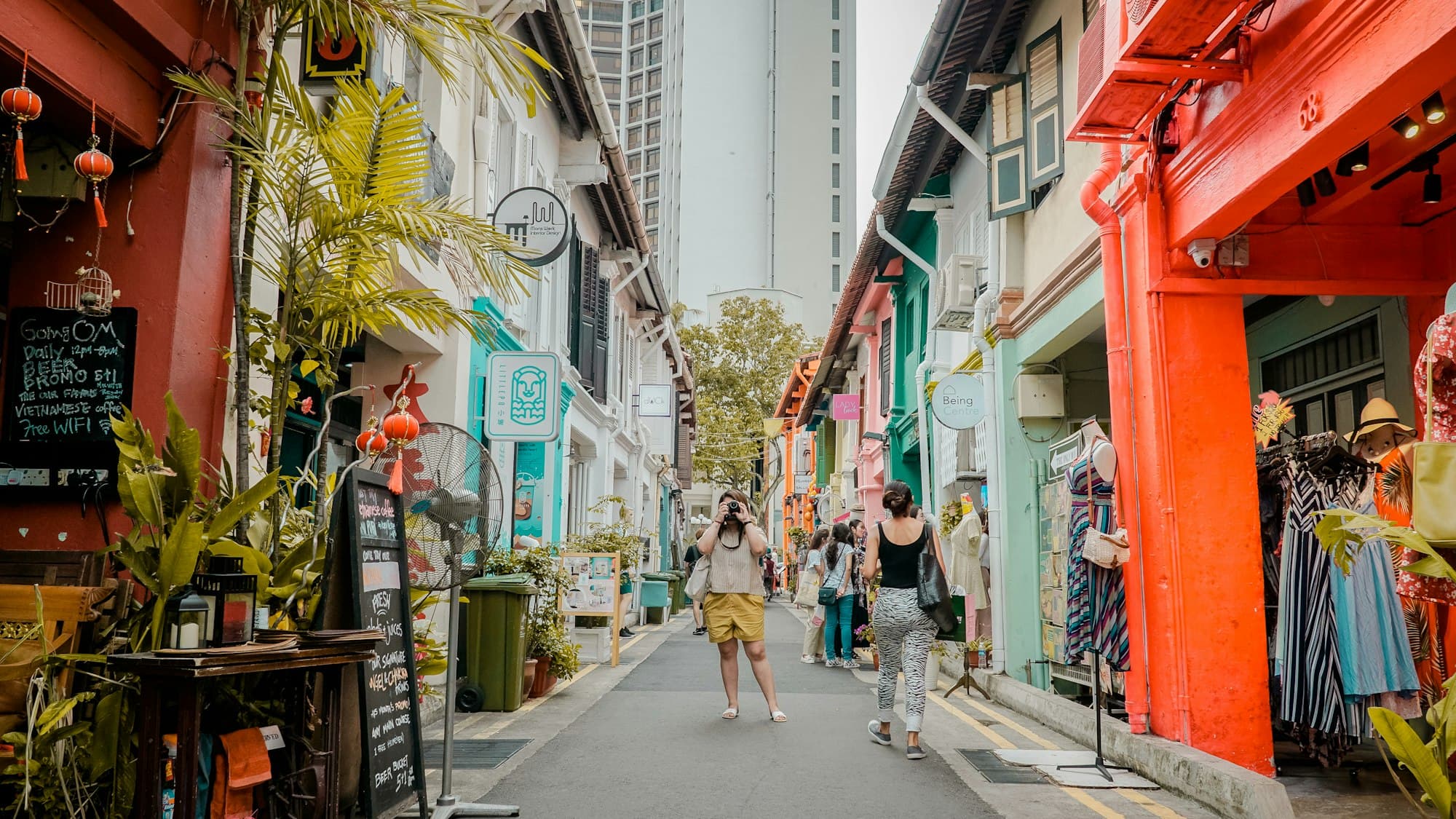
The questions Americans ask after the pass is sorted, with the answers that apply to foreigners rather than to citizens.
Healthcare
Singapore scores 90 out of 100 on our healthcare index, but as a foreigner you pay full price. MediShield Life, the national basic insurance, covers citizens and permanent residents only, and public hospitals give subsidies only to those two groups. A hospital may ask a non-resident inpatient for a letter of guarantee from an employer or insurer before admission. The State Department also warns that most U.S. health insurance won't cover you there. So private international coverage isn't optional. Hunter Schultz, our healthcare coach, helps you plan the care you'll need. ExpatInsure, our health insurance partner, matches you with a plan.
Taxes
You become a Singapore tax resident after 183 days in a calendar year, and a work pass valid for at least a year generally counts too. Residents pay nothing on the first S$20,000 of income (about $15,650), and the top rate is 24% on income above S$1 million. Non-residents pay a flat 15% on salary or the resident rates, whichever is higher. Foreigners don't pay into CPF.
The part Americans miss is the IRS. The U.S. taxes its citizens wherever they live, and Singapore has only a limited treaty with the U.S. rather than a full income tax treaty. For 2026, the foreign earned income exclusion shields up to $132,900 of salary, and foreign tax credits cover some of the rest. Because Singapore's rates are low, those credits go less far than they would in a high-tax country, so higher earners can still owe U.S. tax. MyExpatTaxes files U.S. returns for Americans abroad, and Beacon Global Advisors keeps 401(k)s, IRAs and investments working after you move.
Driving and pets
On a work pass, you have six months from the pass being issued to swap your U.S. license for a Singapore one, which means passing the Basic Theory Test. Pets take planning. The U.S. is a Schedule II country, so dogs and cats need a rabies shot, a rabies blood test taken at least 90 days before travel, an import license (S$50) and at least 10 days of quarantine. That quarantine can be at home if your pet arrives within five days of you and meets the other conditions. Pit Bulls, Akitas, Boerboels and their crosses can't be imported.
Rules to take seriously
Police can require a drug test at short notice. Vapes are illegal, and repeat vaping offenders risk deportation. Carry your passport or pass. None of this touches most people's daily life, but it's worth knowing before you land rather than after.
Checked in September 2026
MOM raises its salary floors regularly, and the next increases start January 1, 2027. Everything here reflects the rules and prices as of September 2026, with the Singapore dollar at about 1.28 to the U.S. dollar. Confirm the current numbers with MOM or a licensed adviser before anyone files.
05 · Finding your spot
Picking a neighborhood in a one-city country
In Singapore, "where to live" means which part of the island, and the first choice is the kind of home. HDB flats put you in a public housing estate alongside Singaporean neighbors; you can rent one on most long-stay passes. Private condos are the other option.
The second choice is your commute. The rail network makes it realistic to live well away from downtown, and on our figures that's worth about $850 a month in rent. Before you sign a lease, ride the route to work at rush hour, visit the block at night, and ask new colleagues where they live and what they'd do differently.
06 · Help with the hard parts
Your move team for Singapore
In Singapore the employer usually files the work pass, so the paperwork you'll need help with is everything around it: health coverage for a country where foreigners pay full price, U.S. taxes, moving money, shipping your things and bringing the dog. These are the Expatsi-vetted people we'd call, grouped by what they handle.

Hunter Schultz
Healthcare Coach
A healthcare coach with more than 20 years of expat living and a background in air medical transport. His one-hour consultation maps out the care you'll need abroad and how to get it.
Learn more
ExpatInsure
Global Health Insurance
Andy Seale and Stephanie Edwards's team connects you with an international health plan that fits your family, the coverage that carries the load when public subsidies aren't open to you.
Learn more
MyExpatTaxes
U.S. Expat Tax Service
Software and support for filing U.S. returns from abroad, running since 2018. Built for the IRS filing you still owe every year while living in Singapore.
Learn more
Beacon Global Advisors
Financial Planning
Financial planning for Americans abroad: keeping 401(k)s, IRAs and brokerage access working after you move, and staying on the right side of the IRS.
Learn more
Moneycorp
Currency Exchange
An international payments specialist in business since 1979. They convert dollars to Singapore dollars and set up the regular transfers your rent and bills will need.
Learn more
Bodzin Pet Travel Solutions
Pet Relocation
Founder Aliza Bodzin's pet travel team plans the vaccines, blood tests, import paperwork and flights, so your dog or cat reaches Singapore on schedule.
Learn more
Aqua Moving Services
Worldwide Shipping and Moving Service
Part of the Clearview Group. One survey of your belongings produces three quotes from vetted international movers, so you can compare the cost of shipping to Singapore.
Learn more
Culturosity Co.
Cultural Skills Coach
Jennifer and Janka run intercultural coaching and workshops built on research-backed frameworks, useful for settling into a new workplace culture and daily life in Asia.
Learn more07 · Quick answers
Moving to Singapore: common questions
Do Americans in Singapore still pay U.S. taxes?
Yes. The U.S. taxes citizens wherever they live, and Singapore has only a limited tax treaty with the U.S. rather than a full income tax treaty. For 2026 the foreign earned income exclusion covers up to $132,900 of foreign salary. Singapore itself generally doesn't tax foreign-sourced income that individuals bring into the country.
Does Singapore have a digital nomad visa?
No. Singapore's Ministry of Manpower says work passes are for working for Singapore-based companies, and an employer of record that sponsors a pass so someone can work remotely for an overseas company commits an offense. The closest option is the ONE Pass, which requires a monthly salary of at least S$30,000, about $23,500 as of September 2026.
Does Singapore have a retirement visa?
No. Singapore has no visa for retirees living on pensions or savings. The main route for a retiree runs through family: an adult child on an Employment Pass earning at least S$12,000 a month (about $9,400 as of September 2026) can sponsor a parent on a Long-Term Visit Pass. Very wealthy applicants can seek permanent residence through the Global Investor Programme.
How much does it cost to live in Singapore?
Expatsi's 2026 estimates put a comfortable month at about $4,350 for one person, $5,850 for a couple and $10,350 for a family, all in U.S. dollars. Housing is the biggest cost, and school fees for foreign children come on top of the family figure.
What salary do you need for a Singapore Employment Pass in 2026?
In most sectors, at least S$5,600 a month if you're 23 or younger, rising with age to S$10,700 at 45 and older (about $4,380 to $8,370 as of September 2026). Financial services require S$6,200 to S$11,800. From January 1, 2027, new applications need S$6,000 to S$11,500, or S$6,600 to S$12,700 in finance. Applicants also need 40 points on the COMPASS framework.
Can I keep my U.S. citizenship if I become a Singapore citizen?
No. Singapore doesn't allow adult citizens to hold dual citizenship, so naturalizing would mean giving up U.S. citizenship. Foreigners can apply for citizenship after at least two years as a permanent resident. Employment Pass and S Pass holders can apply for permanent residence instead, for a S$100 fee.
Can Americans move to Singapore without a job?
Not easily. Americans can visit for up to 90 days without a visa, but visitors can't work, including remote work for a U.S. employer. Nearly every long-stay pass is tied to a Singapore employer or company. The exceptions are narrow: the ONE Pass for people earning at least S$30,000 a month, the Global Investor Programme starting at a S$10 million investment, and a Long-Term Visit Pass for parents of Employment Pass holders earning at least S$12,000 a month.
Can my spouse work in Singapore?
Yes, but usually with their own work pass. Since May 2021, Dependant's Pass holders need an Employment Pass, S Pass or Work Permit to take a job, unless they own at least 30% of a business that employs a local. Spouses of ONE Pass holders can work on a Letter of Consent. Singapore doesn't recognize same-sex marriages, so a same-sex spouse can't get a Dependant's Pass.
Sources
- Eligibility for Employment Pass (salary floors, COMPASS, 2027 changes) · Ministry of Manpower, Singapore (checked September 2026)
- Apply for an Employment Pass (fees and processing) · Ministry of Manpower, Singapore (checked September 2026)
- Eligibility for S Pass · Ministry of Manpower, Singapore (checked September 2026)
- Overseas Networks & Expertise Pass: eligibility and key facts · Ministry of Manpower, Singapore (checked September 2026)
- Personalised Employment Pass: eligibility and requirements · Ministry of Manpower, Singapore (checked September 2026)
- Eligibility for EntrePass · Ministry of Manpower, Singapore (checked September 2026)
- Passes for family of Employment Pass holders · Ministry of Manpower, Singapore (checked September 2026)
- Becoming a Permanent Resident · Immigration & Checkpoints Authority (checked September 2026)
- Singapore international travel information · U.S. Department of State (checked September 2026)
- Individual income tax rates · Inland Revenue Authority of Singapore (checked September 2026)
- Tax inflation adjustments for tax year 2026 · Internal Revenue Service (checked September 2026)
- MediShield Life · Ministry of Health, Singapore (checked September 2026)
- Importing dogs and cats · Animal & Veterinary Service (checked September 2026)
- Cost of living and country data for Singapore · Expatsi (checked September 2026)
See how Singapore fits your life
Take the free Expatsi Test and compare Singapore with other countries on the things that decide a move: cost, healthcare, climate and safety.
Why not you?