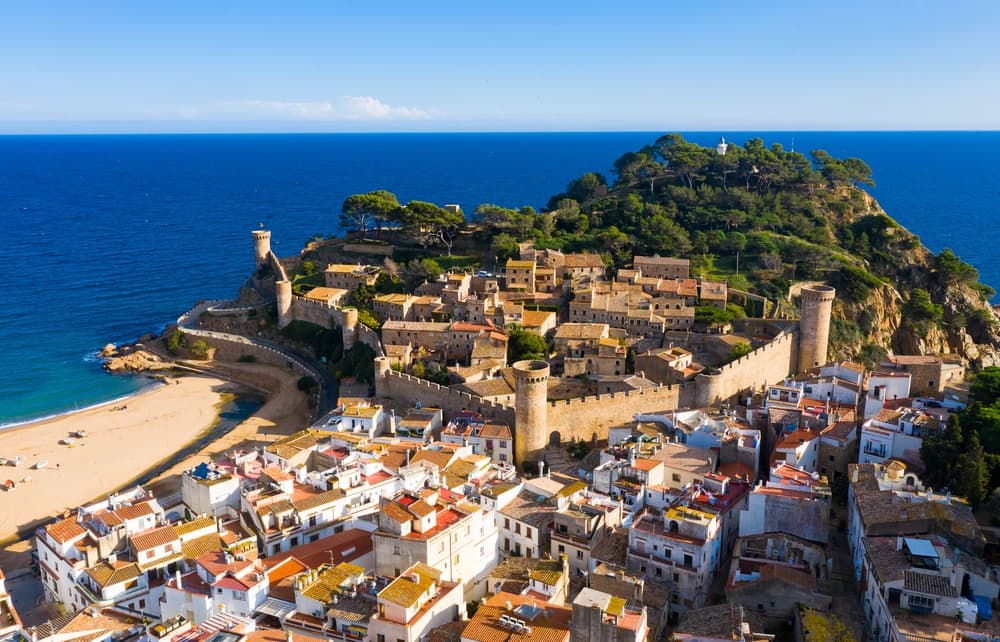
Girona: medieval Catalonia, genuinely lived in
A compact, well-preserved city of about 108,000 people in Catalonia: lower rents and a higher safety score than Barcelona, which is under 40 minutes away by high-speed train.
- 108,666
- Population (2025)
- $2,300/mo
- Monthly budget · single
- 59°F / 15°C
- Avg temperature
Budget about $2,300 a month in U.S. dollars for one person in Girona, around $3,300 for a couple, or roughly $5,000 for a family. A one-bedroom in the center averages about $1,150, and about $900 outside it. Barcelona costs a single person about $2,900 a month by comparison. Girona's old quarter is small and protected, so much of the value sits across the river and at the edges of town.
Girona suits people who want the texture of old Spain without big-city scale. The medieval core, with its cathedral, city walls, and the pastel houses along the Onyar, is genuinely lived-in rather than a stage set, and the food scene punches far above the city's size; the Roca brothers put it on the culinary map years ago. Cyclists know it as one of Europe's road-riding capitals, and the international crowd that sport brings gives the city more English than its size suggests.
The honest drawback is that Girona is a Catalan city first. Daily life, schools, and signage run in Catalan as well as Spanish, and while people switch to Castilian readily, newcomers are learning two languages' worth of context, not one. It's also small: if you need a deep job market or big-city anonymity, this isn't it.
At a glance
$2,300
Monthly budget · single person
$1,150/mo 1-bed rent, center
76/100
Safety index
$35
Internet / month
59°Fannual average
Jan 45° · Aug 75°
Climate
108,666
Population (2025)
Expatsi estimates, updated Aug 2026, based on rental listings, government statistics, and local reporting.
Cost of living
What it costs to live in Girona
Single person
$1,900–$2,700/mo
about 25% below Austin, TX
Couple
$2,700–$4,000/mo
about 30% below Austin, TX
Family of four
$4,100–$5,900/mo
about 35% below Austin, TX
Compared with Austin, TX (Expatsi estimate, 2026).
- $14 −30%
- Inexpensive meal
- $950–$1,350/mo −41%
- 1-bed rent, center
- $700–$1,050/mo −33%
- 1-bed rent, outside
- $35/mo −46%
- Internet
- $35/mo −15%
- Transit pass
- $325/sq ft −50%
- Buy price, center
Expatsi estimates, updated Aug 2026, based on rental listings, government statistics, and local reporting.
Daily life
How Girona lives
- B+ grade, 66th percentile among the cities we track
- Dining & cafésstrong
- B+ grade, 68th percentile among the cities we track
- Arts & culturestrong
- A+ grade, 97th percentile among the cities we track
- Parks & outdoorsstandout
- A- grade, 74th percentile among the cities we track
- Schools & educationstrong
- B+ grade, 57th percentile among the cities we track
- Healthcare accessstrong
- A- grade, 70th percentile among the cities we track
- Bike infrastructurestrong
- B grade, 55th percentile among the cities we track
- Public transittypical
- B+ grade, moderate physical accessibility
- Accessibilitymoderate
Graded on OpenStreetMap amenity density relative to the 298 cities we track. Accessibility is the exception: it's graded against a fixed standard (terrain steepness and sidewalk surfaces), not a curve.
Climate
Weather through the year
Annual average 59°F (15°C) · 28 in of rain a year · Source: Meteostat station normals (08184, 1991-2020)
On the ground
Scenes from Girona
Getting around
Transport in Girona
Girona is a walking city before anything else. The train station is about a 15-minute walk from the old quarter, and most of daily life fits inside that radius. The medieval center is largely pedestrianized, which is pleasant on foot and useless by car.
Local buses are run by TMG, the city-owned operator, linking the station, the Trueta hospital, the university campuses, and outlying neighborhoods like Sant Narcís and Santa Eugènia. Budget about $35 a month as a regular rider. TMG buses take no cash, only contactless cards and phones, and the same company runs Girocleta, the bike share.
The rail connection is the real asset. Girona sits on the high-speed line between Barcelona and the French border, so AVE and AVANT trains reach Barcelona Sants in under 40 minutes, and slower Rodalies trains work the same corridor for less. Girona-Costa Brava airport is eight miles southwest and flies almost entirely low-cost European leisure routes; for the United States you connect through Barcelona El Prat.
The coast itself is harder to reach than it looks. No train serves the central stretch, so coaches from the bus station run to Palafrugell, the hub town, in about an hour, and the coves past it need a second bus or a car. Driving takes about 45 minutes.
A car is unnecessary inside Girona and genuinely inconvenient in the center, where parking is scarce and much of the core is restricted. Most who want one rent it for the weekend.
- 30/sq mi
- Transit stops
- 30/sq mi
- Bike infrastructure
- 38/sq mi
- Wheelchair-accessible places
Mapped features per square mile from OpenStreetMap.
Keep exploring
Places like Girona

Community
Community & practical notes
The expat scene: Girona's foreign community skews active and outdoorsy. The city is a global road-cycling hub, and a rotating cast of riders, many of them American, British, and Australian, has seeded English-speaking cafes, bike shops, and social rides. Beyond that scene the expat texture is thinner than in Barcelona or Valencia, and integration runs through language classes, kids' schools, and sport rather than big expat associations.
The coast: The Costa Brava beaches are a day out, not the daily backdrop. Resort towns like Begur and Cadaqués empty out between November and Easter, with restaurants and beach bars shut for the season. Girona stays busy all year. You get the coves in summer without living somewhere that closes.
Healthcare: Catalonia runs its own public service, CatSalut. The card is the Targeta Sanitària Individual, requested at your local CAP clinic, and you have to be registered on the padrón first. How you qualify depends on your visa: non-lucrative holders must carry full private insurance with no copays, and most keep it until they qualify through work contributions or the convenio especial buy-in. Girona's public teaching hospital is the Hospital Universitari de Girona Doctor Josep Trueta.
Limited mobility: The medieval core is the challenge, and the city says so itself. The ajuntament's tourism office calls the upper Barri Vell difficult for wheelchair users and people with reduced mobility, because of the slope, the uneven ground, and the cobbles. The long staircase to the cathedral and the walls walk are out. The flat districts west of the Onyar are a different city. The council publishes an accessible route through the old quarter and walks along the Devesa park and the river, and TMG's buses are adapted. Pick the neighborhood carefully rather than assuming the whole city works.
Getting online: Fiber runs about $35 a month, with good coverage across urban Spain. Girona has a modest coworking scene around the center, and Spain's digital nomad visa made the setup legal for remote employees of U.S. companies. Local hiring concentrates in tourism, food, healthcare, education, and the university; jobs at international salaries mean remote work or a Barcelona commute.
Retiring here: Spain's main route for retirees is the non-lucrative visa. For 2026 it asks the main applicant to prove about 2,400 euros a month, 400 percent of Spain's IPREM index, plus 600 euros per dependent, along with private health insurance, and it does not permit work. U.S. Social Security and pensions generally qualify, and after five years you can move to long-term residency. Girona's walkability and fast trains make it a plausible retirement base if the old town's hills and stairs aren't an obstacle. See retirement visa options, the Spain non-lucrative visa, and our full Spain guide.
Housing
Renting and buying
- 1-bed rent (center)
- $950–$1,350/mo
- 1-bed rent (outside center)
- $700–$1,050/mo
- Buy price (center)
- $325/sq ft
- Buy price (outside center)
- $265/sq ft
Expatsi estimates, based on rental listings, government statistics, and local reporting.
Good to know
Frequently asked questions
Can I retire in Girona?
Yes, most American retirees use Spain's non-lucrative visa, which requires proof of passive income, full private health insurance, and no work in Spain. Pensions and Social Security count, and it renews toward long-term residency after five years. At about $2,300 a month for one person, a typical benefit check plus modest savings covers life here.
Do people speak English in Girona?
More than the city's size suggests, thanks to tourism and the international cycling community, but daily life runs in Catalan and Spanish. You can get by in English in shops and restaurants, though bureaucracy, healthcare, and schools work much better with basic Spanish. Learning some Catalan earns real goodwill.
Is Girona safe?
Girona scores 76 on the safety index and 24 on the crime index. Among the 19 Spanish cities we hold data for, that sits in the upper half, about 20 points above Barcelona, the lowest of the set. Spain is at the State Department's Level 2, exercise increased caution, and OSAC points at pickpocketing and bag theft in crowded tourist spots rather than violent crime.
How much does it cost to live in Girona, Spain?
One person needs roughly $2,300 a month here, a couple about $3,300, and a family around $5,000, in U.S. dollars. Rent is the biggest line: about $1,150 for a one-bedroom in the center and about $900 outside it. An inexpensive restaurant meal runs about $14.
How does healthcare work for expats in Girona?
Most new arrivals start on private insurance, which their visa usually requires. Legal residents reach Catalonia's public system, CatSalut, through work contributions, a paid buy-in called the convenio especial, or after qualifying residence periods, and you register on the padrón before you can get a health card.
How do Americans move to Girona?
Americans need a Spanish visa before arriving: the non-lucrative visa for people living on savings or passive income, the digital nomad visa for remote workers, or a work or student visa. Applications go through the Spanish consulate covering your state, and processing takes a few months. Once in Spain you register locally and apply for your residence card.
Do I need a car in Girona?
Not for daily life. The city is compact and walkable, city buses fill the gaps for about $35 a month, and high-speed trains reach Barcelona in under 40 minutes. A car earns its keep only for regular weekends on the Costa Brava or in the Pyrenees.
What's the weather like in Girona?
Mediterranean, but far enough inland that the seasons bite harder than on the coast. The annual average is about 59°F (15.1°C). August days average about 87°F, and January nights average about 34°F, so freezing nights are normal in winter. Rainfall is about 28 inches (703 mm) a year, heaviest in autumn, with October the wettest month.
See how Girona fits your life
Take the free Expatsi Test and compare Spain to nearly 200 countries on what actually matters: cost, healthcare, climate, and safety. About five minutes.
Why not you?