Central Europe
Hungary got a new government. It still has no retirement visa.
A 15 percent flat income tax, the EU's highest sales tax, and a permit list that shrank in 2024. Here's what a month costs and which routes are still open to Americans.
Budapest is cheap by EU standards and sits under three hours from Vienna by train. Its government just lost an election to a party Brussels likes. The living part of Hungary is easy. The staying part is where people get stuck.

By Jen Barnett, Co-founder, Expatsi
Reviewed and updated September 18, 2026 · 15 min read

01 · The case for Hungary
A low-tax EU country that just changed direction

Hungary sits inside both the EU and Schengen. An American living here can train to Vienna for lunch and fly to Lisbon without a passport check, and it is one of the cheaper places in the bloc to do that from. Getting home is the harder trip. American Airlines flies Philadelphia to Budapest daily from May 21 to October 5, the only nonstop between the two countries, so the rest of the year means a connection.
Then there's the tax rate. Hungary charges a flat 15 percent personal income tax, with no brackets and no higher band. Only Bulgaria and Romania go lower inside the EU, both at 10 percent. Corporate tax is 9 percent, which is the lowest rate in the Union.
The political story changed completely this year. On 12 April 2026, Viktor Orban's Fidesz lost after sixteen years in power. Peter Magyar's Tisza party took a two-thirds supermajority on turnout of just under 80 percent, the highest since Hungary's first free elections in 1990. Magyar took office in May. Within weeks the EU said it would release more than 16 billion euros it had been withholding over rule-of-law concerns. The forint hit its strongest level against the dollar since February 2022.
Who it works for
Remote workers on a foreign salary do best. Budapest has fast internet, a real coworking scene, and rents that leave something over after a US paycheck. Founders who want to run a Hungarian company have a route. So do people with a Hungarian job offer, people with Hungarian family, and investors willing to lock up a quarter of a million euros.
Here's the catch
Hungary rewrote its immigration law in 2024 and deleted the flexible category. The old permit for "other purposes" is gone. In its place sit 24 named permit types. If your reason for being here isn't one of them, there is no permit for you.
That lands hardest on retirees. Hungary has no pensioner visa and no passive-income visa. There's nothing here like Portugal's D7 or Spain's non-lucrative permit. If you're retired with no Hungarian ancestor, and you don't want to put 250,000 euros into a property fund, what you get is the 90 visa-free days Schengen already gives you.
The remote-work permit has its own ceiling, and it's two years. The language is hard in a way that surprises people. And the United States canceled its tax treaty with Hungary, which surprises almost everyone.
- Safety index
- 65/100
- English proficiency
- 55/100
- Internet speed
- 120 Mbps
- Currency
- Hungarian Forint (HUF)
- Capital
- Budapest
02 · What it costs
Six numbers, and one caveat
$1,350
Monthly budget, one person
All in, and it assumes you cook most nights
$2,300
Monthly budget, a couple
Doubling the single figure overshoots; two people share one rent
$600
One-bedroom rent, central, nationwide
A country average. Budapest asks more than this.
$12
Lunch at an inexpensive restaurant
Eating out is where the gap with home lands hardest
$27
Monthly transit pass
One ticket covers metro, tram, trolley and bus
$22
Home internet, per month
Cheap enough that nobody shops around for it
Cheap food, real rent, 27 percent sales tax

Start with the caveat, because those are country averages and Budapest is not average. Investropa, working from Hungary's statistics office, the central bank and the listings site ingatlan.com, puts the average Budapest one-bedroom at 270,000 forint a month, about $855. The usual band runs 230,000 to 310,000, so roughly $730 to $980. A two-bedroom averages 380,000, or about $1,200.
Then add the line nobody warns you about. Hungarian apartment buildings charge a monthly közös költség, a shared maintenance fee, and it runs 20,000 to 60,000 forint on top of your rent. Ask what it is before you sign.
Rents rose about 5 to 6 percent over the past year. Growth is slowing as more supply arrives. A well-priced central flat still goes in two to four weeks.
Buying is a different story, and a louder one. The central bank reported that nationwide house prices jumped 23.5 percent in 2025. At the end of that year it estimated prices were sitting about 22.5 percent above what incomes, rents and construction costs justify. Median Budapest asking prices are around 1.4 million forint per square meter, about $4,430. Worth knowing before you put money into a Hungarian property fund.
The tax you never add at the register
Hungary's standard VAT is 27 percent, the highest rate in the European Union and in the OECD. Staples like milk and bread sit at 18 percent. Medicine, medical devices and books sit at 5 percent. The rate is already inside every shelf price, so you never see it added. You just feel it.
That pairing is the honest version of Hungary's low-tax reputation. Income tax sits near the bottom of the EU range. Consumption tax sits at the very top of it. If you earn abroad and spend here, you pay the expensive half and skip the cheap one.
Why the budget and the permit list don't line up
Here's what makes Hungary unusual. The cost of living says come. The immigration law says prove why. Plenty of cheap-EU countries pair a low budget with a broad income-based permit, and that's how Portugal, Spain and Greece built their American audiences. Hungary went the other way in 2024. It kept the prices and deleted the catch-all. So the question isn't whether you can afford Hungary. It's whether you fit one of the named categories.
03 · The routes in
The permits that still exist after 2024
Hungary's new immigration act took effect on 1 January 2024, most of it from 1 March. It replaced a loose system with 24 named permit types, eight of them for work. A US passport by itself buys 90 visa-free days inside any 180, as a visitor. Everything past that needs one of these.
The White Card, and why two years is the ceiling
This is the remote-work permit, the Fehér Kártya. You work for a company based outside Hungary, or you own and manage a profitable foreign company, and you do that work from here. Immigration specialists reporting on 2026 applications put the income floor at 3,000 euros a month, about $3,450, proven over the six months before you apply. Some official pages have been slow to update and may still show the older 2,000 figure. Confirm the number before you file.
Now the limits, because they are severe. One year, extendable once, and that is the end of it. No permanent residence and no citizenship clock, and the two years count toward neither later. No family reunification, so a spouse qualifies separately or not at all. No switching to another permit type, either during the card's life or after it expires. Take a Hungarian job or buy into a Hungarian company and the card is withdrawn. Holders are shut out of public healthcare too, so private insurance runs the whole stay.
Guest self-employment, for people building something here
The old business-immigration permit is gone. Guest self-employment replaced it, for freelancers, sole traders and company directors. The immigration office wants a tax-authority certificate showing annual self-employment income above 24 times the minimum wage. At 2026's wage floor of 322,800 forint a month, that is 7,747,200 forint a year, roughly $24,500. Profit after expenses, not revenue.
It runs one year, then extends by two. You file quarterly income and activity reports through the authority's E-Paper platform, and skipping them can sink your renewal. Family can join after a year.
The golden visa, which is now a fund and nothing else
The Guest Investor Program opened on 1 July 2024. Two options survive. One is 250,000 euros, about $287,500, into units of a real estate fund registered with the Hungarian National Bank, held five years, with at least 40 percent of the fund's assets in Hungarian residential property. The other is a 1 million euro donation to a Hungarian university held by a public-interest trust.
The 500,000 euro option to buy property directly was removed on 15 January 2025. You cannot get Hungarian residency by buying a house. Only two funds are approved so far, Gravitas Hungary and SPRINT Hungary.
The permit runs ten years and renews once for ten more, and it asks for no minimum stay. That is where investors get it wrong. Holding the card from abroad starts no clock. Permanent residence needs roughly three years of continuous residence, and citizenship around eight.
A job, if a Hungarian employer wants you
Two skilled routes matter. The EU Blue Card wants a recognized degree and a salary pegged at 150 percent of the national average from two years back, which for 2026 works out to 1,001,048 forint a month, about $3,170. The Hungarian Card, new in 2024, covers high-skill roles concentrated in IT, engineering and the natural sciences.
The unskilled end got much harder. Guest worker permits now run only through government strategic partners and licensed agencies, cap out at three years, and carry no permanent residence or family reunification. New applications have stopped.
Family, and the Hungarian ancestor route
With a Hungarian spouse or a Hungarian resident relative, family reunification is the least difficult permit here.
Simplified naturalization is separate and asks for no residency at all. Prove an ancestor held Hungarian citizenship, including in territory that belonged to the Kingdom of Hungary before 1920, then hold a conversational interview in Hungarian at a consulate. More than 1.1 million people have used it and there is no generational limit. The language is the gate, and it is a real one.
What is not on this list
There is no line for someone with a pension and a bank balance. Two workarounds get suggested and both carry a real cost: a Hungarian company you have to genuinely operate and report on, or the fund with its five-year lock. Rolling 90-day Schengen visits are legal and are not residency. They buy no address card, no health insurance and no clock.
Four permits, compared
| Visa | Category | Application cost | Processing | Difficulty | Guide |
|---|---|---|---|---|---|
| EU Blue Card | work | — | ~60 days | 4/5 | Guide |
| Family Reunification Residence Permit | family | — | ~60 days | 2/5 | Guide |
| Guest Investor Residence Permit (Golden Visa) | investment | $250,000 | ~90 days | 3/5 | Guide |
| Guest Self-Employed Residence Permit | residency | — | ~60 days | 3/5 | Guide |
04 · Taxes, doctors and paperwork
No tax treaty, and a health card with a waiting list

The tax treaty is gone
Almost nobody knows this, and it changes your math. The United States gave Hungary notice on 8 July 2022 that it was ending the 1979 double-tax convention. Treaty protection stopped applying to withholding on 1 January 2024, and to other taxes for tax years beginning on or after that date. A replacement was negotiated back in 2010. The Senate never ratified it.
Three things follow. There is no tie-breaker, so both countries can call you a tax resident at once and you resolve it under each one's domestic rules. There are no capped rates on US-source dividends and interest. And you fall back on the US foreign tax credit plus Hungary's own relief, which credits 90 percent of foreign withholding up to 15 percent of the income and never lets Hungarian tax on foreign income drop below 5 percent. Get a cross-border preparer before you move, not after.
The pension agreement survived
That part is good news. The two countries signed a social security totalization agreement on 3 February 2015 and it took effect on 1 September 2016. It is still in force. A posting of five years or less keeps you on US Social Security alone, and credits from both systems combine if you have six US quarters behind you. One agreement stands. The other is gone.
The TAJ card, and the 24-month wait
Public healthcare runs on a social security number called a TAJ. A non-EU national can apply once they hold a residence permit and a registered Hungarian address. If you're employed, your employer registers you and the number issues in about eight days. That is the easy version.
Without a job it gets harder. Hungarians and permanent residents outside the system pay a health service contribution of 12,300 forint a month in 2026, about $39. A third-country national without that domestic status signs a different agreement, priced at 50 percent of the minimum wage per adult per month. Full coverage only starts on the first day of the 24th month unless you prepay 25 months up front. Emergencies only until then, and anything you were already being treated for is excluded. Every permit application wants proof of insurance anyway, so you are buying a private policy either way.
The forint, for now
Hungary is an EU member that does not use the euro. The forint traded between roughly 300 and 343 to the dollar inside 2026 alone, a 14 percent swing on the cost of your rent. Tisza says it wants to work toward euro-area membership, and two thirds of Hungarians told pollsters this spring they favor it. Nothing is scheduled.
Hungarian is the real work
Hungarian is Uralic. It has no relation to German, Slavic or Romance languages, so almost nothing you know transfers. Budapest's younger workforce speaks good English and our proficiency score puts Hungary mid-table for Europe. Offices, doctors and landlords outside the capital are another matter. Both citizenship routes test the language: descent through a conversational consular interview, standard naturalization through a constitutional-studies exam in Hungarian that practitioners put at upper-intermediate or better.
This guide is dated on purpose
Checked in mid-September 2026. Dollar figures use about 316 forint to the dollar and about $1.15 to the euro. Run both again on the day you pay: the forint moved 14 percent inside this year. Two rows in the four-permit comparison above deserve a correction. The investor entry's $250,000 is the investment, not an application fee, and Hungary sets it in euros. And the difficulty column prints out of ten when the values behind it stop at five, so every route looks easier there than it is. Finally, the new government campaigned on a progressive income tax and has signaled it may review residency by investment. Neither has happened. Check both before you commit money.
05 · Where to live
City guides, as we publish them

Budapest
Cheap capital, real city
Thermal baths, ruin bars in the old Jewish Quarter, Danube views from Buda, and a coworking scene that works on a foreign salary. Living here is easy. The catch is the paperwork: there's no retirement or passive-income permit, so you need a work, business, investor or family route to stay.

Debrecen
Eastern university town
Hungary's second-largest city, with a large university and medical school, a wide central square with the big Reformed Church, and a tram down the main avenue. Rents run below Budapest's. The catch is that English thins out beyond the campus and Budapest is two and a half to three hours away by train.

Szeged
Sunny river city
A university city on the Tisza with an elegant center rebuilt after the great flood of 1879, an open-air festival in summer and paprika and fish soup on every menu. Relaxed and cheap. The catch is that it's near the Serbian border and a bit over two hours from Budapest by train, with little English and a quiet winter.
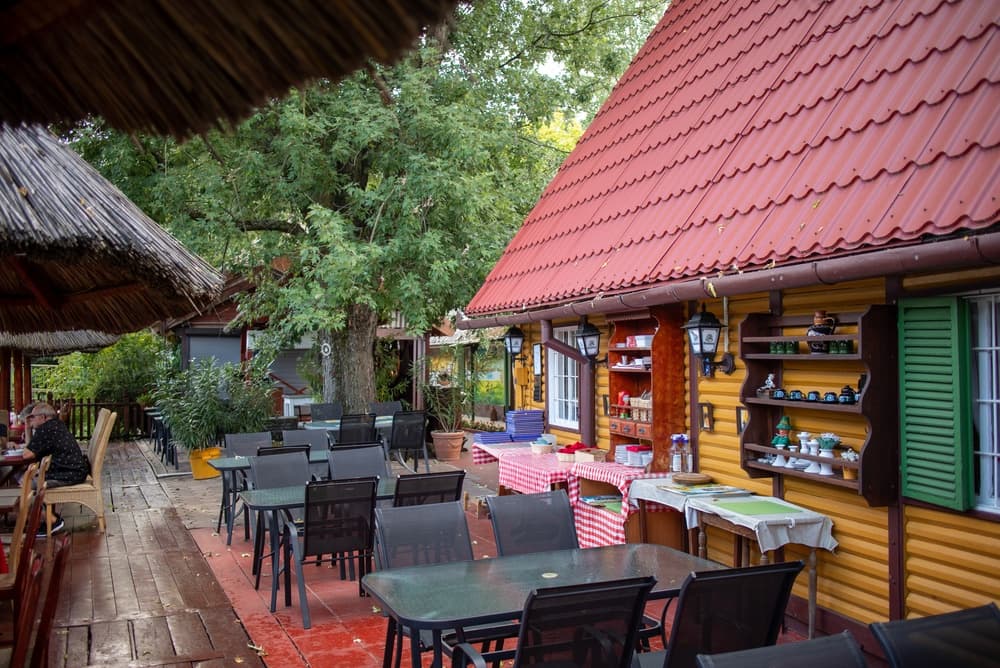
Pécs
Arty southern hill town
A southern city at the foot of the Mecsek hills, with the Ottoman-era mosque church, the Zsolnay ceramics quarter and a mild climate by Hungarian standards. Slow, arty and cheap. The catch is that Budapest is about three hours away and not many people speak English.
Budapest, and five places people choose instead
Rent ranges come from our country data, quoted in euros for the local market. Dollars use the mid-September rate.
Budapest
About 1.7 million people in the city proper, one river, and 23 districts that behave like different cities. Pest is flat, dense, and where the cafes and offices are. Buda is hills, quieter streets and families. Roughly $575 to $1,380 a month, with the inner districts at the top of that. District VI banned short-term rentals in residential flats outright from January 2026, worth knowing if your plan involved buying and listing one.
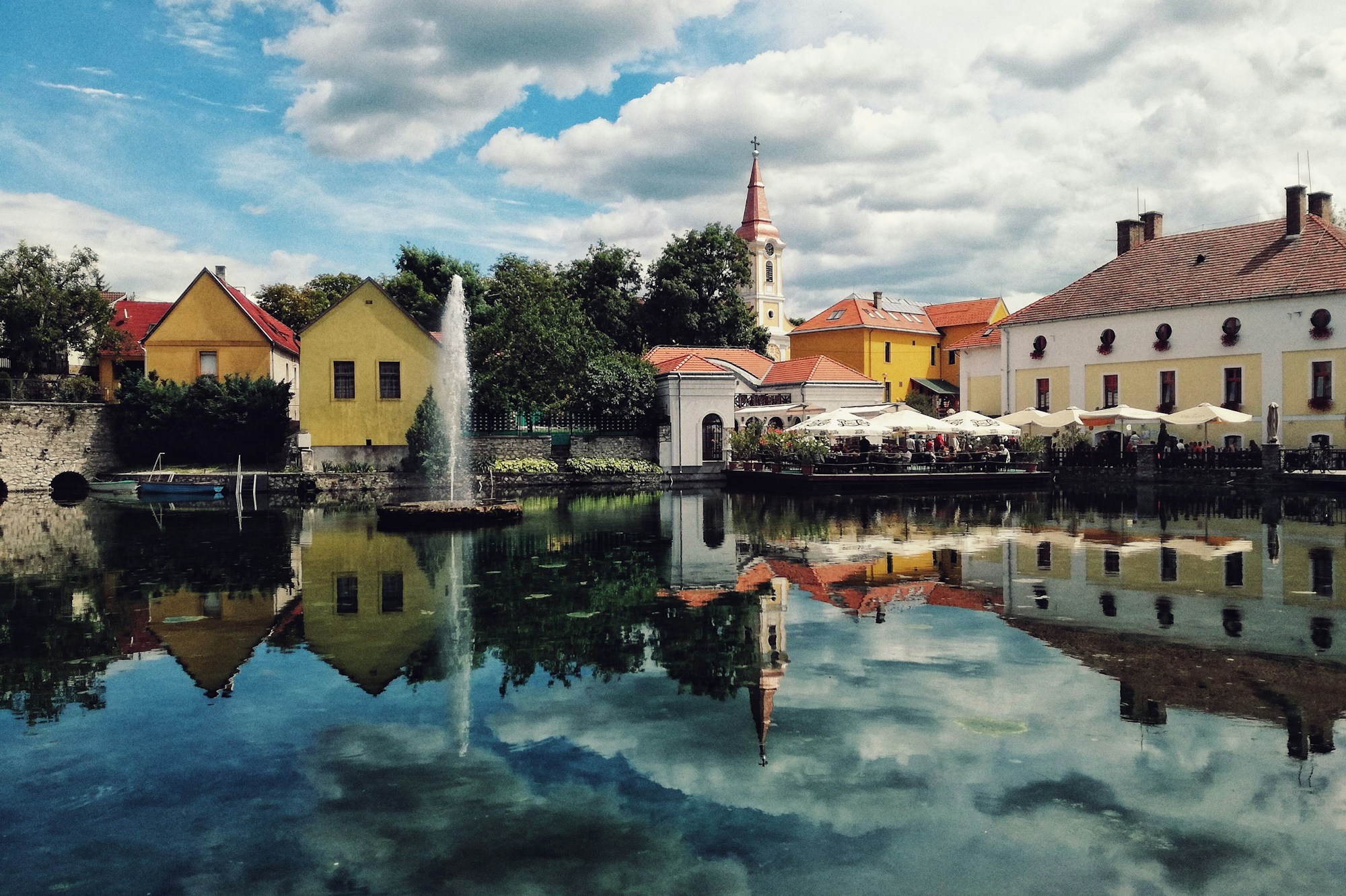
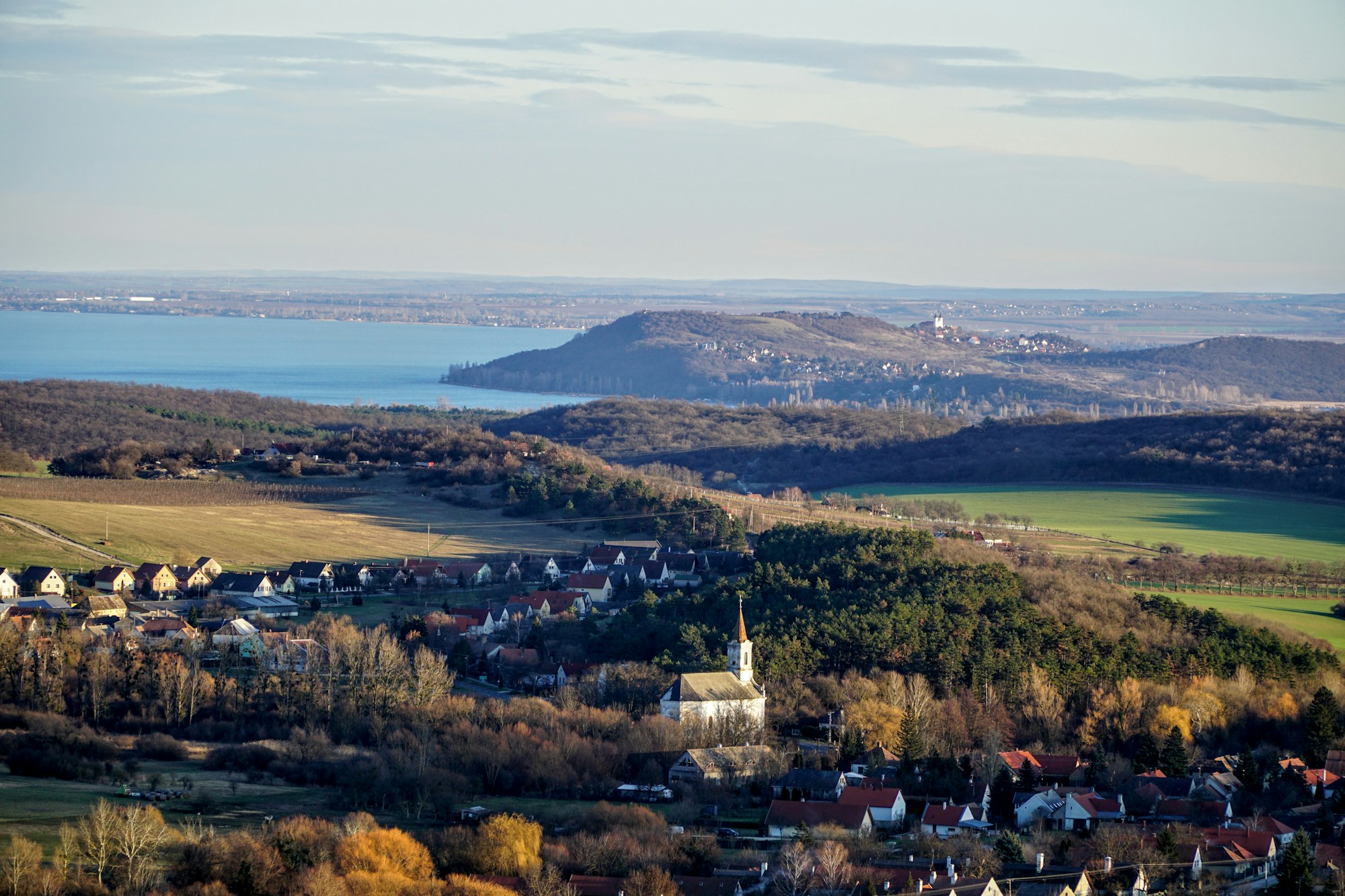
Lake Balaton
Hungary's inland sea, ninety minutes from Budapest, wine hills on the north shore and resort towns on the south. About $460 to $1,035. It runs on summer, so winter is thin on people and thinner on services.
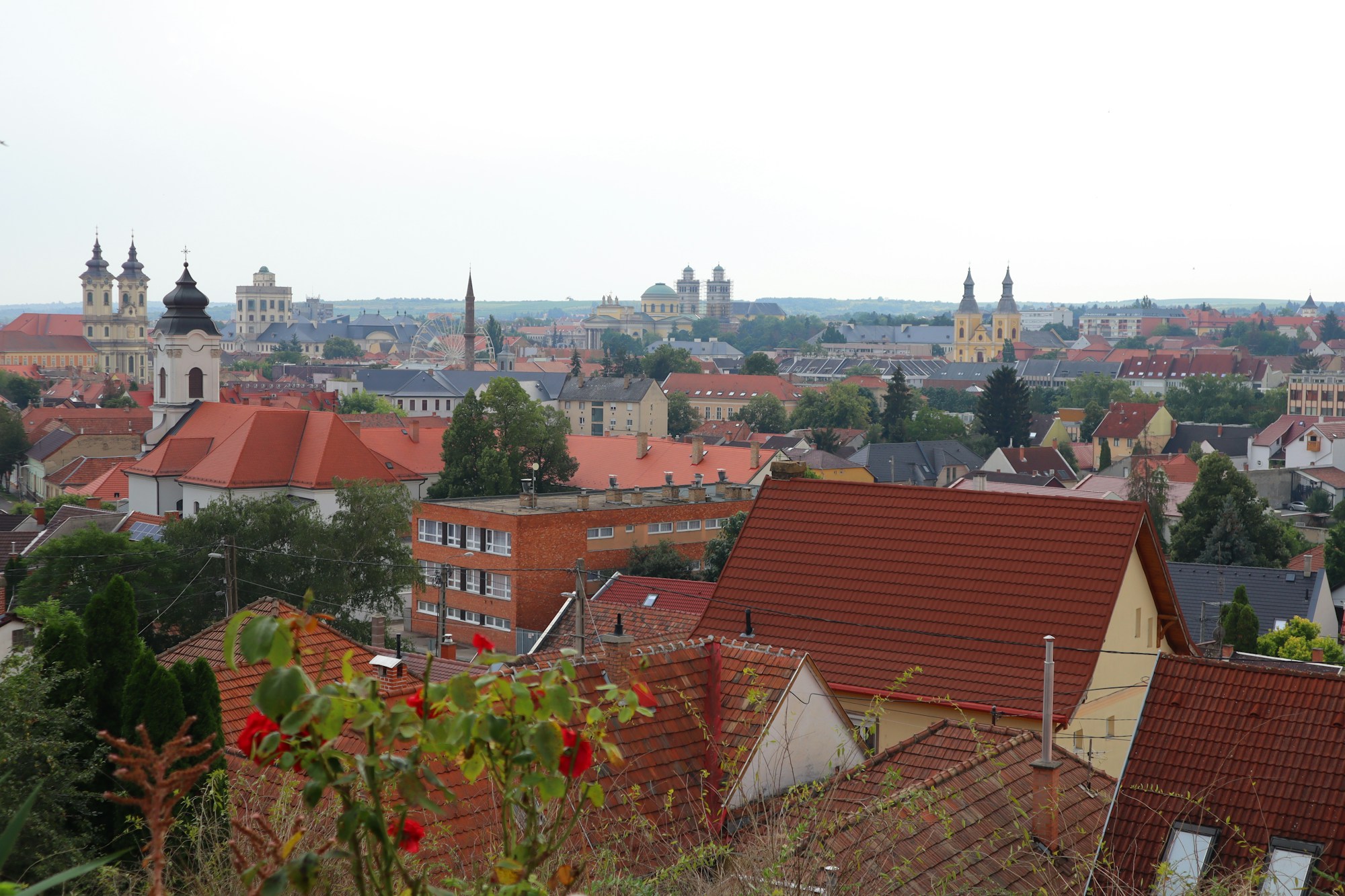
Debrecen
The second city, out east, a university town with a large medical school that teaches in English. About $400 to $805. Less international than the capital and cheaper for it.
Szeged
Down on the southern border, rebuilt after an 1879 flood, which is why the center looks designed rather than accumulated. Another university town, and the one Hungarians call the city of sunshine. About $345 to $690.
Pécs
Southwest, under the Mecsek hills, Roman and Ottoman layers still standing, and a climate mild enough that locals call it Mediterranean. About $345 to $690.
Győr
Northwest, halfway between Budapest and Vienna, baroque old town, and an Audi plant that drives the local economy. About $400 to $805. The obvious pick for manufacturing work or a commute into Austria.
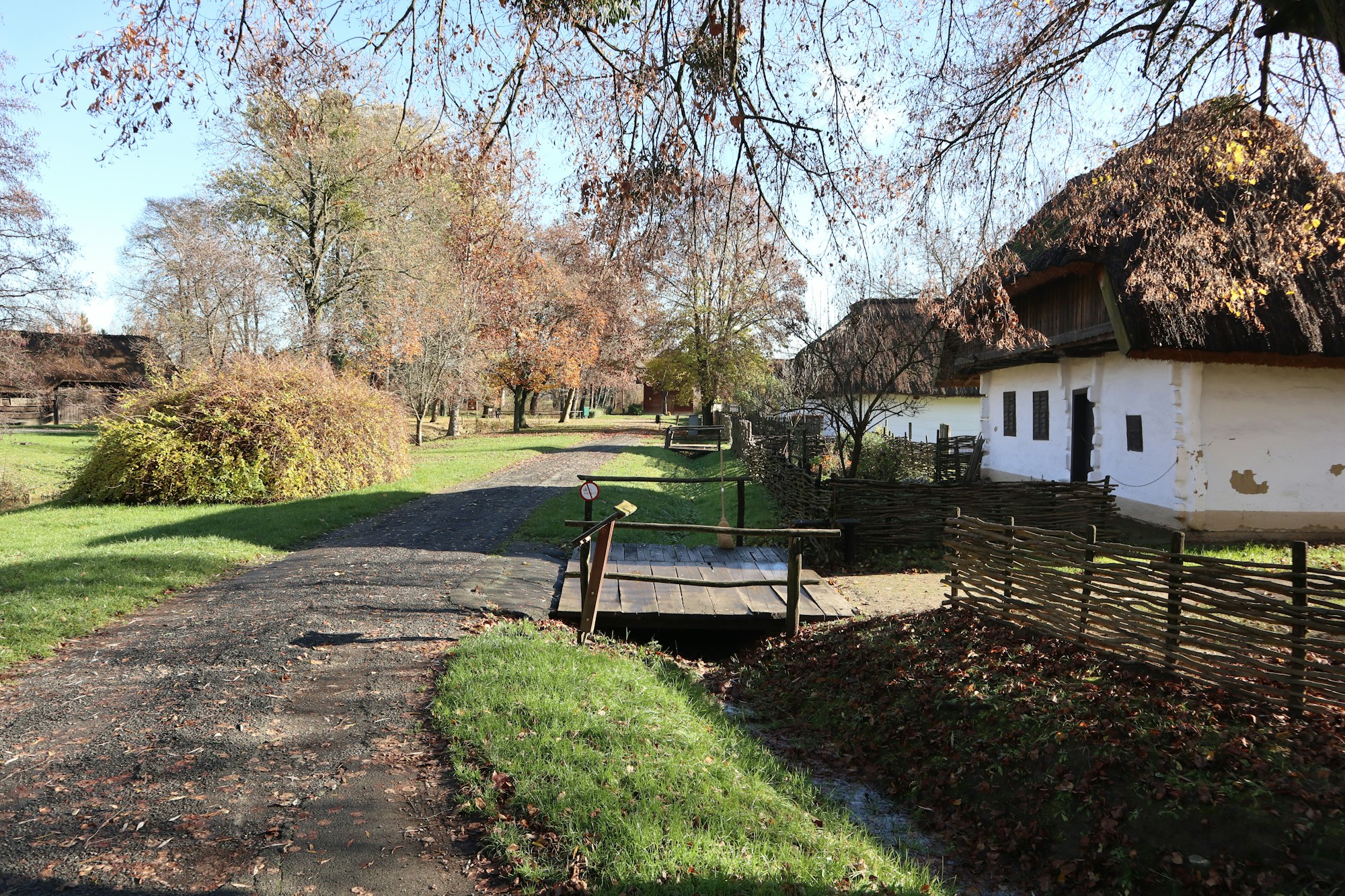
06 · Help, if you want it
Enter Hungary does more than a consultant can
Hungary's immigration authority runs a single online platform, Enter Hungary, and it's where nearly every application and extension gets filed. Local one-stop government offices, the kormányablak, handle address cards and much of the rest under one roof. So the bottleneck here is rarely a consultant. It's the document you have to get notarized and apostilled back home, or the quarterly report you forgot to upload.
That shapes what outside help is worth buying. No one here packages a whole Hungarian move the way firms do for Portugal, so nobody will try to sell you one. The flip side is that the lawyer you find has probably processed more Hungarian Cards than American White Cards. What does exist, and what we'd use, is specialists in the four things that go wrong.


MyExpatTaxes
U.S. Expat Tax Service
Hungary's flat rate looks like it should simplify your US return. It does the opposite. The IRS still wants a return from you every year, with the FBAR and FATCA forms behind it, and the credit you claim for Hungarian tax now gets computed with nothing arbitrating between the two systems. Ask about state filing while you're there. Several U.S. states don't accept that you left.
Learn more
Flamingo Compliance | Tax Residency and Visa Tracker Platform
Tax Residency and Visa Tracker Platform
Flamingo is a day counter that sits on your travel history and warns you before a threshold arrives. Hungary is a strong use case. Cross 183 days and you're a Hungarian tax resident, and with no convention to settle a dispute your own calendar is the only evidence either authority will weigh. Your Schengen count sits in the same view.
Learn more
Legalize That Doc
Document Preparation
Melissa Di Nardo handles apostilles, FBI background checks and certified translations, and she got her own Italian citizenship by descent, so she's sat on the applicant side of a European file. Hungarian offices want documents legalized and translated into Hungarian. Start the FBI check first. It's the one item in the folder you cannot hurry.
Learn more
ExpatInsure
Global Health Insurance
ExpatInsure writes the comprehensive inpatient and outpatient policy Hungarian immigration accepts, which travel insurance is not. Worth flagging when you call: a White Card holder never gets off private insurance. For them, this isn't a bridge to the public system. It's the plan for two years.
Learn more
Moneycorp
Currency Exchange
Kelly Cutchin's team moves money for people whose income and whose rent sit in different currencies. Hungary is a good argument for a broker over a bank. The forint is one of Europe's higher-yielding currencies, and it moves on what the central bank decides about interest rates, not on anything you can schedule.
Learn more
Go deeper
We don't have a Hungary guide in the library yet. These four cover the questions this page raises hardest.
Do I have enough money?
Our partners at Beacon Financial outline how much money a move abroad could cost you as well as how much you may need to retire.
Runs the arithmetic this page only sketches: what a monthly figure has to cover once insurance, a tax preparer and one flight home are inside it.
Can I get healthcare?
Our partner Hunter Schultz explains what you need to know if you're concerned about healthcare abroad.
Useful before you pick a permit, because the White Card and the investor route put you in completely different places on health coverage.
Strategies for Buying or Renting in Europe
we'll dive into the real-world process of searching for property across some of Europe’s most popular destinations. You'll get practical tips on using the top real estate portals, how to contact agents effectively, what red flags to watch for.
Renting against buying, across Europe. Read it before you decide, because Hungarian purchase prices have run a long way ahead of Hungarian rents.
US Expat Taxes 101
Moving abroad doesn't mean leaving the US tax system behind. In this webinar, we'll cover the basics every American expat should know, including filing requirements, foreign income exclusions, tax treaties, reporting foreign bank accounts, and common mistakes to avoid. Whether you're planning your move or already living overseas, this session will help you better understand your tax obligations and where to turn for professional guidance.
The groundwork for the missing-treaty problem. Start here, then take the Hungary-specific part to a preparer.
What people ask us about Hungary
Can you get Hungarian residency by buying property?
No. The 500,000 euro real estate purchase option was removed from the Guest Investor Program on 15 January 2025 and never took effect. What remains is 250,000 euros into units of a real estate fund supervised by the Hungarian National Bank, held five years, or a 1 million euro donation to a qualifying Hungarian university. Investors still need a Hungarian address, so they rent or buy somewhere to live, but the home itself earns no status.
How much money do you need to live in Hungary?
Expatsi's country data puts a comfortable all-in monthly budget at about $1,350 for one person, $2,300 for a couple and $3,700 for a family. Those are national figures. In Budapest rent is the line that moves: the average one-bedroom runs about 270,000 forint a month, roughly $855 in mid-September 2026, and apartment buildings add a shared maintenance fee of 20,000 to 60,000 forint on top.
Can Americans retire in Hungary?
Not on a retirement visa, because Hungary doesn't have one. The 2024 immigration overhaul abolished the flexible permit for "other purposes" and replaced it with 24 named categories. None covers living on a pension or passive income. A retired American with no Hungarian ancestor and no Hungarian family has three options: the 90 visa-free days Schengen allows in any 180, the Guest Investor Program at 250,000 euros into an approved fund, or a different country.
Is Hungary safe for Americans?
Yes, by the numbers. The US State Department rates Hungary Level 1, exercise normal precautions, reaffirmed in April 2026, and the homicide rate is about 0.7 per 100,000 people. Hungary's theft rate of 531 per 100,000 sits well below France, Italy, Germany and Austria. The real risks are petty: pickpockets on crowded Budapest trams and at main stations, passport theft on the Vienna and Bratislava trains, and overcharging in nightlife districts.
Did the 2026 election change anything for foreigners moving to Hungary?
The politics, yes. The immigration rules, not yet. Peter Magyar's Tisza party beat Viktor Orban's Fidesz on 12 April 2026 with a two-thirds majority. The EU released more than 16 billion euros in withheld funds in May, Budapest Pride marched lawfully in June, and in September the government filed a bill to strip the 2021 anti-LGBT provisions out of four statutes. The 2024 permit categories and the flat 15 percent income tax are unchanged so far.
Is there a tax treaty between the United States and Hungary?
No, not since 2024, and it catches people out. The US gave notice of termination in July 2022. The 1979 convention stopped applying to withholding on 1 January 2024 and to other taxes for tax years beginning on or after that date. A replacement signed in 2010 was never ratified by the Senate. Without a treaty there is no residency tie-breaker and no capped rates, so both countries can tax you and you rely on domestic credits.
Does Hungary have a digital nomad visa?
Yes, the White Card, and it works well for two years and then stops. You need remote work for a business based outside Hungary and income that immigration specialists put at 3,000 euros a month for 2026, proven over the prior six months. It runs one year and extends once, then you leave and reapply from abroad. It brings no permanent residence, no citizenship clock, no family reunification and no Hungarian public healthcare.
How long does it take to get Hungarian citizenship?
Two very different answers. Standard naturalization needs eight years counted from your Hungarian plastic address card, and non-EU nationals usually need permanent residency first at around three years, so the real figure is often quoted as eleven. It also requires a constitutional-studies exam in Hungarian. Simplified naturalization by descent needs no residency at all, only proof that an ancestor held Hungarian citizenship plus a conversational Hungarian interview at a consulate.
Sources
- United States' Notification of Termination of 1979 Tax Convention with Hungary · U.S. Department of the Treasury (checked 2026-09-18)
- Hungary Tax Treaty, Announcement 2024-5 · Internal Revenue Service (checked 2026-09-18)
- Totalization Agreement with Hungary · U.S. Social Security Administration (checked 2026-09-18)
- Hungary: New immigration law affects residence permits · European Commission, Migration and Home Affairs (checked 2026-09-18)
- White Card, residency for digital nomads · National Directorate-General for Aliens Policing (checked 2026-09-18)
- Residence permit for guest self-employment · National Directorate-General for Aliens Policing (checked 2026-09-18)
- The latest updates to the Guest Investor Residency Programme · International Bar Association (checked 2026-09-18)
- Hungary: Individual taxes and other taxes, 2026 · PwC Worldwide Tax Summaries (checked 2026-09-18)
- Short summary on the taxation of private persons in 2026 · Hungarian National Tax and Customs Administration (checked 2026-09-18)
- Hungary Travel Advisory, Level 1, 15 April 2026 · U.S. Department of State (checked 2026-09-18)
- 2026 Hungarian parliamentary election results · IPU Parline (checked 2026-09-18)
- Reforms to Hungary's Anti-LGBT Laws Welcome, but More to Do · Human Rights Watch (checked 2026-09-18)
- Updated Rents in Budapest, 2026 · Investropa (checked 2026-09-18)
- American Airlines announces new international routes for summer 2026 · American Airlines (checked 2026-09-18)

Hungary might not be your country. Find out which one is.
Speak to an Expatsi advisor about your move abroad plans. We'll build a custom roadmap and put you with who can help.
Why not you?