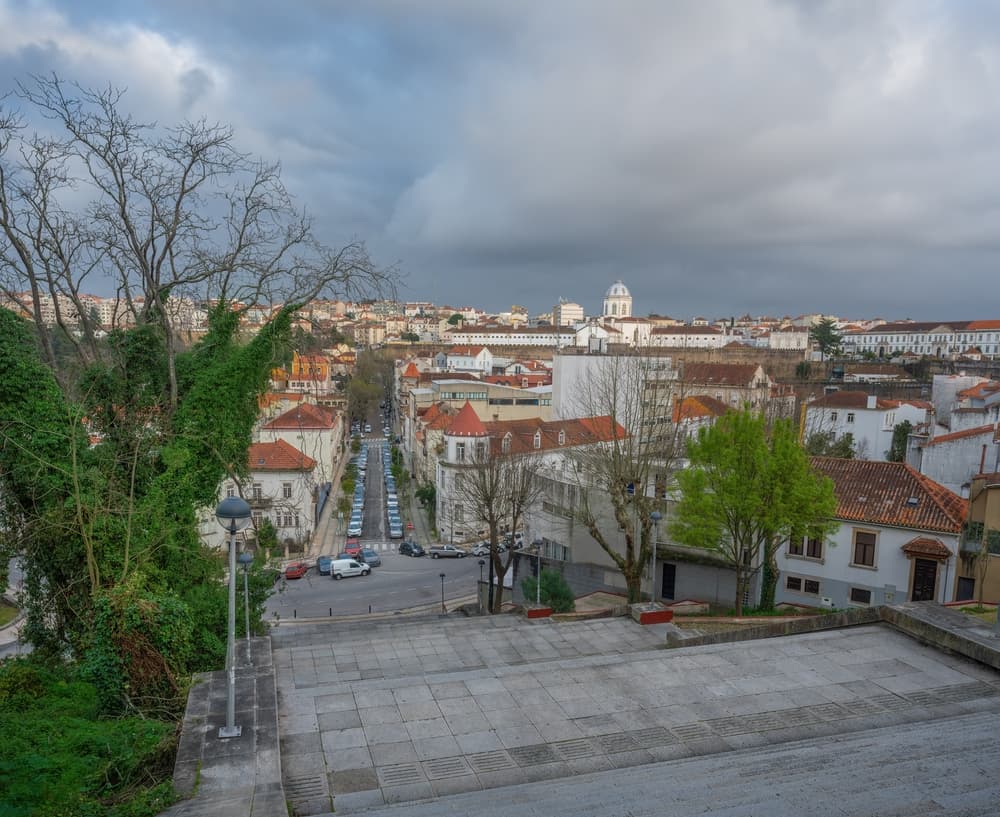
Coimbra: Portugal's original university town
A hillside city of medieval streets and student energy on the Mondego River, halfway between Lisbon and Porto.
- 140,816
- Population (2021)
- $1,700/mo
- Monthly budget · single
- 61°F / 16°C
- Avg temperature
Budget about $1,700 a month in U.S. dollars for one person in Coimbra, around $2,600 for a couple, and roughly $3,600 for a family of four. A one-bedroom in the center averages about $800, and outside the center closer to $600. Those figures buy you Portugal's oldest university town, a city of about 141,000 built up a hillside on the Mondego River, with a UNESCO-listed campus at the top and a compact medieval core below it.
The university sets the rhythm here. It enrolls more than 20,000 students, which keeps cafés, bookstores, and cheap lunch spots busy. It also means Coimbra feels younger than its architecture suggests. It suits people who want an authentic Portuguese mid-size city with real intellectual life and are fine being between the big hubs rather than in one. Lisbon and Porto are both under two hours away on the fast trains.
The honest drawback is that the expat infrastructure is thin compared with Lisbon or the Algarve. English is common among students and doctors but not guaranteed at the town hall or the utility office, so bureaucracy takes more patience, or more Portuguese, than it does in the bigger landing spots.
At a glance
$1,700
Monthly budget · single person
$800/mo 1-bed rent, center
81/100
Safety index
$40
Internet / month
61°Fannual average
Jan 50° · Aug 72°
Climate
140,816
Population (2021)
Expatsi estimates, updated Aug 2026, based on rental listings, government statistics, and local reporting.
Cost of living
What it costs to live in Coimbra
Single person
$1,400–$2,000/mo
about 45% below Austin, TX
Couple
$2,100–$3,100/mo
about 45% below Austin, TX
Family of four
$3,000–$4,200/mo
about 55% below Austin, TX
Compared with Austin, TX (Expatsi estimate, 2026).
- $10 −50%
- Inexpensive meal
- $650–$950/mo −59%
- 1-bed rent, center
- $500–$750/mo −56%
- 1-bed rent, outside
- $40/mo −38%
- Internet
- $35/mo −15%
- Transit pass
- $195/sq ft −70%
- Buy price, center
Expatsi estimates, updated Aug 2026, based on rental listings, government statistics, and local reporting.
Daily life
How Coimbra lives
- B+ grade, 64th percentile among the cities we track
- Dining & cafésstrong
- B+ grade, 67th percentile among the cities we track
- Arts & culturestrong
- B+ grade, 62nd percentile among the cities we track
- Parks & outdoorsstrong
- B grade, 53rd percentile among the cities we track
- Schools & educationtypical
- B+ grade, 59th percentile among the cities we track
- Healthcare accessstrong
- B+ grade, 59th percentile among the cities we track
- Bike infrastructurestrong
- A- grade, 74th percentile among the cities we track
- Public transitstrong
- C grade, challenging physical accessibility
- Accessibilitychallenging
Graded on OpenStreetMap amenity density relative to the 298 cities we track. Accessibility is the exception: it's graded against a fixed standard (terrain steepness and sidewalk surfaces), not a curve.
Climate
Weather through the year
Annual average 61°F (16°C) · 35 in of rain a year · Source: Meteostat station normals (08549, 1991-2020; no sunshine data)
On the ground
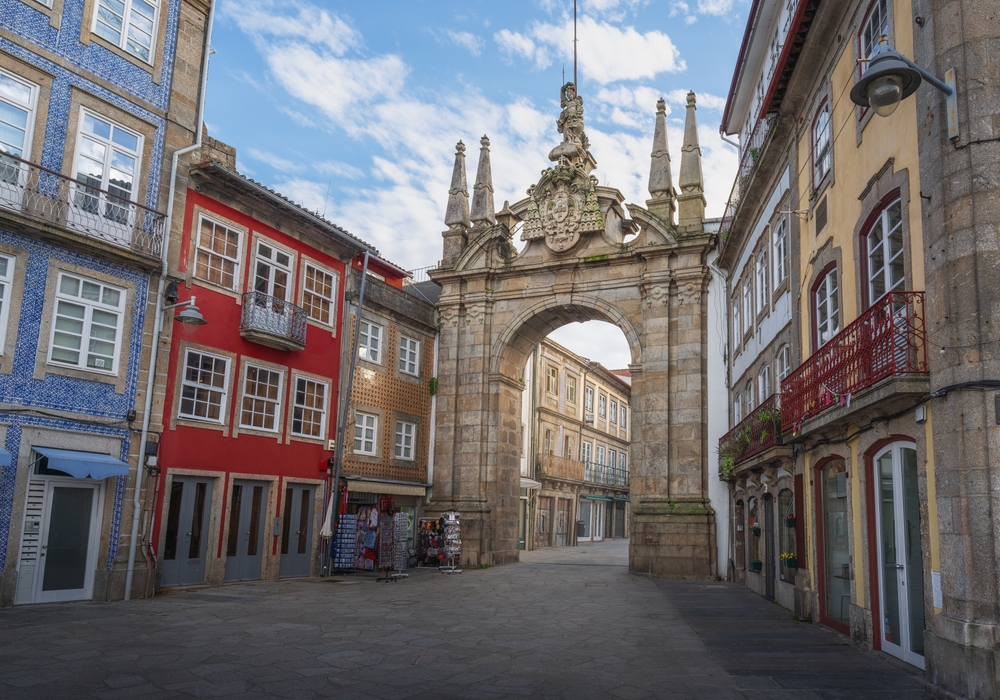
Scenes from Coimbra
Getting around
Transport in Coimbra
Coimbra's city buses are run by SMTUC, which covers the urban area and the hillier residential neighborhoods reasonably well. Plan for about $35 a month on a MOVE-C card that covers the buses and Metrobus together. The Metrobus is the long-delayed Metro Mondego project rebuilt as electric buses in a dedicated lane; it has run since 2025, reaches out along the former Lousã rail corridor to Miranda do Corvo and Serpins, and is still being extended toward the hospitals.
You have two stations For intercity travel. Coimbra-B, on the edge of town, sits on the main Lisbon to Porto line and gets the fast Alfa Pendular and Intercidades trains, putting Lisbon about 90 minutes away and Porto about an hour. Getting from Coimbra-B down to Coimbra-A by the river used to mean a short rail shuttle; that branch closed for the Metrobus works and the Metrobus is taking the link over, so check what's actually running before you plan around it.
The lower town is genuinely walkable, flat along the river with everything from the market to the pedestrianized Rua Ferreira Borges in easy reach. The catch is verticality: the university and upper town sit well above the river. Climbs are steep enough that where you live matters more than distance on a map.
A car is optional in the city itself but parking in the old center is a headache. It earns its keep if you settle in an outlying parish or want easy weekend access to the Serra da Lousã, the schist villages, or the beaches at Figueira da Foz.
- 49/sq mi
- Transit stops
- 13/sq mi
- Bike infrastructure
- 20/sq mi
- Wheelchair-accessible places
Mapped features per square mile from OpenStreetMap.
Keep exploring
Places like Coimbra


Community
Community & practical notes
Community: Coimbra's foreign population skews academic. Visiting researchers, Erasmus students, and Brazilian and Lusophone African communities tied to the university, plus a slower-growing crowd of American and northern European retirees priced out of Lisbon. There's no ready-made expat bubble, which most people here consider the point. Social life tends to run through language exchanges, the university's cultural calendar, and fado de Coimbra performances.
Healthcare: Once you're a legal resident, you can register with the public SNS system at a local health center, and Coimbra is unusually well served for its size. The university hospital complex (CHUC) is one of Portugal's largest and the tertiary referral center for the whole central region, so pecialists that similarly-sized cities send patients away for are on site here. The friction is the same as everywhere in Portugal: registration takes patience and paperwork and family-doctor assignment can lag. Thus, most newcomers carry private insurance (affordable by U.S. standards) and use private clinics while their SNS access gets sorted.
Limited mobility: Be realistic here because Coimbra is two cities stacked on each other, and only the lower one is easy. The riverside Baixa is flat and largely pedestrianized, the Botanical Garden is fully accessible, and Santa Cruz church has a step-free interior. The Alta is the hard part: steep grades, calçada cobblestone, narrow sidewalks, and landmarks like the Sé Nova and the university Rectory that you cannot enter without help. Public lifts do solve the climb, and Portugal's tourism board points wheelchair users to the Elevador do Mercado by the municipal market as the step-free way down into the centre. It publishes a full accessible itinerary for Coimbra; read it, confirm the lifts are running, and lean toward flatter, newer neighborhoods like Solum.
Remote work: Home fiber runs about $40 a month and Portuguese connections are fast and reliable. Coworking options exist near the university and downtown. The local job market leans on the university, hospital, and a growing health-sciences and tech cluster around Instituto Pedro Nunes, the university's incubator that spun out Critical Software and Feedzai. Most Americans here still earn remotely from U.S. employers or clients.
Retirement: Portugal remains one of the most practical retirement moves for Americans. The D7 visa fits retirees with stable passive income (Social Security and pensions qualify), and the D8 digital nomad covers those still working remotely. You'll need proof of income, Portuguese housing, and patience with AIMA appointment backlogs, and after five years of residence you can apply for permanent residency or citizenship. Compare paths in our retirement visa options guide, and see the full picture in our Portugal guide.
Housing
Renting and buying
- 1-bed rent (center)
- $650–$950/mo
- 1-bed rent (outside center)
- $500–$750/mo
- Buy price (center)
- $195/sq ft
- Buy price (outside center)
- $153/sq ft
Expatsi estimates, based on rental listings, government statistics, and local reporting.
Good to know
Frequently asked questions
How do Americans move to Coimbra?
Most Americans use Portugal's D7 visa (for passive income like pensions or Social Security) or the D8 digital nomad visa (for remote workers). You apply through a Portuguese consulate in the U.S. with proof of income, housing in Portugal, and health coverage, then finalize residency after arrival. Coimbra's lower rents make the housing-proof step easier than in Lisbon.
What's the weather like in Coimbra?
Mild overall, with an annual average around 61°F (16°C) and about 35 inches (892 mm) of rain a year, most of it in fall and winter. Summers are warm and dry; winters are cool and damp rather than cold. Homes often lack central heating, so budget for space heaters or a well-insulated rental.
Is Coimbra a good place to retire?
It's a strong fit for retirees who want an affordable, walkable Portuguese city with serious healthcare. The university hospital is one of the country's major medical centers, and a couple can live well on about $2,600 a month. The trade-offs are hilly terrain and a smaller English-speaking retiree community than the Algarve.
How does healthcare work for expats in Coimbra?
Legal residents can register with Portugal's public SNS system, and Coimbra's university hospital complex gives the city better specialist coverage than most cities its size. Registration paperwork is slow, so most newcomers carry private health insurance and use private clinics while their public access gets established.
Is Coimbra safe?
Yes, by the numbers. Coimbra scores 81 out of 100 on the safety index with a crime index of 19, comfortably better than Lisbon and Porto, which both score 71. It is not the top of the Portuguese table though, since several smaller coastal towns we track score 84. Treat it as a solidly safe mid-size European city.
How much does it cost to live in Coimbra?
Plan on about $1,700 a month for a single person, around $2,600 for a couple, and roughly $3,600 for a family of four, all in U.S. dollars. A one-bedroom averages about $800 in the center and $600 outside it. An inexpensive restaurant meal runs about $10.
Is Coimbra wheelchair accessible?
Partly, and it depends on which part. The flat riverside Baixa is manageable, and the Metrobus was built with level boarding at every door, so the low city works reasonably well. The historic Alta is the problem, with steep grades and cobblestone; public lifts, not the streets, are what make the climb possible. Most people with mobility needs settle in newer, flatter areas like Solum.
Do I need a car in Coimbra?
Not necessarily. Buses and the Metrobus run about $35 a month on a single MOVE-C pass, the lower town is walkable, and fast trains from Coimbra-B reach Lisbon in about an hour and a half and Porto in about an hour. A car mainly helps if you live outside the city or want weekend trips to the coast and mountains.
See how Coimbra fits your life
Take the free Expatsi Test and compare Portugal to nearly 200 countries on what actually matters: cost, healthcare, climate, and safety. About five minutes.
Why not you?