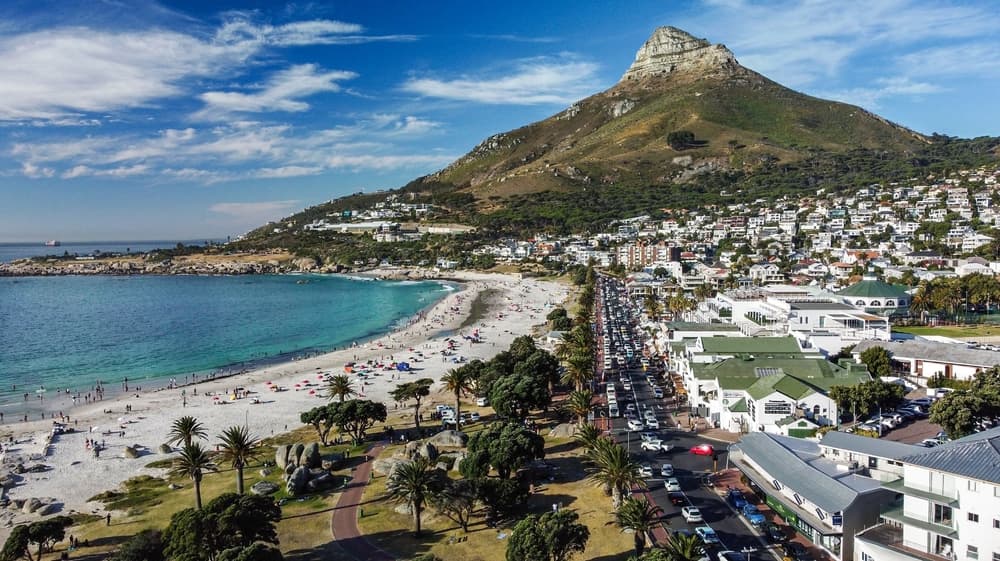
Cape Town: Table Mountain at your back, the Atlantic out front
A city of about 3.8 million where the City Bowl and Atlantic Seaboard let you live without a car, as long as you budget for security and private healthcare.
- 3,776,313
- Population (2021)
- $1,800/mo
- Monthly budget · single
- 63°F / 17°C
- Avg temperature
Plan on about $1,800 a month in U.S. dollars for one person in Cape Town, with most singles landing between $1,500 and $2,200. A couple needs about $2,800, and a family of four about $4,400. A one-bedroom near the center averages around $900 a month and about $650 farther out, and a meal at an inexpensive restaurant runs about $8. Those are 2026 figures.
Most newcomers start in the City Bowl, the neighborhoods tucked under Table Mountain, or along the Atlantic Seaboard around Sea Point. Those areas put the mountain, the ocean, restaurants and the MyCiTi bus within easy reach, and they're where the international crowd is thickest.
Cape Town suits remote workers, retirees with room in the budget for private healthcare, and anyone who wants a hike and a beach in the same afternoon. It's a harder fit if you want to stop thinking about security. The U.S. State Department calls violent crime common across South Africa, and residents plan around it: secure buildings, an alarm, and no solo walks after dark.

Reviewed and updated October 8, 2026 · 4 min read
At a glance
$1,800
Monthly budget · single person
$900/mo 1-bed rent, center
35/100
Safety index
$40
Internet / month
63°Fannual average
Jul 55° · Feb 72°
Climate
3,776,313
Population (2021)
Expatsi estimates, updated Oct 2026, based on rental listings, government statistics, and local reporting.
Cost of living
What it costs to live in Cape Town
Single person
$1,500–$2,200/mo
about 40% below Austin, TX
Couple
$2,300–$3,300/mo
about 40% below Austin, TX
Family of four
$3,400–$5,400/mo
about 45% below Austin, TX
Compared with Austin, TX (Expatsi estimate, 2026).
- $8 −60%
- Inexpensive meal
- $750–$1,050/mo −54%
- 1-bed rent, center
- $550–$750/mo −52%
- 1-bed rent, outside
- $40/mo −38%
- Internet
- $260/sq ft −60%
- Buy price, center
Expatsi estimates, updated Oct 2026, based on rental listings, government statistics, and local reporting.
Daily life
How Cape Town lives
- B+ grade, 61st percentile among the cities we track
- Dining & cafésstrong
- B+ grade, 64th percentile among the cities we track
- Arts & culturestrong
- A grade, 88th percentile among the cities we track
- Parks & outdoorsstandout
- B grade, 52nd percentile among the cities we track
- Schools & educationtypical
- B- grade, 34th percentile among the cities we track
- Healthcare accesstypical
- B grade, 42nd percentile among the cities we track
- Bike infrastructuretypical
- B grade, 45th percentile among the cities we track
- Public transittypical
- B+ grade, moderate physical accessibility
- Accessibilitymoderate
Graded on OpenStreetMap amenity density relative to the 298 cities we track. Accessibility is the exception: it's graded against a fixed standard (terrain steepness and sidewalk surfaces), not a curve.
Climate
Weather through the year
Annual average 63°F (17°C) · 21 in of rain a year · Source: Meteostat station normals (68816, 1991-2020)
On the ground
Scenes from Cape Town
Getting around
Transport in Cape Town
If you live in the City Bowl or along the Atlantic Seaboard, you can get by without a car. The MyCiTi bus does most of the work: its routes cover the City Bowl and the seaboard suburbs out to Hout Bay, and a dedicated busway runs up the West Coast through Milnerton to Table View. Fares are cashless. You load a myconnect card at stations, participating shops or ABSA ATMs. Buses come often at rush hour and much less often in quiet off-peak hours. Check the timetable before you count on a late ride home.
For evenings out and trips the bus doesn't make, people use Uber and Bolt. Drivers sometimes cancel trips into certain townships over safety concerns, so confirm your pickup point and have a backup plan for late nights.
Metrorail's Southern Line, the commuter train toward the southern suburbs, is harder to rely on. Commuters reported frequent delays and cancellations in early 2026, often with little warning.
Here's the catch: once you live in the southern or northern suburbs, or want regular trips to the winelands and the beaches beyond town, a car becomes close to essential. If you drive, keep doors locked and windows up, and skip driving outside the metro area at night, as the State Department advises.
- 21/sq mi
- Transit stops
- 4.0/sq mi
- Bike infrastructure
- 17/sq mi
- Wheelchair-accessible places
Mapped features per square mile from OpenStreetMap.
Keep exploring
Places like Cape Town

Community
Community & practical notes
Community: English works for daily life and business, though you'll hear Afrikaans and isiXhosa everywhere. Cape Town Tourism describes a well-connected expat and remote-worker scene, and it's easy to find people who moved here from somewhere else, especially around Sea Point, the City Bowl and the V&A Waterfront.
Healthcare: Newcomers mostly use private hospitals. Netcare Christiaan Barnard Memorial Hospital is in the city center, Mediclinic Panorama serves the northern suburbs, and Vincent Pallotti Hospital the southern suburbs. Expat guides advise against relying on public hospitals for serious emergencies or major surgery. Expats typically join a local medical scheme such as Discovery Health, Momentum Health or Bonitas, or carry international coverage. Check the rules on pre-existing conditions before you sign up.
Remote work: Home internet runs about $40 a month. Workshop17 has coworking spaces at the Watershed on the V&A Waterfront and on Kloof Street. Cape Town is six to seven hours ahead of Eastern, by season, so a U.S. East Coast workday lands in your afternoon and late evening. South Africa has gone through long stretches of scheduled power cuts (load shedding), so ask landlords about backup power before you sign.
Limited mobility: Mixed. MyCiTi is the bright spot: its buses have boarding bridges that give wheelchair users level access from platforms. The Sea Point promenade welcomes wheelchair users alongside walkers and runners. Away from those, Cape Town Tourism itself acknowledges rough pavements in some areas and inaccessible buildings in others, and the City Bowl climbs steeply toward the mountain. Look for a level street near a MyCiTi stop, and ask about elevators, and whether they run during power cuts, before you sign a lease.
Retirement: Cape Town works for retirees who can budget for private healthcare and want mild weather, with average highs near 81°F in January and 64°F in July. South Africa's retired person visa is the route built for people living on a pension or retirement income. Compare it with other countries on our retirement visa page, and see the full picture in our South Africa guide.
Housing
Renting and buying
- 1-bed rent (center)
- $750–$1,050/mo
- 1-bed rent (outside center)
- $550–$750/mo
- Buy price (center)
- $260/sq ft
- Buy price (outside center)
- $139/sq ft
Expatsi estimates, based on rental listings, government statistics, and local reporting.
Good to know
Frequently asked questions
Can Americans retire in Cape Town?
Yes. South Africa has a retired person visa for people living on a pension or retirement income, and Cape Town's mild climate and private hospitals draw retirees. Budget for private health coverage from day one, since expats rarely rely on public hospitals for serious care.
Is Cape Town safe for Americans?
It can be, with real precautions. The U.S. State Department rates South Africa Level 2, exercise increased caution (advisory issued May 2025), and says violent crime such as robbery, carjacking and mugging is common, especially downtown after dark. Residents choose secure buildings, avoid walking alone at night, watch for ATM skimming, and visit townships only with someone who knows the area.
Do you need a car in Cape Town?
Not if you live in the City Bowl or along the Atlantic Seaboard, where the cashless MyCiTi bus and Uber or Bolt cover daily life. In the southern or northern suburbs, or for regular trips to the winelands, most people drive.
How much does it cost to live in Cape Town?
Plan on about $1,800 a month in U.S. dollars for one person, with most singles spending between $1,500 and $2,200, and about $2,800 for a couple (2026 figures). Housing, private health coverage and whether you need a car make the biggest difference.
Where do expats live in Cape Town?
Most newcomers start in the City Bowl, under Table Mountain, or on the Atlantic Seaboard around Sea Point. Both areas are close to restaurants, the ocean and MyCiTi bus routes, which makes living without a car realistic.
Is Cape Town good for remote work?
For many people, yes. Home internet runs about $40 a month, Workshop17 has coworking spaces at the V&A Waterfront and on Kloof Street, and the city is six to seven hours ahead of U.S. Eastern time, by season. Ask about backup power, since South Africa has had long periods of scheduled power cuts.
What is the weather like in Cape Town?
Summers are warm and dry, with average highs near 81°F in January and February. Winters are cool and wet, with average highs around 64°F and lows near 45°F in July. Of about 20 inches of rain a year, most falls from May through August.
See how Cape Town fits your life
Take the free Expatsi Test and compare South Africa to over 100 countries on what actually matters: cost, healthcare, climate, and safety. About five minutes.
Why not you?