Romania for Americans, start to finish
Moving to Romania from the U.S.: costs, visas and the fine print for 2026
A full EU and Schengen member where a couple can live on about $2,050 a month. The visa menu is strong for remote earners and thin for retirees, so here's how Americans really get residence.
Written for U.S. passport holders: what daily life costs, which residence route fits the way you earn, the tax and Social Security changes that landed in 2026, and who can handle the paperwork in Romanian.

Reviewed and updated September 28, 2026 · 14 min read

01 · The case for Romania
What draws Americans to Romania, and what sends some home
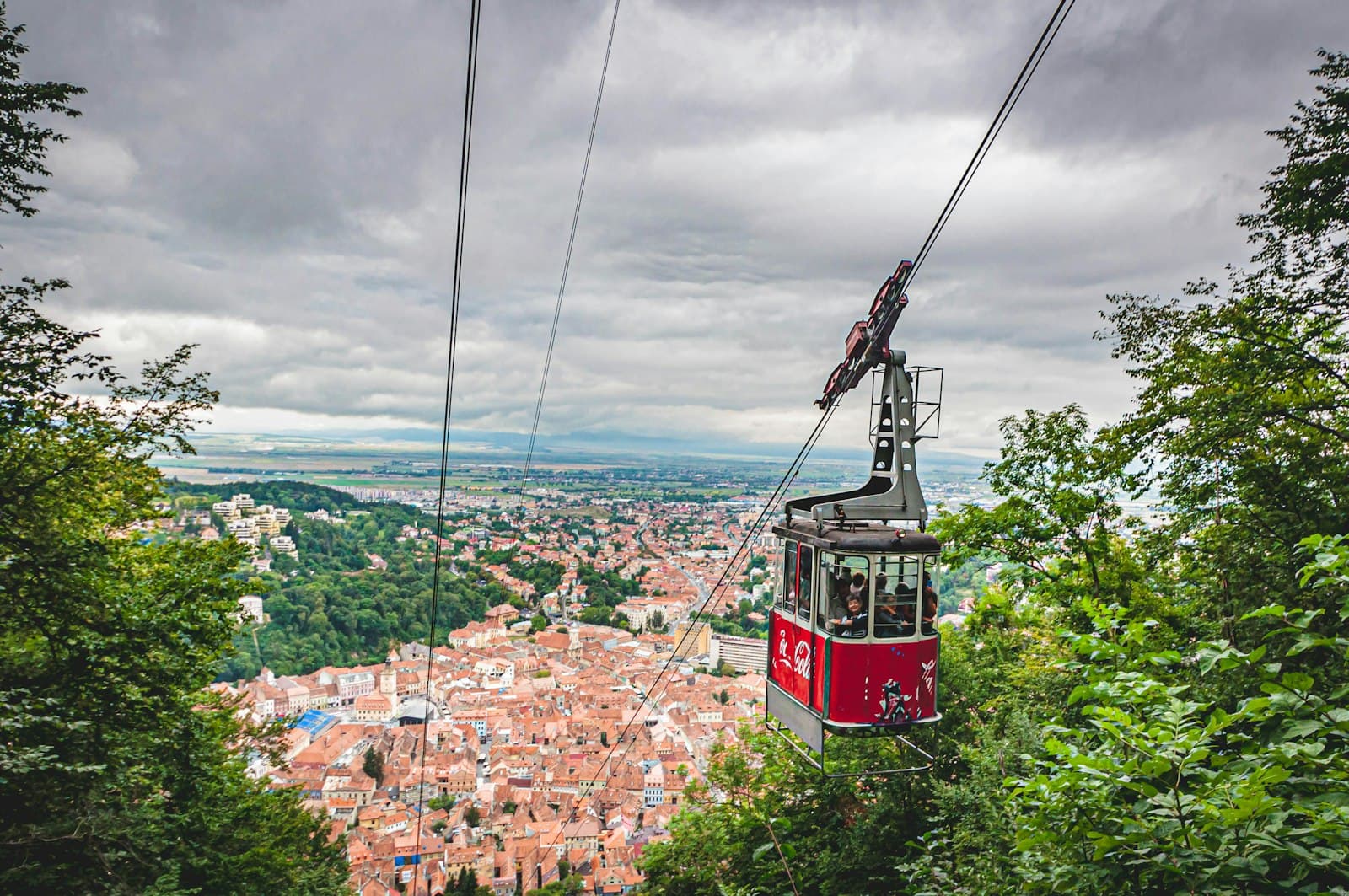
Romania rarely makes the first draft of an American's Europe list. That's part of the appeal: you get an EU country with the full Schengen package, a flat 10% income tax, strong English and a cost of living that lets a couple live comfortably on about $2,050 a month. It also has a few hard edges; they're specific enough that you can tell pretty quickly whether they matter to you.
Start with access. Romania dropped air and sea border checks with the rest of Schengen in March 2024 and land border checks on January 1, 2025. Live here and Vienna, Budapest and the Greek islands are a bus, train or budget flight away with no passport line in between. Romania is 7 hours ahead of Washington, D.C., which puts a U.S. workday in your afternoon and evening.
Then there's the language question, which surprises people. Romanian is the official language, but English is widely spoken, especially among younger people in the cities. Romania ranked 11th of 123 countries and regions in the 2025 EF English Proficiency Index, in the very high proficiency band. You'll still want Romanian for landlords, paperwork and village life, and you'll need it to naturalize, but day one is less isolating than you might expect.
The practical basics hold up well. Home internet runs about $10 a month at around 150 Mbps. The State Department rates Romania Level 1, its lowest advisory, and our safety index puts it at 70 out of 100. The Carpathians run through the middle of the country, and the State Department's own travel page tells visitors not to feed bears or stop on the road to photograph them. That gives you a sense of how close the outdoors is to daily life.
There's also a route here many Americans don't know they have. If a parent or grandparent was a Romanian citizen, Romanian law lets their children and grandchildren reclaim citizenship, which means an EU passport without the residence years.
Here's the catch
Romania is a great fit for some people and a poor one for others. Four things decide which one you are.
First, there's no retirement visa. Romania has no residence permit built for people living on a pension or savings. Some retirees get in through a catch-all "other purposes" permit, but it's a judgment call, not a program. If you're retiring, read the visa section closely before you fall for a Brașov apartment.
Second, local jobs pay local wages. The average net salary was 5,734 lei in June 2026, about $1,236 a month, and the minimum wage is 4,325 lei, about $932. Work permits go through your employer, who usually has to show no Romanian or EU candidate could fill the job. Romania works best when your income comes from outside the country.
Third, Bucharest sits in an earthquake zone. The State Department says Bucharest faces the highest seismic risk in the country, and the 1977 earthquake killed 1,578 people. You can manage the risk by choosing your building carefully, and we'll show you how, but you shouldn't ignore it. Roads are the other safety issue: Romania has the highest per-vehicle rate of road deaths in the EU.
Fourth, healthcare is uneven. The State Department says facilities are generally below U.S. standards, although some providers in Bucharest and other cities meet them. Most Americans lean on private clinic networks, which are affordable, but it's a plan you'll want in place before you land.
If none of that scared you off, you're likely a good fit, especially if you work remotely for a U.S. employer or have Romanian roots. The rest of this guide covers the money, the routes in, healthcare and taxes, where people settle, and who can help.
- Cost of living (single)
- $1,200/mo
- Safety index
- 70/100
- English proficiency
- 60/100
- Internet speed
- 150 Mbps
- Currency
- Romanian Leu (RON)
- Capital
- Bucharest
02 · The numbers
Monthly costs in Romania, in U.S. dollars
$2,050
Monthly budget, couple
all in, comfortable
$1,200
Monthly budget, single
all in, comfortable
$3,300
Monthly budget, family
housing included
$500
Rent, 1-bed city center
$350 outside center
$12
Inexpensive meal out
local restaurant
$23
Monthly transit pass
city buses and trams
$10
Home internet, monthly
about 150 Mbps
70/100
Safety index
State Dept Level 1
Where your money goes, and why local wages matter
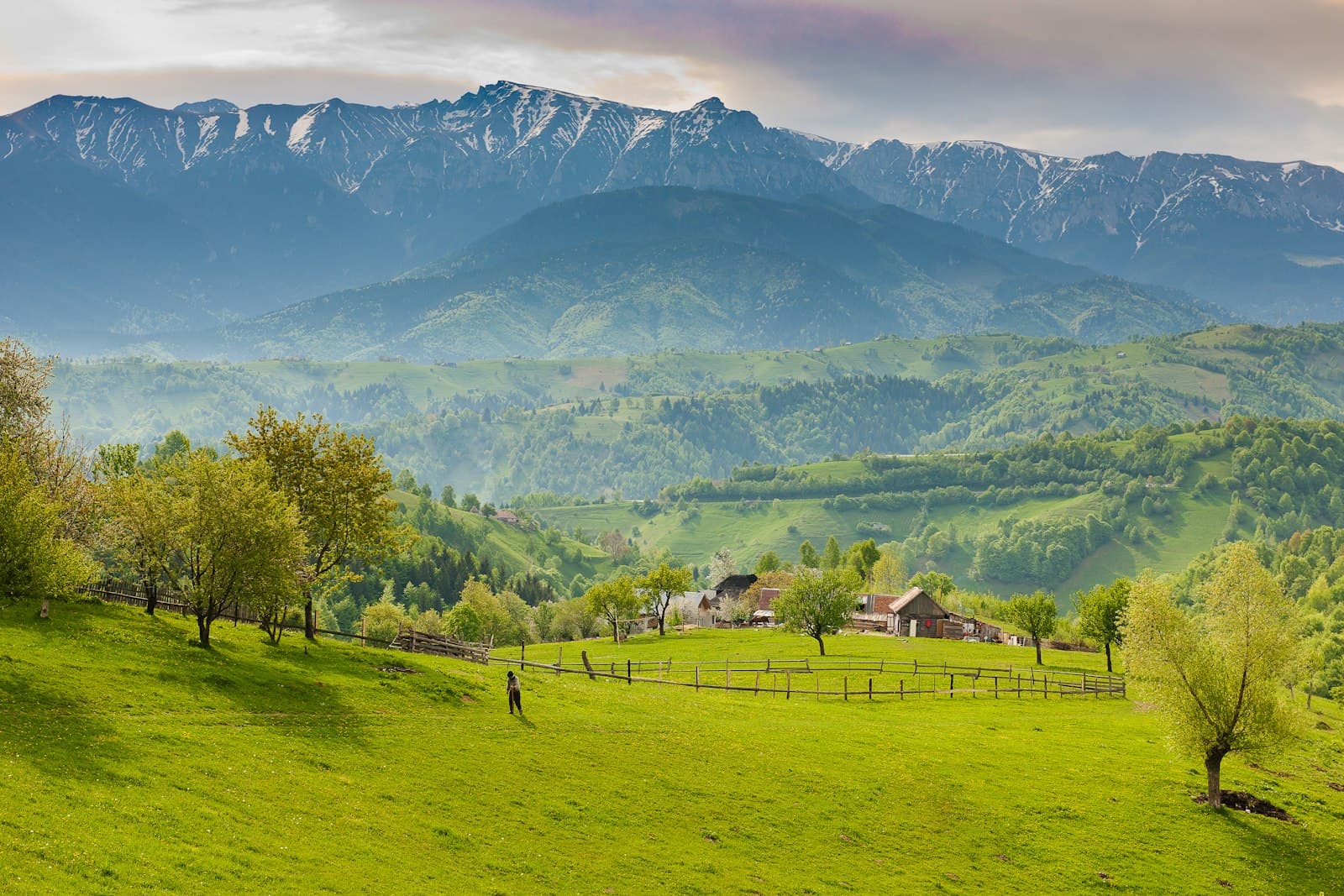
Our 2026 numbers put a comfortable couple at about $2,050 a month and a single person at about $1,200, with a family of four near $3,300 once housing is in. Rent is the biggest line: a one-bedroom in a city center averages about $500, and closer to $350 outside the center. Eating out stays affordable at around $12 for a simple meal, and a monthly transit pass costs about $23.
The dollar goes further here than the headline figures suggest, because the local economy runs on much smaller paychecks. The average Romanian takes home about 5,734 lei a month, roughly $1,236 at the September 2026 rate of about 4.64 lei to the dollar. That's why a U.S. income, a remote salary or a pension feels generous, and why a local job rarely covers an American-style budget on its own.
A few costs are rising. Romania raised its standard VAT rate to 21% in August 2025, so shop prices crept up across the board. If you want private healthcare, add a clinic subscription at roughly $17 to $119 a month depending on the tier (more on that below).
Housing has one rule that catches newcomers: IGI, the immigration office, won't accept a short-term rental booking at renewal. Plan on signing a lease of at least 12 months, which also tends to bring the monthly rent down. Outside the big cities, rents drop further, but so do English, private clinics and flight options, so the savings come with trade-offs.
Where the budget and the visa rules part ways
A retired couple on Social Security could live well in Romania on about $2,050 a month. The trouble is getting the right to stay. Romania's one purpose-built residence route for people with foreign income, the digital nomad visa, asks for about $6,000 a month of work income, nearly three times what that couple needs to live. Retirees have to use a different door, and the next section walks through each one.
03 · The right path for you
Four routes into Romania, matched to how you earn

Americans can visit Romania without a visa for up to 90 days, and those days count toward the Schengen limit of 90 days in any 180. To stay longer, you need a long-stay visa from a Romanian consulate, then a residence permit from IGI once you're inside. The consulate has to decide within 30 days, and the visa itself only covers your first 90 days. File for the residence permit at least 30 days before that stay runs out.
Working remotely: the digital nomad visa (D/AS)
This is Romania's clearest route for Americans. It's issued under the long-stay visa for "other purposes" (D/AS), and it's for people who work remotely for employers outside Romania or run their own foreign company. The bar is high: you must show income of at least three times Romania's average gross monthly salary for each of the six months before you apply, and for the whole period the visa covers. In 2026, that works out to roughly 27,800 lei a month, about $6,000. The figure moves as wage statistics update, so check it the month you apply.
Once you land, you swap the visa for a residence permit. Government fees run about 385 lei, around $83, and the card takes 30 to 35 days in Bucharest and often three weeks elsewhere. Sources disagree on how long each permit lasts and how many renewals you get, so confirm the current terms with a lawyer before you commit. On taxes, holders who stay under 183 days a year are reported to owe nothing in Romania on their foreign income. Stay longer and the standard 10% applies.
Retired or living on savings: the gray-area route
Here's the honest answer: Romania has no retirement visa. Some Americans have been approved under the same "other purposes" category. One U.S. military retiree in Cluj applied that way using his pension, saying he had to show three times the minimum wage, plus a one-year lease and private health insurance. It isn't a published program, so approval rests with the consulate and IGI, plus there's no official income number to aim for. Go in with a lawyer, strong paperwork and a backup plan. If that sounds like too much uncertainty, you can still spend 90 days out of every 180 here as a visitor.
Hired locally or studying
For a local job, your employer applies to IGI for a work permit before you ever file for a visa. Romania capped work permits at 90,000 for 2026; employers in many categories must show the job couldn't be filled by a Romanian or EU candidate. Once the permit is issued, you have 60 days to apply for the D/AM employment visa. The permit is tied to that one employer, so changing jobs means starting over. Highly qualified workers can go the EU Blue Card route, which requires a gross salary of at least 8,620 lei a month, about $1,858.
Students are the easier case. Non-EU students pay about 2,000 to 5,000 euros a year in tuition on average, roughly $2,300 to $5,700, and many degree programs are taught in English. You'd apply for the D/SD study visa once you have an acceptance letter.
Joining family, or reclaiming a Romanian passport
Once you hold a residence permit valid for one year, you can sponsor a spouse and minor children, and IGI has three months to decide. If your parents or grandparents were Romanian citizens, look at restoring citizenship under Article 10 of Romania's citizenship law before anything else. It skips the residence clock entirely.
For everyone else, the long game looks like this: after five years of continuous legal residence you can apply for long-term residence, a five-year card. After eight years (five if you're married to a Romanian), you can apply for citizenship with a B1 Romanian language certificate and a test on the constitution, culture and national anthem. Romania allows dual citizenship, so you won't have to give up your U.S. passport.
Long-stay (National) Visa
Covers the digital nomad (D/AS) route
Romania's long-stay visa for other purposes, used by remote workers and some retirees. You convert it into a residence permit after you arrive.
- Valid passport
- Completed application form
- Proof of purpose (e.g., work, study, family reunification)
Work Visa
Your employer files the work permit first
For a local job offer. The permit is tied to one employer, and a 2026 cap of 90,000 permits applies.
- Valid passport
- Work permit (obtained by employer)
- Employment contract
Student Visa
Many programs taught in English
For admitted students at Romanian universities. Non-EU tuition averages 2,000 to 5,000 euros a year.
- Letter of acceptance from a Romanian educational institution
- Proof of financial means
- Valid passport
04 · The practical stuff
Healthcare, taxes, Social Security and your apartment
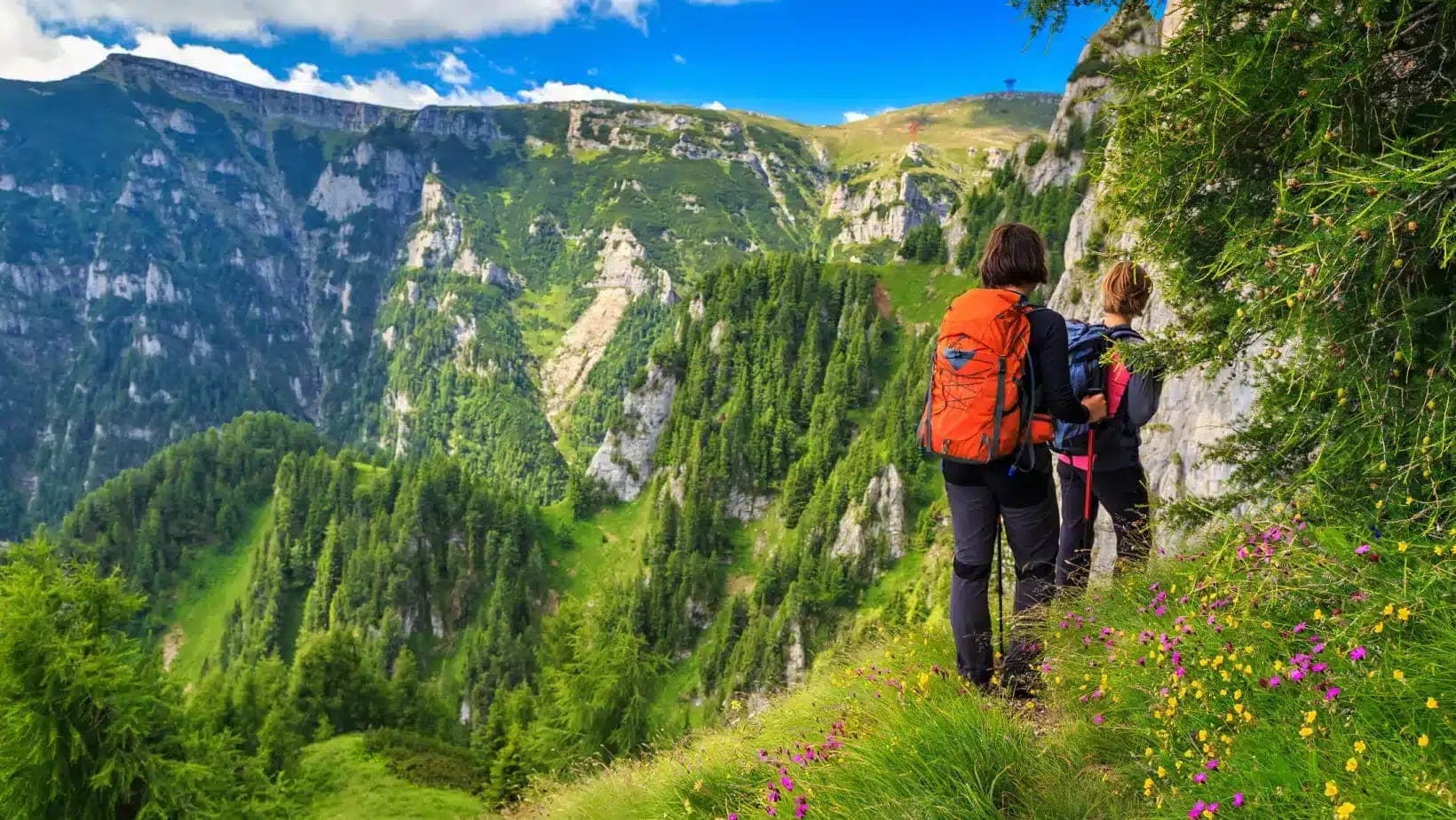
The questions every American asks, plus two that are specific to Romania: earthquakes and a brand-new Social Security agreement.
Healthcare
Romania has a public system run through CNAS, the national health insurance house. If you have no Romanian income, you're not covered automatically, but you can opt in by paying 2,430 lei for 12 months in 2026, about $524 a year. Emergency care is available to everyone regardless of insurance. Most expats pair that with a private clinic network such as Regina Maria, MedLife or Sanador. Subscriptions run about 80 to 550 lei a month, roughly $17 to $119, and a private GP visit without one costs about 150 to 350 lei, or $32 to $75. The State Department says care is generally below U.S. standards, though some providers in Bucharest and other cities meet them, so pick your network before you pick your neighborhood. Hunter Schultz, a healthcare coach we work with, can help you judge the options, and ExpatInsure can set up the private coverage your permit needs.
Taxes
You become a Romanian tax resident once you spend more than 183 days in the country in any 12-month period, or when your center of life is here. From then on Romania taxes your worldwide income, mostly at a flat 10%. Dividends are taxed at 16% since January 2026, up from 10%. On top of that comes a 10% health contribution on non-salary income such as pensions, rent and investments, capped at a base of 97,200 lei, which limits it to roughly $2,100 a year. Romania has no wealth tax and no gift tax. The U.S. still taxes you as a citizen, and a U.S.-Romania income tax treaty helps prevent paying twice on the same income. MyExpatTaxes handles the U.S. return from abroad. Beacon Global Advisors keeps your 401(k)s and IRAs working once you've left.
Social Security
This is new. A U.S.-Romania Social Security agreement took effect on September 1, 2026. If you've worked in both countries, you can combine the time to qualify for benefits, and you no longer pay into both systems for the same work. Retirees can receive the benefits they've earned while living in either country.
Banking and paperwork
Your residence card carries a CNP, a 13-digit personal number, and banks need it to open a resident account. Phone plans and tax filings ask for it too, so expect to rely on a U.S. account and a transfer service until your card arrives. If you move, you must tell IGI within 15 days. Legalize That Doc can gather and apostille your FBI background check and other U.S. records before you apply.
Housing and earthquakes
In Bucharest, check the building before you sign. Apartments in the highest-risk class carry a red dot and have been banned from rental since January 1, 2024, and you can look up any address on acasainsiguranta.ro. Buying is open to Americans for apartments and houses, but non-EU citizens face limits on owning land outright, so buyers who want land usually go through a Romanian company. Annual building tax on a home runs 0.08% to 0.2% of its taxable value.
Getting around, with pets
Take the roads seriously, especially at night on two-lane highways. The State Department also warns against contact with stray dogs. If your own dog or cat is coming, it needs a microchip, a rabies shot at least 21 days before travel and a USDA-endorsed health certificate within 10 days of arrival. Bodzin Pet Travel Solutions plans that paper trail for you.
Checked against the rules in September 2026
Romania raised VAT in August 2025 and the dividend tax in January 2026, the U.S. Social Security agreement started on September 1, 2026, and the digital nomad income floor moves every time wage statistics update. Everything here reflects the rules as of September 2026. Before you file anything, confirm the details with a licensed professional.
05 · Choosing a base
Picking the right part of Romania
Where you live in Romania shapes your budget, your healthcare and how much Romanian you'll need.
Bucharest is the capital and the biggest job market, with the most flights and the widest choice of private clinics. It's also where the earthquake risk is highest, so building choice matters more there than anywhere else. Transylvania's mid-size cities are the other main draw. Cluj-Napoca is an academic and tech center with a young crowd, and Brașov sits at the foot of the Carpathians with a slower pace and easy mountain access.
Smaller towns and villages cost less, and our numbers put rent outside city centers at about $350 for a one-bedroom. The trade is less English, fewer private clinics and longer trips to an airport. A good test is to rent for a few months in two places before you sign a year-long lease, since that lease is what IGI will want to see at renewal.
06 · Help on the ground
The people who make a Romania move easier
You've already met several of them above. Romania's paperwork runs in Romanian, the rules for retirees are a judgment call, and the tax picture changed twice in a year. That's exactly when it pays to have someone who has done this before.
These are Expatsi-vetted partners who work with Americans heading abroad, grouped by what they handle: your health coverage, your money and taxes, your documents, your pets, and settling into a new culture.

Hunter Schultz
Healthcare Coach
A healthcare coach with more than 20 years of expat living and a background in air medical transport. In a one-hour consultation he maps your health needs to the care available where you're headed.
Learn more
ExpatInsure
Global Health Insurance
Expatsi's international health insurance partner, led by Andy Seale and Stephanie Edwards. They match you with private coverage for your residence permit and life abroad.
Learn more
MyExpatTaxes
U.S. Expat Tax Service
Tax software and support built for Americans abroad, running since 2018. It files your U.S. return from overseas and handles the forms that come with foreign income.
Learn more
Beacon Global Advisors
Financial Planning
Wealth management for U.S. citizens living overseas. They keep 401(k)s, IRAs and investment access working after you move and help you stay compliant in both countries.
Learn more
Moneycorp
Currency Exchange
A currency and international payments specialist since 1979, led for U.S. clients by Kelly Cutchin. They move dollars abroad at better-than-bank rates and can lock a rate for up to two years.
Learn more
Legalize That Doc
Document Preparation
Melissa Di Nardo's document concierge gets U.S. records like FBI background checks, birth and marriage certificates apostilled and ready for use abroad, on a plan built around your timeline.
Learn more
Bodzin Pet Travel Solutions
Pet Relocation
A pet travel advisory and concierge service run by founder Aliza Bodzin. They plan the trip and the paperwork so your dog or cat travels with you.
Learn more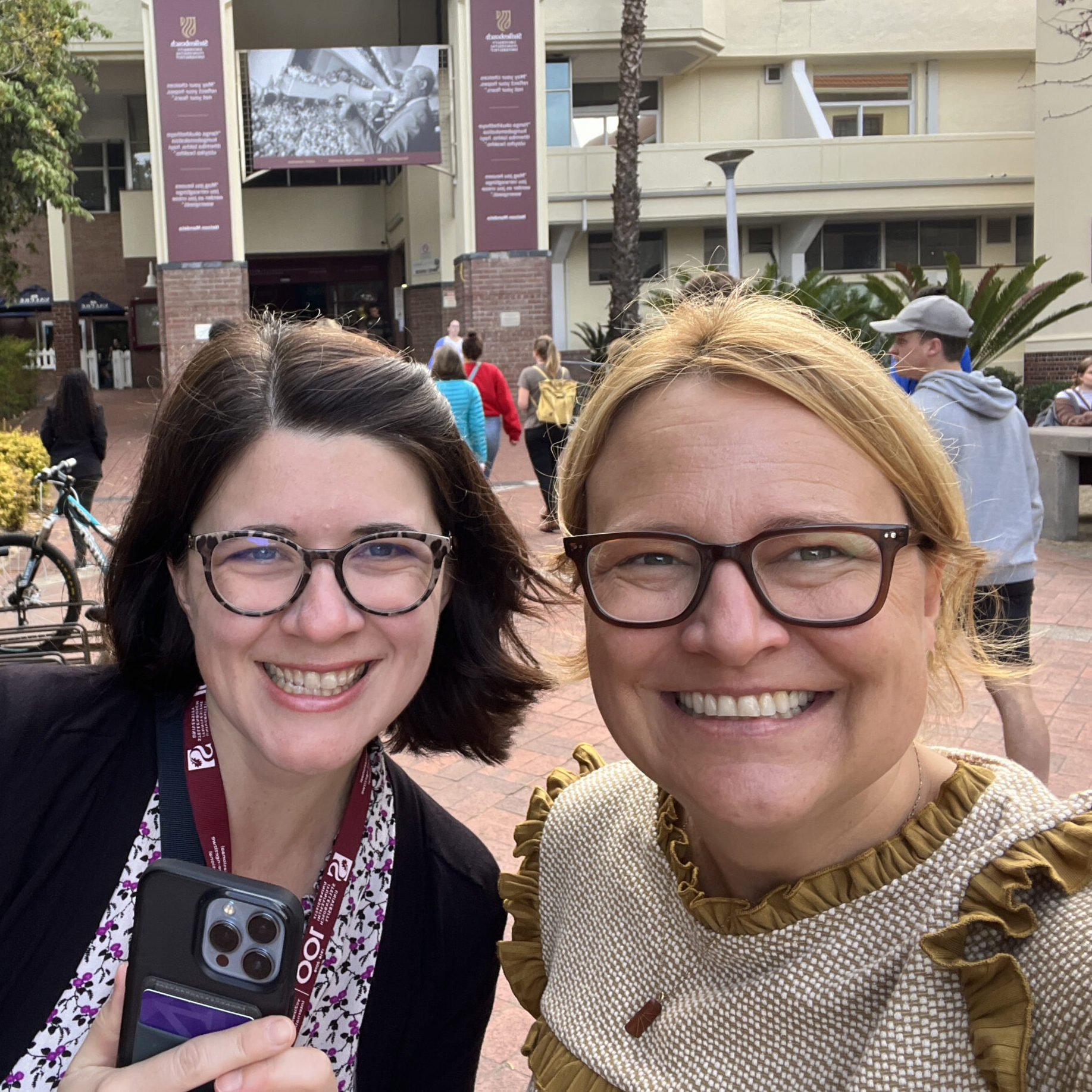
Culturosity Co.
Cultural Skills Coach
Co-founders Jennifer and Janka train people in intercultural skills through one-on-one coaching and group workshops, so settling into a new culture takes less guesswork.
Learn more
WhatLingo
Whatsapp Translation
Translates your WhatsApp chats in real time, so you can message landlords, neighbors and service providers in Romanian before you speak it yourself.
Learn more07 · Quick answers
Moving to Romania: common questions
Is it safe to live in Bucharest with the earthquake risk?
It can be, if you choose your building carefully. Bucharest has the highest seismic risk in Romania. Buildings in the top risk class are marked with a red dot and can't legally be rented out, and you can check any address on acasainsiguranta.ro before signing a lease.
Does Romania allow dual citizenship for Americans?
Yes. Romania allows dual citizenship, so you can naturalize without giving up your U.S. passport. Naturalization normally takes eight years of legal residence, or five if you're married to a Romanian, plus a B1 Romanian language certificate and a test on the constitution and culture.
Is Romania part of the Schengen Area?
Yes. Romania became a full Schengen member on January 1, 2025, when land border checks ended. As a U.S. visitor, your days in Romania count toward the Schengen limit of 90 days in any 180. A Romanian residence permit lets you stay longer.
How much income do I need for Romania's digital nomad visa?
You need income of at least three times Romania's average gross monthly salary, for each of the six months before you apply and for the whole visa period. In 2026 that's roughly 27,800 lei a month, about $6,000. The income must come from employers outside Romania or from a foreign company you own.
How are Americans taxed in Romania?
You become a Romanian tax resident after more than 183 days in any 12-month period. Residents pay a flat 10% on most income, 16% on dividends and a 10% health contribution on non-salary income. You still file U.S. taxes, and a U.S.-Romania tax treaty helps avoid double taxation.
Can an American retire in Romania?
Yes, but there's no retirement visa. Retirees usually apply for a long-stay visa for "other purposes" (D/AS) and then a residence permit, showing pension income, a lease of at least 12 months, private health insurance and a clean record. Approval is at the authorities' discretion, so a Romanian immigration lawyer is worth hiring. Americans with a Romanian parent or grandparent can also look at restoring Romanian citizenship instead.
How much does it cost to live in Romania?
A couple can live comfortably on about $2,050 a month in 2026, and a single person on about $1,200. A one-bedroom apartment in a city center averages about $500 a month. Costs are highest in Bucharest and lowest in small towns.
Do I need health insurance to live in Romania?
Yes. You need health coverage for your residence permit. Residents with no Romanian income can join the public CNAS system for 2,430 lei a year in 2026, about $524. Many Americans also buy a private clinic subscription, which runs roughly $17 to $119 a month.
Sources
- Types of visa: long-stay visas and the digital nomad (D/AS) conditions · Romanian Ministry of Foreign Affairs (checked September 2026)
- Residence permit · General Inspectorate for Immigration (IGI) (checked September 2026)
- Long-term residence in Romania · General Inspectorate for Immigration (IGI) (checked September 2026)
- Family reunification · General Inspectorate for Immigration (IGI) (checked September 2026)
- Romania international travel information · U.S. Department of State (checked September 2026)
- Council lifts land border controls with Bulgaria and Romania · Council of the European Union (checked September 2026)
- Romania individual taxes: personal income, residence and other taxes · PwC Worldwide Tax Summaries (checked September 2026)
- U.S.-Romania Social Security Agreement · U.S. Embassy Romania (checked September 2026)
- Healthcare in Romania for foreigners (2026) · Romania Travel Tips (checked September 2026)
- Mapping earthquake risk in Bucharest · Al Jazeera (checked September 2026)
See whether Romania fits your life
Take the free Expatsi Test and see how Romania compares with other countries on cost, healthcare, climate and safety.
Why not you?